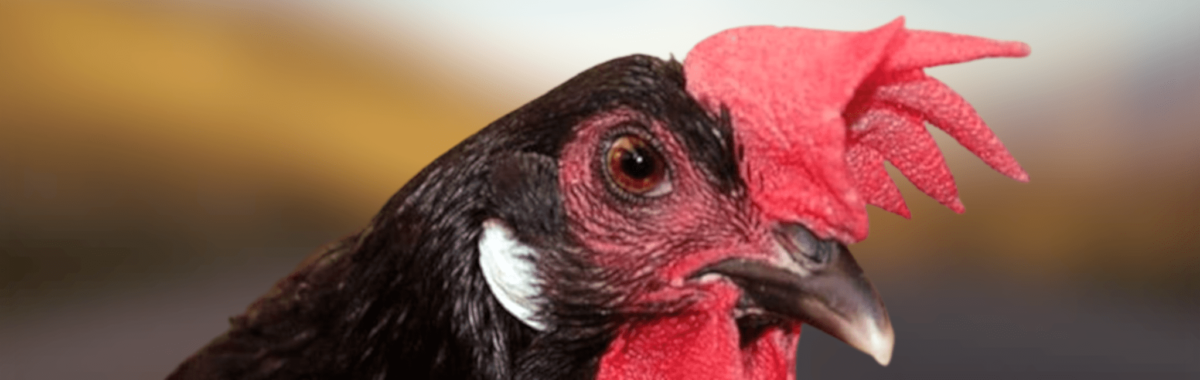
Eye of the Black Castilian hen

A chicken's sense of sight:

The visual sense of the bird and the hen, In general, they enjoy excellent vision, which is more perfect and complex than that of mammals. The behavior of most animals, and in the case that concerns us, our chickens, is based on visual information, both for feeding, staying alert, and visual recognition to identify members of the opposite sex or their enemies.

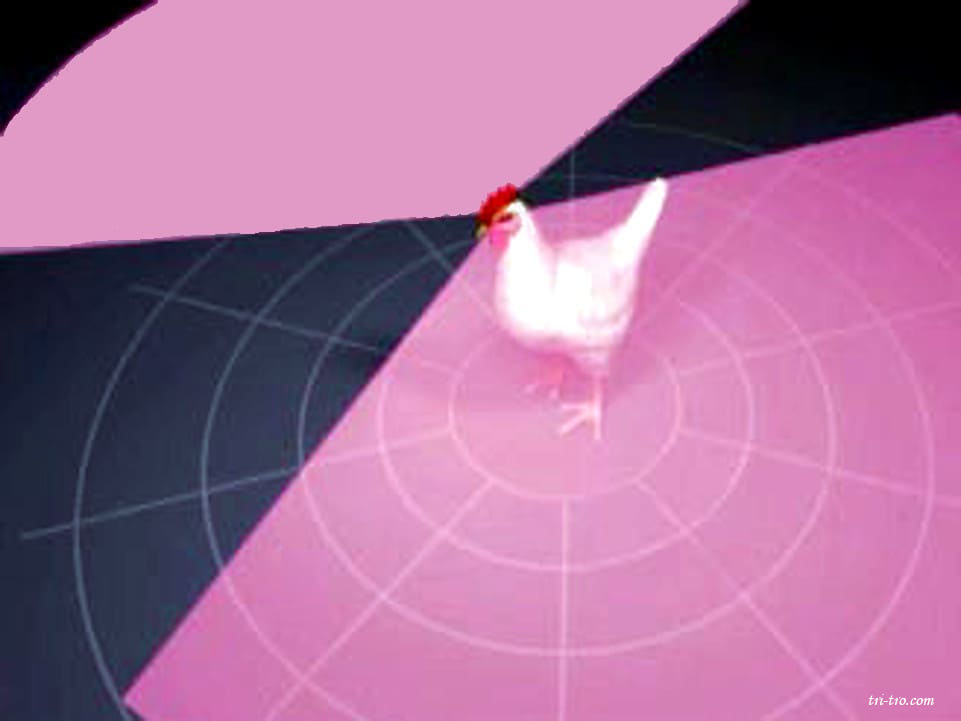
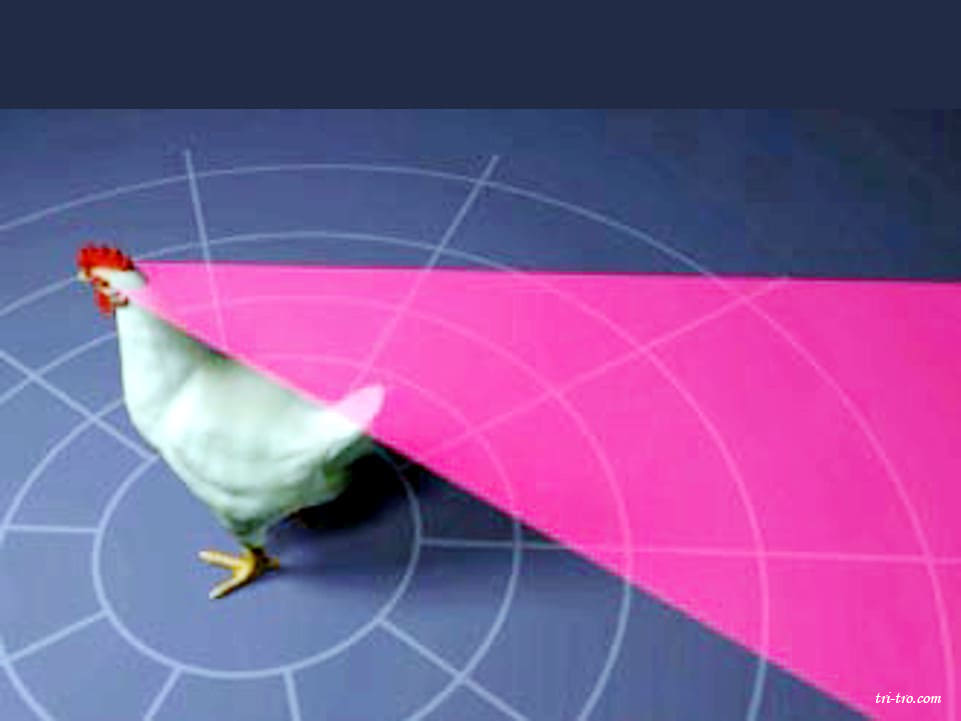
The eyeballs of the hen are characterized by being large, and in most birds they are located laterally; therefore, the field of vision ranges from 280 to 360º, which allows it to see almost the entire outline.

Many birds have eyesight no sharper than humans. This is because their very small eyes cannot contain as many photosensitive cells as a human eye. The belief in their excellent visual acuity is fully justified in larger birds. Some nocturnal birds of prey are able to detect details up to eight times better than humans.

The eyes of the birds are also able to take a “snapshot” of wide-angle lends a visual field, which we would need to go slowly with our own. This capacity they need our hens, by the rapidity with which it can appear a danger or to run away.

Species that feed on grains and seeds are frequently preyed upon by birds of prey; they need the widest possible field of vision, and their eyes are located on the sides of their heads. Birds, with only a small binocular field of vision, judge distances by moving their heads to obtain different views of the object.

Surely this explains the movements of the head of birds such as chickens or pigeons. However, it is easier to detect objects in motion with the head still, and many birds are able to maintain the head in a fixed position despite the movement of the body.

The eye of a chicken or rooster has a special characteristic that distinguishes it from that of mammals. In fact, the entire retina of a chicken is located on a plane very close to the surface of the retina, while in mammals the focal area normally coincides with the focal surface located near the central area of ​​the retina.

Therefore, mammals have a single point of high visual acuity, but their visual abilities outside this region are relatively poor. In chickens, however, thanks to the anatomical position of the retina, good and uniform vision is ensured across a large portion of the retinal surface. 

Let's define what parts is compound eye of the chicken.

Eyeball: which in birds is always voluminous. Furthermore, except for some oppressive birds with nocturnal habits, the disc-shaped form (disc shape) prevails, with a clear predominance of the equatorial diameter over the axial or optical axis.

The eyeball in the chicken is spherical in shape and appears somewhat flattened at the poles, represented by the most prominent region, the cornea, and at the back, from the point where the optic nerve emerges. The optic axis is considered to pass through these two points.

Have not been able to establish, however, the relations between the size or shape of the eyeballs with the visual capabilities of the species, nor in terms of the position (more-or-less side) of the eyes in the head. All the birds who possess the eyes in a position apparently front are of panoramic vision and no binocular.

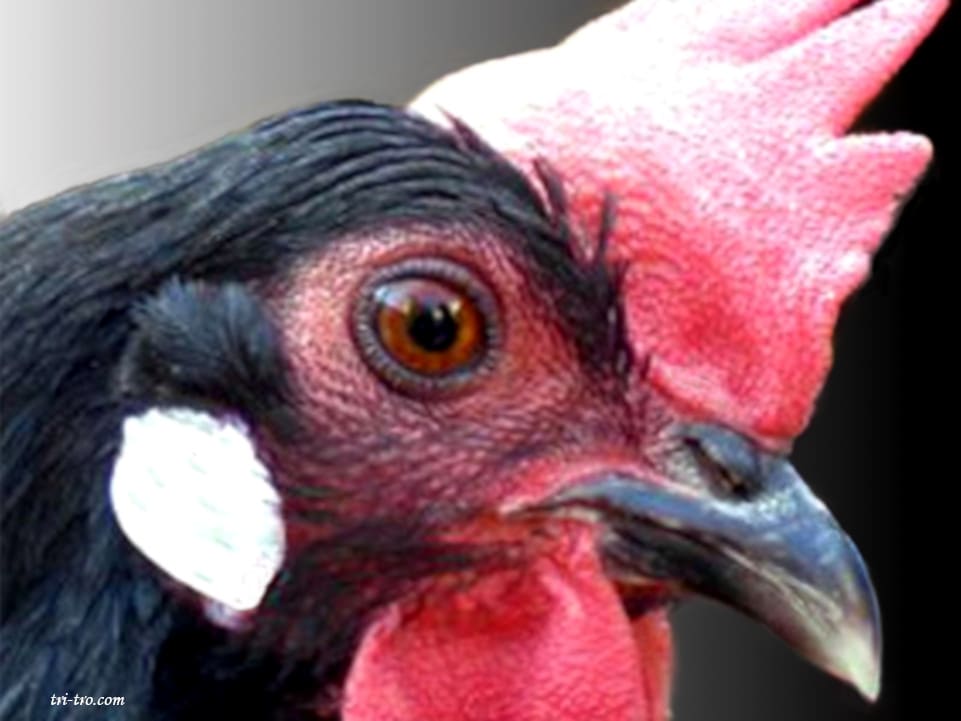
Eye of the Black Castilian hen

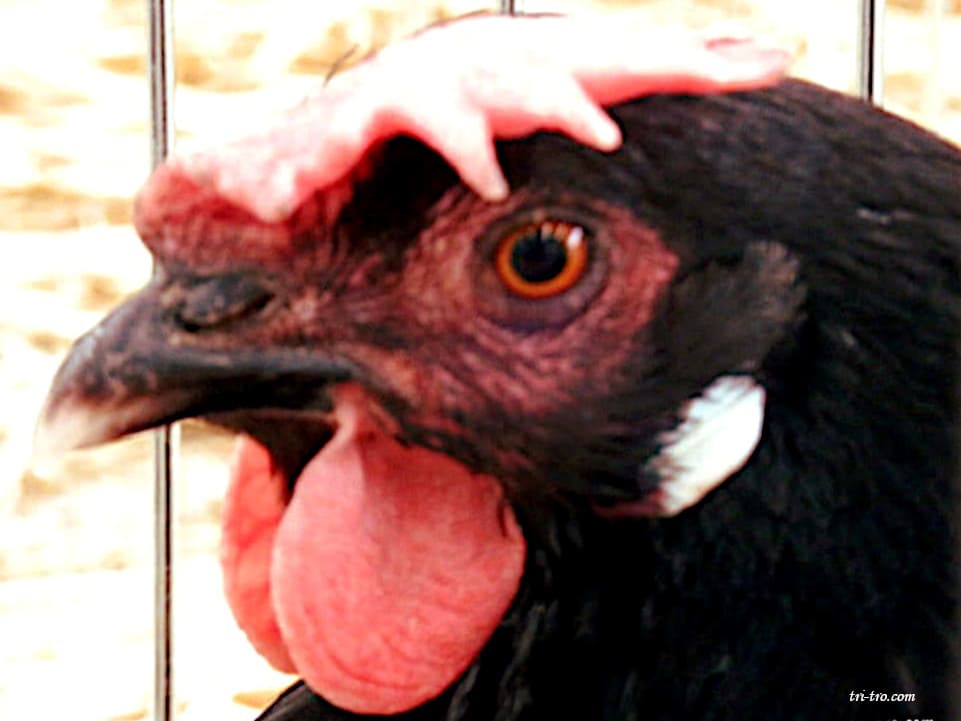
Eye Black Castilian hen and face

Inner walls of the chicken's eye:

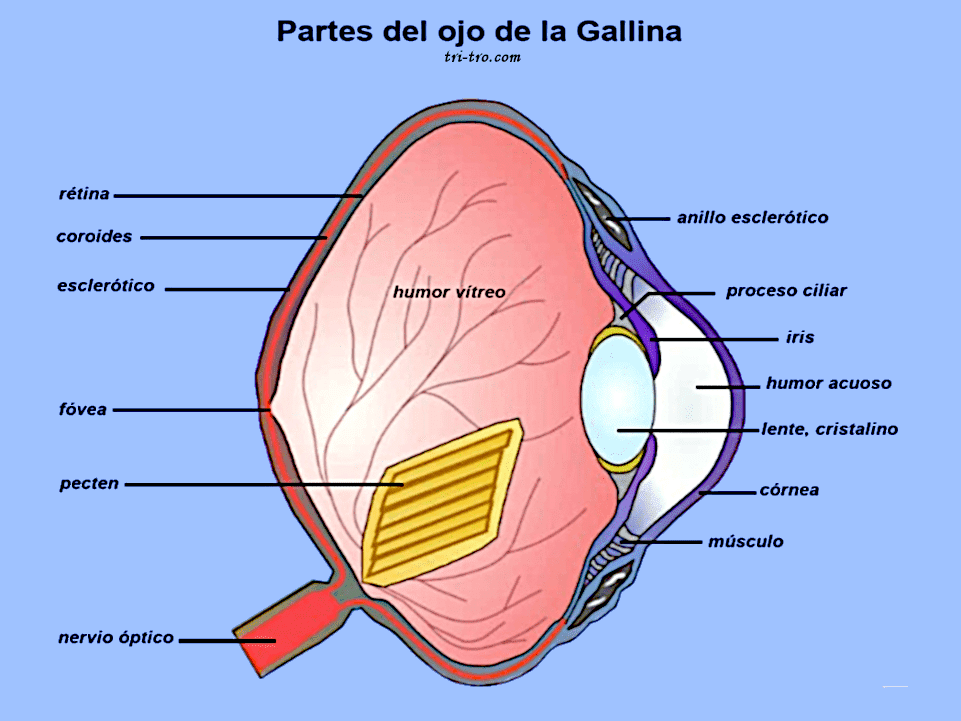
The inner walls of the hen's eye are composed by three membranes: the sclera, the uvea, and the choroid.

  • The whites: It is a tough, whitish, fibrous sheet, often reinforced by cartilage or bone, that covers the surface of the eyeball. The sclera is very firm and is surrounded by a bony ring of reinforcing scleral ossicles that gives it rigidity at the back, called the scleral ring; at the front it continues as the cornea, which is transparent and has a smaller radius of curvature than the sclera. 
  • The uvea: It is the middle membrane of the eyeball, also known as the vascular membrane. It consists of three structures: the iris, the ciliary body, and the choroid, forming a pigmented layer. The name comes from the uvea because this membrane, when isolated from the outside, resembles a grape. 
  • The choroid: It is intensely pigmented and rich in blood vessels. The red-eye effect in photographs is due to the reflection of light on the choroid. It appears red because of the blood vessels in the uvea. The function of the choroid is to prevent the uncontrolled bouncing of light within the eye.

Ciliary body: It is the seat of the ciliary muscle, whose contraction is involved in changes in the shape of the lens (focusing or defocusing) in the chicken. The ciliary body muscle in birds is composed of striated fibers and is divided into two components: the anterior and posterior corneal muscles, which act independently in the accommodation process, the former modifying the curvature of the cornea and the latter that of the lens. There is no tapetum lucidum (the layer of bluish color) of one eye of a calf, with the retina by coating it. The iris is yellowish-brown.

The ciliary body produces a fluid within the eye, which is essential for the proper functioning of the eyeball, called the aqueous humorIt is a colorless liquid found in the anterior chamber of the eye. It serves to nourish and oxygenate the structures of the eyeball that do not have a blood supply, such as the cornea and the lens.

The iris: It forms a diaphragm, located behind the cornea and in front of the lens. The pupil, an opening whose width can be changed by the contraction or dilation of the pupillary muscles, passes through its center.

The iris has several colors, from light yellow to black brown, depending on the species or variety.

Structurally, it is composed of two components of different origin, which are closely integrated with each other, since they have the main role in characterizing eye color, because the pigments can be distributed on the front and back face; distributed in the context of the stroma (the framework that, in a tissue, supports the cells), melanocytes surrounding the blood vessels may also be present.

The surface of the iris is derived from the choroid and is composed of an endothelium, often pigmented, that underlies a stroma with pigment cells, blood vessels, and the cells of the circular fibers of the sphincter muscle (the iris dilator muscle).

Carotenoids are found in different parts of the eye, visible in the iris, where they combine with the red pigment from blood capillaries to produce the color. Xanthophyll has been found in the eyes of 27 species of wild birds and in the irises of domestic fowl, but not in pigeons. In fact, in chickens, dietary alterations in carotenoids show a decrease in their presence in irises composed largely of xanthophyll.

Carotenoids are found in the chromatophores (these are cells with pigments inside that reflect light) and, in combination with red widespread, giving rise to the shade of the eye. The carotenoids are not visible in the eyes of chicks newly born, where the color of the eye is only fully expressed by the increase of sex hormones before the period of growth of the bird.

A chicken's view:

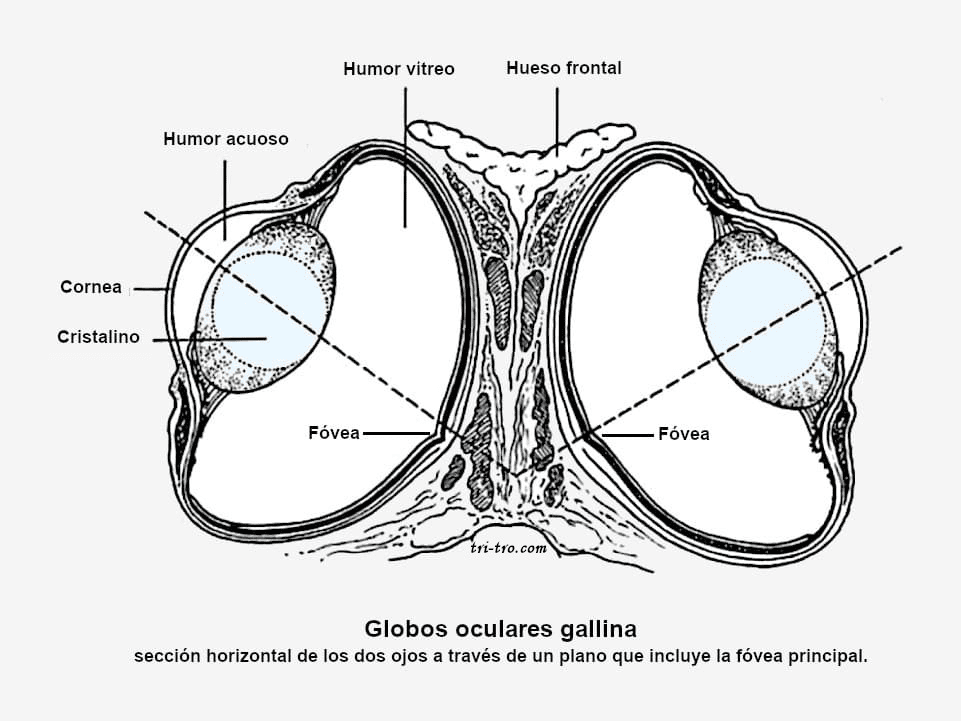
Eyeballs hen, horizontal section of the two eyes through a plane that includes the fovea

Binocular vision

The retina: It's a thin tissue at the back of the eye that collects the image. Light receptors convert the projected image into nerve impulses; the closer these receptors are together, the smaller the image's "pixels." Of course, the more receptors there are in that area, the better, and this number of receptors creates optimal optical conditions.

The retina, equipped with rods and cones, has a central fovea composed almost exclusively of cones. This gives it visual acuity eight times greater than that of humans. The retina is very rich in photoreceptor cells, suggesting that vision is excellent.

There is a 100 % of the adequacy of fibers in the optic nerves, by what we don't see pupillary reflex in the birds. 

In the human eye, the central part of the retina (fovea) has about 150,000 to 200,000 light receptors. The fovea of ​​a bird of prey, of a similar size, has 1.5 million receptor cells, a very significant increase. Such a large number of receptors requires a substantial blood supply, and the anatomy of the human eye could not support such a high density of receptors.

To this end, these birds possess a tissue called the pecten, a comb-like vascular structure that anchors to the retina and the wall of the eye and projects inwards. In addition to its feeding function, it has other functions that contribute to the high image resolution of these animals.

It is easier to see the pecten than to determine the density of cones; it can be stated that birds with a more developed pecten have better vision. 

The pecten comb or eye: It is the most characteristic structure of the fundus of the eye in birds. It is a vascular body that emerges from the retina adjacent to the opening of the vitreous humor. Surrounding the basal lamina that forms it is a vascular mantle of arterioles that eventually form an extensive capillary network.

This pigmented vascular membrane, located at the back of the eye at the level of the optic nerve entrance and floating in the vitreous humor, performs very important functions (trophic, pressure-sensing organ, temperature regulation). The arterioles originate from the pecten arteriole, a terminal branch of the temporal ophthalmic artery.

This pecten has different shapes in avian species: conical in the kiwi, cross-shaped in the ostrich.

The posterior chamber (vitreous humor) contains a typical structure called the pecten or comb. The pecten is believed to nourish the retina and control the pH of the vitreous humor. It is present in all birds and some reptiles. In the vertebrate eye, the blood vessels are located in front of the retina, partially obscuring the image. The pecten helps solve this problem by raising the blood vessels away from the retina, allowing birds to have extremely sharp vision, as in the case of diurnal raptors. The pigmentation of the pecten is believed to protect the blood vessels from damage by ultraviolet light.

The fovea: This area, where visual acuity is greatest due to a higher concentration of receptors, is identified in the retina. In birds, it typically develops two foveae, a primary and a temporal fovea.

The primary fovea, located in the central area of ​​the retina, is normally used for daytime vision and has a high concentration of cones. It is situated at the posterior pole of the eye and roughly corresponds to the optical axis. 

The temporal fovea also contains a large number of sensory cells; it is located in the posterodorsal region of the retina. Light rays strike this fovea when the eyes tend to converge during flight, causing the visual fields to overlap partially. 

Stereoscopic vision allows for a difference between the two images, called binocular disparity, creating a three-dimensional image. For this vision to be accurate, the brain and eyes must function properly. This is of great importance, even when the chicken has to visually determine the location of its food.

Monocular vision

Blind zone

Nictitating membrane:

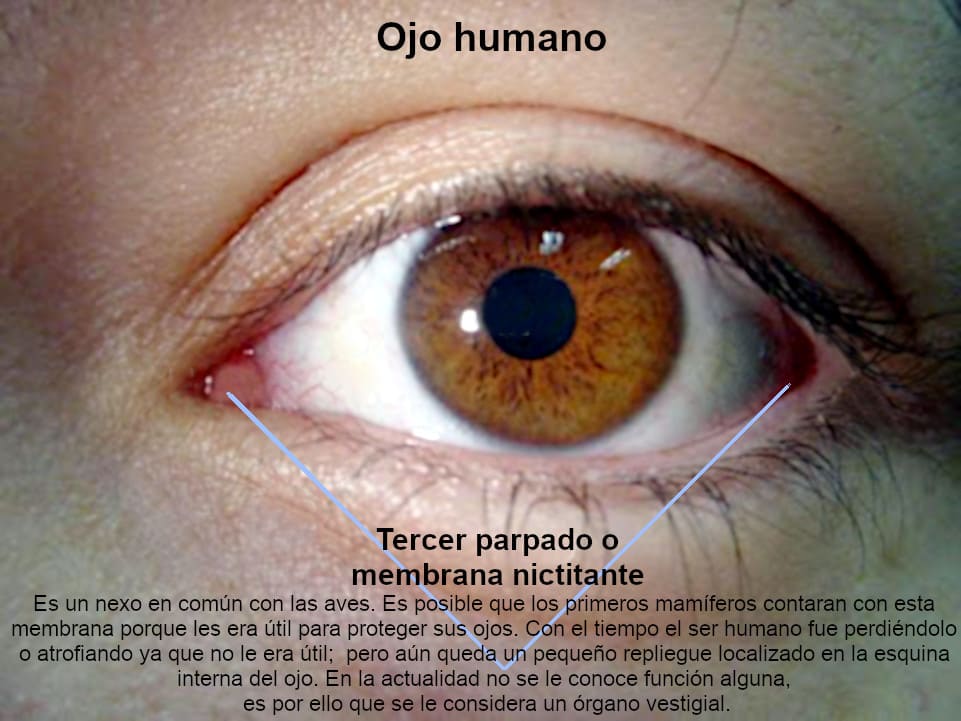
Human eye, loss of Nictitating membrane

Nictitating membrane on a cock

Finally, as a complement Thanks to this marvelous organization, nature has provided birds, in addition to the two eyelids, with another, located in the inner corner of the eye, which can cover the cornea like a curtain and protect their vision from very bright light. It is also called the tertian palpebra or third eyelid.

The nictitating membrane (from Latin: nictus = night, nictare = to blink) is a transparent or translucent third eyelid; unlike the upper and lower eyelids, the nictitating membrane moves horizontally across the eyeball.

In our chickens (gallinaceous birds), the eyelid moves from bottom to top, and when they preen themselves, notice that they close their eyes completely so that their feathers don’t scratch their corneas. Chickens only lose their vision at night, while they sleep, which is when they close their eyelids completely.

In the inner, central part, a cartilage of varying length, shape, and thickness depending on the species provides greater rigidity. On its surfaces are located a considerable number of seromucoid (serum) cells of the tubuloalveolar type (with more than one secretory duct); these are the accessory lacrimal glands.

The third eyelid slides over the eye when the eyeball retracts, through the action of the intrinsic muscles and the retractor muscle. Its movement is slow, triggered by corneal stimulation from irritants.

Its primary function is to protect the eyeball and aid in cleaning and moistening it, thus maintaining visibility. The membrane's thickness varies, approximately 1 mm; it is fan-shaped, and its length varies depending on the species.

The surface epithelium is stratified, consisting of two or three layers of flat basal cells, both on the bulbar and palpebral (eyelid) sides. The basal portion contains a considerable number of goblet cells.

  • The structure of the surface stroma It is composed of loose connective tissue, non-dense collagen fibers, fibroblasts, and melanocytes
  • The central stroma It is made up of dense connective tissue and collagen, as well as small blood vessels.

It occupies almost the entire orbit and has an oval shape due to the tension created by the scleral ring, unlike in mammals. It is a fold of the conjunctiva and is found in many animals. In mammals, it is generally located in a ventral and medial position and takes on a shape T.

This is retractable and can extend horizontally to cover the cornea, without completely blocking vision, as it is translucent. I blink frequently and very rapidly, almost imperceptibly. Any stimulus to the eyeball (for example, a breath of air) will trigger the nictitating membrane reflex. The lower eyelid is larger and more mobile. The third eyelid has a relatively inflexible free edge.

In our pets is a good local observation, to determine the overall health of the eyes and the cardiovascular system.

In humans, the nictitating membrane is pink in color. Like birds, early mammals may have had this membrane because it helped protect their eyes. Over time, humans lost it or it atrophied, as it was no longer useful; however, a small fold remains in the inner corner of the eye. Currently, it has no known function; that is why it is considered a vestigial organ, and we have lost its original functions.

Lacrimal apparatus: It consists of two glandular formations attached to the posterior surface of the eyeball and the corresponding secretory drainage ducts.

The lacrimal gland, which is relatively small and elongated, is located dorsal to the lateral canthus of the eye, situated between the orbital fascia and the lateral rectus muscle.

Its excretory duct starts from the dorsal end of the glandular body, describes an arc-shaped path over the origin of the dorsal rectus muscle and ends in several small ducts that terminate in the conjunctival sac of the lower eyelid.

The nictitating membrane gland in birds is usually more developed than the lacrimal gland. It is located on the ventral surface of the sclera, between the sclera and the ventral oblique muscle. It secretes seromucous fluid.

The excretory duct emerges from the rostral end of the gland and the nictitating membrane. This membrane is responsible for distributing the secretion produced by the gland. The secreted substance also has a high antibody content and is more highly developed in flying birds to prevent the eye from drying out during flight.

Chicken Eye (Castilian)

Parts of the eye of the Chicken

The eye of the bird breathes thanks to a protein:

The study, published in the Journal of Biological Chemistrysays that the globing And has not been found in any other animal, although the turkeys and zebra fish have genes similar to those responsible for putting that in chickens.

In mammals there are also proteins, respiratory as myoglobin, which can enhance the delivery of oxygen to certain tissues.

To capture visual information and send it to the brain is a complex task that requires a large amount of energy. Especially in birds, whose eyes contain a large retina and function with a metabolic rate is very high.

To make it work, they need a considerable input of oxygen. However, their bodies visuals pose no hair of any kind, which rule out the possibility of them comes through the blood, as occurs in mammals.

In its place, the one in charge of the transport of fuel appears to be a protein called globing E, which have been detected in large quantities in the eyes of chickens.

According to the biologist Miriam Blank, of the University of Hamburg (Germany) and his team, it is only present in these organs, especially in the photoreceptors. Taking into account that secures very well the oxygen, the researchers consider that it could be the one in charge of supply to the mitochondria, the power plants of the cells.

News published in Libertad Digital (Spain)

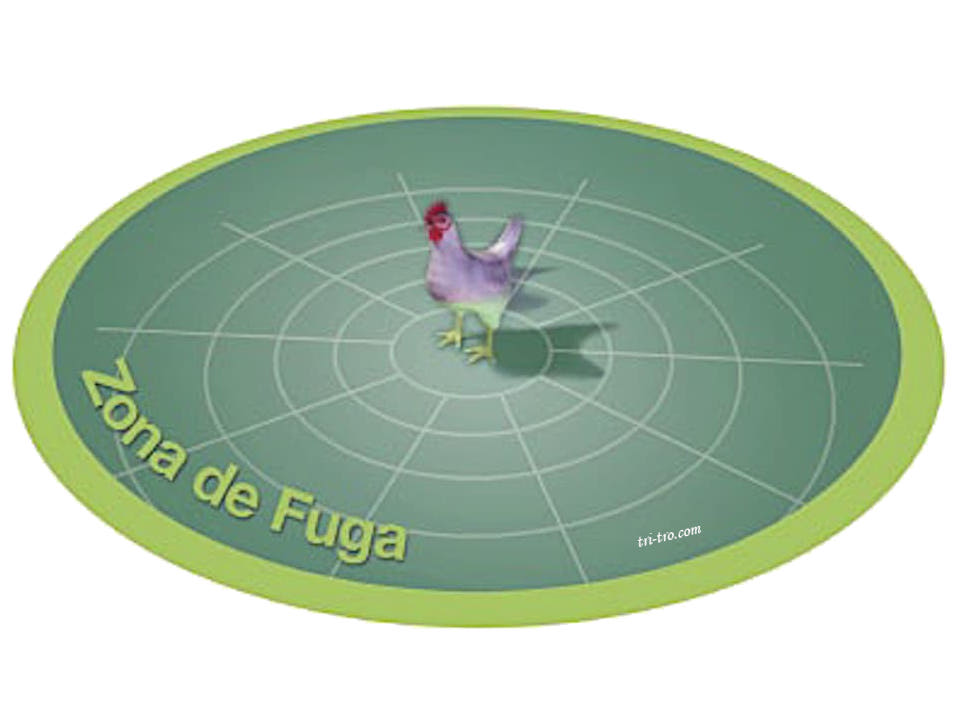
Leak zone


Bibliography:

Dyce, K. M., Sack, W. O., and Wensing, C. J. G., 1991. Veterinary Anatomy. Ed. Pan-American.

Ede, D. A., 1965. Anatomy of birds. Ed. Acribia.

Grasse, P. P., 1980. Zoology. Vol. 4: Vertebrates. Reproduction, biology, evolution, and systematics. Ed. Toray-Masson.

Grifols, J. and Molina, R. 1994. Manual of clinical exotic birds. Ed. Grass-Iatros.

Natural History, 1984. Vol. 1. Ed. Ocean-Institute Gallach.

King, G. M. and D. Custance. Colour atlas of vertebrate anatomy: The Pigeon. Pp.: 5.1-

5.17. Ed. Blackwell Scientific Publications.

Krahmer, R., and Schröeder, L. 1979. Anatomy of the domestic animals. Ed. Acribia.

McClelland, J., 1992. Atlas in color of the anatomy of birds. Ed. inter-American.

Nickel, R., 1977: The Anatomy of the Domestic Birds. Ed. Paul Parey.

Sandoval, J., 1976. Veterinary Anatomy. Ed. Modern Printing Press (Córdoba).

Schwarze E. 1980. Compendium of Veterinary Anatomy. Volume V: Anatomy of birds. Ed. Acribia.

Shively, M. J., 1993. Veterinary anatomy, basic, comparative, and clinical. Ed. Manual Moderno.

Sturkie PD, 1967. Physiology of Avian. Ed. Acribia.

Dr. Francisco Gil Cano.

Professor H. Aguinaga.

MERCK & CO. (1995). Manual Merck de Veterinaria. Rahway, N. J., EE. UU.

BUXADÉ, P. (1987). The laying hen. Ed. Mundiprensa. Madrid.

DORN, P. (1987). Manual of avian pathology. Ed. Acribia. Zaragoza.

HOFSTAD, M. S. (1984). Diseases of Poultry . Iowa State University Press, Ames, Iowa.

ZARZUELO, E. (1982). Vade mecum of the pathology, infectious poultry . Ed. Aedos, Barcelona.

CASTELLÓ, F and CASTELLÓ, J. A. (1960). The new art of raising chickens. Ed. Aedos, Barcelona.

OROZCO, F. (1989). Breeds of chickens Spanish. Ed. Mundiprensa. Madrid.

LACADENA, J. R. (1998). Genetics. Ed. AGESA

GATES, M. J. (1992). Genetics, fundamentals and perspectives. Ed. Interamericana McGraw – Hill.

SANCHEZ-MONGE, E. (1969), Genetics. Ed. Espasa – calpe SA

OROZCO,F, and ROBLA, F. (1986). Genetic aspects of the rooster. XXIV Symposium of the WPSA (Spanish Section): 199 – 212.

HILL, J. L. (1973). Genetics, general and applied. Ed. UTEHA.

CASTELLÓ, J. A., LLEONART, R., FIELD, J. L., OROZCO, F. (1989). Biology of the chicken. Real Escuela de Avicultura.

LLEONART, F., ROCA, E. CALLÍS, M. GURRI, A. PONTES, M. (1991). Hygiene and pathology avian . Real escuela de avicultura.

STURKIE, NB (1968). Physiology Of Avian. Ed. Acribia. Zaragoza.


You may be interested in these other sections

How to Choose the Right Eggs for Hatching

How to Choose the Perfect Broody Clucking Hen

Incubating Chicken Eggs: A Complete Guide


Do you want to share or comment on your social networks

Scan to visit TRI-TRO
Escanea para visitar. TRI-TRO