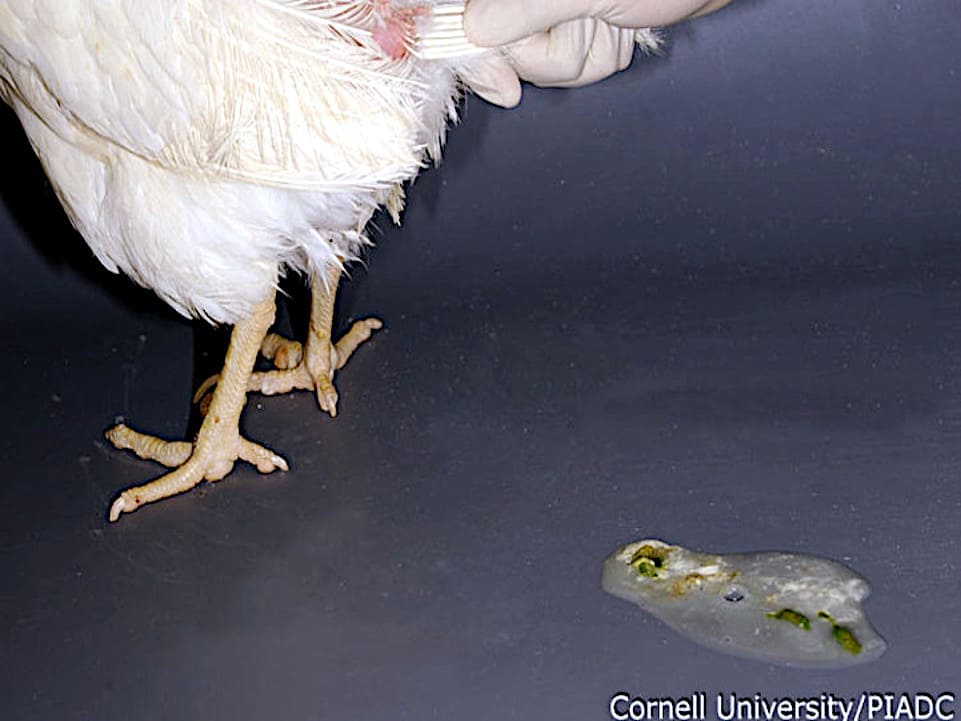
It is convenient to follow the directions of the diagrams (in Spanish or English), for all viruses, explaining what steps we should take and how infected poultry could transmit avian influenza to humans.
It is unlikely that the people from infection with the avian influenza virus, but this can happen. People can become infected when sufficient avian influenza viruses enter their eyes, nose or mouth, or when inhaled.
This could happen when the virus is present in the air in droplets or perhaps in the dust), and people breathe it in, or when they touch something that containing the virus and then touch their mouth, eyes, or nose.
Most cases of infection of avian influenza in people have been having unprotected contact with infected birds or contaminated surfaces.
However, there are no reported cases of infection of avian influenza in humans to the proper handling of poultry meat or eating meat poultry or poultry products thoroughly cooked.
Cases of avian influenza in humans have ranged from mild to severe. Signs and symptoms of avian influenza infection in people may include fever (temperature of 37.8 °C, 100 °F, or higher) with a feeling of fever, cough, sore throat, runny or stuffy nose, muscle or body aches, fatigue, headaches, red eyes (or conjunctivitis), and difficulty breathing.
Other possible symptoms are diarrhea, nausea, and vomiting. As is the case with the influenza (flu) seasonal, some people have a high risk of illness severity if they contract an infection of avian influenza. Among these people include pregnant women, people who have weakened immune systems and those of 65 years or more.
Usually, the cases of infection by avian influenza virus in humans can be treated with the same prescription drugs that are used to treat infections with seasonal influenza viruses in humans. These drugs are called “antiviral drugs for influenza”.
Look at this link from the Spanish Ministry of Agriculture and Fisheries, Food and Environment MAPAMA, para las dudas que podáis tener; ahí tenéis todas las preguntas y respuestas sobre la influenza aviar.
Outbreaks of avian influenza in birds:
Outbreaks of avian influenza occur among birds from time to time. When outbreaks of deadly avian influenza occur in poultry, the country’s Ministry of Agriculture works with the pharmaceutical industry and other partner countries to contain the outbreak and prevent it from spreading to other birds. The Centers for Disease Control and Prevention work to protect public health during these outbreaks.
The risk to the public from avian influenza outbreaks is low; however, because other avian influenza viruses have infected people, it is possible that these viruses could infect humans.
The risk depends on the exposure. It is believed that people who do not have contact with infected poultry or contaminated surfaces have very low risk or no risk of infection. It is believed that people who have close contact or prolonged, unprotected, with infected birds or polluted environments have a greater (though probably still low) risk of infection.
Infections of influenza (flu) avian in people are rare, but possible. The majority of the reported cases of infection of avian influenza in people have been having unprotected contact with infected birds or contaminated surfaces.