The incubation process egg production is typically the first step in any type of poultry farming; it is carried out on farms that specialize in this activity, as well as by breeders.
Subsequently, they supply the chicks on the farm dedicated to the bait of animals, such as the sale or exchange on the part of the keepers of their races.
The eggs, when you place them in the incubator, you need to put special attention on the environmental conditions necessary for this activity.
We will use a commercial incubator with automatic egg turning, or the natural incubation method carried out by our hens—either on their own or with foster mothers such as the Kika and Flor de Ametller breeds, which are highly prone to brooding.
To examine the eggs, we will use a portable ovoscope, whether it is commercially available or one we make ourselves.
Embryonic development:
The early stages are started before being put in the egg.
In a freshly laid egg, the blastoderm is already visible; it appears as a small disc between the yolk and the vitelline membrane. You can see it in the photos.
Three days later, already appreciated the small buds along the body of the embryo that will give rise to the extremities.
The heart begins to function, although it is located in the outer part of the embryo.
The digestive system is closed on the fifth day, while the lungs are noticeable on the sixth day.
From the eighth day, there are areas of dense feathers.
Skeletal calcification begins at ten days and is complete by fifteen.
The beaks and claws are already fully formed by the sixteenth day.
The incubation time of the eggs is characteristic for each species of domestic birds.
For the correct development of the embryos, it is necessary to maintain environmental conditions:
Temperature, humidity, oxygen level, carbon dioxide, etc., as properly as possible to reach a good end with our eggs.
Egg formation and fertilization:
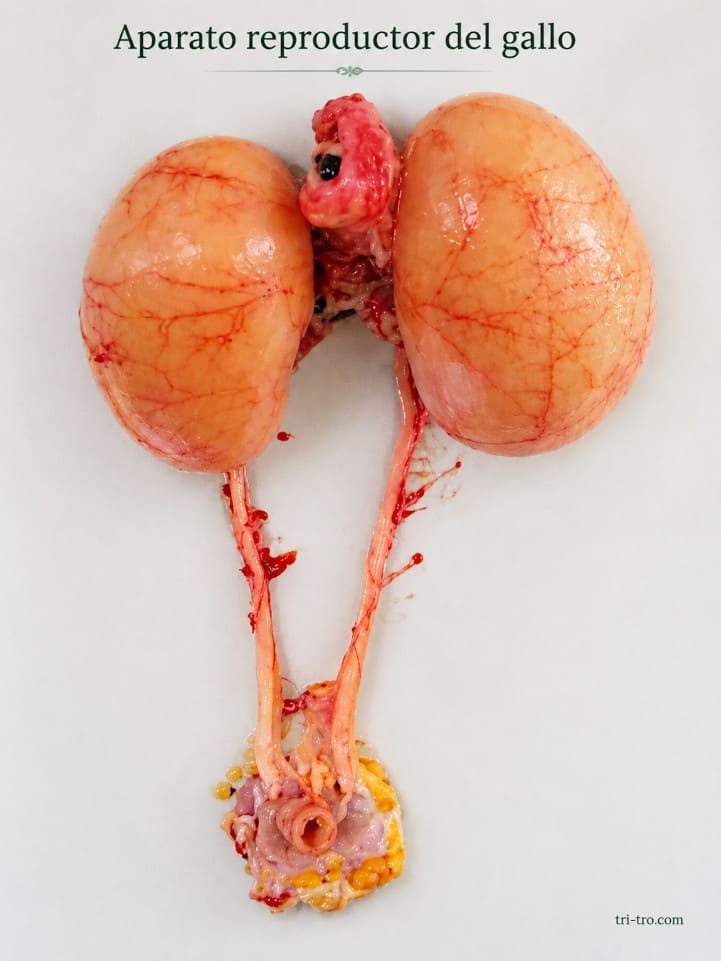
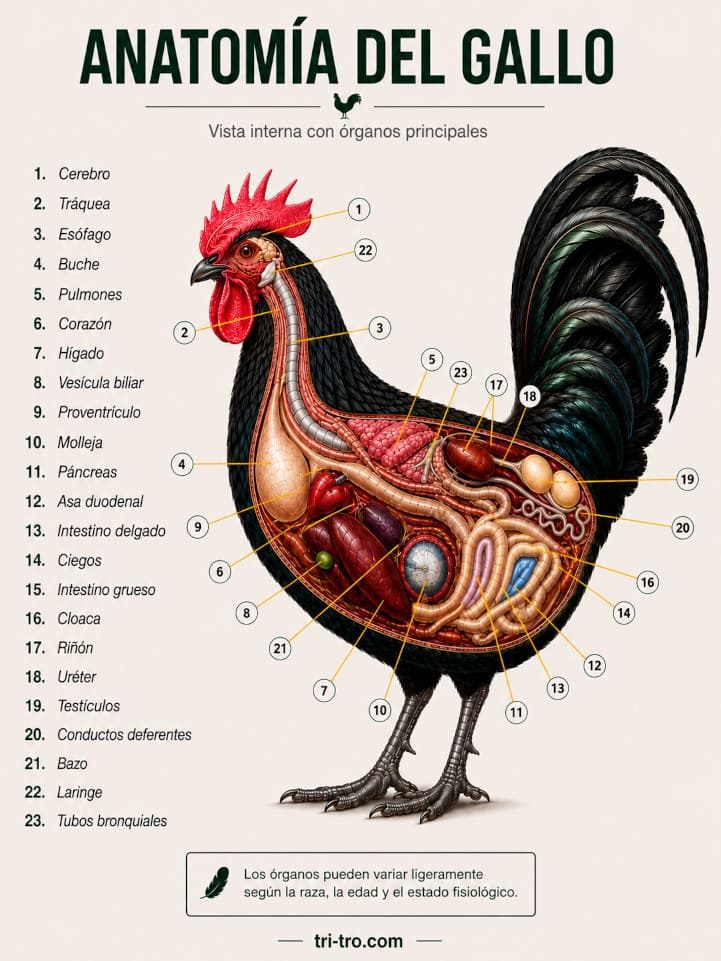
In the left ovary, as the right of the chickens is atrophied, is the basis of the oocyte or egg.
As they pass through the oviduct, the eggs first acquire the egg white (albumen) and, finally, the shell; thus, the egg is formed along the length of the oviduct, a process that takes 24 hours in a hen.
From egg to egg fertilized:
From that comes out of the ovary as the bird puts it through its cloaca, going through the various ducts, adding to it various substances:
Reserve substances:
The yolk contains a large amount of nutrients, minerals, essential vitamins, and fats, while the white contains more structural components, such as water and proteins; the most important of these is “ovalbumin.”
Sperm:
In addition to the reserve cells, if the egg has been fertilized, sperm are added at a certain point. In birds, all sperm cells pass through the egg (yolk) and enter it; this phenomenon is called polyspermy, but only one fertilizes the nucleus of that cell, combining the genes of the egg and the sperm and thus forming an embryo.
After that they form the vitelline membrane, which surrounds the yolk and the embryo, separating the clear. Any sperm can pass through then.
Thus, if the egg is fertilized, it will contain the embryo (which in the early days may also be called an “egg” or zygote), and if not, simply an egg cell that can no longer be fertilized. This can be distinguished, upon opening the egg, by a small reddish or brown spot visible right on the surface of the yolk; that is the embryo.
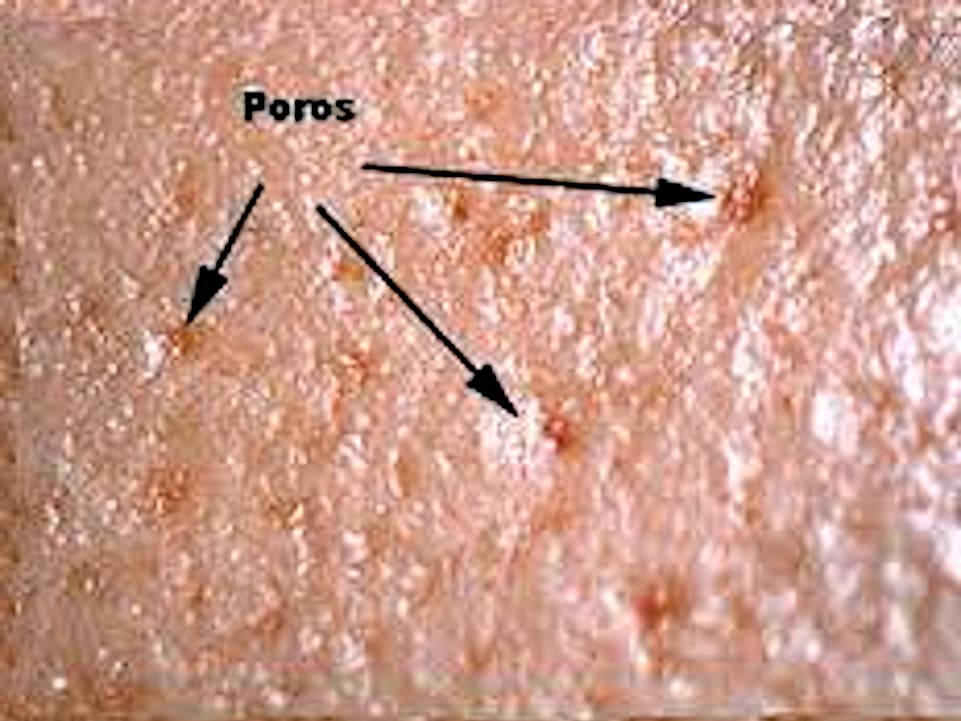
The shell also forms within the bird to base of various minerals, and will have thousands of pores to promote the exchange of gases to the exterior, gas that you will use the chicken to breathe.
These gases will accumulate primarily in an air cell located at the thick end of the egg. This air cell must be kept in perfect condition; therefore, it is recommended that eggs be stored until incubation with the air cell positioned so that no pressure forces the air out—that is, with the thick end of the egg facing upward.
In the section titled “Anatomy of the Hen” and in the section titled “The Egg, Castilian Hen,” you'll find a detailed explanation of the entire process, complete with photos.
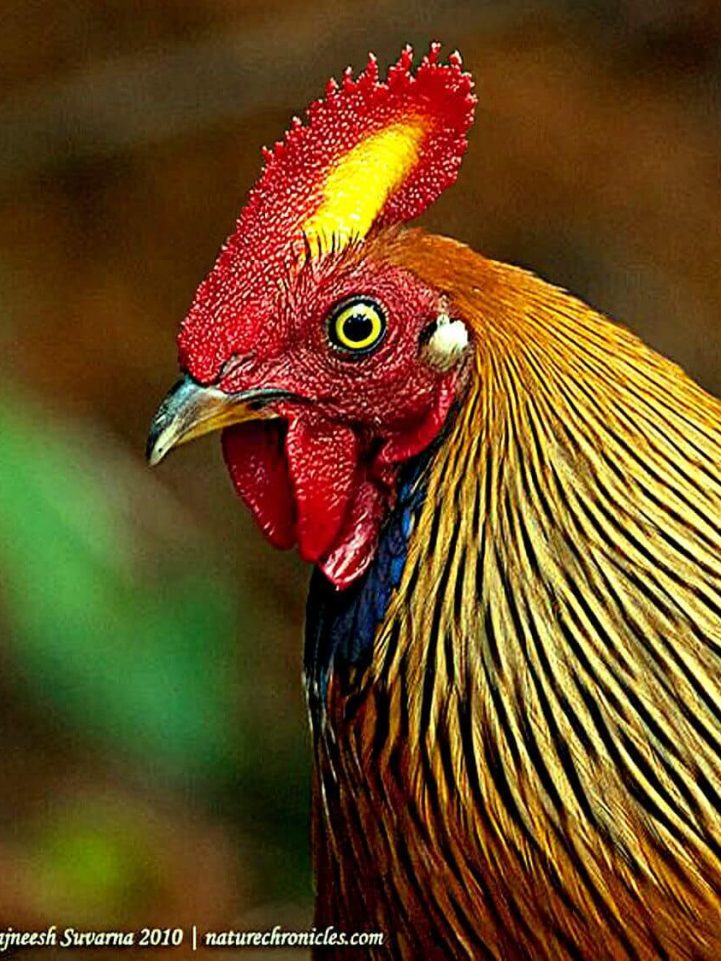
Fertilization always occurs in the upper part of the oviduct through the union of the sperm, the male sex cell, with the egg, the female sex cell; therefore, for the egg to be fertile, the rooster must be involved.
Main parts of an egg:
The egg is protected by a very thin but hard calcareous shell.
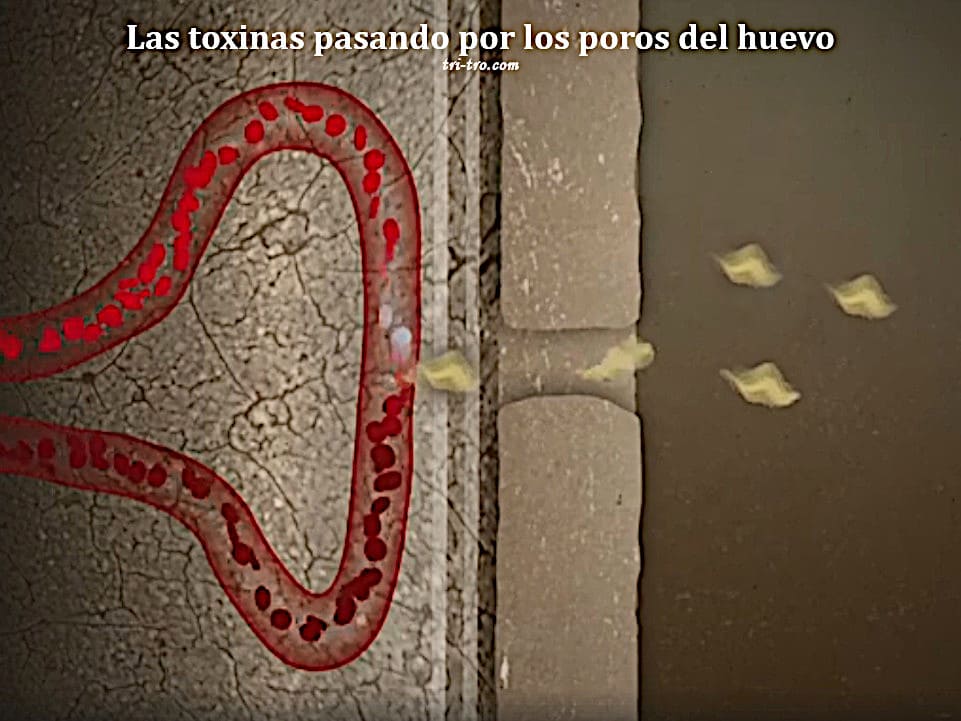
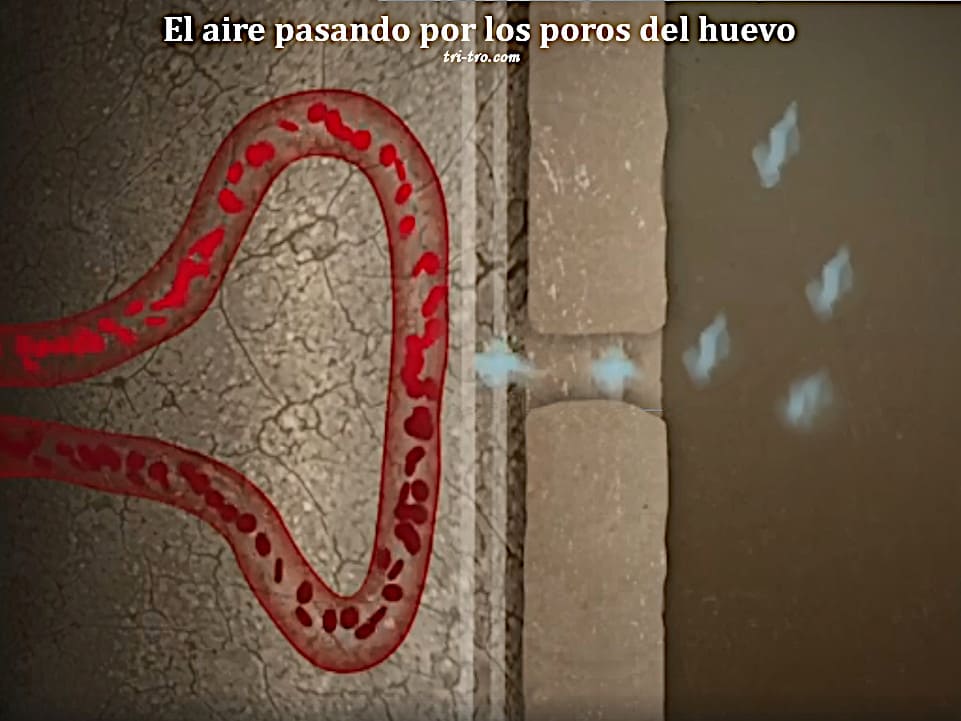
The shell allows the elimination of toxins produced by the embryo and the entrance of air to breathe by passing the oxygen through the tiny pores of your surface.
This process is caused by the veins that the embryo has spread throughout the interior of the egg, a phenomenon known as the “spider web.” When these veins come into contact with the pores in the shell, they facilitate two processes: the elimination of toxins and the entry of air; see photos.
Until the chick to be able to break the shell, the respiration can only occur with the help of oxygen that passes through these pores.
In addition to this, shell porous, and as the egg contains two membranes that also influence the development of the chick.
These membranes are closely packed inside the shell, but they remain separated from the shell and from one another.
The membrane closest to the shell is called the “outer shell membrane,” and the one in contact with the albumen is called the “inner shell membrane.”
During the incubation, the air chamber located at the wider end of the egg is formed as a result of the separation of the two membranes.
Incubation:
You can define the regime of incubation as the set of physical factors present in the environment that surrounds the egg. The factors that make it up are:
Of all these factors, temperature is the most important, as even small fluctuations in temperature can be fatal for many embryos.
The changes that take place in the egg during incubation are governed by physical laws.
These changes occur, normally, only under specific levels of temperature, moisture, chemical content of the air and positions of the egg.
On the other hand, the same egg hatched modifies the environment which surrounds it to give off heat, gases, and water vapor.
When an egg is exposed to the heat of incubation—which typically ranges around 37.7 °C (99.86 °F)—it comes to life and becomes an embryo; the embryo grows, and what was initially a tiny, insignificant speck gradually takes shape.
As it grows, the embryo draws nourishment from the substances contained in the yolk; it first spreads through the yolk and then through the white until it fills the entire interior.
Once the chick has developed, it uses its beak (a tiny bony protrusion at the tip of the upper jaw) to break open the shell. A few days after hatching, the beak disappears or falls off.
The purpose of visual inspection is to identify clear eggs or embryos that have died prematurely; these eggs will be removed to prevent excessive water evaporation and to eliminate a source of contamination.
Candling is performed on the seventh day of incubation; we must avoid the effects of sudden temperature changes by taking every possible precaution.
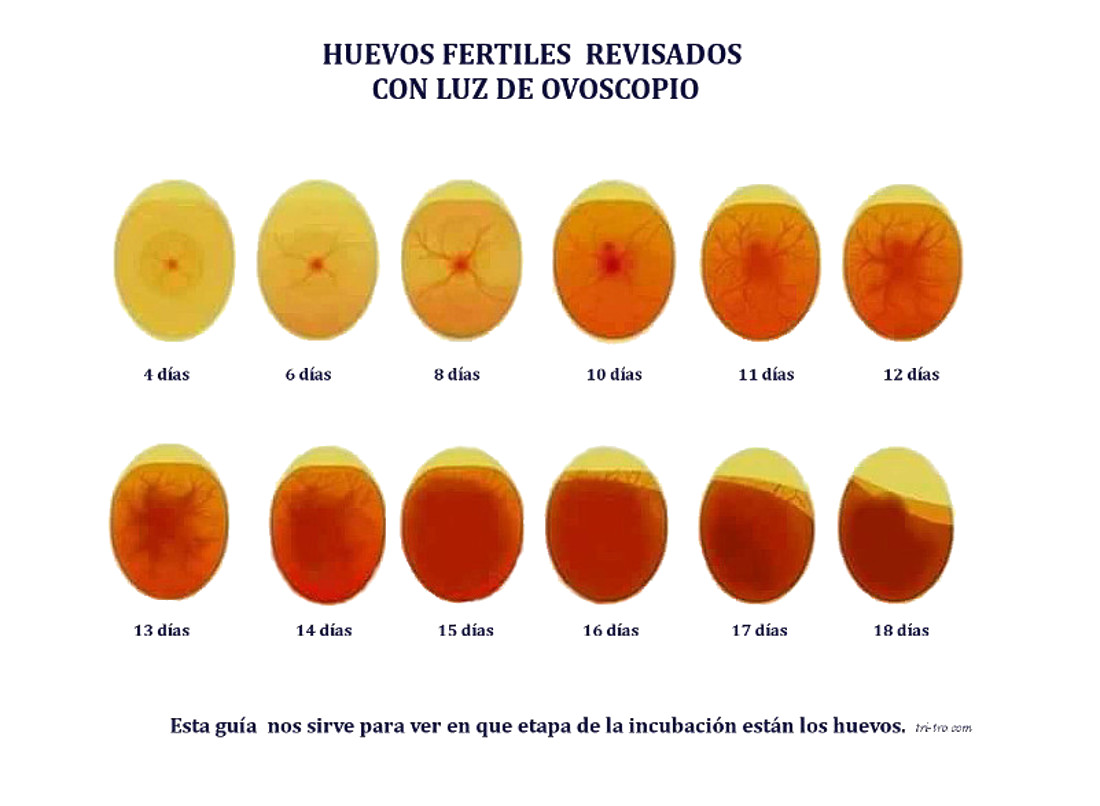
We perform the candling using an ovoscope; see this section: internal visualization of the egg.
It may happen that they start incubating eggs and, despite all the care they provide, no chicks hatch because the eggs were infertile.
To prevent this from happening, you need to examine the eggs. To do this, you will need an egg candler—a small box equipped with an electric light or some other type of light source. By holding the egg up to the light (or in sunlight), you can determine whether it is developing properly.
It is necessary to check the eggs:
Candle during the incubation:
Ovoscopia:
In this video below, tell us what is the process of ovoscopia.
Is performed before inserting the egg into the machine and incubator in the rear control at different stages of the incubation.
George Rhodes, of the Faculty of Veterinary Sciences, explains the importance of this work.
How is the selection process carried out? Identify the fertile eggs for incubation and discard all infertile eggs or those with dead embryos.
This is the first thing that you should do, before you can start to incubate the eggs, and the processes of candle (ovoscopia) that we need to do until the birth of the chicks.
This guide ovoscopia and video, helps us to understand and see, in that stage of incubation are the eggs.
Warming of the eggs before incubation:
Before placing the eggs in the incubator, it is advisable to allow them to acclimate.
In this way, we will avoid sudden changes of temperature and the water vapor condenses in the skin, clogging the pores.
Pre-incubation of eggs:
The eggs can be preincubar to increase the percentage of hatchability of a 1 to 2 %.
They are subjected to a temperature of 38 °C – 100.4 °F for 2 hours, and then cooled to room temperature before being placed in incubators.
You might find this section very helpful: Our Fertile Eggs: How to Ship Them.
Incubation process:
The incubator:
The design of an incubator is, in essence, a solution of engineering to the biological parameters of temperature, humidity, replacement air, and vaulting.
Before placing the eggs in the incubator, we must set the temperature and humidity to the exact levels, since it is more difficult to adjust these settings once the eggs are inside.
It is recommended that the incubator be placed in a room where the temperature ranges between 15 °C and 23 °C (59 °F and 73.4 °F) and that the room be well ventilated but free of drafts.
Temperature:
The warming of the eggs during artificial incubation occurs through the exchange of heat between the air and eggs.
It follows, therefore, that air temperature is the key factor in this process.
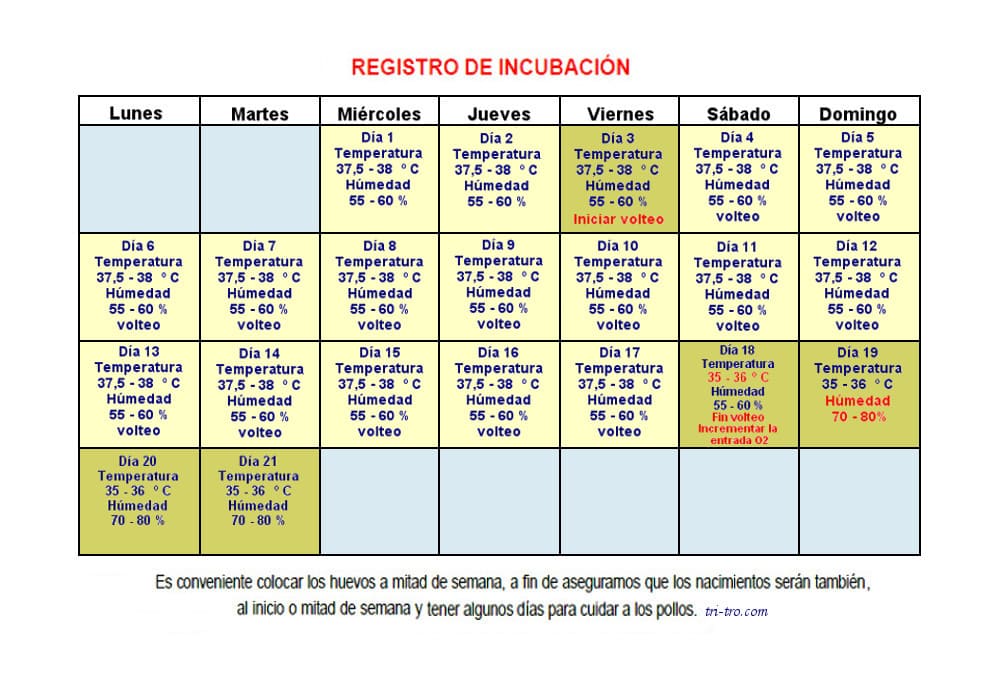
The temperature in the incubators ranges from 37 °C to 38 °C (98.6 °F to 100.4 °F).
Pores of the egg
It is necessary to decrease the temperature level during the last few days (2 to 3) of incubation, that is to say, the temperature is adjusted according to the stages of incubation.
Relationship between the air temperature of the incubator and hatching eggs:
At the beginning of the incubation, the embryos are not ready functionally (or organically) to emit heat. This is why they react as they do the bodies of cold-blooded, that is to say, when the temperature of the air rises, it increases the metabolism of the embryos.
If the temperature drops, metabolism slows down as well. Therefore, a rise in temperature promotes cell division and the formation of embryonic layers and membranes.
In summary, increases the pace of growth and development of the embryos.
At the end of incubation, when the egg is already emitting a significant amount of heat, the drop in temperature within normal limits has the opposite effect: it stimulates nutrient uptake, or, in other words, accelerates metabolism and development in the embryos.
Incubation stage: the first 18 days = 37.5–37.7 °C (99.5–99.86 °F).
Incubation stage: last 3 days = 36.5–37 °C (97.7–98.6 °F).
Control of the temperature during the incubation process:
To maintain the level of temperature in a stable value during the incubation process is not easy.
To achieve this requirement is you need an adjustment almost perfect of all the systems of the incubator and efficient working of the instruments of control of the factors of incubation.
To maintain an optimal temperature inside the incubator, there must be a very close relationship between the humidity and ventilation systems, on the one hand, and the temperature, on the other.
The ideal temperature is 37.7 °C (99.86 °F).
The upper tolerance limit should be 38 °C – 100.4 °F.
The lower tolerance limit should be 37 °C – 98.6 °F.
Problems with the temperature:
Higher-than-normal:
Lower than normal:
Humidity:
The heating and evaporation of water from the eggs depend on the humidity inside the incubator.
The higher the temperature of the air, the greater the amount of water vapor that it can contain.
On the other hand, the dry air is a bad conductor of heat and, therefore, it is necessary to moisten it in order to achieve the necessary heating of the eggs.
Of the eggs, evaporated water during the incubation, more or less depending on the stage of incubation.
During incubation, the egg constantly loses water, which is unavoidable; however, the humidity regime established should be designed to minimize water evaporation from the eggs during the first week of incubation and to accelerate it starting halfway through the incubation period.
Water loss through evaporation also causes heat loss from the eggs. It follows that, during the first few days of incubation, excessive water evaporation is detrimental; however, during the second half of incubation, water evaporation is necessary to help dissipate the excess heat generated by the chick’s development and trapped inside the egg.
At the end of the incubation process, it is necessary to increase the humidity in order to soften the shell membranes and, thereby, facilitate hatching.
That's why, in the last days of incubation, when the water reserves in the egg have been exhausted, it is necessary to raise the relative humidity of the air in the incubator in order to avoid the drying of the membranes of the shell and the down of chicks in the stage of hatching.
Incubation stage: first 18 days: required relative humidity 55–60%.
Incubation stage (last 3 days): Relative humidity should be 70–80%, depending on the hardness of the shell.
The minimum humidity limit for the wet-bulb thermometer should be 26.6 °C – 79.88 °F, and the maximum should be 35 °C – 95 °F.
Problems with the humidity:
Excess moisture: Chicks soft and weak
Lack of moisture: Chicks attached to the shell.
Ventilation:
The problem of the ventilation system must be approached from two angles: the movement of air itself (recirculation inside) and the replacement or removal of the air.
The air circulating inside the incubator provides the eggs with the necessary heat and humidity.
On the other hand, the replacement of steady air that is necessary for the removal of excess heat that may build up on the inside of the incubator and in that way ensure the purity of the air.
During the incubation, the egg absorbs oxygen and eliminates carbon dioxide in large quantities.
A proper reventilación is required to remove the water that produces the egg for breathability, renew the oxygen essential for the respiration of the embryo and remove the CO₂.
The correct circulation of air in the incubator is ensured by the operation of the fans, the injectors, or the exhaust fans, dampers, or holes of input and output, etc
The temperature of the air entering the incubator must always be below 28 °C (82.4 °F).
Problems with ventilation:
Lack of ventilation: produces chicks that are weak and soft that they have great difficulty to hatch.
Tips for a good ventilation:
Increase ventilation when the embryos are in advanced stages of development.
Make sure that the ventilation inlet and outlet for the incubator is the same.
Pay attention to proper ventilation, such as temperature and humidity.
Making sure that it is getting rid of the stale air, especially in small rooms or closed, so that the incubator is able to take the air clean and fresh.
Flip:
In the natural incubation, the birds turn the eggs that hatch themselves with a certain frequency, hence in the process of artificial incubation may be necessary to repeat this procedure using mechanical means.
The development of the embryos takes place normally only when the eggs are turned regularly during the first 18 days of incubation.
The egg, as explained before, water is lost during the incubation period, that is to say, undergoes a process of drying.
For this reason, the embryo is exposed to stick to the inner membrane of the shell, which may result in their death, in particular during the first six days of incubation.
The frequency of tumbling optimal is once every 1 or 2 hours.
The rotation must be 90 degrees.

In general, the need flip the egg begins from the time the egg is placed in the incubator, up to 2 or 3 days before the chicken starts to sting.
Inside the egg, strands of albumen intertwined with one another extend from the yolk, through the white, and all the way to both ends of the egg.
These strips, call chalaza (known mistakenly como galladura), ayudan a mantener la yema en el centro del huevo.
When placed in an environment of 37.7 °C (99.86 °F) in the incubator, the albumen begins to thin out, the chalaza loses its ability to hold the yolk in place, and the yolk floats in the white.
Albumin, egg white, contains no fat particles and has a specific gravity very close to that of water.
The bud, by contrast, has a relatively high content of fat.
Fats and oils have a lower specific gravity than water and float on it. Egg yolks tend to do the same: they float on the egg whites.
If the egg is left in the same position, the yolk tends to float in the clear and sticks to the shell.
The specific weight of the embryo takes to stay on top of the yolk, during the first few days, below and very close to the shell.
The developing embryo is always located at the surface, higher than the yolk. When the egg is flipped, the yolk turns in the albumin and the embryo is positioned again at the top.
Nature does this so that the embryo is always in the best position to receive warmth of his mother in the natural way.
If the egg is not flipped, the yolk tends to float and pushes the embryo against the shell, resulting in their injury or death.
Starting on the third day of incubation, the eggs must be turned to prevent the yolk from sticking to the membranes, which would result in poor development of the vascular zone during the early days of incubation.
On the other hand, the dump helps to homogenize the temperature.
The flip should never be carried out in a single direction, as this may cause alterations of the chorioallantoic membrane and other internal structures of the egg.
From the day, the eighteenth must not be turned.
The eggs should no longer be turned once there are 2 to 3 days left before the chicks hatch.
These need to be positioned within the egg to nibble on the shell, and they do better if they are quiet when this process takes place.
To this point, the embryo is large enough and has consumed the greater part of the yolk, and therefore not in danger of being crushed between the yolk and the shell.
Embryonic development:
The membranes extraembryonic:
At the start of the incubation, within the shell porous egg, begin to develop three membranes:
This system of membranes has blood vessels that allow the chick in development to obtain oxygen and dispose of carbon dioxide.
Inside you will find:
The clear:
A substance containing albumin, among other important components; for more information, see the section on eggs.
The yolk:
It contains a large amount of nutritious egg yolk; for more information, see the section on eggs.
Amnion:
The first issue of the walls of an egg is deposited in the soil is drying out. Es cells should dry out quickly if they were not in an aqueous environment.
This environment is provided by the amnion. The cells of this membrane secrete amniotic fluid; therefore, embryogenesis still occurs in water..
It is a membrane enclosed in the form of a sac containing amniotic fluid. This structure develops faster than the allantois of itself; the embryo is immersed in it.
It serves to dampen the embryo against mechanical shock, and protects it against dehydration or contact with the shell.
Part of this fluid is absorbed by the embryo in the last stages of their development.
Chorion:
The second problem of an egg of the earth is the gas exchange.
This exchange is provided by the chorion, membrane extraembrionaria more external. In birds and reptiles, this membrane adheres to the shell, allowing the exchange of gases between the egg and the environment. In mammals, as has been seen, the chorion has developed into a placenta, which has evolved functions, endocrine, immunologic, and nutritious, in addition to respiratory.
Allantois:
The third problem for an egg terrestrial is the elimination of waste.
The allantois stores urinary waste and also helps facilitate gas exchange. It is a sac-like membrane connected to the digestive tract; it serves two functions:
In some species of amniotes (characterized by the embryo developing four layers: the chorion, the allantois, the amnion, and the yolk sac, and creating a fluid-filled environment in which it can breathe and feed), such as chickens, the mesodermal layer of the allantoic membrane extends to and fuses with the mesodermal layer of the chorion to form the chorioallantoic membrane.
This garment is extremely vascularized is crucial for the development of the chicken and is responsible for the transport of calcium from the shell of the egg to the embryo for the production of bone (Tuan 1987).
Yolk sac:
The yolk sac is the first membrane extraembrionaria to be formed, because this contributes to the nutrition of the birds, and reptiles in their development. This is a derivative of esplacnopleural cells that grow over the yolk sac and surround it.
The yolk sac is connected to the midgut by an open tube, the duct yolk, so that the walls of the yolk sac and the walls of the intestine are continuous. The blood vessels within the mesoderm transport nutrients from the yolk to the body, but the yolk is not taken directly into the body through the yolk.
Instead, the endodermal cells break down the protein in the yolk, producing soluble amino acids that can then pass into the blood vessels in the wall of the yolk sac.
Other nutrients, including vitamins, ions, and fatty acids, are stored in the yolk sac and transported through the yolk sac’s blood vessels into the embryonic circulation.
In this sense, the four membranes extraembryonic (which play a role in nutrition, gas exchange, and waste elimination) enable the chicken embryo to develop.
The utilization of the yolk is gradual at the start of incubation, and is greatly accelerated in the past five days.
At the beginning, the 25% to 30% of the yolk remains unused; this is transferred to the body of the chick, through the navel, just before the birth.
There is reabsorbed, and during the first week of life outside the shell, serves him food, since their function is nutritional.
The embryo's position is already established by 36 to 48 hours of incubation. At this stage, the embryo lies across the yolk, aligned with the minor axis.
Subsequently, the head of the embryo begins to separate from the yolk and turn to the left.
Towards the fifth day of incubation, the embryo is situated close to the air chamber.
Beginning on the eleventh day, when the body of the embryo weighs more than your head, the same makes a turn to the left, which causes a body to descend in the direction of the pole thin egg.
The fourteenth day, the body of the embryo is located along the major axis of the egg, with the head directed toward the thick pole.
This is the correct position and required to be adopted by the chick for the birth.
The embryo is oriented normally with his head toward the wide blade of the shell.
The tenth day in ninth place, the embryo will introduce its peak between the membranes separate and use the camera of air to breathe for the first time.
The chick has the opportunity to “practice” breathing while still inside the shell; this allows its various organs to complete their development.
Critical periods of incubation:
60% of the mortality occurs in two periods, very concrete:
The first covers the 3-4 first few days of incubation and is due to problems of the eggs, such as: lack of fertility, little effect, inbreeding, etc
To avoid these problems, ovoscopes—devices equipped with a cold light (LED)—are used to examine the inside of the eggs by holding them up to the light; watch the video.
This procedure is performed between the fifth and seventh day of incubation, allowing for the removal of clear eggs (where the embryo did not develop), unfertilized eggs, or eggs in which the embryo has died.
The second over the past 3 days, and this is due to problems with the incubator settings, such as temperature, humidity, ventilation, or turning.
Management of the incubator for the last 3 days:
Starting on the eighteenth day, the eggs are no longer turned
The way to adjust the system so that conditions are optimal is:
Temperature: It drops to 35.5–36 °C (95.9–96.8 °F), as the egg has been giving off more heat in recent days.
Ventilation:
It is beneficial for the CO2 concentration to rise in the incubator (this is achieved by closing the vents or openings to the outside) from 3% to 5–6% percent between the nineteenth and twenty-first days, as this encourages or initiates the chick's breathing.
You should limit the ventilation to slowly increase the rate of CO₂.
Humidity: The relative humidity is increased to 70%. Once hatching begins, the humidity is raised to 80%; this will make it easier for the shell to break.
Can be as a spray or splash the eggs with warm water, from the day of tenth-ninth and to the hatching of the same, in order to increase the humidity to facilitate the breaking of the shell by the chicks.
Once hatching is complete, the relative humidity is rapidly reduced to 40% by increasing ventilation, which helps the chicks dry off.
To be able to see the interior In this video, the eggshell was digitally removed to provide a view of the developing skeleton and how it is positioned inside the egg.
At this stage (day 12), the embryo fills only about one-third of the volume of the egg, and the skeleton has just become sufficiently ossified to be visible in x-rays.
However, the brain and eyes have already developed and are relatively large; the skull bones provide little more than a delicate protective shell around them. The bones of the beak and lower jaw are more robust. The spine, ribs, and the shafts of the bones that form the limbs have also begun to ossify.
The skeleton more mature (day 20) is that of a chick much larger, which fills the egg and is ready to hatch. The brain and its capsules sensitive are largely surrounded by bone, and the skeleton of the eyeball, known as sclerotic rings, has begun to osificarse.
The peak is quite robust and is strong enough to break the shell of the egg, and release the chick.
The spine and ribs are also well ossified, as are the limbs.
Once born, the skeleton of this chick would continue to grow and develop for several months.
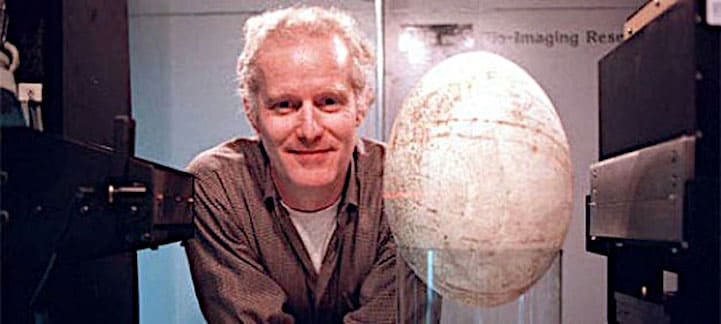
A study conducted by Timothy Rowe, a professor of paleontology at the University of Texas at Austin, United States.
His main research focuses on the evolution and development of the skeleton of vertebrates. In this work, I use phylogenetic systematics to study the evolution of the shape of the skeleton, as well as the evolution of skeletal development in the ontogeny of the species alive.
An important tool for this research is the X-ray computed tomography, high-resolution, which has become a research focus of secondary. This revolutionary technology allows for the nondestructive inspection of the internal structure, even in the specimens of vertebrates is a smaller and more delicate.
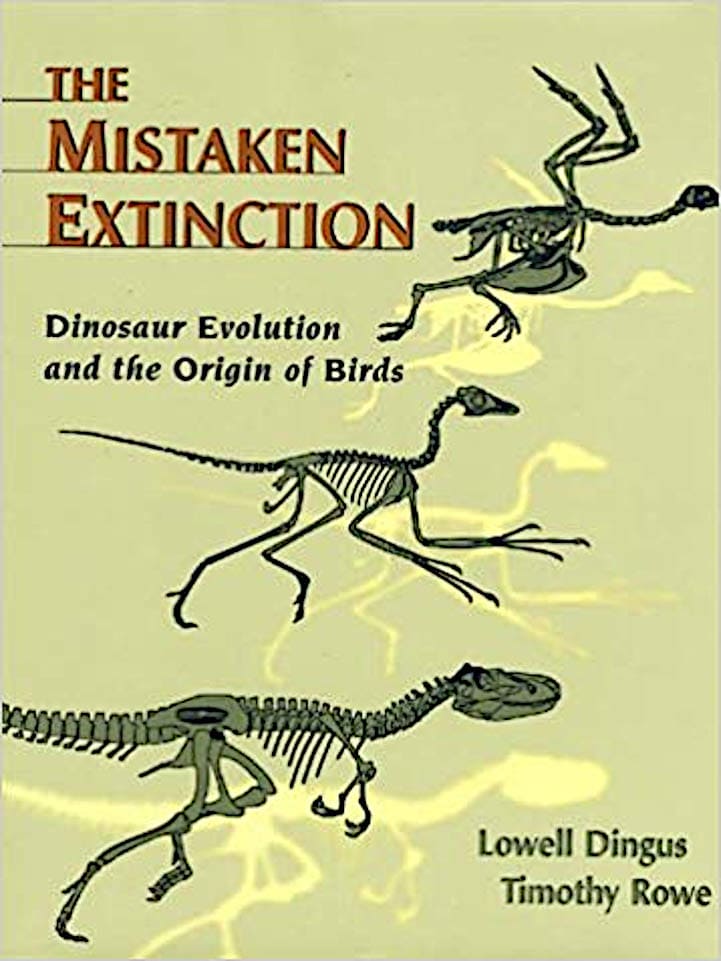
His book. The Wrong Extinction: Dinosaur Evolution and the Origin of Birds. New York, W. H. Freeman & Co., 322 pp. ISBN 0-7167-2944-X, ISBN 0-7167-3227-0 (academic edition). Dingus, L. and T. Rowe. 1997
Source: Digital Morphology
Approximately three days before hatching, the egg starts with a series of steps that are extremely critical, and pose a great effort for the chicken.
This has to stop breathing alantoica and pass to the lung, retract their yolk sac, yolk and hatch.
Just at the moment when the chick reaches its maximum growth, is when you need more oxygen, but the chorioallantoic membrane (air chamber) is not able to provide you with everything you need for that size.
At the same time, in the neck, a muscle called the complexis becomes engorged by the lymphatic tissue and tightens, making spasms, transmitting to all the chicken, like a stretch that makes shock his beak against the membrane that separates the air chamber and the shell.
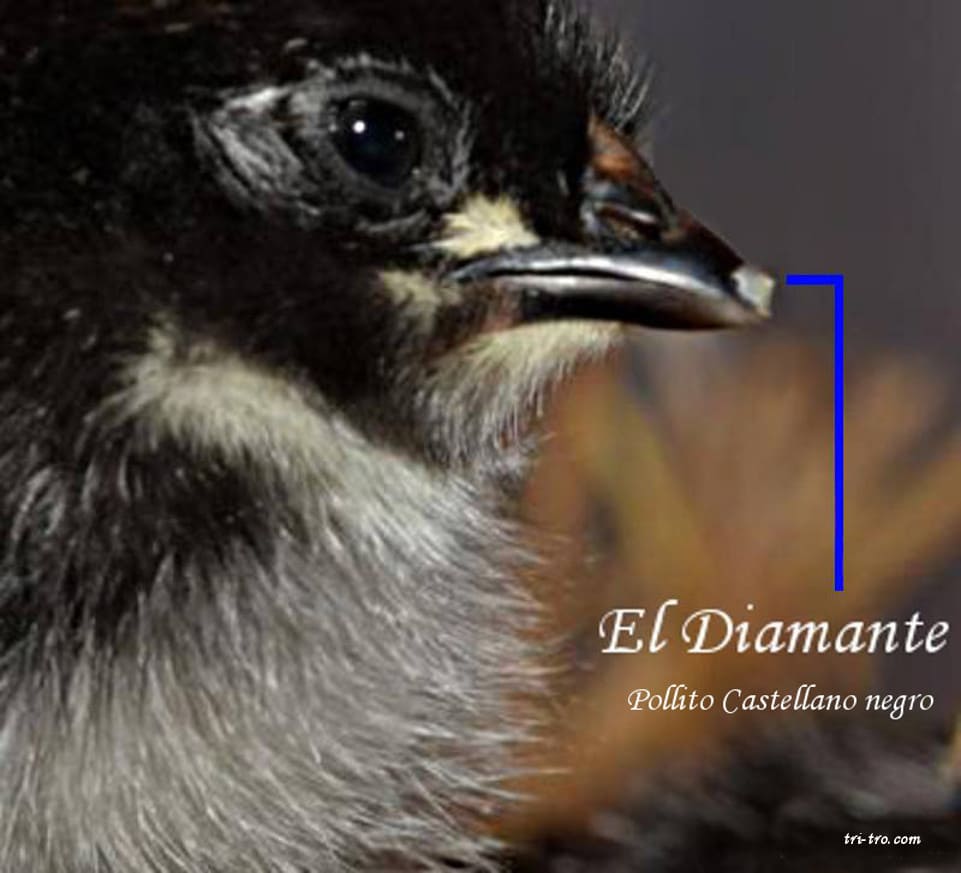
The beak is equipped with a “diamond,” which is a calcified structure at the tip of the beak that is essential for breaking through the membrane and the shell and finally hatching.
Once they have made the first peck in the egg—which requires a great deal of effort on the hen’s part—they usually rest for 48 to 60 hours before resuming their pecking and turning with the spasms mentioned earlier.
In addition to pecking and cracking the eggshell as it spins, the chicks also use their beaks to press against the shell, pushing the yolk inward through their navel—which will serve as their primary source of nutrition during the first 48 hours of life.
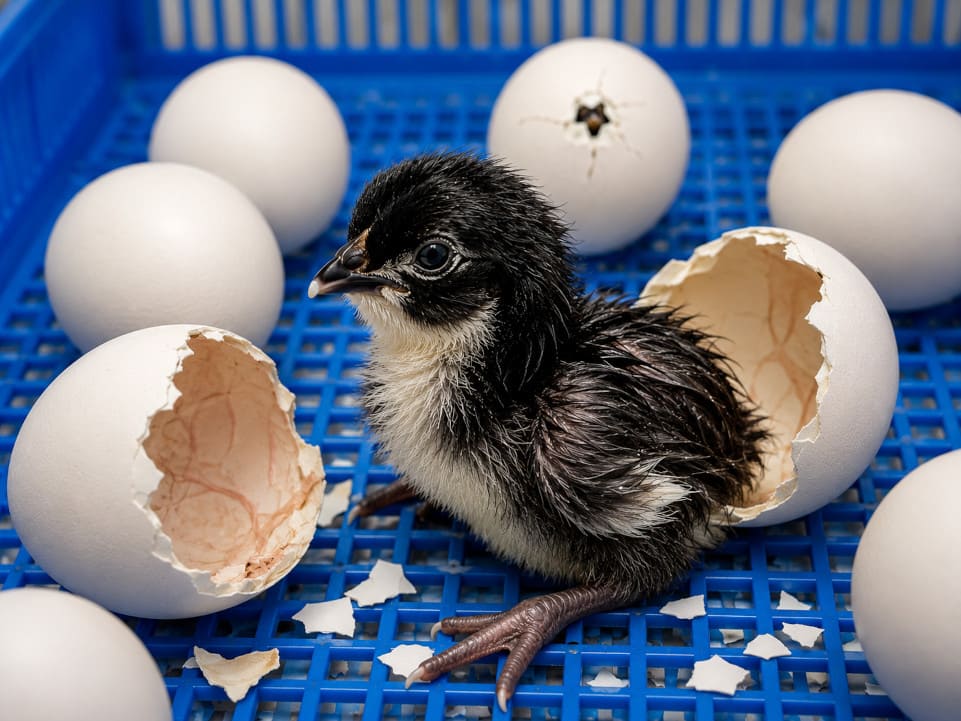
Once it hatches, the chick is tired and misshapen from being crammed inside the egg, so it needs several hours of rest; you’ll also notice that its down is damp.
We should wait at least 24 hours before feeding him his first meal, since he has reserves from the yolk sac that he has been absorbing for several days. Important: We need to make sure his navel heals properly and remove any pieces of shell so they don’t peck at them on the floor of the incubator, as this can be a source of salmonella or coccidiosis.
In these first shots This food is simply meant to get your digestive system started, so in addition to the Vitelo food in your pantry, we’ll provide a small amount of food moistened with whey—for example, cooked egg yolk. It would be about two small pieces in the porridge, roughly the size of four or five grains of rice (approx.).
If we observe and study their wild counterparts, we’ll see that in these early stages, the mother hen essentially feeds them saliva containing bacteria, enzymes, and other substances that are crucial for their initial digestion; this is something that’s impossible in captivity and can be replaced with probiotics, but it will never be the same.
Therefore, the chickens are hatched in an incubator and reared for the human not be able to eat a lot of food, because they could not digest it.
Summarizing the most relevant of the hatching
The hatching process begins days before you can see us at the chick. He makes a hole inside, through the membrane of the inner shell, into the air chamber.
The first sign to identify it to us, and the chick is in the course of his birth, is a small hole with a star shape, a few (mm) on one side of the shell.
At this point, if you haven’t already done so when you removed the turning mechanism, you need to adjust the humidity to between 65% and 80%—depending on the hardness of the shell—and wait.
If we listen carefully, you will hear soft blows, as sounds in lockstep.
The egg will start with a small dot or crack, and within 12 to 16 hours—after the chick has rested from its strenuous efforts—the sounds will grow louder and louder. After 24 hours, the small hole won’t have grown much; we’ll be able to hear a faint chirp accompanied by the panting of its breath.
This tells us that its lungs are working and that the chick is breathing. After a few hours, the chick makes a small row of holes that will form a circle in the shell; this can take 24 hours or more, so we have to be patient.
If you do not have drawbacks, we should not help; this means that you do not have to break the shell and extract the chick.
If it helps you too early, you run the risk of the bud and the blood of the blood vessels, which are around the shell membranes, have not been reabsorbed, causing the death of the chick.
It is preferable for the chick to exert a strong, sustained effort to break out of the shell on its own, thereby ensuring a healthy birth, the reabsorption of the yolk sac, and the healing of the navel
If the chick appears attached to the membranes of the shell, to release it we can add a few drops of distilled water and make a smooth movement of the shell stuck to dampen down and can be released.
The reflex that causes the chick to peck at the shell stems from a lack of oxygen (except for that in the air cell) and from the fact that, as it grows, the chick itself generates an excess of carbon dioxide inside the egg. That is why we must not break the shell prematurely, because if the chick does not peck, it results in a weak chick, and that is not what we want.
Starting on the eighteenth day of incubation, we stop turning the eggs (they should not be turned), so that the chick can find the ideal position to hatch while resting. On the nineteenth and twentieth days, we can see the eggs being pecked; that special moment—the hatching of the chicks—is beginning.
Excellent video in English of the process of the chick within the egg, with the stages of its formation in 21 days in the shell.
The birth is a process which lasts two to three days. We must keep in mind that, at the moment of hatching, the eggs need a high level of humidity so that the chick can easily break through the shell.
That's why there are that raise the humidity to promote the breakage of the shell once you start hatching.
Once the shells begin to crack, humidity should be increased to 65%–80% to encourage the chicks to hatch.
On average, it takes between 2 and 3 days from the time the chick breaks through the air sac until it hatches.
The hatching process can be hindered by nutritional, genetic, and bad position or pathological.
Similarly, a lack of external stimuli (such as the chirping of their siblings) can delay the chicks' hatching, affecting their physical well-being.
In the process of natural incubation, the chickens are stimulated during the process of hatching by own adult animals and other chicks of the brood.
As a management practice, it is recommended to check the eggs daily and, if necessary, assist chicks that are having difficulty hatching by making a 1-centimeter hole in the shell at the level of the air cell.
But this should not be taken as a routine practice, as far as possible the chickens have to birth alone.
Do not remove any of the incubator until 24 hours have passed from birth to dry perfectly down.
After this time, they should be placed in a small enclosure or box with a heat lamp to keep them warm, along with water and appropriate feed.
In the section on the hatching of the Castilian Black chick, you’ll also find a guide that provides practical solutions for examining unhatched eggs in the incubator’s hatching trays—a process known as embryodiagnosis.
It is a very useful tool for veterinarians, managers in various areas of poultry production, and for us, the breeders, as it allows us to diagnose the possible causes of low hatch rates in incubated eggs.
In these following paragraphs, you are more information about:
The whole process of the birth of a chick, the phases that occur in the interior of the egg and the formation of the chick, day by day until birth. Phases of the chick within the egg.
And in this other case, the best method—which is the natural way for chicks to hatch—is with their mother. Natural incubation, broody hens.
The entire process of development of the embryo within the egg until hatching, striking images,.
Bibliography:
Dyce, K. M., Sack, W. O., and Wensing, C. J. G., 1991. Veterinary Anatomy. Ed. Pan-American.
Ede, D. A., 1965. Anatomy of birds. Ed. Acribia.
Grasse, P. P., 1980. Zoology. Vol. 4: Vertebrates. Reproduction, biology, evolution, and systematics. Ed. Toray-Masson.
Grifols, J. and Molina, R. 1994. Manual of clinical exotic birds. Ed. Grass-Iatros.
Natural History, 1984. Vol. 1. Ed. Ocean-Institute Gallach.
King, G. M. and D. Custance. Colour atlas of vertebrate anatomy: The Pigeon. Pp.: 5.1— 5.17. Ed. Blackwell Scientific Publications.
Krahmer, R., and Schröeder, L. 1979. Anatomy of the domestic animals. Ed. Acribia.
McClelland, J., 1992. Atlas in color of the anatomy of birds. Ed. inter-American.
Nickel, R., 1977: The Anatomy of the Domestic Birds. Ed. Paul Parey.
Sandoval, J., 1976. Veterinary Anatomy. Ed. Modern Printing Press (Córdoba).
Schwarze E. 1980. Compendium of Veterinary Anatomy. Volume V: Anatomy of birds. Ed. Acribia.
Shively, M. J., 1993. Veterinary anatomy, basic, comparative, and clinical. Ed. Manual Moderno.
Sturkie PD, 1967. Physiology of Avian. Ed. Acribia.
Dr. Francisco Gil Cano.
Professor H. Aguinaga.
You may be interested in these other sections