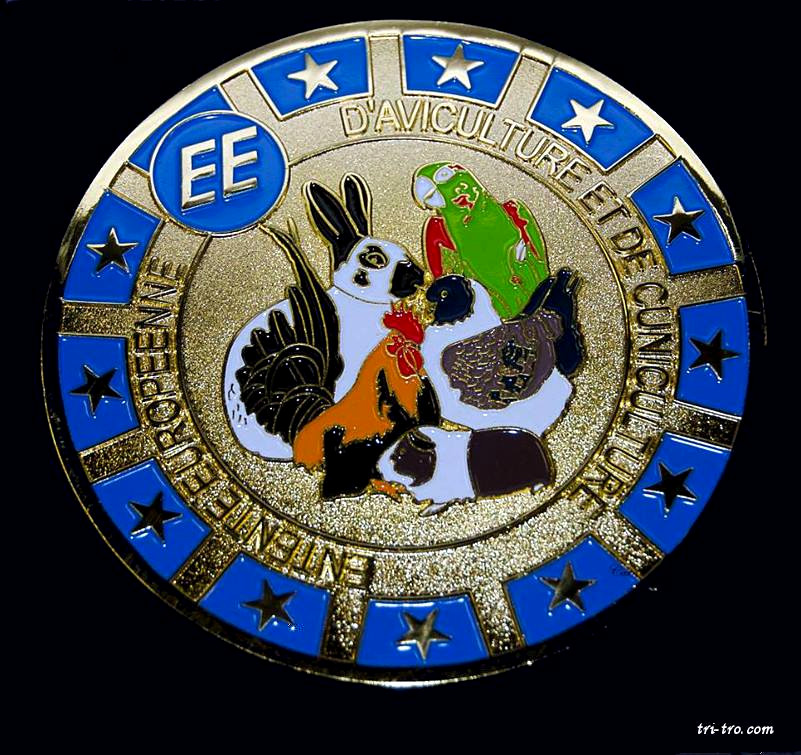
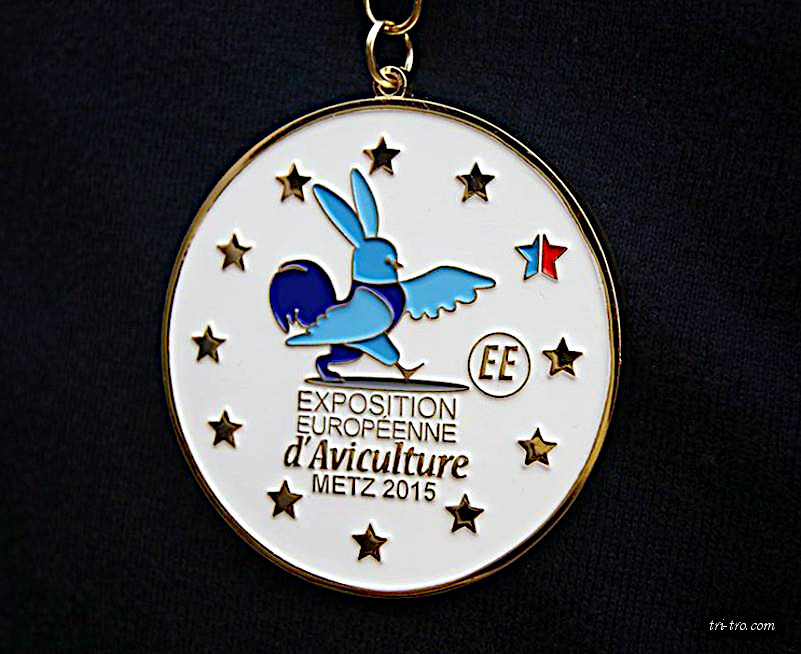
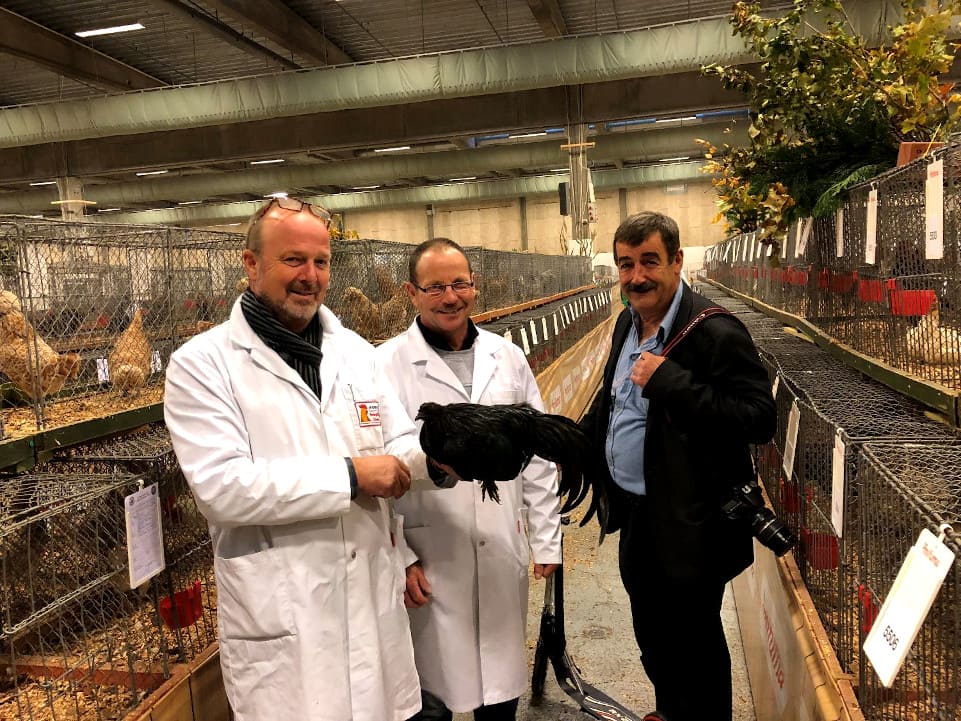
Entente Européenne Medal; EE (for poultry and rabbit farming) is the association that brings together all European countries.

Point scale:

The merit of a bird is determined using a 100-point scale with several categories; this scale is usually the same for all breeds of European or Chinese chickens (a bird of merit usually has a minimum score of 85 points). Shape is always more important than color (in the Malay type, shape is even more relevant).

In sections 1 through 5 of the scale, points are awarded for characteristics related to shape, while in sections 6 through 16, points are awarded for both shape and color (for example, two points for shape and one point for beak color); from sections 11 to 16, the points for shape and color differ between white-feathered breeds and the others (for example, two points for shape and three points for neck color in white-feathered breeds, or one point for shape and five points for neck color in the others).

Thus, approximately 75% of the point scale corresponds to the shape in white-plumaged breeds and 65% in the remaining breeds.

  • Symmetry: 4. 2.
  • Weight or size: 4. 3.
  • Condition and vigor: 10. 4.
  • Crest: 5. 5.
  • Chins: 2. 6.
  • Peak: 2 + 1. 7.
  • Skull and face: 3 + 1. 8.
  • Eyes: 2 + 2. 9.
  • Earlobes: 2 + 2. 10.
  • Legs and toes: 5 + 3. 11.
  • Neck: 3 + 3 or 1 + 5. 12.
  • Back: 8 + 4 or 6 + 6. 13.
  • Queue: 5 + 3 or 4 + 4. 14.
  • Wings: 5 + 3 or 3 + 5. 15.
  • Chest: 7 + 3 or 5 + 5. 16.
  • Body and down: 6 + 2 or 5 + 3.

Section 3. The condition and vigor of the bird:

They are evaluated based on ten different subcategories, which list the favorable characteristics:

  1. Peak: provided.
  2. Head: wide.
  3. Crest: They are thick at the base, perfectly formed, and bright red in color.
  4. Eyes: large, bright and well-pigmented.
  5. Face: full, smooth and wrinkle free.
  6. Chins: well developed.
  7. Body: broad, deep, and well-developed.
  8. Outline heart: large.
  9. Back: wide and flat throughout its entire length (from the shoulders to the tail).
  10. Keel: well elongated (good capacity abdominal).

In females there is usually an additional clause to the characters of the sunset, and it will be necessary to deduct points from some sections of the scale, so that the total is still 100.

For example, giving eight points for the characters to start and deduct a point for the shape of the crest, chins, neck, back, wings, and tail, and an additional point for the color of the back and the tail, adding to a total of eight points.

Defects:

The scale of points is deducted for general defects that are specified below and applicable to all races (the minimum for a general defect is usually 1/2 point).

In relation to the form: 

Sectión 2. Weight:

(European breeds): Default:

2 points for the first 1/2 kg and 2 points for the second 1/4 kg in males;

2 points for every 1/4 kg, up to 1/2 kg in females.

Excess: 

There is no charge for the first 1/2 kg.

Two points are awarded for the second 1/2 kg.

Sectión 4. Crest:

General:

  • Rough: 1/2 point.
  • Excessive: 1/2 point.
  • Frozen: 1/2 point.

Crest simple:

  • Teeth more or less: 1/2 point.
  • Folded: up to 1 point.
  • Mark finger: up to 2 points.

Sectión 5. Chins:

  • Rough: 1/2 point.
  • Wrinkled: 1/2 point.

Section 8. Eyes:

  • Absent: (only the cavity): 2 points.
  • Damaged: 1 point.

Section 10. Legs and toes:

  • Fingers twisted: up to 2 points for each one.
  • Spur fowl: 1/2 point.
  • Spurs multiple: 1/2 point for each one.

Section 11. Neck:

  • Jowls: up to 1 point.

Section 13. Queue:

  • Little developed: up to 3 points.
  • Whip: up to 2 points.
  • T-shirts: 1 point for each missing feather.
  • Sickles: 1 point for every pen absent.

Section 14. Wings:

  • Primary and secondary: up to 2 points for each pen absent or damaged.

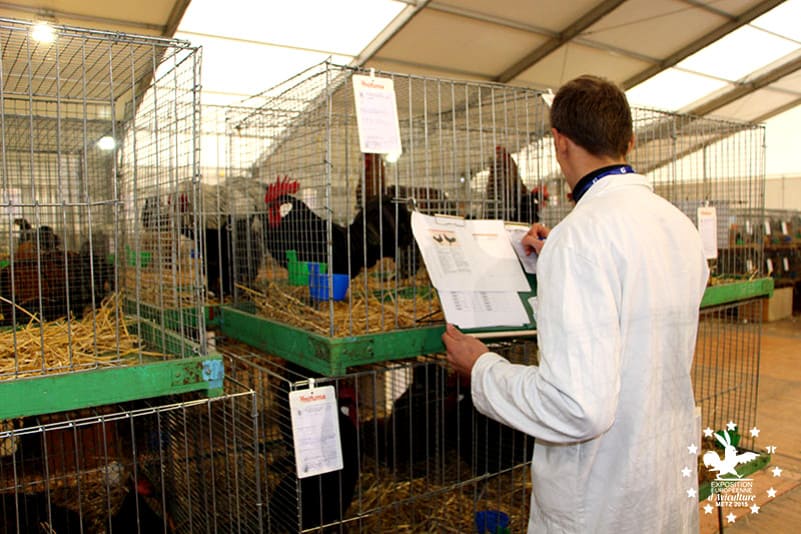
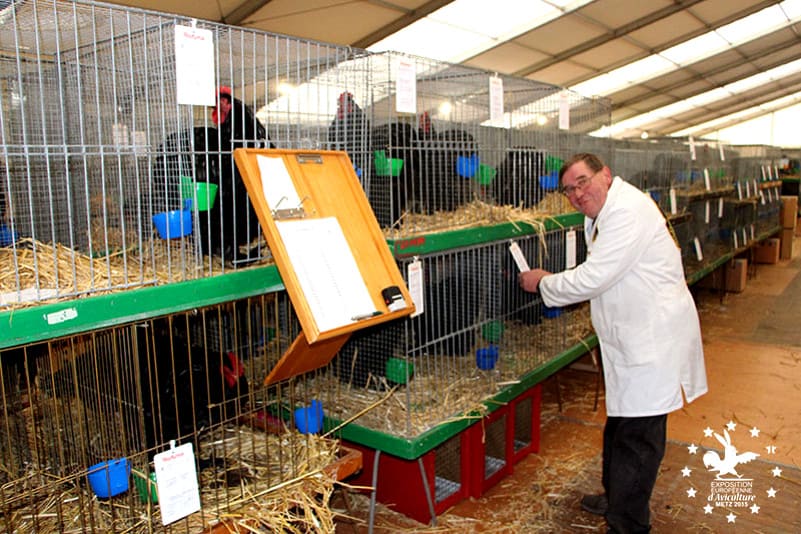
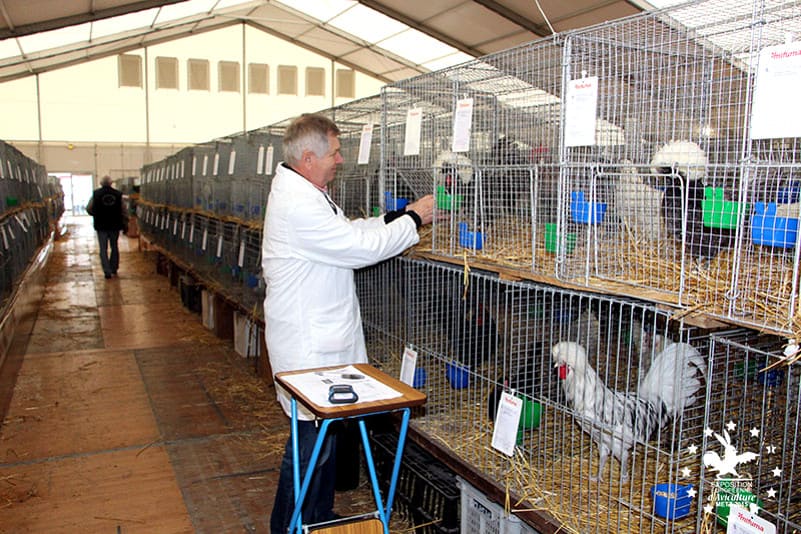
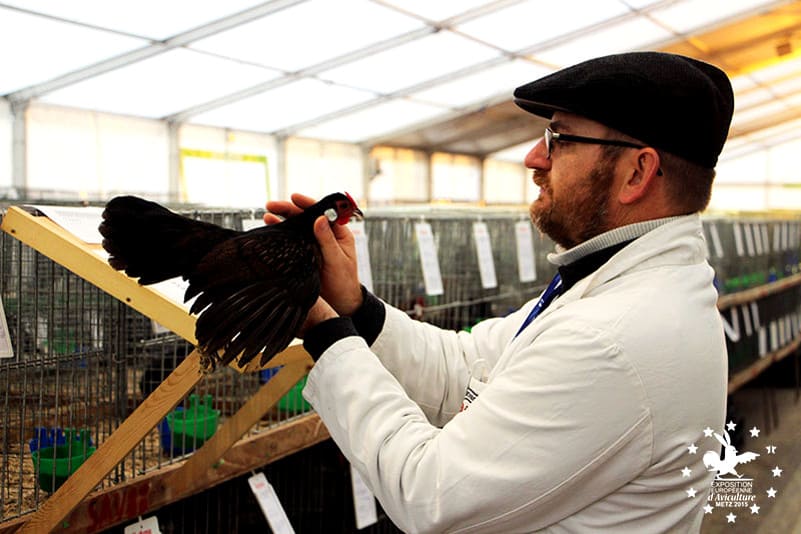
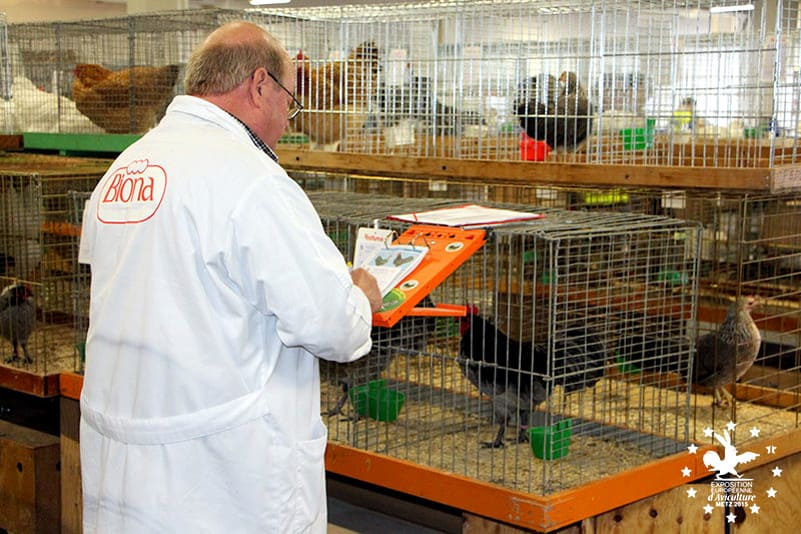
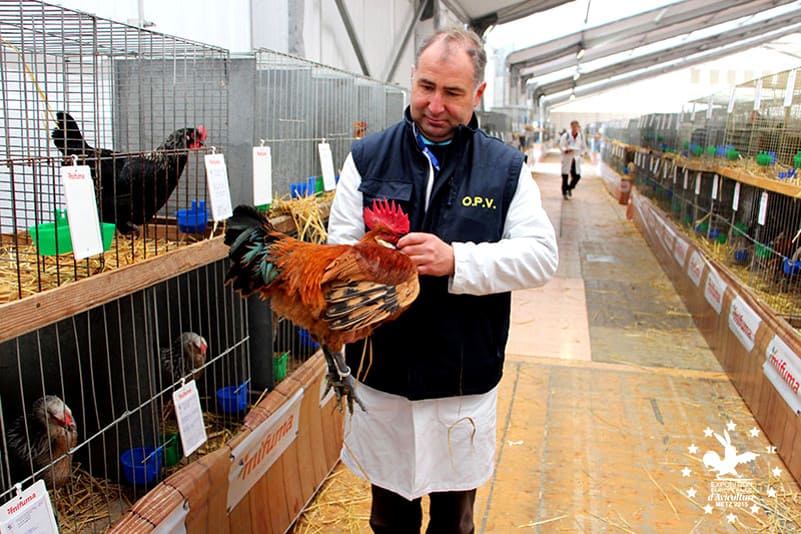
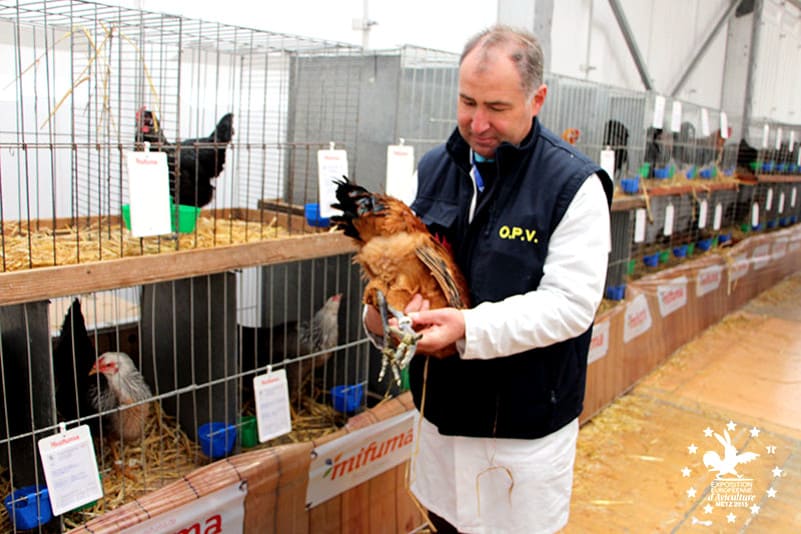
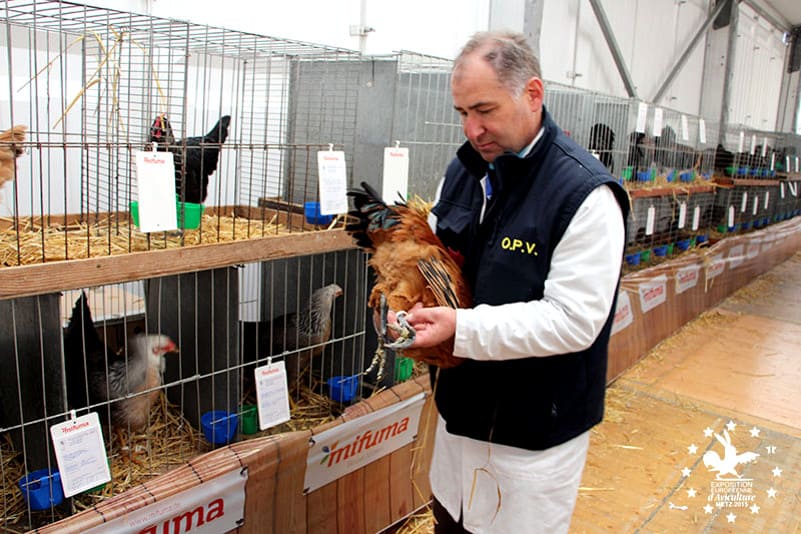
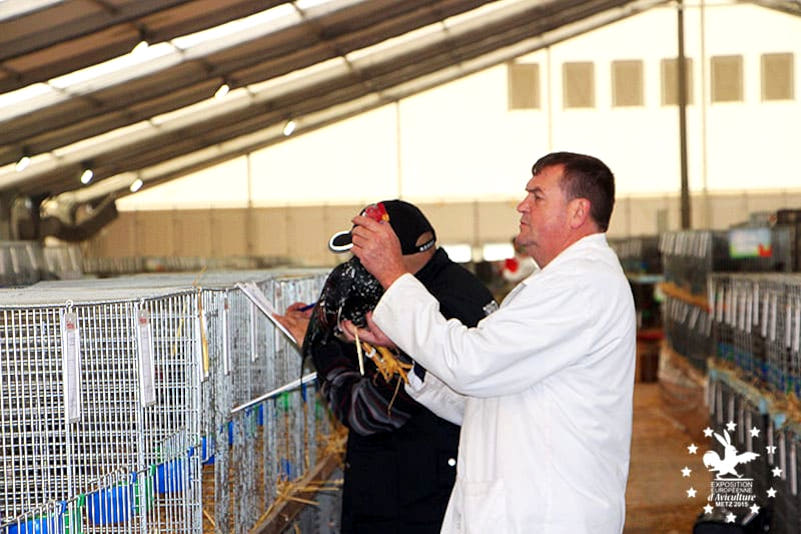
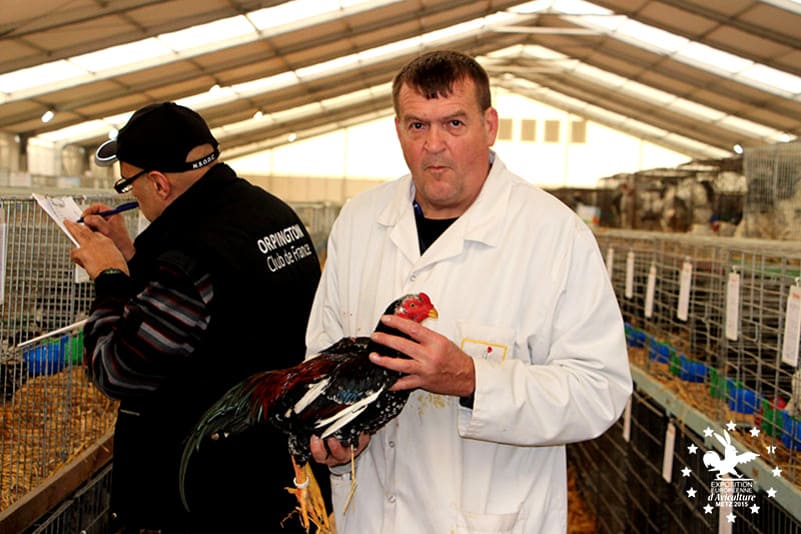
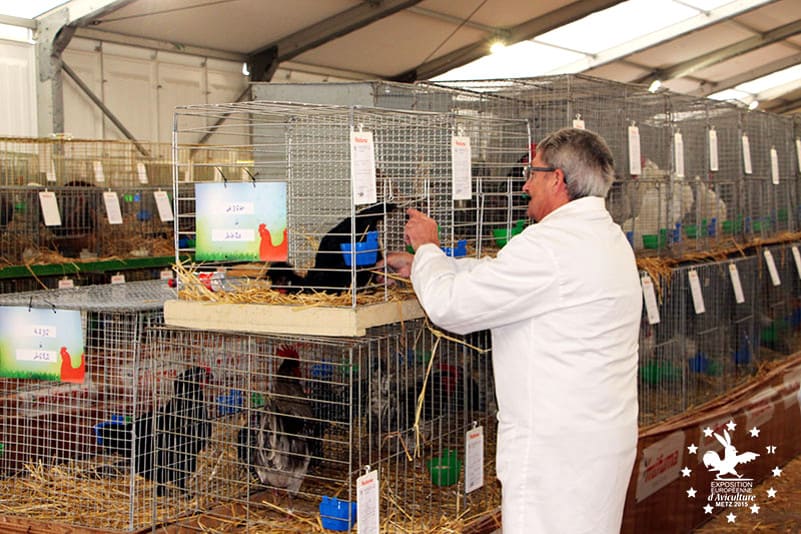
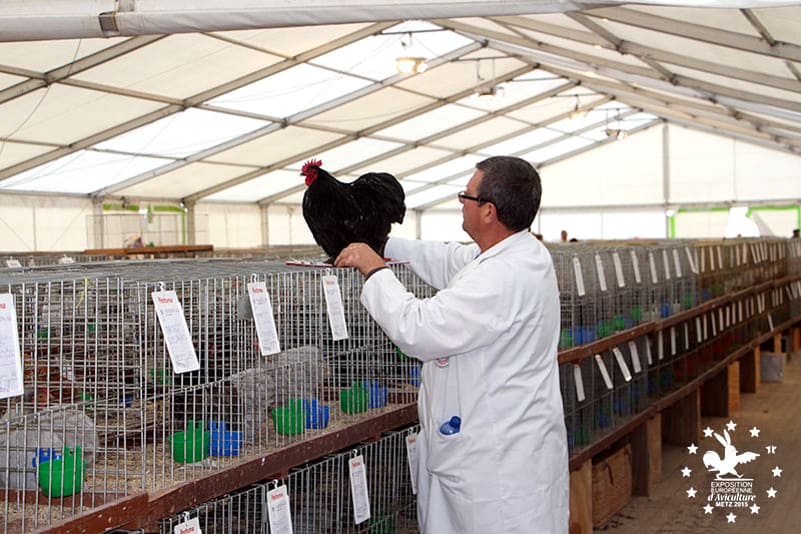
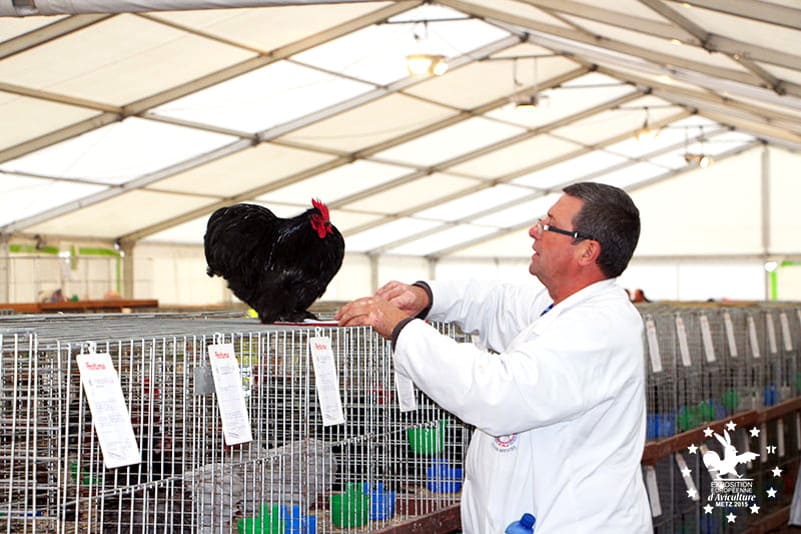
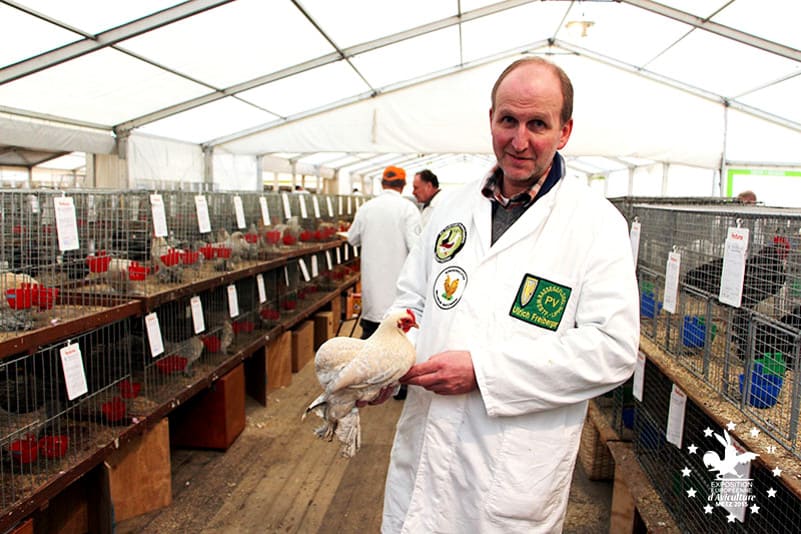
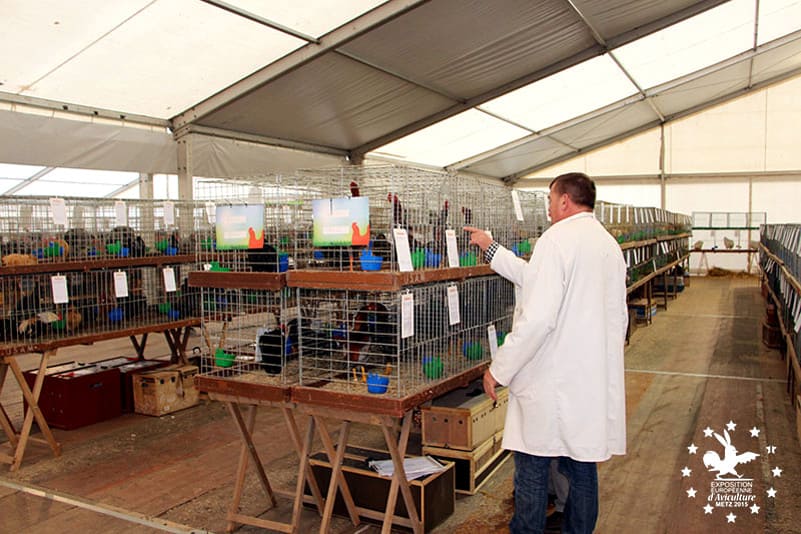
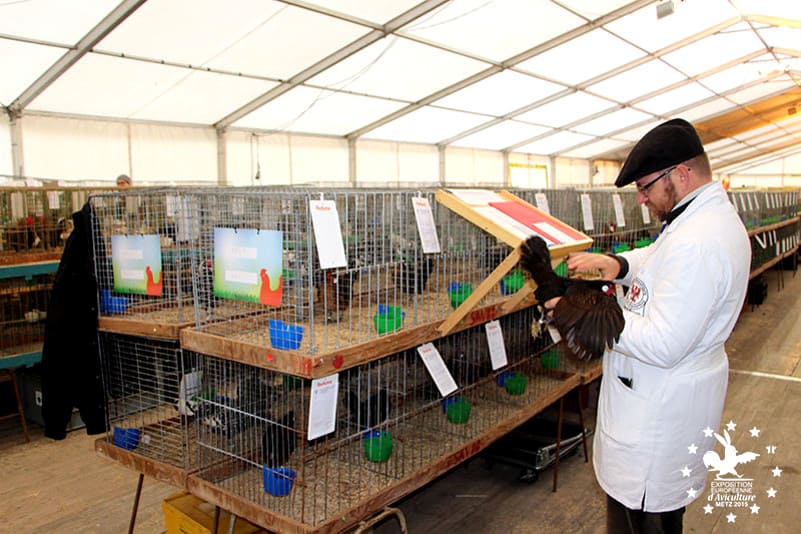
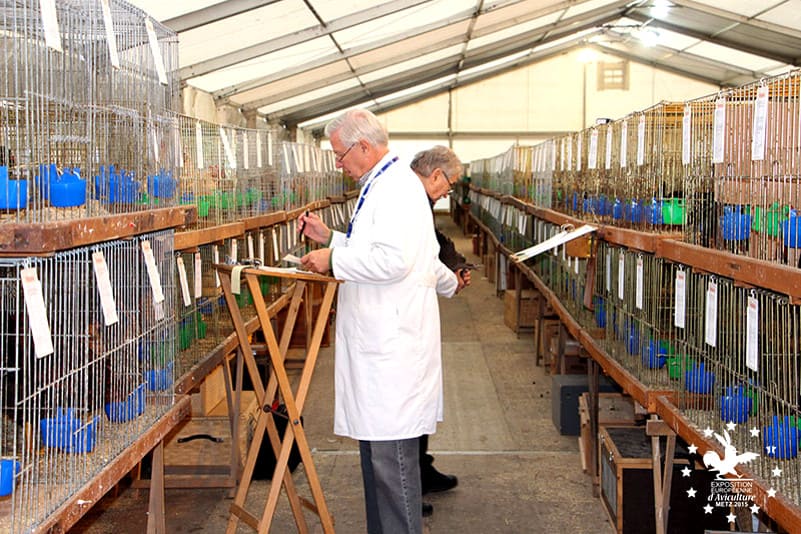
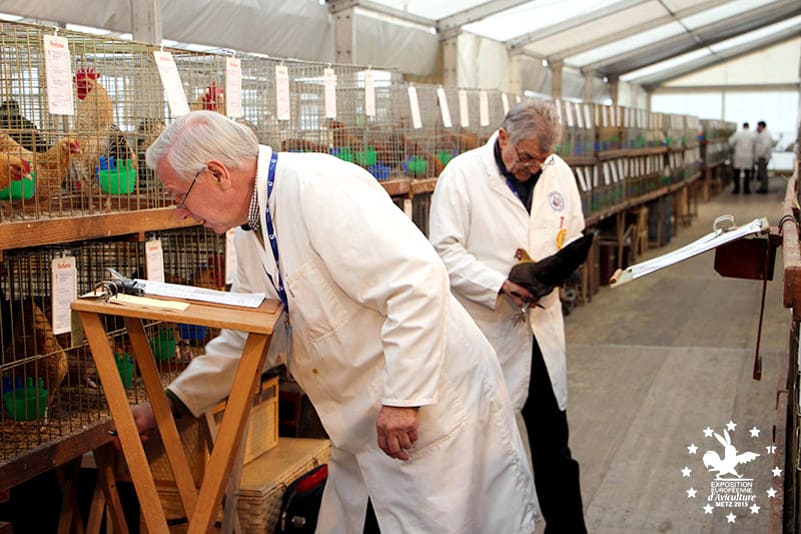
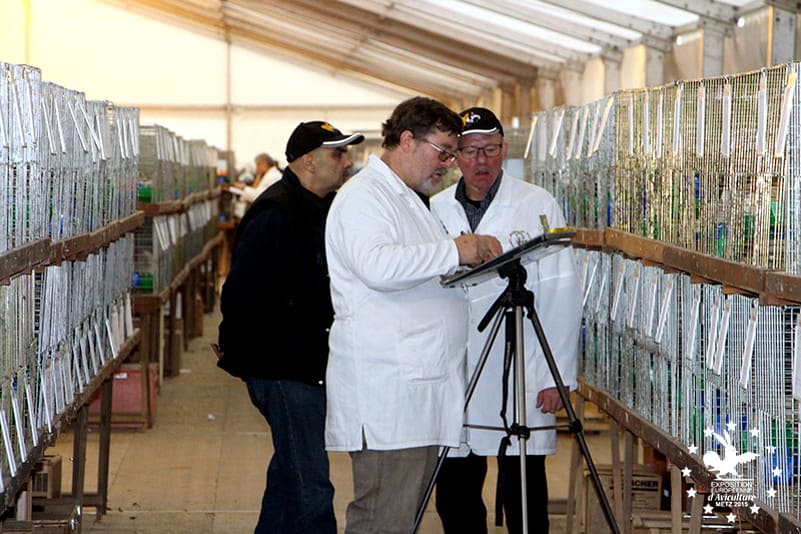
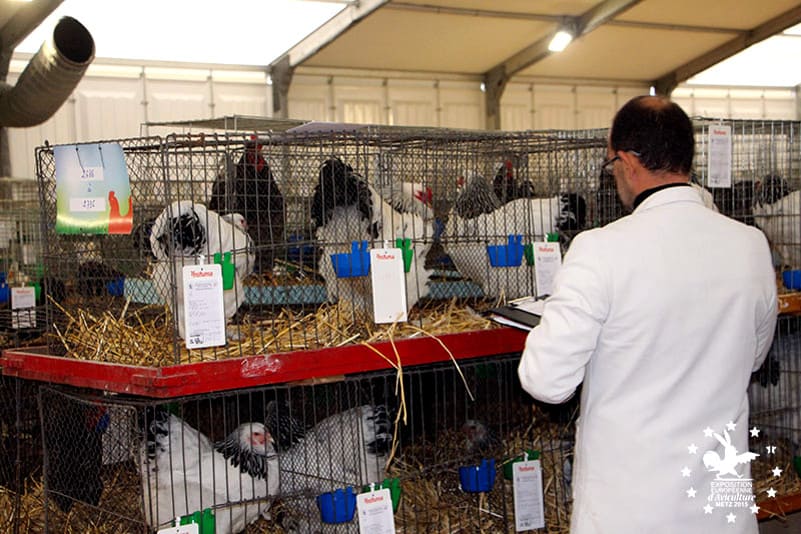
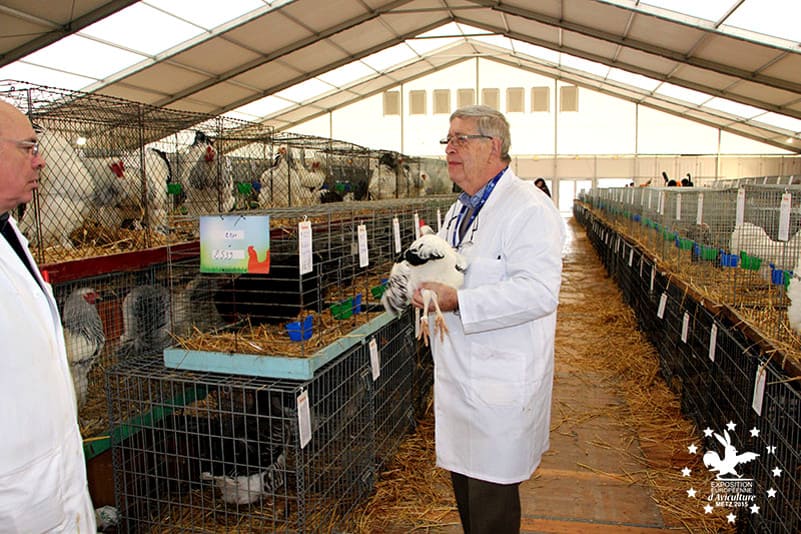
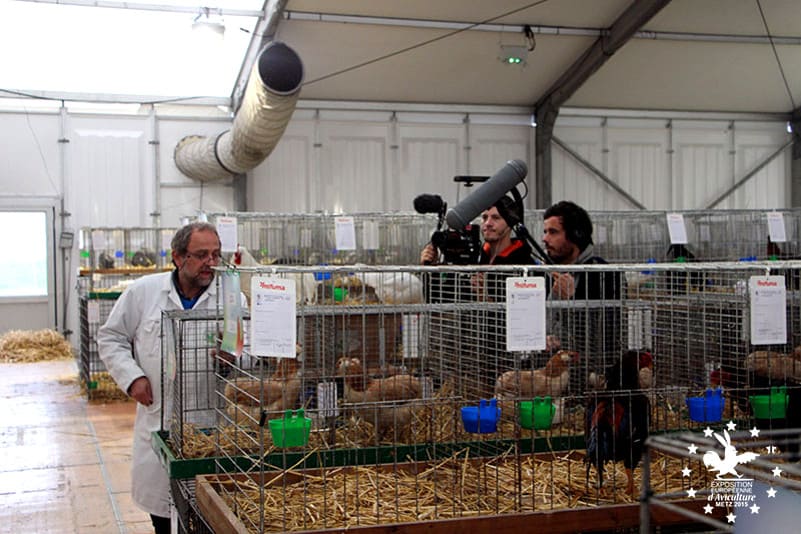
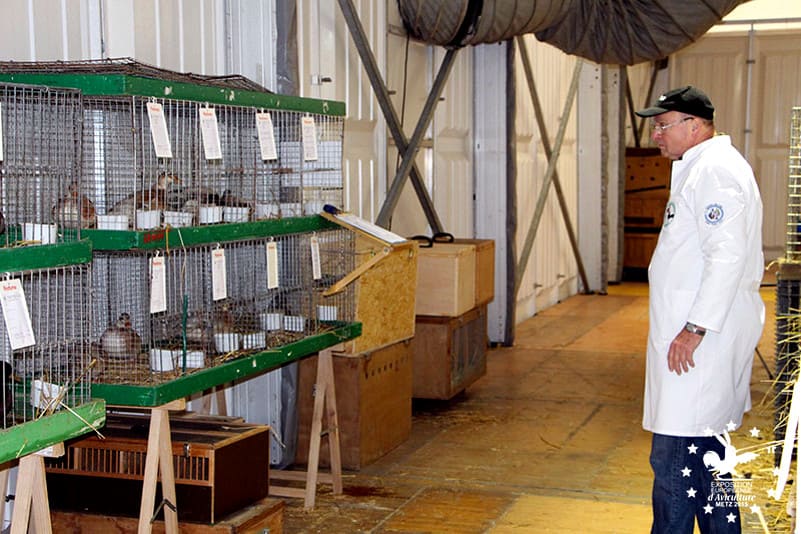
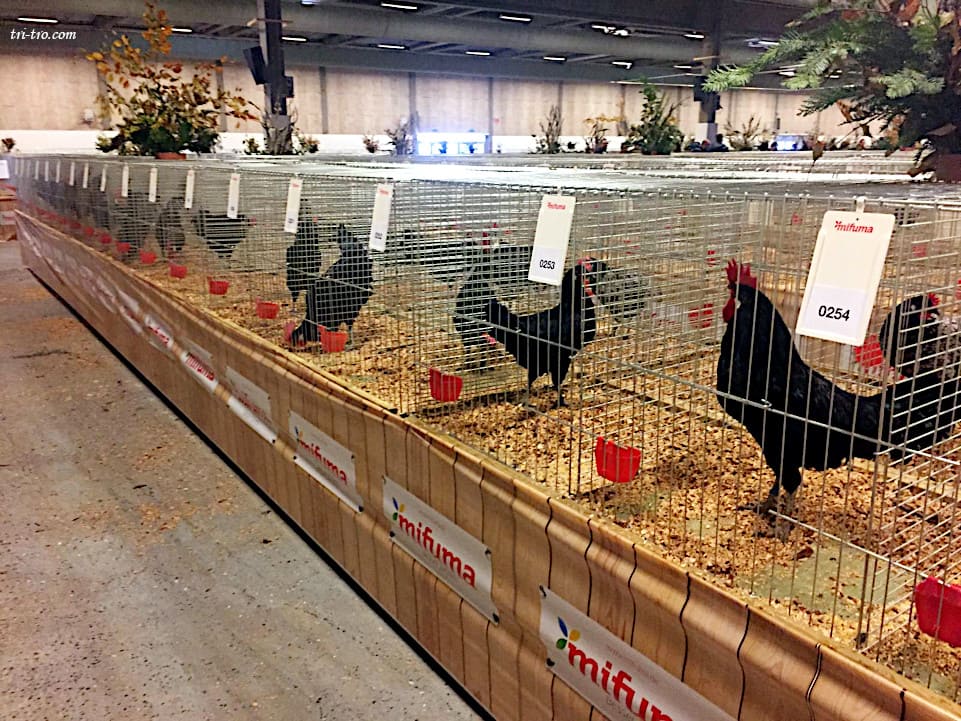
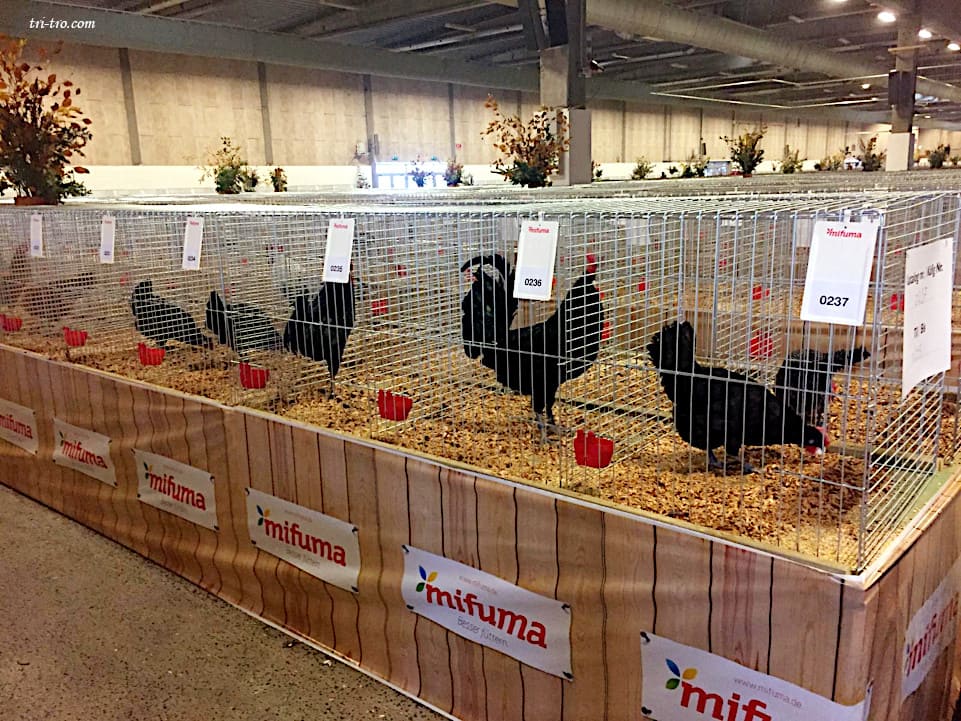
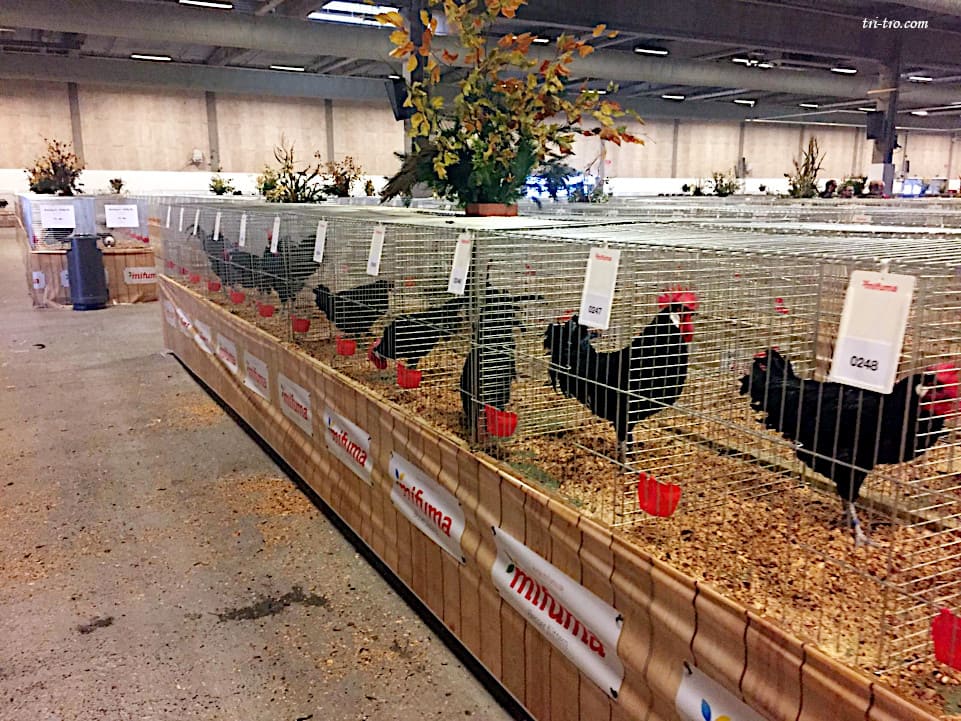
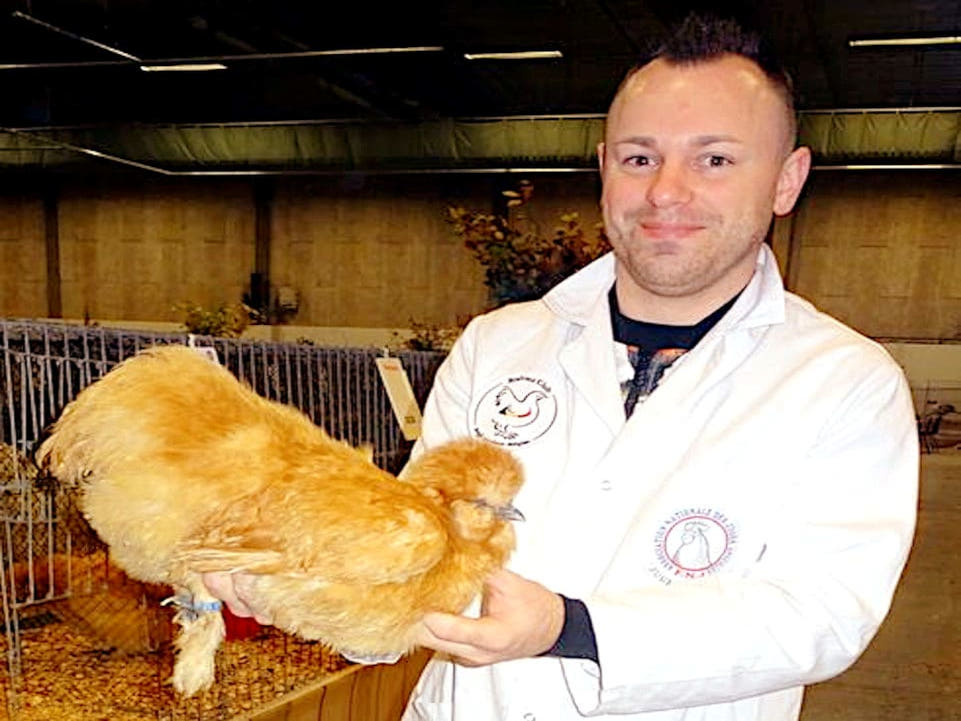
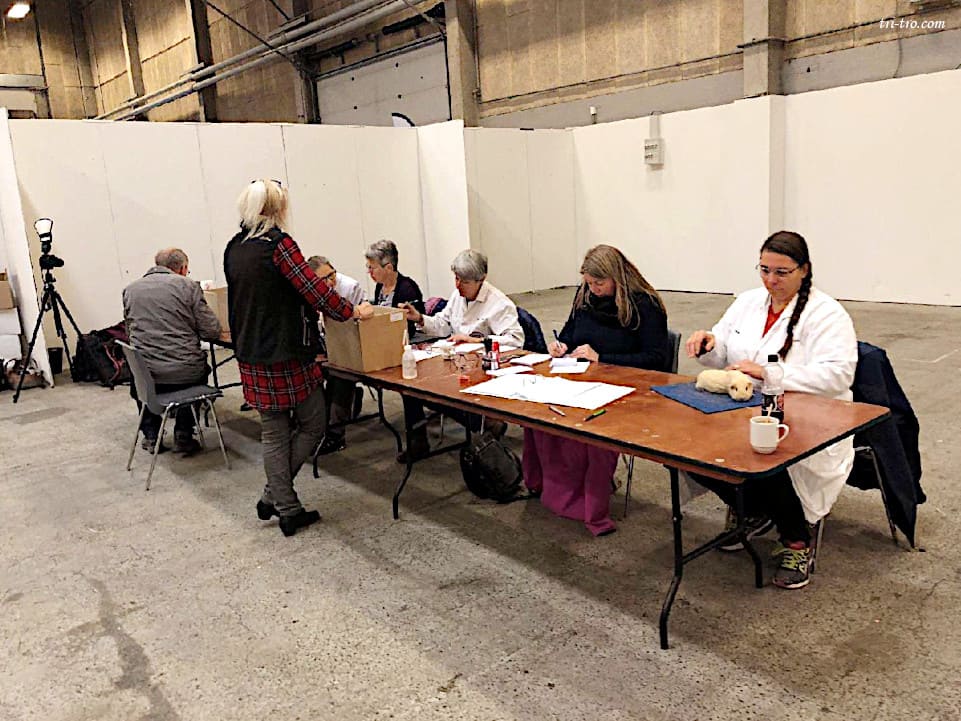
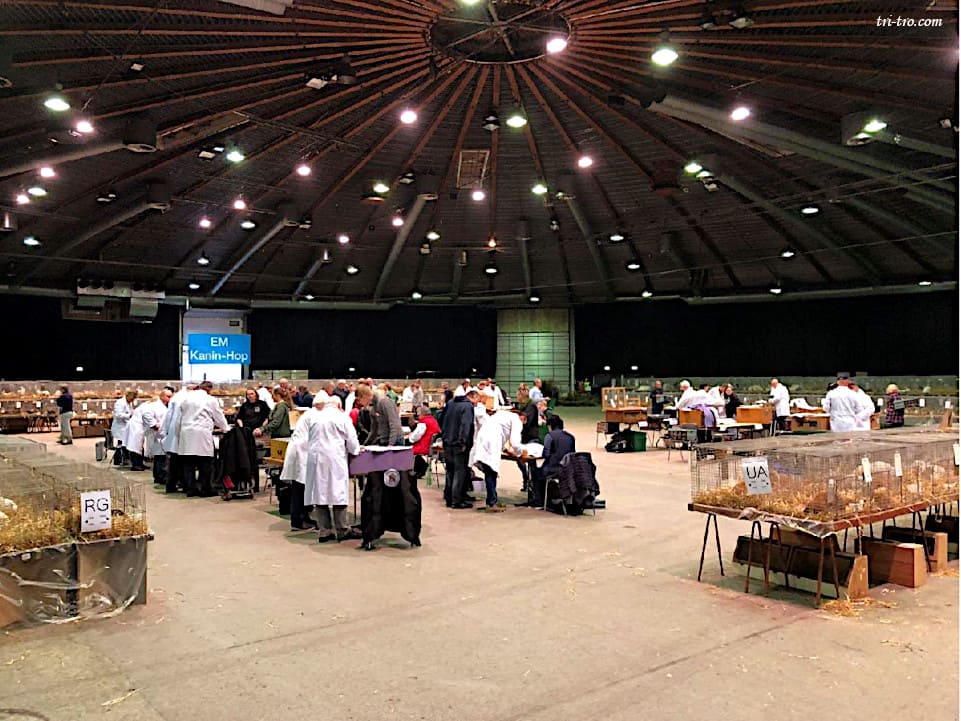
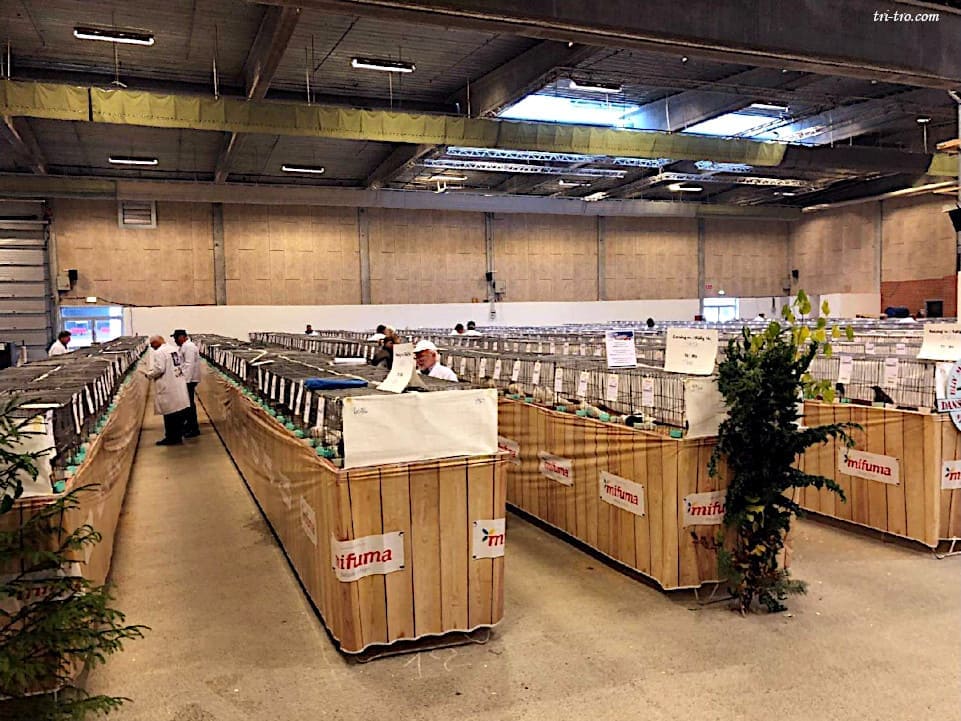
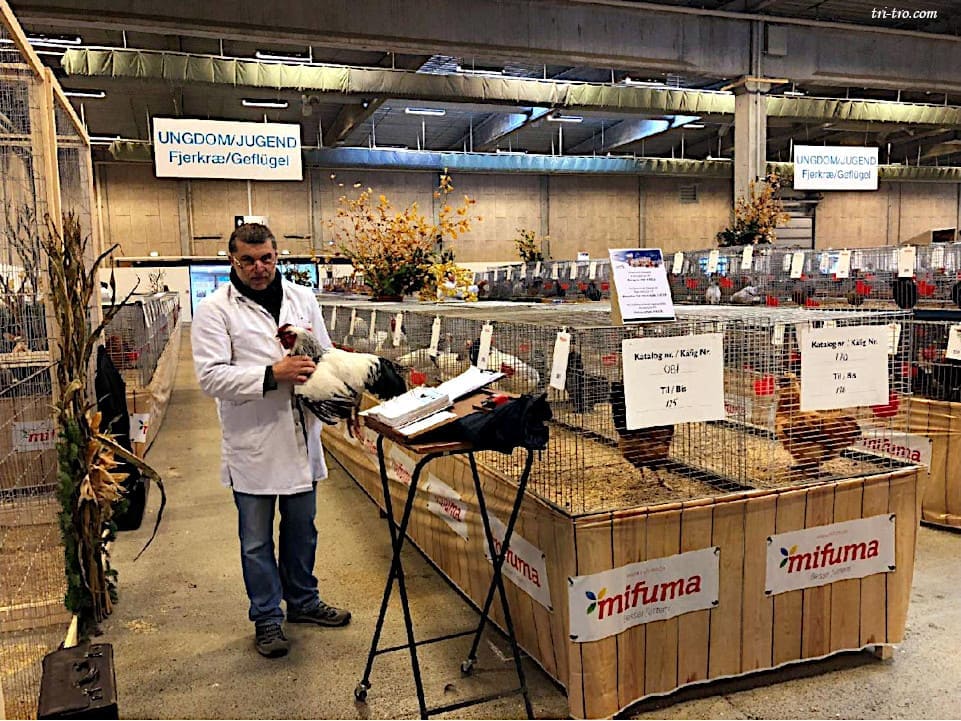
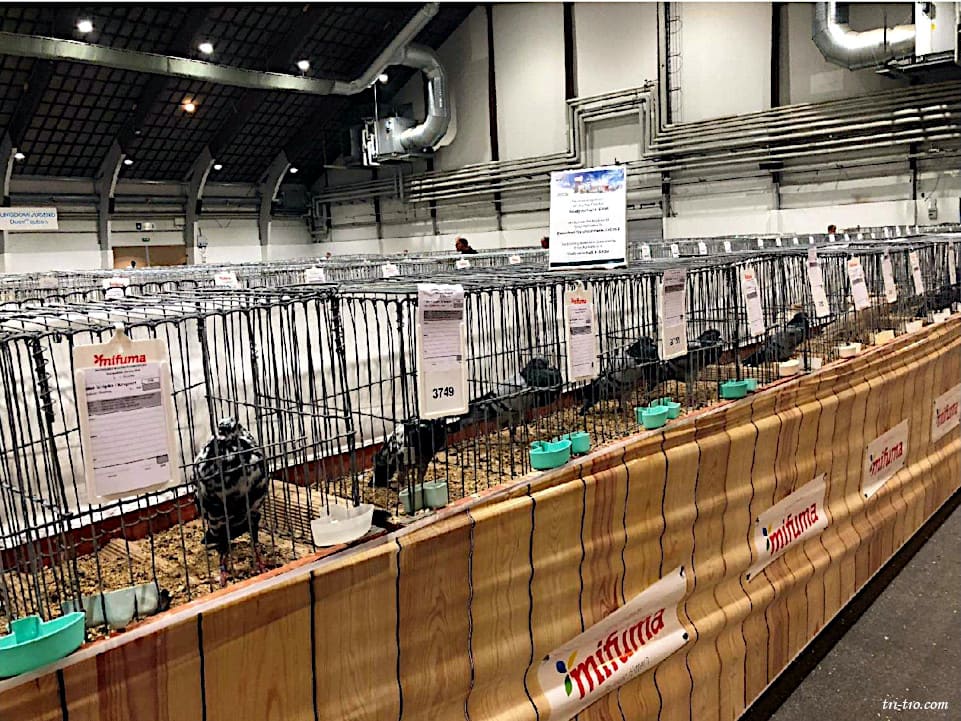
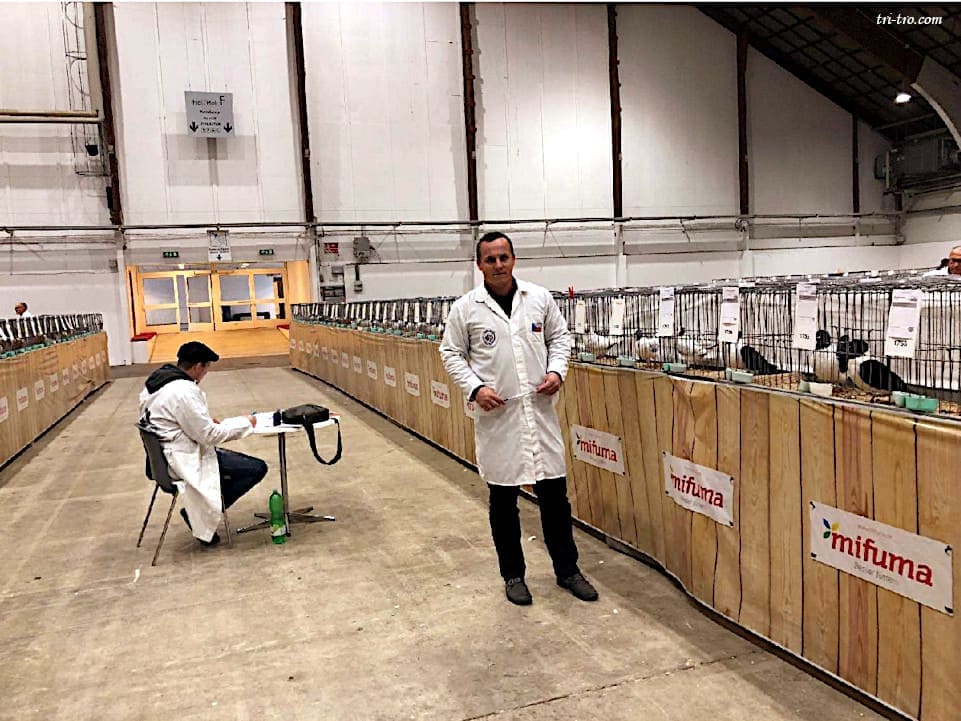
Judging at the 2015 European Championship (EE 28) in Metz: hens:

Awards and Prizes, 28th EE Metz 2015

European exhibition of Poultry, Metz 2015

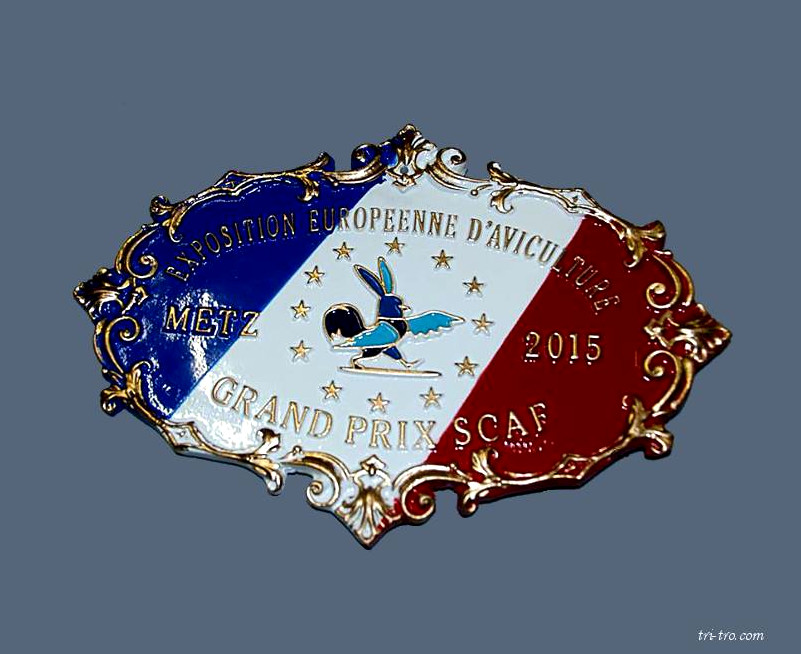
Award Medal from the SCAF (French Breeders' Association). Metz 2015 European Poultry Show

Section 15. Chest:

  • Bent keel: up to 5 points deducted.

In relation to the color, it is deducted on each section of the scale, the following

Points regarding plumage color:

General:

  • Lack of brightness: up to 1 point

Red plumage, black breast:

  • White feathers: up to 2 points.

Plumage black:

  • Feathers barred: up to 2 points.
  • Tone metallic copper: up to 2 points.

Plumage white:

  • Yellowish: up to 2 points.
  • Canyon or beards creams: up to 1 point.
  • Small gray spots: up to 2 points.

Plumage fulvous:

  • Feathers in black or white: up to the limit of the section.
  • Subcolor gris: up to 2 points.
  • Cannon lighter or darker than the beards: up to 2 points.
  • Feathers harinosas: up to 2 points.

Golden columbine plumage:

  • White feathers: up to the limit of the section.

Barred plumage:

  • Spot: up to 2 points.
  • Black feathers: up to 2 points.
  • Yellowish: up to 2 points.
  • Different tone to the pattern of the race: up to 2 points.
  • Metallic tone: up to 2 points.

Laced plumage:

  • Spot: up to 2 points.
  • Colorless: up to 1 point.
  • Half moon: up to 1 point.
  • Demasiado intenso: up to 1 point.
  • Blur: up to 1 point.
  • Dark mark in the center of the pen: up to 2 points.

Sequined plumage:

  • Colorless: up to 1 point.

Plumage listing:

  • Spot: up to 2 points.

Are deducted in addition to the following points relating to the color of the face, the eyes, the legs and the fingers:

Section 7. Face:

  • White: up to 1 point.

Section 8. Eyes:

  • Different from the pattern of the race: up to 1 point for each one. 

Section 10. Legs and toes:

  • Dark spots: up to 2 points.

In addition, breed-specific faults must be deducted, provided that the total deduction does not exceed the score for each section (the minimum deduction for a breed-specific fault is usually 1/4). For example, the presence of red on the face is a disqualification in the Spanish Cara Blanca breed, as is the presence of a very swollen face that impairs vision.

Evaluation of chicks

Sometimes, day-old chicks are also evaluated, with up to 1 point deducted for each chick lacking vigor and 5 points for each dead chick; in addition, points must be deducted for the following defects:

Weight (pattern for 25 chicks is 900 g): 1 point per 30 g less.

Uniformity of size: 1 point for every chick is different to the majority.

Condition:

Sticky marker: You can earn up to 3 points!

Deformity: up to 2 points.

Navel infected: up to 5 points.

Sewer pasty: up to 5 points.

Color:

Down: up to 1/2 point if it is different from the race.

Tarsus: up to 1 point if it is different from the race.

Color uniformity:

Down: 1/4 point for every chick is different to the majority.

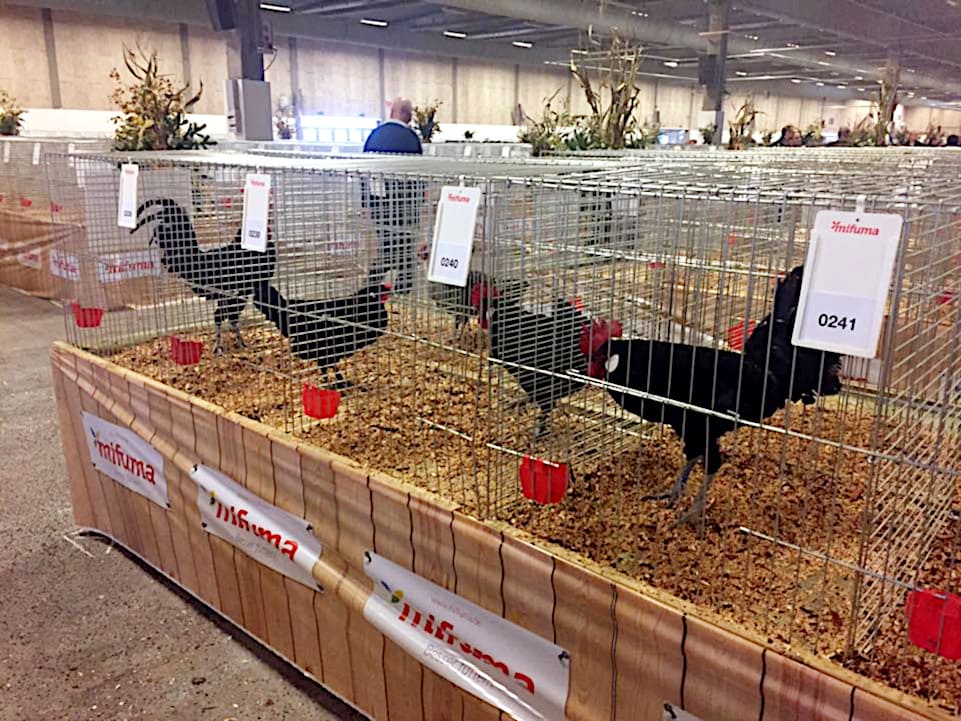
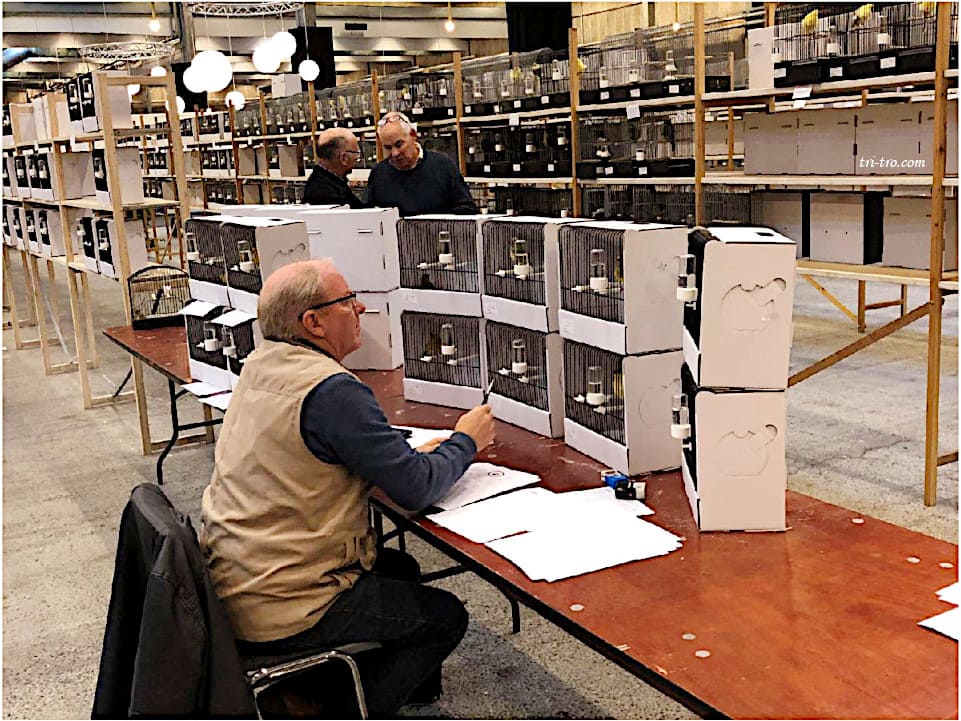
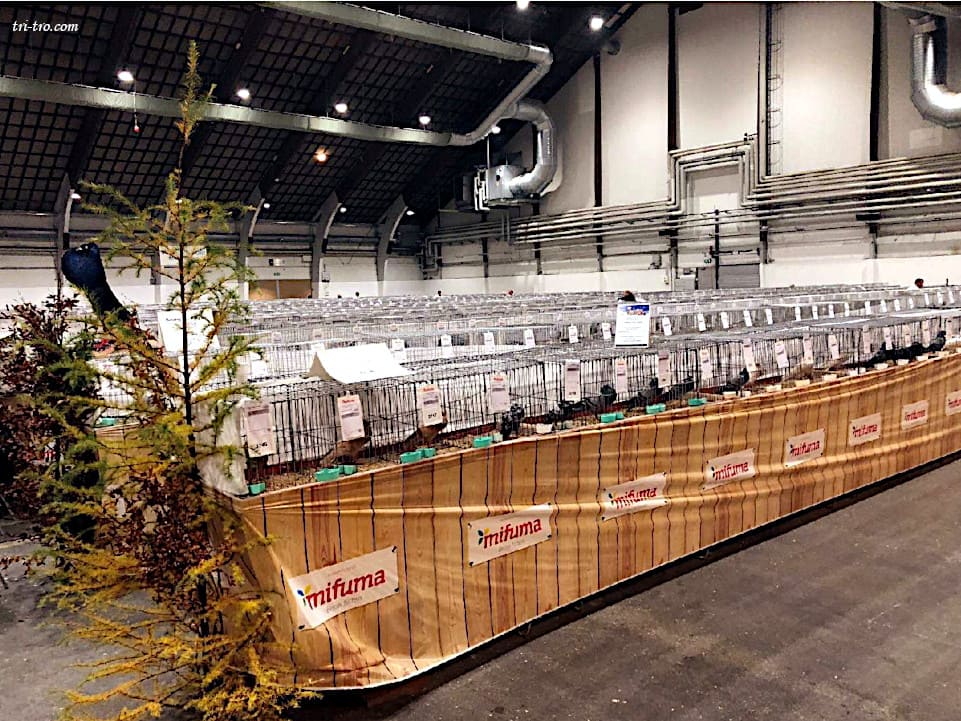
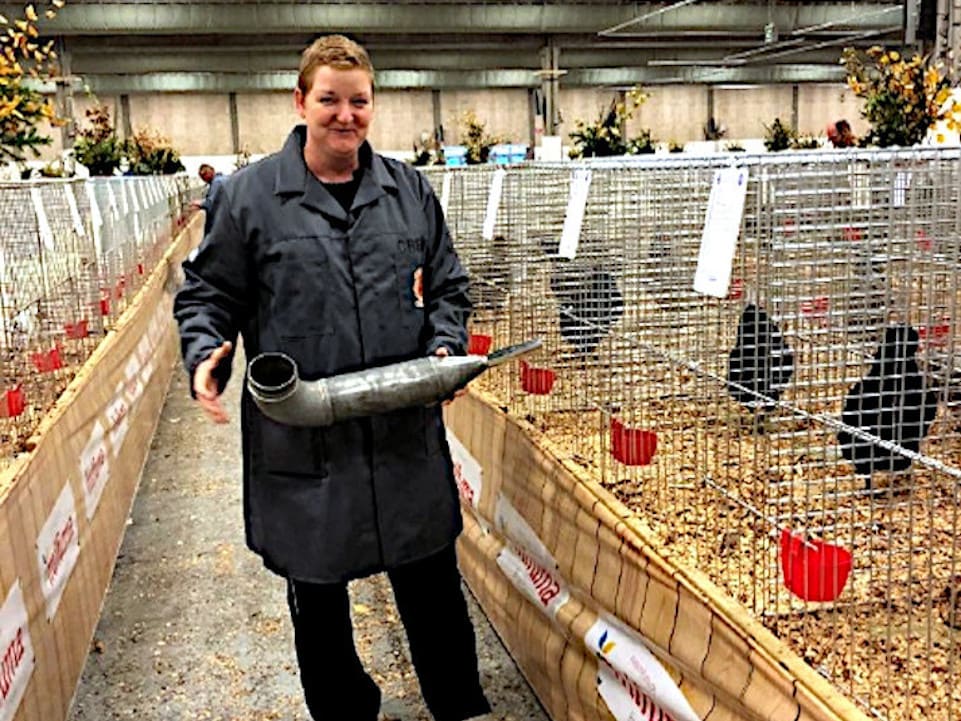
Judging at the 29th European Championship in Herning 2018 (hens):

Awards Ceremony, 29th EE Herning 2018

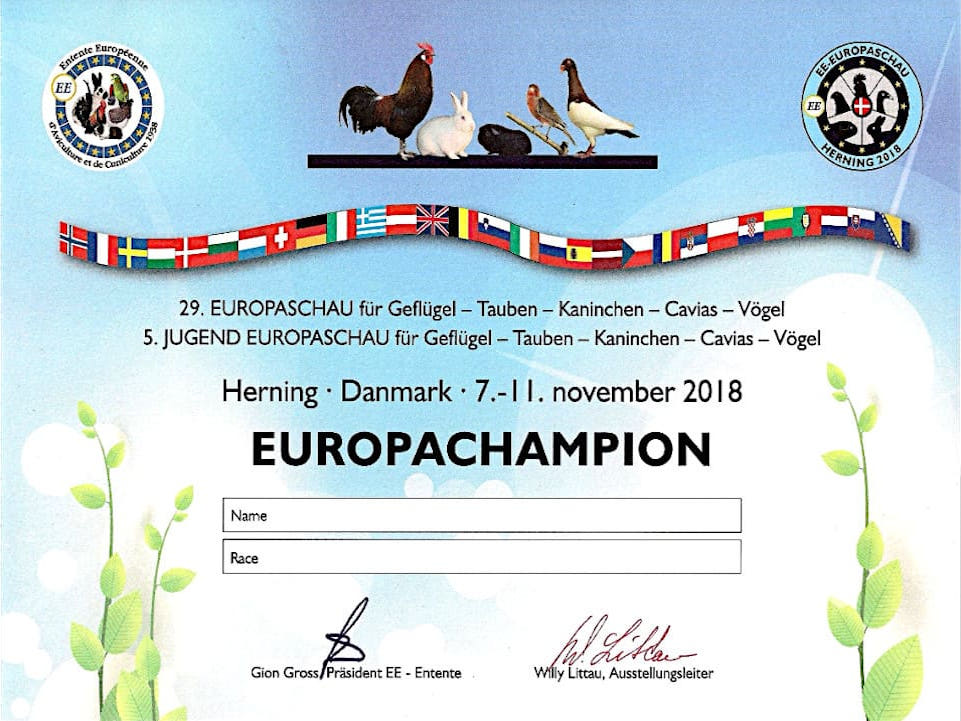
Europachampion Herning 2018 Diploma

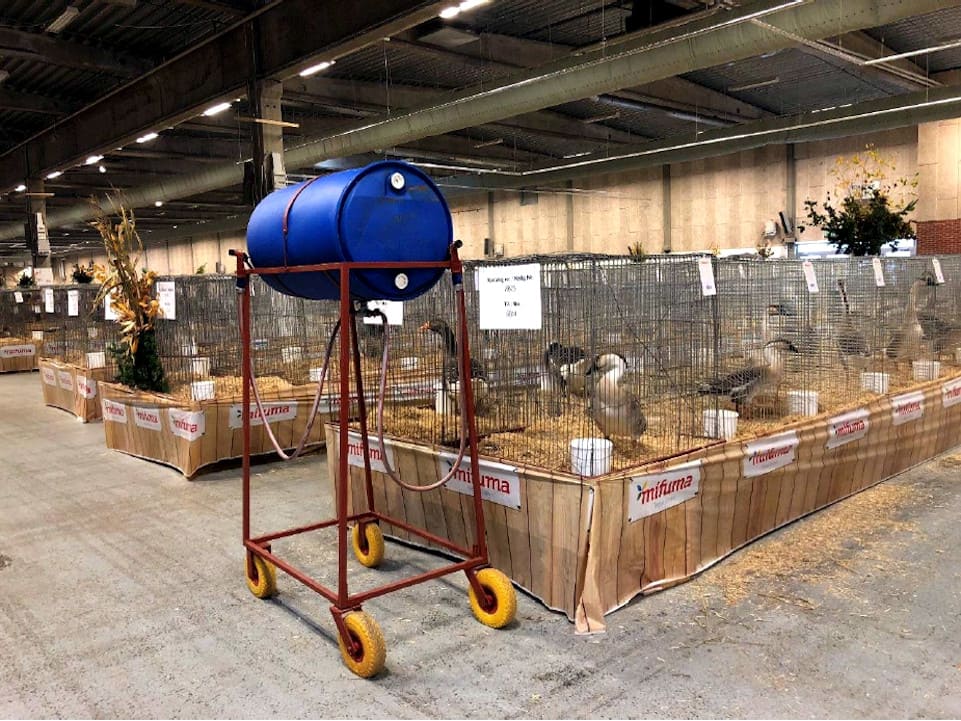
European exhibition of poultry, Herning 2018

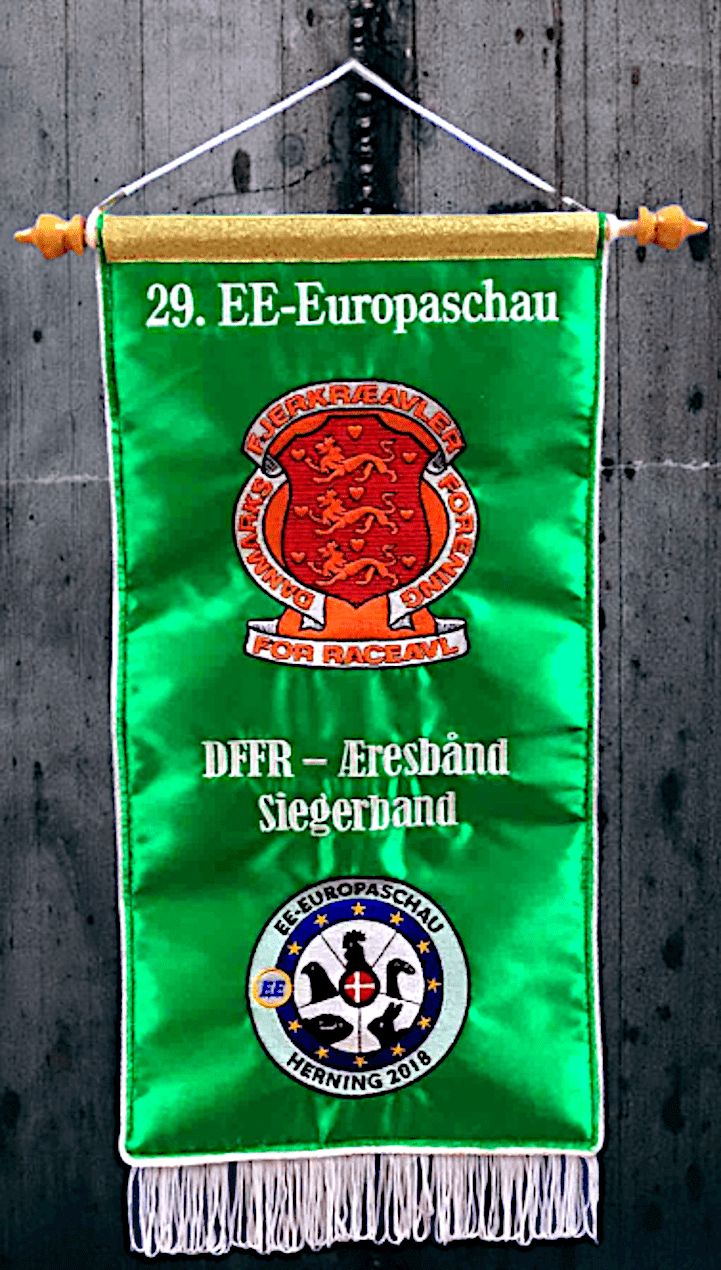
Banderin 29 vs. EE Herning 2018

Disqualifications:

Some are deformities or characteristics that negatively affect the bird’s vigor, while others prevent the bird from conforming to the breed standard. In addition to the obvious cases—such as when the bird lacks breed characteristics, suffers from a disease, or has a tumor, or when there is evidence of tampering—the following are disqualifications related to conformation:

Sectión 2.

  • Weight (races of European type):
  • Default: more than 3/4 kg in males and more than 1/2 kg in females.
  • Excess: more than 1 kg

 Sectión 4. Crest:

  • General: Different from the pattern of the race (also in the chick).
  • Crest simple: Fall to one side (except in females of mediterranean-type). Spur divided in two. Appendix lateral (also in the chick).

 (6).

  • Peak: Deformed (also in the chick).

 (7).

  • Skull and face: The presence of bun and beard.

 (8).

  • Eyes: Blindness (also in the chick). Pupil irregular (ebl).

 Section 10.

Legs and toes: Arched legs. Legs zambas. Deformed toes. Duck toe. Tarsus, or heel deformed. Webbed fingers with skin (also in the chick). More than 4 fingers (also in the chick). The presence of feathers (also in the chick).

Legs and fingers wide the pattern of the race.

Section 12.

  • Back: Twisted or deformed.

 Section 13.

  • Queue: T-shirts twisted or absent. Sickles twisted. Divided in two, with a central space between the t-shirts. Squirrel. Twisted to one side of the vertical.

 Section 14.

  • Wings: Primary or secondary twisted. Divided in two, with a space between primary and secondary. Primary out-of-the secondary (instead of under them).
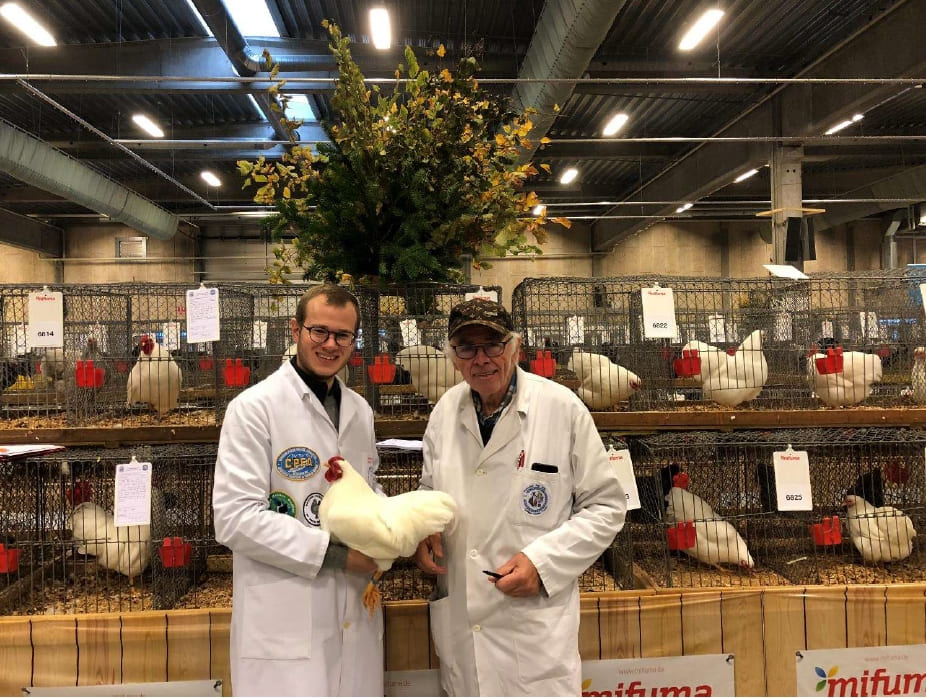
With regard to plumage, the “hen-like” and “rooster-like” types are also grounds for disqualification.

In relation to the color, they are disqualifications for the color of the plumage:

  • Plumage black or blue: White, red, or yellow.
  • Plumage white: Black in the flag of the primary and secondary (coagulated blood). Different (except for the small gray spots).
  • Plumage columbian silver: Black feathers in the back or red feathers in any part.
  • Feathers barred or mottled: Red or yellow.
  • There is also a disqualification for the color of the orejillas, legs and fingers.

Section 9.

  • Earlobes: Other than the pattern of the race.

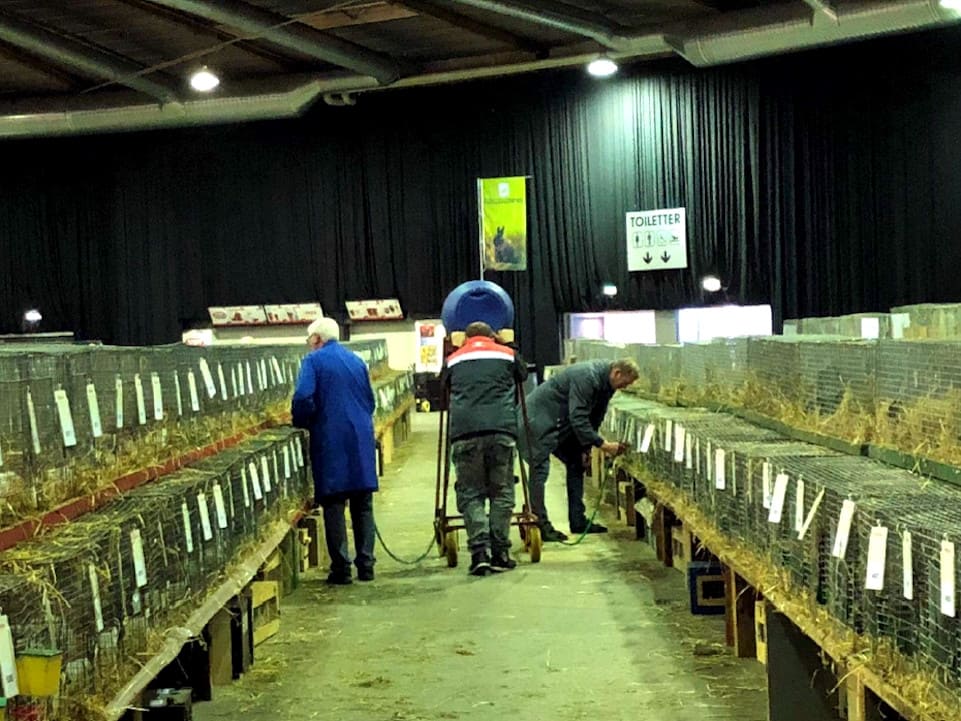
I hope this information helps us understand how chickens are judged by poultry judges at the annual exhibitions. These events may be organized by breed clubs or by the EE (Entente Européenne d Aviculture et de Cuniculture) represented by Fesacocur (Spanish federation of Aviculture, Colombicultura and Rabbit Race) in Spain.

Next European match

30th Europaschau, November 19–21, 2021, Tulln, Austria.

If not cancelled by the COVID-19


Public and Private European Show 2021 Tulln. Austria

30th Europaschau, November 19–21, 2021, logo. Tulln, Austria

30th Europaschau, November 19–21, 2021, logo. Tulln, Austria


You may be interested in these other sections


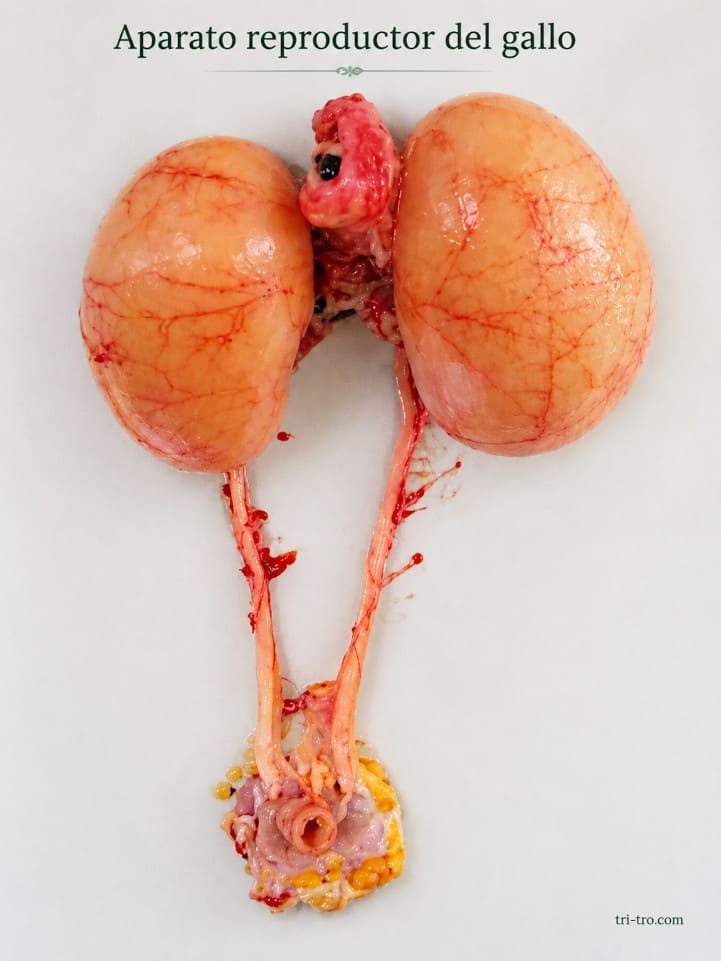
The Rooster's Reproductive System: Parts and Function

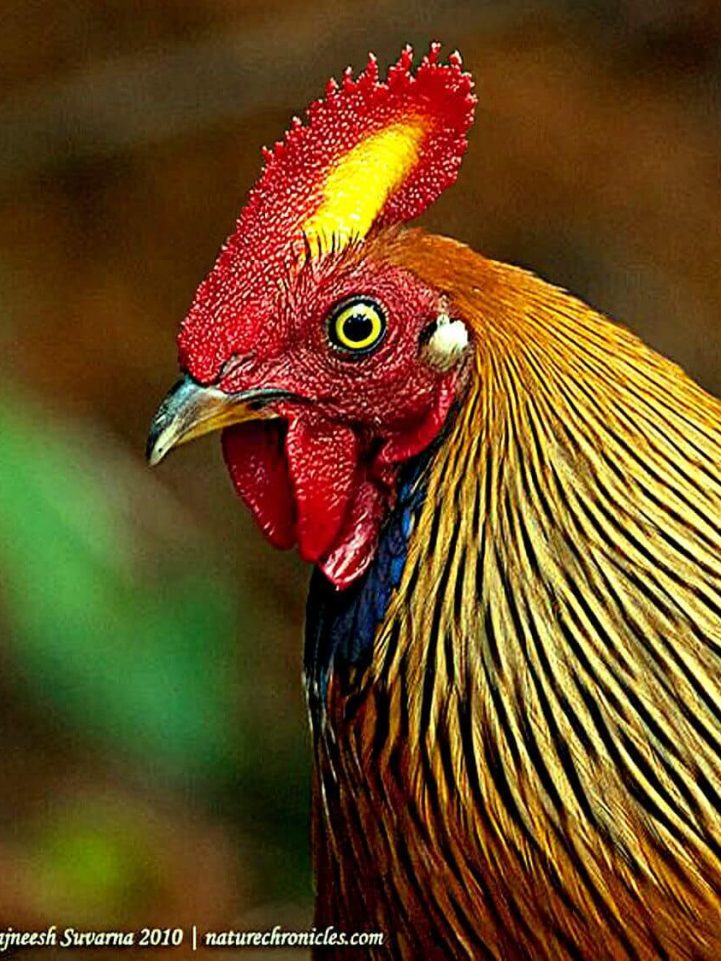
Gallus lafayettii: Origin and Characteristics of the Ceylon Fowl

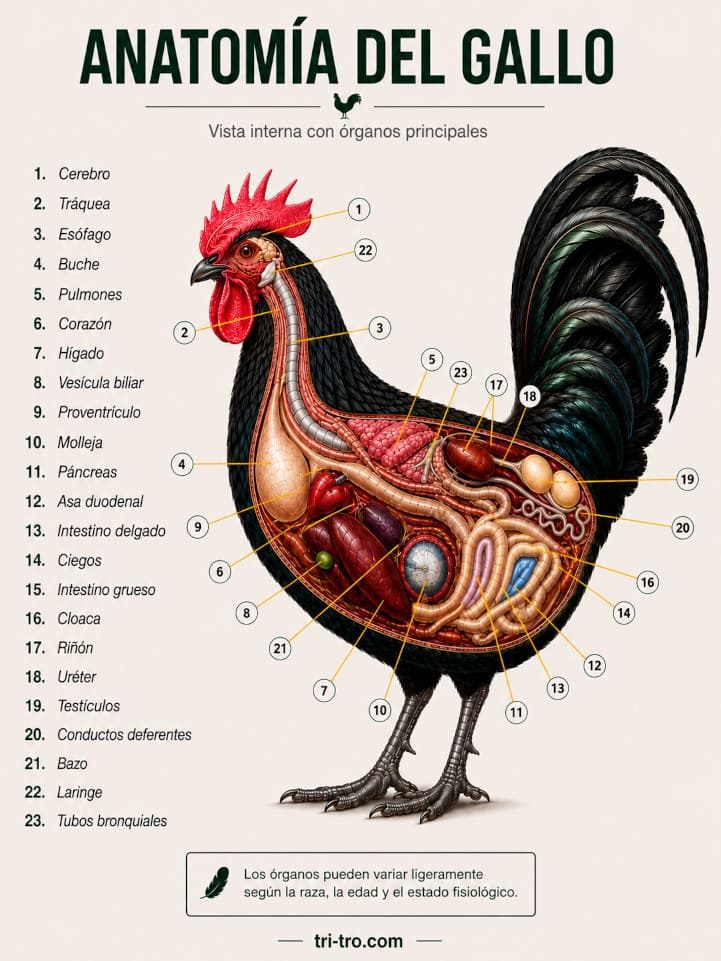
Exploring the Anatomy of the Domestic Rooster


Do you want to share or comment on your social networks

Scan to visit TRI-TRO
Escanea para visitar. TRI-TRO