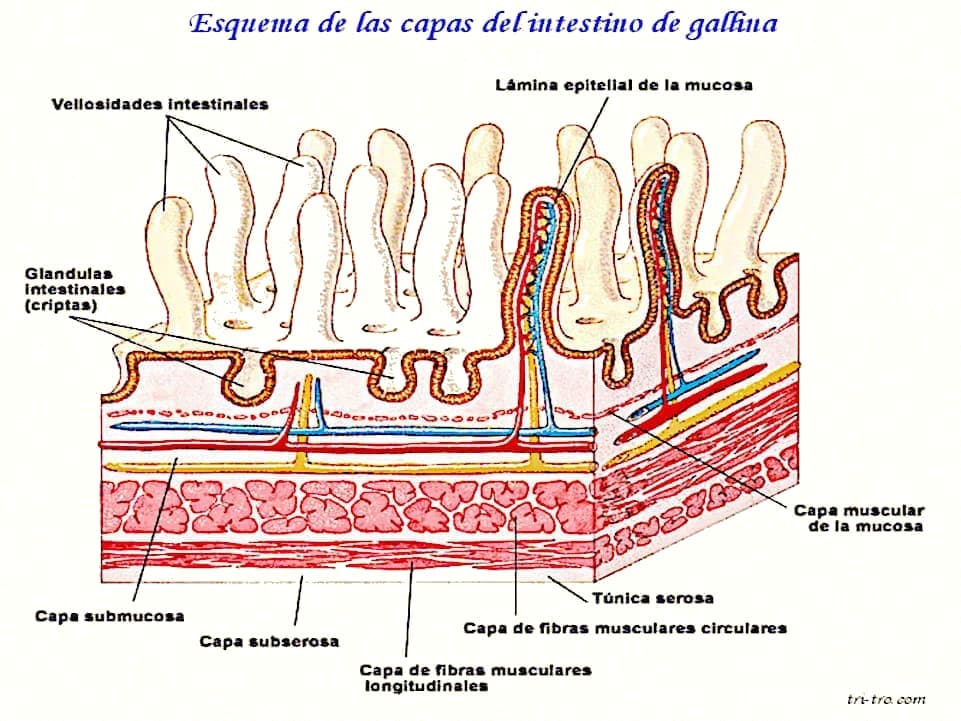
Diagram of the layers of the intestine of chicken

The chicken intestine is a key part of the digestive system, responsible for nutrient absorption and maintaining digestive balance. It plays a crucial role in converting digested food into essential nutrients for the bird’s health and productivity.

Parts of the chicken intestine

The digestive tract It is a tube lined with specialized epithelial cells that are continuous with the epithelial layers covering the skin. Therefore, the digestive tract is open to the external environment and is potentially exposed to organisms and toxic agents that enter through ingestion along its entire length.

Epithelial cells differentiate into a variety of specialized cells with specific functions, including the secretion of various fluids, electrolytes, and enzymes; in the small intestine, they also physically block the passage of undigested particles. These cells form a semipermeable surface that selectively allows the passage of fluids, electrolytes, and dissolved nutrients.

Autonomously in their specialized function in the digestive tract, each epithelial cell is part of a physical barrier that continues to protect against the entry of foreign material and organisms into the bloodstream and get access to other viscera. The integrity of this protective barrier is broken when the organisms and toxic agents damage the epithelial cells.

This epithelial lining continuously sheds cells into the center of the digestive tract (lumen), with new cells constantly regenerating and differentiating to take over the functions of the lost cells.

The surface area of the intestinal mucosa (mucous membrane) has expanded significantly beyond that of a simple tube due to extensive microscopic folding, forming a somewhat flattened carpet with projections called villi, which resemble fingers.

In the avian intestine, villi are present along the entire length of both the small and large intestines, gradually decreasing in height as they extend downward. The luminal surface area of each villus, in turn, is increased by numerous microvilli to facilitate absorption at the cell surface.

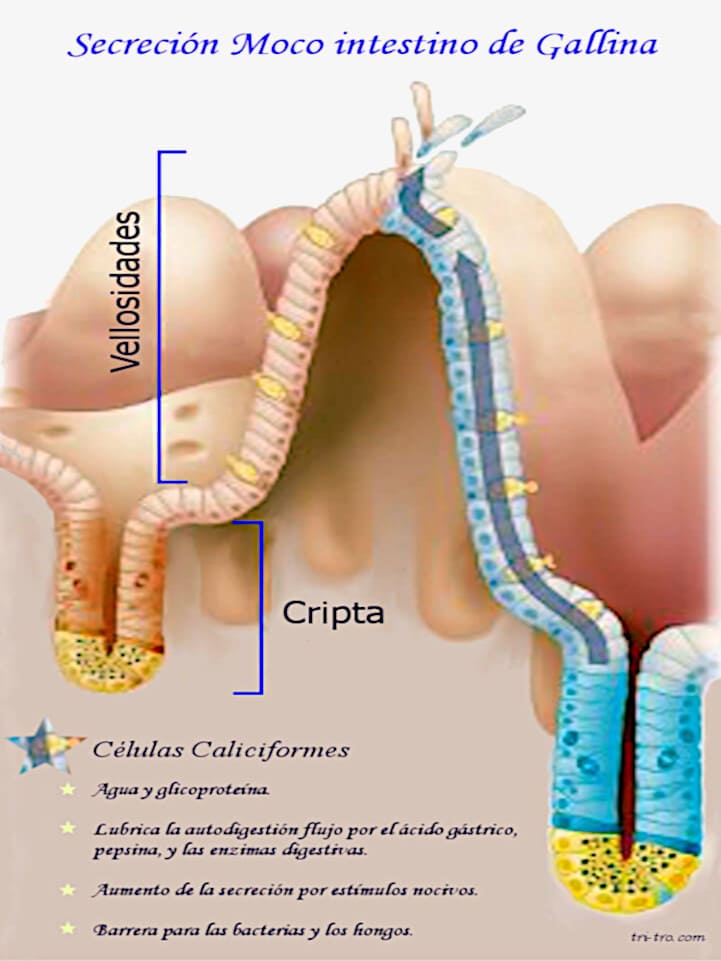
Each villus is lined with epithelial cells (enterocytes) that differentiate according to their location within the villus to absorb fluids and nutrients (tip), secrete electrolytes and fluids (lateral and crypt), and regenerate and replace damaged cells or those lost due to attrition (crypt).

The epithelial lining of the intestine is supported by the lamina propria, which contains the connective tissue underlying specialized structures such as blood vessels, lymphatic channels, and the immune system, or gut-associated lymphoid tissue (GALT).

The blood vessels entering and exiting the tip of the villus form a countercurrent mechanism that creates a hyperosmolar environment to facilitate fluid absorption. The rich blood supply throughout the intestine serves to rapidly dilute and remove any agent or chemical (endogenous or exogenous) that may cross the mucosal barrier.

Function of the chicken intestine

The main function of the chicken intestine is to absorb nutrients from digested food and transfer them into the bloodstream. It also plays a role in immune defense and maintaining a balanced gut microbiota. The intestine of the chicken has an essential role in the digestion, because it is responsible to absorb the nutrients that come from food the digestive system of the chicken was processed previously. Also, it contributes to the elimination of waste and the balance of the intestinal flora.

Agents that directly damage blood vessel components can compromise intestinal integrity, causing ischemic injury to the mucosa or the leakage of blood from the vascular bed (hemorrhage). Virulent forms of Newcastle disease and avian influenza, invasive candidiasis, and coccidiosis caused by Eimeria tenella and pathogenic forms of salmonellosis are examples of diseases that can damage the intestinal vascular system.

GALT may collectively represent the body's largest secondary immune organ.

In chickens, immune tissues are distributed in specific locations at the junction of the proventriculus and gizzard, and in the cecal tonsils; they are also found in concentrated ectopic sites, diffusely scattered throughout the tissue section, and as scattered individual intraepithelial lymphocytes.

GALT is composed of B and T lymphocytes, plasma cells, macrophages (mobile cells that engulf foreign materials and infectious agents), and dendritic cells (resident macrophages that process antigens). An important function of GALT is the secretion of secretory antibody (IgA) onto the mucosal surface in response to the gut’s heavy exposure to foreign antigens from infectious agents and ingested food.

The intestine is constantly exposed to foreign materials; the lamina propria is highly active due to the responsiveness of the GALT, and is actually in a normal state of reactivity and mild inflammation. The transition from normal mild inflammation to subclinical disease is an important consideration in poultry, not only from an economic standpoint but also as a precursor to fatal enteric disease. Multiple pathogenic agents and disease mechanisms can occur simultaneously in production settings.

Infectious bursal disease, infectious anemia in chickens, Marek’s disease, and hemorrhagic enteritis in turkeys can potentially affect the secondary lymphoid tissues of chickens and turkeys.

Clinical coccidiosis in broiler chickens: It commonly occurs during and immediately after the onset of acute bursitis. Lymphocytolytic mycotoxins such as T-2 toxin and diacetoxiscirpenol can rapidly deplete the GALT.

Impaired integrity of the intestinal epithelium:

Intestinal integrity is severely compromised when the mucus layer breaks down; epithelial cells die or are destroyed; blood supply is disrupted; or the immune system is compromised.

Intestinal integrity, specifically with regard to the epithelial layer, can be compromised by viruses, bacteria, fungi, countless parasites, and toxins. We will focus on specific types of damage.

This section will focus on the types specific lesions in the intestinal epithelium.

Mucus secretion in the chicken intestine.

How the chicken intestine works

The chicken intestine works by breaking down food using enzymes and absorbing nutrients through its intestinal walls. This process allows proteins, fats, and carbohydrates to be efficiently used by the body. The digestion of the hen is based on the food is broken down by enzymes and nutrients are absorbed through the walls. This allows the body of the bird to benefit from proteins, fats and carbohydrates.

Parts of the chicken intestine

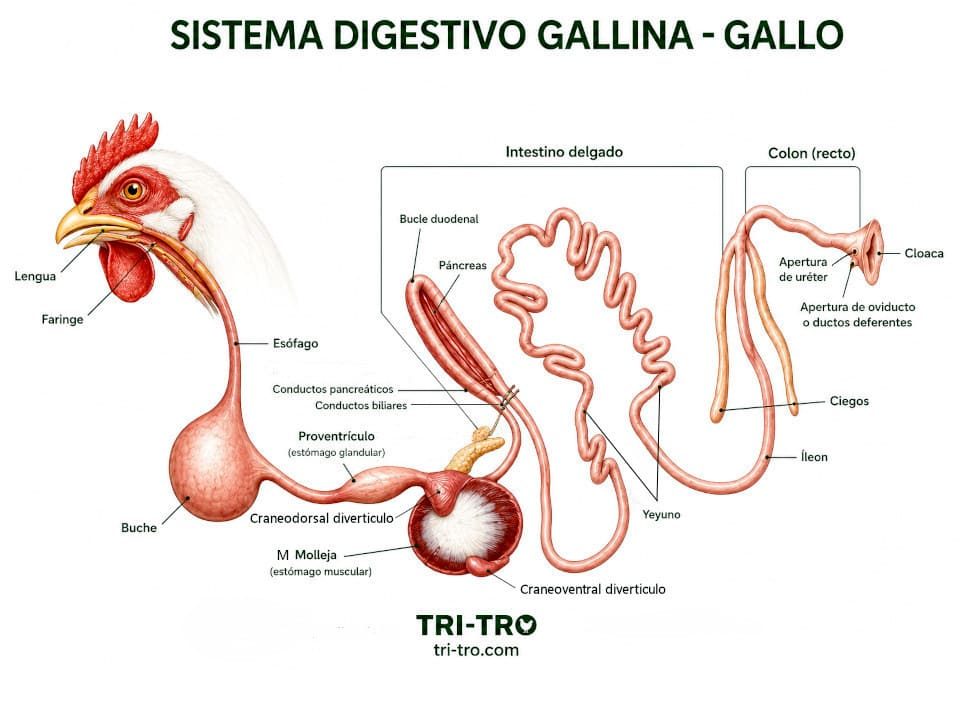
The chicken intestine is divided into several sections, each with a specific role in digestion and nutrient absorption:

  • Duodenum: receives digestive enzymes and begins nutrient breakdown
  • Jejunum: main area for nutrient absorption
  • Ileum: completes absorption and transports content
  • Cecum (ceca): involved in fermentation and digestion of fiber

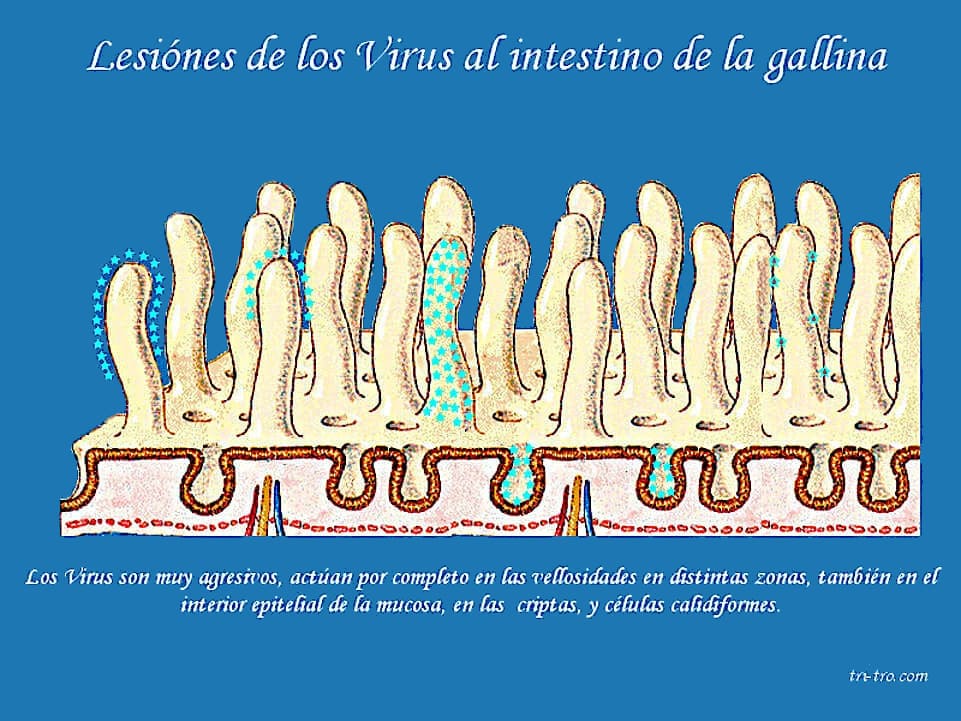
Lesions of the virus in the intestine of the chicken

Viruses affecting the chicken intestine

The infection and replication An enteric virus typically kills an epithelial cell. Unlike bacteria, viruses do not produce toxins.

Viral infections can damage the intestinal lining and reduce nutrient absorption, affecting the overall health of the bird. Each has a tropism for cells at a specific stage of differentiation along the villi.

These viruses have the ability to preferentially infect cells at the tips, crypts, and sides of the villi.

The severity of the clinical disease and the course of viral infection without complications are a reflection of the cells destroyed by the virus. To destroy the cells at the tip of the villi, the function that allows the absorption of the intestine is completely lost and cannot survive the epithelium.

Watery diarrhea persists until the villi are repaired with mature, functional cells. A torovirus such as that isolated from turkeys with early mortality syndrome (PEMS) does not cause the death of host cells (intestinal epithelial cells).

Rather, the cell is stimulated to release signaling molecules (cytokines) that interact with the immune system and trigger a more complex series of reactions involving the inflammatory response of the nerves in the intestinal wall. These, in turn, release lymphokines or mediators that cause a cyclic amplification of the epithelial responses.

It produces a general result in the increased secretion of fluid into the intestines, which nullifies its absorption capacity, causing diarrhea and a decrease in digestive efficiency.

See section of the diseases caused by the virus.

More information

Bacteria in the chicken intestine

The bacteria damage the epithelium by producing toxins that facilitate cell invasion. The host may ingest preformed bacterial toxins; these may be present in spoiled or contaminated food. Staphylococcus, Clostridium, and Bacillus are some of the likely producers of enterotoxins in food.

The host may ingest bacteria that produce toxins once they begin to multiply in the intestine, such as

  • Clostridium perfringens.
  • Clostridium colinum.
  • Campylobacter spp.
  • Escherichia coli.

They produce enterotoxins, which are polypeptides capable of causing diarrhea. Some enterotoxins cause an increase in fluid secretion, while others are cytotoxic, leading to cell lysis and cell death. E. coli strains aggregate and adhere to the surface of enterocytes, secreting a toxin that disrupts the cell’s water regulation.

This leads to a pure chloride secretion, accompanied by water loss, and results in the onset and progression of diarrhea. This necrotic enteritis is caused by the Clostridium perfringens; it is a severe form of toxin-induced cell necrosis that can lead to mucosal destruction and the death of the host.

Other bacteria are able to abound, to invade, and to destroy the intestinal epithelium. In milder cases, there are certain E. coli bacteria that adhere to and damage the microvilli on the edge of luminal enterocytes. Producing the release of cytokines, the development of inflammation, with a net increase in the secretion and diarrhea.

Bacteria enteropatógenas can proliferate within cells after the us invasion, leading to cell death and allowing the spread from cell to cell.

Salmonella attaches itself to the intestine and passes through the epithelial cells to invade the lymphatic and blood vessels, causing inflammation in the intestine and then spreading to other organs.

See section of the diseases caused by bacteria. 

More information

Fungi in the chicken intestine

Fungal infections in the intestinal mucosa are not significant in poultry. Mycotoxins produced by fungi that grow on grains and feed are crucial; they damage the mucosa and interfere with intestinal digestive functions. Tricyclic mycotoxins cause caustic damage to the mucosa, destruction of cells at the tips of the villi, and radiomimetic lesions characterized by rapid division of the crypt epithelium.

Aflatoxin affects digestion by decreasing the secretion of bile from the liver and the secretion of bicarbonate by the pancreas. Other toxins that can impact on gut health include.

  • The fumonisins.
  • Sterigmatocystin.
  • Ochratoxin.
  • Toxins undefined Penicillium.

See section of the diseases caused by fungi.  

More information

Protozoa and parasites

Protozoa such as coccidia are common intestinal parasites that can cause serious digestive issues in chickens. Coccidia are the primary pathogens of the intestinal tract in poultry, invading and destroying epithelial cells and, in the case of some coccidia species, the lamina propria. This results in increased mucus secretion, reduced absorption, hemorrhage, and fluid leakage from the damaged mucosa, as well as a dynamic immune and inflammatory response. Coccidia can affect all levels of the small and large intestines.

Coccidial damage to the mucosa enhances the adhesion of pathogenic bacteria, such as Clostridium perfringens and Salmonella typhimurium, and reduces the adhesion of non-pathogenic bacteria, such as Bacteroides vulgatus and Bifidobacterium thermophilum. Ascarids are the primary nematodes found in the intestines of poultry and commercial birds.

In general, the inflammatory response to the nematode provides a greater involvement of mast cells and the mediators of acute inflammation, which are linked to the responses neurologically as well.

See the section on diseases caused by parasites. 

More information

Common intestinal problems in chickens

The health and production of hens may be seriously compromised due to intestinal problems. Infections—viral, bacterial, and parasitic are one of the most frequent and affect the balance of the digestive tract, reducing the absorption of nutrients. Weight loss and decreased egg production.

Frequently asked questions on the intestine of the chicken


What is the function of the intestine of the chicken?

The main function of the intestine of the chicken is the absorption of the nutrients present in the foods and the elimination of the waste that is produced during digestion.

Where are nutrients absorbed in chickens?

The absorption is mainly in the small intestine, more specifically in the jejunum.

What are the parts of the chicken intestine?

The intestine of the chicken consists of blind, ileum, jejunum and duodenum, which have particular functions.

What are common intestinal diseases in chickens?

Infections by viruses, bacteria and parasites that compromise the overall health and digestion are the most common.


Bibliography:

Dyce, K. M., Sack, W. O., and Wensing, C. J. G., 1991. Veterinary Anatomy. Ed. Pan-American.

Ede, D. A., 1965. Anatomy of birds. Ed. Acribia.

Grasse, P. P., 1980. Zoology. Vol. 4: Vertebrates. Reproduction, biology, evolution, and systematics. Ed. Toray-Masson.

Grifols, J. and Molina, R. 1994. Manual of clinical exotic birds. Ed. Grass-Iatros.

Natural History, 1984. Vol. 1. Ed. Ocean-Institute Gallach.

King, G. M. and D. Custance. Colour atlas of vertebrate anatomy: The Pigeon. Pp.: 5.1— 5.17. Ed. Blackwell Scientific Publications.

Krahmer, R., and Schröeder, L. 1979. Anatomy of the domestic animals. Ed. Acribia.

McClelland, J., 1992. Atlas in color of the anatomy of birds. Ed. inter-American.

Nickel, R., 1977: The Anatomy of the Domestic Birds. Ed. Paul Parey.

Sandoval, J., 1976. Veterinary Anatomy. Ed. Modern Printing Press (Córdoba).

Schwarze E. 1980. Compendium of Veterinary Anatomy. Volume V: Anatomy of birds. Ed. Acribia.

Shively, M. J., 1993. Veterinary anatomy, basic, comparative, and clinical. Ed. Manual Moderno.

Sturkie PD, 1967. Physiology of Avian. Ed. Acribia.

Dr. Francisco Gil Cano.

Professor H. Aguinaga.


You may be interested in these other sections


Digestive system of the chicken

The Process of Digestive Juices in Chickens

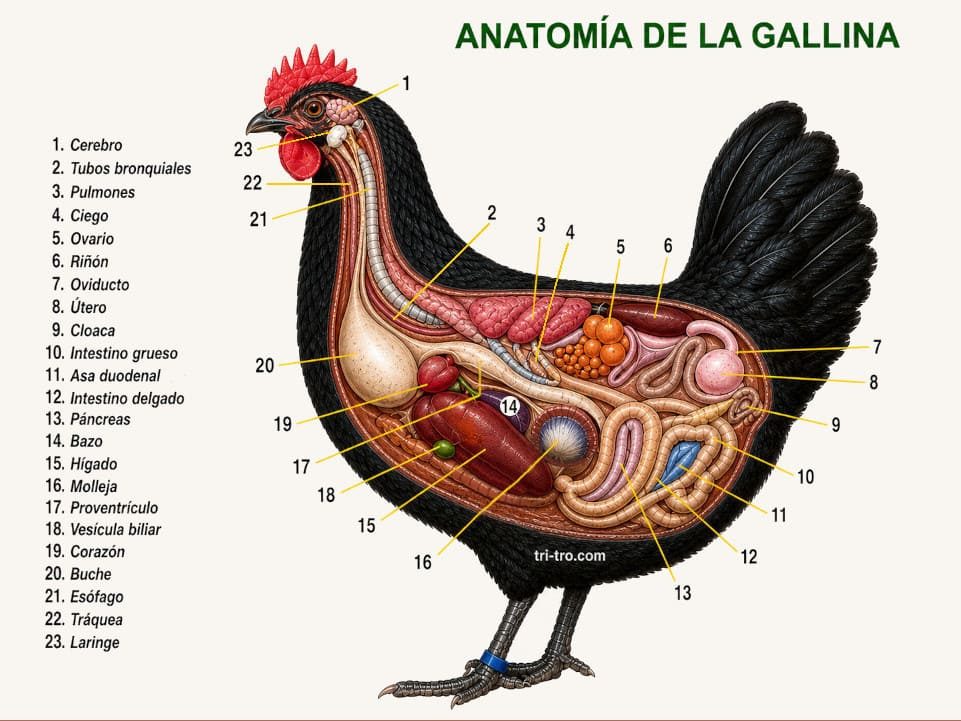
Complete Anatomy of the chicken


Do you want to share or comment on your social networks

Scan to visit TRI-TRO
Escanea para visitar. TRI-TRO