Re rustica, or The Twelve Books on Agriculture
Lucius Junius Moderatus Columella was one of the most important agronomists of ancient Rome. In his work De Re Rustica describes the raising of chickens, their care, and feeding, making it a historical reference on the origins of poultry farming.
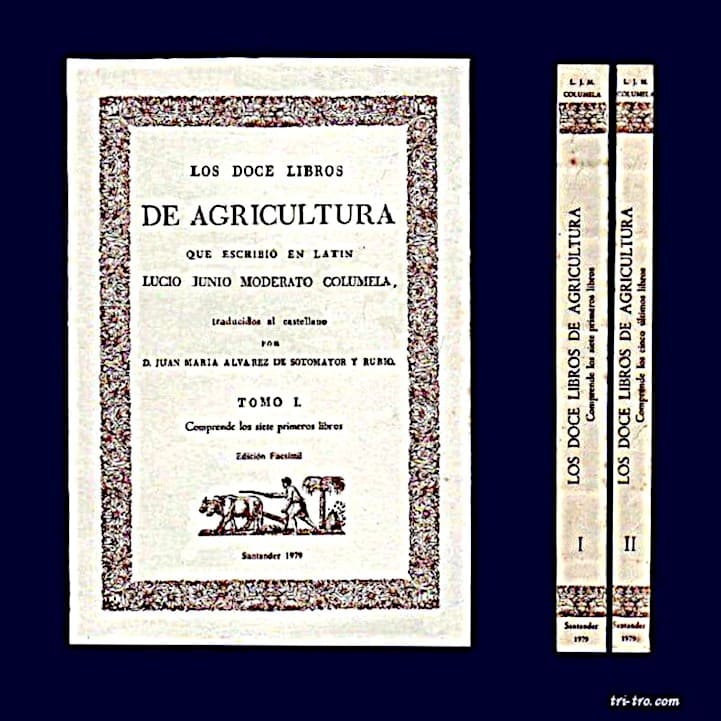
The work it was translated late for the first time to the Spanish by Don Juan María Álvarez de Sotomayor y Rubio and printed in two volumes in Madrid, 1824.
Drawing on the previous literature on the topic of Greek and Latin authors, the main body of the text is preceded by a preface in which the author “Columela“provides a brief history of agriculture and presents ideas that were innovative for the time in the field.”
The treaty deals with the work of the field from all aspects, studying the conditions and types of soil and cultivation; care and diseases of the different plants; poultry farming; animal husbandry; beekeeping; fish farming; and the development of different types of canned food, among other topics.
But it doesn't stop there; it also provides insights into rustic construction, delving into details that even an architect would be hard-pressed to know.
Mr. Juan María Álvarez de Sotomayor y Rubio, in the preface to his Latin translation of "re rustica” or ““The Twelve Books on Agriculture,” published in Madrid in 1824, he tells us:
Lucius Junius Moderatus is known to history by his nickname “Columella,” which in Latin means “small column or pillar”; we imagine this refers to his firm and steady character. A philosopher born in Gades (Cádiz)—though we do not know the exact date—he died in Taranto (southern Italy) around 60 or 70 AD.
He was a contemporary of another great figure from Cadiz, the Pythagorean Moderato de Gades, with whom he was often confused, and of the Stoic Seneca from Cordoba, who was his friend.
Columela left for Rome as a teenager and served in the Roman legions, becoming a tribune in one of the legions stationed in Syria in 35 AD. He then returned to Rome, where he devoted himself to large-scale agriculture, putting his knowledge of the subject into practice.
In the capital of the empire, he moved in the highest social circles.
It was a great author of agriculture, philosopher, and poet, who wrote, around the year 42 of our era, a work which is amazing, “Re Rustic”whose ideas, 2,000 years later, remain relevant and timely, especially in the times we are living in today.
For all these reasons, and as we will see later, he is regarded in the field of agronomy as one of the fathers of agriculture. He is the author of the most comprehensive work on agronomy that antiquity has bequeathed to us.
His work has been praised by agricultural experts for centuries, and today, thanks to Google...we have it available in digital format; below are links to the complete work in PDF format.
Here I present to you the book VIII, which is the poultry farming, chicken breedswhat is the purchase, care and maintenance of pen, chicken coops, its construction, the power, of the eggs, the broody or lluecas, baiting, etc., which is the section I've included below; the book also covers other topics: wood pigeons, peacocks, geese, domestic and wild ducks, and fish.
Keep in mind that it is a translation from the Latin, and totally understandable, with the uses and forms of that time, over 2000 years ago, in which he describes almost like our chicken coops and chickens today.
It is really fabulous to be able to enjoy this spectacular work of those times, told by Columela with a target text, and it is unique. I invite you to do so because it is deserving and very much worth reading.
Poultry Farming According to Columella
The Twelve Books on Agriculture, Lucius Junius Moderatus Columella
Here I present to you the book VIII, which is the poultry farming, chicken breedswhat is the purchase, care and maintenance of pen, chicken coops, its construction, the power, of the eggs, the broody or lluecas, baiting, etc., which is the section I've included below; the book also covers other topics: wood pigeons, peacocks, geese, domestic and wild ducks, and fish.
Keep in mind that it is a translation from the Latin, and totally understandable, with the uses and forms of that time, over 2000 years ago, in which he describes almost like our chicken coops and chickens today.
It is really fabulous to be able to enjoy this spectacular work of those times, told by Columela with a target text, and it is unique. I invite you to do so because it is deserving and very much worth reading.
LUCIO JUNIO MODERATO COLUMELA
The things of the field:
BOOK EIGHTH Of the offspring that are made in the hunting
CHAPTER I
The utilities, which pay these pups.
Us we have set forth, O Publius Silvinus, in these seven books all the matters that more or less constitute the science of farming and those required by the management of livestock.
This book will bear the title of the volume that follows these—that is, the eighth—and is not included in this work because the matters we discuss in it require the immediate and specific care of the farmer, but rather because they should be applied only on farms or in rural homesteads and are of greater benefit to people in the countryside than to those in the town.
Since poultry, just like livestock, yields a significant benefit to the farmer—for the manure from these birds not only revives the vines that are in poor condition but also nourishes all crops and farmland—and since these same birds provide delicacies for the family home and lavish tables, I felt it necessary to discuss this type of livestock as well.
It is usually done at the farm or near it. At the farm are the ones the Greeks call ornibionas 1, xaiperísereionas 2. And they are also handled with great care when there is a sufficient supply of water; the ixduotropea 3. These are, to explain it in Latin, like Stábula 4 for poultry, and no less so for those that are fattened up, enclosed in rooms or receptacles 5 for aquatic animals.
On the other hand, near the farmhouse are the elisions 6, xaixenotropeia 7, and the lagotropeia 8 are also carefully tended; we also call these, when they serve as shelters for bees, apiaria 9; if they serve as roosts for waterfowl that frequent ponds or cisterns, aviary 10; and when they serve as shelters for wild animals kept in enclosed forests, they are called vivariums 11.
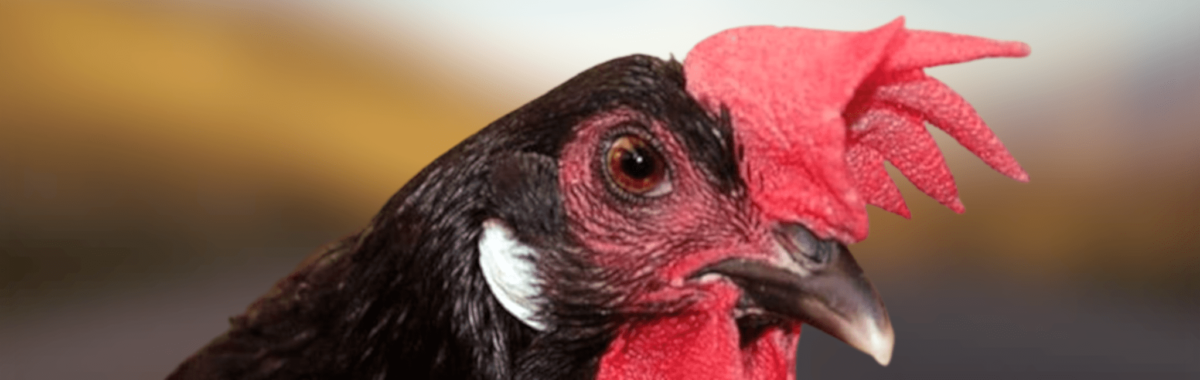
Types of chickens described by Columela
CHAPTER II
The different breeds of chickens; the purchase, care, and feeding of free-range chickens.
I'm going let us, then, begin by discussing the rules governing those who remain within the confines of the farmhouse and certain animals; to be honest, one might wonder whether country folk should keep them at all, but most farmers do, as a rule, raise chickens.
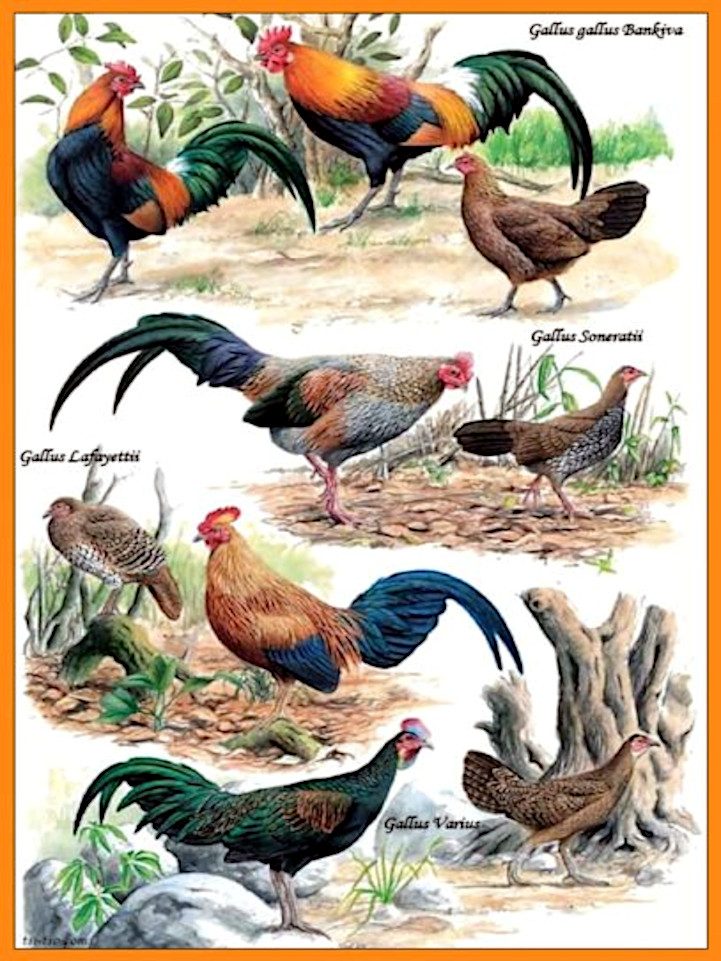
There are three species of them: domestic, wild, and African. The domestic ones are those commonly seen in almost every country home; the wild ones, which resemble them, are the ones hunted by hunters; and there are many of these on an island in the Ligurian Sea, which sailors, by extending the name of this bird, have called “gallinera.” The African ones, which many call Numidian chickens, resemble the pheasants, except that the latter have a red crest and beard, whereas these have a bluish one.
But of these three species, the female domestic birds are properly called hens, the males roosters, and the neutered males capons, a name given to them after they have been castrated to eliminate their attraction to hens. And this is not only done by removing their genitals, but also by burning their spurs with a red-hot iron; after which, once the wounds have been seared by the fire, the resulting sores are smeared with potter’s clay until they heal.
This is no small matter, for the usefulness of this domestic species—if one applies skill in breeding them—is what brought fame to most of the Greeks, especially those of Delos; but they too, seeking roosters of great stature and steadfast spirit for the fights, favored above all the breeds of Tanagra and Rhodes, and no less those of Chalcis and Media, which the ignorant common folk, changing one letter, call “melica.” For us, the breed we like best is that of our own country, though we pay no heed to the Greek custom of preparing the fiercest of these birds for fights and contests; for we seek to provide a livelihood for an industrious family man, not for a trainer of fighting birds, whose entire fortune has often been lost in a wager on a cockfight to the athlete who emerged victorious.
Thus, anyone wishing to follow our guidelines should first consider how many laying hens to purchase and what qualities they should possess; next, how to care for and maintain them; then, at what times of the year the eggs should be set aside for incubation and hatching; and, finally, how to care for the chicks so that they grow up properly, for it is through this care and labor that a poultry yard is successfully managed—a practice the Greeks call ognidongopian.
The maximum number to purchase is two hundred birds, which will require the care of a single keeper; however, an attentive elderly woman or a young boy should be assigned to watch over those that stray from the flock and prevent them from falling prey to humans or the animals that stalk them. Furthermore, it is not advisable to buy birds unless they are prolific layers.
They must have bright or blackish plumage and black wings; and if possible, they should all be chosen in one of these colors or a similar shade; but if not, white ones should be avoided, as they are generally delicate and lack vitality, nor are they easily found to be good layers; and also, since they are conspicuous due to their white color, this trait often causes them to be snatched away by hawks and eagles.
Therefore, the chicks that are destined for laying should be of good color, square-shaped, broad-chested, with large heads, upright red combs, and white earlobes and, within this build, as large as possible, with uneven claws; it is believed that those with five toes are the best, provided that no spurs protrude sideways from their legs, for the hen with this characteristic feature of the roosters is reluctant to allow the rooster to mount her and does not accept him; besides which, she is rarely fertile, and even when she incubates, she breaks the eggs with her spurs.
It is not advisable to keep roosters unless they are highly prized; in such roosters, one looks for the same color and the same number of toes as in chickens: they should be larger in size, with tall, blood-red, upright combs; red or nearly black eyes; short, curved beaks; very large, very white earlobes; and red wattles that tend toward whitish and hang like an old man’s beard; the neck feathers should be mottled or yellow and golden in color and should extend down the neck and throat to spread across the shoulders.
Likewise, they have broad, muscular chests; strong, arm-like wings; and very long tails, folded in two rows, with a feather protruding from each side; at the same time, they have large thighs covered in feathers that frequently bristle, and strong legs that are not long but are offensively armed with a kind of spike ready to strike.
Although the breed is not intended for fighting or for the glory of victory, it is considered most important that it be noble; consequently, roosters should be proud, lively, alert, quick to crow frequently, and not easily frightened, since they must sometimes confront other animals to protect the flock and even kill a threatening snake or some other harmful creature.
But for such roosters, five hens are provided for each one, as is the case with the Rhodes or Media breeds. Because of their heaviness, neither the fathers are particularly vigorous nor the mothers fertile; yet three hens are assigned to each rooster; and besides laying few eggs, they are lazy about brooding, and even more so about raising the chicks, which they rarely do; and so those who wish to keep hens of these breeds for their beauty, once they have collected their eggs, give them to the common hens that raise the chicks that hatch.
The chickens of Tanagra, which are generally similar in size to those of Rhodes and Mytilene, do not differ greatly in their characteristics from those of our country, nor do those of Chalcis.
However, crossbreeds of all kinds—resulting from local hens and foreign roosters—make excellent chickens, because they combine the beauty of their fathers with the vitality and fertility of their mothers.
I don’t care much for bantam birds, neither for their fertility nor for any other benefit they might provide, and the same goes for the fighting cock, which picks fights to satisfy its passion: it attacks the others and won’t let them mate with the hens, even though it can’t handle them all itself. Therefore, his aggressiveness must be restrained with a piece of wine boot leather cut into a circle and slit open in the middle, through which the rooster’s foot is inserted; this causes a kind of cry that suppresses his ferocious nature.
But I will discuss, as I have already suggested, the care of all these species.
Building a chicken coop according to Columella
Publius Claudius Pulcher and the sacred chickens.
CHAPTER III
The establishment of the chicken coops.
Chicken coops They should be placed in the part of the coop that faces east in winter; they must be adjacent to the oven or the kitchen so that the smoke reaches the birds, as this is very beneficial for this species.
But the entire office—that is, the henhouse—is divided into three sections along the same line, the entire front of which, as I have said, will face east. A single, small entrance will then be provided on this front through the middle section, which will be the shortest of the three and will measure seven feet in all directions.
On the right and left walls, an entrance shall be made into each side room, and this entrance shall be adjacent to the wall facing the main entrance. A fireplace of such length shall be built against this wall that, while not obstructing said entrances, the smoke it produces reaches both side rooms; these rooms shall be twelve feet long and high and the same width as the central room.
The loft shall be divided by two platforms, with four feet of space above one and seven feet below the other, both clear of obstructions, since each platform occupies one section. Both platforms are intended for the chickens, and each shall be lit by a small window facing east, allowing the chickens to exit to the yard in the morning and return in the afternoon, but care must be taken to ensure they are always closed at night so that the birds are kept safer.
Below the platforms, larger windows will be installed and protected with bars to keep out harmful animals; however, these areas should remain open so that birds can live there more comfortably. The poultry keeper should check the eggs of the partridges or other laying birds from time to time.
To this end, it is also advisable that the walls of the chicken coops be thick enough to allow for the carving out of nesting boxes for the hens, where they can lay their eggs or raise their chicks; for this method is healthier and more refined than the one used by some people, who drive stakes deep into the walls and place wicker baskets on top of them.
But whether the nests are dug into the walls, as we have said, or made of wicker baskets, small vestibules or entrances must be placed in front of them, through which the birds pass to reach them—whether to lay eggs or to incubate them—so that they do not fly in, lest they break the eggs with their feet upon landing: immediately, the birds are helped to climb onto the platforms in both enclosures by placing them close to the wall. Some medium-sized planks that are slightly uneven, forming steps, so that they do not slip while climbing up them.
Ladder-shaped perches will also be installed on the outside of the coop near these windows so that the birds can climb up them to roost at night. Above all, care must be taken to ensure that these chicken coops, as well as the other facilities we will discuss later, are plastered smoothly both inside and out so that neither cats nor snakes can approach the birds and to prevent the entry of other equally harmful animals.
It is not advisable for the bird to rest on the perch while sleeping, lest its droppings harm it; if they stick to its feet, they can cause gout. To prevent this, sticks are cut at right angles, lest, if they are round and smooth, the bird be unable to land on them when jumping; after cutting them this way, they are inserted at their ends into the two opposite walls so that they are one foot higher than the platform and two feet apart from each other.
This is how the chicken coop should be arranged. However, the pen where the chickens roam must be free of both manure and moisture, as it is of the utmost importance that there be no water in it—except in a single designated spot for them to drink from—and that it be kept very clean, since when it is full of debris, it causes them to develop scaly skin.
However, it cannot be kept in its pure form but must be stored in specially made containers.
But these are lead feeders that are filled with water or food, and they have been found to be more useful than those made of wood or fired clay. These are closed with lids placed on top of them, and medium-sized holes are drilled in the sides above the halfway point, through which the birds can stick their heads in and out, spaced about a span apart. For if these feeders are not covered with lids, the hens will kick out the little water or food inside with their feet. Some people drill holes in the lids themselves at the top, which is not advisable, because the bird, standing on top, soils the feed and water with its droppings.
Feeding the chickens
Chickens depicted in a Roman mosaic from the time of Columella, at the Villa Kérylos (Alpes-Maritimes, France).
An authentic Alexandrian mosaic from the 2nd century B.C., depicting an allegory of the family.
CHAPTER IV
About chicken feed.
The best food the feed given to chickens is barley ground in a mortar and vetch and no less millet, as well as millet and foxtail millet; but for these grains, where their low cost allows it—and even more so where they are more expensive—it is advisable to give them small amounts of wheat, although this grain, even in places where it is cheaper, should not be given to them because it is harmful to the birds. They can also be fed cooked barley and, no less, moderately ground bran, which, if it contains no flour whatsoever, is of no use and is not even palatable.
Those who have hunger like in the end the leaves and seeds of cítiso, they are very pleasant; and there is no any country in that there may not be a lot of abundance of this shrub.
Although grape pomace keeps them in reasonably good condition, it should only be given to them twice a year—during the periods when they are not laying eggs—because they rarely lay eggs when fed this food, and those small eggs, especially since they stop laying entirely after autumn, can sustain them.
But the food given to the chickens in the pen should be divided into two portions; one will be given at the start of the day and the other as the afternoon draws to a close, not only so that in the morning they do not stray too far from the henhouse, but also so that before nightfall they return to it earlier in anticipation of food, and the number of birds can be counted more frequently, for poultry easily evades the watchfulness of the keeper.
Wherever there is a spot in the coop covered by an overhang or some other kind of roof, dry dust or ash should be placed along the walls so that the hens can dust themselves, for these substances are used to clean their feathers and wings, if we are to believe Heraclitus of Ephesus, who says that pigs wash themselves with mud and poultry with dust or ash.
The hen should be let out of the coop after 1:00 p.m. and put back in before 11:00 p.m. The care described above applies to hens that are free to roam the yard; and, nevertheless, the care given to caged chickens is no different, except that they are not allowed to go out and are fed in the coop three times a day in larger portions, since the daily ration for each bird is four cyathos, whereas those that are free-range are given two or three.
It is also advisable for the aviary to have a spacious enclosure where the bird can go out and bask in the sun; this enclosure must be protected by netting, lest an eagle or a sparrowhawk swoop down upon it, as the expense and care involved are worthwhile only in regions where these birds fetch high prices. But the most important thing, both for these birds and for all kinds of animals, is the loyalty of the person who cares for them; if he does not remain loyal to his master, no profit the coop yields will exceed his costs. What has been said about how to care for chickens is sufficient; now let us continue discussing the remaining topics in the proposed order.
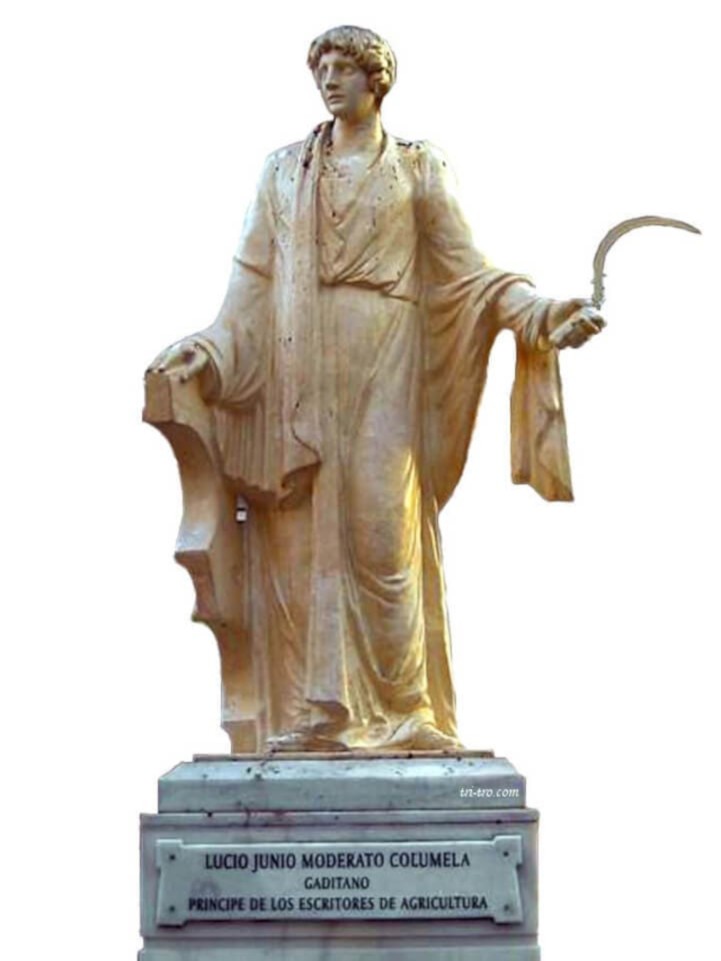
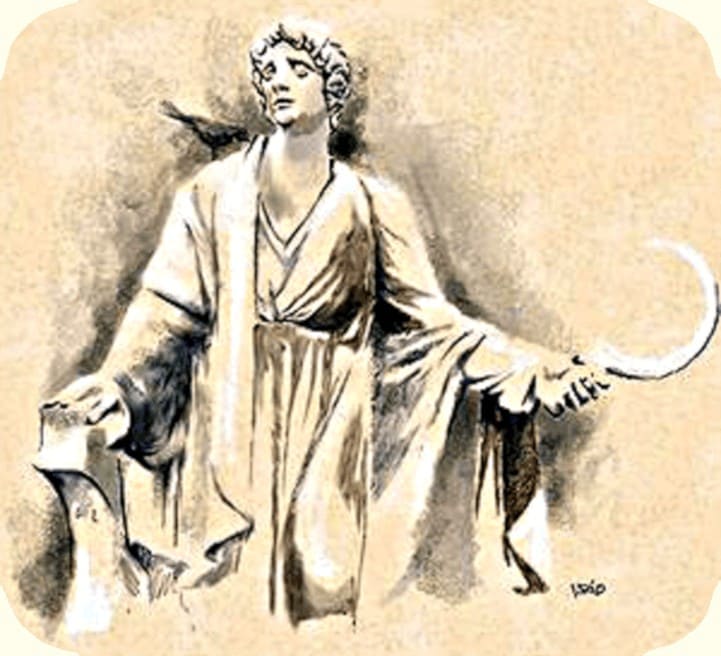
Image of Lucio Junio Moderato Columela
Raising and hatching chicks
CHAPTER V
Of the eggs, their custody, and how to get them out to the lluecas
This species poultry generally begin laying after the winter solstice; the most fertile birds start laying in temperate regions around the first of January, but in colder climates, after the middle of the same month. It is better, however, to stimulate their fertility with special food so that they lay earlier: it is very good to give them as much half-cooked barley as they want, because it makes the eggs larger and causes them to lay more often, but this food must be seasoned, so to speak, by mixing in leaves and seeds of cistus, because both are believed to greatly increase the fertility of birds.
The portion of food to be given to those kept in the open will be, as I have said, two cyathos of barley; however, a little cistus should be mixed in, or, if that is not available, vetch or millet. But the poultry keeper must ensure that, when these birds are about to lay eggs, their nests are lined with very clean straw and that they are swept from time to time and that the straw is replaced with the freshest possible, for if this is not done, they become infested with fleas and other similar insects that the bird carries with it when it returns to the same nest.
The poultry keeper must be careful and watch for the hens that are about to lay, which they signal with frequent clucking interrupted by sharp cries. And so he must watch them until they lay their eggs, and immediately visit the nests to collect the ones they have laid, and he will note down which ones he has collected and the date he did so for each one, in order to place the freshest ones in the incubators: the incubators were called lluecas by country folk, glocientes in Rome, and these are the ones intended for incubation.
The remaining eggs should be stored or sold. However, the freshest eggs are best for feeding to the hens, although stored eggs may also be used, provided they are no more than ten days old. However, generally speaking, once the hens have finished their first laying, they tend to want to brood after the Ides of January, and not all of them should be allowed to do so; for in truth, the younger hens are better suited for laying eggs than for brooding them, and their desire to brood can be discouraged by running a feather across their noses.
Therefore, it is best to use older hens for this purpose—ones that have done this many times before—and, above all, to be well acquainted with their characteristics, because some are better at hatching chicks, while others are better suited for raising the chicks that have hatched; on the other hand, there are some that break their own eggs and eat them, as well as those of others, in which case they must be removed immediately.
However, chicks hatched by two or three hens should be transferred, while they are still small, to a hen that is a better brooder, and this should be done as soon as possible—on the very first day—before the mother can distinguish her own chicks from the others, given how similar they all look.
However, there should be limits to this, as a hen should not be given more than thirty eggs, and it is certain that she cannot raise a larger number. It is customary to give the chickens an odd number of eggs, which is not always the same, for at the beginning of the season, that is, in January, they should be given fifteen and no more; in March, nineteen and no fewer than that; in April, twenty-one; thereafter, throughout the summer until the beginning of October, the same number; after that, it is unnecessary to worry about this, because the chicks hatched during the cold months die.
However, many people believe that it is not advisable to hatch chicks from the summer solstice onward, because, although they are easy to raise from that time on, they do not gain enough weight. But in the areas immediately surrounding the city, where chicks taken from under their mother’s wing are sold for a good price and do not usually die, it is acceptable to take them out in the summer.
When laying eggs in a brooder, one must always take care to do so during the waxing moon, from the tenth to the fifteenth day, for laying them during these days is generally best, and because this should be timed so that, when the chicks hatch, the moon is once again in its waxing phase.
Chicken eggs take twenty-one days to hatch and develop into chicks; but peacock and goose eggs require a little over twenty-seven days. If these are placed with hens, we should let the hens incubate them for ten days before adding eggs of their own species, as the hens will only lay four or, at most, five; but these larger ones, since small eggs produce tiny birds.
Apart from this, if someone wants to produce a large number of males, they should give the chicken the longest, most pointed eggs they can find; conversely, if they want to produce females, they should give her the roundest ones. However, the method for hatching eggs taught by those who take the greatest care in these matters is as follows.
First, they choose the most secluded nesting sites so that the lluecas are not disturbed by other birds; then, before placing anything over them, they carefully clean the straw that is to be placed under the eggs and fumigate it with sulfur, pitch, and a burning torch; after fumigating it, they place it in the nests, arranging it so that the eggs do not roll over when the birds enter or leave the nest.
There are also many people who place a little grass and a few bay leaves under the straw, along with garlic cloves studded with iron nails, all of which are believed to be a remedy against thunder, which spoils the eggs and kills the chicks before they are fully formed, before all their limbs have developed.
But the person who places the eggs under the hen should arrange them one by one by hand, unless they are all gathered in a basket, and then gently drop them into the nest that has been prepared. However, the chickens that are brooding must be given food immediately so that, being satisfied, they will stay in the nest more willingly, lest they move away and cool the eggs, which, even though the hens turn them with their feet, will, nevertheless, once the mothers have left the nest, be checked by the poultry keeper, who must check them and circle them with his hand so that, receiving the heat evenly, they hatch easily, and if any have been injured or cracked by the hen’s claws, he must remove them.
And when you do this, check on the nineteenth day to see if the chicks have pecked holes in the eggs, and listen to see if they chirp, since they often cannot hatch because the shells are so hard. And so you should remove by hand any chicks that are slow to hatch; and place them under the mother so she can keep them warm, but do this for no more than three days, for after twenty-one days, the eggs from which no chicks are chirping are empty, and they must be removed so the chicken does not sit on them any longer in the vain hope of hatching chicks.
However, it is not advisable to remove them from their mother one by one as they hatch; instead, leave them in the nest with their mother for a day without feeding or watering them until they have all hatched. The next day, when the entire brood has hatched, they are removed from the nest as follows. The chicks are placed on a sieve that has already been used to sift vetch or even a small field; they are then smoked with pennyroyal branches; this fumigation seems to protect them from the grain weevil, which kills them very quickly when they are small.
They must be placed in a cage with their mother immediately and fed sparingly with barley or spelt flour sprinkled with wine; for above all, one must avoid causing them indigestion; therefore, after three days, they must be kept with the mother in a cage, and before they are released to forage for new food, each one must be examined individually to see if there is anything from the previous day in their crop, for if it is not empty, it is a sign of indigestion, and in this case, they must not be allowed to eat until they have digested.
Young chicks should not be allowed to wander off; instead, they should be kept near the cage and fed barley flour until they grow strong. Care must also be taken to ensure that they do not come into contact with the breath of snakes, whose odor is so foul that it kills them all.
This can be prevented by repeatedly burning deer antlers, galbanum, or women’s hair; for the smoke from all these substances usually drives away such pestilential animals.
But care must be taken to keep them in a moderately warm environment because they cannot tolerate extreme heat or cold; it is best to keep them enclosed in the henhouse with their mother and, after forty days, let them roam freely. But in the first days of their infancy, so to speak, they must be picked up and the down feathers under their tails removed, lest they become soiled with litter, harden, and block the opening; and even if these precautions are taken, it often happens that the abdomen has no way to empty itself, and then a hole forms in the spot covered by a feather, allowing the droppings to pass through.
However, we must prevent both the chicks—once they have grown strong—and the hens themselves from contracting the “seed disease.” To prevent this from occurring, we will provide them with very clean water in thoroughly cleaned containers, regularly fumigate the coops, and clean them so that no manure remains inside. But if, despite this, they contract this disease, some people insert small pieces of garlic dipped in warm oil into their mouths. Others pour warm human urine into their beaks and squeeze them until the saltiness of the urine, combined with the nausea it causes, forces them to expel the beak through their nostrils.
They also benefit from the grape that the Greeks call angian saphilen 4, mixed with their food, or ground up and given to them to drink in water. And these remedies are used for those that are not yet very ill; for if the discharge surrounds the eyes and the bird refuses food, the cheeks are opened with a hot iron, all the matter that has collected under the eyes is squeezed out, and then a little ground salt is sprinkled on the wounds.
This disease arises mainly when birds suffer from cold and a shortage of food; also when, in the summer, they drink water that has pooled in the pens; and likewise when they have been allowed to eat unripe figs or grapes—even if not as much as they would have liked—foods from which birds must certainly abstain; and to make them reject them, a cluster of wild grapes—picked unripe from the hedgerows and cooked with fine wheat flour—is offered to the hungry birds; and, put off by the unpleasant taste, the birds will shun all kinds of grapes.
The same is true of the cabrahígo, which is fed to the birds along with their regular food and causes damage to the figs. Note, as with livestock, the custom of selecting the best birds and selling the worst ones so that every year, around autumn, when their production ceases, their numbers are reduced. And we will get rid of the old ones, that is, those over three years old, as well as those that are poor layers or poor brooders and especially those that eat their own eggs or others’ eggs and no less so those that begin to crow like roosters and to mount the other chickens; likewise, the late-hatched chicks, which, having been born after the solstice, have not been able to reach their full growth.
However, we will not follow the same approach with the males; instead, we will keep them as breeding stock for as long as they are able to mate with the females, because among these birds, it is very rare for a male to turn out to be a good breeder.
During the period we have mentioned—that is, after the Ides of November—the birds should no longer be fed; they should be taken off their more expensive feed and given grape pomace, which sustains them quite well, occasionally supplemented with wheat bran.
Pike Moderato Columela currency
Care and Management of Chickens
CHAPTER VI
How to save the eggs to last a long time.
Conservation storing eggs for a long period of time is also an important part of caring for these birds: they keep well in the winter if you cover them with straw, and in the summer with bran.
Some people cover them beforehand, for six hours, with ground salt; then they clean them and place them in straw or bran. Some put them among whole beans, and others among ground beans; some cover them with unground salt, and others cure them in hot brine.
But salt, whatever its condition, not only prevents them from spoiling but also reduces their volume, preventing them from remaining plump, which deters buyers. And so, even those who preserve eggs in brine cannot keep them intact.
CHAPTER VII
How to feed the chickens.
Although the fat although raising chickens is more the domain of a poultry farmer than that of a farmer, since it is so easy to do, I have decided to offer some guidelines on the subject.
This requires a very hot, dimly lit room: the chickens are placed there, each in a very narrow cage or in a basket, which is hung up so tightly that the chickens cannot turn around.
The cages or baskets should have openings on both sides—one for the head and the other for the tail and hindquarters—so that the animals can eat and, after digesting their food, excrete without soiling themselves. Very clean straw or soft hay will be spread out beneath them; this is important, because if the bedding is hard, they do not gain weight easily.
All the feathers on their heads, under their wings, and on their thighs are plucked; the former to prevent lice, the latter to keep their anuses from becoming ulcerated by the droppings.
And for food, they are given barley flour mixed with water and shaped into balls, which help them gain weight. In the first few days, these should be given sparingly, until they become accustomed to digesting a larger portion; for it is essential above all to avoid indigestion, and to give them only the amount they can digest; and they must not be given new food until, upon touching their crop, it is determined that nothing of the old food remains.
Then, once the bird has had its fill, the cage is lowered slightly and the bird is let out—not so it can roam freely, but so that if any insect bites or stings it, it can chase after it with its beak.
This is the method commonly used by those who fatten poultry; for those who, in addition to fattening them, want them to be tender, pour fresh mead over the flour we mentioned, and in this way fatten them: some mix one part good wine with three parts water, and fatten the bird with wheat bread soaked in it.
The chicken has begun to prime; the first day of the moon (because this also has to meet) is perfectly blind to the twentieth.
But if the food spoils, it would be advisable to reduce the feeding for as many days as have passed since the fattening began; however, the fattening period should not extend beyond the twenty-fifth day of the lunar month. Even so, the most important thing is to reserve the largest birds for the most sumptuous tables, for in this way the labor and expense are handsomely rewarded.
NOTES TO THE BOOK, THE EIGHTH:
Notes to Chapter I
- 1 Bird aviaries.
- 2 Dovecotes.
- 3 Fish ponds.
- 4 Stables.
- 5 Shelters.
- 6 Apiary.
- 7 Places where geese and other waterfowl are kept.
- 8 Parks where, at first, only hares were kept and later all kinds of wild animals.
- 9 (also known as an apiary) is the place where a beekeeper’s hives are kept.
- 10 An aviary is a large cage for confining birds.
- 11 Hunting estate.
Notes to Chapter II
1. Pliny, in Book 10, Chapter 26, states that the tomb of Meleager in Boeotia has made them famous, and that people come to it from Ethiopia at certain times of the year, but neither he nor Varro tells us what kind of people they are.
2. Pliny states in Book 10, Chapter 50, that these peoples were the first to think of raising chickens: they perfected this art to such an extent that Cicero notes in Book 2 of *The Academic Questions* that there were people among them who, simply by looking at an egg, could tell which hen had laid it.
3. From this passage, as well as from Varro’s *De re rustica* (Book 3, Chapter 9) and Pliny’s *Natural History* (Book 10, Chapter 21), it is clear that the ancients enjoyed watching cockfights, that they raised roosters for no other purpose than this, and that large bets were placed on which one would win.
This pastime has endured among us over the years, sometimes with greater enthusiasm and sometimes with less: I have known of one cockfighting ring in this city of Lucena, and two in Cabra, which were in operation on every holiday. It is much more widespread in England, Mexico, and Bohemia.
4. Our author says: “ampullaceo coreo,” whether he means that this piece of leather is a section of a boot (since the ancients also made them) or at least that it was folded as if it had been cut from one.
Notes to Chapter IV
This philosopher was the one who constantly lamented the miseries of human nature. He wrote extensively, although it is said that he had no teacher and was self-taught.
Having developed dropsy, he consulted doctors with cryptic questions, asking them if they could make rainy weather clear. And since they did not understand his question, he buried himself in manure, believing that its heat would dispel the excessive moisture in his body; and since this remedy did not cure him, he let himself die at the age of 60.
Notes to Chapter V
1. It seems, however, from what was said in the previous chapter, that citiso should never be omitted.
2. The ancients also attributed other qualities to long eggs, which made them superior to others. Horace, in Book 2, Satire 4, lines 12 and following, says that they are the tastiest and most nutritious. Pliny also cited this passage in Book 10, Chapter 52.
4. Staphis agria in Latin; albarraz in Spanish.
Notes to Chapter VI
1. Could this effect not be attributed to the same cause that causes salt to dissolve in humid air? And do these two effects not stem from the fact that salt draws the liquid components of the egg toward itself, just as it draws moisture from the air, as a result of this principle of adhesion, which causes all fluid substances to adhere to solids that are denser than themselves?