All poultry, including hens and roosters, that arise or are on display in any jurisdiction, poultry should be properly identified.
This is important for several reasons. When birds such as chickens, pigeons, ducks, and turkeys are vaccinated by a veterinarian for certain diseases, the veterinarian usually issues a vaccination certificate. This document specifies which birds have been immunized and their respective identification numbers, i.e., the ring placed on their legs. This identification serves as confirmation that the bird has received the required vaccine.
During the fairs and competitions, it is essential that each bird has its identification number, which is unique for each specimen, at the time of evaluated and classified.
This code of the ring is useful for the breeder because you can use it in breeding to easily identify the offspring of several specimens, as well as for the monitoring of the production, the development, and the aesthetic defects, which provides additional support to the controlled breeding, especially by applying lines or crosses.
The individual number assigned to each hen or rooster is also recorded in the listings of the control of the breeder. For example, when we buy, sell, or transfer birds, this number in the ring serves as a means of checking on the animal.
It is essential to remember that a ring does not provide information about the breed, lineage, or characteristics of an individual.
All the specimens exposed must be banded with an official ring that is closed so that it cannot be removed or opened.
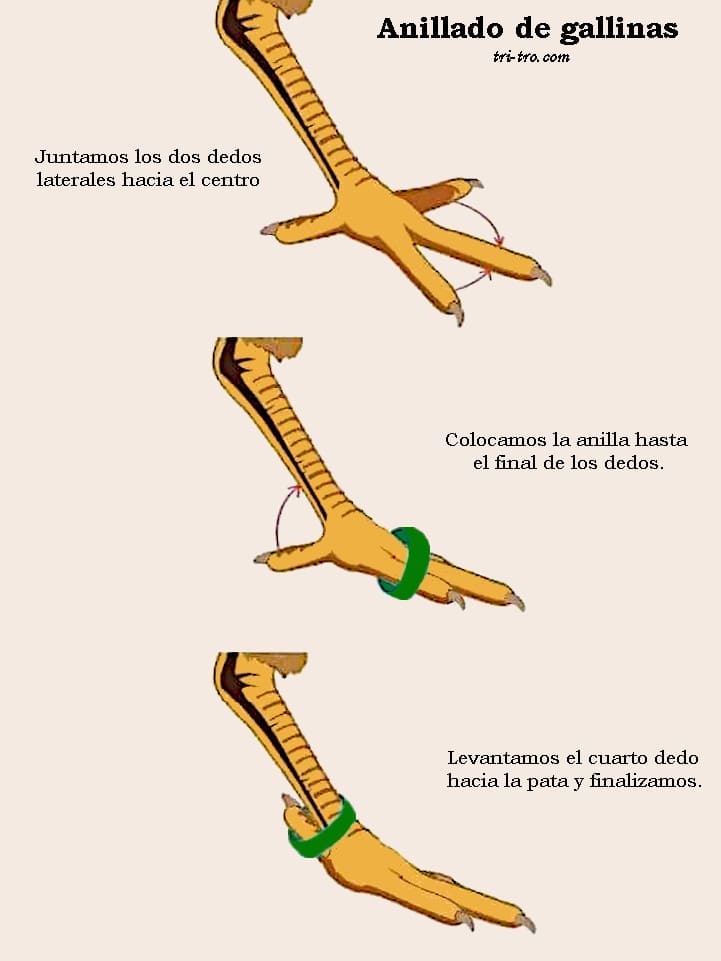
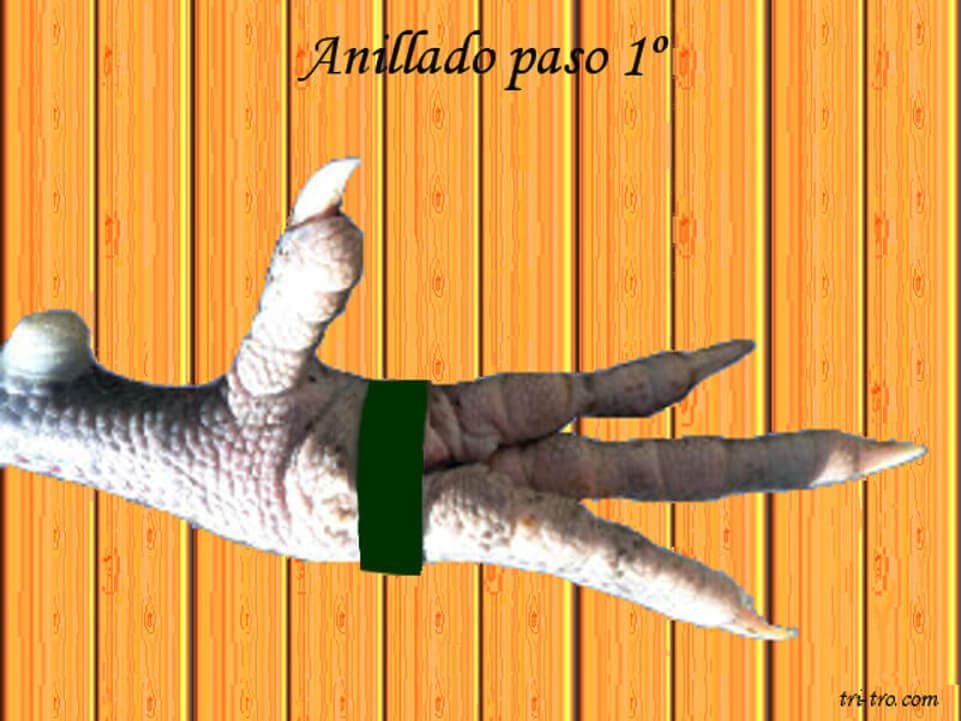
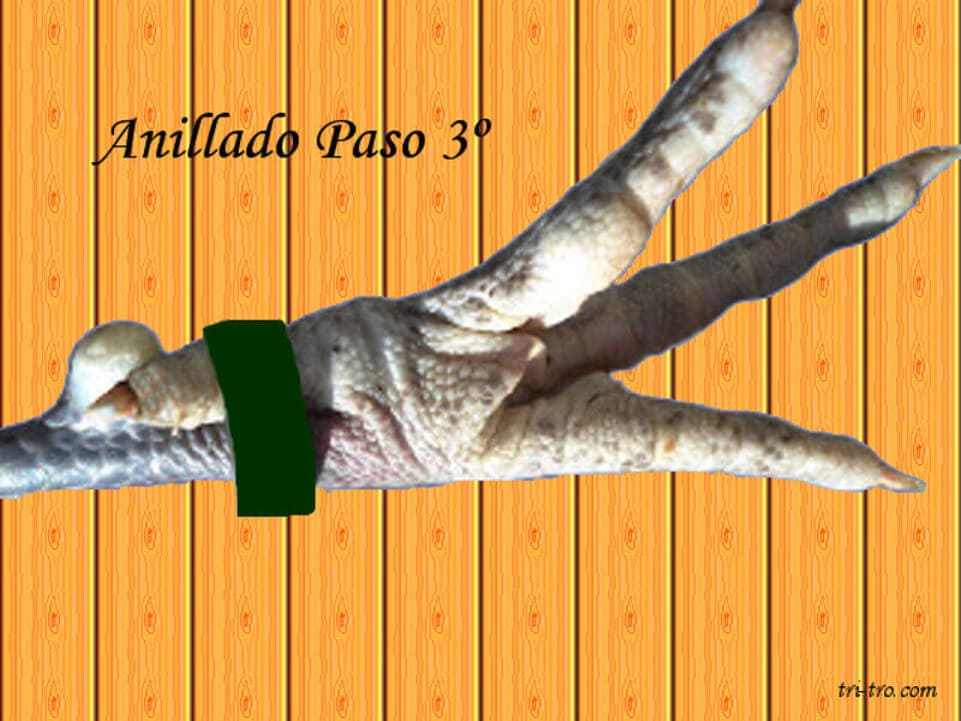
Banding is performed at an early age, approximately 45 days after birth, where the band is inserted using the three forward-facing toes of the foot. The band is brought close to the fourth toe, which must be bent over the tarsus, and the band is slid until it passes the toe; below are some descriptive photos.
As the animal grows, the ring may not be withdrawn. It is important to verify in the young specimens, which all keep the ring on the leg, as in some cases it could occur that the ring will slide because the foot has not made sufficient growth. You can also place a flange in plastic, which will be removed when they are no longer at risk of exit.
What is the meaning of the letters, numbers, and colors in a ring?
When using the official rings for the first time EE – E, is likely to arise various questions about it.
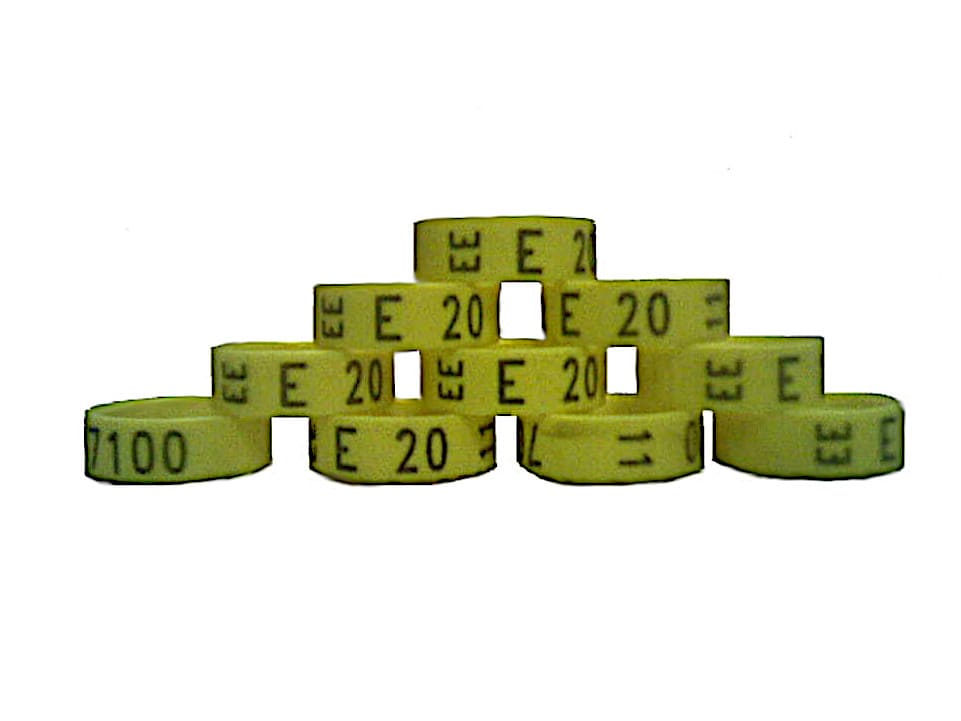
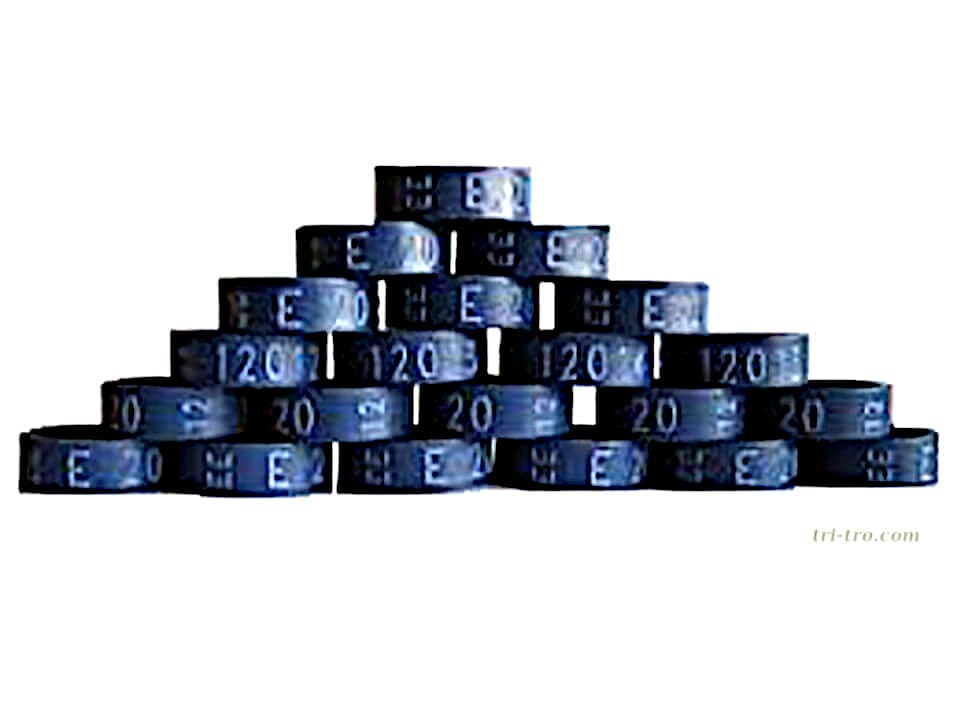
The color of the ring changes each year in accordance with the following scheme of colors, spanning a period of six years:
- 2017: yellow
- 2018: blue
- 2019: green
- 2020: gray
- 2021: white
- 2022: black
- 2023: yellow
- 2024: blue
- 2025: green
- 2026: gray
- 2027: white
- 2028: black
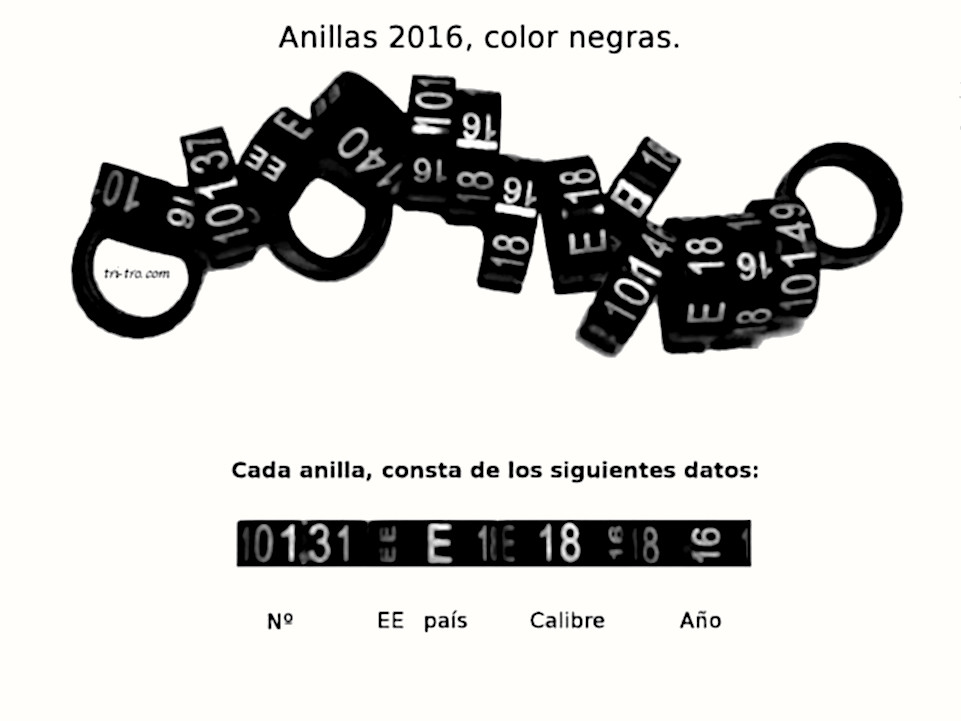
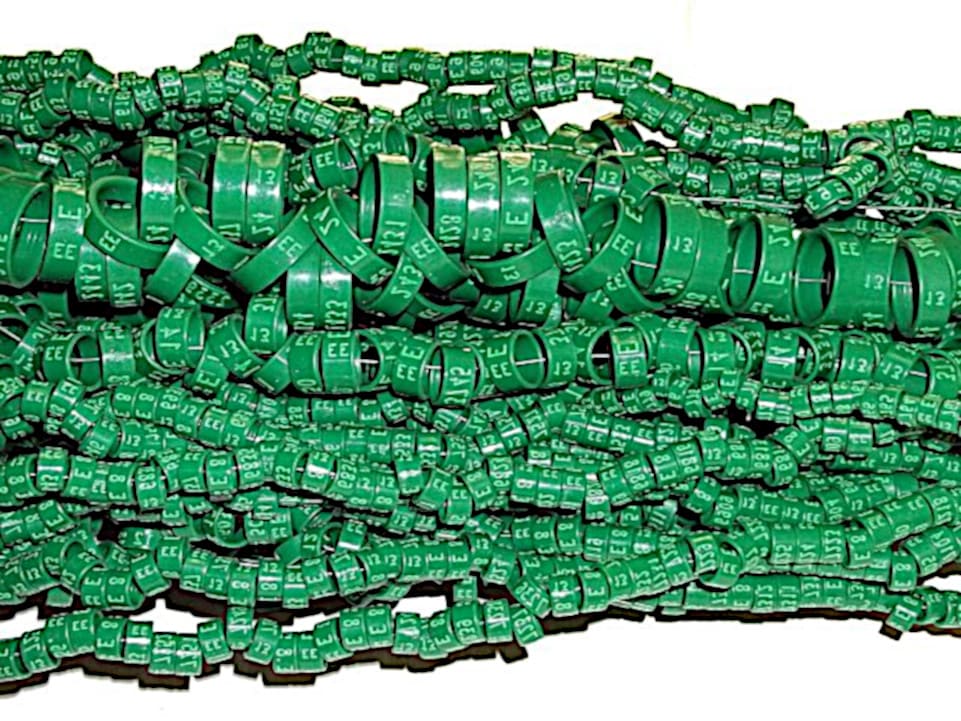
This color is uniform for all the nations associated with the Entente europea,. In consequence, he has no particular meaning, while it facilitates the breeder to determine the age of a bird from a distance, without the need to manipulate it. In addition, the rings have a series of alphanumeric codes (cover image of the post).
As an illustration:
Ring 10131 – EE – E – 18 – 16
What do these letters and numbers mean?
- EE it refers to the Entente europea, and warrant to us that it is a ring official, a federation recognized by this and attached to the same.
- E denotes the nation, in this case, Spain. The rings of France are marked as FR, the German D, and so on.
- 10131 represents the unique number of the ring of this issue.
- 16 corresponds to the last two digits of the year.
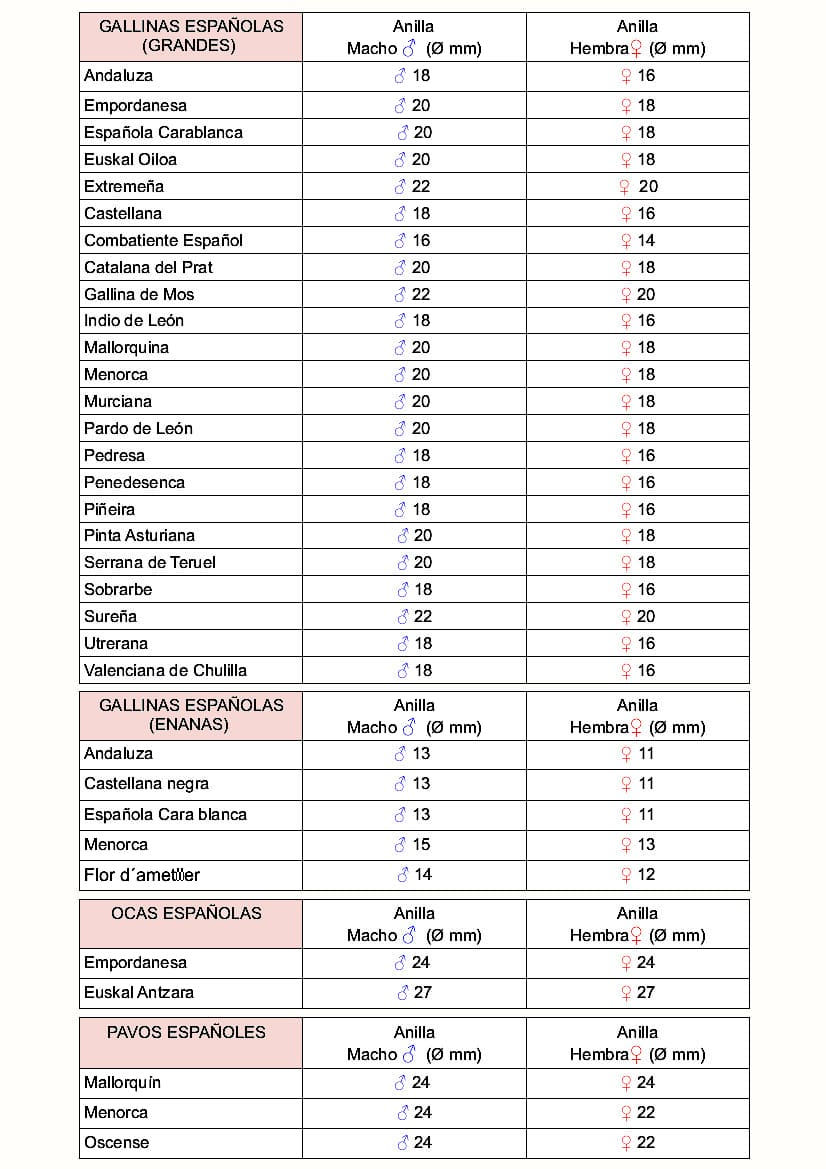
- 18 indicates the size in millimeters of the ring.
Each breed of hens presents a thickness of the legs is different, both in males as in females. For this reason, it is necessary to use the appropriate size for the ring, in order to prevent that you can lose or be uncomfortable due to being too small.