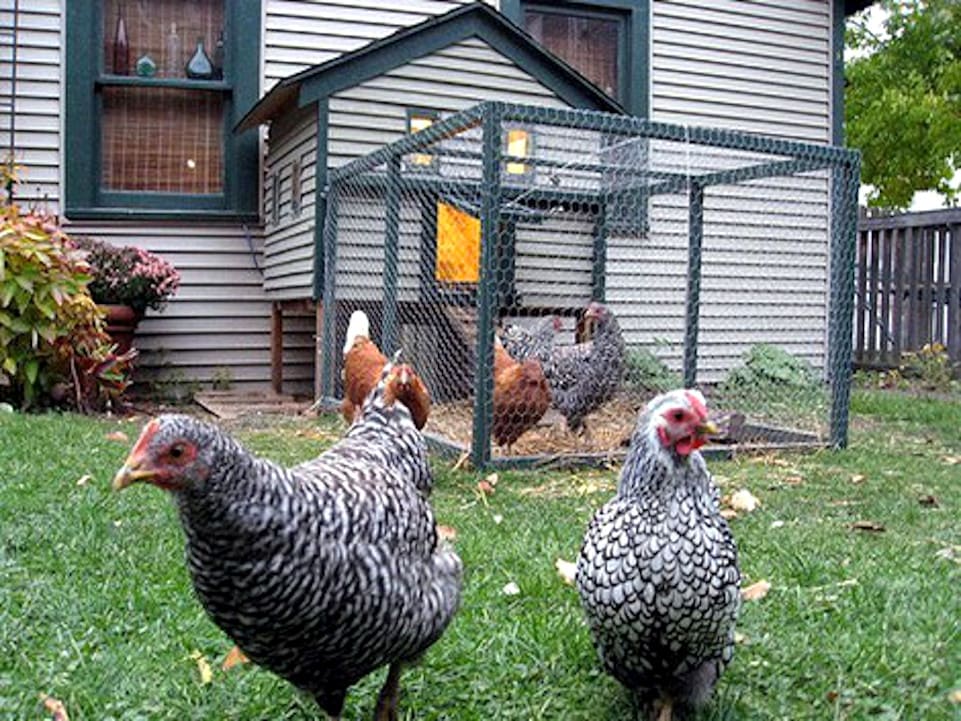
Millions of chickens and turkeys are born annually in the united States. Muchos consumidores optan ahora por los huevos orgánicos, certificados como “libres de jaulas”, es decir, pollos en patios urbanos; causa furor, pero por lo general estos cuestan entre dos y tres veces más que los comunes, y tampoco es fácil encontrarlos en todos los supermercados.
¿La alternativa? Criar sus propias gallinas. Por ejemplo, el Proyecto de Huertos Comunitarios de Oakhurst (OCGP, por sus siglas en inglés) realizó su cuarto Simposio de Pollitos en la Ciudad en Decatur, también en Georgia. Unos 50 participantes se dieron cita en talleres a lo largo de un día entero.
The purpose of these annual meetings is to teach urban people the basics for raising chickens in their backyards, in a country where, except in the case of the great metropolis, a growing number of cities with reduced helmets plants and extensive neighbourhoods and residential suburbs of single-family homes.
The classes cover topics such as the symbiotic nature of chickens, different varieties, building chicken coops and measures against predators, what to feed your birds, how to raise them, first aid and general health concepts, and how to set up community coops.
OCGP taught throughout the year the course “The chickens are easy”. The quotas are often exhausted. Although there is a national organization that brings together the breeders of urban chickens, many communities have turned to the tools of the Internet to support their ventures, and poultry.
Andy Schneider, a spokesman for the national movement that promotes the breeding and urban that is known as “The pretty chicken”, started in 2008 a Meetup group on breeding in the backyards of Atlanta, which already has about 1,700 members.
Other cities that are experiencing a boom in the raising of chickens are Austin, Chicago, New York, Portland, and San Francisco, according to Schneider. Austin and Dallas, both in the southern state of Texas.
Offer tours of chicken coops, in which people travel, especially to see how to breed birds, to other people, according to the coordinator of the program in OCGP, Andrea Zoppo.
For his part, Schneider has a daily radio program that is transmitted over the Internet from 12:00 to 14:00 hours, and deals entirely on sustainability and poultry in backyards.
También actúa como portavoz nacional del Programa de Bioseguridad para Aves del Departamento de Agricultura de Estados Unidos. Y en septiembre de 2011 presentó el libro “The Chicken Whisperer’s Guide to Keeping Chickens” (Guía del susurrador de pollos para la cría de pollos).
Ya aquí, en Europa, se hace desde hace mucho tiempo; está integrado en los habitantes y cultura de los países, y más en los de origen mediterráneo; ese es el caso de España.
Well, there is always a chicken coop in rural areas, both for laying hens and roosters or capons for meat, that is, self-sufficient in eggs and meat from these birds.
Hoy en día, ya se ven en los patios urbanos de los adosados o parcelas de 500 metros en las nuevas construcciones de las urbanizaciones en las ciudades, en las que se está aprovechando su pequeña parcela trasera de verde, con un pequeño gallinero de dos o tres aves, que surten a la familia de este estupendo alimento.
Lo interesante sería proponer y hacer efectivo para esos ciudadanos urbanitas, como es el caso de las personas mayores (jubilados) que no pueden poner en su vivienda unas gallinas.
Providing a ground to the city hall, to be able to put a chicken coop community, it would be ideal, as they would be busy with everything that takes the care and attention of the hens, and in exchange they will give you some beautiful eggs.