Viral Diseases:
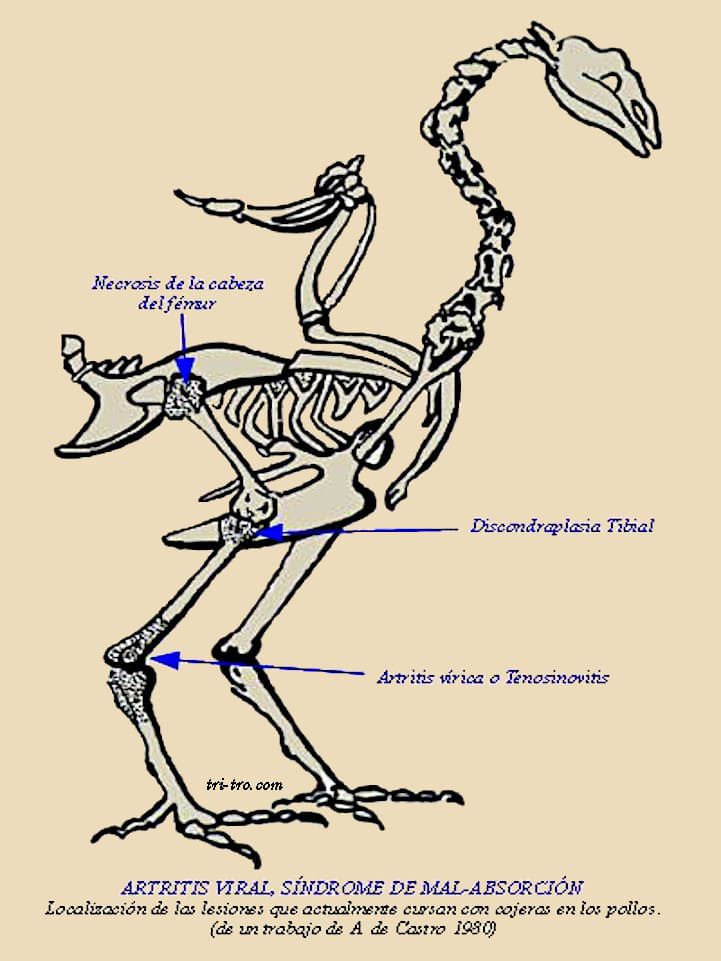
Infectious disease viral in origin characterized by alterations of the membranes, synovial, tendon sheaths, and myocardium. Viral arthritis is also known as “tenosynovitis.”
The malabsorption syndrome is produced by the same causal agent, and is presented as a disease with digestive symptoms or poor absorption of food.
Symptoms may include be of three types:
– General:
Sometimes these symptoms do not appear, and the flock appears normal. In some cases, certain birds tend not to move, and when forced to do so, they show signs of lameness.
Locomotives:
The birds exhibit lameness. Have tendon thickened and appears above the joint tarsal, a nodule of two or three centimeters.
– Digestive “malabsorption syndrome”:
It is a condition characterized by sparse feathering, with the feathers on the upper front part of the back standing on end, giving the appearance of helicopter blades.
Both in the form of lameness as in the syndrome of malabsorption, the morbidity, and mortality vary dramatically among the lots affected.
Since the late 1970s, the poultry industry has been facing a new problem that undermines the economic efficiency of meat production, a condition now known as malabsorption syndrome.
This disease was believed to be caused by various factors that lead to malabsorption of nutrients and result in a wide range of clinical and pathological manifestations; these factors include the effects of certain viruses on the digestive system, mycotoxins, management practices, genetic factors, and others.
The disease was first identified and studied in broiler chickens, which suffer the greatest economic losses, but it has since been diagnosed in laying hens and turkeys as well. First described in the Netherlands, the disease has spread rapidly around the world, and today nearly every country is affected by it, including ours. Reoviruses are currently considered a key factor in the disease.
The following is a summary of the key findings regarding this condition, drawn from the extensive existing literature on the subject. In the Netherlands, Kouwenhoven and colleagues described a syndrome in broiler chickens in the late 1970s, characterized by dwarfism, poor feathering, and leg weakness, which was later reproduced experimentally in broiler chickens.
Inoculating material by the pro ventricle and intestine of chickens affected; and in this way open the door to a possible infectious cause, for what was there called the condition of the “Dwarfism infectious”, because it slows the growth of affected animals, was a fact of great significance.
Subsequently, outbreaks with similar characteristics were reported in various European countries, each of which was given a different name based on the predominant clinical and pathological findings:
— Disease of the chicken helicopter: Due to the bad position of the feathers in the wings.
Dwarf Chicken Syndrome: By the relatively high percentage of birds that do not reach the size and the desired weight.
Avascular necrosis of the femoral head: Since this lesion has been found in adult chickens in some cases.
Brittle bone disease: Or osteoporosis due to the bone fragility that often accompanies it, etc. In the early 1980s, similar outbreaks began to be reported in the United States, where the disease spread rapidly, receiving the names mentioned above and others such as:
Pale Chicken Syndrome By the lack of pigmentation of the ridge, the chins, and plants.
—Infectious ventriculitis: The frequency of this injury in cases in which it was studied.
— Malabsorption syndrome: According to Van der Heide in 1982, this is because the chicken apparently consumes the necessary nutrients but, for some reason, does not absorb them.
In addition to Europe and the United States, this disease has been confirmed in South America, Mexico, Australia, etc
The most significant losses associated with this disease have been the stunted growth of affected animals, which can account for 5 to 30% of the affected flock, resulting in a reduction in slaughter weight of up to 30 or 40% compared to healthy birds.
Some compensatory growth can be expected starting in the seventh and eighth weeks of rearing for these animals, which would entail extending the fattening period and incurring considerable feed costs—a measure that generally does not justify such an extension.
In addition to weight loss caused by dwarfism, injuries to the musculoskeletal system that result in lameness further hinder weight gain.
The de-pigmentation which often appear in all the sick animals makes the chicken to diminish significantly its value in the market affected the aesthetics of the product and appear to an animal with less nutritional value, while all other indices are satisfactory.
The mortality tends not to be a factor of great concern within the economic losses, since they are usually low between 5 and 7 %, although it may be much higher in cases associated with other diseases and processes such as bursitis and infectious avian coccidiosis.
It has been noted that the increased growth rate of today’s broiler chickens contributes to the onset of stress when feed is unable to fully meet their nutritional requirements—both in terms of quantity and quality—particularly with regard to:
Essential amino acids, vitamins A, B, E, and the B-complex, as well as certain minerals; therefore, any factor that interferes with the normal absorption of nutrients could lead to the development of what is now known as malabsorption syndrome, which is why the theory of its multifactorial aetiology is gaining increasing support.
Viruses are commonly isolated from sick birds, particularly from the digestive tract, and many of these isolates have been able to reproduce the disease. Among the wide variety of viral isolates obtained, the largest percentage has been reoviruses; however, the experimental reproduction of the disease using such inoculants is not always successful.
Many of the isolated reoviruses with proven pathogenicity share the same antigenic properties as the reference strain used for the production of viral arthritis vaccines (strain S1133); therefore, reoviruses—and especially those that share these antigenic properties with strain S1133—could play an important role in the development of this condition.
The viral arthritis reovirus, isolated from clinically affected field cases of this disease, has been shown to cause SMA under experimental conditions, with a higher incidence in chickens fed high-energy diets.
Other viruses have also been isolated in natural outbreaks of the disease and, as agents that cause diarrhea, may well be important factors in SMA; these include:
Parvovirus, calicivirus, adenovirus, and coronavirus, although little is yet known about their actual role.
Since the pathophysiological basis of SMA is associated with malabsorption of nutrients, various authors agree that poorly balanced diets or diets lacking certain key nutrients could produce the same effects as the action of various biological agents or promote the progression of the disease following exposure to these agents.
Rickets and osteomalacia, which commonly occur in birds affected by SMA, have been observed in broiler chickens due to vitamin D deficiencies when mineral levels have been poorly balanced.
Encephalomalacia, stunted growth, feathering problems, and rapid growth are also described as very common nutritional deficiencies in the rearing of high-performance broiler chickens.
The harmful effects of mycotoxins on the economics and management of broiler chicken production have been well established, and among their main effects are:
Its detrimental effect on immune processes, its negative impact on growth, and its interference with proper nutrient utilization.
— Increased morbidity depresora of renal function and disorders of pigmentation of the birds.
Locomotor disorders in broiler chickens have repeatedly been linked to the effects of mycotoxins.

Other factors:
Some researchers who have conducted in-depth studies of SMA assert that management plays a significant role in the onset and severity of the syndrome, particularly transportation, and that there is sometimes a close link between sick chicks and the breeding line used.
Despite the possible influence of genetics, the cleaning and disinfection routine of the premises appears to be a significant factor in the onset of this condition; however, once it has taken hold, there is little improvement, even when very careful hygiene and disinfection measures are taken.
Already established that the reovirus are directly responsible for the syndrome of malabsorption, we will describe in the following outline the pathogenesis of this syndrome and the related conditions.
The application of viral intestine and liver produces effects on the metabolism, digestion, and the absorption of nutrients.
It produces fibrosis of the pancreas with a decrease in the production of enzymes such as lipase, amylase and trypsin, pancreatic, as well as decreased the proteolytic activity total.
The proventriculus enlarges, as do its glands and walls; in addition to poor digestion, malabsorption is cited as a cause of atrophy of the intestinal villi and crypts, leading to the loss of fats, amino acids, carbohydrates, vitamins, minerals, and pigments.
There is an abnormality in body chemistry, such as a decrease in serum carotenoids (malabsorption).
Decrease of vitamins A, D, E in the serum, increased alkaline phosphatase (intestinal damage).
Elevated serum pancreatic enzymes (pancreatic damage). Decreased plasma glutathione peroxidase (a selenium-dependent enzyme). Certain conditions arise as a result of malabsorption syndrome:
The first clinical symptoms usually appear during the first week of life and are characterized by diarrhea and bloating. The feces are loose or semi-loose, and undigested food may be visible.
Diarrhea can last for about 10 days and then recur during the third week. Throughout this period, the birds appear lethargic and experience delayed feathering.
The abdomen may be distended and hard. Although in this period may be animals that are left in the growth, this is usually seen with greater clarity into the fourth week, where they also begin to appear, disorders of the legs of the fingers.
Chicks with the most delayed feathering still have yellow down on their heads and lack feathers on their bellies and tails; some may also exhibit abnormal wing feather arrangements, with the feathers curling upward—a trait that has led to these affected chicks being called “helicopters.”
Many animals generally have little or no pigmentation on their tarsi, crest, and chin.
By the sixth or seventh week, between 5% and 7% of affected animals exhibit marked bone fragility, leading to spontaneous fractures in the abdominal limbs.
Neurological symptoms characteristic of encephalomalacia may appear during the second and third weeks of life.
Although the clinical lesion tends to vary with the characteristics of the units, factors, additional in which to look outbreaks, the box lesion can be summarized as follows:
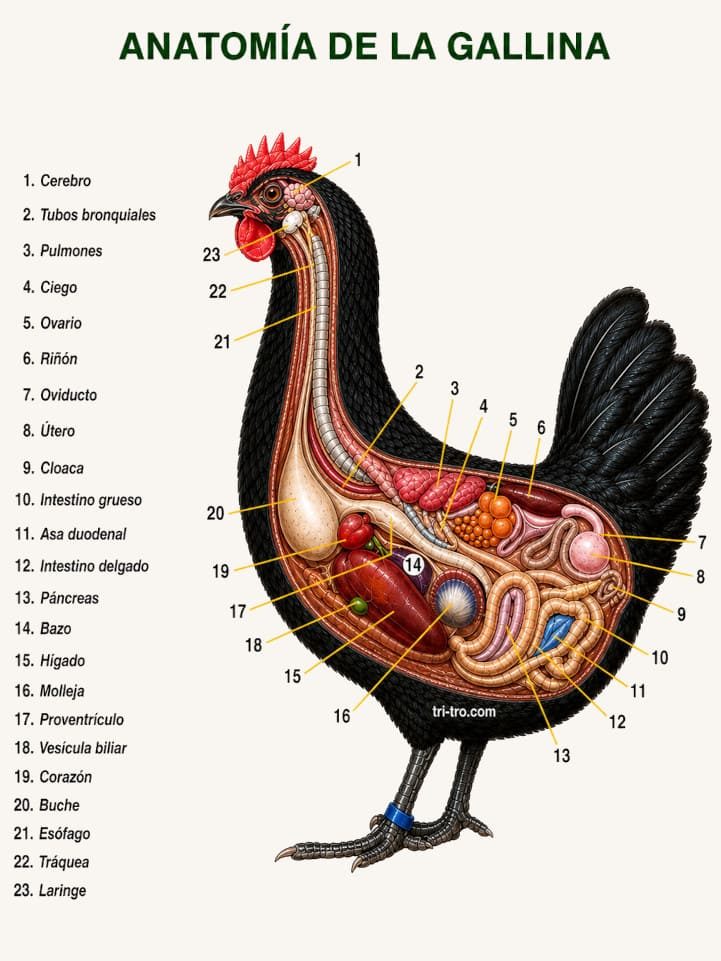
The proventriculus is one of the organs most frequently reported to have morphological abnormalities; it is generally somewhat dilated and flaccid, with a slightly thickened wall, a pale or dull mucosa, and prominent proventricular glands whose excretory ducts appear somewhat dilated.
When pressure is applied, a milky, cloudy fluid—sometimes in large quantities—may be observed oozing from these glands, and the gizzard may be reduced in size. Microscopically, in addition to inflammation of the digestive epithelium, hyperplasia of the glandular epithelium and lymphocytic nodular formations are frequently observed.
The small intestine is usually affected, particularly the duodenum and part of the jejunum, which appear distended and flaccid. The liquid or semi-liquid stools may have a slight orange or brown tint and reveal the presence of coarse or undigested food in the stool.
The intestinal mucosa may have some redness and mucus on the surface or forming cords, or seem to be inexplicably normal.
Microscopically, in addition to inflammation, catarrhal of variable degree and that's called the box pathological, can be seen in some cases function and atrophy of the intestinal villi with flattening of the erythrocytes. The tonsils cecal usually appear tumefactas and the blind relaxed.
In the liver and pancreas, it is common to find a fine speckled whitish, which microscopically correspond with areas of necrosis, or an accumulation of items lymphoid.
Bone lesions are characterized primarily by early-stage rickets or severe osteoporosis; detachment of the articular cartilage from the femoral head is common, and in more severe cases, fracture of this structure occurs when the pelvic limbs are disarticulated during the necropsy.
In clinical cases, staphylococci and E. coli are frequently isolated from such bone lesions, which is why the condition has come to be known as femoral head necrosis.
Other injuries of interest described in the literature include: myocarditis, inflammation of the thymus and the spleen, nephrosis, and bleeding in the fat and muscles.
Other alterations may occur in organs and tissues when coupled to the SMA to pursue other entities such as coccidiosis, infectious bursal, infectious coryza, etc., very common operation.
For, the diagnosis of this pathology plays an important role in the anamnesis epizootic, where the assessment of the enabling health plays a significant role.
This should be accompanied by clinical and pathological studies, which must take into account the various clinical presentations, such as the “dwarf chicken,” “pale chicken,” and “helicopter chicken,” among others.
This can be combined with serological tests such as agar gel, precipitation, and reno-centration. Isolation of reoviruses (responsible for viral arthritis) would provide a definitive diagnosis.
Preventive measures should be based on proper handling, in addition to the use of thorough sanitation and disinfection methods; among these, the use of 10% formalin, preferably heated, is recommended as part of the sanitation protocol.
Immunoprophylaxis plays a crucial role in prevention; thus, live and inactivated vaccines against reovirus are used in long-cycle poultry. The objectives are to protect breeding birds against tenosynovitis and to promote high levels of maternal antibodies to protect the offspring against: (early-onset) tenosynovitis and malabsorption syndrome.
Bibliography
Basso, Nilda y otros. 1992. Bases de la parasitología veterinaria, Ed. Hemisferio Sur, 157 pp.
Boero, Juan José 1976. Parasitosis Animales, EUDEBA Argentina, 524 pp.
Booth, N.H.; McDonald, L.E. 1987. Farmacología y terapéutica veterinaria, Editorial Acribia, 527 pp.
Drugueri, L. 2004. Ticks of the animals
Drugueri, L. y D. Modern. 2002. Parasitología veterinaria (Parte 1)
Hallu, Ruben E. y otros. 1997. Curso de Farmacología y Bases de la Terapéutica, Prensa Veterinaria Argentina.
Merck & Co. 1988. El Manual Merck de Veterinaria, Merck & Co., Inc. EE. UU. Centrum. Tercera edición.
Soulsby, E. J. L. 1982. Helminths, arthropods and protozoa of domesticated animals, 7th ed. p. 119-127.
Surumay, Queila. 1993. Parasitismo en especies avícolas. FONAIAP DIVULGA, n.º 42, enero-junio 1993
MERCK & CO. (1995). Manual Merck de Veterinaria. Rahway, N. J., EE. UU.
BUXADÉ, P. (1987). The laying hen. Ed. Mundiprensa. Madrid.
DORN, P. (1987). Manual of avian pathology. Ed. Acribia. Zaragoza.
HOFSTAD, M. S. (1984). Diseases of Poultry. Iowa State University Press, Ames, Iowa.
ZARZUELO, E. (1982). Vade mecum of the pathology, infectious poultry. Ed. Aedos, Barcelona.
CASTELLÓ, F. and CASTELLÓ, J. A. (1960). The New Art of Raising Chickens. Aedos, Barcelona.
OROZCO, F. (1989). Breeds of chickens Spanish. Ed. Mundiprensa. Madrid.
LACADENA, J. R. (1998). Genetics. Ed. AGESA
PUERTAS, M.J. (1992). Genetics: Fundamentals and Perspectives. McGraw-Hill Interamericana.
SANCHEZ-MONGE, E. (1969), Genetics. Espasa-Calpe S.A.
OROZCO, F. and ROBLA, F. (1986). Genetic aspects of the León rooster. 24th Symposium of the WPSA (Spanish Section): 199–212.
HILL, J. L. (1973). Genetics, general and applied. Ed. UTEHA.
CASTELLÓ, J. A., LLEONART, R., FIELD, J. L., OROZCO, F. (1989). Biology of the chicken. Real Escuela de Avicultura.
LLEONART, F., ROCA, E., CALLÍS, M., GURRI, A., PONTES, M. (1991). Poultry Hygiene and Pathology. Royal School of Poultry Science.
STURKIE, P.D. (1968). Avian Physiology. Acribia Publishers. Zaragoza.
LOHMANN ANIMAL HEALTH (2012)
You may be interested in these other sections