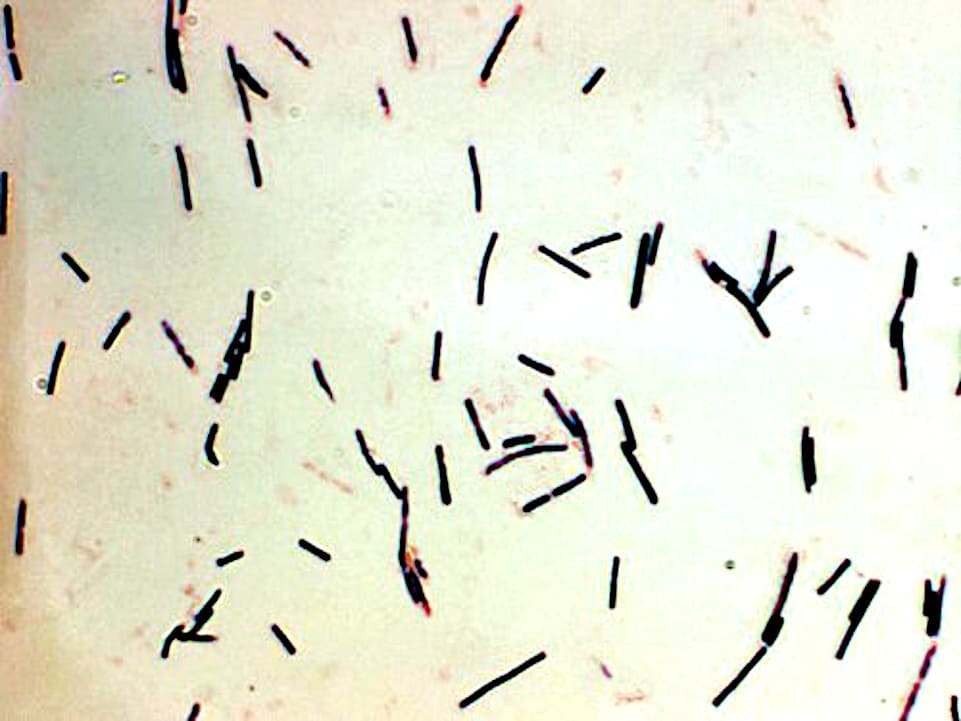
Necrotic enteritis has been linked with types A and C of Clostridium perfringens. This disease is more common in individuals who live in facilities where they are used in beds of straw.
Enterotoxemia is likely to occur only in the context of a significant disturbance in the intestinal bacterial flora.
These disorders may be caused by changes in intestinal contents resulting from variations in the quality or quantity of feed consumed; a decrease in intestinal motility; damage to the intestinal mucosa caused by pathogenic microorganisms (such as hemorrhagic enteritis in turkeys, Salmonella, or roundworm larvae); or toxins.
These changes may facilitate the colonization by clostridia and the consequent immediate production of toxins. Necrotic enteritis has been reproduced in experimental conditions by using the direct administration into the duodenum of a high number of cells of clostridia and pre-formed toxin.
Injury and diagnosis:
The infected birds show symptoms of depression and can suffer from diarrhea. The onset of clinical symptoms is rapid, and death can occur in a matter of hours.
The region of the chest presents an appearance dehydrated and dark, while the liver is usually inflamed and congested.
The small intestine takes a globose shape and is brittle, containing a liquid of brown color and strong odor.
The intestinal mucosa is covered by a layer of diphtheria brown.
The disease can persist in the affected population between 5 and 10 days, with mortality rates that range from 2 to 50 percent.
The identification of a high number of bacilli short, thick, gram-positive, observable in a stained smear prepared from scrapings of the mucosa, facilitates the establishment of a preliminary diagnosis.
The histological observations include coagulative necrosis in one-third or one-half of the thickness of the mucosa, accompanied by clusters of bacilli short and thick in the remains fibronecróticos. It is possible to isolate Clostridium perfringens in the intestinal contents through crops or techniques anaerobic.
The lesions caused by Eimeria brunetti can be similar to those observed in necrotic enteritis; however, coccidiosis is not complicated rarely presents a nature as acute or severe.
Enteritis colitis can present clinically in a similar way to necrotic enteritis. However, the intestinal lesions are usually localized, affecting mainly the ileum, cecum and rectum, and are often seen in necrotic lesions in the liver.
Treatment and control:
To minimize the risk of necrotic enteritis, it is crucial to implement a health check and rigorous efforts to prevent coccidiosis, salmonellosis, and other intestinal infections.
It is essential to avoid modifications to steep in the power supply and monitor food and water for contaminants that may affect intestinal motility or damage the mucosa.
The disalicilato methylene bacitracin is effective in the prevention and treatment of necrotic enteritis.
The dose recommended preventive is 50 g per ton (55 ppm) in food, while the therapeutic dose range between 100 and 200 g per ton (110 to 220 ppm).
It has been shown that penicillin, erythromycin, and tetracycline are also effective, to be administered at a concentration of 20 ppm in food.