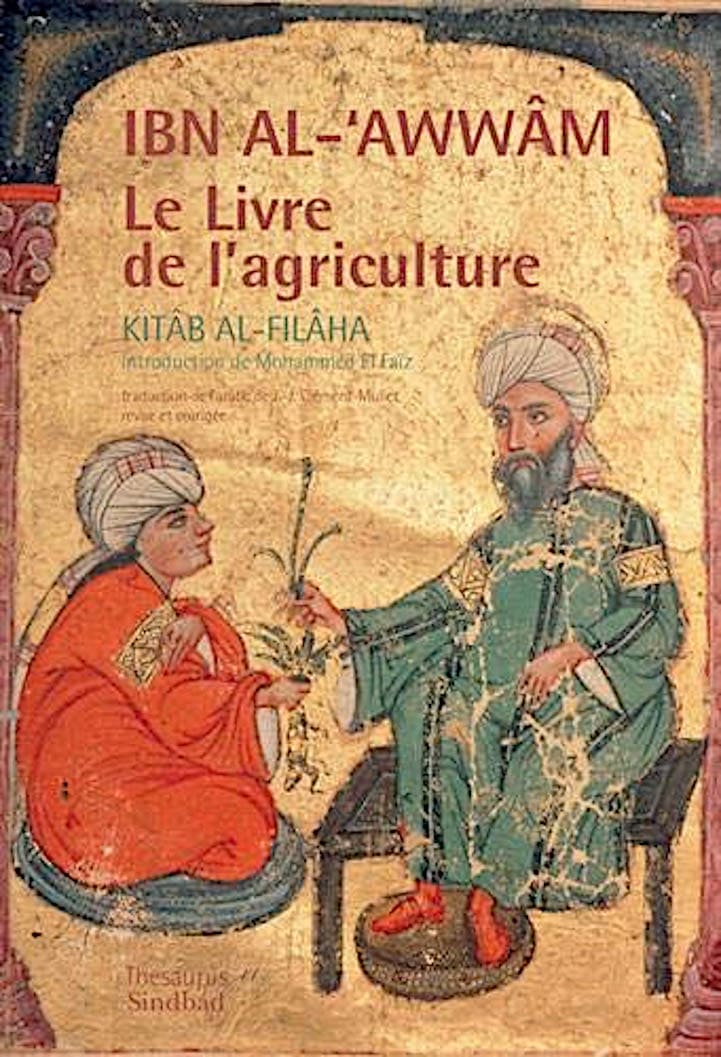
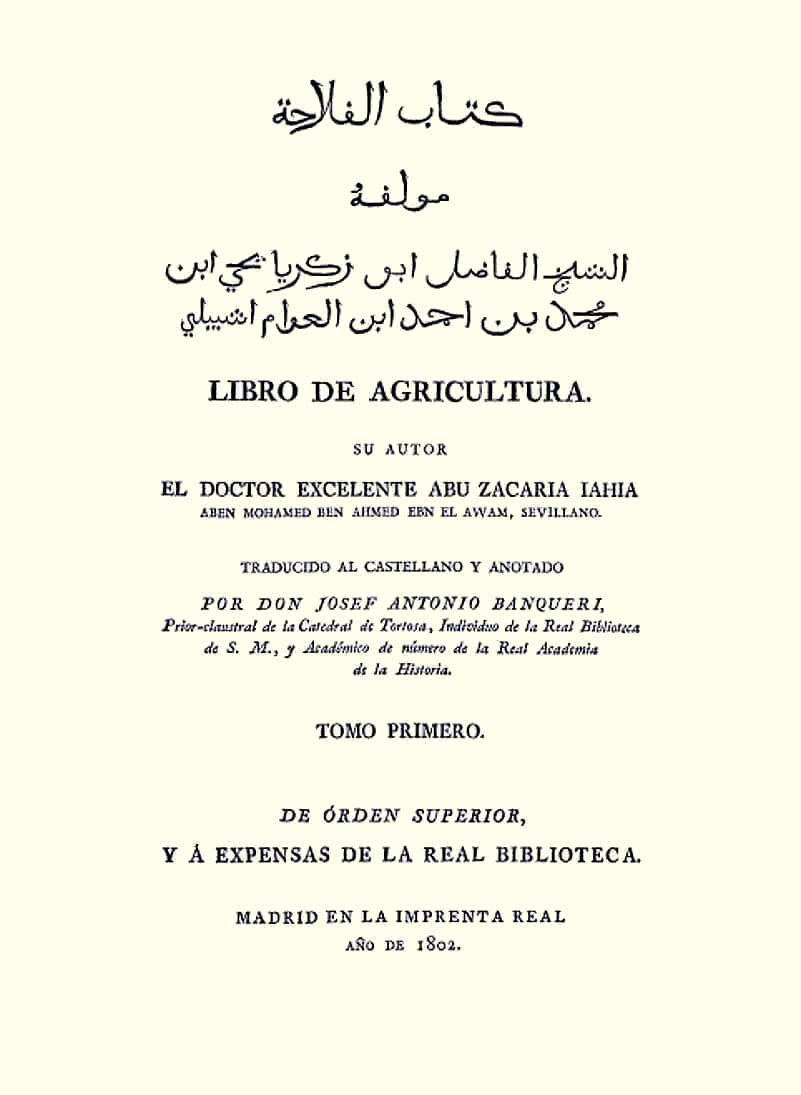
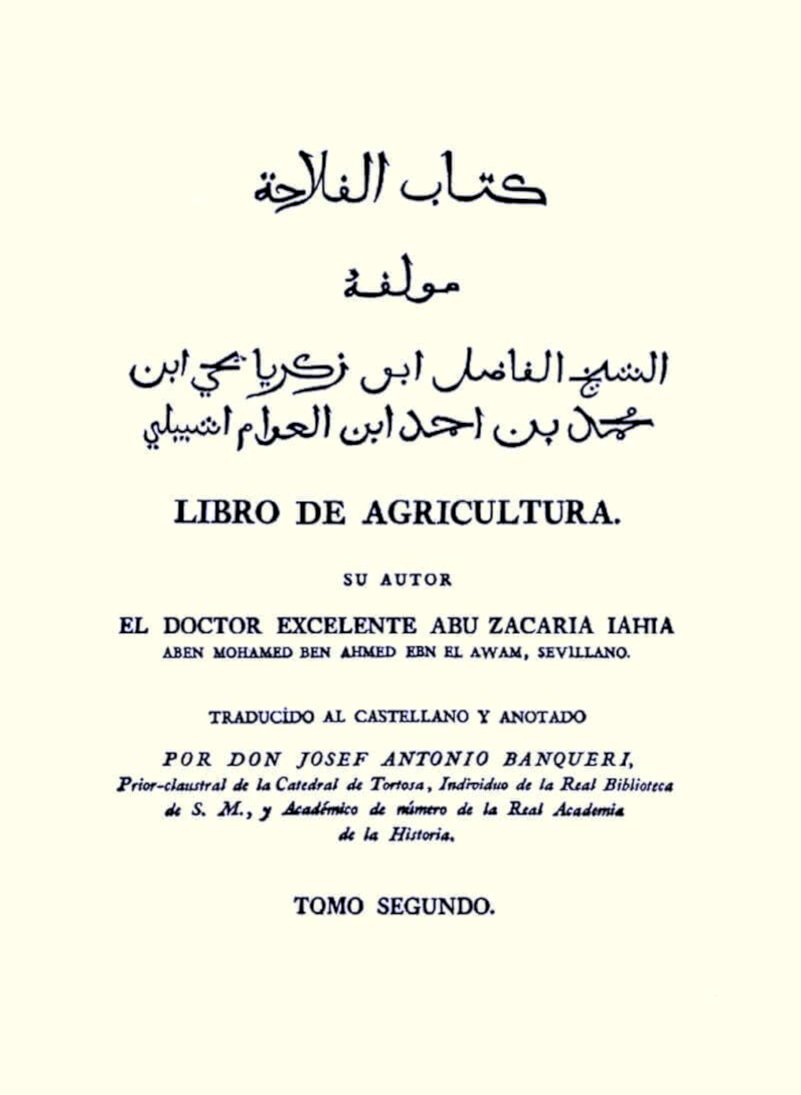
The cover of his masterful Kitab al Filaha

Who was Abu Zacarias Iahia?

Abu Zechariah Yahya wrote his masterful *Kitab al-Filaha* (which means Book of Agriculture), probably towards the end from the 12th century. Although he does not appear in any of the biographies, he is the only Andalusian agronomist mentioned by the historian Ibn Khaldun (1332–1406), and he is also noted by the early 15th-century encyclopedist Al-Qalqashandī.

However, he does not provide any additional biographical details either (García Sánchez, 1992, p. 991). The textual evidence in his treatise indicates that Ibn al-Awwam raised crops and conducted successful agricultural experiments in the Aljarafe district, west of Seville (like his predecessors Abul Khayr and Ibn Hajjaj), where he was likely an aristocratic landowner (Sánchez García 1992, p. 992).

Because that is not mentioned in any other concept's attitude, it seems likely that he devoted his life exclusively to agricultural activities, the only agronomist of Al-Andalus to do this, apart from Ibn Bassal. This is all that we know of the man.

Nevertheless, his work is the most famous of all Andalusian agronomists, as it was the first to be published and translated into a modern language—first into Spanish by Banquerí in 1802, then into French by Clément Mullet in 1864, and finally into Spanish by Claudio Ben Telón in 1878. For a long time, it was the only reference source on the agronomy medieval Al-Andalus.

In addition, it is one of the few works of this genre that has come down to us more or less complete.

Undoubtedly the most comprehensive agricultural treatise in Arabic. It brings together all the knowledge of its time regarding agriculture, horticulture, and poultry farming and animals in a vast compendium of excerpts from all previous agricultural traditions and treatises.

From 112 named authors (Ibn al-Awwam, Banquerí 1802, I, pp. 61–62), including 1,900 direct and indirect citations, 615 from Byzantine sources—particularly Cassian the Elder—and 585 from Near Eastern sources, 85% of which are from Ibn W. Ashiya, and 690 citations from earlier Andalusian agronomists (Glick 2005, pp. 12–13). To these he often adds his own observations and experiences.

Ibn al-Awwam’s treatise consists of a total of 34 chapters covering all aspects of cultivation, mentioning 585 different plants; it explains the cultivation of more than 50 fruit trees and includes many valuable observations on soils, fertilizers, grafting, and plant diseases (Sarton 1927–48, II, pp. 424–25). Ibn al-Awwam also includes an agricultural calendar, one of the few Andalusian agronomists to do so.

The final section of his work is devoted to animal husbandry, with chapters on cattle, sheep, goats, and camels, but primarily on horses, to which he devotes Chapter XXXIII, describing a total of 111 breeds, grouped by region: head (eyes, nose, mouth, and teeth), neck, torso, limbs, and internal diseases; mules and donkeys; geese, ducks, chickens, pigeons, peacocks, and beekeeping.


Volume I Book of agriculture. Abu Zacaria Yahya

Volume II-Book of agriculture. Abu Zacaria Yahya

Also, since it is of great value and interest for the study of the history as a treatise on agriculture, the *Kitab al-Filaha* has enabled scholars to reconstruct the original texts of certain earlier authors, whose works have survived only in abridged or fragmentary form.

Also, it presents a survey only of the geography of agriculture of Al-Andalus by the end of the TWELFTH century, at least in terms of its interior, the arable land and the valley of the river Guadalquivir.

Banqueri, prior of the cloister at Tortosa Cathedral and a member of His Majesty’s Royal Library, was a full member of the Royal Academy of History. It took fourteen years—a gift from the generous Banqueri—to decipher the contents of this marvelous Spanish-Arabic book and render it in beautiful Castilian Spanish, a work deserving of the distinction and simplicity, rarely found together, that the excellent Sevillian Arab scholar demonstrated throughout his writings.

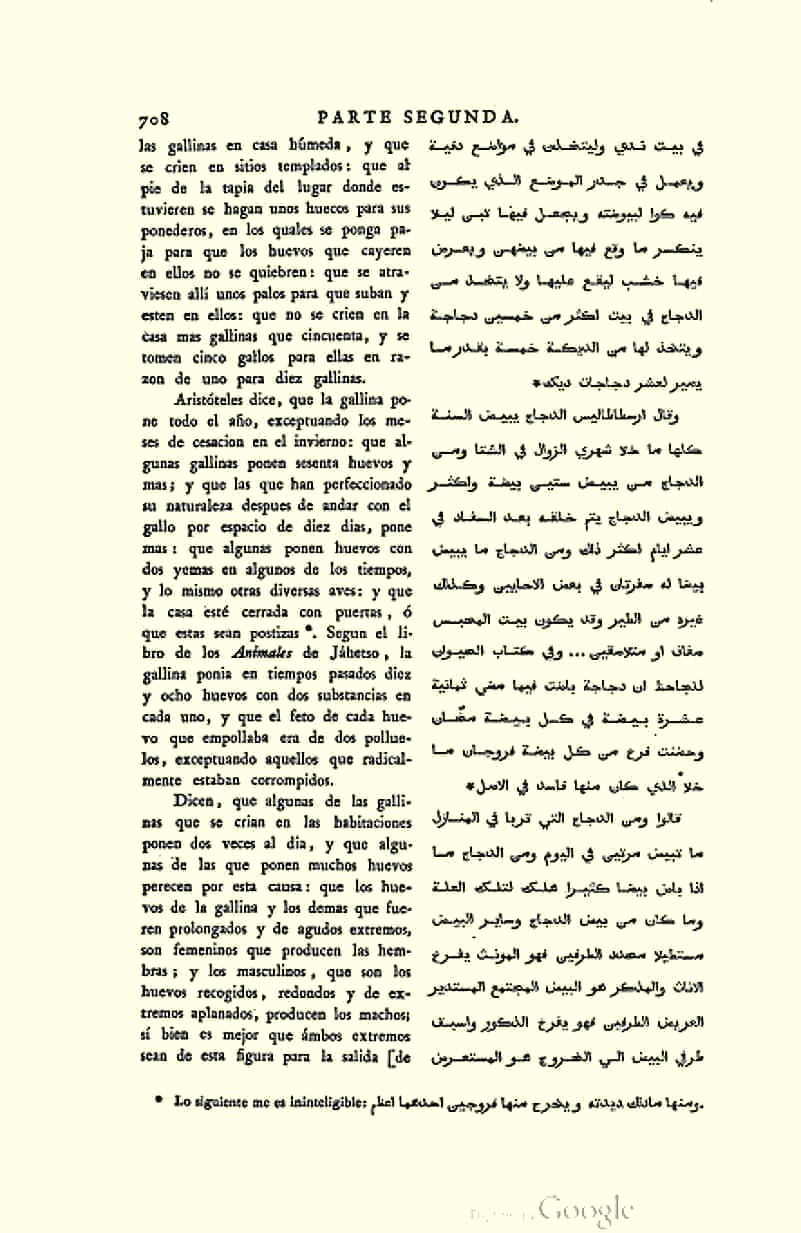
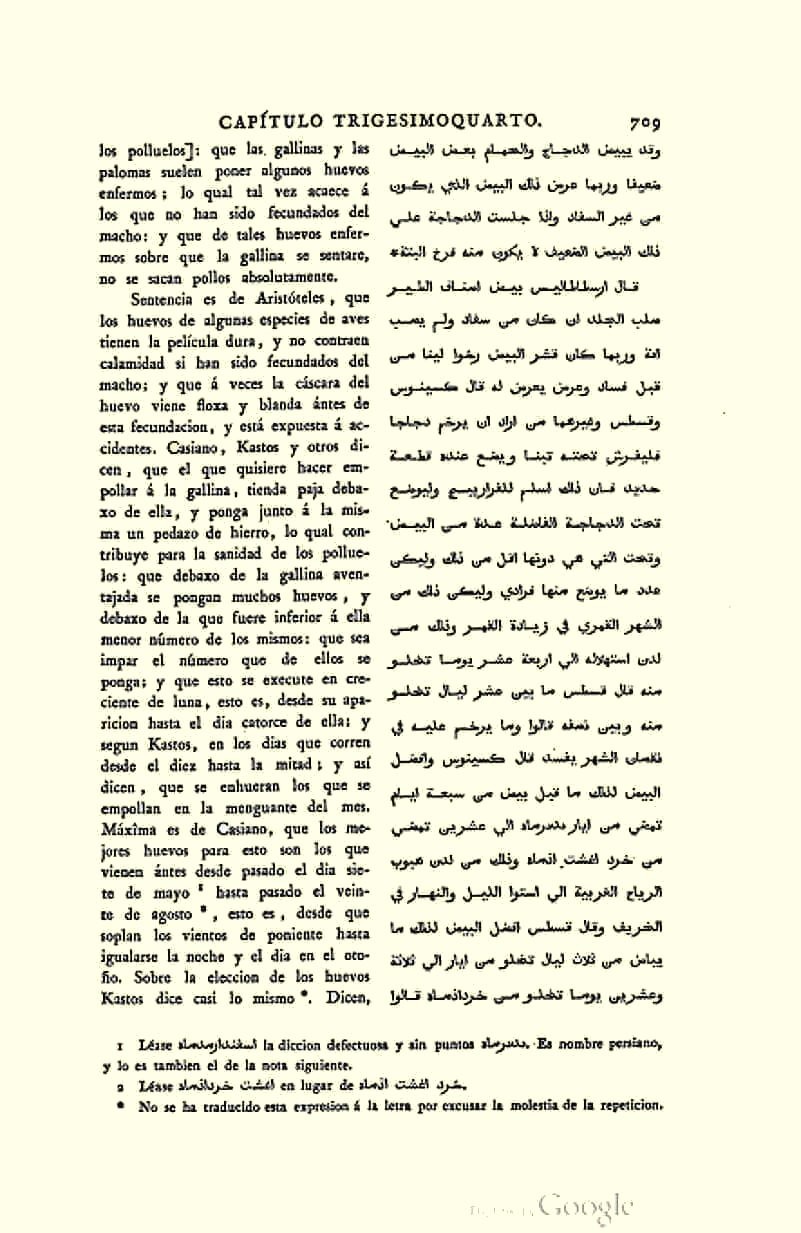
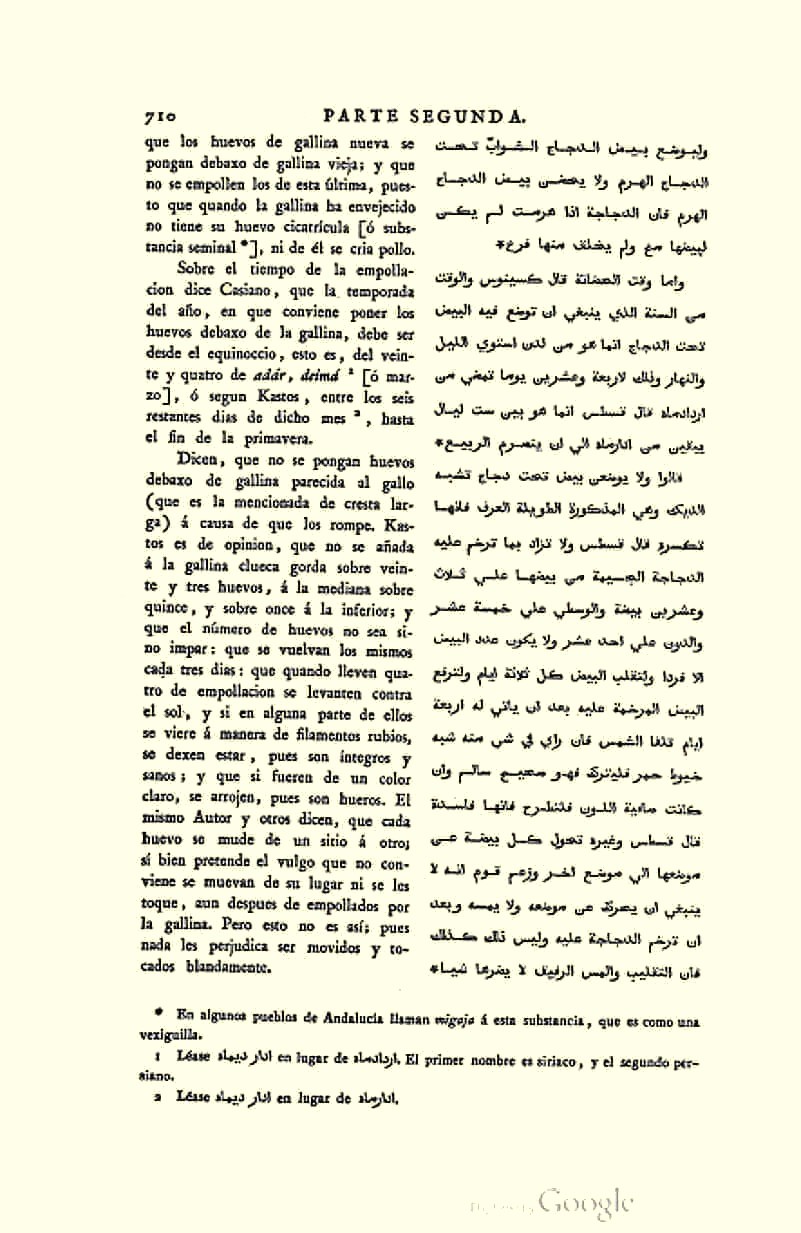
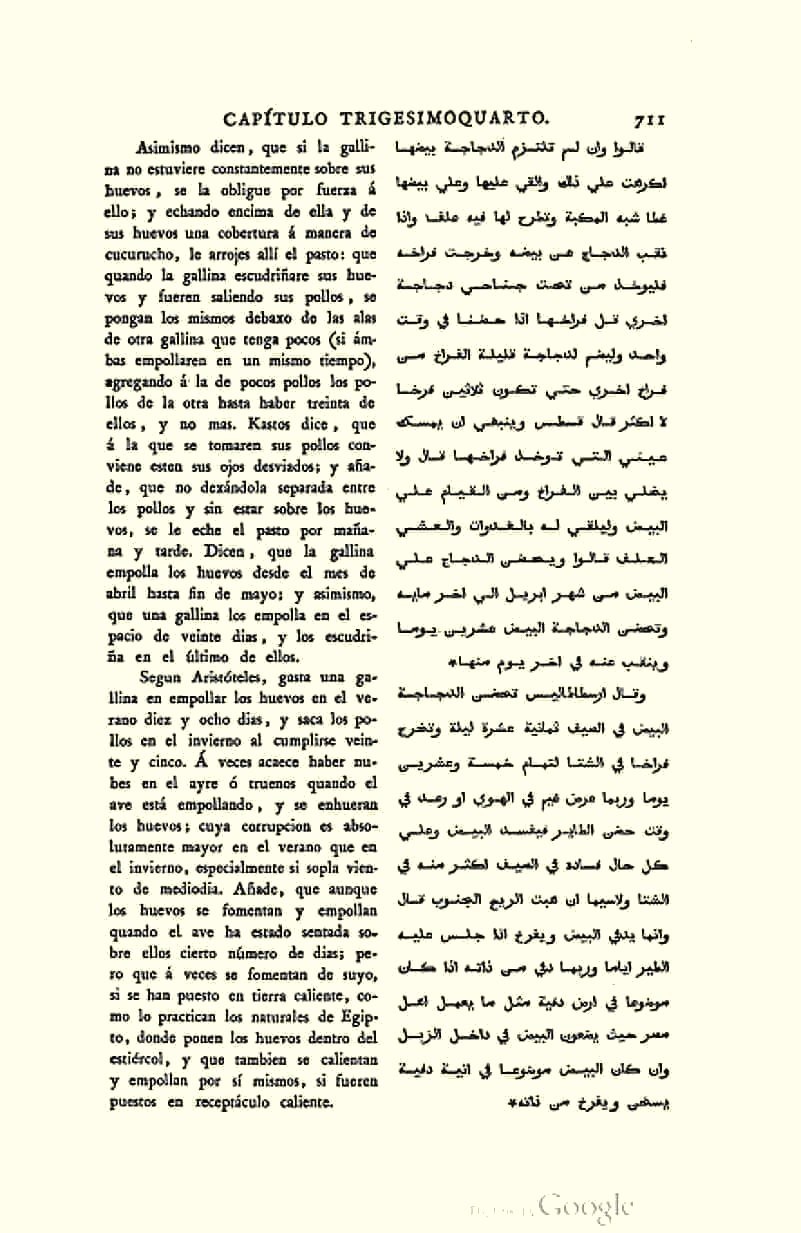
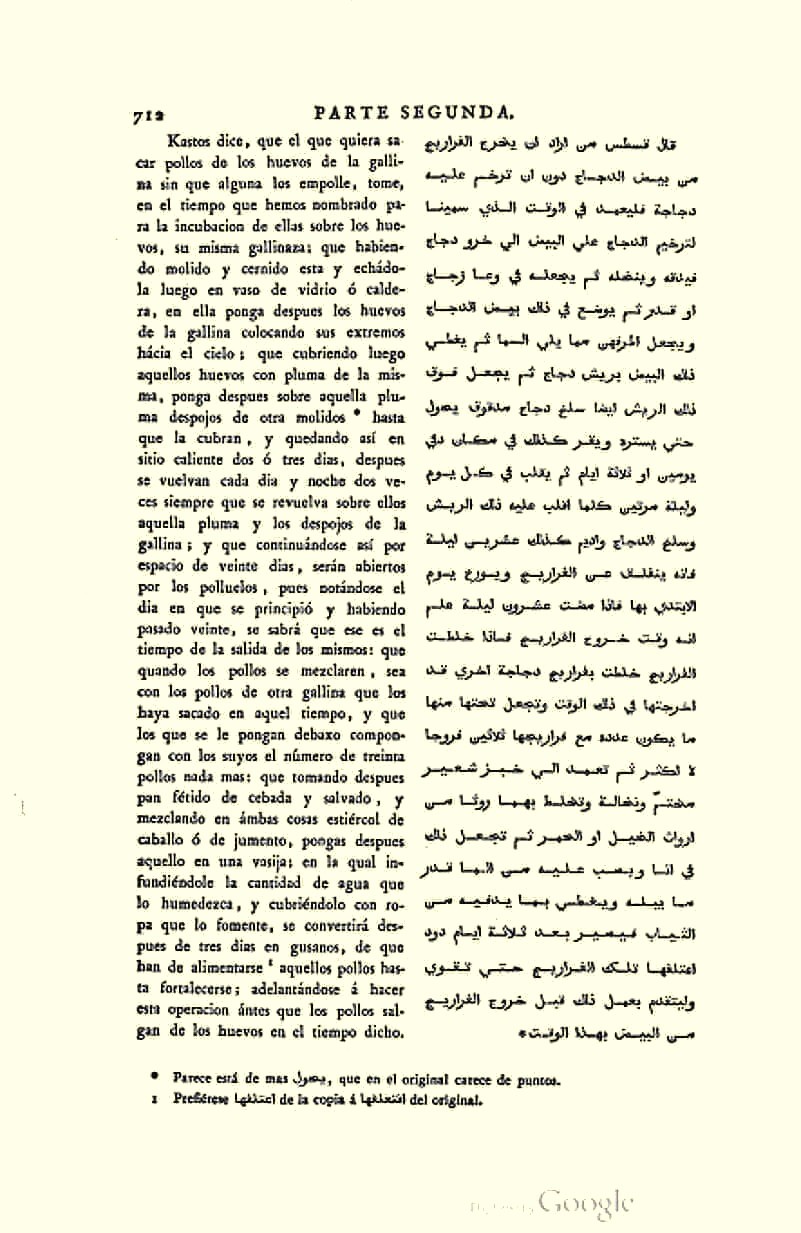
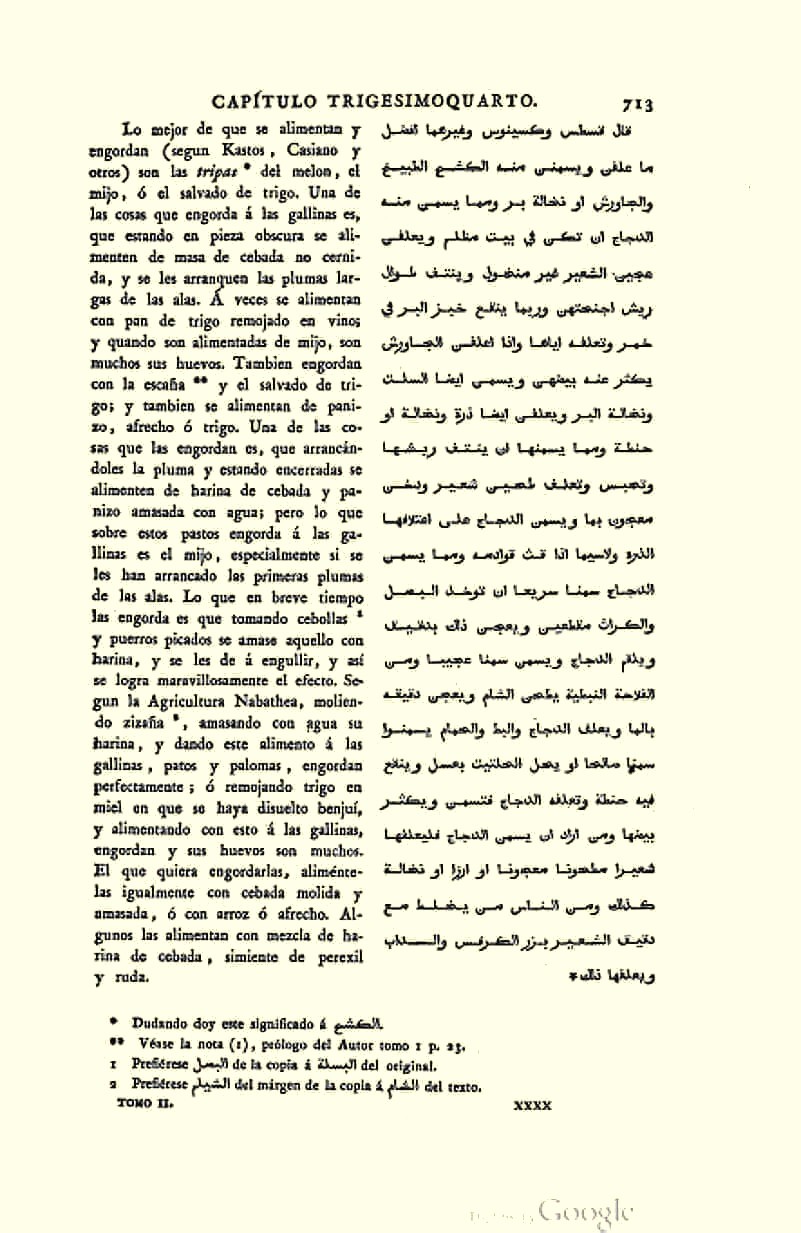
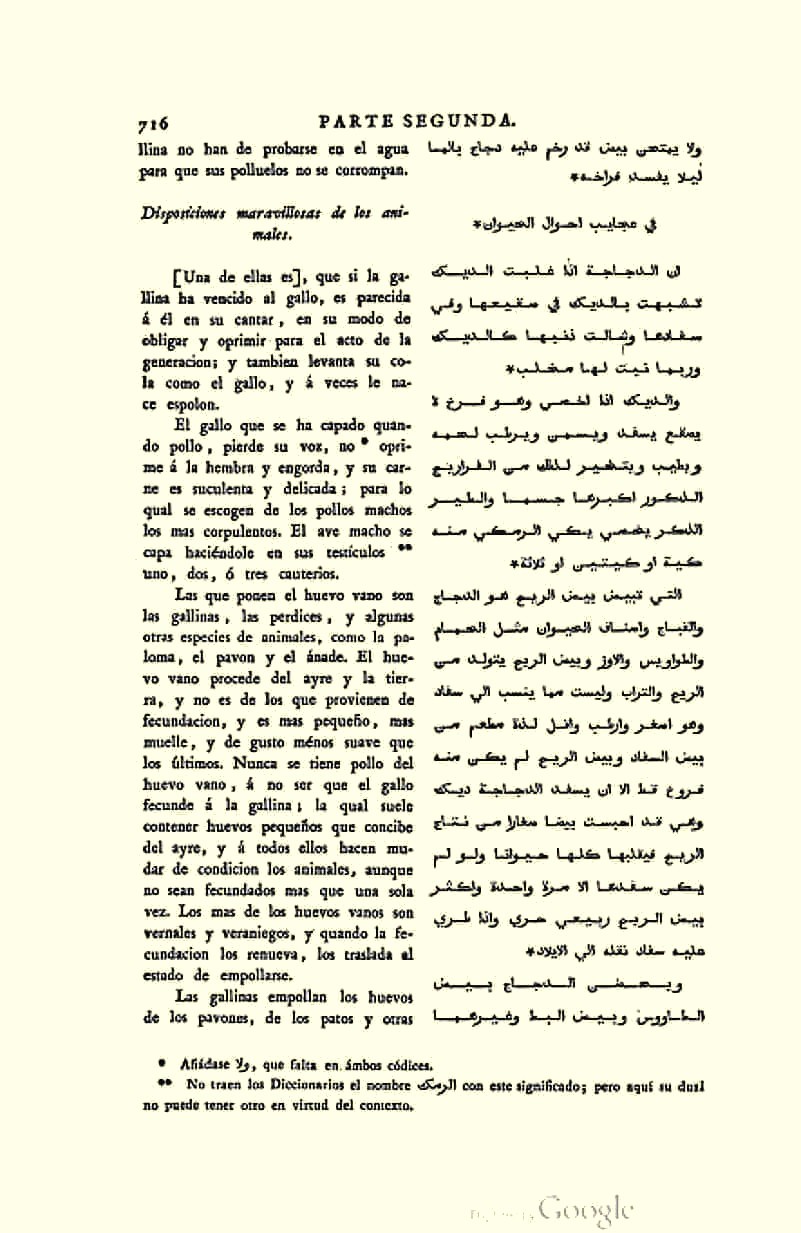
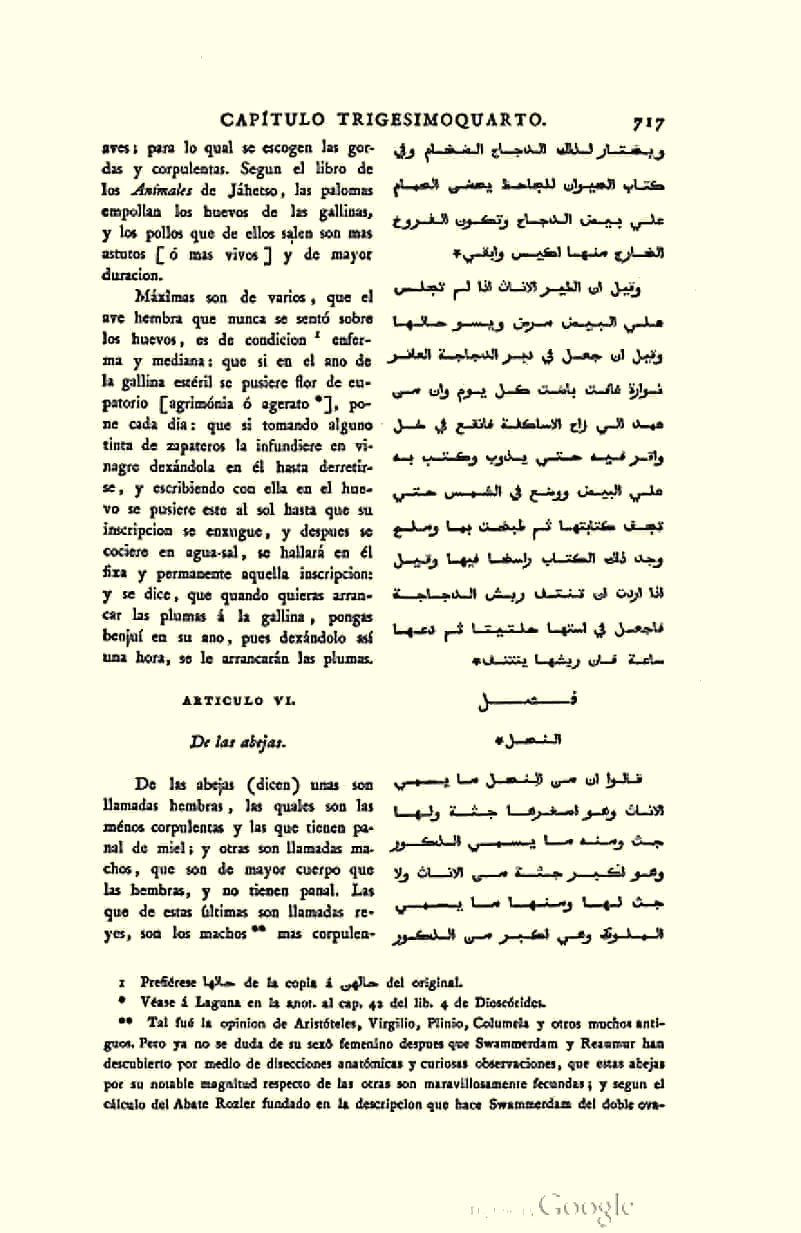
The version of the illustrious Banquerí honors the national literature, published in 1802 at the expense of the state, in the Royal Press, in two volumes in folio, and superbly printed; the pages have two columns, one in English and one in Arabic, and the translation is dedicated to the king, Don Carlos IV.

In the Library of The Escorial there is a codex written in the language of Arabic, composed of 426 sheets in 4, which contains the text of the magnificent book of Agriculture. The work is incomplete, missing the last chapter of the 35 that were the whole of it. This thirty-fifth was the dogs; it was planned, but no trace of her, if she has survived.

In 1868 he published an arrangement summarized from the translation of Banquerí, by the botanist and agronomist Claudio Boutelou, by a recital of the culture of poultry, very superior to that which was had to the development of the TWELFTH century in central Europe.

Consists of II Volumes;

Volume I

Volume I:  The first book will contain the knowledge that a farmer should have about choosing land, manure, water, how to plant and prune trees, and everything related to and pertaining to this subject.

Volume II

Volume II:  In the second book, you will understand what belongs to sementeras and the bouquet of agriculture respective to the animals; he devotes a large extension to the exploitation of the domestic birds in Chapter XXXIV on poultry.

719–706: The Chickens Abu Zacaria Iahia

720–707: The Chickens Abu Zacaria Iahia

721-708 The Chickens Abu Zacaria Iahia

722-709 The Chickens Abu Zacaria Iahia

723-710 The Chickens Abu Zacaria Iahia

724-711 The Chickens Abu Zacaria Iahia

725-712 The Chickens Abu Zacaria Iahia

726-713 The Chickens Abu Zacaria Iahia

727-714: On Diseases of Chickens. Abu Zakaria Iahia

728-715 mode to save the eggs. Abu Zacaria Iahia

729-716 Provisions for a wonderful animal. Abu Zacaria Iahia

730 - 717 Provisions for a wonderful animal. Abu Zacaria Iahia

You may be interested in this book in the shop of the BOE. It is within the collection: Classical agrarian: Have edited a facsimile edition of the work Book of Agriculture, 1802, presented in two volumes, on the link.

Related historical articles


You may be interested in these other sections


Discovering the origins of Spanish poultry farming

Lucius Junius Moderatus Columella, the master of Roman agriculture

The Origin of the Domestic Chicken: Gallus and the Evolution of the Species


Do you want to share or comment on your social networks

Scan to visit TRI-TRO
Escanea para visitar. TRI-TRO