Social factors:
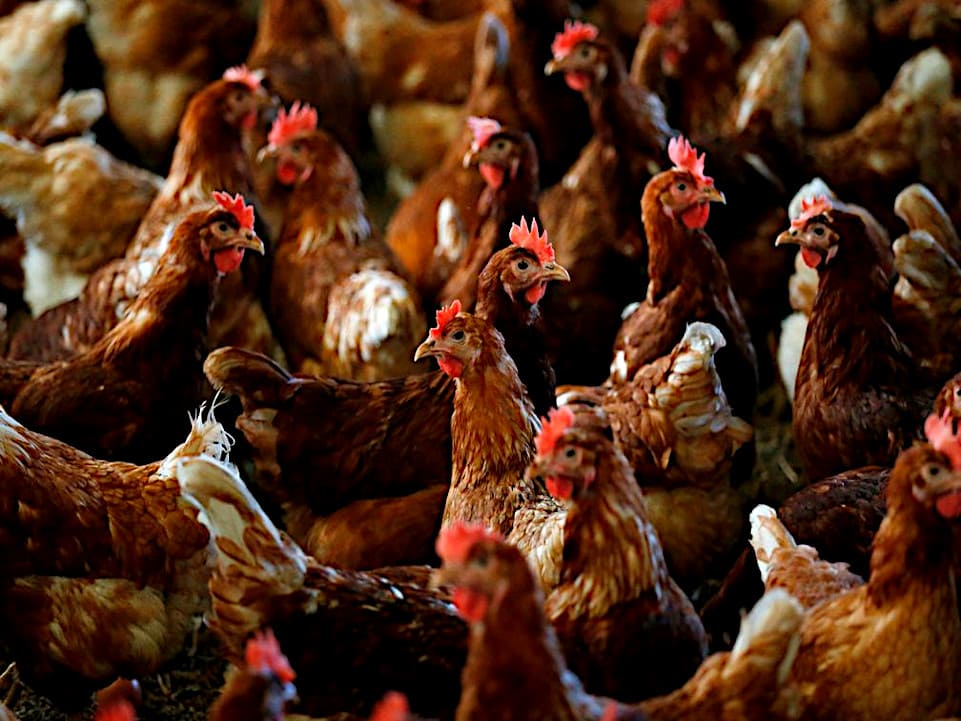
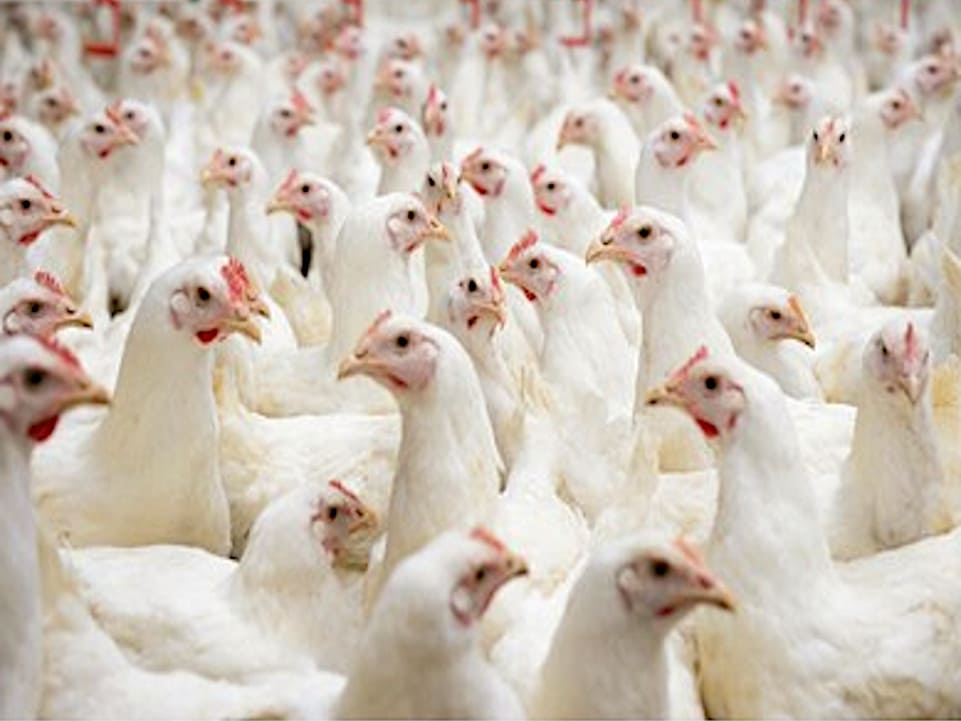
Most of the social tensions between the birds occur due to the limitation of space available to each one. Knowing that the hens have a social structure, territorial and hierarchical that mainly affects the order of access to food and to the choice of the place where you sleep, by varying this characteristic to a greater or lesser extent depending on the breed.
Between 8 and 10 weeks of age, the birds begin to establish a dominance order and social hierarchy, which are the two main causes of fighting among them.
The most dominant and aggressive Spanish breeds are more susceptible to this social stress; examples include the Española Cara Blanca and the Menorca Negra. The least susceptible breeds are the Castilian Black, the Prat Leonada, and, among foreign breeds, the White Leghorn; laying breeds have been found to be less aggressive than broiler breeds.
Importance of temperature and humidity:
In the chicks (at birth), his rectal temperature is located between the at 37.5 °C and goes up to 41.5 °C (15 days). Birds do not have sweat glands to regulate the body temperature, unlike other domestic animals.
As a result, their thermoregulatory mechanisms are much more limited, and they rely heavily on a balanced temperature and humidity to prevent heat stress or heatstroke, which in severe cases can be fatal.
The ideal environmental conditions are temperatures between 18 °C and 24 °C, without sudden fluctuations, and humidity around 60%.
The importance of light:
The hens are strictly diurnal. In their natural habitat (wild), at night it will protect it from predators in the trees, because your body is large and heavy, as well as their short wings, the disabled for the long flight, though they are able to fly short distances (flight gallináceo).
They are active during the day, eat, interact with the group, and mate while it is light out.
Photoperiod growing (increase the hours of light) stimulates the reproduction and the making of eggs.
Photoperiod decreasing (reduction of the hours of light) stimulates the move in chickens. In addition, they are capable of perceiving very low light levels, which help them feel calm, making them widely used in broiler chicken farming.
Importance of color environmental:
Chicks and hens are highly sensitive to wavelengths in the spectrum corresponding to colors ranging from red to yellow. The color red excites them and causes them to peck at each other more frequently.
Colors with shorter wavelengths (such as blue) are not perceived by the animal and are used in certain management practices to improve animal growth by stimulating feed intake food, control playback, and the laying of eggs, try to increase it, and modify the behavior.
Environmental factors:
Factors such as light, air temperature, relative humidity, atmospheric pressure, noise, and odors caused by gas emissions (manure) are some of the most common stressors for birds.
Importance of air quality:
The accumulation of dust affects the respiratory system of birds, as well as your immune system, favoring the emergence of diseases.
On the other hand, the excess of ammonia from the manure It not only irritates the respiratory tract and eyes, but also affects the animal's appetite; therefore, our chicken coops must always be well ventilated.
The frustration:
Generates aggression in the hen, manifesting with a rearing aggressive, reaching in extreme cases the cannibalism.
Although pecking is still an abnormal behavior, it is a repetitive and invariable behavior pattern that has no obvious objective or function, i.e. the bird is unable to carry out its normal behavior (scratching the ground, eating, bathing, etc.).
Anxiety and fear:
A consequence very common produced by the cause of the stress is the hysteria avian. This is a situation of widespread panic in the birds; they show a great excitement, flying over to the other birds until something stops it.
Many of them are injured During this behavior, legs, claws, and wings are broken, and feathers are plucked out… Eventually, the entire flock will be affected. The birds pile on top of one another, and many suffocate to death.
Bird calls help us positively associate frightening and painful procedures; the sounds our chickens make can be a good indicator of the stress they are experiencing.
In addition, vocalizations or patterns differ depending on the type of stress and, therefore, the stimulus that caused it. For example, the patterns of vocalization were different for the stress produced during the handling of the birds to the one produced by overcrowding (Otu-Nyarko et al., 2008).