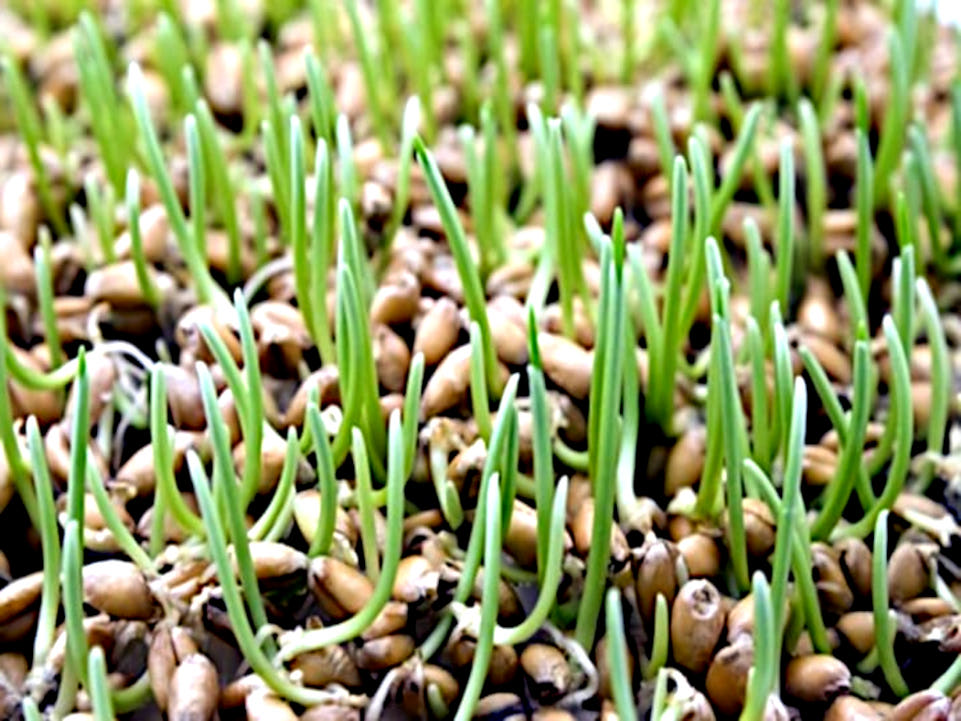
The wheat and its products

It is good, the wheat for our hens:

The wheat is very good grain for food de nuestras gallinas; muchos lo consideramos como el alimento ideal. El trigo posee un gran número de características favorables.

Is the grain most desired by the birds and are very well adapted to its power, both for its size and color as for your little fiber content.

Su composición es similar a la del maíz, pero contiene algo más de proteínas y tiene un poco más de fibra; por su relación elevada de proteínas, tiene una relación nutritiva algo más estrecha que la del maíz.

The dry grain can be stored in airtight containers (buckets or plastic containers) or in bags stacked tightly without aeration. The respiration depletes the oxygen in the air intergranular and effectively stops the activity of insects and fungi. 

El trigo, por su riqueza en proteínas, y por su alto contenido en sales fosfóricas y en riboflavin (vitamin B2), is a good food for birds, being especially indicated in the rations of growth in the form of flour, and constituting the 10 % the entirety of the mixture.

En experimentos de crecimiento se observó que no se puede mantener por mucho tiempo con una ración compuesta a base de trigo si no se complementa esta en forma adecuada.

The term feed wheat usually refers to a type of wheat that is not accepted by flour mills, either because the kernels are not large enough, are not full enough, contain weed seeds or have a high content of moldy or sprouted kernels.

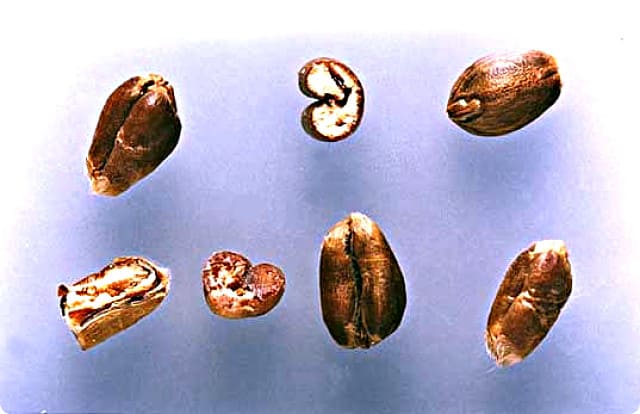
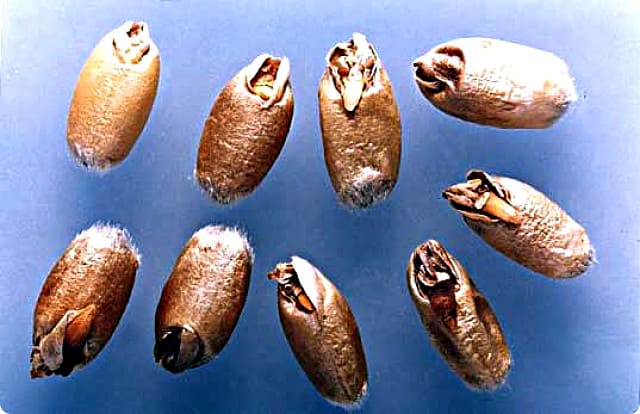
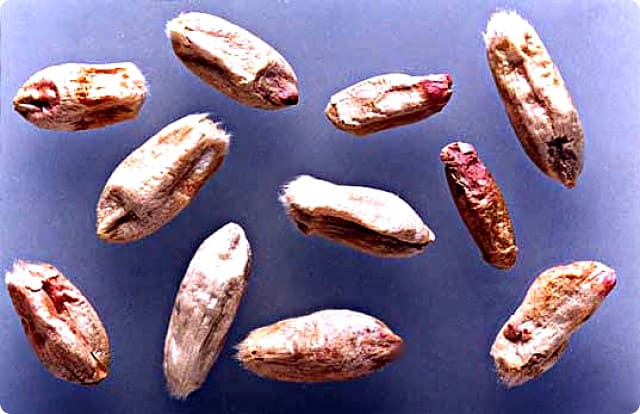
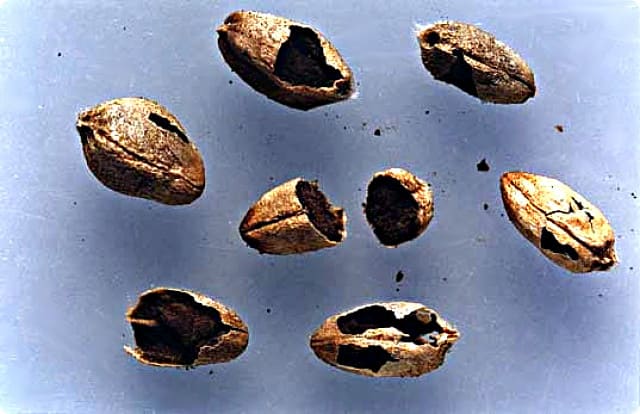
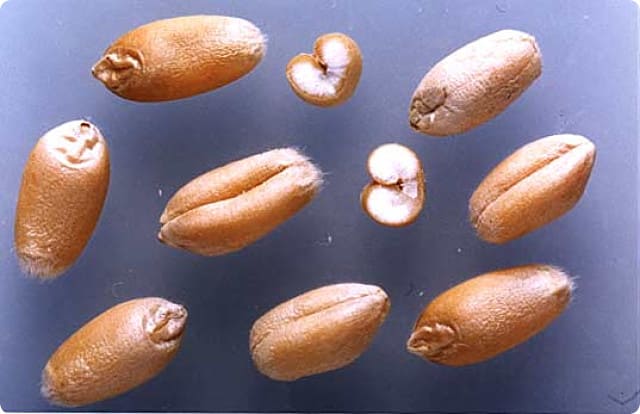
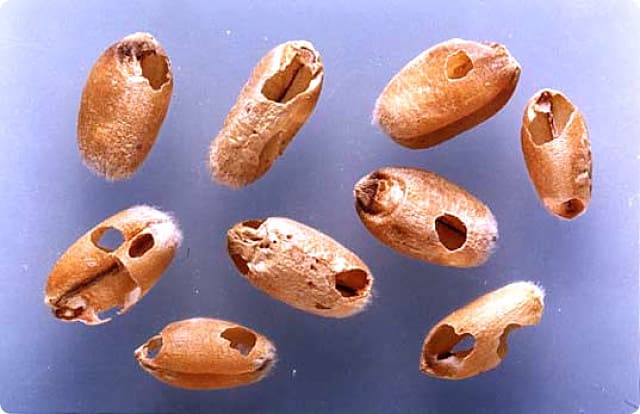
En las fotos de más abajo, Daños y defectos comerciales en el trigo cosechado, se ven perfectamente las diferencias y nos sirve para cuando realicemos la compra saber diferenciarlo.

History of the wheat:

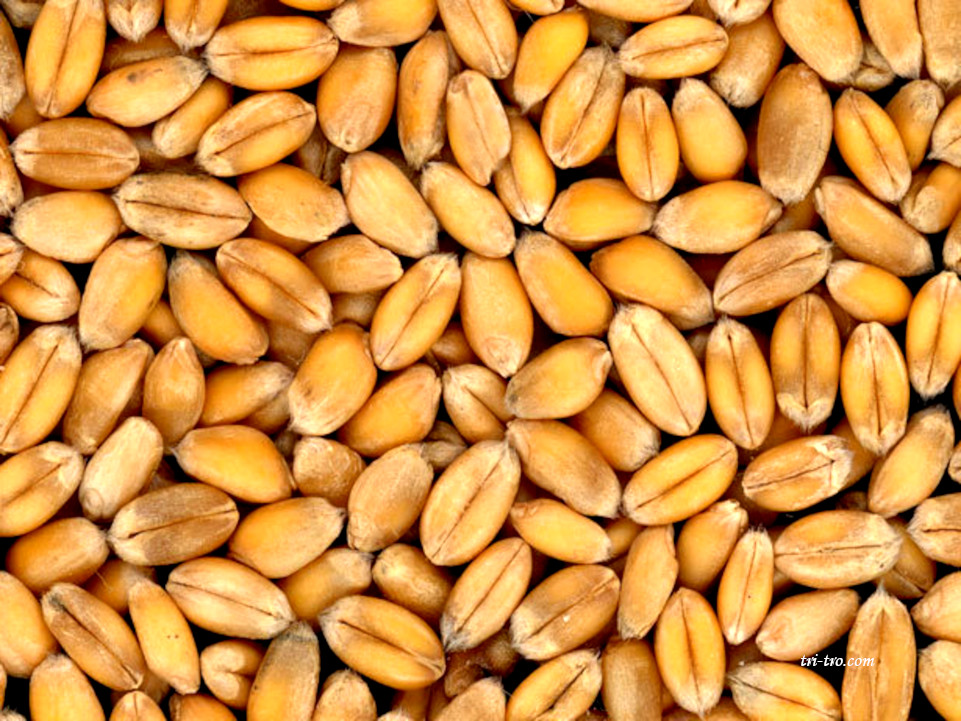
Grains of wheat

The origin of the modern cultivated wheat is en la región asiática comprendida entre los ríos Tigris y Éufrates; sus orígenes en la antigua Mesopotamia. De acuerdo a estudios realizados, se ha comprobado que el trigo proviene de Siria, Jordania, Turquía e Irak. Habiendo numerosas gramíneas silvestres comprendidas en esta área y al estar emparentadas con el trigo.

Desde Oriente Medio, el cultivo del trigo se difundió en todas las direcciones.

The first forms of wheat harvested by man for over twelve thousand years ago were of the type Triticum monococcum and T. dicocccumcharacterized mainly by having fragile spikelets that disintegrate at maturity.

Wheat belongs to the grass family (Poaceae), with varieties grown in the present Triticum durum and T. compactum. The wheat flour hexaploid called T. aestivum is the cereal flour grown the most in the world.

In the vegetative cycle of the wheat distinguish three periods:

  • Período vegetativo: ranging from sowing to the beginning of the encañado.
  • Período de reproducción: from the encañado until the completion of the scheme.
  • Periodo de maduración: that stretches from the end of ear emergence until the time of collection.

Debido a la diversidad de usos del trigo, existe una gran diversidad de variedades; actualmente se comercializan variedades de paja corta y de alto rendimiento, así como variedades de verano e invierno.

En general, pueden distinguirse tres variedades en función de su ciclo:

  • Fall varieties or long-cycle.
  • Varieties of spring, or short cycle.
  • Varieties alternatives. 

The structure and nutrition information of the wheat:

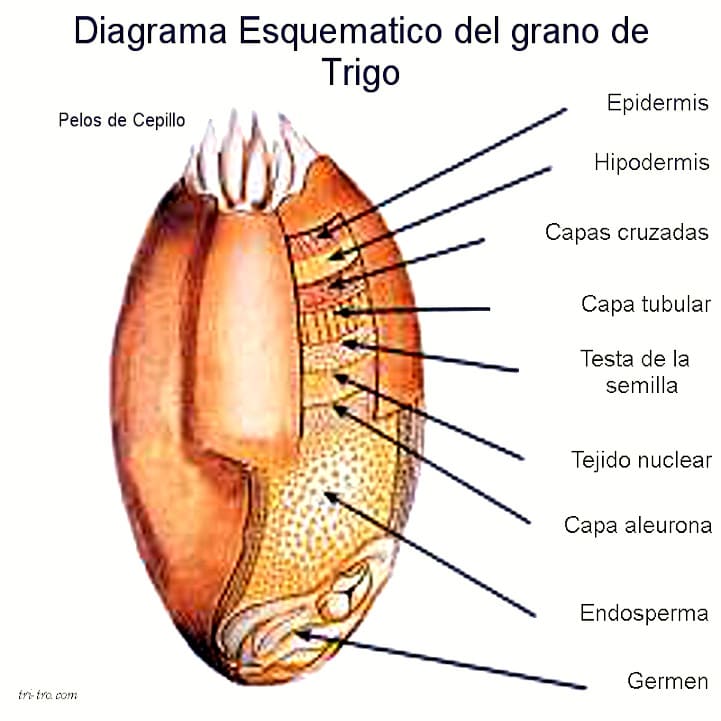
Cross section of a grain of wheat

El trigo es, de todos los cereales, el de a protein value more variablebeing the types hard richer than the soft. En general, el trigo es superior al maíz y al sorgo en proteína y algunos aminoácidos, aunque es de valor inferior en energía.

Their employment in aviculture, is uncommon, since it is a cereal usually reserved to the power of the human, having a price high enough. It is sometimes found in the market denatured by the addition of other grains or products that prevent the re-sold for human consumption, which they must know the type of product that has been added prior to their use in feed for birds.

Tanto en forma de harina de trigo integral como de triguillo o granos partidos, pero que no estén dañados, puede suministrarse a las aves perfectamente.

Información nutricional del trigo

Por cada 110 g crudo, Shollenberger and Jaeger (1943)

Información nutricional por cada 110 g crudo.

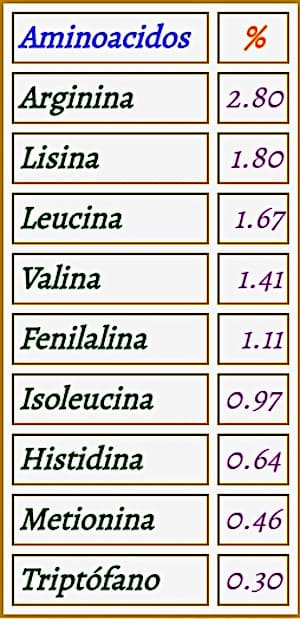
Amino acids of wheat

Por cada 110 g crudo

Fuente: Nelson (1963)


By-products of the wheat for our hens:

También son utilizados para nuestras aves los subproductos del trigo obtenidos de la fabricación de la harina.

The grain of wheat consists of three parts that are clearly different:

  • Los tegumentos: are bran and constitute approximately 16 % of the grain.
  • El endospermo: which is about the 82 % of the grain.
  • El germen: about 2 % of the grain.

In the process of grinding, a large part of the bran is separated into flakes, but a part of him is broken into fine particles and mixed with the flour. The by-products separated on the outer part of the grain are the following:

  • Saved 11 %
  • Harinillas first 5 %
  • Harinillas second 11 %
  • El resto, 72 %, composed mainly of starch, is transformed into flour.

The wheat germ can be built-in by-products or collected separately for the procurement of wheat germ oil.

The layers of the bran and germ contain most of the proteins, vitamins, fat, and minerals.

The endosperm is mainly made up of starch.

As the outer layers contain most of the ash, fiber and protein, by-products of wheat possess greater portion of these principles nutritious and lower total amount the whole grain. 

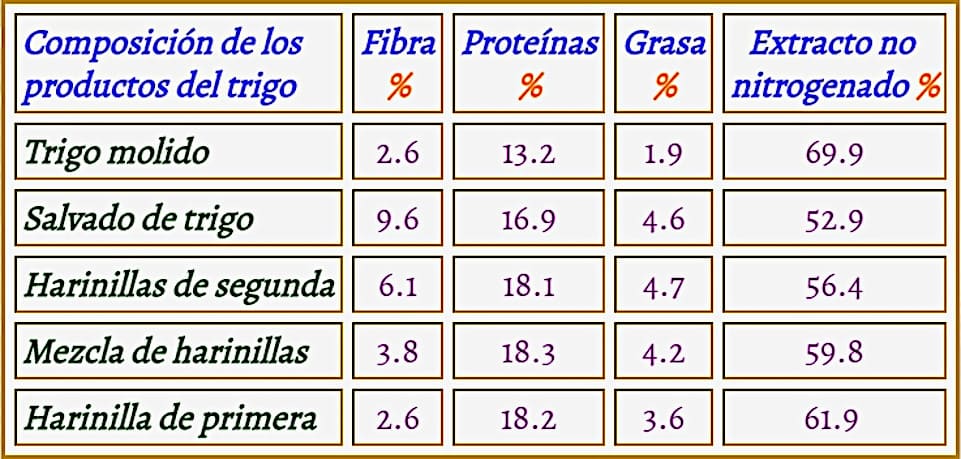
El salvado de trigo: Es el producto formado por las cubiertas o tegumentos del grano separados del trigo cribado y limpio en el proceso de la fabricación de harina. El salvado es voluminoso y basto y contiene mucha fibra.

Es también laxante a causa de su riqueza en fibra y pentosanas (enzimas que son distintas al almidón). Lo convierte en un alimento pobre en principios nutritivos digestibles. La riqueza en cenizas o minerales del salvado de trigo lo hace muy conveniente como alimento proveedor de phosphorus and manganese.

La harinilla de segunda: En trigos de primavera, está formado principalmente por partículas finas de salvado, germen de trigo y muy poca cantidad de residuos fibrosos, y no debe contener más del 9.5 % of crude fiber.

In wheat of winter must not contain more than 7.5 % of crude fiber.

La mezcla de las harinillas de trigos de primavera, compuestas por salvado, germen y harina, no debe contener más del 6 % of crude fiber.

La harinilla de primera: En trigos de primavera, está formada por el residuo fibroso, unido a una cantidad de partículas de salvado, germen de trigo y harina de trigo. Este producto se obtiene en la fabricación de harina comercial y no debe contener más del 4 % of crude fiber.

La harinilla de primera es la más utilizada en la alimentación de las gallinas; es pobre en fibra y tiene las mismas características que la de segunda; se emplea en las raciones de engorde.

In the harinillas there are two types, normal, or mealy, which differ in composition and texture, since the former contains higher quantity of bran.

I think mixed wheat: Compuesto por cubiertas del grano, cierta cantidad de partículas finas de salvado, germen, harina y muy poca proporción de residuos fibrosos, no debe tener más del 9.5 % of crude fiber.

The flour of wheat germ: Formada principalmente por gérmenes de trigo, y algo de salvado y harinillas, no debe contener menos del 25 % of proteins and 9 % fat.

La torta oleaginosa de germen de trigo: Es la torta que resulta al extraer parte del aceite de la harina de gérmenes de trigo y no debe contener menos del 29 % de proteínas.


Wheat germ is highly appreciated by our birds

Damages and defects trade in wheat harvested:

Estas imágenes que tenéis a continuación, y su descripción, nos pueden servir para cuando realicemos la compra de nuestro trigo, para tener una idea muy clara, y la identificación de los defectos a la hora de la comercialización y envasado del mismo.

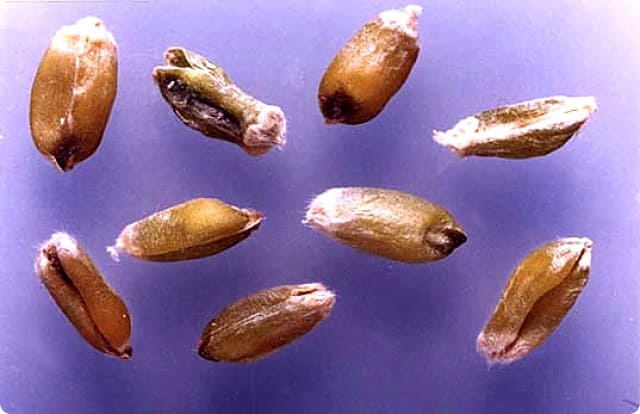
Granos de trigo ardidos o dañados por calor: Son aquellos granos o pedazos de granos que presentan un oscurecimiento en su tonalidad natural, debido a un proceso fermentativo o a la acción de elevadas temperaturas.

Granos de trigo brotados: Are those in which he has begun the process of germination. This fact is manifested by a rupture of the cover of the germ, through which overlooks the outbreak.

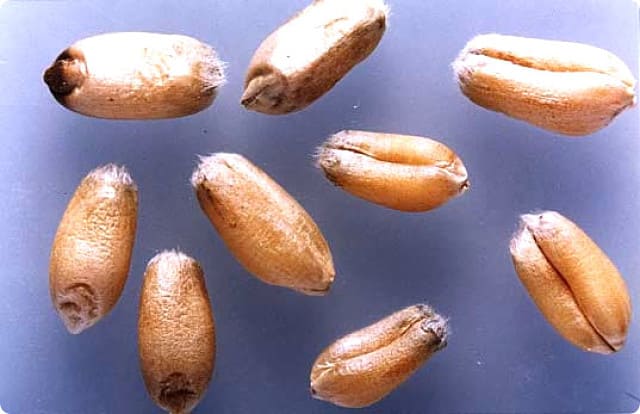
Granos de trigo helados: Son aquellos que presentan concavidades pronunciadas en sus caras laterales.

Granos de trigo verdes: Are those that present a clear coloration greenish due to physiological immaturity.

Granos de trigo calcinados: They are those with a whitish coloration, sometimes with pinkish areas, whose endosperms have a chalky appearance and can crumble when light pressure is exerted on them.

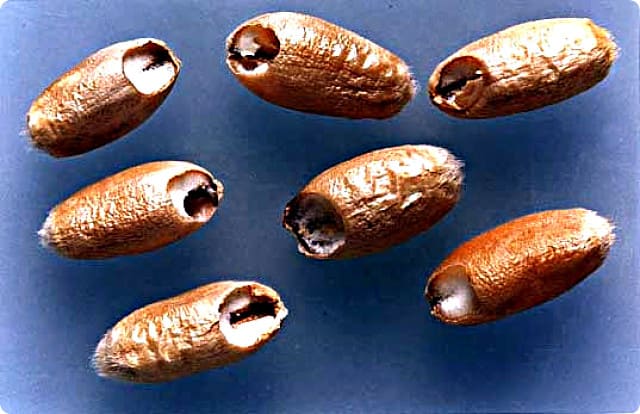
Granos de trigo roídos por isoca: Are those rotten by insect larvae that attack the cereal on the ground and whose affected part presents dusky or dirty.

Granos de trigo roídos en su germen: Are those whose seed has been destroyed or gnawed manifestly by the action of larvae.

Granos de trigo con carbón: Are those transformed into a mass of powdery black in color, because of the attack of the fungus Tilletia sp. Its external appearance is rounded and of a grayish color.

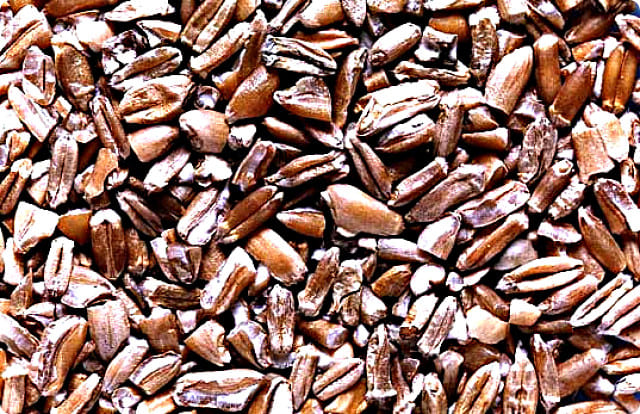
Granos o pedazos de trigo (not damaged) that pass through a screen, described in the existing rule.

Granos de trigo panza blanca: Are those that are characterized by a powdery texture in one-half or more of the grain, which is appraised by an external coloring, yellow-defined.

Granos de trigo picados: It are those that have perforations caused by the attack of insects.

Granos de trigo con punta sombreada por tierra: A lot is considered as such if it has a high proportion of grains whose brushes show a characteristic coloration produced by soil adhering to them.

Granos de trigo revolcados en tierra: It is considered as such to the whole lot that has a high proportion of grains that carry land attached in the greater part of its surface.

Granos de trigo punta negra por carbón Se considera como tal a todo lote que presenta elevada proporción de granos cuyos cepillos muestren una coloración negruzca, como consecuencia de tener adheridas a las mismas esporas del hongo Tilletia sp.

Where to buy:

Nosotros lo podemos adquirir en almacenes comerciales avícolas, cooperativas agrícolas y en empresas de materias primas para piensos.

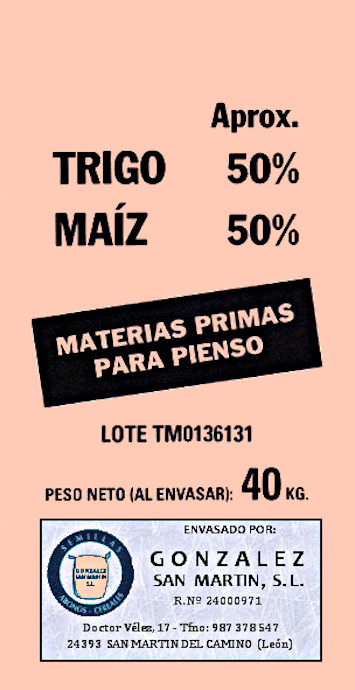
Suelen estar listos para la venta, bien a granel o en sacos de plástico enlazado, no de papel por la rotura, de 40 kg en distintas formas: en grano, triturado, harinas o mezclas con otros cereales.

Una de estas empresas de materias primas para piensos, González San Martin, S.L., que para nosotros, pequeños y grandes avicultores, nos viene muy bien, porque podemos hacer compras factibles por el problema de espacio y fáciles por su embalaje.

I put some labels of how we can choose the wheat that we need.

The facilities Gonzalez San Martin SL

Wheat

Mixture of Wheat and corn

Literature review:

Scade, John. «Cereales». Editorial Acribia. Zaragoza, España, 1975.

Howthorn, Jonh. «Fundamentos de la ciencia de los alimentos», Editorial Acribia. Zaragoza, España, 1983.

Gustave F. Heuser, Feeding Poultry, editorial Folder, Mexico. 1955.

Muller, Hg & Tobin G. «Nutrición y ciencia de los alimentos». Editorial Acribia. Zaragoza, España.


You may be interested in these other sections


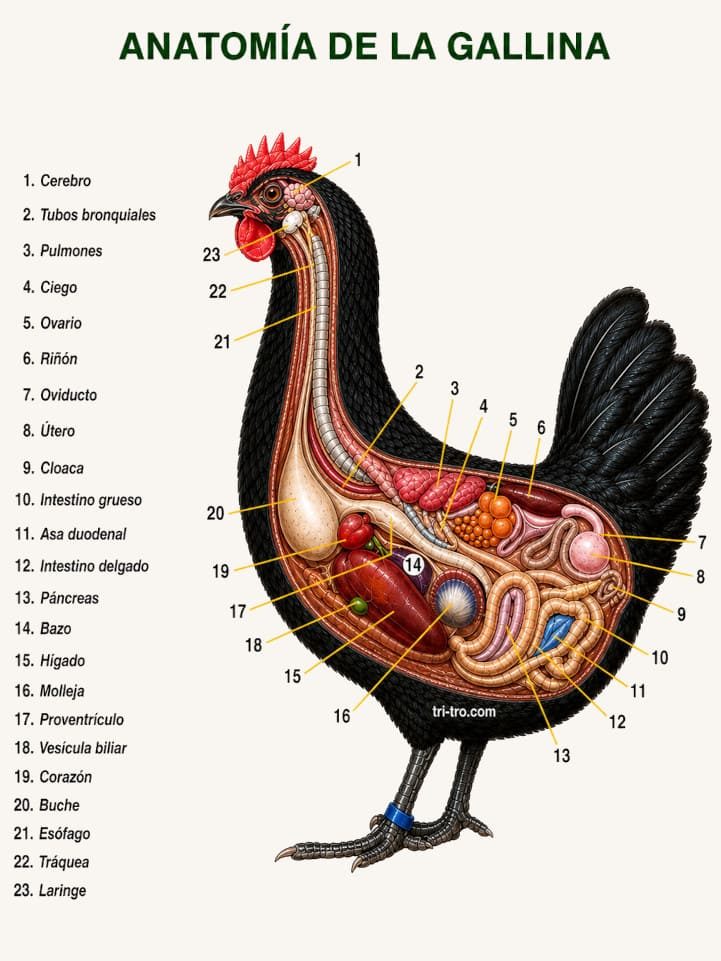
Anatomy of the chicken: parts, organs, and functions

Poultry Slaughter Form: What It Is and How to Use It

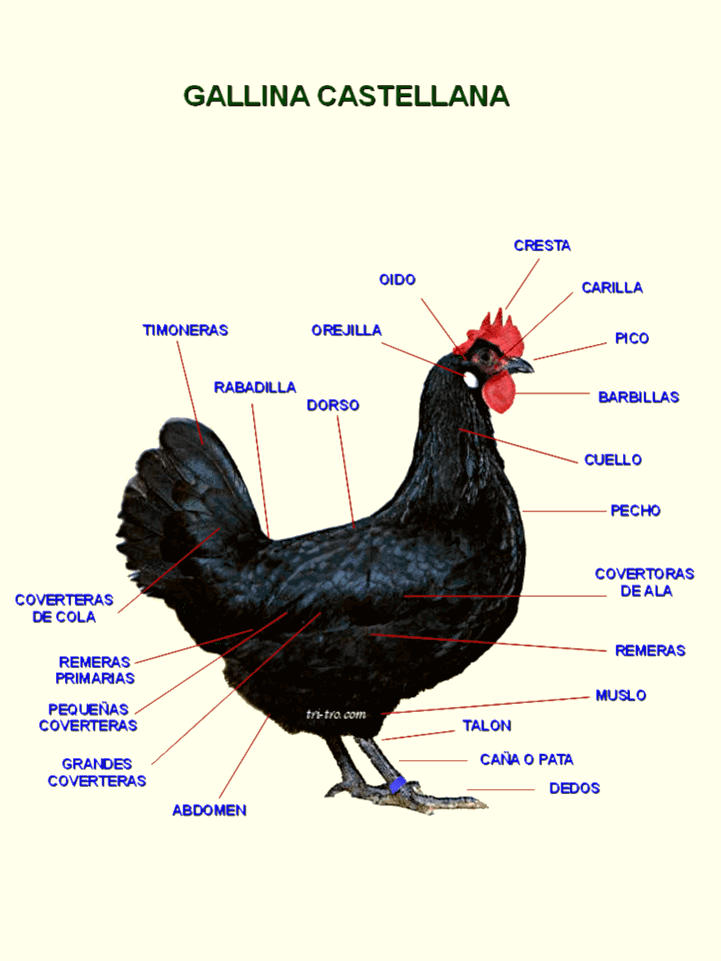
Castilian Black Hen: an elegant, egg-laying Spanish breed


Do you want to share or comment on your social networks

Scan to visit TRI-TRO
Escanea para visitar. TRI-TRO