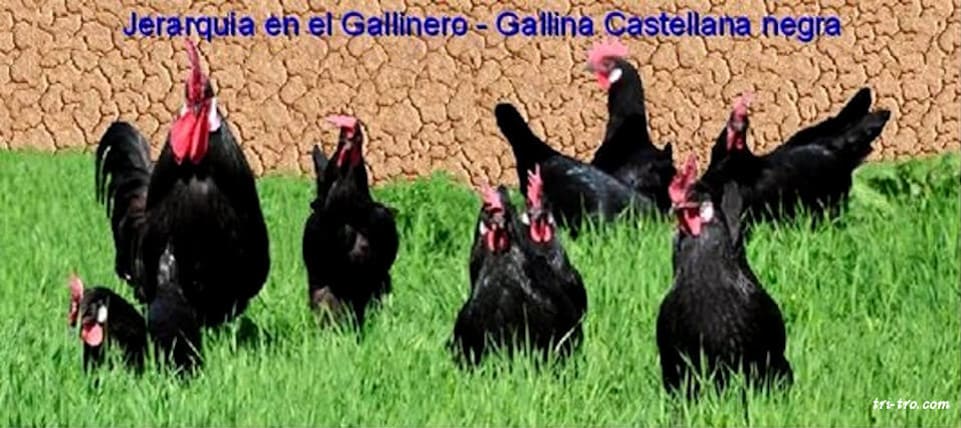
Hierarchy in the chicken Coop – Gallina Castellana negra

Behavior and ranking in the chicken:

The recognition between individuals is not general nor constant, because the ability to do this is limited to approximately one hundred individuals, who can be forgotten in about two weeks.

In the scientific field, roosters have been responsible for one of the greatest advances in our understanding of animal behavior.

Mutual recognition: Birds dominated tend to lower the head to pass so unnoticed. 

Regarding the concept of hierarchy, a term mentioned above, it should be noted that in any set of birds there is always an order or category dominance of each other.

In other words, there is always one that dominates the others, another that dominates all of them except the first—which dominates it in turn—and so on until we reach the last one, which is dominated by all the others.

Based on the fact that the birds recognize each other by signs of the conformation of the crest, appears in them gradually the order of dominance, although this is not developed in the chicks until after a few weeks of life.

At the beginning, the fact is very light and vague because the chicken is still not well understood and because it has not been established the concept of rivalry, which is manifested by pecks of the dominant to scare off the dominated and the emergence of fights with growing acometividad.

In the early days, the social manifestations consist in the satisfaction of the birds of feeling in the group, especially after his fill of food.

After two weeks, signs of rivalry appear in the form of games resembling combat, in which the presumed dominant individuals raise their heads threateningly, while the dominated individuals generally flee or submit immediately.

At the age of two months, at the end of the breeding season, it can be said that it is already perfectly defined the social scale of agressiveness and cowardice.

Upon reaching sexual maturity, when the recognition between the birds is good and there is the rivalry, governed complete the “order of the pecks”, with a perfect status for each bird, so there are no fights, but that, on the approach of a dominant, the others are removed, otherwise you will receive pecks without the option to play the field.

The fights usually occur at the base of pecks or attempts rearing in the head, which the bird dominated, soon learn to dodge.

The introduction of new birds in a chicken coop often alter the level of dominance preset, develop new struggles to rebalance the social order.

Social order diminishes when equilibrium is restored, as each bird knows exactly where it stands and the more timid ones become elusive and shy away from confrontation, in which case confrontation can only occur when there are not enough drinking troughs or feeders.

The elements involved in the rearing have been extensively studied, being linked with the age of the birds, the territoriality, the lighting, the number of birds in total housed in a coop, the density of population, etc

The hens are territorial animals that establish complex social hierarchies, interacting in recognition between them (for the characteristics of the head), being even able to learn behaviors or new tricks by watching the success or failure of other members of their community.

Every bird has its place within the group; some are dominant, while others are more submissive due to their lower social status.

The hens and the chickens are sensitive animals and intelligent, in addition to very sociableindividuals who like to spend the day cleaning and grooming their feathers, pecking away, basking in the sun or during sand baths.

In the wild, hens and chickens establish complex social hierarchies, with each hen knowing her place in the social hierarchy and living in harmony with it. These birds, which can live between 10 and 15 years in the wild, are now dying by the millions, making them the most exploited non-human animals after fish.

When learning how to perform a task, they follow the instructions of the dominant member of the group. Hens also produce various types of vocalizations that alert other members of their group to the presence of predators, food, danger, fear, etc. (Mench and Keeling, 2001). Hens, just like us, enjoy spending time with members of their own species.

In the section: “The Crow of the Black Castilian Rooster,” you'll find more information about vocalizations.

In the year 1922 was published for the first time the idea of the hierarchical organization of animal societies. It was discovered through the observation of the goose common.

The hierarchy in hens:

If a dozen chickens when they are placed together in a chicken coop, they quickly split into pairs and begin to fight. One member of each pair prevails over the other, either because it is stronger or because its opponent refuses to fight. 

So the first one is dominant over the second, and this is a subordinate of the winner.

Then, the dominant ones face each other, fighting in pairs; from this new struggle, half will be winners, dominant ones, and the other half will be subordinates. In the end, a hierarchy will be established that we could express as follows:

If we identify the chickens with letters from a To L, there will be a hen who will be the leader (A), which can peck all the others, but none of them can peck at it. The following (B) will be able to pick at all, except To;

C can peck at everyone except A and B, and so on until the end, when L is subordinate to everyone.

Any chicken can change their position in the hierarchy defeating another that is superior to it; but if you do not encounter such a challenge, the hierarchical positions are accepted by all.

This is a simplified version, but the principle of the law is there, and subsequent research on a large number of animal species (including our own) shows that there is a social order of dominant and subordinate, in males than in females.

This has been a discovery that has revolutionized our study of the social behavior of animals.

Within the birds are behaviors which are very different in habits, diet, mode of life, breeding stations, etc

Skills cognitive the intellectual abilities of birds (intelligence) have all too often been underestimated, but if we take the time to get to know these nonhuman animals, we will learn that their complex intellectual and emotional lives are evident; for example, scientists have discovered that these birds clearly understand the relationship between cause and effect.

Opinions of some experts:

It is now a fact that birds possess cognitive abilities similar to those of many primates. Dr. Rogers L. J., Professor of Zoology, University of New England.

The chickens and the hens show a social behavior sophisticated… can you recognize approximately 100 individuals and remind them. Have over 30 different types of vocalizations.

Dr. Joy Mench. Professor and director. Center For Animal Welfare. University of California.

Contrary to what one might hear on the part of the industry, the chickens and the chickens are not animals without mind, they are animals with complex behaviors, learn fast, show social organizations-rich and have a diverse repertoire of calls between them. Anyone who has lived with chickens recognize differences in the personalities of each one of them.

Dr. Bernard Rollin. Professor of Animal Science. Colorado State university.

The law of the strong:

The chickens also perform interactions complex social: Develop friendships and societies is significant. Like to have fun, have a sense of humor and even fall in love.

Many people think that putting a rooster with five or six hens there is everything.

A more intimate reveal that the hens laying down an order to “double” and the first wife of the rooster will try to sleep for the night beside him, and they'll get the snacks tastier than the rooster found first, while they are foraging.

Chickens have a sense of humor, they like to have fun, they fall in love, and they grieve over their losses.

The alpha or dominant rooster realizes that there are members of the group that make him uncomfortable and decides to expel these young males, who behave in a wild and unruly manner, from the group.

They are already becoming rivals to the rooster. Nature is wise, and through this mechanism prevents groups of roosters and hens in the wild from becoming too closely related.

This inevitable flight is due to immaturity, a lack of or insufficient status, and unequal standing with the rooster of the group (the possible father); in this regard, there is no awareness or remorse for actions of the same nature as those of the rooster.

The chicks flee and are rejected. They set out in search of another place to find food until they have fully matured and are strong enough to take on the males that dominate other groups. In galliformes, the spur is a tool used to inflict pain on an opponent.

Here, the male’s beauty alone isn’t enough, nor are his dances, courtship rituals, or fine singing. One well-placed kick and the rival runs off. In the wild, it’s very rare to see both rivals fight to the death.

As in all societies, hierarchies are established within different groups. There is a pecking order in which the strongest and most capable oppress the weakest.

When raising chickens in captivity, we must be very careful about where and how they are raised or develop. It is recommended to let them roam freely at an early age in open areas, not only so that their muscular system develops properly, but also so that they can find their “own space” and mature healthily (without too much stress).

This is called: Character development in roosters:

  • Hostile.
  • Dominant.
  • Friendly.
  • Submissive.

In summary, we have up to four “personalities or psychological trauma” with marked differences in the cocks:

Dear Owner: 

This is the ideal rooster: intelligent, knowing when and how to act. He was raised to keep his distance, asserting dominance but in a hostile manner. He is easy to manipulate and is typically the intelligent, even-tempered rooster.

Hostile dominant:

He could be handled with care, in a way; he’s the wild rooster, the rascal. He usually goes for the jugular. He grew up dominating the whole group through violence.

For this reason, and because he was used to being the one who dealt blows and dominated the group in a hostile manner, he never actually received any real blows (that caused pain). So, when he fights his opponent and feels the peck or jab, he panics and runs away. He experienced something he had never experienced before. This may be one of the reasons why a rooster runs away.

Yours sincerely, 

Unreliable roosters. They’re near the bottom of the pecking order. These are roosters haunted by traumas from their childhood. They’ve been bullied by those higher up in the pecking order. It’s recommended to be very careful around them or to cull them.

Hostile-submissive:

Unreliable roosters. Those at the bottom of the pecking order. The most bullied in the group. Roosters that scurry about like rodents among their brothers and eat only after the stronger ones have had their fill. Roosters that have been beaten by those higher up in the pecking order. It is recommended to be very careful with them or to eliminate them. This may be one of the reasons why a rooster runs away.

Why does the rooster behave this way?

Here is where the man is working with its own perspective, talent, observation and selection, a brood of their own. Each person looks and sees something different. This is how we have different results from the same source. There is selection on size or height, in the structures, the width of the rooster, styles, color of plumage, the bravery, etc.

It has been shown that if we give the same pair of animals to two different people living in distant locations, after about 10 years, what we see in one person’s chicken coop will be completely different from what we see in the other person’s. Why is that? Simply because of each person’s own selection criteria and the environment.

This is due to a formula that is not magical, but rather the result of a combination of genetics, behavior, and environmental factors.

  • Phenotype or type: What we see and its expression.
  • Genotype: What we do not see, but it is written in the chromosomes.
  • Environment: Power, location of the chicken coop, weather, selection, etc

There is an interaction that acts by generating changes in the offspring:

Analysis, interrelationship of structure, genetics, and style:

Type or phenotype:

Body structure. What we see: physical expression and movement, colors, size, shape, and body structures.

  • It depends on a healthy diet at every stage of development.
  • It depends on the weather, hours of light, dry, humidity, etc.
  • It depends on the good management.
  • It depends on the management in the control of diseases and health.

How is he doing?

It is part of the rooster's phenotype—or what we see in it: its expression of movement, attack, and defense, as well as its ferocity and aggressiveness, etc, of the same animal.

Normally, it is attributed to the gallo the heritability, which carries mainly the cock.

  • Depends on the structure of the rooster. The characteristics of muscle and bone. The dimensions (lengths and widths of the structures).
  • Depends on the introduction of blood and their own characteristics.
  • It depends on the health, nutrition, preparation, and training.
  • Depends on the qualities of this contribution.

Genotype: 

The genetic information in chromosomes and what is known as acquired genetic knowledge.

This information emerges naturally and is evident in the various behaviors of roosters and hens, from chicks at birth through adulthood. These behaviors become apparent at each stage of their development.

  • It depends on getting birds from a good source (pedigree).
  • It depends on knowing how to select and delete.
  • Depends on the qualities that contribute to these lines or breeds.
  • It depends on which of those qualities are heritable.


Environment:

All around the cock, from food, medication, climate, treatment, and handling of the birds, the selection by the breeder, features, pens, etc

All this new information is stored (primarily) by the female in her chromosomes over the years. The chromosomes that were intact when the first wild roosters (Gallus gallus) were discovered are now different; you can find more information in the section on the origin of the Castellana rooster.

New information on the selection of traits that may occur spontaneously, such as mutations or discontinuous variations (new feather colors, new types of crests, tufts, and wattles; 4, 4.5, or more toes on the feet; multiple spurs or spurs; black, white, or yellow skin; feathers on the legs, etc.).

These are changes or variations that, in most cases, the breeder did not intend. They simply occur spontaneously.

If the breeder decides to proceed, he realizes that by inbred breeding with the mother or father, he can preserve this new trait.

The other method of selection is based on continuous variations, in which the breeder makes his own selection from the traits he observes and likes for various reasons—which may be personal—with the aim of finding exactly what he is looking for.

These selection variations can last for several years.

All these changes were more rapid, whereas working within closed groups (consanguinity).

The various traits of roosters have been bred for many centuries—between 5,000 and 7,000 years. But we must not forget that many of these traits already existed in roosters long before we first observed them, and that we have gradually improved them through years of selective breeding.

In the wild, as the males in each brood grew and matured—producing their own sex hormones (starting at around 5 months)—they began to grow new, brightly colored feathers, and changes began to occur in their behavior (toward one another).

Some of them would flirt with the sisters and their mother, without knowing why, while others were already starting to pick fights with the other little boys, just for fun.

These new changes in behavior, caused by hormonal secretion, are already a sign of the animal’s imminent departure from the group. These changes result from the activation of a series of hormones and physical-chemical changes in the animal. Accompanied by what is known as acquired genetic knowledge (information encoded in the genes that serves as a natural defense for living beings, without the need for experiential learning), these are the new behaviors or actions that spontaneously emerge in the animal—behaviors that have never occurred before.

For example:

Who taught him to sing the cock? Who teaches him to want to copulate with the females? Why the struggles and the desire to impose themselves before others?

Biological factors and genetics play a role in this combination of social and psychological factors. We can say that the information stored by roosters and hens—the result of significant events or experiences—is what drives them to fight without hesitation, without thinking, and without fear of death.

All this information, which is encoded in the genes and can be passed down to future generations “like memories,” and, above all, the rooster’s aggressive nature, which has become increasingly pronounced over the centuries, to the point that “fight by fight", is essentially part of the impulsive hereditary trait. This occurs in many animal species.


It is something innate and impulsive, as the word itself suggests. In some individuals, there may even be what is known as an “impulsive aggression trait,” which acts as a stimulus, motivation, or reaction pattern, triggering defensive behavior in the face of potential danger, accompanied by an emotional component, with a fight-or-flight response.

These include somatic changes caused by sympathetic nervous system activation—known as reactive aggression—to which the animal reacts in response to danger, frustration, or fear; predatory behavior involving the killing of conspecifics for reasons of dominance, territoriality, food acquisition, or sexual competition; and, in the case of roosters, fighting to establish their status.

The two are biologically different. The theories of learning, which diverted the attention of the biological approach is pure, emphasize that behavior is the result of a conditioning process by reinforcement or imitation. The experiences learned or imitated, emphasizing in this learning environment, constituting a learning by modeling the observed repeated behaviors.

The brain is vulnerable to changes. Psychological stimuli include the risk of injury, changes occur in the neural connections and genetic mutations that lead and predispose to violent behavior by the rest of the life.

Approximately 40% of personality traits are attributed to genetic factors. Current views on the genetic basis of violent behavior suggest that genes are inherited that cause primary biochemical disturbances which do not consistently disrupt behavior and which are expressed in temperament, defining the neurochemical levels of neurotransmitters such as serotonin, which has been implicated in violent temperament.

These behaviors are determined by variant forms of genes encoding enzymes or proteins that serve as a transporter for the neurotransmitter, such as the polymorphism of the gene that codes for the tryptophan-hydroxylase, the rate-limiting enzyme of serotonin.

The aggressively defensive to a present danger or potential, and that is accompanied by anxiety, attack, or escape, is linked to an increase of the tenor of noradrenaline.

In roosters, disturbances in serotonin—the predominant neurotransmitter in the centers that control feeding, sexual, flight, and fight behaviors—are particularly notable. Significantly low levels of serotonin’s main metabolite, 5-hydroxyindoleacetic acid (HIAA) 24, suggest decreased activity in the central serotonergic systems.

In some of these studies, the decrease of the serotonin metabolite has been found, in addition, correlated quantitatively with indicators of psychometric aggressiveness.

The analysis of the behavioral characteristics of the subjects with low levels of HIAA in the CSF, it has been proposed that this metabolic might represent a marker of impulsivity that of violence.

Well, if testosterone—which is responsible for other secondary sexual characteristics—could account for males’ greater aggressiveness, then high levels of testosterone should be associated with high levels of aggressive behavior.

In all the studies conducted, there is no clear evidence of a direct relationship between high testosterone levels and increased aggressive behavior. This suggests that the relationship between hormones and aggression is not direct.

That is to say, that the testosterone may influence other variables, which in turn may influence aggressive behavior; for example, certain personality traits or personal dispositions stemming from the animal’s hormonal levels may predispose it to aggression.

Find more interesting is that the testosterone levels, which tend to be similar in all animals prior to the social interaction, rise dramatically in the winners of the fights and decrease in the losers. In this line, we can place the strong relationships found between androgen and behaviors related to aggression.

As well, some research has found that testosterone is related to certain personality characteristics such as dominance, assertiveness, or certain behaviors that we can call of sensation seeking.

Then we would come to understand the aggressive behavior as a consequence of the level of sensation seeking or assertiveness of the individual, especially in the exemplary primitive as it is the case of the Bankiva fowl o Gallus gallus, y que se va heredando y sumando a elementos antes explicados durante los siglos evolutivos y de aprendizaje heredado.

On the other hand, estrogens decrease aggressive behavior and competitive in the genre. Happens a higher percent of arrests in the hens on the days causes a decrease physiological levels of estrogen.

There are contributions of genetic and environmental structure and function of the circuit of emotion regulation.

In fact, the prefrontal cortex receives a greater projection of serotonergic fibers, which is dysfunctional in individuals who exhibit impulsive violence. Individuals who are vulnerable to impaired regulation of negative emotions are at risk of engaging in violent and aggressive behaviors.


Diet:

If we look at the diets of the birds, you can check that the hens and roosters have skills omnivorous, as the same are capable of digesting protein source meat that the cereal grains or herbs.

Typically, the wild hen is a foraging animal that, after scratching the ground with its powerful feet, searches for roots, sprouting seeds, insect eggs, nematodes, and larvae, while also feeding on tender shoots of grass, small stones, or even small live prey such as lizards, mice, snails, etc. Thus, it can be seen that the feeding hen it is founded on a broad base of natural products.

In domesticated birds, the ability to fly has almost been lost, but they still retain the habit of scratching and the instinct to forage for the foods they prefer.

The average life-span of these cocks is seven or eight years, although some individuals may live up to fifteen years. Domestic birds possess a number of characters instinctive to point out a few rules of conduct established characteristic of the species and which have a close relationship with their skills, anatomical and physiological.

Individuals present a way of life mainly instinctive, allowing a remarkable capacity for adaptation. Domestic birds adapt their life to a series of habits, behaving with great regularity throughout the day.

Birds exhibit a behavior marked by the rhythm of the seasons of the year and the various moments of the day, that is to say, they are strongly under the influence of the light environment and the natural rhythms.

If the animals are healthy, they display a particular liveliness and cheerfulness, characterized by leisurely movements, clucking, flapping, crowing, etc.

The chicken, without possessing a remarkable ability of orientation, it is able to operate with ease in your territory or habitat, returning daily to the same places for overnight stays.

Among the acts that govern the natural behavior of these individuals, we can mention:

The ability for the broodiness:

It is a hereditary factor that has been removed from the birds producing eggs, given the incompatibility between this situation and the setting. The hens are not laying birds temporary, because with greater or lesser intensity are giving eggs all-year round, but in its production take the courses of the solar year, going on to increase when the days are longer and in decline when cut.

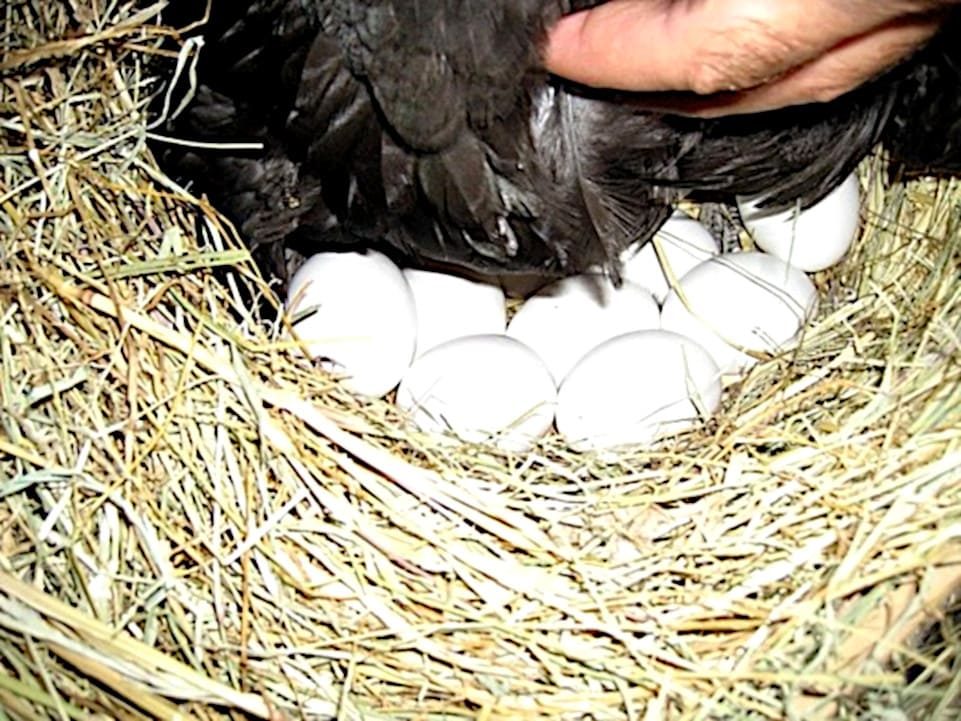
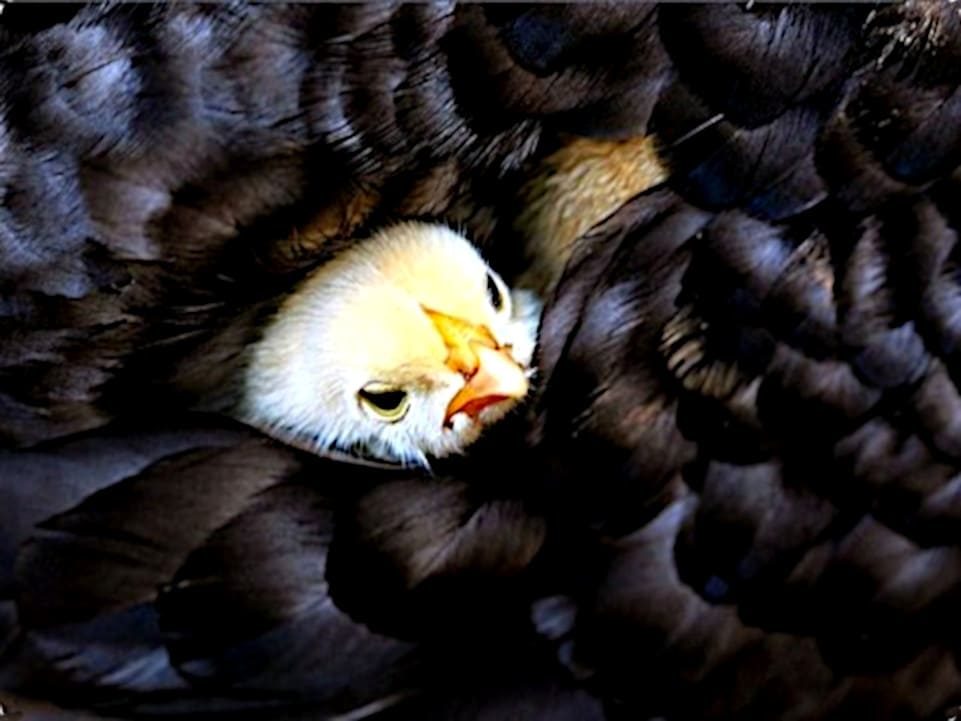
In wild chickens, as is still the case with wild gallinaceous birds, oviparous reproduction occurs following a period of sexual activity, during which the hen lays a clutch of ten, twelve, or twenty eggs; after which the bird enters a state of brooding that prompts her to incubate the eggs for the 21 days required for embryonic development and the subsequent rearing of the chicks.


Stop sexual rooster : 

This behavior is related the reproduction and consists in the emergence of sex games and relationships framed directly or indirectly by the mount. These factors are conditioned to the rhythm and seasonal factors, neuroendocrine.

Wild gallinaceous birds exhibit very distinctive behavioral patterns; generally, when the breeding season arrives, the male becomes aggressive and combative toward his fellow males, in accordance with a concept of ranking very typical of this species.

The dominant male who wins fights usually has a large number of females.

The genus Gallus does not form pairs; rather, a tendency toward polygamy within natural clans is very characteristic.

The fowls present a sexual dimorphism is very pronounced, both in the size and coloration as in the habits of the two sexes. From the wild varieties to the most modern breeds, they are known for their attitude and beauty chromatic cocks on chickens, which have a plumage more discreet, less weight and a lower capacity for the fight.

In this sense, the cocks are characterized by a series of differences in secondary sexual of great importance, as are the size of the ridge of the head, higher than that of chickens, a bright plumage and colorful, a tail that has large feathers in the shape of a sickle, etc

On the contrary, the chickens have feathers of colors dimmed or turned off, the feathers of the tail straight, absence of plumes, crests of the smaller size, etc.

As for their mating behavior, it is worth noting that the frequency of mating depends on the rooster’s position in the group’s social hierarchy; thus, the stronger roosters mate more frequently than the weaker ones, since the former block the others.

The preference of the roosters is shown that it leads almost always to the hens of the same breed and, within a uniform group, to some certain they can demonstrate more submission.

On the other hand, hens that occupy higher positions in the community's social hierarchy are less likely to allow themselves to be dominated by roosters for mating, sometimes manifesting this ostensibly by not crouching down like others when the rooster is nearby.

The instinct of mating is a ritual, with a close-up of the cock to the female.

This crouches if you are willing to be covered, in which case the male sometimes even starts a little dance around her, dragging the wing, mounting an act followed by the back while the tails of both birds are shifted laterally to facilitate the reciprocal coupling of their sewers, time of ejaculation.

Once the cock descends on the back of the chicken, sometimes exerts a ritual by dragging the wing, while the hen shakes the feathers and leaves.


You may be interested in these other sections


How to Choose the Right Eggs for Hatching

How do you choose the perfect broody hen for incubation?

Incubating Chicken Eggs: A Complete Guide


Do you want to share or comment on your social networks

Scan to visit TRI-TRO
Escanea para visitar. TRI-TRO