The definition of a hematoma (from the Greek haimato, “blood” more ōma, “tumor”) is the accumulation of blood caused by an internal hemorrhage (rupture of blood vessels, without which the blood reaches the body surface area) that usually appears as a response of the body, a result of a coup.
Bruises are a common occurrence among our chickens, whether from climbing perches, pecking order fights, injuries to the tibiotarsal joints (tibia, fibula, and foot), or stress and panic caused by overcrowding or collisions with structures in the coop or yard.
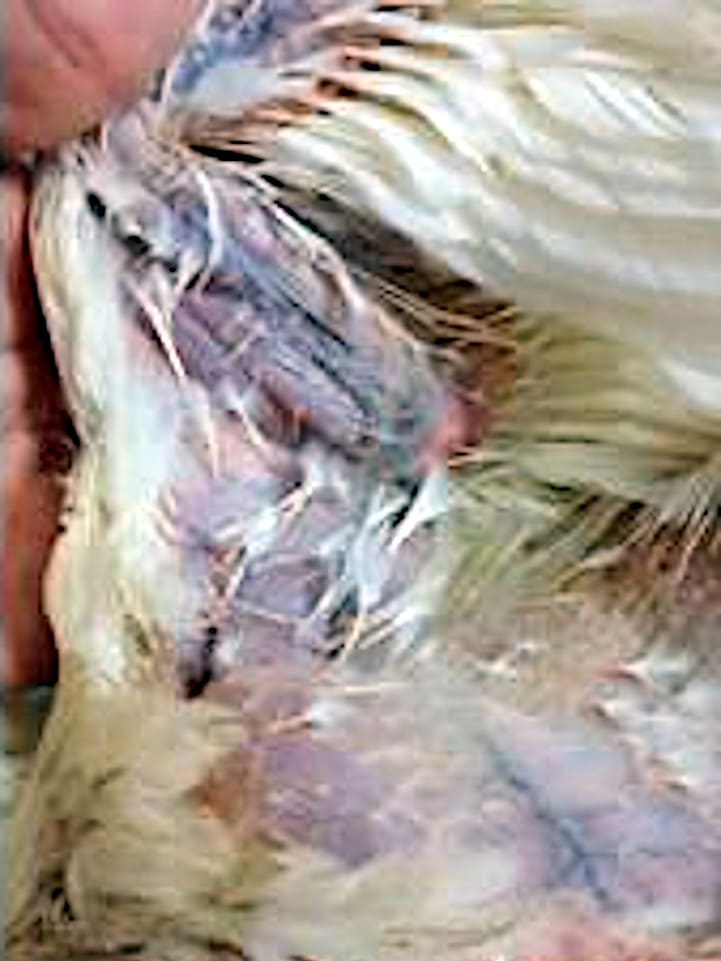
Unlike the simple bleeding, in the bruising is visible damage to the epithelial cells and the vessels, but there is no rupture and extravasation (leakage of blood, lymph or other liquid).
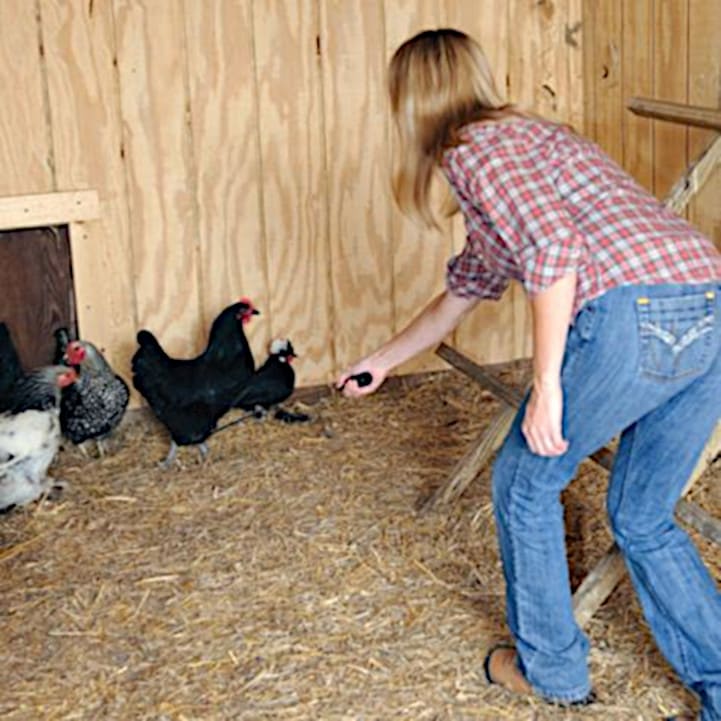
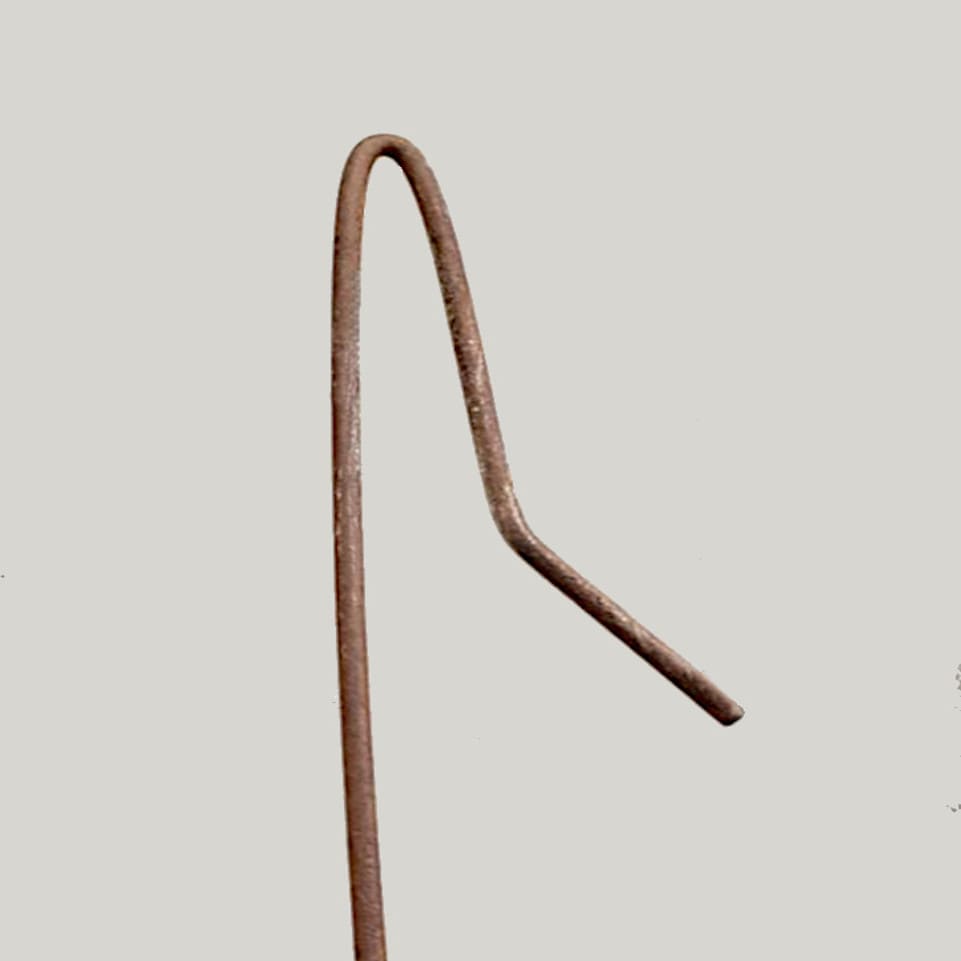
In these cases, bruises on the breast are caused by blows and compression resulting from the birds piling on top of one another during careless handling; that is why we should use this device, which is very practical (see photo) and does not harm our birds.
The age, weight, and sex of the birds also play a role; roosters are more combative or aggressive than hens, who follow their own unique system, such as pecking to establish hierarchy. The most affected are the heaviest chickens, or the broiler chickens we raise. The hematoma in the distal part of the thigh due to its excessive compression.
Carrying too many chicks in each hand or bumping into the waterers or feeders in the chicken coop can cause injuries, while injuries to the back and wing tips occur when the birds are placed in transport crates or released abruptly, or when they flap their wings to climb onto perches or elevated areas.
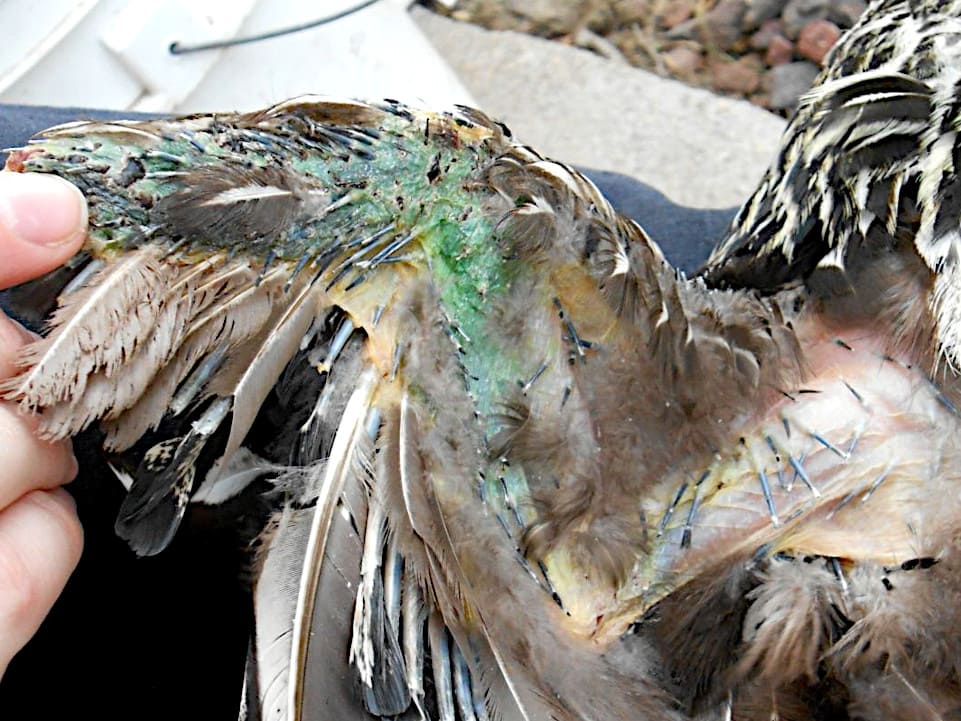
These bruises are already visible just a few seconds after the injury occurs; they become more noticeable, taking on a purplish hue with greenish tints after 36 hours, a greenish hue after 48 hours, an almost normal color after 3 days, and a normal color after 96 hours.
Hematomas are more frequent at this level are given in the tibiotarsal joint.
Bruising:
These are less distinct and more widespread injuries; the most common are scratches on the back or around the hip joint (which connects the hip bone to the femur); if they are recent (bright red in color), they are likely due to improper handling by workers and/or transport crates in poor condition.
It has been found that the chickens are packed in boxes for a long time, increases the incidence of scratches, which does not occur during the transport.
Fractures of bones:
Fractures of small bones (such as the furcula, coracoid, and scapula) also increase when the intensity of the electric current (slaughter) applied to the chicken is high.
Jagged bones produce bleeding in the internal face of the muscles of the breast, and are a problem.
Bleeding in breast and thighs:
Increase in the electrical stunning, high-intensity, due to the rupture of the blood vessels; this may also occur after, for a plucked excessively strong or to be affected muscles by the fractured bones. Bleeding in the wings and in the pectoral muscle deep is also associated to a bleeding insufficient; to be bulky vessels by an excess of residual blood, they break more easily in the plucking.
Dislocations and fractures:
Occur in the long bones, due to shock, clutter in the collection, transport, too many chickens in each box. In this case appear visible hemorrhage, which will not occur if the dislocation or fracture occurs after the slaughtering of the chicken, since the circulation of the blood has already been interrupted.
Logically, bone fragility, necrosis of head of femur, etc., increase the incidence of these problems, so you have to treat it with special care to the polladas affected in loading and unloading. The necrosis of the head of femur (degeneration, and even detachment of the articular head) is one of the abnormal conditions more frequent.
Although initially described as a typical lesion of reovirustoday it is considered more a result of the poor absorption of a pathogenic action specific.
It is observable in polladas apparently healthy and excellent growth, but that in slaughterhouse show a high level of dislocations and/or fractures of the proximal part of the femur, which produce bleeding under the skin and muscle, and they usually have occurred during the collection and further handling of the chickens.
Colours of the abnormal channel:
Congestive carcasses are more common; these are typically found in birds that were suffering from a fever at the time of slaughter. High temperatures during the final days of fattening or during transport and holding can also cause reddening of the skin, but to a much lesser extent.
Due to the peripheral vasodilation that causes the heat. The color blue appearing on fasts very long for transport, long-distance, especially in cold conditions.
These cuts bleed very poorly due to intense vasoconstriction; the meat becomes darker and firmer, retaining too much water because the pH does not drop sufficiently due to the depletion of muscle glycogen stores.
The breast is pale and exudate may appear in chickens that have had a strong stress in the short term, either due to incorrect handling of the birds or by conditions of high ambient temperature.