A hen's health and performance depend largely on her circulatory system, which is responsible for carrying oxygen and nutrients throughout her body.
The circulatory system The circulatory system is the body’s primary transport system, serving as the means by which nutrients, enzymes, and other substances essential for the proper functioning of the body’s systems, organs, tissues, and cells—as well as components of the immune system—are transported to where they are needed.
Metabolic waste products from tissues are also transported to the site where they will be eliminated or otherwise processed. Foreign substances such as bacteria and viruses can be transported throughout the body by the system.
The circulatory system is related to many diseases in chickens
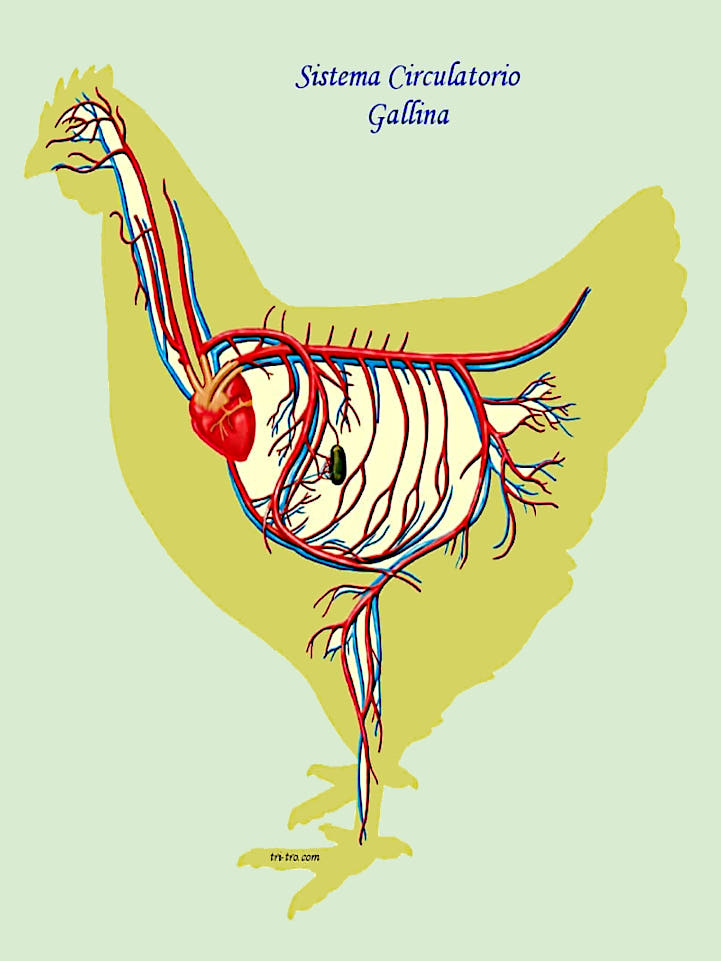
The circulatory system of birds consists of a heart and a complex network of veins and arteries. The main evolutionary advancement they exhibit compared to their reptilian relatives (with the exception of the crocodile) is that the heart consists of four chambers—two atria and two ventricles, as in mammals—which prevents the mixing of venous blood from the body with the oxygenated blood that has been purified in the lungs.
Another difference is that the red blood cells have a nucleus in comparison with erythrocytes anucleados of mammals.
In order to carry out its function, the system consists of several main components, including the heart, blood vessels, spleen, bone marrow, blood, and lymph vessels.
It is necessary to a knowledge of how these components work and their relationship with the whole system in order to better understand the biology of birds.
There are two types of body fluids:
Fluid circulation (they move around):
Body fluids (static, stay stationary):
The circulatory system consists of a series of organs that produce blood cells, the organ that pumps blood throughout the body (the heart), and blood vessels, such as arteries, veins, capillaries, and lymphatic vessels. After the arteries leave the heart, they branch into smaller and smaller arteries to provide the many branches needed to supply the various systems, organs, tissues, and cells.
When they reach the tissues, they divide into capillaries, which are very small and very thin, with walls just one cell thick. This allows nutrients and other substances to be delivered—moving out of the capillaries into the tissues—and waste products to be removed from the cells. When they leave the tissue capillaries, they join together to form veins, starting very small until they are near the heart; the blood then flows through either the vena cava or the pulmonary veins.
The lymphatic system is a specialized fluid-collecting system that gathers the fluid left behind in the tissues by the capillaries and transports it to a region of the heart where it enters the vena cava. The lymphatic vascular system of domestic birds is characterized by the presence of so-called lymphatic hearts in ducks and geese throughout their lives. All birds possess these structures during the embryonic period, but they disappear later, as in chickens and pigeons.
The blood is the vehicle transport to the body. It is a compound very complex and consists of:
The formed elements include red blood cells (erythrocytes), white blood cells (leukocytes), and thrombocytes, which are the mammalian equivalent of platelets. Blood also carries a large number and variety of other substances and factors. These include:
Erythrocytes:
These are large, oval, flat, nucleated cells (mammalian erythrocytes are anucleate). Occasionally, erythroid structures without a nucleus are observed, but these are normal avian erythrocytes that have lost their nucleus. The nucleus is located in the center and tends to be elongated, with a length of approximately 12 micrometers and a width of approximately 7 micrometers.
The red coloration is caused by the presence of hemoglobin, which is a compound of iron that carries oxygen. The function of erythrocytes is to transport oxygen from the lungs to the tissues and carbon dioxide from the tissues to the lungs. Erythrocytes are formed in the red marrow.
In adult birds, there are 2.5 million red blood cells per milliliter of blood. The cell volume can be measured by taking a blood sample and centrifuging it at 3,000 rpm for 15–20 minutes. The cells and the separated plasma can then be measured, and the volume of the cell fraction can be determined.
This volume is called the hematocrit, and although it consists mainly of red blood cells, it also contains white blood cells, as well as a small amount of trapped plasma. The error resulting from the trapped plasma is approximately 5%.
Leukocytes:
These are nucleated, amoeboid cells with colorless cytoplasm. Some have fine granules in their cytoplasm, others have coarse granules, and still others are non-granular. Because of the presence of granules, leukocytes are often called granulocytes. Most are phagocytic. Consequently, their shape is variable, but under normal conditions they are spherical. They are mononuclear, although they sometimes appear to be multinuclear due to the shape of the nucleus, which is often multilobed.
Leukocytes are formed in the spleen, lymphoid tissue, and in special cells in the bone marrow.
The average is about 30,000 per milliliter in the adult birds and 10,000 per milliliter in chickens a day.
Leukocytes can be classified by the nature of their cytoplasm and nucleus.
Protein granules in the cytoplasm can be acidic, basic, or have a neutral pH, and this determines, to some extent, the type of stain they take up. Microscopic organisms, such as cells and bacteria, are typically stained in the laboratory to aid in their identification.
Without staining, when viewed individually, the various types of white blood cells are mostly colorless, and it is very difficult to clearly see their characteristics, even with a powerful microscope.
Those identified in this way are:
Acid-staining granules that stain with a basic (alkaline) stain are called basophils.
(Alkaline) Basic granules that stain with an acid stain and are called acidophilic cells, eosinophilic cells, or eosinophils.
Granules neutral can be stained with a neutral tint, and are called neutrophils.
There are five main groups in the use of this system leukocytes or granulocytes:
Granulocytes polymorphonuclear heterophils
These are known as heterophils. They are spherical cells with a diameter of 10–15 nanometers (nm). The nucleus is distinctly lobulated, with the lobes connected by thick strands of nucleoplasm (nuclear material). These cells play an important role in the body’s defense against bacterial invasion, as they have a bactericidal function and ingest proteins.
Eosinophil granulocytes polymorphonuclear leukocytes (eosinophils)
These are similar in size to heterophils (10–15 nm), and the nucleus is often lobulated. The granules in the eosinophil nucleus are round and not as numerous as those in heterophils. The function of eosinophils is not definitively known, but it is believed that their numbers increase in cases of internal parasite infestations. It has also been suggested that they play a detoxifying role.
Granulocytes basophils polymorphonuclear leukocytes (basophils)
These cells are also roughly the same size as heterophils and eosinophils. The nucleus is generally not lobulated but appears oval in shape. There tend to be fewer of these cells, and their function is unknown; however, it has been suggested that they represent a stage in the degeneration of eosinophils.
Lymphocytes:
These are the most numerous of all leukocytes. Their size varies significantly; older cells are usually somewhat smaller than new cells due to the loss of cytoplasm in the older cells. The size of the nucleus is the same in all cells, but it may be kidney-shaped in some cases.
The mobility of these cells is greatly reduced, and its action phagocytic is probably null and void. Its function is believed to be the regulation of toxic materials. Also release enzymes that help in the synthesis of nucleoplasm. In its degeneration, release special compounds called gamma globulins that have the properties of antibodies.
Monocytes:
Monocytes are the largest of all white blood cells. They are difficult to distinguish from large lymphocytes due to their striking similarity in appearance. The nucleus may be round, oval, or kidney-shaped. They are highly mobile and highly phagocytic. Their function is to eliminate bacteria, protozoa, and tissue debris by engulfing them.
Thrombocytes:
They are similar to the blood platelets found in mammals; however, they play a lesser role in blood clotting. They are very numerous (approximately 25,000 per milliliter). They are the smallest of all blood cells and tend to clump together in small clusters. Thrombocytes are formed in the bone marrow in a manner similar to red blood cells.
Plasma:
It is the liquid portion or non-cellular blood. Contains a number of different compounds that include:
Blood glucose:
Blood sugar in birds is in the form of D-glucose, just as in mammals, but is generally at higher, albeit variable, levels. Certain hormones, such as insulin, glucagon, and corticosteroids, influence the actual level.
Nutrition also plays a role: whether the bird is well-fed or starving (in terms of nutrition) also affects its blood sugar levels.
The amount of sugar in the blood is about 260 mg/100 ml, although levels as low as 110 and up to 350 mg/100 ml have been reported.
Non-protein nitrogen:
After the removal of plasma proteins, the remaining liquid contains a series of nitrogenous substances. The amount in the range of approximately 15.5 mg/100 ml in the layer to 19.5 mg/100 ml in the bird immature. These include:
It is the end product of protein metabolism and accounts for the majority of the residual nitrogen excreted by birds. Blood levels vary considerably and are influenced by sex and reproductive status. As a result, laying hens have higher levels.
Diet is another factor affecting poultry; on a high-protein diet, they have higher levels of uric acid in their blood. Urea is another nitrogen-containing compound that is excreted by the kidneys. Relatively small amounts can be found in the blood (2.2 to 2.5 mg/100 ml), and the level is influenced by age, sex, and production.
Acid creatine, ammonia and free amino acids:
Creatine is an amino acid found in animal tissues. It is distributed equally between plasma and cellular components. It combines with phosphate to form phosphocreatine, an important compound in the anaerobic (oxygen-free) phase of muscle contraction. The levels found ranged from 0.5 to 1.6 mg/100 ml, with an average of approximately 1.0 mg/100 ml.
Ammonia, or more specifically the ammonium ion, is present in such small amounts that further testing is not warranted. Free amino acids are present in very small amounts. Up to 22 different amino acids have been detected in the blood of birds, but not all at the same time. The total amount has been estimated at approximately 8 mg per 100 ml of blood.
The plasma proteins:
Avian plasma contains a number of protein compounds that can be grouped into the following categories:
Lymphatic system:
The bodies of birds are richly supplied with lymphatic vessels. Lymph is derived from the body fluid found within the interstitial space (the space between the major body tissues).
The lymphatic system has the function of drainage systems of the body fluid that is left behind by the blood vessels, although the lymph fluid in the last instance will not return to the main circulatory system when the lymphatic vessel enters the vena cava near the heart.
Birds do not have lymph nodes. Lymphatic plexuses (a network of small lymphatic vessels) serve the same function as lymph nodes in mammals.
Spleen:
It is located immediately to the right of the junction between the glandular stomach (proventriculus) and the gizzard. The spleen’s primary function is to filter unwanted particles from the blood. Another function is its role in the formation of lymphocytes. It is reddish-brown in color and generally round in shape. It is surrounded by a thin, fibrous capsule containing few muscle fibers.
In general terms, the heart acts as a pump that pumps in two directions:
To the lungs, where it removes the carbon dioxide in the blood and the oxygen replaced.
For the rest of the body, to supply nutrients and oxygen to the cells and to remove waste products and carbon dioxide.
The blood leaves the heart through the arteries, called the aorta (in the body) and the pulmonary artery (in the lungs).
The blood always enters the heart through the vena cava (the body) and the pulmonary vein (of the lungs).
Location and the form:
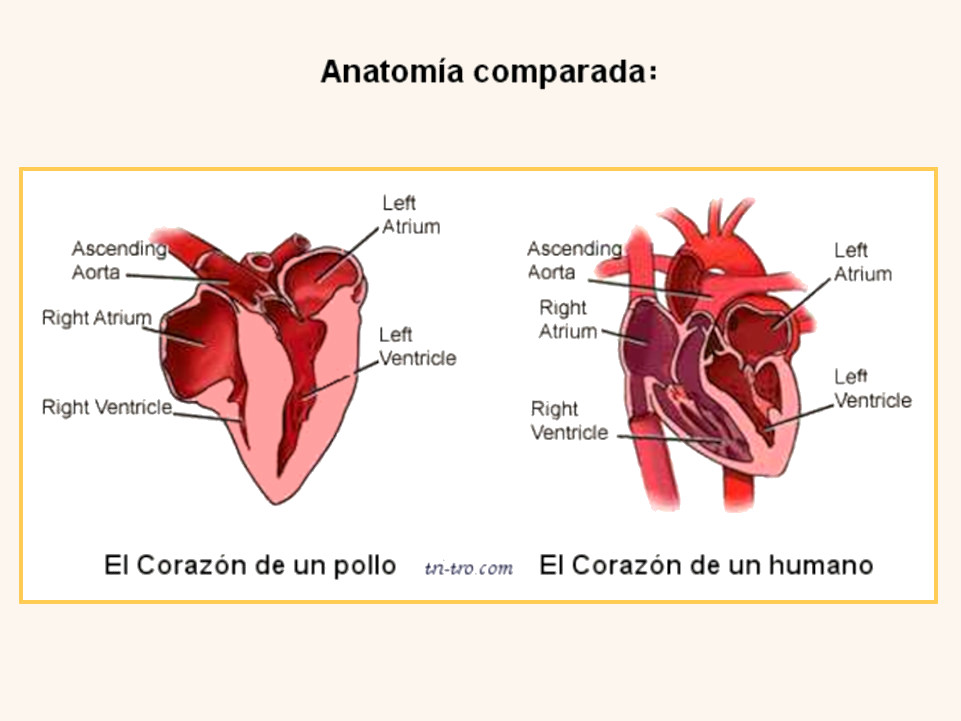
The heart of domestic birds differs from that of mammals in the following ways: instead of a right atrioventricular valve, there is a powerful muscular lamina; the left atrioventricular valve has three cusps; the inner walls of the ventricles are smooth; the spongy tissue is absent in the ventricles; the structure of the heart is simple throughout; there are two cranial venae cavae, and the heart is relatively heavy.
It is a dark red, hollow, conical muscle, generally relatively slender, though variable in shape, which is enclosed within the pericardial sac. The heart and pericardium are located ventrally in the cranial portion of the visceral cavity; the base of the heart is oriented in the direction of craneodorsal, while the tip what is in a sense caudoventral and is housed between the two lobes of the liver.
The face sternal The cardiac side faces the sternum, and the dorsal side faces the liver. In addition, it is bordered by the right margin, which is more or less concave, and the left margin, which is straighter or convex; both margins are rounded.
The pericardium:
It is transparent, thin, and durable; in the hen silky melanotic It may appear partially pigmented. Its basal portion is attached to the great vessels, and its apical portion is attached to the rachis and to the liver or sternum by means of a septum located between the ventral hepatic sacs. Its wall is also attached to the aerial, cervical, and cranial thoracic sacs; in the hen, it contains about three drops of clear, slightly yellowish pericardial fluid.
The atria:
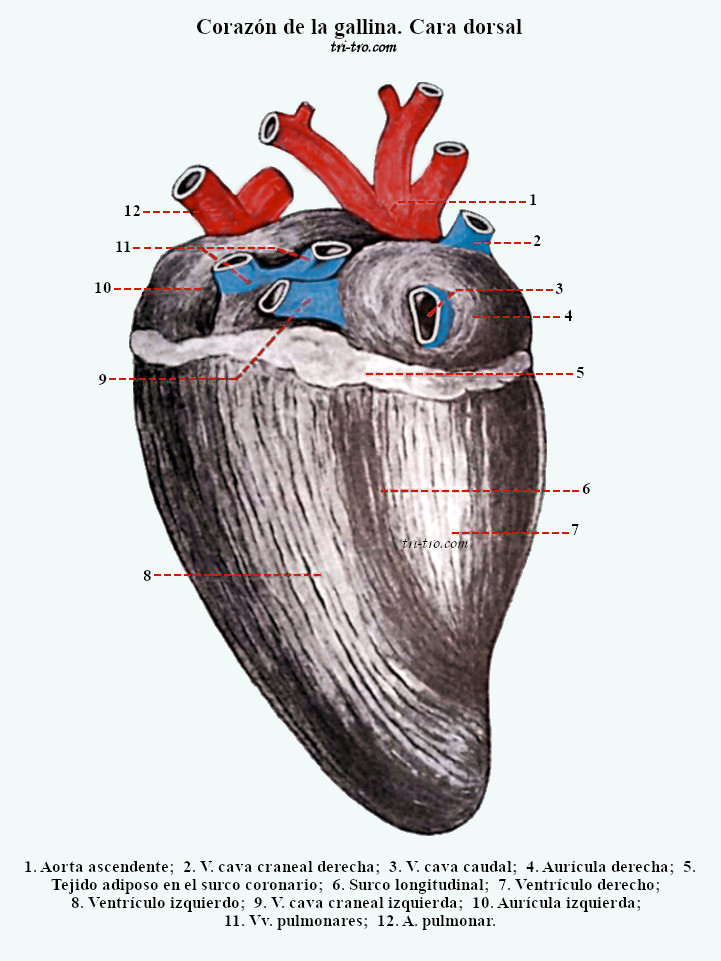
They are separated from the ventricles by a sulcus coronary, not clearly defined along their entire outline, and often containing varying amounts of adipose tissue; they are more or less hemispherical structures that protrude slightly laterally from the ventricles.
The right atrium is larger and has a slightly thinner wall than the left; the right atrium is less translucent and is reinforced by several muscular bundles; the right and left superior vena cavae, as well as the inferior vena cava, drain into it.
The holes of these veins are so close to each other on the venous sinus, which may become occluded completely against the remaining portion of the atrium at the close of the valve sinus. This muscle is well developed in chickens, but not as much in ducks or geese; it is a two-headed muscle composed of a tensor muscle, the M. pectinatus valvularis, which descends from the ceiling of the atrium.
Two pulmonary veins drain into the left atrium through a common opening lined with muscular ridges designed to prevent the backflow of blood; the fetal foramen ovale is closed by a thin, translucent, and relatively strong membrane. This membrane is located in the portion of the interatrial septum that is closest to the left atrium.
The ventricles:
Are separated externally by longitudinal grooves less marked than in the case of mammals. The left ventricle it is spacious; the thickness of your wall come to be twice that corresponding to the right, represents a hollow cone, narrow and circular cross-section, comprises the left half of the heart from the sulcus coronary until the end, to which it gives shape without it involved the right ventricle.
At the tip of the heart there is a very thin, translucent, and often membranous area, which in chickens is 0.25–0.50 mm thick. The left atrioventricular valve has three cusps; in the left ventricle there are three papillary muscles: one is located on the outer wall, another on the septum, and the third occupies an interparietal position. In the vascular wall the origin of the aorta there are formations of cartilage.
The right ventricle It does not extend to the apex of the heart; this region belongs almost entirely to the left ventricle; in cross-sections of the organ, it appears as a sickle-shaped notch. The right ventricle lacks papillary muscles; the right atrioventricular valve is replaced by a broad, powerful muscular sheet that originates from the lateral wall.
When it contracts, its free edge presses against the ventricular septum; from this edge, a strong, short muscular trabecula projects obliquely in a cranial direction and toward the lateral wall. In chickens, this trabecula becomes a weaker, smaller muscular lamina.
A membrane that slopes from the lateral wall to the septum, with which it forms an open pouch. The free edge of the membrane faces the septum; between these two parts lies a slit through which the right atrium and right ventricle communicate, which closes during each ventricular systole due to the contraction of the membranes.
In the vascular wall the origin of the aorta pulmonary there are formations of cartilage. Otherwise, the devices ventricular and valve apparatus of the orifices of the aorta and of the A. lung are similar, in essence, to those belonging to the domestic mammals.
The greater the ratio of heart weight to body weight, the longer and better the bird in question can fly. The absolute weight of a hen's heart ranges from 4.5 to 12.0 g.
The system atrioventricular extends across the entire heart wall; the Purkinje fibers they travel along the surface of the body and the interior of the myocardium. In particular, in the epicardium headset, there are many sympathetic ganglia. The innervation (distribution or arrangement of the nerves in a body) of the heart corresponds also to the sympathetic and the parasympathetic.
The heart is supplied by two coronary arteries; both vessels are approximately the same size in chickens, arise from the aorta at the level of the semilunar valves, and divide into a deep branch and a superficial branch. The A. right coronary arterythat emits a bouquet circumflex for conexionarse with the relevant branch of the left side, supplies blood to the ventricular septum, the right atrium and the ventricle of the same side, as well as part of the left.
The A. left coronary. It is distributed primarily throughout the atria and the left ventricle; it also supplies part of the ventricular septum. Both arteries form numerous anastomoses; venous blood returns to the left superior vena cava or to the right atrium via the middle and greater cardiac veins, which correspond to those found in mammals. The lymphatic vessels of the heart drain into the right and left superior vena cavae.

The aorta (figs. 10 and 12) leaves the heart through the left ventricle, which emits in the first place A. braquiocefálica izquierdto and immediately after the right. The ascending aorta, much thicker than the brachiocephalic arteries, it forms an arch (aortic arch) around the right pulmonary artery and the bronchus on the same side, and reaches the vertebral column at the level of the 4th–5th thoracic vertebrae, where it becomes the descending aorta and runs first along the right side toward the pelvis.
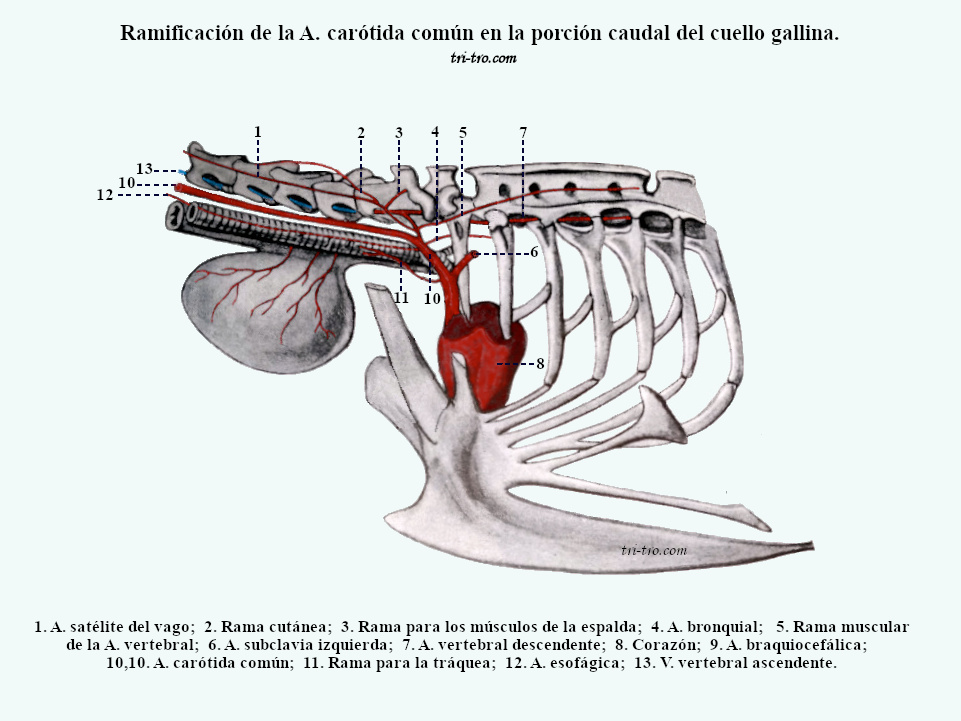
The A. braquiocefálica On each side, the common carotid artery and the subclavian artery originate; where they branch off on the ventral wall, a small vessel emerges that runs toward the trachea.
The Aa. Common carotid (left and right) from the hen (Figs. 14 and 16), which are associated with the thyroid gland near its origin; they run very close together through a central canal formed by the ventral processes of the cervical vertebrae and the longus colli muscle. Both leave this canal at the level of the third vertebra; along their course, they give off the Aa. Caudal and cranial thyroid immediately in front of the chest entrance, both of which supply the thyroid gland; the bronchial artery, which runs alongside the corresponding bronchus toward the lung and supplies branches to the esophagus, as well as to the A. esophageal ascending.
This sends branches into the left side of the trachea, the esophagus and into the crop and was anastomosed with the A. esophageal down, while the glass on the right side is distributed radially in the wall of the crop.
The A. vertebral is a thick branch that arises from the common carotid artery at the level of the thyroid gland; it lies within the transverse canal of the cervical vertebrae and divides within it into two branches, one cranial and the other caudal. The first of these is the A. spinal ascendingthat is anastomosed to the descending branch of the A. occipital and participates with small branches in the formation of the A. ventral spinal.
The second, A. spinal descending, runs in a caudal direction between the heads and the costal tubercles and extends down to the 4th rib Aa. Intercostales supremos. Shortly before it divides into the ascending and descending branches, the vertebral artery gives rise to the A. comes vagi (satélite del vago), accompanying the N. vagus and V. jugular in the direction of the head, dividing in the middle of the neck in the A. subcutaneous neck, thicker, for the skin of the region, and another branch thinner that was anastomosed with the A. occipital.
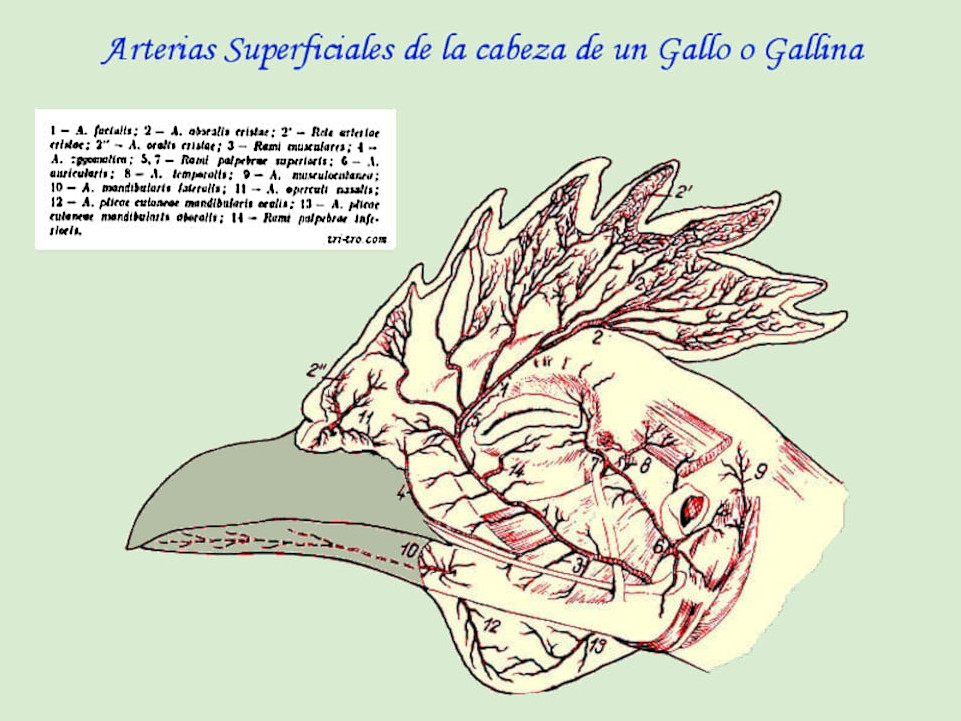
In the head, whose blood vessels vary with the individual and the species, each A. common carotid divides into two: A. internal carotid artery and the external.
1. La A. internal carotid it enters the cranial cavity by the ventrolateral part of the foramen magnum and forks in the A. ophthalmic (external) and in the A. carotid cerebral. The external ophthalmic artery, which also sends a branch to the auditory capsule, enters the orbit from behind and primarily supplies blood to that cavity, the eyelids, the eyeball, the optic nerve, the eye muscles, and the lacrimal glands.
The A. (carotid) the brain is divided to cause the A. ophthalmic internal and forms an oral branch and an aboral branch. There is no closed cerebral arterial circle. The basilar artery of the brain consists solely of the right or left aboral branch. The ventral spinal artery, in the formation of which small branches of the ascending vertebral artery participate, anastomoses with the basilar artery of the brain and with the terminal branches of the intercostal and lumbar arteries. Otherwise, the internal carotid artery supplies, through its various branches, the same regions as in mammals, although its distribution is different.
2. La A. external carotid provides to each side, as the first vessel, the A. occipital, which divides into a superficial branch and a deep branch before entering the muscles of the neck and head. The second artery arising from it is the laryngeal artery; this travels to the laryngeal region and divides into four terminal branches:
In the vicinity of the bone, square divides the A. external carotid in its last branches: A. handset, the face, and the jaw.
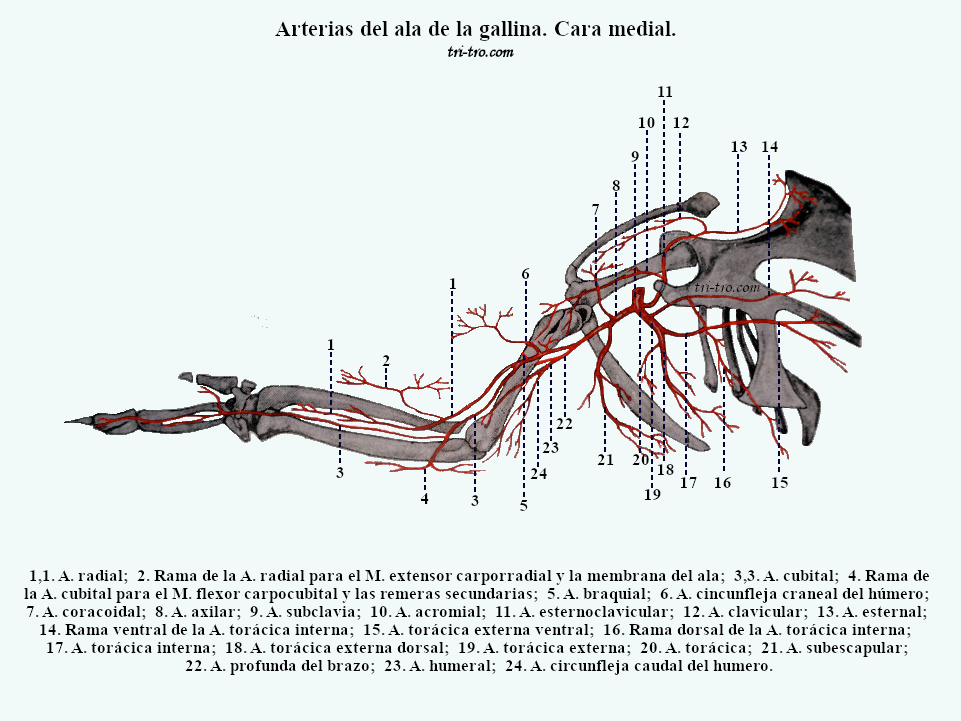
The A. subclavia (Fig. 18), the trunk of the thoracic and brachial vessels gives rise to the sternoclavicular artery; this artery branches to form the sternal and clavicular arteries, which supply the supraclavicular and pectoral muscles.
The A. acromial It branches off from the subclavian artery at the same level as the sternoclavicular artery, or arises from it; it supplies the coracoid process, the caudal coracobrachialis muscle, the capsule of the scapulohumeral joint, and the long head of the biceps brachii muscle. The next branch of the subclavian artery is the A. chest, which is divided after a short drive, giving the A. internal thoracic with its branches, dorsal and ventral, aimed at the muscles intercostal, and the A. thoracic external, which gives rise to three branches (dorsal, ventral, and lateral).
These three vessels are distributed essentially in the pectoral muscles; the lateral one also irrigates parts of the skin in that region and forms a wide arterial network (broody spots); see section on broody hen or broody hen.
The A. axillary originates as a branch, not as a continuation of the subclavian; gives way to the A. subscapularis to the muscle of the same name, the inferior scapulohumeral muscle, and the serratus anterior, as well as the A. coracoides to the M. coracoclavicularis, the teres minor, and the coracoid process; the extension of the axillary artery is the branchial artery.
The A. gill generates the A. deep in the arm at the level of the scapulocoracohumeral joint; the latter gives off a branch to the latissimus dorsi muscle, as well as A. humeral which supplies the latissimus dorsi muscle, the triceps brachii, the wing membrane, and the humerus along with the surrounding musculature. At the junction between the proximal and middle thirds of the humerus, the deep brachial artery branches to give rise to the A. ulnar collateral or circumflex flow of the humeruswith branches for the muscles surrounding the membrane of the wing, as well as the A. ulnar collateral that irrigates the M. triceps brachii and the skin of the face fly arm. The A. gill drift, in addition to the A. circumflex head of the humerusthat vasculariza the M. biceps brachii and the musculature of the wing.
At the beginning of the middle third of the humerus, the brachial artery, accompanied by the median nerve and the vein of the same name, divides into the ulnar artery and the radial artery.
A. ulnar It also supplies small branches to the capsule of the elbow joint, as well as branches to the flexor carpi ulnaris muscle and to the follicles of the arm’s secondary muscles; it then divides after sending minor branches to the carpal region, and its terminal branches supply the bones of the hand and the follicles of the primary muscles.
A. radial irrigate with its branches, the M. gill, the extensor carpi radialis, the membrane of the wing, and the joint of the elbow, and gives several branches to the follicles of the t-shirts high schools.
The A. descending It runs toward the pelvis alongside the vertebral bodies, initially on the right side; it reaches the midline at the level of the 5th to 6th ribs and divides into its terminal branches in the pelvis. Along its course, it gives off the following branches:
The Aa. Los intercostales They are paired branches of the aorta; starting with the second pair, they divide into distinct branches; one of these anastomoses with a terminal branch of the vertebral artery and with another branch of the next intercostal artery. A second branch supplies the intercostal muscles; these arteries also give off branches to the muscles located dorsally to the spine, while other branches enter the vertebral canal to join the vertebral spinal artery.
The Aa. Las lumbares are distributed in a manner similar to that of the intercostal muscles; some Aa. Las sacras supplying primarily the dorsal musculature of the tail. Small A. esophageal it originates immediately in front of the celiac, is directed toward the left and is lost in the esophagus near the hilum of the lungs.
The A. celiac (Fig. 20) is a single vessel; its branching pattern is highly variable. It originates at the level of the 5th to 6th ribs, gives off the esophageal branch, and divides into two main trunks with several gastric arteries supplying the proventriculus and the gizzard, as well as a A. right hepatic and another left to the respective lobes of the liver, without forming a celiac tripod. The spleen is located between the two main branches of the artery. In domestic birds, the celiac artery supplies not only the stomach, liver, spleen, pancreas, and duodenum, but also the ileum and caeca, with the exception of the segments located near their openings into the terminal intestine.
The A. mesenteric cranial (Fig. 20) originates as a single vessel from the aorta at the level of the 6th rib, immediately behind the celiac artery; from it arise first the A. ileocolic, which supplies the distal segment of the small intestine and the cervical portions of the cecum, and anastomoses with the inferior mesenteric artery. It then gives off the branch for the terminal intestine and the Aa. Yeyunales or small intestine, their number ranges between 12 and 20, varying with the handles, as each of these is supplied by a single vessel generally.
The jejunal arteries travel through the mesentery to the corresponding intestinal segments and form anastomotic arcs with one another before reaching them; these arcs are located at the greatest distance from the digestive tract in the hen; numerous small vessels branch off from these arcs toward the intestinal wall.
The A. mesenteric flow (Fig. 20) is the last unpaired vessel of the aorta, from which it arises at the caudal end of the kidneys; its branches do not form anastomotic arches and supply blood to approximately the caudal third of the terminal intestine, as well as the cloaca and the bursa of Fabricius. It anastomoses with the cranial mesenteric artery and the internal pudendal arteries.
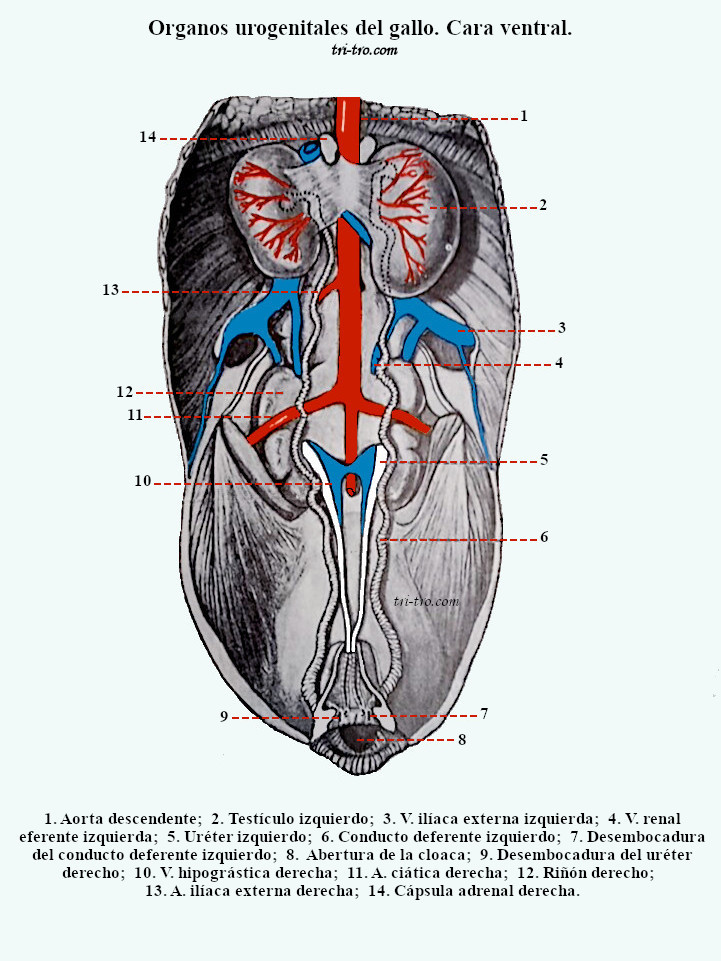
The Aa. The internal spermatic veins They originate from the aorta at the level of the first lumbar vertebrae; in the rooster, each of them branches into the A. suprarrenal for the adrenal gland, in the A. testicular for the testis and in the A. renal craneal, which may also arise directly from the aorta, supplying the cranial lobe of the kidney. The right internal spermatic artery of the hen supplies only the adrenal capsule and the cranial lobe of the kidney, while the left branch divides into three branches supplying the adrenal gland, the same lobe of the kidney, and the ovary (A. ovarian). Artery left also sends branches to the infundibulum and the oviduct.
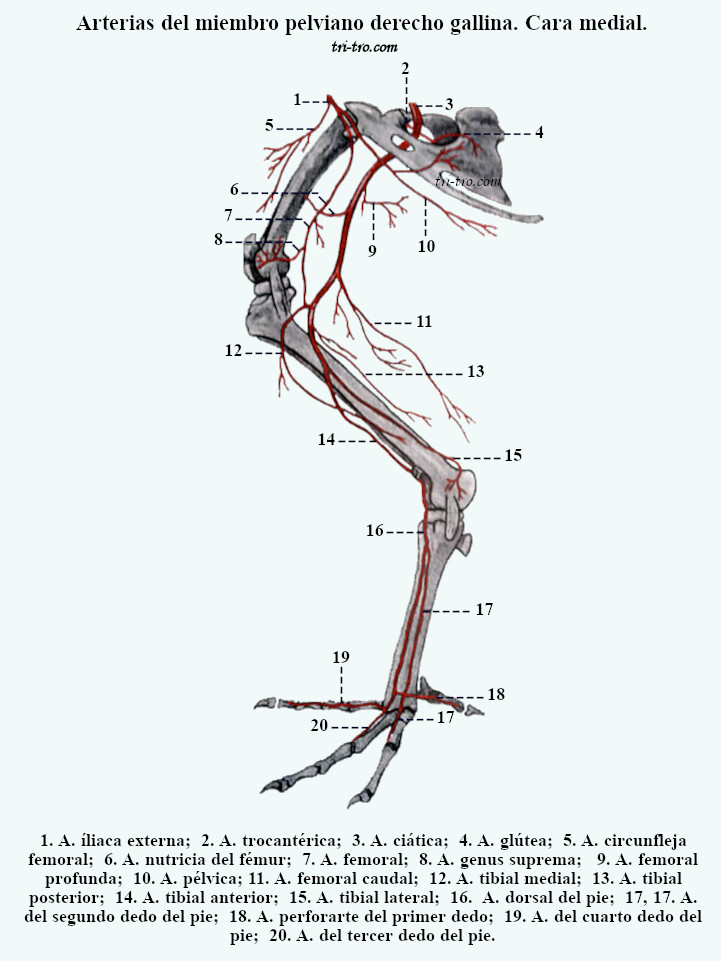
The A. iliac external (Figs. 22 and 24) is a thin vessel that originates on both sides of the pelvis, at the level of the middle renal lobe, exits the pelvic cavity, and divides into four branches:
The A. pelvic it runs along the pubic bone and supplies blood to the abdominal muscles and the air sac in the abdomen.
The A. circunfleja femoral branches in the muscles cranial nerve of the thigh, as well as in the sartorius and the triceps of the leg.
The A. femoral It runs along the inner side of the thigh down to the knee joint; it joins the medial tibial artery after branching off.
The. A. Genus suprema that irrigates the adductors and the M. gracilis.
The Aa. External sciatic nerves (Figs. 22 and 24) are the most important vessels of the pelvic limbs; they arise from the aorta on both sides, at the level of the hip joint. Each of them enters the caudal lobes of the kidney immediately after emerging and supplies the A. renal flow, thick and usually double, with separate branches for the medial and caudal lobes of the kidney. In the hen, the A. the oviduct (average), very developed in the laying period. Was anastomosed with the A. sperm internal and with the internal pudendal.
The external sciatic artery emerges from the pelvic cavity through the sciatic foramen, accompanied by the sciatic nerve; it then gives rise to the trochanteric artery in the region of the hip joint, as well as the A. gluteus for the Mm. Twins, the shutter, the box, the femoral and the proximal portions of the M. adductor of the thigh and the femoral biceps, following his journey along with the N. sciatic or tibial and the peroneal.
At the height of the proximal third of the thigh originates from the A. profunda femoris, which branches off into the muscles caudal thigh and it sends a branch to the skin of the same. To the middle of the thigh is born of the sciatica the A. nutricia of the femur and that is continued in the A. popliteal at the back of the thigh. From this point, a thick branch first extends to the skin covering the biceps femoris muscle; then, in the region of the back of the thigh, the A. femoral flow for the muscle belly of the flexor of the phalanges, as well as a branch that supplies the capsule of the tibio-femoral joint, the M. vastus medialis, the adductor and the vicinity of the medial condyle of the femur.
The A. popliteal gives in addition to the A. medial tibial at the level of the knee joint; the latter anastomoses with the femoral artery and sends several branches to the skin of the leg. After giving off the Aa. Tibiales, caudal lateral; the populite becomes the A. tibial cranial, that supplies the flexors of the phalanges on the dorsal side of the tibia, contributes to form the network of the tarsus, located dorsally, and becomes the A. dorsal foot after passing the joint intertarsiana.
The latter descends along the dorsal surface of the metatarsal bone, gives off the small artery of the second toe in the proximal third of the metatarsal, and divides in the fossa between the articular tubercles of the third and fourth toes to give rise to the A. the third finger of the foot and the A. the fourth finger of the foot, after giving rise to an artery at the distal epiphysis of the metatarsal bone that penetrates it—namely, the perforating artery of the first toe. In ducks and geese, arteriovenous anastomoses are present at the extremity of the limb, particularly in the webbed membranes.
After giving rise to the caudal mesenteric arteries, the descending aorta gives rise to the two hypogastric arteries and the middle sacral artery:
Las Aa. Hipogástricas or pudendal internal vessels pairs, are born immediately behind the caudal lobe of the kidney and sent a branch muscle to the depressors of the queue, and a branch gut to the cloaca and the sexual organ or the terminal segment of the oviduct.
The ARTERIA sacra media o coxígea media It is relatively small, forms the continuation or end of the descending aorta, gives off several branches to the tail muscles, the skin, and the tail feathers, and gradually disappears.
The veins of the general circulation They form three trunks: the left cranial vena cava, the right cranial vena cava, and the caudal vena cava, which carry blood to the right atrium (Fig. 10). Domestic birds lack V. azygos.
Each V. cava cranial it is the junction of the jugular and the subclavian on the corresponding side. The cava cranial left also collects the blood of the V. coronary heart.
The Vv. Jugular, the right of which is often much thicker than the left, carry blood from the head and neck back to the heart. They are joined by a transverse branch below the base of the skull and lie relatively close to the surface, alongside the vagus nerve and its satellite artery next to the trachea. In the lower part of the neck, they receive blood from the Vv. Vertebral, formed by a branch of cranial and by another flow. The first carries the venous blood from the brain and neck, while the flow rate or V. spinal thoracic leads of the vertebral column and the spinal cord.
The subclavian veins form the collecting trunk for the thoracic and brachial veins. They are as follows:
Vv. Thoracic external ventral.
Vv. Thoracic external dorsal.
Vv. Thoracic internal.
Vv. Axillary.
Vv. Esternoclaviculares.
Accompany the arteries corresponding. The V. thoracic external side is suitable for blood collection because of its superficial location; it empties into the V. subscapularis and carries blood from the skin, the abdomen (cloacal spots), and the ventral pectoral region. The large cubital cutaneous vein, which is also suitable for blood collection at the elbow joint or on the medial aspect of the arm near the coracohumeral process, continues into the V. cephalic, which is located superficially. The latter is extended in the V. axillaryin both the gill, located deeper, is a branch of that axillary artery.
The vena cava flow (fig. 10) is a trunk length limited, formed by the confluence of the two Vv. Renal efferent (fig. 22), receives the Vv. Liver and V. ventral abdominal, which is odd and ends in the right atrium.
The Vv. The efferent renal veins originate in the renal parenchyma, run on either side along the medial border of the kidney in a cranial direction, and collect blood from the V. renal afferent or porta kidney, which is included in the renal tissue on both sides and at the lateral edge of the body, spinning in capillaries within the same. Collect first the blood of the A. renal cranial lobe corresponding to the kidney through the V. renal efferent cranial and V. renal afferent cranial (branch of the external iliac), which branches off into the lobe renal head.
After receiving the own V. external iliac (fig. 22). As the orifice of communication of the V. external iliac with the renal efferent is provided with a valve to close almost completely, only a small part of the blood passes directly to the last vein, while the greater part of it flows back into the renal afferent to circulate through its capillary network and the renal glomeruli. Until then, do not pass this part of the blood to the V. renal efferent by their collecting vessels.
The Vv. Las renales aferentes originate in the end flow of the kidney to the branch the V. coxígeo mesenteric from the segment's of caudal intestine (fig. 20). Also receive the blood lead on each side by the V. coxígea from the regions flows, and by the V. hypogastric (fig. 22) from the caudal area of the pelvis.
The mesenteric vena is connected to the veins of the intestinal tract, so that blood from the caudal segments of the intestine reaches the kidney via the renal veins, while blood from the cranial segments of the intestine flows to the liver via the hepatic portal system.
The V. porta It is formed by the confluence of the veins from most of the gastrointestinal tract, the spleen, and the pancreas, and also collects blood from the caudal portions of the body through its anastomosis with the mesenteric coccygeal vein. It generally forms two separate trunks; one of these, the V. right portal, forms a capillary network in the right lobe of the liver; the other, V. porta left, comes into its own in the left lobe. Of these, capillary networks originate from the Vv. Liver, which flow into the trunk of the cava flow.
Differences from the heart of a chicken with the human
Bibliography:
Dyce, K. M., Sack, W. O., and Wensing, C. J. G., 1991. Veterinary Anatomy. Ed. Pan-American.
Ede, D. A., 1965. Anatomy of birds. Ed. Acribia.
Grasse, P. P., 1980. Zoology. Vol. 4: Vertebrates. Reproduction, biology, evolution, and systematics. Ed. Toray-Masson.
Grifols, J. and Molina, R. 1994. Manual of clinical exotic birds. Ed. Grass-Iatros.
Natural History, 1984. Vol. 1. Ed. Ocean-Institute Gallach.
King, G. M. and D. Custance. Colour atlas of vertebrate anatomy: The Pigeon. Pp.: 5.1-
5.17. Ed. Blackwell Scientific Publications.
Krahmer, R., and Schröeder, L. 1979. Anatomy of the domestic animals. Ed. Acribia.
McClelland, J., 1992. Atlas in color of the anatomy of birds. Ed. inter-American.
Nickel, R., 1977: The Anatomy of the Domestic Birds. Ed. Paul Parey.
Sandoval, J., 1976. Veterinary Anatomy. Ed. Modern Printing Press (Córdoba).
Schwarze E. 1980. Compendium of Veterinary Anatomy. Volume V: Anatomy of birds. Ed. Acribia.
Shively, M. J., 1993. Veterinary anatomy, basic, comparative, and clinical. Ed. Manual Moderno.
Sturkie PD, 1967. Physiology of Avian. Ed. Acribia.
Dr. Francisco Gil Cano.
Professor H. Aguinaga.
MERCK & CO. (1995). Manual Merck de Veterinaria . Rahway, N. J., EE. UU.
BUXADÉ, P. (1987). The laying hen. Ed. Mundiprensa. Madrid.
DORN, P. (1987). Manual of avian pathology. Ed. Acribia. Zaragoza.
HOFSTAD, M. S. (1984). Diseases of Poultry. Iowa State University Press, Ames, Iowa.
ZARZUELO, E. (1982). Vade mecum of the pathology, infectious poultry . Ed. Aedos, Barcelona.
CASTELLÓ, F and CASTELLÓ, J. A. (1960). The new art of raising chickens. Ed. Aedos, Barcelona.
OROZCO, F. (1989). Breeds of chickens Spanish. Ed. Mundiprensa. Madrid.
LACADENA, J. R. (1998). Genetics. Ed. AGESA
GATES, M. J. (1992). Genetics, fundamentals and perspectives. Ed. Interamericana McGraw – Hill.
SANCHEZ-MONGE, E. (1969), Genetics. Ed. Espasa – calpe SA
OROZCO, F, and ROBLA, F. (1986). Genetic aspects of the rooster. XXIV Symposium of the WPSA (Spanish Section): 199 – 212.
HILL, J. L. (1973). Genetics, general and applied . Ed. UTEHA.
CASTELLÓ, J. A., LLEONART, R., FIELD, J. L., OROZCO, F. (1989). Biology of the chicken. Real Escuela de Avicultura.
LLEONART, F., ROCA, E. CALLÍS, M. GURRI, A. PONTES, M. (1991). Hygiene and pathology avian . Real escuela de avicultura.
STURKIE, NB (1968). Physiology Of Avian. Ed. Acribia. Zaragoza.
You may be interested in these other sections