Diseases esporádicas en gallinas:

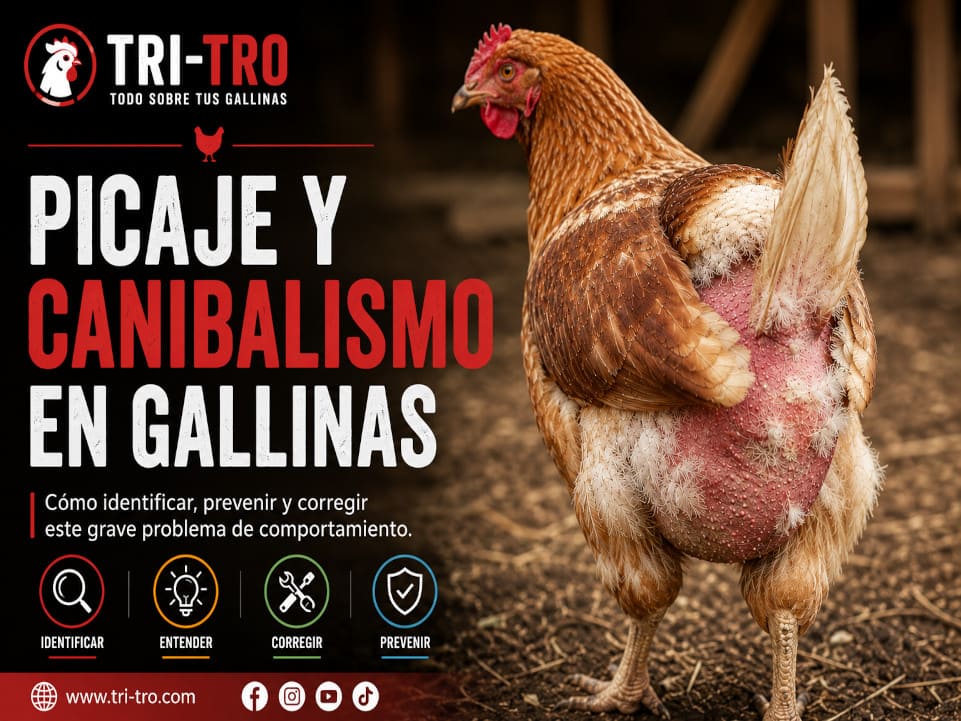
Picaje y canibalismo en gallinas

Behavior, act of cannibalism in hens:

The rearing or pecking at the feathers and cannibalism represent some of the greatest threats to the economic viability and welfare of poultry production. Genetics, traits related to egg production, and feather pecking are positively correlated.

The hierarchy in the chicken coop The behavior that occurs among birds is one of the innate or inherent causes of pecking, which inevitably leads to cannibalism.

The problem is related to the living conditions of the birds and is aggravated by stressful situations. Hens and chickens subjected or those who occupy the lower scale in the social order of a chicken coop are often the victims of cannibalism.

Just as large poultry breeding companies have selected hens for high productivity, they have also increased the prevalence of feather-pecking behavior within the flock.

This behavior is difficult to control and can damage the cover of the feathers of the hen, decreasing the capacity of feeding, as well as increasing the likelihood of injury and the potential for cannibalism.

This phenomenon occurs in flocks or batches of laying hens, which vary in flock size, stocking density, breed or strain, and housing system. As a result, this problem affects most poultry producers worldwide.

Cannibalism is a behavior that has evolved in a wide variety of species throughout the animal kingdom and is associated with a variety of advantages and disadvantages.

Many species that engage in cannibalism are driven by environmental factors that threaten their survival; food availability, population density, environmental stressors, and population regulation are the primary factors behind individuals engaging in cannibalism. 

The canibalizador get the advantage by performing cannibalism, how to win a meal, to eliminate a potential competitor and reduce their own vulnerability to cannibalism. On the contrary, the individuals involved in the cannibalism can potentially destroy their own offspring and reduce your chance of successful reproduction, eliminating the couples.

However, none of these disadvantages of cannibalism apply to human-managed populations; and some of the factors that drive cannibalism can apply to laying hens.

Hens may be driven to cannibalize due to perceived competition, high stocking density, or environmental stressors (such as heat stress), but they do not suffer from a lack of food or resources.

Furthermore, since the hens are housed in groups of similar ages, there is little incentive for cannibalism, which is due to the need to regulate the age distribution of the birds.

Many questions remain unanswered regarding why chickens cannibalize and how to manage this problem. Cannibalism may be an unfortunate by-product of compulsive, unregulated and socially facilitated pecking.

There are conditions that contribute in some way to the rearing which leads to cannibalism, can be classified into nutritional causes, environmental and other. The pecking feathers it can also be an addictive behavior, which further complicates the prevention of this behavior once it starts.

Si las gallinas son adictas a picotear y tienen dificultades para regular el rendimiento de este comportamiento, pueden canibalizar no por deseo de matar, pero sí por su deseo de picotear, que es más fuerte que su capacidad para dejar el hábito de picotear.

Therefore, identifying why they peck, how they choose their targets, and what management practices in our poultry houses can mitigate this behavior is essential for the future of poultry production.

Among the nutritional causes it has been noted that could be determinants of the cannibalism of the shortage of protein and sodium, the power feed pellets, the excess corn in the formulas, an unreasonable restriction of feed and lack of drinking water.

Environmental causes may be related to poor management, such as:

  • Few feeding stations.
  • Few watering holes.
  • a density of population is very high.
  • Excessive heat or light in the chicken coop, etc.

Within the various causes, we will point out the specific situations caused by internal parasites and external, injury, lack of elasticity of the cloaca…

  • The ways of rearing vary greatly.
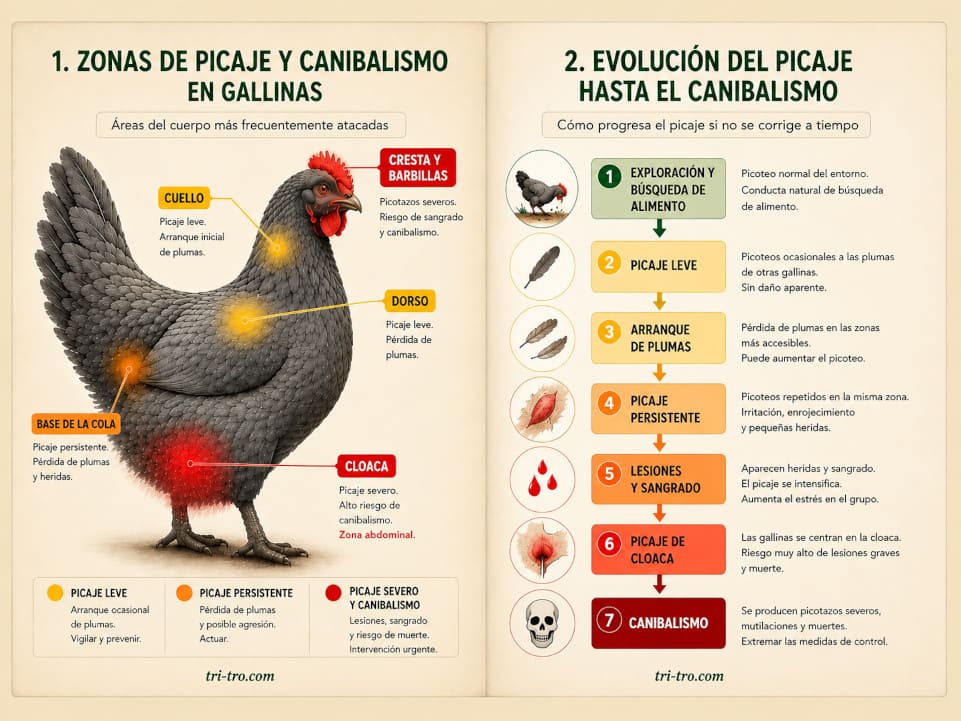
  • Deeper lesions occur in the head and ridges.
  • Sometimes the resulting wounds bleed and lead to areas of tissue death.
  • There are a variety of picajes that affect the feathers or other parts of the body.

It should be noted that the attitudes of cannibalism usually understood as the establishment of a habit, without provocation or apparent causes.

We should remove any objects that could harm the chickens—such as glass, sharp wires, and splinters or sharp pieces of wood—and make the necessary repairs to the chicken coop, shed, and yards. Ideally, all the birds kept together should be the same age and color.

It is important to control lice, mites, and external parasites, which can cause itching and feather loss in our chickens, exposing areas where they may peck at themselves.

The manifestations of rearing, as an attitude of vice collective, arise after having ingested blood or fresh tissues, which is significantly exacerbated in packs, very nervous, or when there is an obvious social stratification.

The signs of self-pecking are entirely external, ranging from a simple wound to severe swelling. Birds that engage in self-pecking tend to avoid the rest of the flock and hide, causing them to eat very little until they become malnourished.

The extension of the defect of the rearing is a difficult one to solve. The best way to mitigate its effects is through the court of peaks.

Pecking at the feathers of chickens:

Pecking the feathers on chickens.

Description of behavior of pecking.

Pecks feather soft: 

The hen uses her beak to gently peck at the feathers of a conspecific (another bird of the same species). This pecking is usually ignored by the recipient and generally does not result in the loss of a feather.

This usually happens during fights, where chickens with soft feathers peck several times in a single bout. They typically target the back or tail, but may also target the head. At the end, the total number of pecks is counted.

Pecks severe of the feathers:

The hen uses its beak to peck the victim hard. The victim usually responds to the peck by moving away or retaliating. May result in the removal of a feather. Usually occurs as a single event, but may occur twice in a row.

No ocurrirá en los combates. Generalmente, se dirige hacia la espalda, el cuello o la cola, pero puede dirigirse hacia la cabeza. Cuenta el número total de picotazos.

Pecks aggressive: 

Occurs when a chicken picks up the head and stabs the strength of the peak once or several times to another hen. The pecks aggressive usually be directed to the head, but you can also head to the body.

The target usually exhibits avoidance behavior, such as crouching or moving away from the aggressive birds. This may involve running away, moving away, or jumping. Count the total number of pecks.

Although the effects of feather-pecking can be felt throughout an entire flock or group, the basic interaction involved in feather-pecking involves only two parties:

The chicken that pecks at the feathers, and the recipient of those pecks.

According to the individual experience, each hen can fall into one of four categories of behavior or behavioral phenotypes (Daigle et al., 2015). As it is unknown whether the behavior of the soft pecking the feathers is associated with the toilet, or if it is part of the mechanism of coping in general.

Severe pecking behavior can serve as an appropriate measure for distinguishing between different behavioral phenotypes in birds. Hens may exhibit the following behaviors:

  1. Picoteadoras of feathers where only give and never receive pecks severe of the pen.
  2. Victims where they receive only and never give severe pitting of feathers.
  3. Neutral where ever receive or give feather pecks.
  4. Victims of pecking feathers, where it is observed that both give and receive pecks severe feather.

It has been observed that some hens never give or receive pecks of feathers or beaks aggressive.

Su apatía, en comparación con el picoteo de la pluma y las opuestas de las víctimas hacia el picoteo específico, puede estar relacionada con niveles más bajos de rotación de serotonina, observado en el tálamo dorsal, una región del cerebro importante para controlar la compulsión (Kops et al., 2013).

Therefore, the hens that do not participate in giving or receiving, with the behavior of pecking, can be consistent in their lack of behavior in the pecking throughout his life, perhaps due to a reduced turnover of serotonin (regulates the mood of the bird).

The brain associated with immune function, the inflammatory bowel disease and glucose metabolism are differentially regulated in birds grinders, the victims, and the birds of control, supporting even more the genetic differences and differences between individuals, based on their behavior with the pecking feathers (Brunberg et al., 2011).

The PMEL17 gene is a well-known mutation that results in the expression of the dominant white allele for feather color. This gene appears to have a pleiotropic effect; that is, it influences the expression of seemingly unrelated phenotypic traits related to plumage color and behavior (Karlsson et al., 2010).

For example, victims have been characterized as having a homozygous wild-type allele at the PMEL17 locus, resulting in more pigmented feathers compared to heterozygotes or homozygous individuals with dominant white alleles (Keeling et al., 2004; Nätt et al., 2007). Bennewitz et al. (2014), in their examination of the heritability of pecking behavior, demonstrated that aggressive pecking and feather pecking were heritable, whereas being the recipient of feather pecking was not heritable.

These findings are consistent with the results of previous studies examining the heritability of feather pecking behavior (both perpetration and victimization) (Rodenburg et al., 2003) throughout the hens’ lifetimes (Kjaer and Sørensen, 1997).

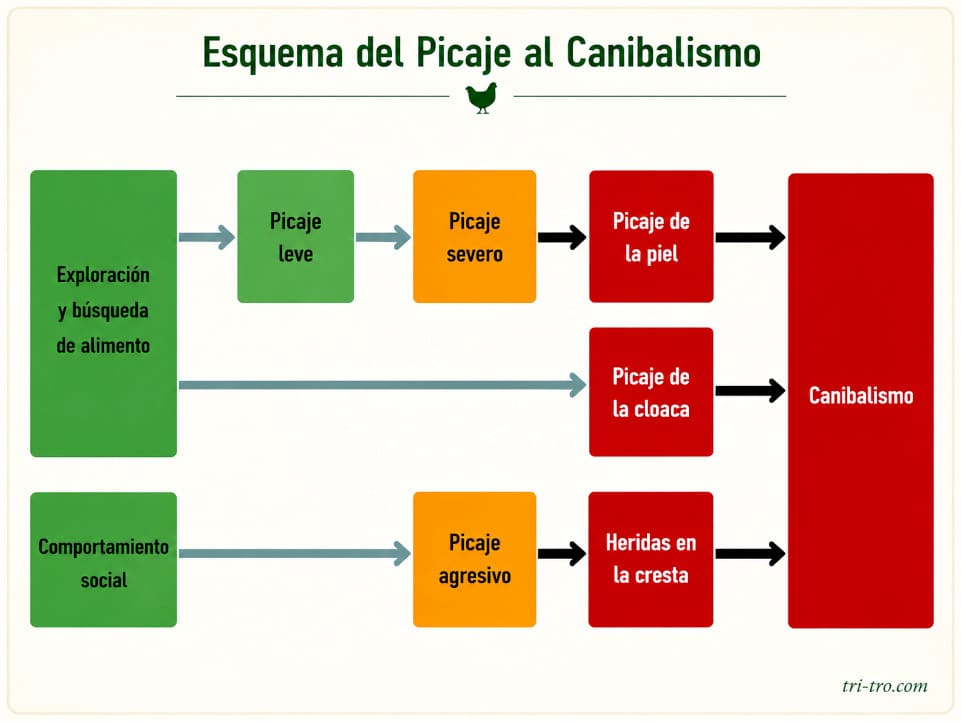
Outline rearing to cannibalism

Use of space: 

The relationship between stocking density, flock size, space utilization, and feather pecking is complex. Hens housed at higher stocking densities, with less space, and in larger flocks have had increased opportunities to interact with more of their peers.

Por lo tanto, puede ser difícil identificar si las gallinas picotean simplemente por casualidad, si las gallinas reciben más picajes de plumas debido a que no pueden escapar, o si hay otras condiciones y menor disponibilidad de espacio; esto estimula la inclinación a este comportamiento.

In any case, it has been observed that population density influences feather-pecking behavior. In small flocks or groups (2,450 birds) housed at high density (12 birds per m²), more feather pecking was observed than in larger flocks (4,200 birds) at low densities (7 and 9 birds per m²) (Zimmerman et al., 2006). 

Hens housed at high stocking densities (10 birds/m²) without access to elevated perches were four times more likely to develop feather-pecking behavior (Huber-Eicher and Audigé, 1999). Furthermore, stocking densities during an early stage of a bird’s life can influence feather-pecking behavior in adulthood.

Chicks housed at higher densities during the first 4 weeks of life exhibited more feather pecking during the rearing period. It is important to note that early-life experiences can shape and reinforce behavioral patterns, perceptions, and preferences throughout a bird’s life.

The larger groups in the cages can also increase the risk of pecking the feathers, and cannibalism. Groups of smaller sizes used in conventional cages and furnished have been associated with less pecking the feathers and cannibalism in comparison.

While the cut of the peak can mitigate the damage to the pecking feathers, it does not influence the motivation of the hen to peck. Also, important is the law in Europe, which is beginning to classify the cutting of the beak-like inhuman, and this practice will probably be eliminated in the near future.

Although geneticists have implemented breeding strategies that rely on group selection rather than individual selection, the selection of hens to successfully reduce feather pecking has not yet been eliminated from the hens’ behavioral repertoire. 

On the other hand, as our understanding of feather pecking grows, having more information suggests that we should observe each hen’s individual behavior.

It is of utmost importance to understand how to act against this behavior, and therefore should not be secondary to select for or against specific traits.

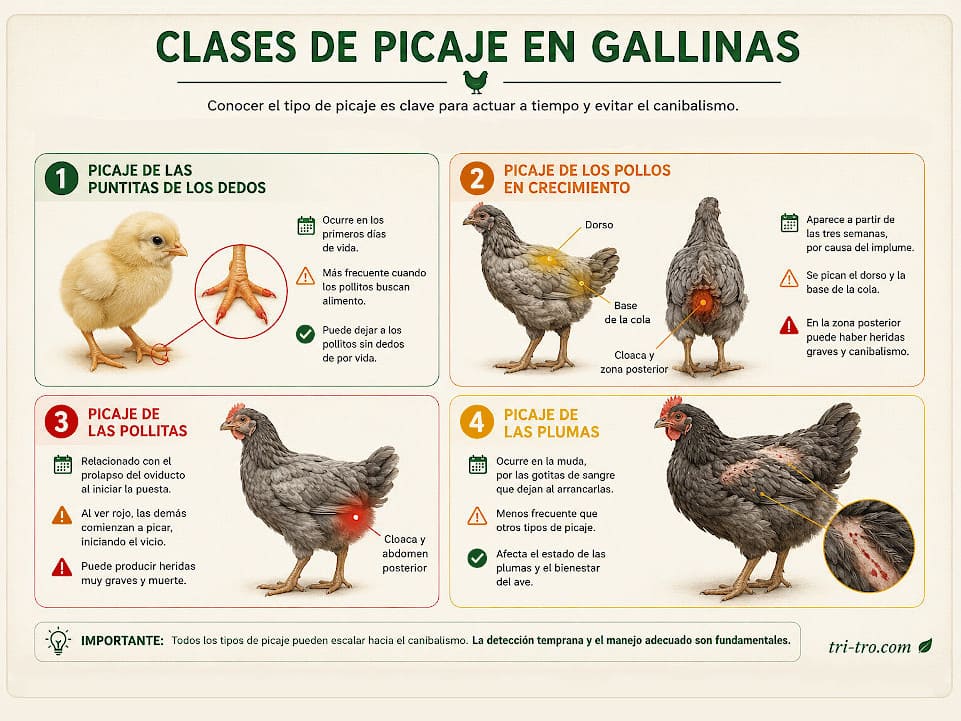
Types of pecking:

Clase de picaje en gallinas

Rearing of the puntitas of the fingers: 

Occurs in the first few days, more common in raised in battery and ground wire in which there are about bed current of shavings or straw.

This type of pecking is one of the side effects of the practice of keeping newly hatched chicks without food for forty-eight hours, which is done to improve the necessary resorption of the yolk sac and ensure proper healing of the navel.

We observed this in a group of chicks that spent more than 48 hours in the incubator. When we released them into the brooder, the first thing they did was peck at each other’s fingertips until they saw the food.

But it also happens this rearing without the circumstance above, and is usually three or four days. It is not alarming, but some are without any finger for all his life.

Rearing of chickens in growth: 

This is caused by the lack of feathers and begins to appear after three weeks. The birds peck at their backs and the base of their tails; this is the most severe form and the one that causes the most losses, as they peck voraciously at this area and can even empty the intestines. This type can occur at different stages of development with similar characteristics until full feathering is achieved.

Rearing of pullets: 

It is due to the prolapse of the oviduct at the start of the start, then to see him red van the other to sting, thus beginning the vice.

Feather pecking: 

On the move, by the droplets of blood that left to be torn off. It is less frequent.

For all of the above reasons, it is clear that we will need to pay more attention to feather-picking in growing chickens than in our hens or pullets, but we must monitor all of them to eliminate this behavior.

Causes:

Many are the causes to which it has been blamed for this bad or vice acquired, and in the truth that almost all of them are contributors to it, as there is no definitive or exclusive.

Excessive heat, lack of ventilation or not. Crowding, that is to say, a lack of space in the hatchery, as well as feeders and drinkers. Poor nutrition due to lack of proteins, although some add to the lack of phosphorus and fiber.

For food of zero efficiency, etc., out of boredom, when not to go outside, especially. And there is one who ensures that it is hereditary vice. In general, it also happens more when there are chickens, something weak or morons.

Means of prevention:

Among the preventive measures have been cited many of the more varied condition, some quite effective, others are downright null, and other curious and perhaps useful in some cases.

We call them “quite effective” are based on creating the environment contrary to that stated in the causes.

Avoid excessive heat, especially after the first two weeks, and give them enough space to stretch out and eat comfortably. Keep them entertained with grains, vegetables, etc. Separate the sexes when raising more than one batch, as males are always more likely to peck due to their greater vigor. Remove any chicks that lag behind or are weak.

Essential point is the food, being the well-balanced diet.

Other media, such as darkening of the local window with glass of different colors, all of which is impractical. 

También existen guardaanos, guardapicos o gafas. Estas últimas, para que no vean más que al inclinarse para comer y beber, impidiéndoles verse de frente las aves, y de esta manera se evita el picaje, y principalmente en la época de muda. Claro que estos son más bien para aves adultas, y ya hemos dicho que es menos frecuente en nuestros gallineros.

Other preventive measures for adult birds include removing chicks with prolapsed oviducts, ensuring there are plenty of nests, and one that might be overlooked: the perches on feeders or nesting boxes must be high enough so that ground-dwelling birds cannot peck at them while they are eating or waiting to enter the nest.

So far, we have discussed all the methods that have been proposed to prevent featherpicking. Now we will discuss the only effective method. It is regarded as such in the most advanced countries in poultry farming, as well as based on our own experience and that of farms that use it; we feel confident in describing it that way.

Because even though you are not able to ensure 100% efficiency, practically speaking delete the rearing with the dawn of the peak. Of the above media have underlined intention to practices of good breeding, that reason should always be followed to not precipitate the onset of rearing, and that will not be taken into account. 

Trimming the upper beak is the only effective way to prevent this. In Spain, the “Ventura method”—which involved reducing the beak by cauterizing it with a red-hot iron—was once the standard practice; today, there are other methods that are better for the bird.

Light Mediterranean breeds of poultry, such as the Castilian breed, andalusian, Leghorns are more prone to feather-pecking and cannibalism than heavier breeds due to their active nature and their reaction to environmental factors.

The importance of foraging before the rearing:

The hens are strongly motivated for foraging, and their foraging behavior is not influenced by age, as they begin foraging as chicks—both on the substrate and on the fresh greens we provide—or peck at their food while foraging.

When given the opportunity, the hens will spend up to 40% of their day searching for food on the ground. The exposure of the chickens to the substrate to forage, even for a short period of time, may protect against the development of pecking at the feathers, to the contrary of if not provided with the material of the forage.

Providing green litter or bedding at an early age can help prevent feather-pecking for the rest of their lives, provided that the source of the litter consistently provides the hens with a reliable, high-quality bedding material.

Efforts must be made to ensure that the hens have continuous access to substrates of quality for the power and dust-sand baths, starting from an early age.

Therefore, providing the hens to a substrate and green quality, with which you can forage, it is important for your well-being and is essential for the good management of the birds.

Early access to the bed tends to reduce the pecking feathers in large flocks of chickens, and do not have access to the bed to dig into, the chickens from 1 to 4 weeks of age was identified as a risk factor for developing the pecking feathers (Johnsen et al., 1998; Bestman et al., 2009).

Birds that had never been exposed to bedding made of straw or wood shavings engaged in more feather-pecking than hens that had been exposed to wood shavings from the start, regardless of age.

The same is true for chicks raised for egg production; when they have wood shavings as bedding, they peck at the floor more and engage in less feather-pecking, unlike chicks housed on slatted floors.

Therefore, the elimination or regular change of bed in the chicken coops, chicken-you can activate the increase of the pecking feathers, and we have to see the associated risks, comparing them with the benefits of not rearing. The constant access of the bird to the high-quality bed can prevent the development of pecking feathers.

Access to perches:

Providing adequate and timely access to perches is important for the hens’ well-being. Perches not only increase the amount of usable vertical space in the henhouse or pen; their presence also provides a place where hens can escape unwanted social interactions (hierarchy), or environmental conditions undesirable.

Milder pecking was observed in the group of birds housed on the floor or on grass litter without access to perches than in the group with access to perches (Lambton et al., 2010), and less feather pecking was observed in groups with access to perches, as well as foraging substrate and dust baths or sandboxes (van de Weerd and Elson, 2006).

Therefore, it is important to emphasize the provision of perches in poultry housing systems, as their presence not only provides health benefits for the hens, both skeletal not only helps build muscle, but also makes it easier for the hen to move around and encourages natural behavior, regardless of the condition of the coop or barn.

In addition to providing hens with access to perches, their accessibility and design must be taken into account.

Chicks exposed to perches at no more than 4 weeks of age showed reduced cloacal cannibalism (Gunnarsson et al., 1999), and fewer instances of pecking or feather pecking were observed in pens with perches at 70 cm compared to those at 40 cm (Wechsler and Huber-Eicher, 1998).

Providing perches at the appropriate heights during critical stages of the birds’ learning and development can have a significant impact on the pecking behavior of hens later in life.

Food and water:

The food and the water son recursos altamente valorados por las gallinas. Proporcionar la calidad, cantidad y accesibilidad adecuadas de estos recursos es primordial para el bienestar y puede afectar el comportamiento del picoteo de las plumas.

The presentation of feed influenced feather pecking in groups or flocks of hens when fed pelleted feed compared to mash or ground feed (Lambton et al., 2010), and changing the diet three or more times during the laying period has been associated with higher levels of feather pecking.

Pelleted feed is consumed more quickly than mash or wet feed, which may leave extra time for the birds to peck at their feathers; that is why it is a good idea to alternate the type of feed in our chicken coops or barns from time to time.

It has been shown that hens engaged in more feather pecking when their diets contained fewer minerals or proteins, or when amino acid levels (methionine, arginine) were below recommended levels. The same was true for diets based on plant proteins with high fiber content, as well as for diets with low intake or food restrictions (van Krimpen et al., 2005).

Many of the factors associated with feather pecking and feeding can influence the amount of time a hen spends engaging in this feeding behavior, including the availability of the provided feed, as well as her sense of satiety and frustration. 

Chickens use their beaks to explore their surroundings, so if you are devoted to feeding, and eating more, they will have fewer opportunities to participate in behaviors of pecking feathers.

Hens fed a nutritionally deficient diet may experience hunger or discomfort, leading them to peck at their feathers as a way to cope with the stress of malnutrition. Feather pecking is a behavior hens exhibit to cope with stress or frustration; we must ensure they receive a consistent supply of high-quality feed.

Feeds containing the right nutrients that promote a feeling of fullness after eating are important for reducing feather-pecking behavior. It has also been observed that the way water is provided influences feather-pecking behavior.

The use of bell drinkers, compared to nipple drinkers, has been associated with high levels of feather pecking. Although the reason for this difference is unclear, bell drinkers require the hens to place their heads inside the drinker.

To put the water in their beaks and require that the chickens go down the level of your head forward and expose the feathers of the cloaca to conspecifics during the act of drinking.

Therefore, hens that engage in feather-pecking may have more opportunities to engage in this behavior when their fellow hens are bent over to drink from bell-type waterers.

We should try to raise the drinking fountains, depending on the age of the birds, since the hens are less attentive while drinking, for not being able to observe their surroundings while your head is in the water trough.

Drinkers of the hood are most likely to spill the water in the soil, which could degrade the quality of the bed and also create an environment uncomfortable. Conditions (for example, increased concentrations of ammonia, development of lesions in the feet) can contribute unintentionally discomfort in the hens, thus promoting the increase of pecking at the feathers.


 

You may be interested in these other sections


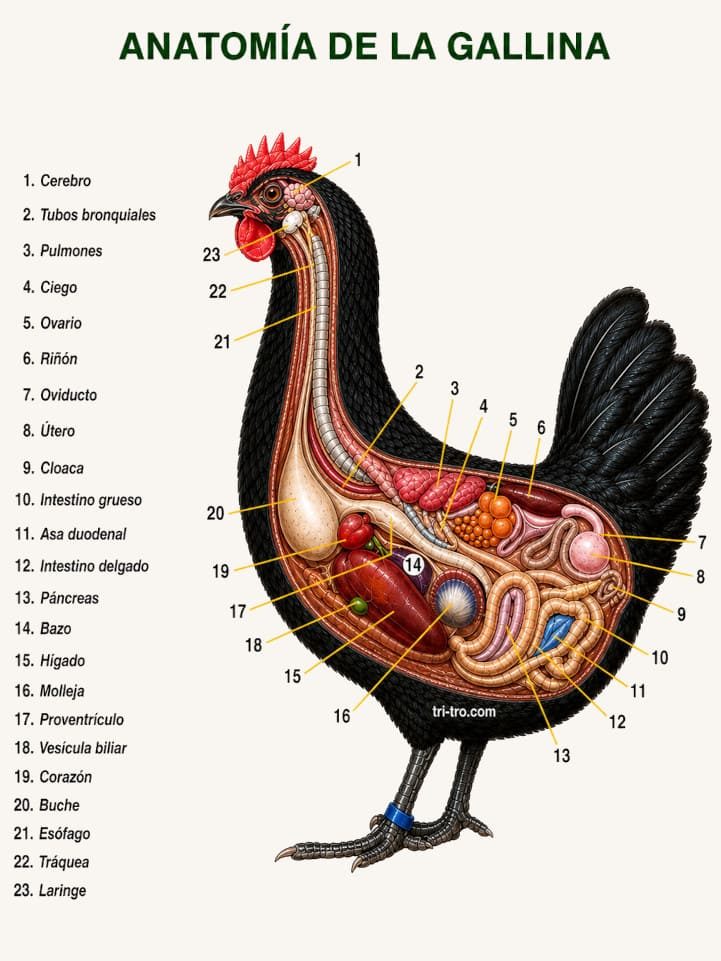
Anatomy of the chicken: parts, organs, and functions

Poultry Slaughter Form: What It Is and How to Use It

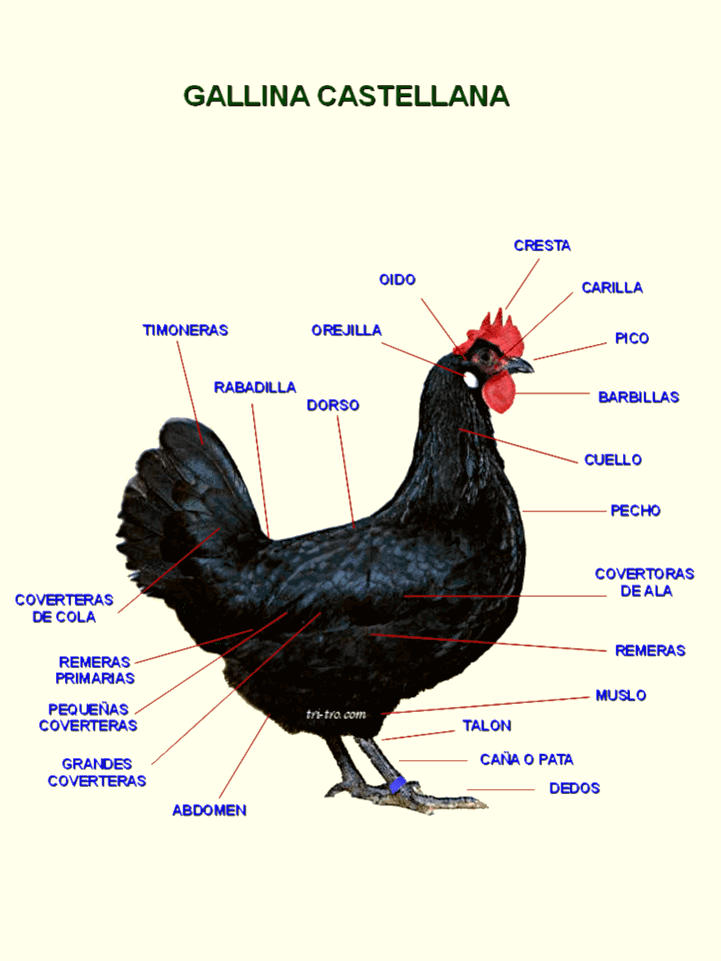
Castilian Black Hen: an elegant, egg-laying Spanish breed


Do you want to share or comment on your social networks

Scan to visit TRI-TRO
Escanea para visitar. TRI-TRO