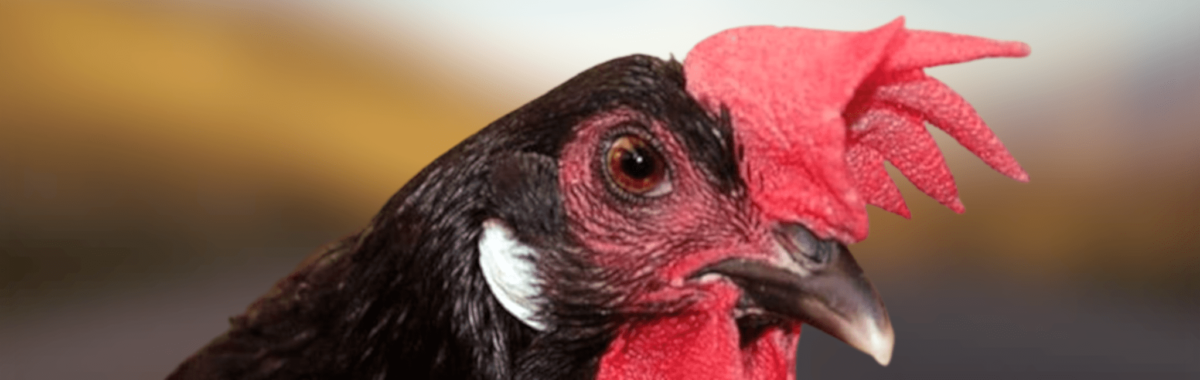
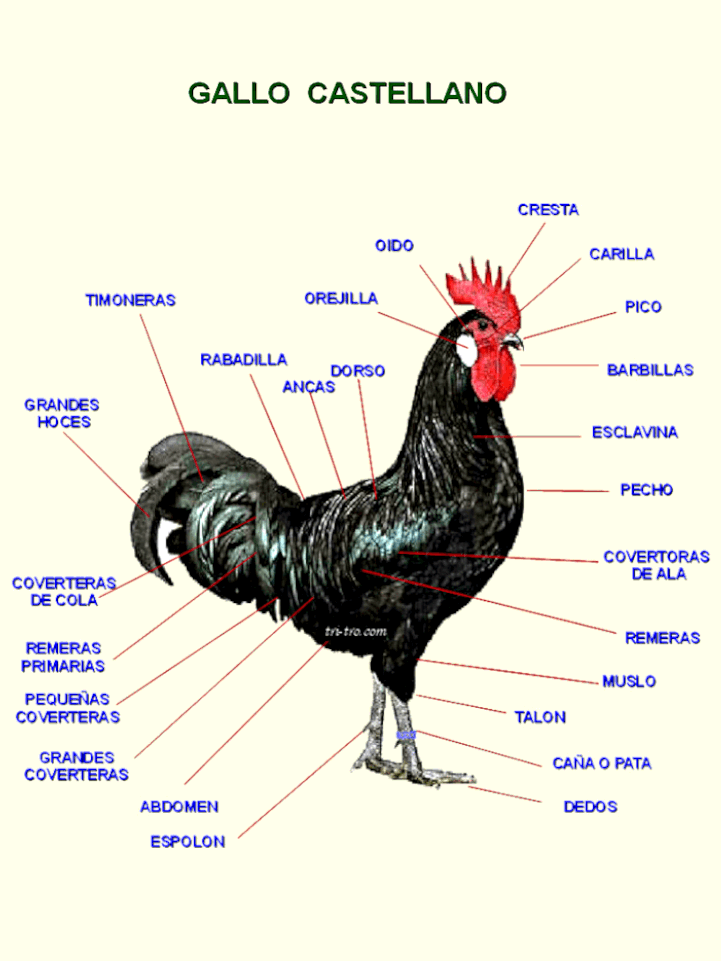
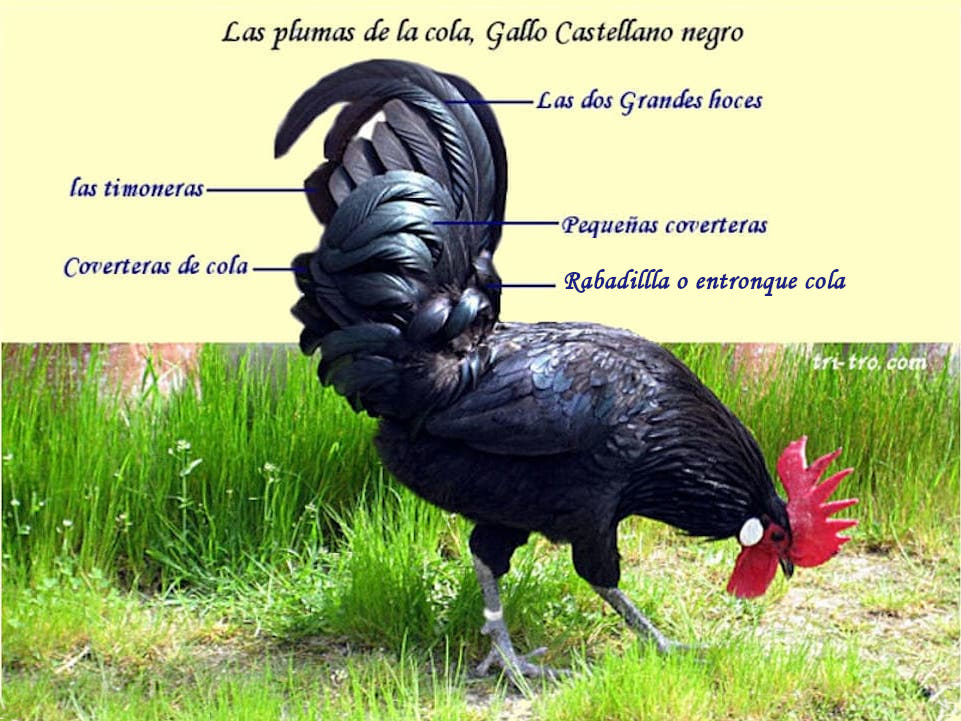
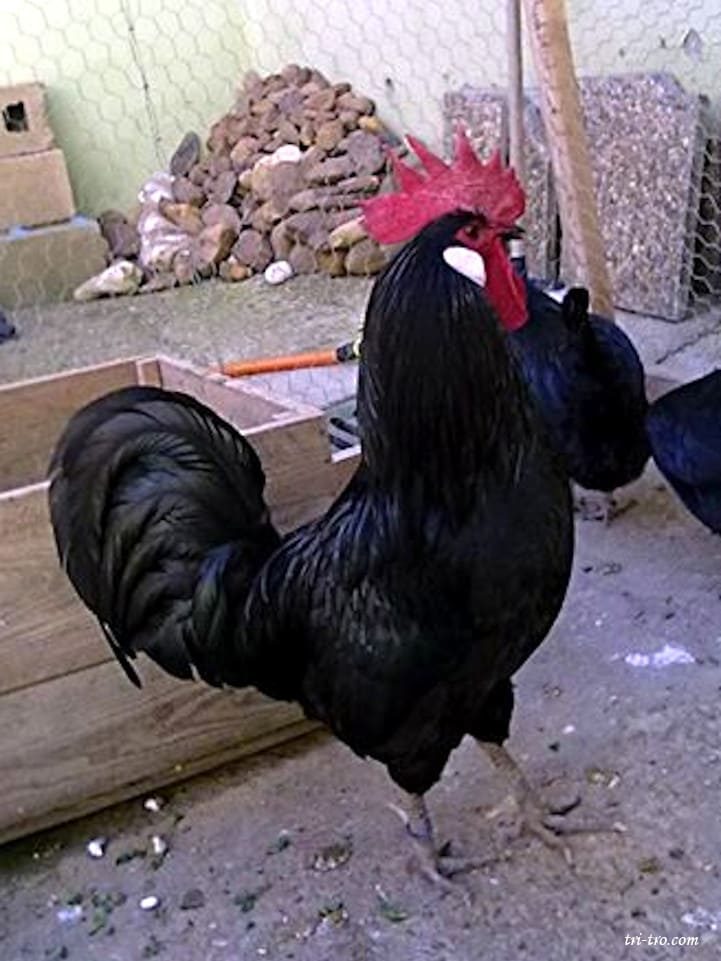
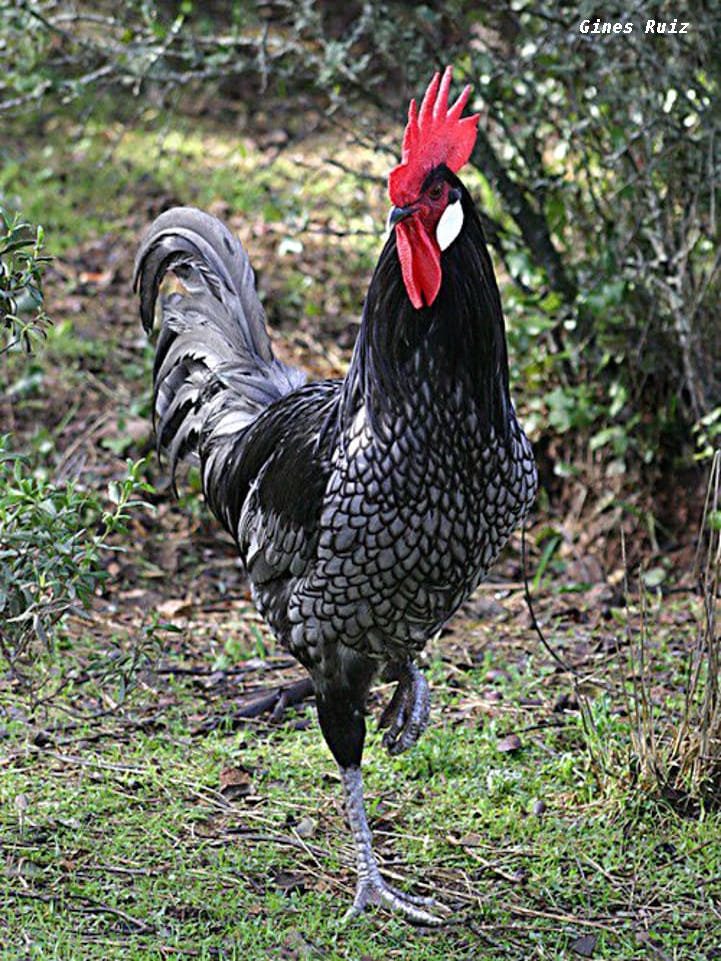
Description of parts of the Rooster Castilian black

Characteristics of the Black Castilian Rooster:

The order Galliforms: covers birds, both domestic and game that are well known and valued, such as chickens, partridges, turkeys, and quail.

These birds are distinguished by their robust bodies, varying sizes, short, strong beaks with curved tips, four-toed feet (three toes facing forward and one backward), and short wings. The young of these birds are precocial, meaning they leave the nest shortly after birth.

Within the Galliformes, several families are identified:

Rooster (Gallus gallus).

Fasiánidos, as the pheasant (Phasianus colchicus).

Partridge, royal or red (Alectoris rufa).

Partridge Greek (Alectoris graeca).

Grey partridge (Perdix perdix).

Quail (Coturnix coturnix).

Other genres include Coturnix and Lophophorus.

Origen del gallo castellano negro:

The domestic chicken, commonly regarded as the domesticated form of Gallus gallus, is believed to be descended from at least one of the four jungle fowl species of the genus Gallus, which inhabit the Southeast Asia. There is a section on the fascinating origins of the Black Castilian Rooster, where you will find the four species of Gallus, considered to be the ancestors of Gallus domesticus.

There is no precise record of the date on which it was domesticated, although it is known to have existed in India around 3200 BC and in China as a domestic bird around 1400 BC.

With regard to the Black Castilian...it is important to understand the history of this breed, which is one of the oldest in Spanish poultry farming, serves as the foundation for various native breeds across the country, and was used by the English to develop and improve other breeds, such as the Menorca.

According to a report from the “information System of domestic animal diversity” (DAD/Domestic Animal Diversity Information System), which is a division of the FAO (United Nations Organization for Food and Agriculture),

A total of 2,629 breeds of domestic chickens have been recorded worldwide.

742 found in America.

1. 347 in Europe.

32 in Spain.

The rest is distributed through Asia, India, among other places.

Physical characteristics and breed standard:

Tail feathers, black Castilian rooster.

Breed of the Mediterranean, of medium size and body structure lightweight; it is characterized by its elegant carriage, proud and strong, with a plumage that presents long feathers, rounded and tight.

Registered in the Book Genealogical corresponding to the race.

This race is included in the Official catalogue of Breeds of Cattle the Ministry of Agriculture.

Recognized by the Entente European EE as a rare breed because of their age.

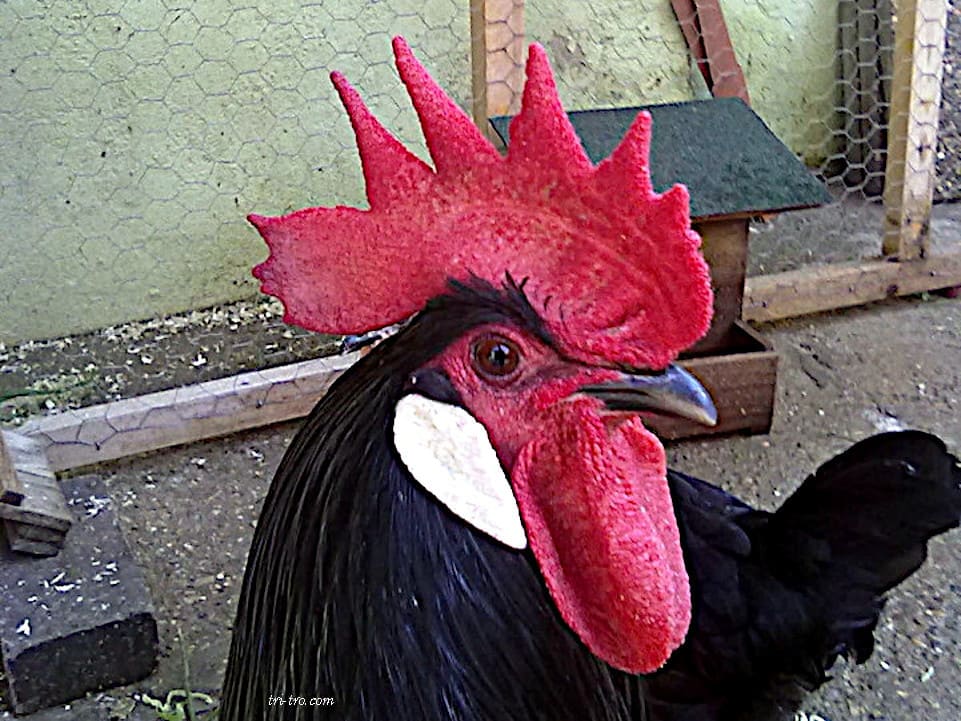
  • Head: Wide, robust, and elongated shape.
  • Peak: Of medium size, strong, and structure of cornea.
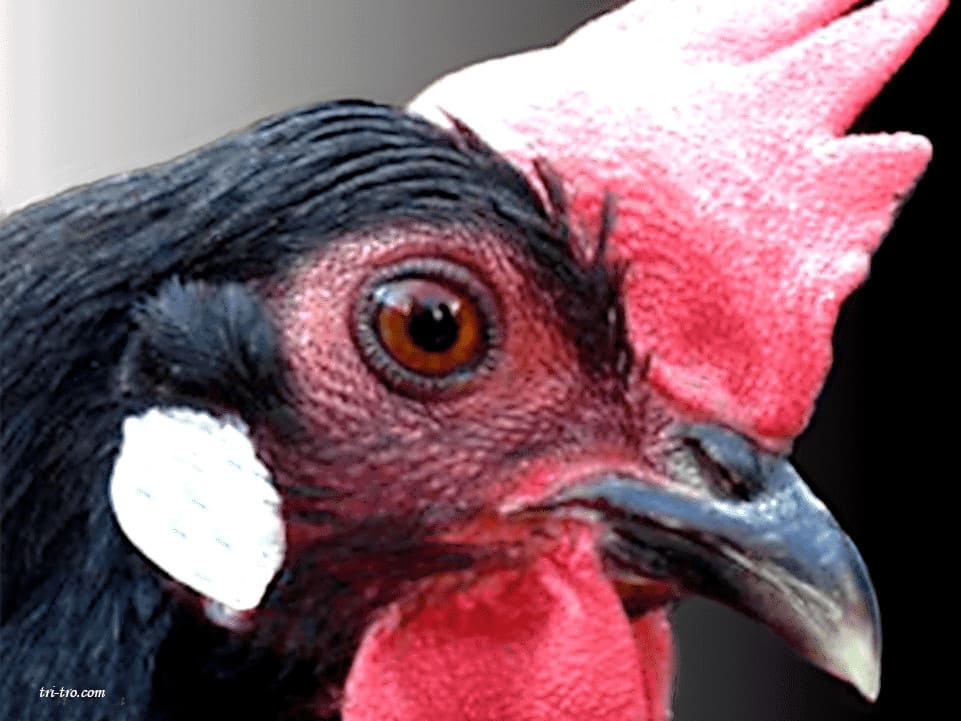
  • Eyes: Large, expressive and with an iris that ranges in hues from yellow-orange to reddish-brown.
  • Face: Red color, smooth and soft texture.
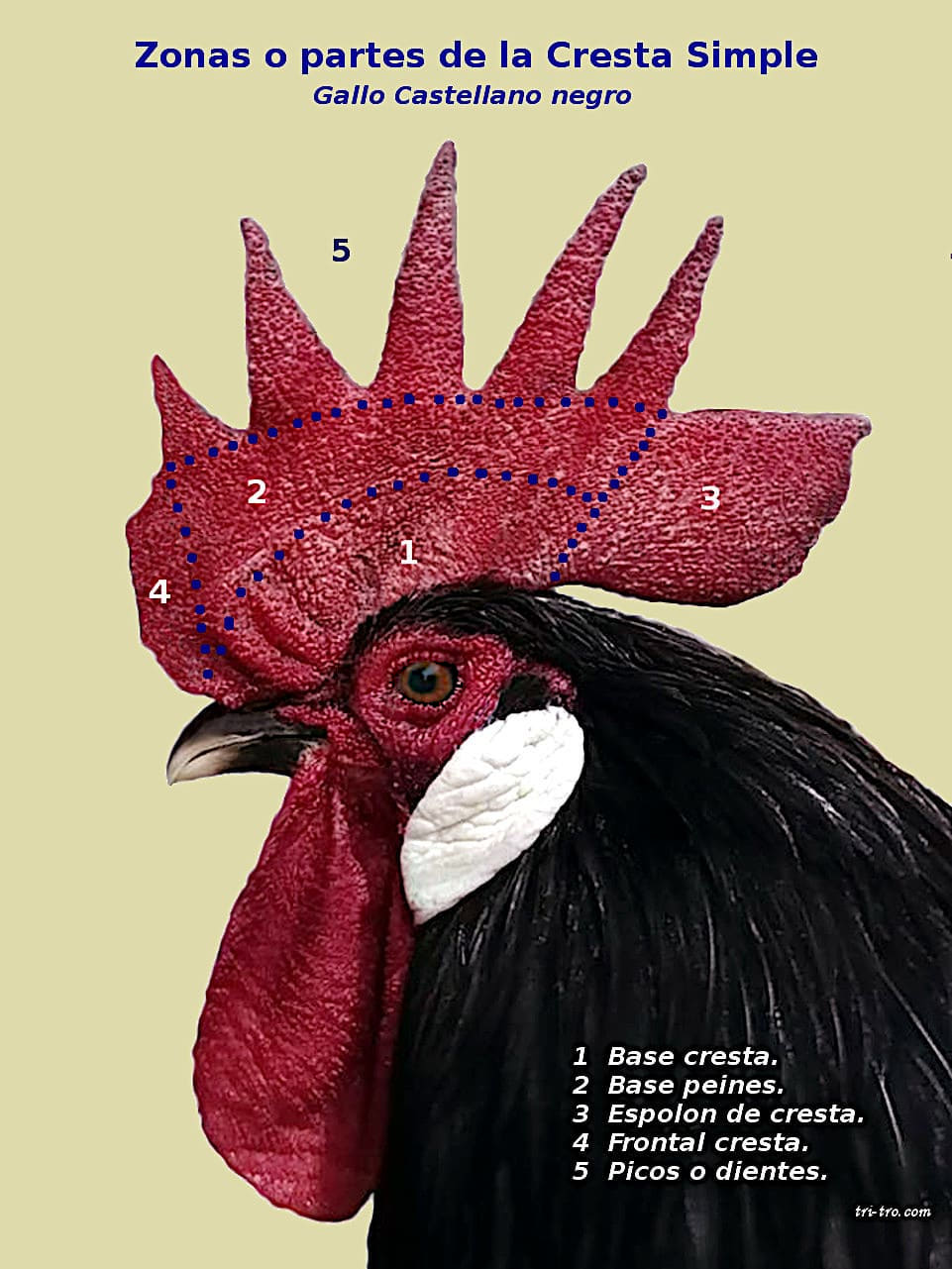
  • Crest: Of medium size, smooth and upright, with five or six teeth, of a deep red.
  • Lobe: Back of the crest, slightly separated from the neck.
  • Chins: Red, long, parallel, wide and delicate tissue.
  • Earlobes: Standard size, with a bright white color. (Same for chickens).
  • Neck: Long and with a slight curvature.
  • Trunk: Elongated, upright and slightly tilted back.
  • Chest: Broad and prominent, well arched up to the abdomen.
  • Queue: Curved and almost at a right angle, without closing off more.
  • Wings: Big and tight to the body.
  • Back: Wide, long and slightly sloping towards the tail.
  • Feathers: Black in color with greenish iridescent in shades of green-blue, the more marked than in the hens.
  • Thighs: Long and strong.
  • Feet: Thick, devoid of feathers and dark grey in color.
  • Fingers: Four fingers straight, three facing forward and one backward.
  • Nails: They may be white or black, although it has not been defined in the standard.
  • Rings: The diameter of the ring is 18 mm
  • Weight: Between 2,800 and 3,000 kg (2,300 to 2,600 kg before reaching one year of age).
  • Skin Color: White.
  • Sexual maturity: Achieved in less than six months.
  • Qualities: Features of lightness, dynamism, vigor and pride, with an excellent ability of flight.

Family tree and related documentation regarding the Spanish breed avian Castilian Black Chicken

Areas or parts of the crest simple

Defects disqualifying:

  • Feet and fingers: Must have a different color to the dark slate.

  • Queue excessively head: Considered to be a defect, both in males as in females, the “tail of the squirrel.”

  • Gray and white feathers Or any key that is not black.

  • The ridges must be completely smooth, without any lateral projections or “claw-like” features.
  • The legs that The fact that they have feathers is another serious flaw.
  • One peso too far from the margins indicated by the template.

The Castilian Chicken Breed account with a specific variety, that is the Black.

Temperament and Behavior

  • Guardian and leader: He stands out as the leader of the chicken coop and a magnificent guardian of the chickens.
  • Energetic and dynamic: This is a very active, energetic, and alert bird that is always on the move, searching for food and staying on the lookout for potential dangers.

  • Behavior in the face of danger: He is protective and remains constantly vigilant, being the first to climb down from the pole and the last to climb back up.

  • Territorial behavior: He may be territorial, and it is sometimes necessary to establish a pecking order. However, if he is a good leader, he will tolerate other roosters once the social hierarchy has been established.

  • Interaction with humans: They are often described as birds with a strong personality that may display aggression or docility when provoked; their spurs are a factor that must be taken into serious consideration.

  • Behavior toward the chickens: The goal is to maintain a balance in your enthusiasm so that you protect and guide the chickens without being rough with them.

In conclusion, the Castilian black rooster is an active and territorial bird, with a commanding presence and a strong protective instinct toward his chickens.

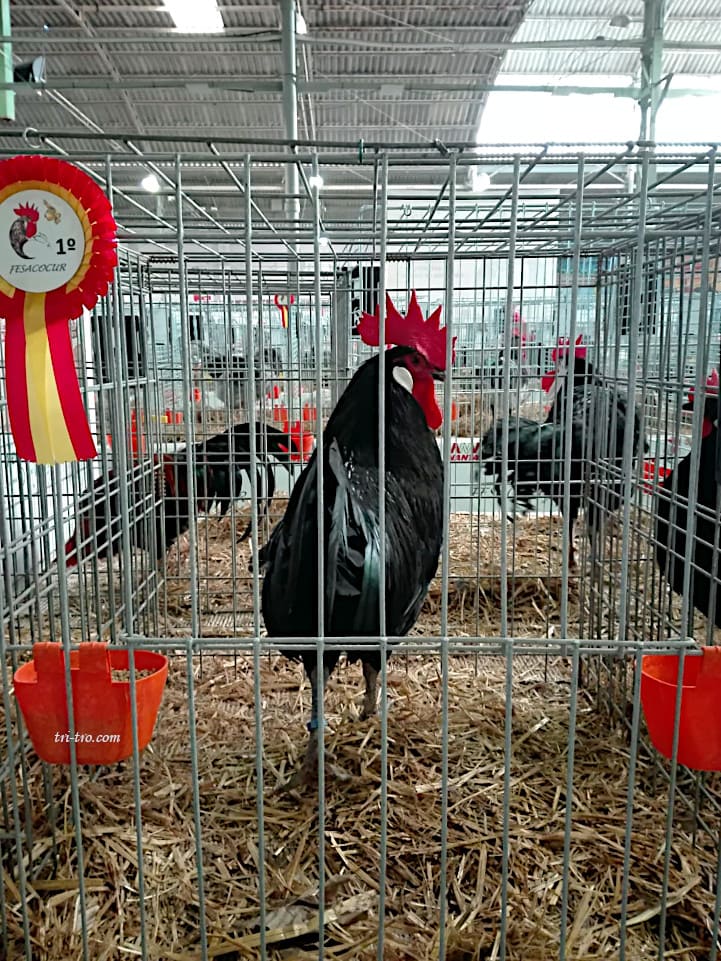
Championship Spain Sariñena 2018 Rooster Castilian 1°

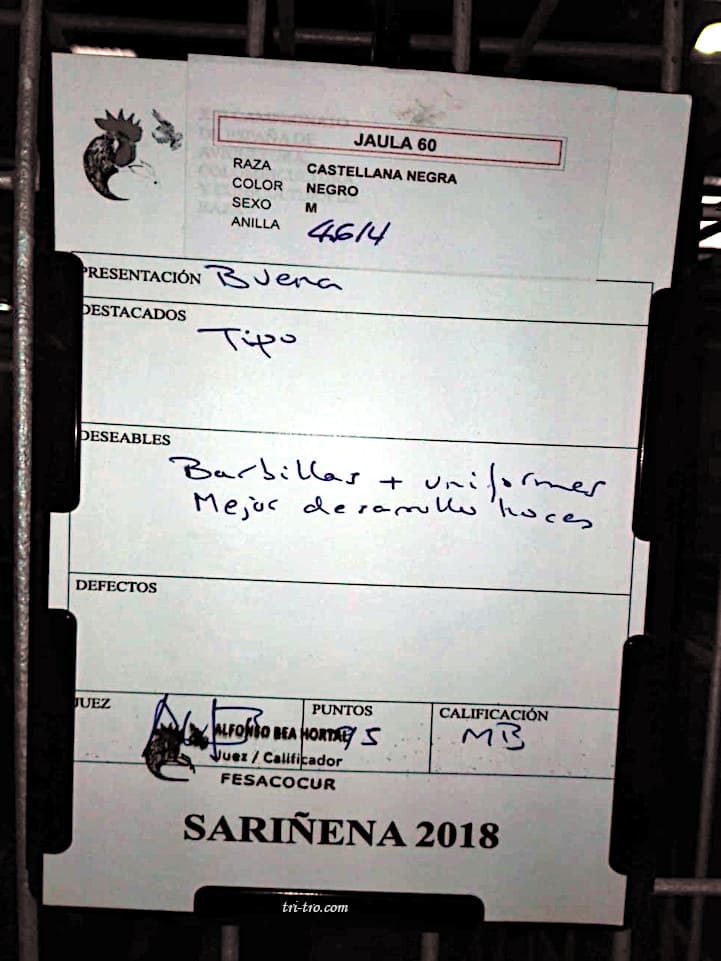
Form cage 60 ring 4614 MB 95 Rooster Castilian 1°

Differences between roosters and black Castilian chickens

Cock Spanish black face

Face gallina castellana

The chickens are smaller than the roosters; they are lively, cheerful, and very active when foraging for food.

It has the same characteristics as this one, with differences related to sex. 

Their chins are almost round, unlike those of roosters, which are almond-shaped, and their beaks are not as curved.

The crest slopes to one side starting from the third tooth, but it does not cover the eye. 

The diameter of the ring is 16 mm 

It weighs about 2,300 kg. 

Sexual maturity between five and six months. 

Eggs weighing at least 60 g with a pristine white shell.

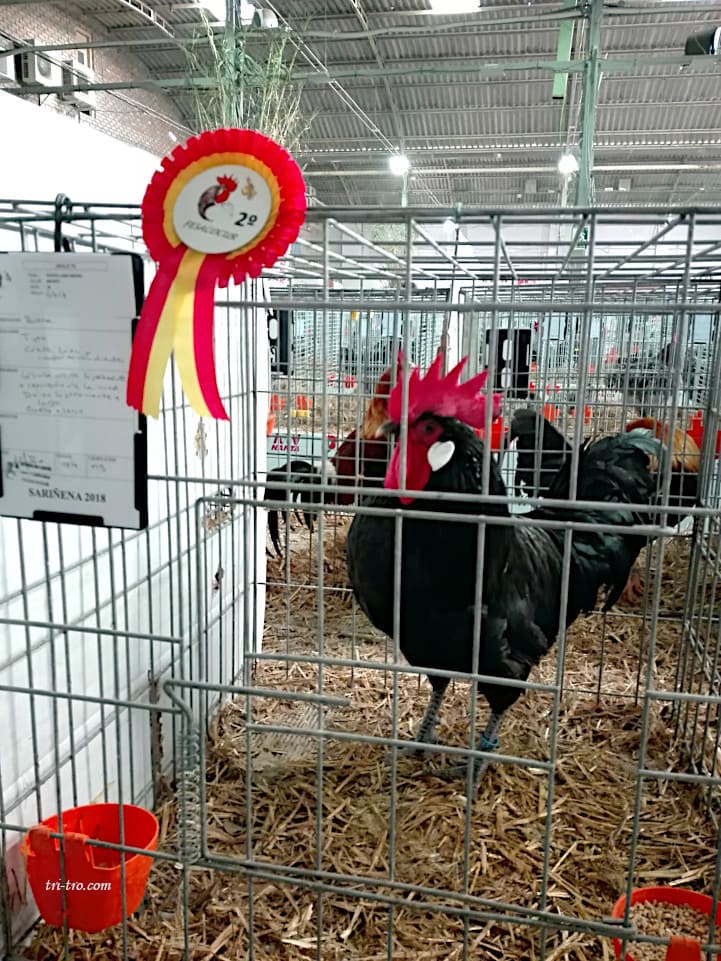
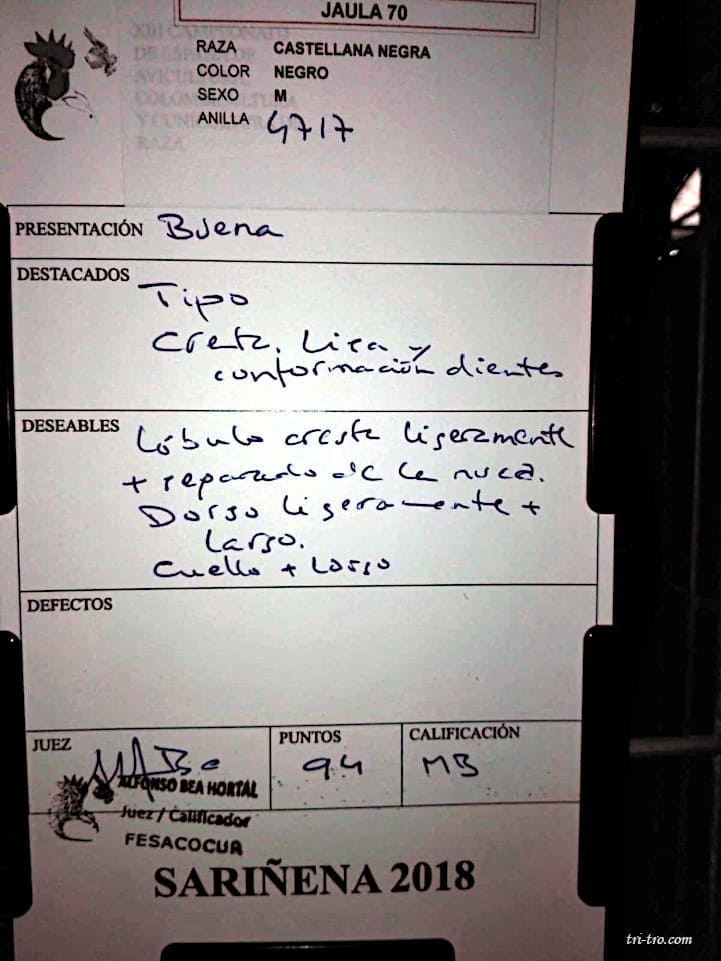
Championship Spain Sariñena 2018 Rooster Castilian 2nd

Form cage 70 ring 4717 MB 94 Cock Castilian 2nd

The Importance of the Black Castilian Rooster

The Black Castilian chicken breed is classified as an endangered native breed in Spain’s Official Catalog of Livestock Breeds.

The “native breed” logo for the Black Castilian chicken is awarded for meat, eggs, and processed products derived from this breed.

The organization responsible for ensuring the proper use of this emblem is the Association of Friends of the Black Castilian Chickens (GANECA), as an entity officially recognized for the creation or management of the stud book and the development of the program of improvement of the breed.

Resolution:

Specification:

The Black Castilian Rooster has always played a very important role in Spanish poultry farming, not only because of its unique physical characteristics, but also because of its cultural, historical, and genetic value. 

It is one of the oldest Spanish breeds, originating in Castile and León, and is currently the subject of conservation programs due to the risk of extinction.

1. Genetic and historical heritage
A pure and ancient breed: It is considered one of the oldest and purest breeds in Spain and is often linked to the history of the Iberian Peninsula.
Genetic background: It has served as the foundation for the development of other breeds, such as the Andalusian Blue.
Purity: Unlike many commercial breeds, it has preserved its identity with almost no crossbreeding with breeds from other countries.

2. Ecological and productive significance
Adaptability to the environment: This is a very hardy breed, well-suited to climates with hot summers and cold winters, and ideal for raising outdoors or through grazing methods.
Organic production: Its ability to forage for food and its resistance to disease make it ideal for organic egg production.
Egg quality: The rooster plays no role in reproduction; he ensures the continued presence of hens that lay white-shelled eggs, which are considered part of the culinary heritage.

3. Value in rural areas
Sustainability: It promotes rural poultry farming and the preservation of traditional methods, which benefits the rural economy.
A symbol of quality: The breeding of this breed is linked to conservation efforts aimed at placing greater value on native products compared to industrial hybrids.

In short, the Castellano Negro rooster is a symbol of agricultural diversity in Spain. Its importance extends beyond food production and lies in preserving the region’s cultural and genetic identity.

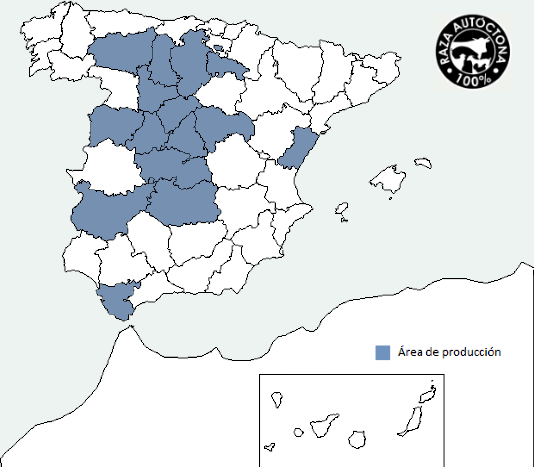
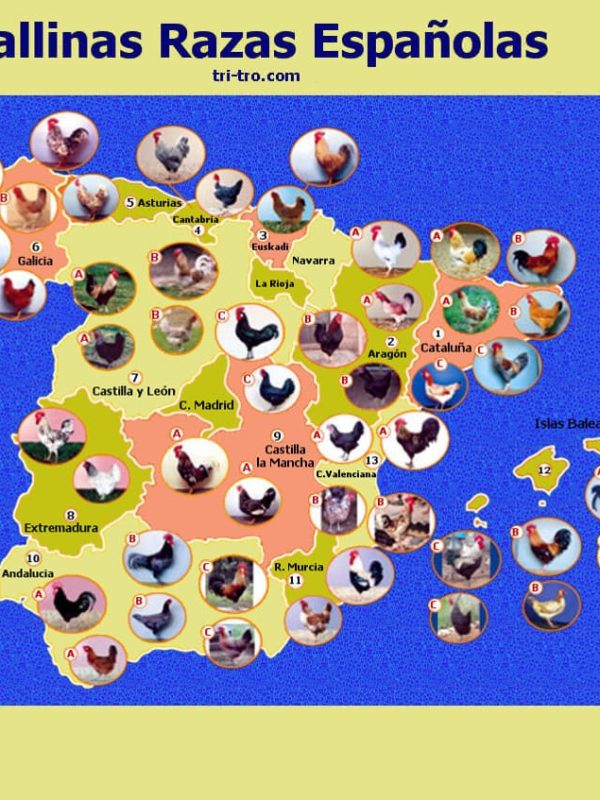
The following map shows the areas of production and sale of the products covered by this logo.

Choose the Castilian Black chicken or other breeds:

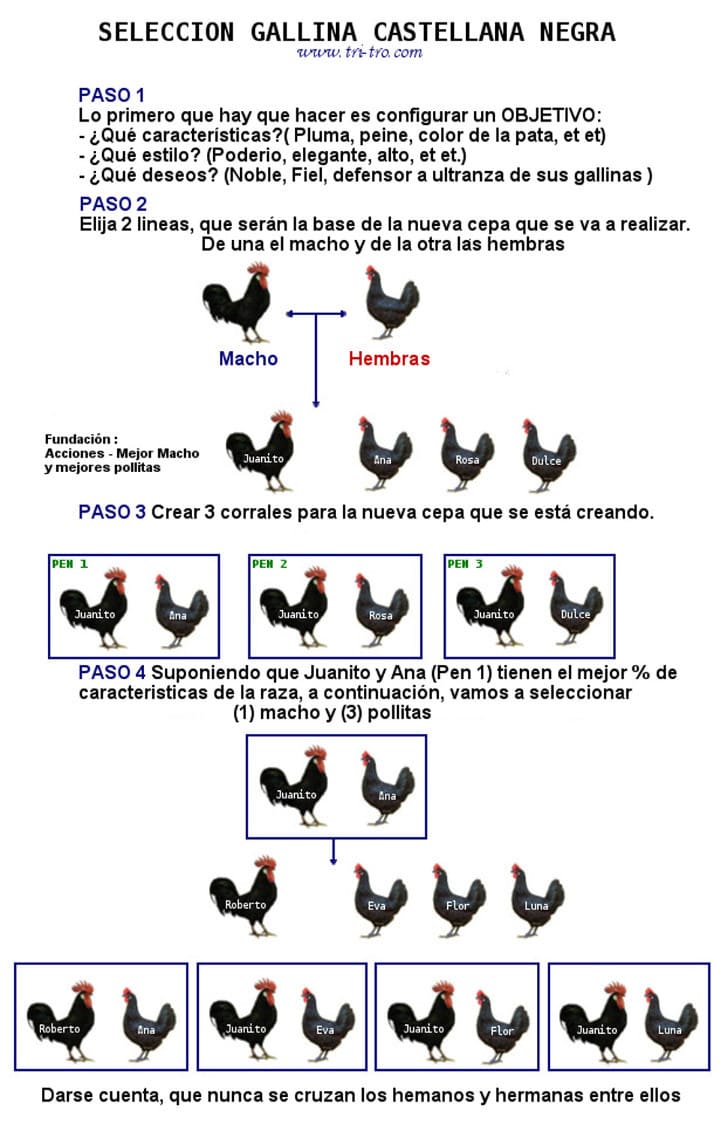
The review comments sent to my mail, I noticed certain questions, such as the appearance of crosses between brothers and sisters in the graph, which is not correct and enlighten.

This is the most effective way to select our Black Castilian chickens, as well as other breeds.

In this image will illustrate the procedure to follow, which can also be useful for other breeds that we raise in our chicken coops or chicken coops, always concerned of birds with similar hues in their plumage, of the race you wish to select. If you prefer, you can download the representation of the image via the link in the PDF.

One thing must be made clear: when developing this breeding program, the birds will not be 100% perfect. To put it simply, they will inherit both the qualities and the flaws of their ancestors—great-great-grandmothers, great-grandmothers, and grandmothers—and it will be our responsibility to carry out the selection process in order to obtain the best birds that meet the breed standard.

STEP 1

  • The first step is to set a GOAL.
  • What characteristics are we looking for (feathers, comb, leg color, etc.)?
  • What style are we looking for (powerful, elegant, tall, etc.)?
  • What traits do we want them to have (noble, loyal, protective of their chickens)

STEP 2

It is essential to pay attention. The male rooster and the females from Castilian come from two different lines of breeders. We will select a single Castilian male (Juanito) from a line or breeder other than our own, and three Castilian females (Ana, Rosa, and Dulce) from another line or breeder, ensuring that there is no blood relationship between them, and from there we will begin.

STEP 3

With Johnny and females Ana, Pink and Sweet already selected, they placed in three departments or chicken coops different and make crosses on a rotating basis with Juanito, to ensure the fertility of their eggs.

When we have a sufficient number of eggs and hatching of each one of them, we will separate them in the incubator or in mother's broody, placing them in bags of fine mesh or by ticking the shell with a pencil to identify what a chicken coop belong to: PHONE 1, PHONE 2, PHONE 3.

After the birth, we will be very aware of the characteristics conforming to the standard or pattern of the race Castilian, or to apply, which will show these chicks or pullets, to proceed with the selection.

Assuming that the best birds come from the FON 1 cross or the first coop (Juanito and Ana), we will select the best rooster (Roberto) and the best pullets (Eva, Flor, and Luna), which we will use to strengthen the line we are establishing.

Roberto is a descendant of Juanito and Ana (FON 1, or the first coop) and was later bred with his mother (Ana).

Eva, Flor, and Luna are the daughters of Juanito and Ana (FON 1, or the first flock), and they are later bred with their father (Juanito).
Always carried out what is known as cross-linking or retrocruce in the field of genetics, which involves the crossing of a descendant hybrid of the first generation with one of the parents or with a genotype identical to the parental.

This term also refers to the agency or race that is of such a crossing, that is to say, the progenitors and their descendants.

However, this approach is not recommended among siblings. Inbreeding, particularly when it occurs among siblings, reduces genetic diversity in the offspring.

In both cases, this increases the likelihood of consolidating both the desired characteristics and those that are less desirable.

Complications can arise; for example, there is a greater probability of having less resistance to certain diseases, as well as deformities in the fingers, malformations in the crest, beak, and feathers, among others.

It is essential to recognize that it never allows the crossroads between brothers.

Black Castilian Chicken Selection

Link to download the photo: Black Castilian chicken selection.

Some videos of Black Castilian roosters:

Roosters players Castilian, 2018

Black Castilian Chickens XIV Spanish Championship 2019

Black Castilian Chickens, VII Spanish Championship.


You may be interested in these other sections


Castilian Black Chicken

Andalusian Blue Chicken

Spanish chicken breeds


Do you want to share or comment on your social networks

Scan to visit TRI-TRO
Escanea para visitar. TRI-TRO