Parasitic diseases:

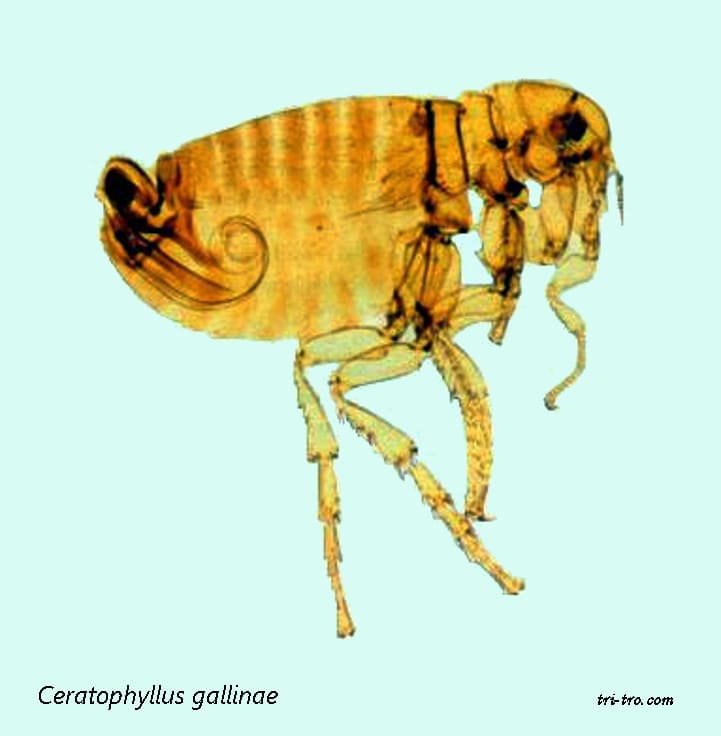
Flea Ceratophyllus gallinae

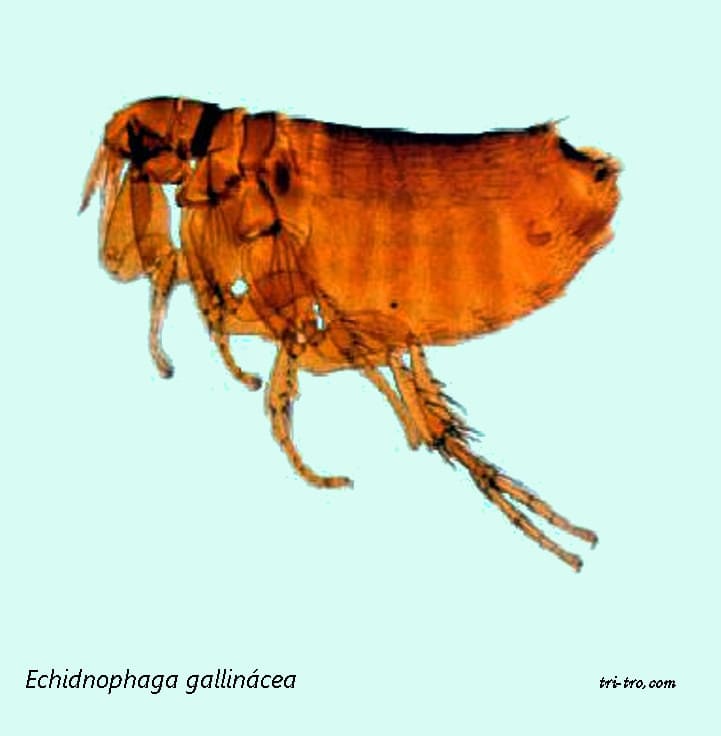
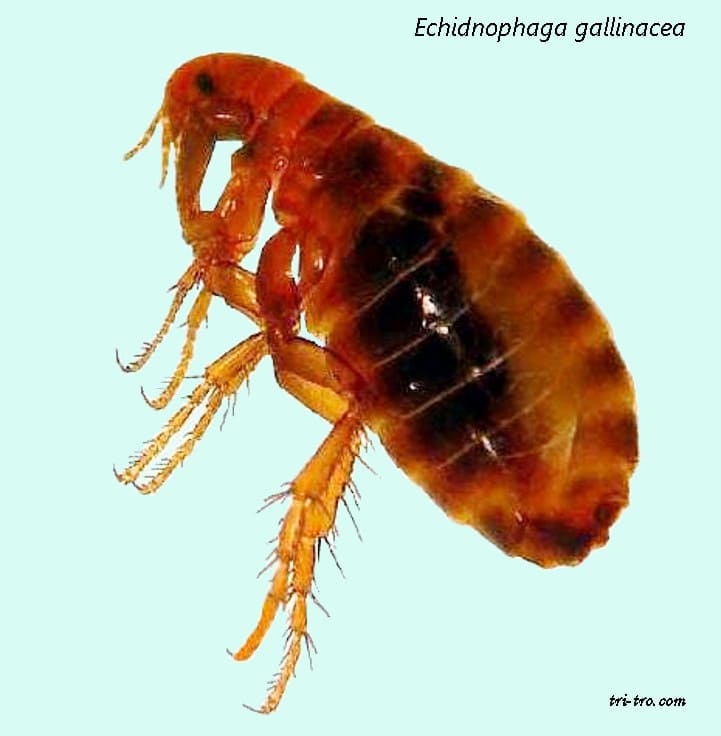
Flea Echidnophaga gallinacea

Chicken fleas (Ceratophyllus gallinae, Echidnophaga gallinacea).

The fleas of a hen's more well-known are separated by the geographical location. We have the flea common Ceratophyllus gallinae, more cosmopolitan and European, and the flea call Echidnophaga gallinacea, which are found more easily in the American continent, and especially in the tropical areas. 

Both are ectoparasites of poultry and wild birds (such as pigeons, starlings, and sparrows). This flea, Ceratophyllus gallinae, prefers a dry climate.

Chicken fleas, also known as common fleas, are, like all other fleas, parasites of warm-blooded animals, but unlike other fleas, they are more selective about the hosts they feed on.

In the absence of their usual host, they move from one animal to another in the chicken coop; they wait for a new host to arrive, but when their preferred hosts are not available, they will even use mammals.

This species is the most common among the fleas of poultry.

Like mites, the bedbugs and fleas that parasitize chickens usually live in the crevices and cracks of the chicken coop.

They can also be found in birdhouses (artificial nests), under tiles, in nests, and under eaves. They emerge from these places to bite and suck blood, which they do primarily at night.

The significance of this arthropod infestation lies in the fact that, when they switch hosts, they often act as vectors for other diseases.

The parasitaciones external causes stress and favor the presentation of certain problems, being always elements that have a negative influence on the economic production of animals.

General morphology of the flea:

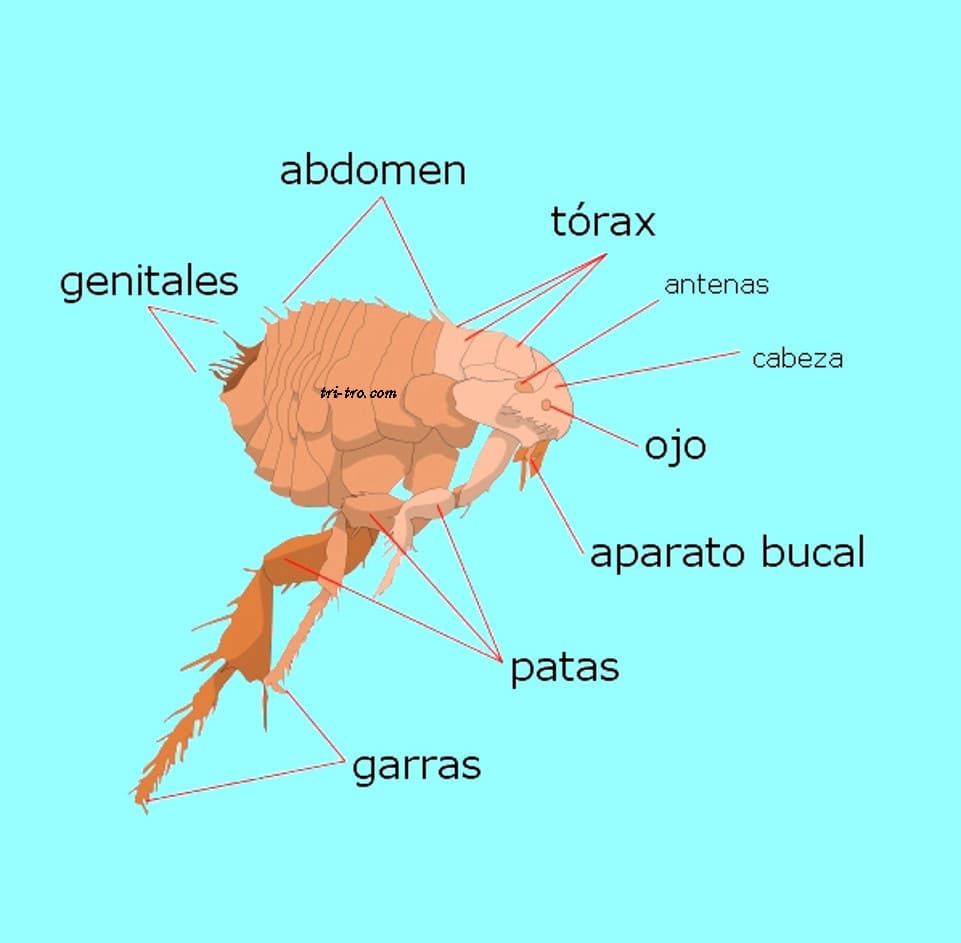
Parts of the flea hen

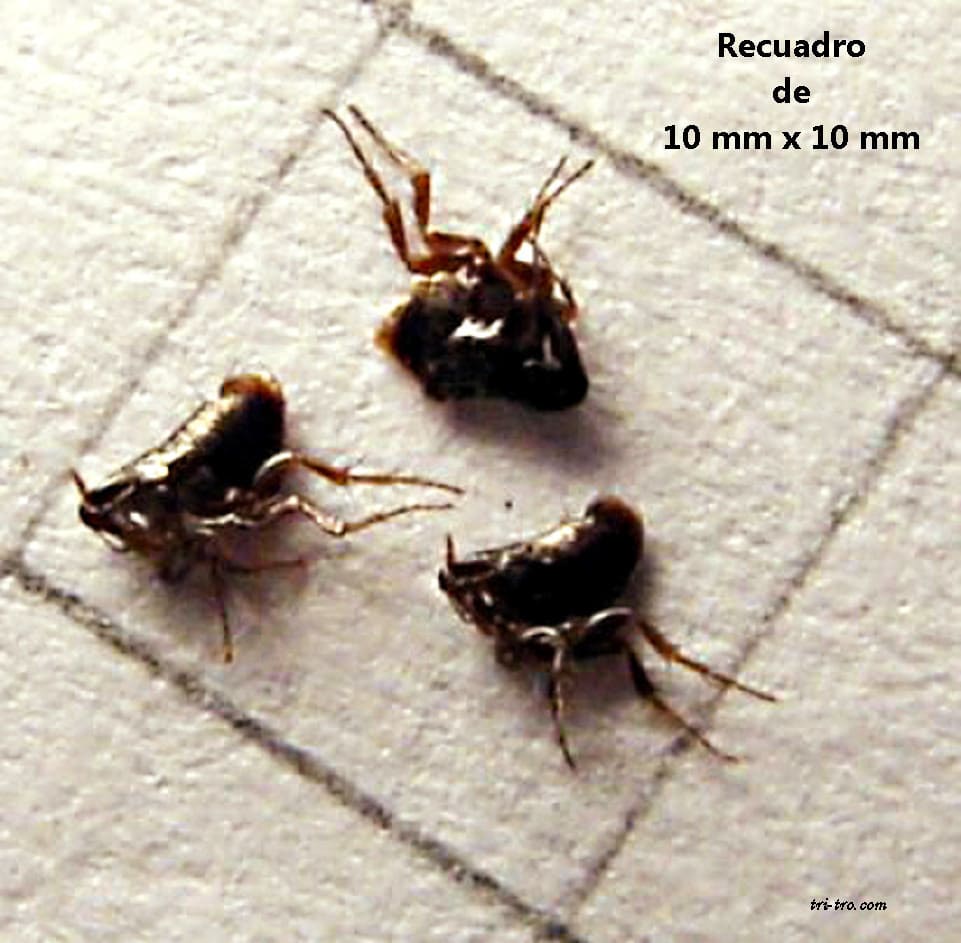
Content of fleas on 1 cm2

Fleas are small insects, generally two to four millimeters long. The body structure is highly adapted to a parasitic lifestyle.

Fleas are an order of insects apart, Siphonapterawith more than 2,000 species and subspecies described.

In Norway, 60 species and subspecies were identified; of these, 40 are associated with birds and 20 with mammals.

The flea is color brown oscuro, y varía de marrón claro a casi negro. No tienen alas y poseen un abdomen comprimido lateralmente, quitinoso (Soulsby, 1982).

The surface brilliant of the body allows easy movement through the hair and feathers (Urquhart et al., 1987).

The compound eyes are absent, but some species have simple eyes, big or small.

The antennae are short and can be tucked into the side slits of the head.

Your body is flattened and compressed from the sides, so that the six legs seem to be united on one side only.

The legs are long, strong, and adapted for jumping (Soulsby, 1982). This can be seen especially in the third pair of legs, which is much longer than the others (Urquhart et al., 1987) and muscle.

For this reason, their hind legs have an elastic capacity that enables them to make jumps between 30 and 50 centimeters in length and between 9 and 25 centimeters in height, it comes to be equivalent to about 200 times the measure of his own body.

In some species, there are a series of large spines on the head and thorax known as “combs,” which serve as a means of clinging to the host, featuring rows of modified hairs that help anchor the insect to the feathers of the host bird.

There may be a comb genal-in-cheek (gena) and a comb prono-tal in the rear edge of the first segment of the thoracic (Soulsby, 1982).

These combs or ctenidios belong to one of the three sets of features in the taxonomy, morphological identification of fleas, call the chaetotaxy.

Structures of the chest and the leg, and the structure of the segment male, the female esternito and the organ of reproduction from sperm (spermatheca) are the other two characteristic sets (Menier and Beaucournu, 1998).

The mouthpart is well-formed to pierce the skin and suck blood, and it is an extension of the head. The mouthparts serve as tools for sucking, cutting, and delgadas.

Life cycle of the flea:

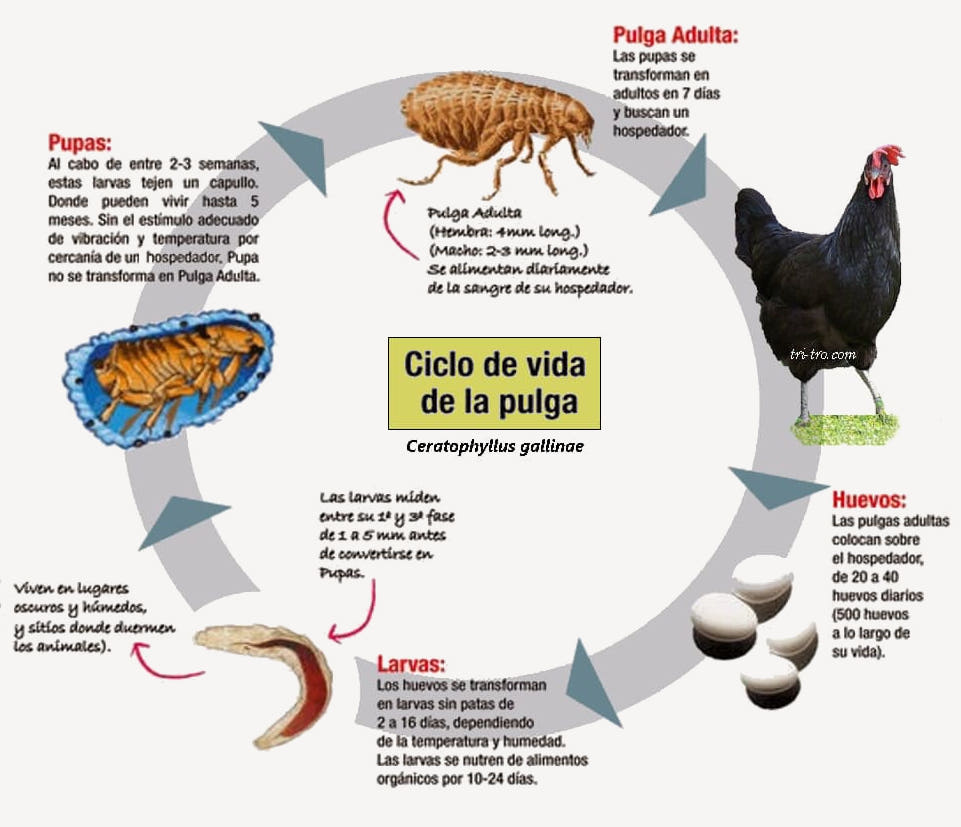
Life cycle of the flea Ceratophyllus gallinae

Flea larvae Ceratophyllus gallinae

They are of complete metamorphosis. Your cycle is:

  • Eggs of 300 to 400.
  • Larva.
  • Pupa.
  • Adult.
  • It takes 30 to 60 days.

The eggs are deposited, and develop the larvae in the birds in the spring and early summer. The Echidnophaga gallinacea it is located in the skin of the birds.

After mating, the females are con la cabeza en la piel de la cresta y las barbillas de aves, y alrededor del ano del animal, en particular donde la piel está desnuda.

Here they form clusters where they lay their eggs. The female flea only pokes her head out of the host's body.

The eggs are deposited in these ulcerations of the skin, as well as in the nest of the host, and in the areas underlying assets such as cracks or slits in the chicken coop.

Flea eggs are about 0.5 mm in size, oval-shaped, and pearl white in color, and are laid in the sores caused by blood-soaked feathers.

Larvae Echidnophaga gallinaceaat the hatch, they fall to the ground to continue his development. The skin around the nodules of the ulcer and the host's young people can die in the case of heavy infestations of fleas.

Flea feces play an important role in the larvae's nutrition; they are those tiny black specks that, when the animal is infested, can be seen on the surface and, when crushed against a white background, leave a bloodstain.

The larvae develop in these places to eat organic particles.

Blood residues from adult insects—that is, partially digested feces—are important for the development of many larval species. The larvae spin a cocoon coated with particles on the outside to camouflage themselves.

The larvae in the cocoon, they turn into pupae and turn into an adult flea. The flea developed can stay a long time in the cocoon. Once you have completed your development, the adult flea emerges not immediately in its envelope pupal, as it may take a few days, months, and even a year.

This explains the presence of fleas on sites that have been unoccupied for periods quite a long time, for example in winter, before there is an appropriate stimulus to exit out.

All fleas feed on the blood of birds or mammals. Fleas can only reproduce when there are birds in the nest or roost that they can feed on.

The larvae of Ceratophyllus gallinae and Echidnophaga gallinacea they are thinner, worm-shaped, and no more than five millimeters long.

The larvae are yellowish-white in color, with a boneless body; the head capsule is brown.

They have rows of long hairs scattered across their bodies. They then pupate inside a cocoon that is spun from the materials in the nest.

The cocoon is camouflaged with debris and are difficult to detect, to become a flea completed during the summer or in the fall, but remains in the cocoon until the next spring. When it comes to the heat of the spring, they come out.

In contrast with the adult fleas, larvae, fleas require specific habitats, mostly associated with the habits of the nesting of our chicken coops, rather than the type of blood.


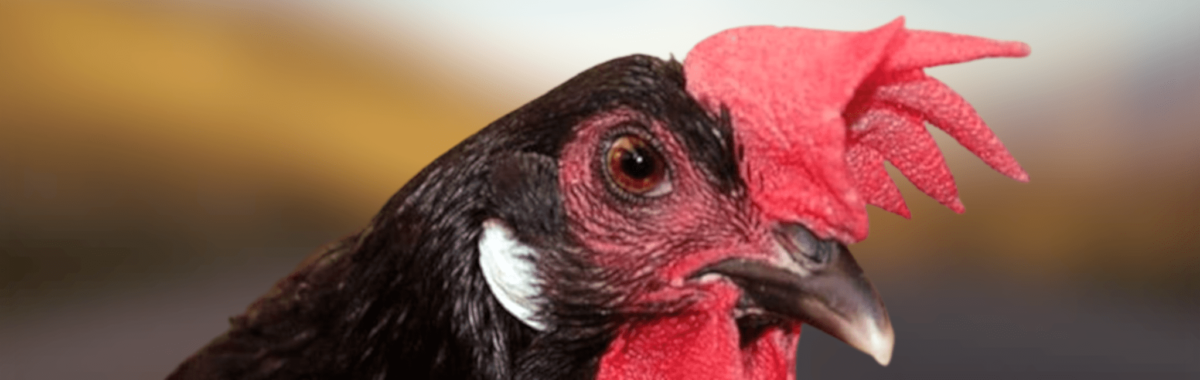
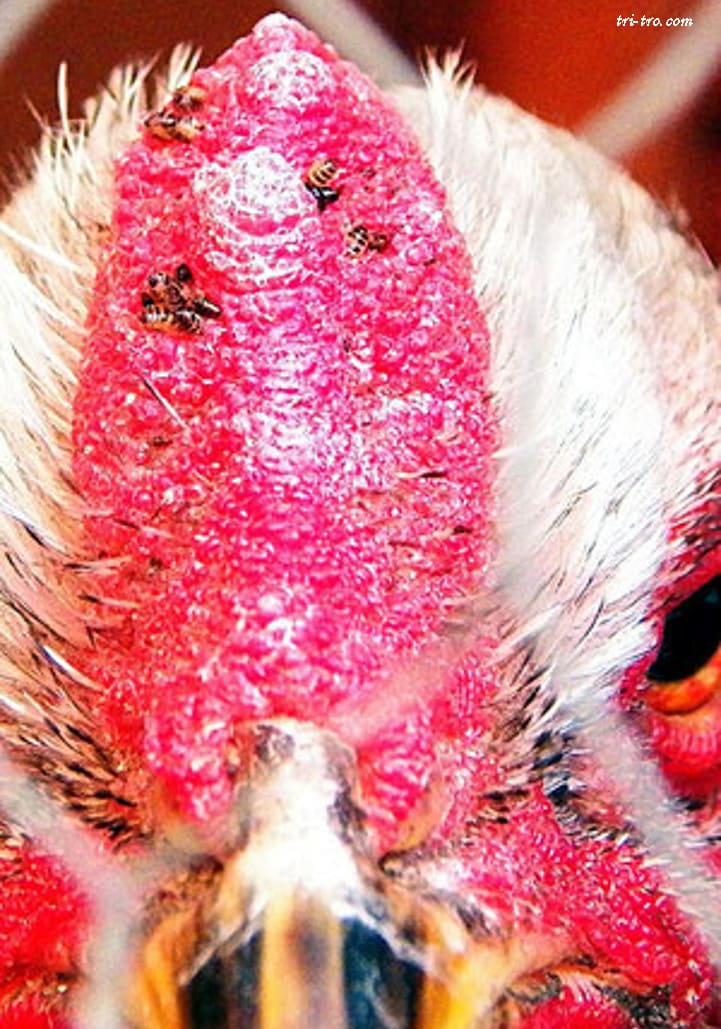
Rooster with fleas in the crest

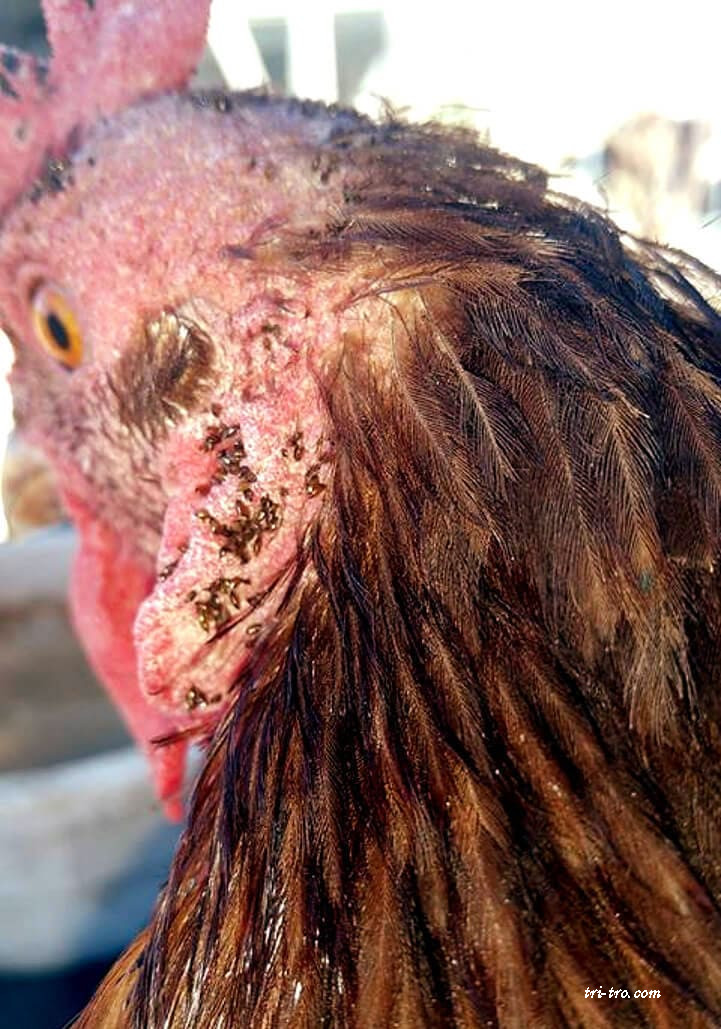
Flea embedded in the skin of the chicken

Flea Echidnophaga gallinacea

Fleas birds live a short time under roof and always in the interior of the nests. They feed during the period of the zeal of the birds, when they are more available to give blood on a regular basis.

When it comes to the heat of the spring, the fleas come out of the cocoons to the entrance of the nesting boxes. Here are ready to jump in and waiting for a new bird, from March to June.

There can be multiple hundreds of fleas in a nest. Fleas jump from birds to human beings and cats who disturb the nesting sites.

The fleas that they miss the host animal will end up in the ground under the nest and stay there and wait for the animal guests.

When there's an infestation in our chicken coops, fleas bite our legs. Cats and dogs often carry fleas on them and bring them into our homes, where they then bite us; it's a cycle.

If the flea has no birds to nest, they will begin to spread in the environment. Can go up to the trunks of the trees and walls, or jump and hide in the ground under the nest.

They can get into the house through cracks in the windows, through ventilation openings, or by clinging to laundry hanging outside.

Fleas on birds are rare and occur in small numbers, almost exclusively in the spring, which is their dispersal season.

They are a short time in the bird to suck blood and are normally found in large quantities in the nest.

The same behavior seems to apply to attacks on humans, dogs, and cats. They follow the person or animal and are often found in beds, sleeping bags, and animal resting areas.

Habit:

Adult fleas live in birds' nests. When the birds leave, they must find a new host.

If the nest is re-used, the pupae to develop into adults, they will mate and continue the breeding cycle of new fleas.

They can multiply at an alarming rate in corrals or stables, batteries, operating poultry, etc

Be attention to other domestic animals that are usually in contact with birds or poultry. In this case, in mammals, is often located around the margin of the external ear and near the nose.

Treatment:

The recommended insecticides are those containing pyrethrum and pyrethroid compounds such as permethrin.

There are several active formulations available on the market. These formulations are low in toxicity to humans and mammals, but highly toxic to fish.

Pentyl is rapidly broken down by sunlight. An adult flea can go without food for up to a year.

In addition to the discomfort and irritation that cause the skin of the bird, it can trigger complicated allergies and even be intermediate hosts and vectors of parasites and infectious agents.

Literature review:

MERCK & CO. (1995). Manual Merck de Veterinaria. Rahway, N. J., EE. UU.

BUXADÉ, P. (1987). The laying hen. Ed. Mundiprensa. Madrid.

DORN, P. (1987). Manual of avian pathology. Ed. Acribia. Zaragoza.

HOFSTAD, M. S. (1984). Diseases of Poultry. Iowa State University Press, Ames, Iowa.

ZARZUELO, E. (1982). Vade mecum of the pathology, infectious poultry. Ed. Aedos, Barcelona.

CASTELLÓ, F. and CASTELLÓ, J. A. (1960). The New Art of Raising Chickens. Aedos, Barcelona.

OROZCO, F. (1989). Breeds of chickens Spanish. Ed. Mundiprensa. Madrid.

LACADENA, J. R. (1998). Genetics. Ed. AGESA

PUERTAS, M.J. (1992). Genetics: Fundamentals and Perspectives. McGraw-Hill Interamericana.

SANCHEZ-MONGE, E. (1969), Genetics. Espasa-Calpe S.A.

OROZCO, F. and ROBLA, F. (1986). Genetic aspects of the León rooster. 24th Symposium of the WPSA (Spanish Section): 199–212.

HILL, J. L. (1973). Genetics, general and applied. Ed. UTEHA.

CASTELLÓ, J. A., LLEONART, R., FIELD, J. L., OROZCO, F. (1989). Biology of the chicken. Real Escuela de Avicultura.

LLEONART, F., ROCA, E., CALLÍS, M., GURRI, A., PONTES, M. (1991). Poultry Hygiene and Pathology. Royal School of Poultry Science.

STURKIE, P.D. (1968). Fisiología aviar, ed. Acribia. Zaragoza.

LOHMANN ANIMAL HEALTH (2012)

Reid Mehl. Institutt for samfunnsmedisinske fag, Oppdatert 15.06.2004


You may be interested in these other sections


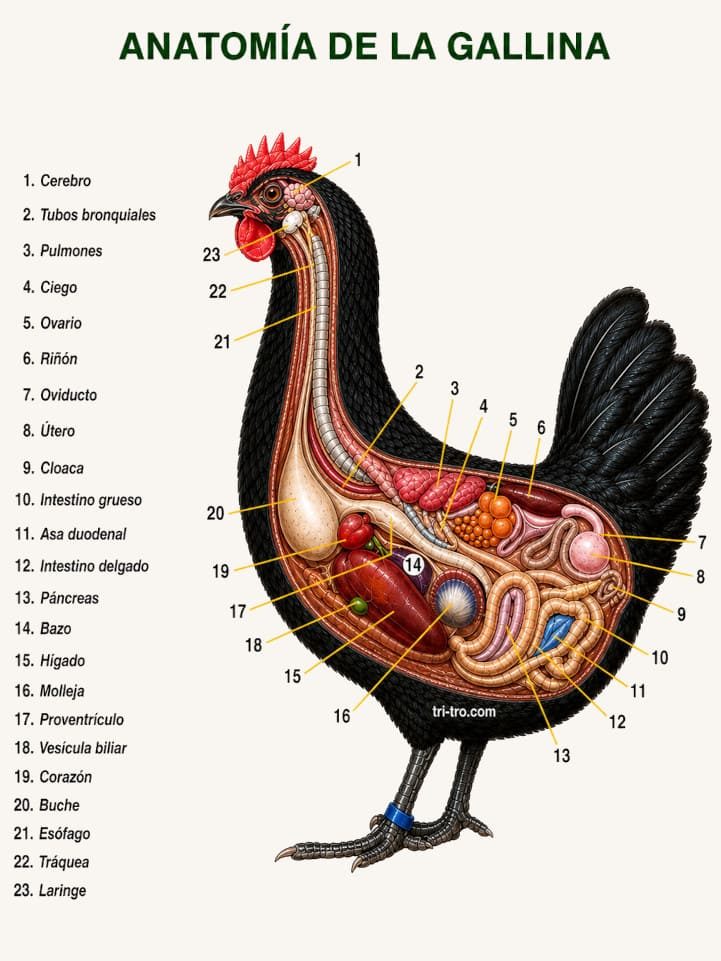
Anatomy of the chicken: parts, organs, and functions

Gallus varius: Origin and Characteristics of the Green Rooster

Legacy of Gabriel Alonso de Herrera


Do you want to share or comment on your social networks

Scan to visit TRI-TRO
Escanea para visitar. TRI-TRO