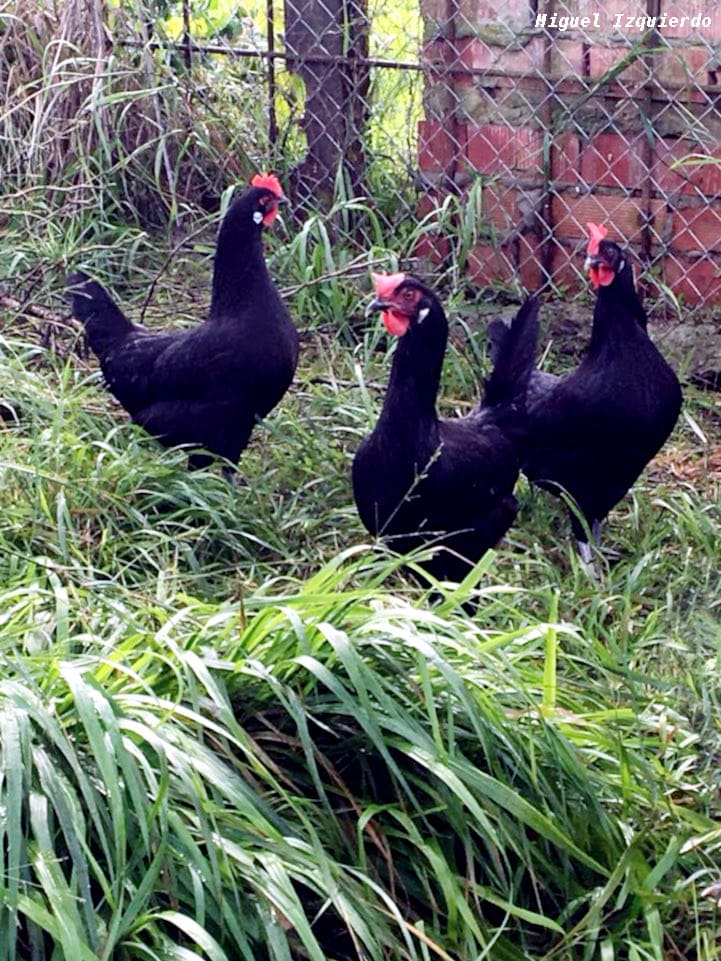
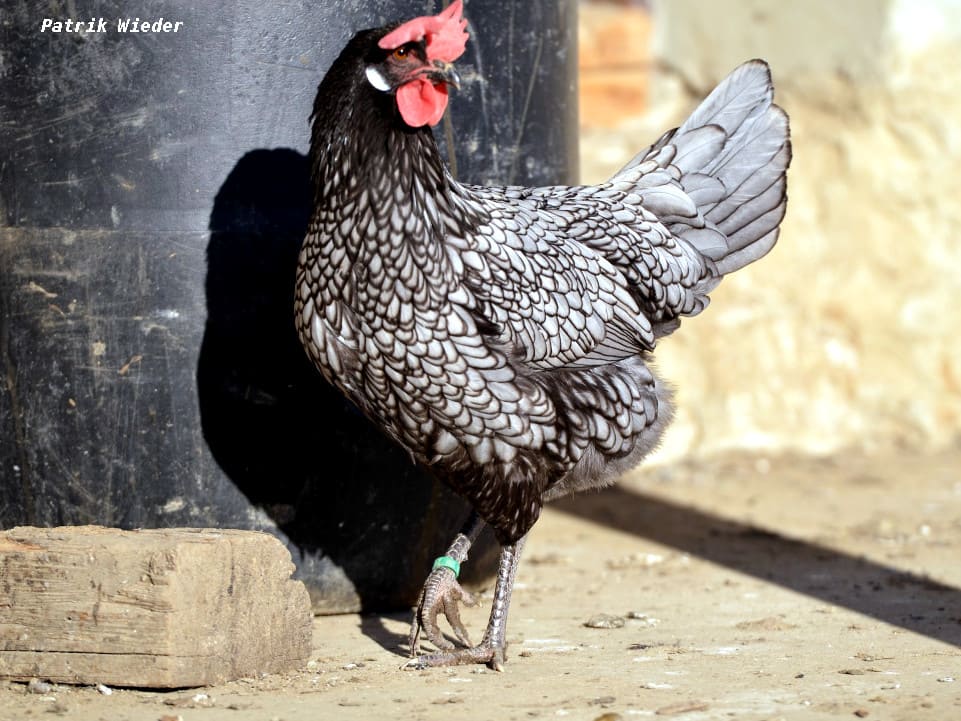
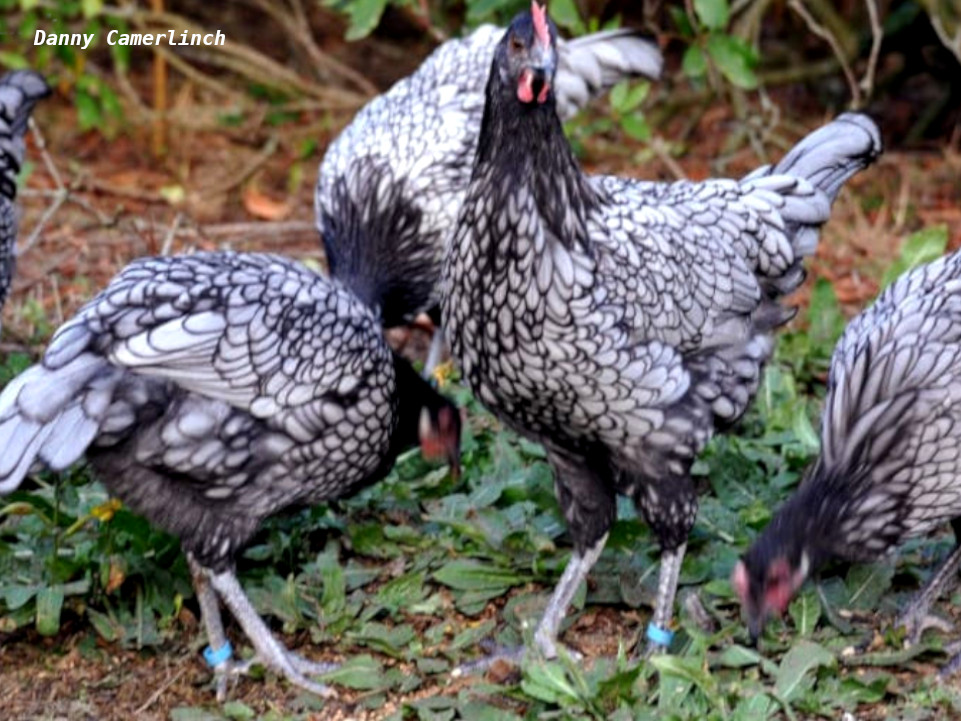
The Andalusian Blue Hen is one of the best-known Spanish breeds internationally. It is distinguished by its slate-blue plumage, hardiness, and high production of white eggs. It originated in Andalusia and was exported to England, where the breed standard was established.
The native Andalusian Blue henwe have another specimen of the ancient greatness of Spain. As a race bred according to other requirements, the Andalusian of the northern states (north of Europe) is certainly not that of Andalusia.
While it is encouraging that there are bluish-gray hens of the corresponding Mediterranean type in Spain and that they were imported from Cádiz to England by Mr. Leonard Barber in 1846–1847, sourced from a gentleman in Jerez de la Frontera. Later, in 1851, the Andalusian fowl breeder Mr. Taylor (of Shepherd’s Bush, London) also imported them. On the same date, Mr. Coles of Farnham imported more Andalusian chickens, which were widely distributed throughout Cornwall and Devon. The breed was exhibited for the first time at the Baker Street Show in London in January 1853.
The new arrivals were small and unattractive, but they stood out for their abundant egg production and the extraordinary size of their eggs. To increase their egg production and improve their color, they were repeatedly crossed with other breeds, especially with Castilian (llamada Española) y la Menorca, para mejorar el peine.
The history of the Andalusian chicken is unknown; it is believed that the ancestors of the Andalusian Blue were likely black-and-white birds with red faces, but it is often assumed that they were actually the Spanish Black breed.
Es decir, de la gallina castellana, también denominada en distintas partes del territorio como zamorana, leonesa, malagueña, jerezana o andaluza, correspondiente a las regiones donde ya se criaba en tiempo de los árabes, que la denominaban Moruna hen.
Undoubtedly, breeding the Andalusian breed—due to the difficult and variable blue coloration of its plumage—remains today, just as in the past, one of the most arduous tasks in poultry farming and is often accompanied by many disappointments. But this has not diminished the value of Andalusian chickens as a breed; rather, it has increased their value among dedicated poultry farmers, and their popularity has grown within this community because they are highly productive birds.
For this reason, the Andalusian Blue deserves our full attention; to that end, there is already an association that maintains the breed’s pedigree registry as well as breeders who are patient and dedicated to raising these beautiful birds.
At some point, between 1850 and 1855, Andalusian chickens were brought to the Americas. The Andalusian Blue chicken was recognized by the American Poultry Association as a breed standard in 1874. These Andalusian Blue chickens first arrived in South America in 1870.
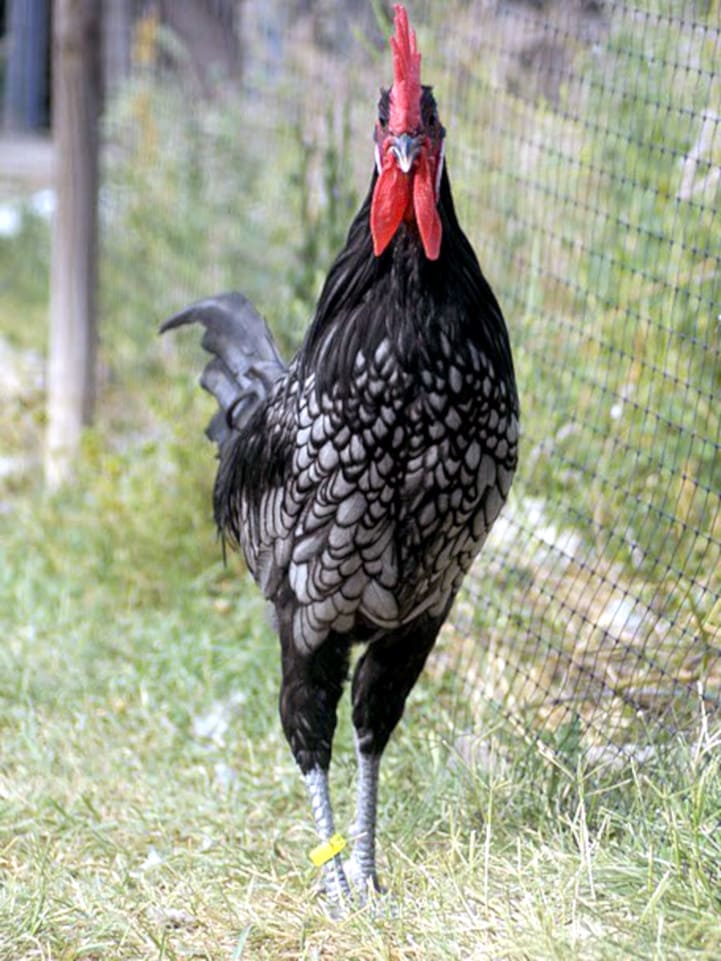
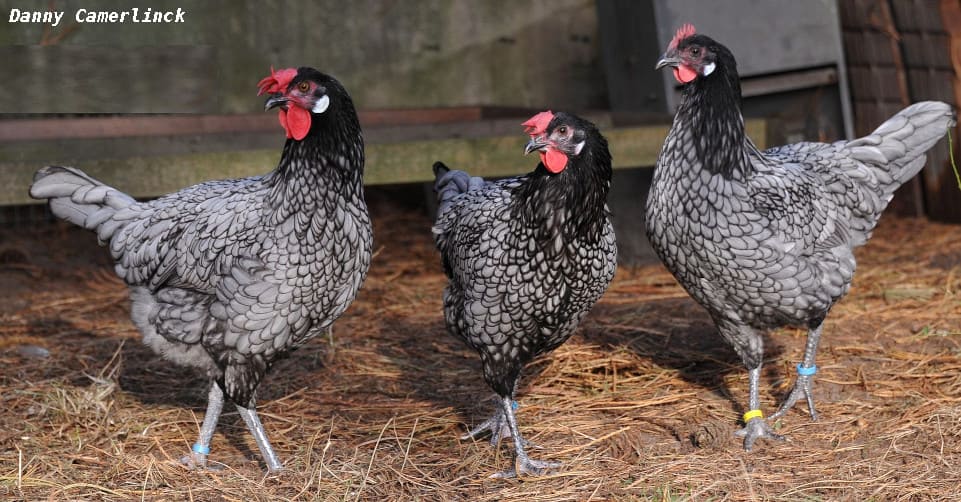
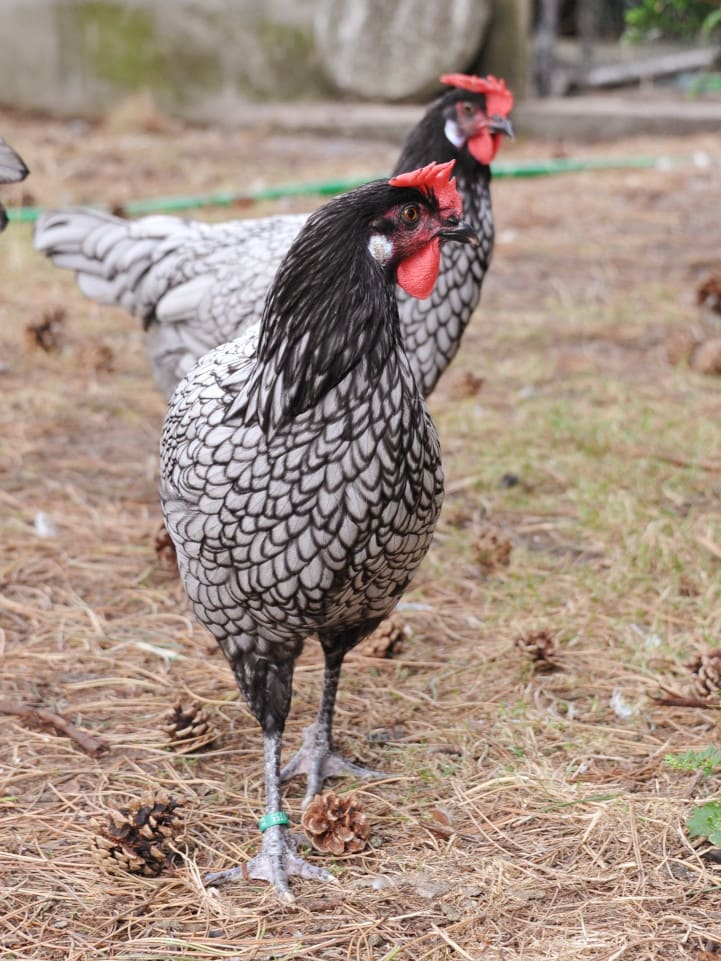
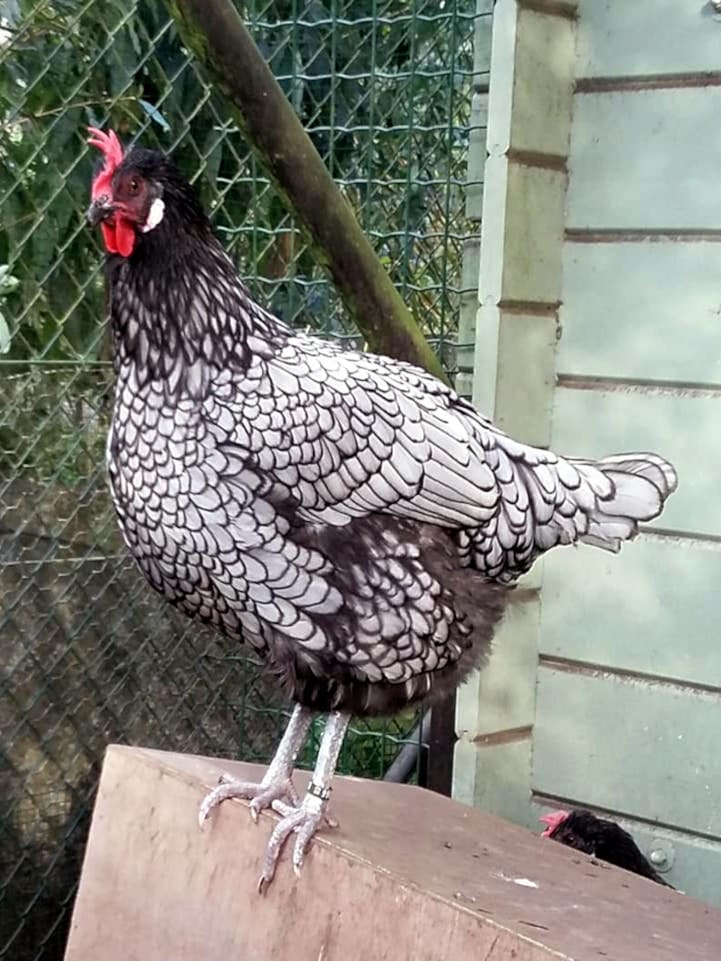
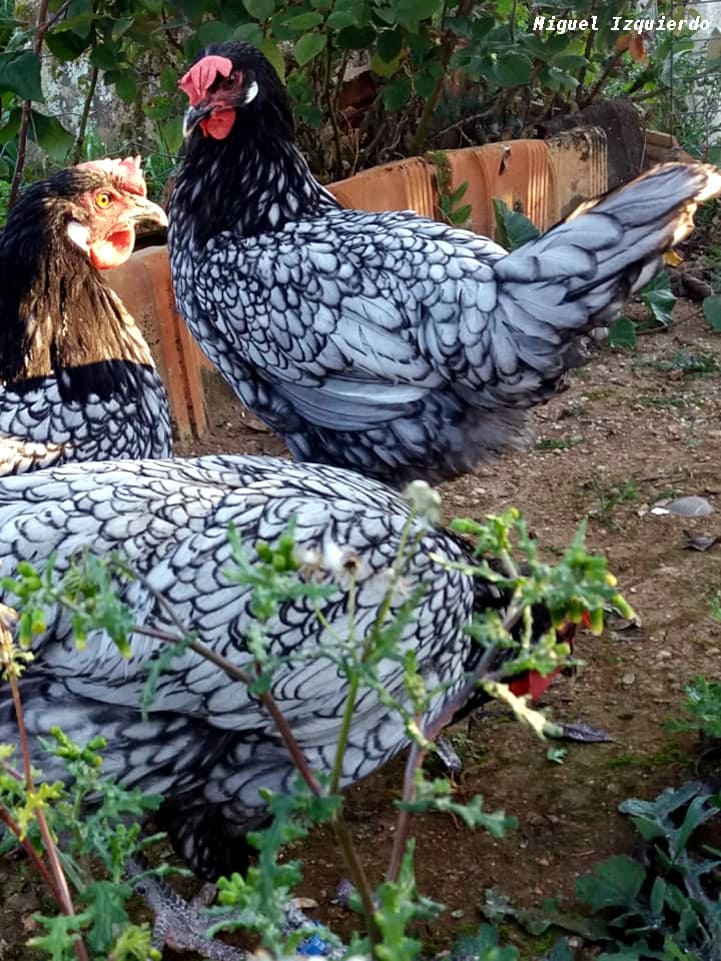
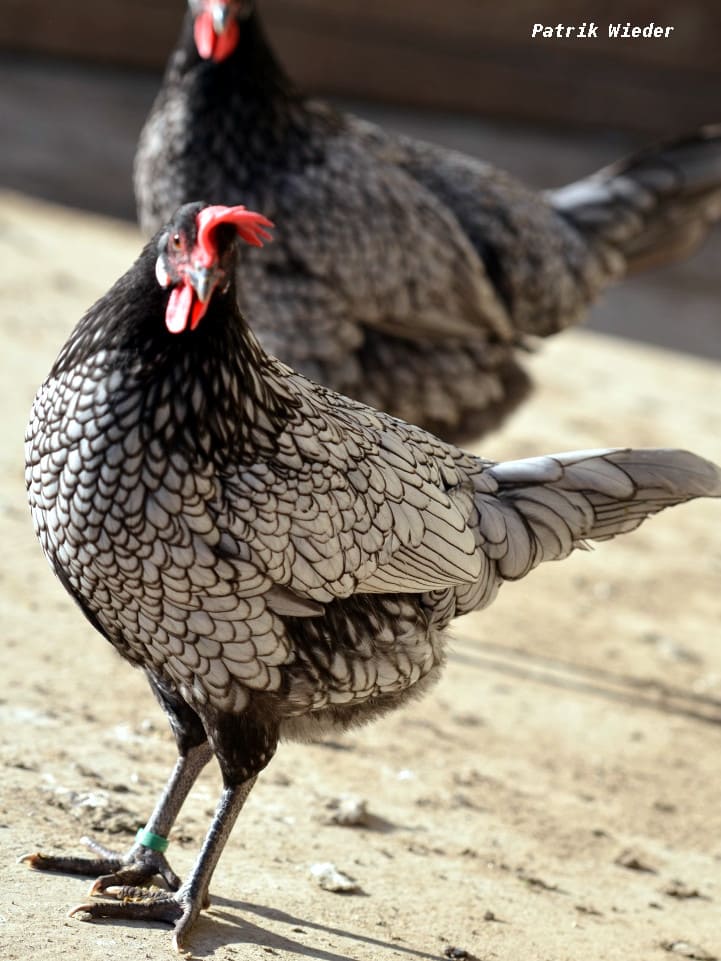
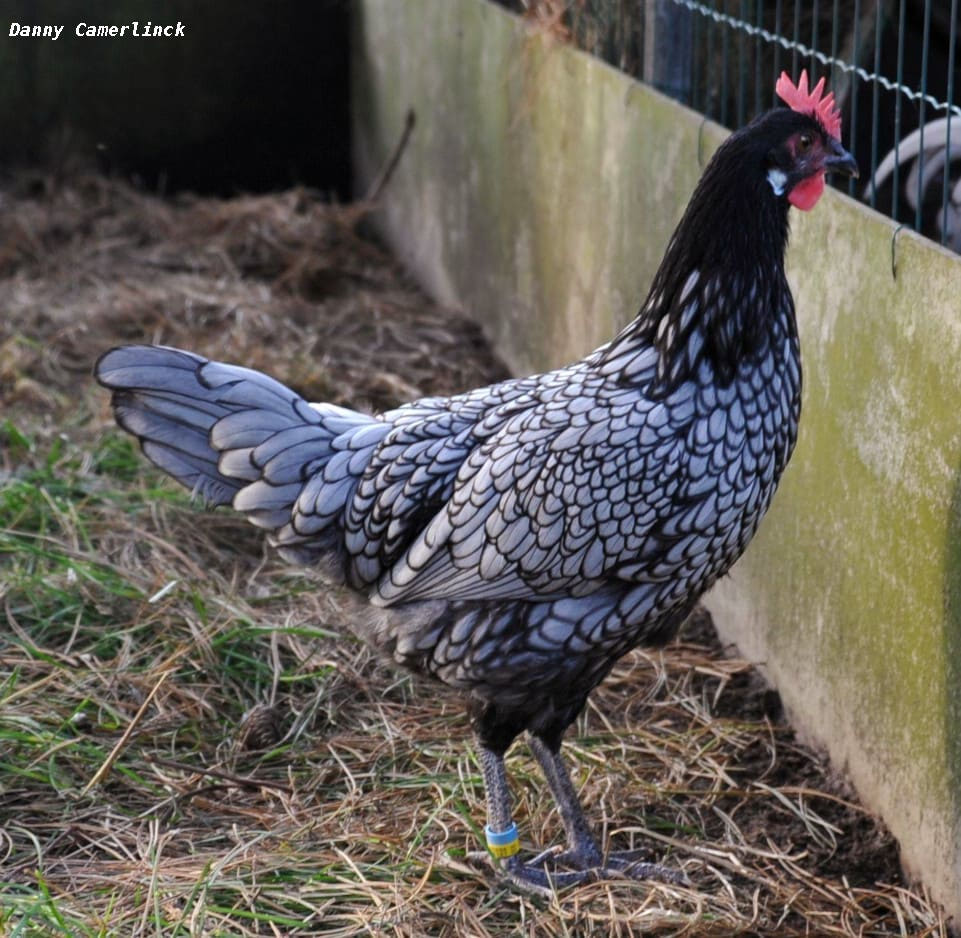
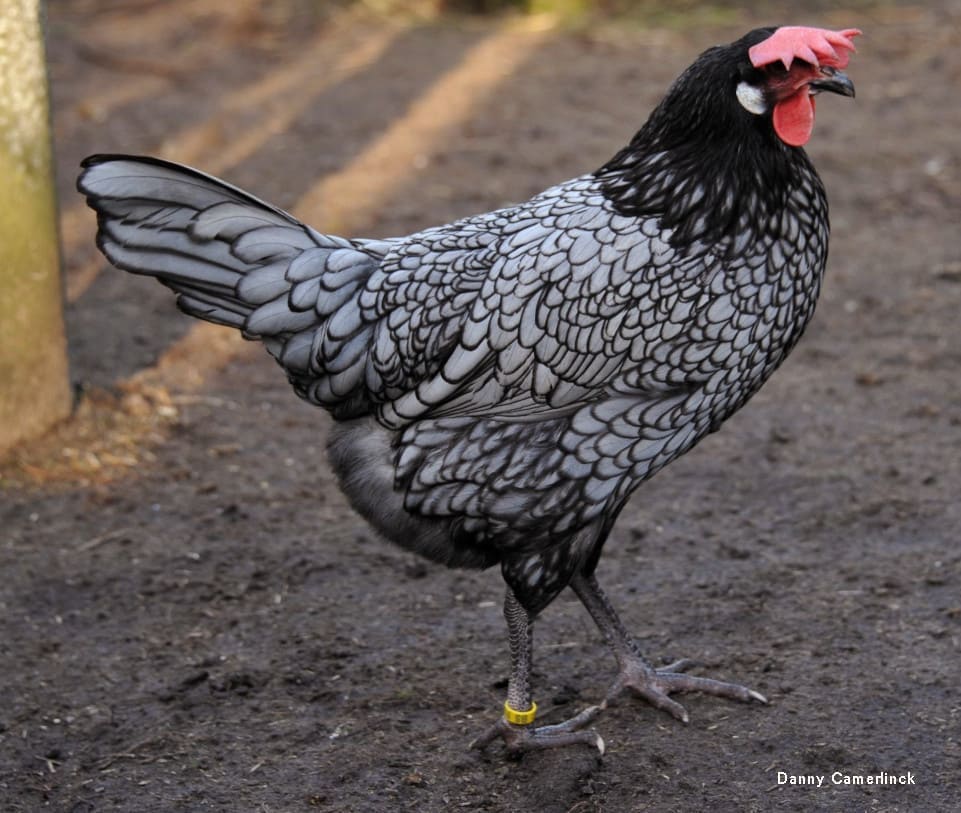
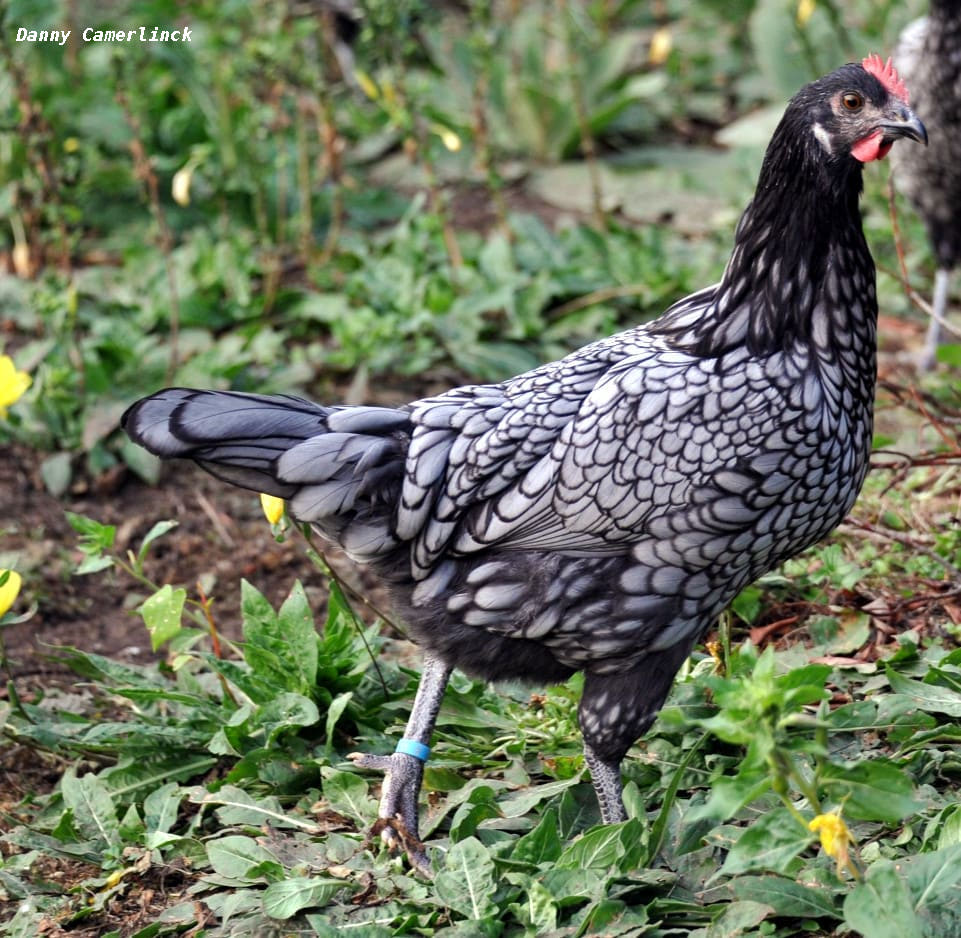
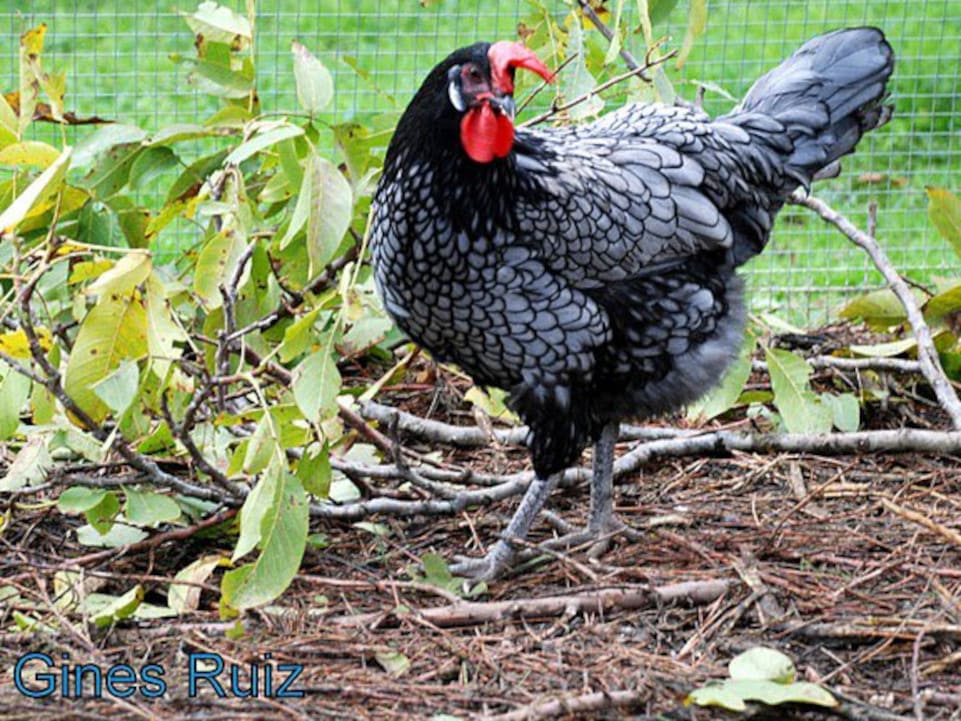
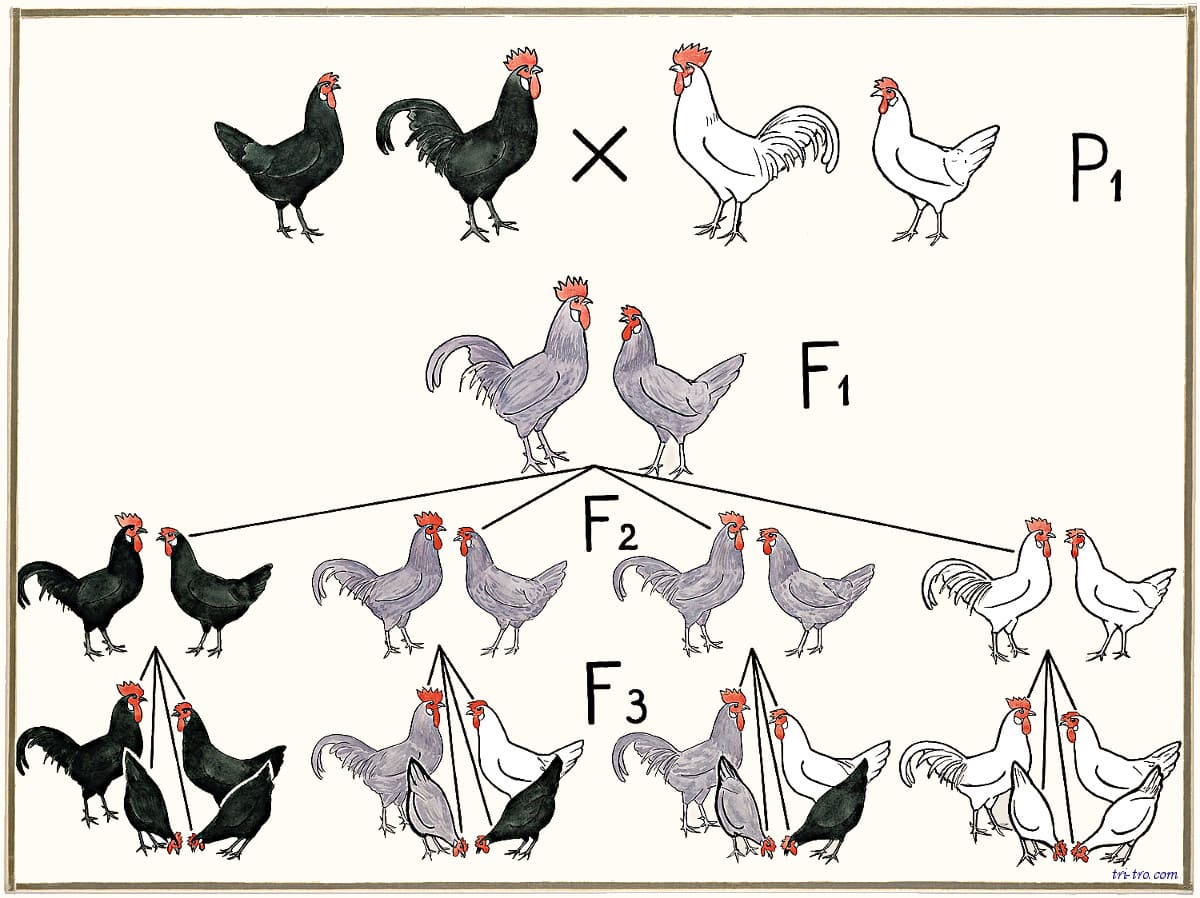
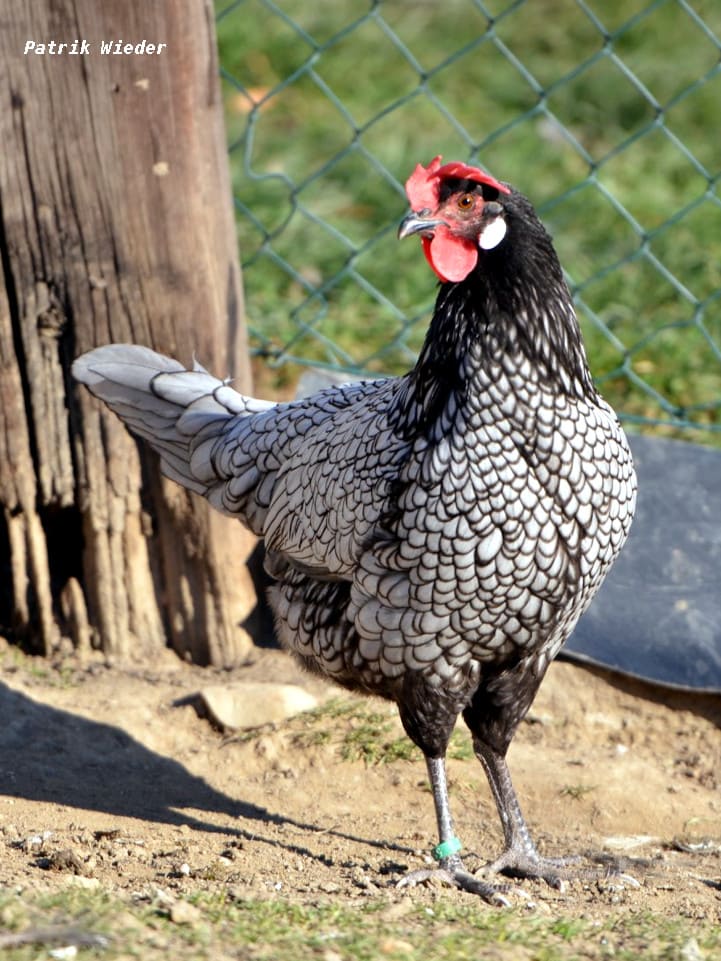
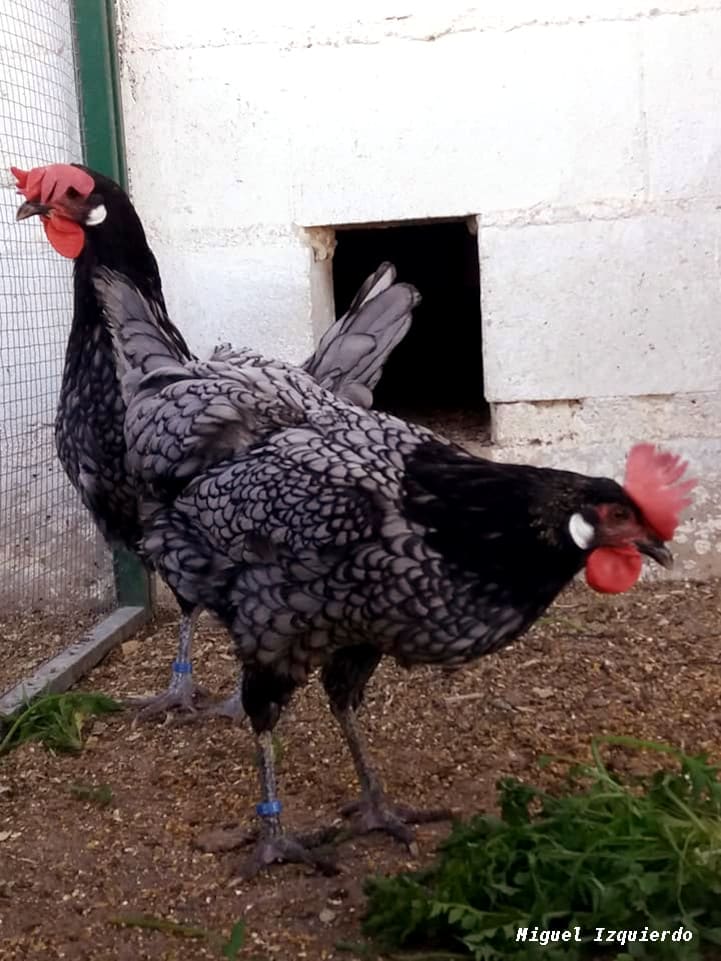
The main distinguishing feature of the Andalusian chicken breed is the blue color of its plumage. Each feather should be a light slate blue, clearly edged with dark blue. These blue birds are produced by crossing black birds with white birds.
The transformation of the primitive birds’ mottled, dirty-gray plumage into the perfect slate-gray with dark edging (capriciously called “blue”) that today distinguishes this breed is one of the most honorable and successful selective breeding endeavors undertaken by English breeders in the field of poultry.
In their hands they got the andalusian to become the favorite birds of all exposures, without losing anything of its superb qualities for the exploitation utilitarian.
Areas of broadcast:
Due to these circumstances, the blue Andalusian varieties spread rapidly throughout the world and are now listed in the standard catalogs of every country.
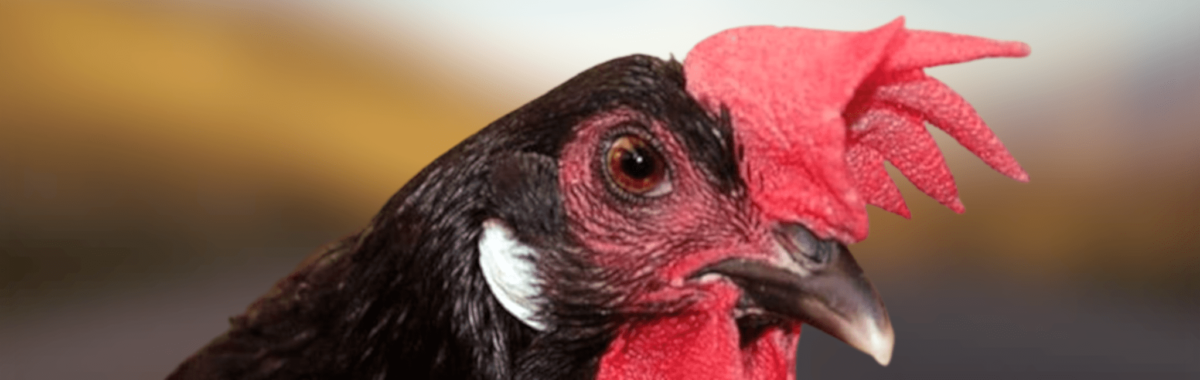
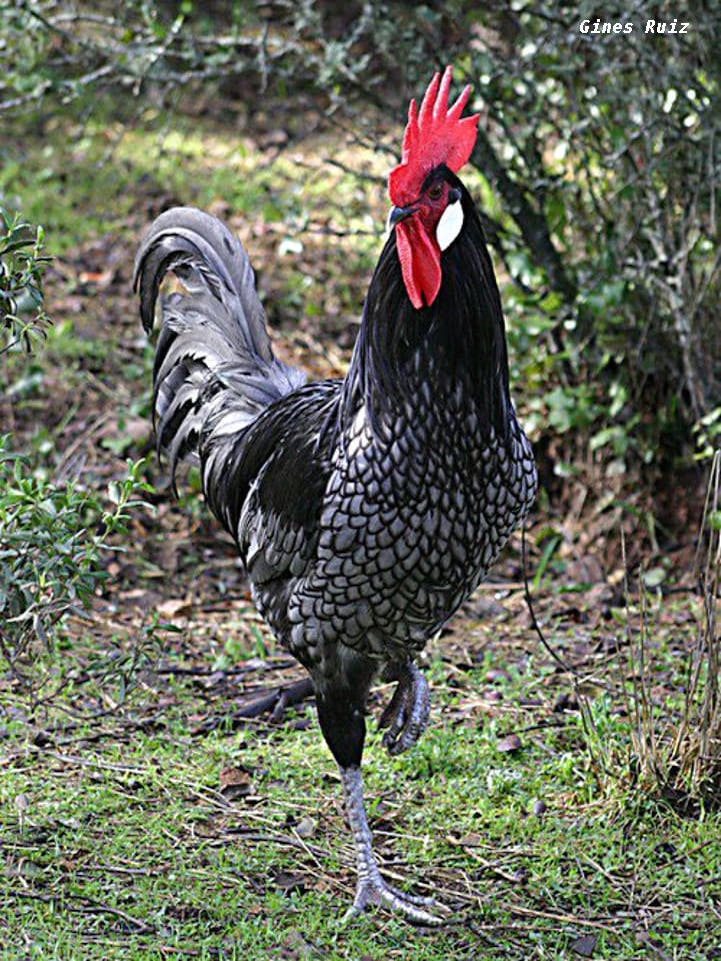
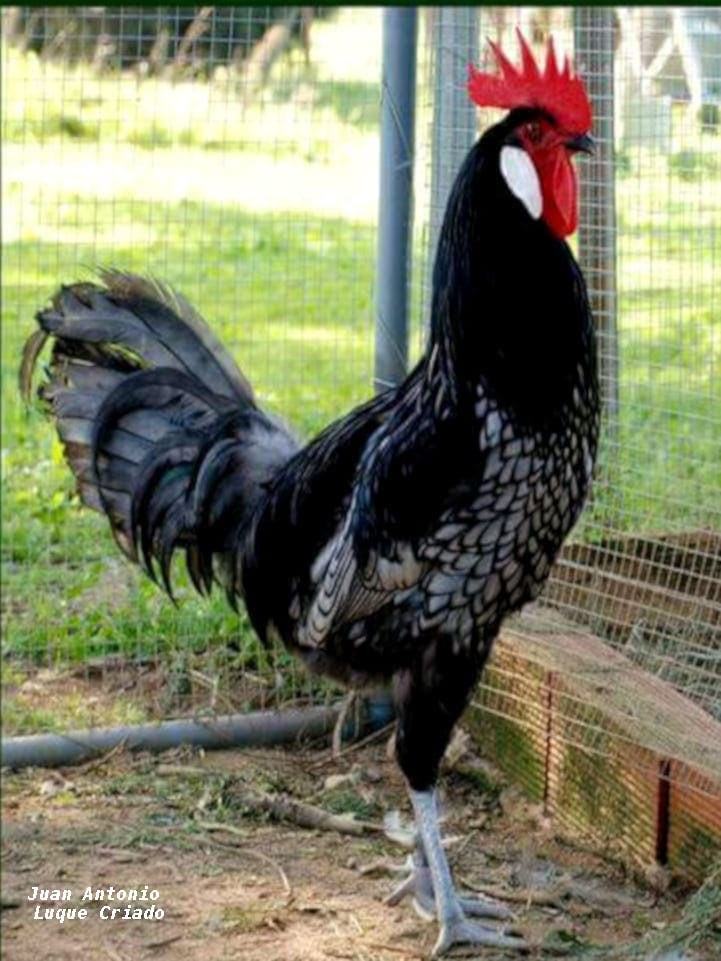
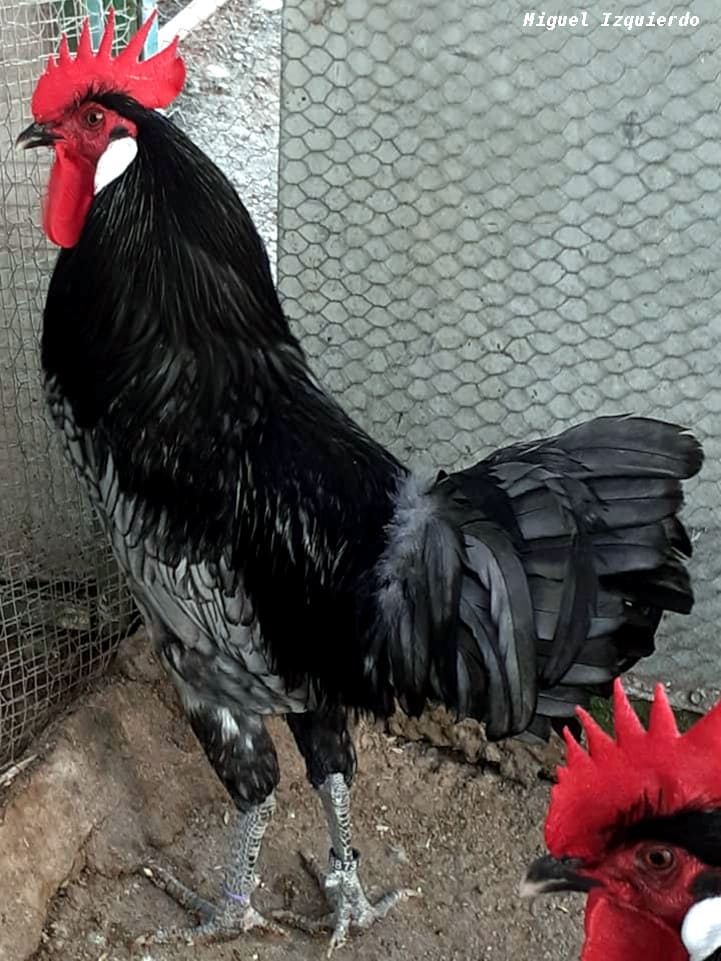
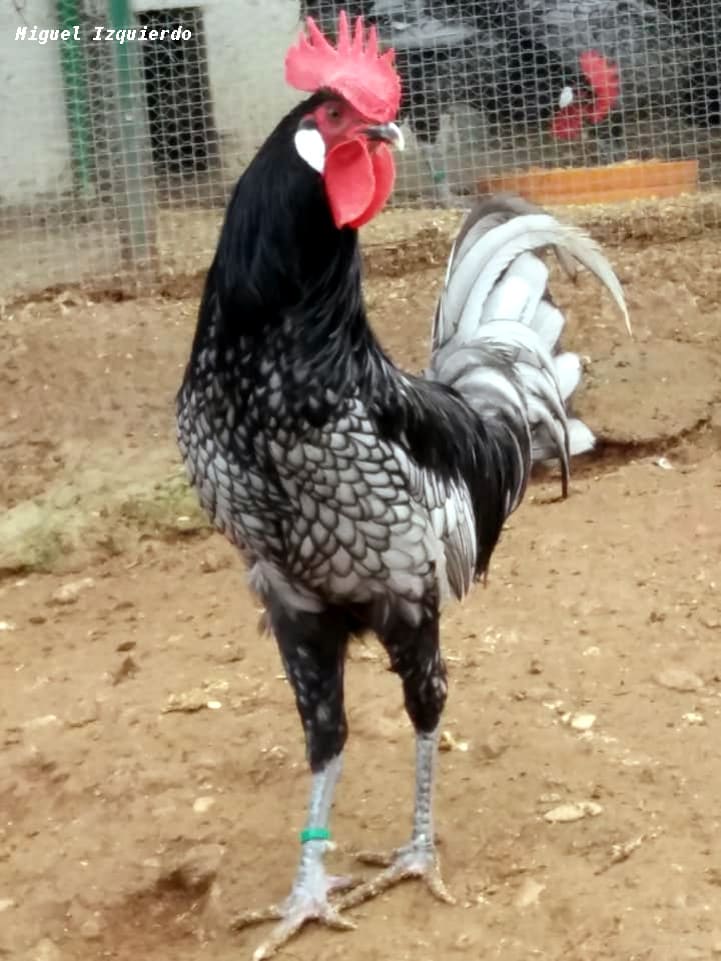
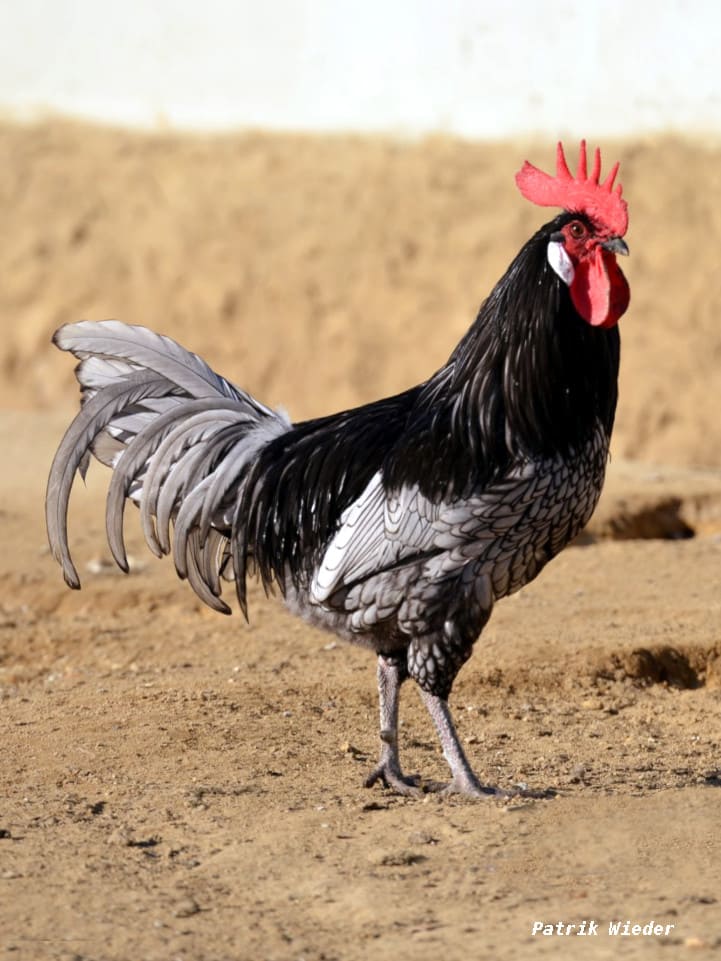
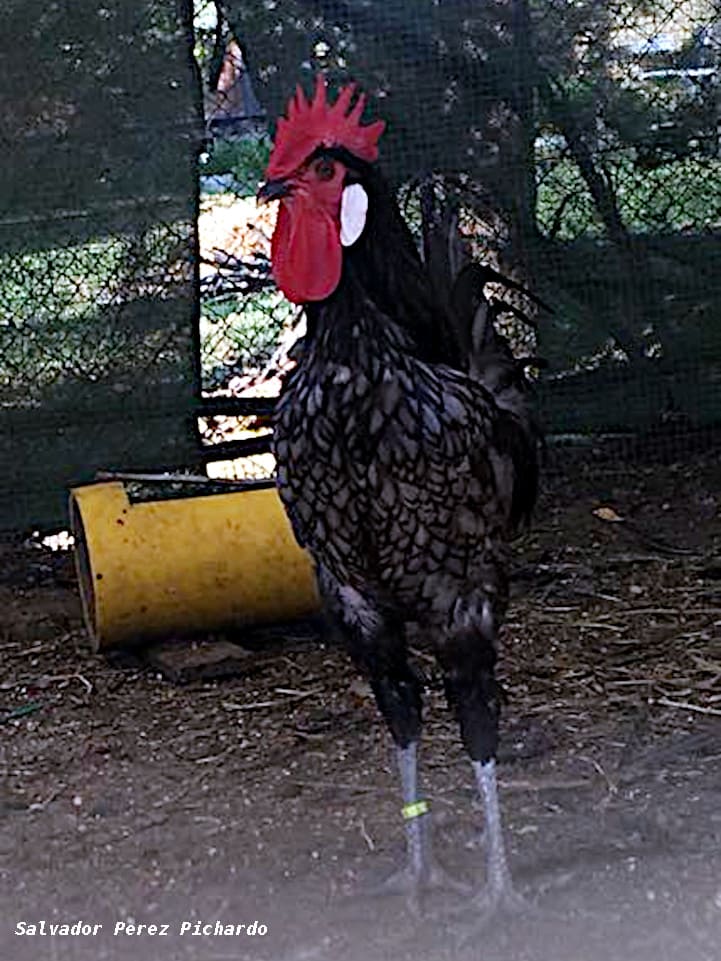
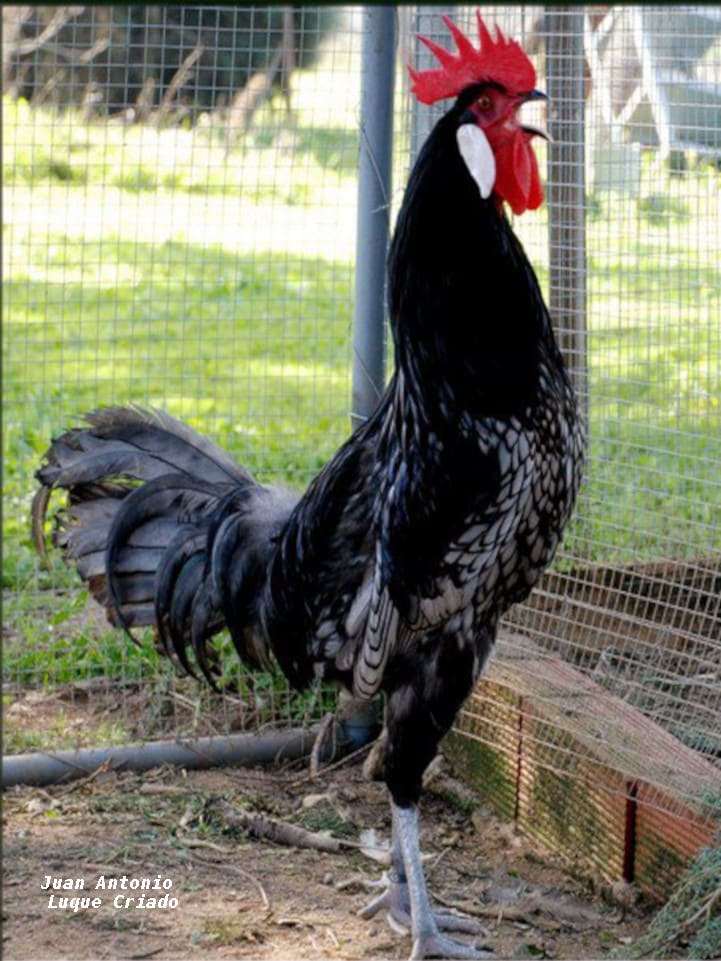
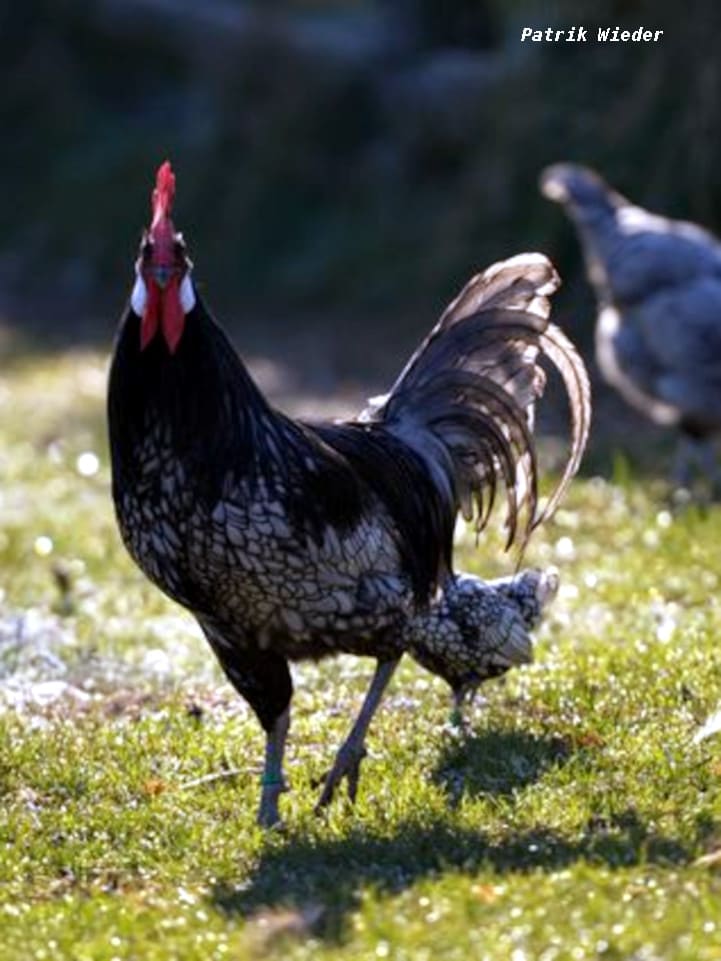
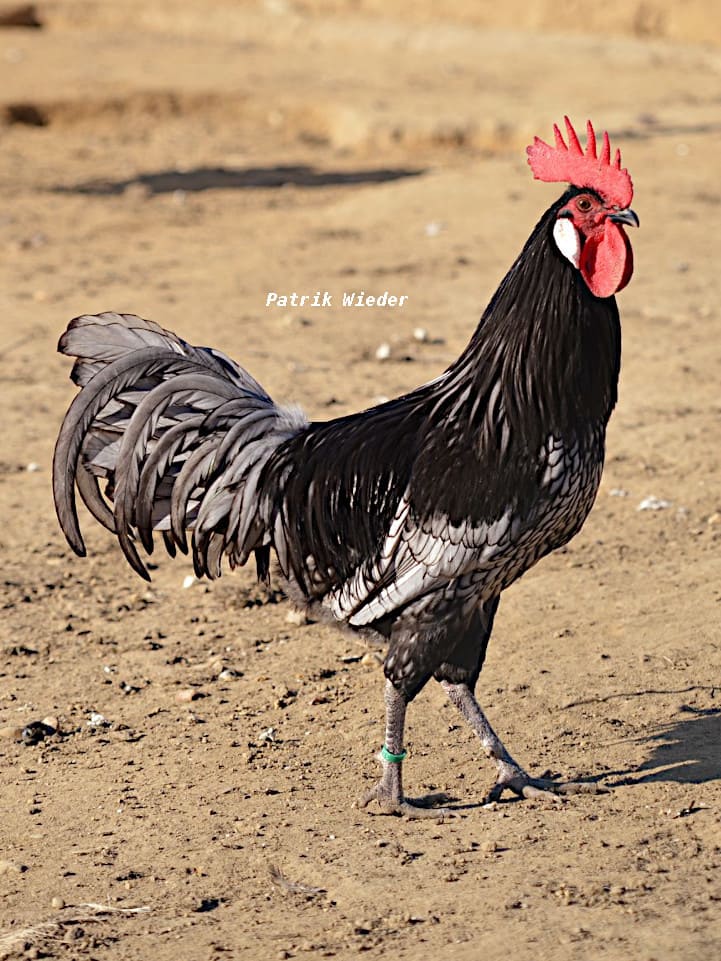
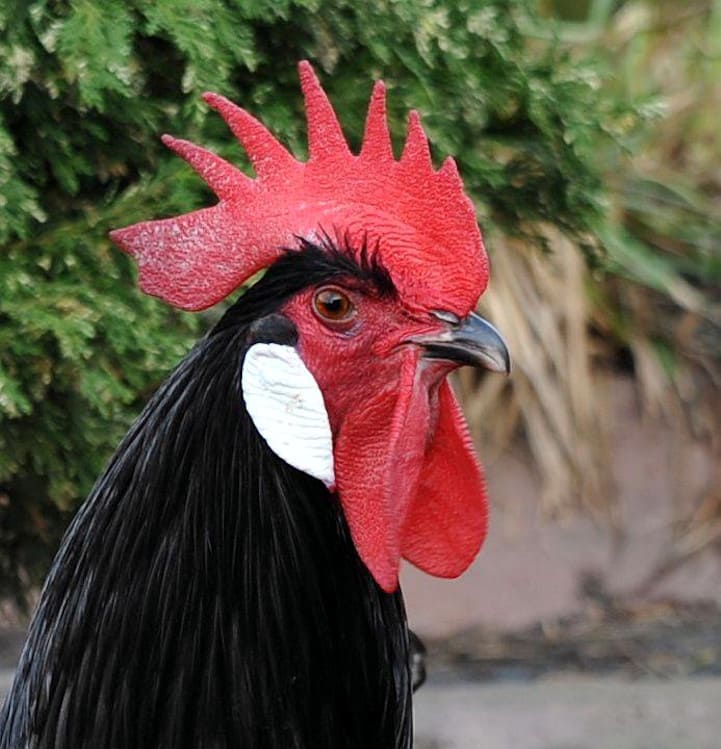
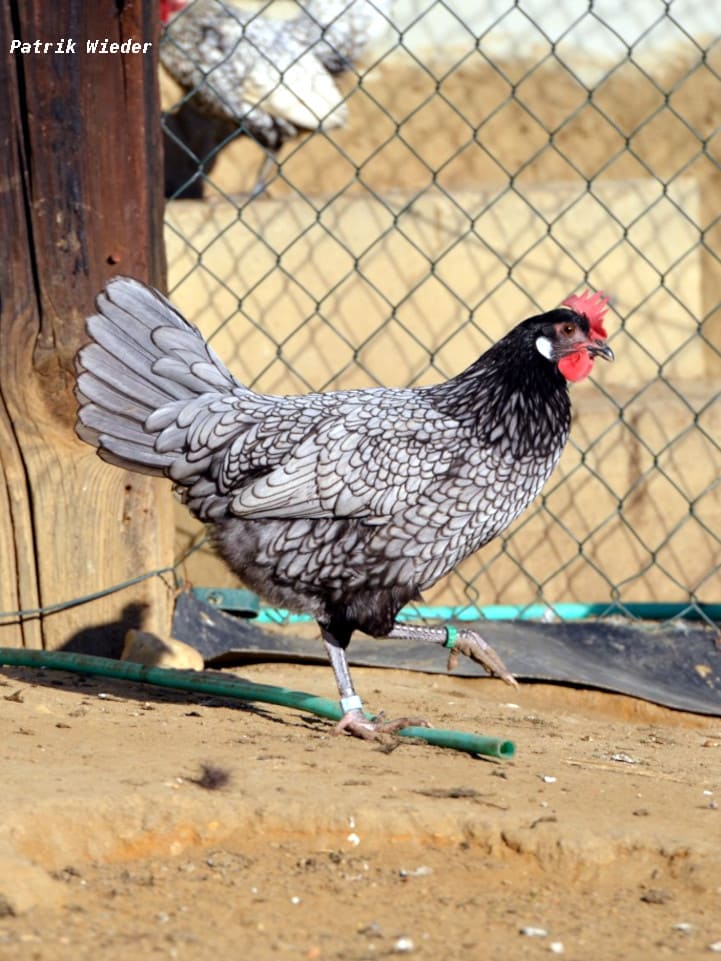
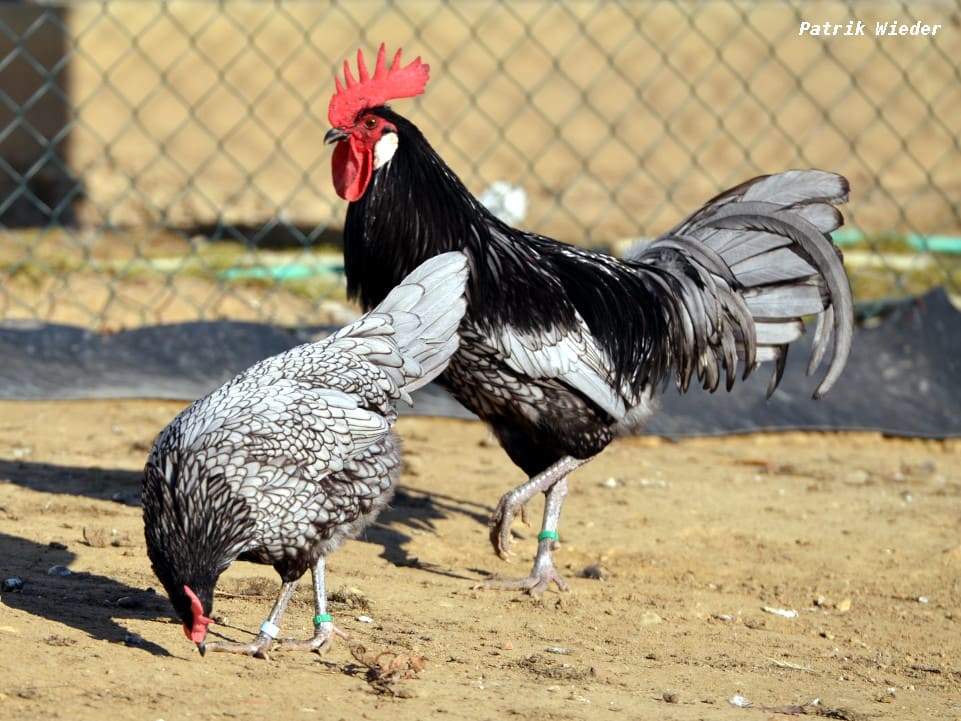
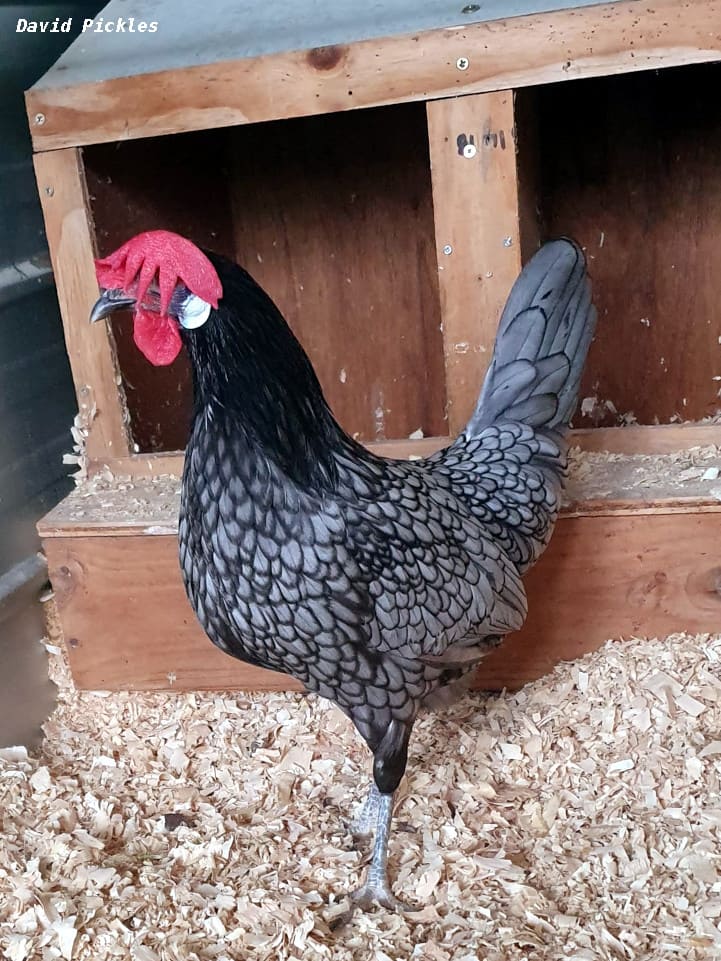
In terms of breed type, it resembles the Castilian breed in build, bearing, and movements—proud, elegant, arrogant, and refined—but is slightly lighter in weight, with a slender, long (cylindrical) yet strong and well-proportioned body; its neck is longer than average and somewhat curved, with a high, arched chest; a crest that is slightly longer than average; a bright red face; fairly large, almond-shaped ears that are pure white; long, slender legs with bare, slate-colored tarsi; a tail with long sickle-shaped feathers in males; and tight, blue plumage.
Estas aves representan el puro y noble tipo español y se distinguen de las menorquinas (variedad negra), entre otras cosas, por su estructura más fina, menos amazacotada y robusta, con cresta más pequeña y fina, ojos más claros y diferencia palpable en su tonalidad de pluma.
To reinforce the blue color, there are accounts indicating that they were later crossed with old English blue fighting cocks; we cannot assume that this crossbreeding was introduced into the Andalusian blue hen, as it is a unique type or morphology, distinct from the classic Mediterranean hen that this breed has always perfectly maintained. German works mention the Andalusian hen as early as 1857, but they did not appear at German poultry shows until 1870 (Dürigen 1931).
When black birds are crossed with white ones, if the white color is not dominant, the offspring will have gray or ash-colored plumage, which may be more or less mottled depending on the purity of the crossed colors.
These ash chickens have always been, and still are, common in rural chicken coops throughout the province of Andalusia, as well as among breeders in the rest of Spain and the area around Gibraltar, from where they were likely brought to England. These beautiful blue Andalusian chickens originate from the lovely Spanish region of Andalusia but have long been known in England and the United States.
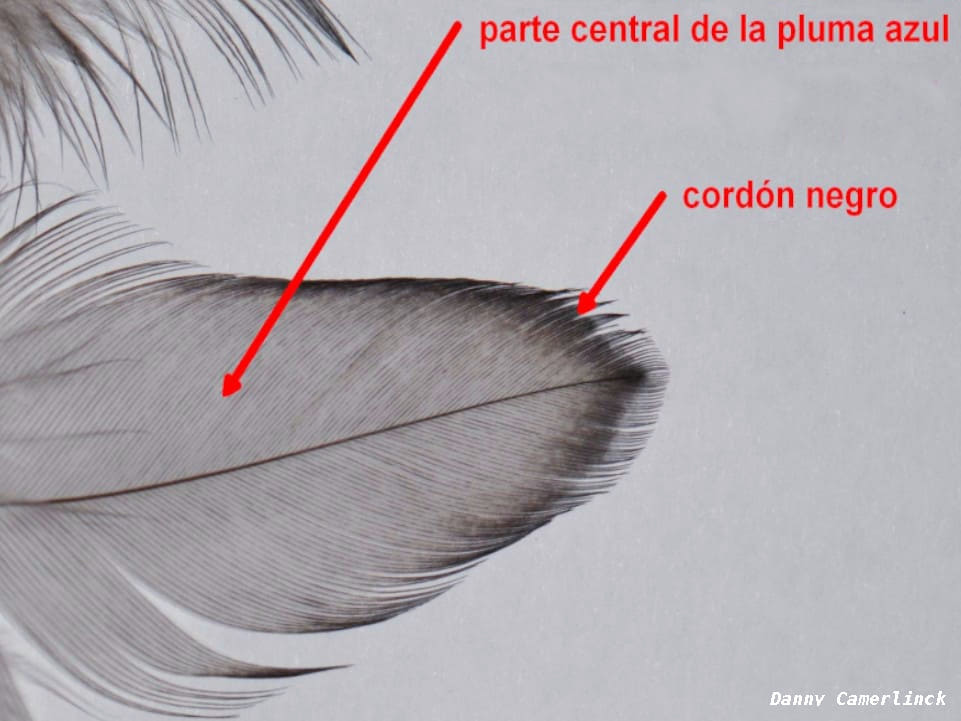
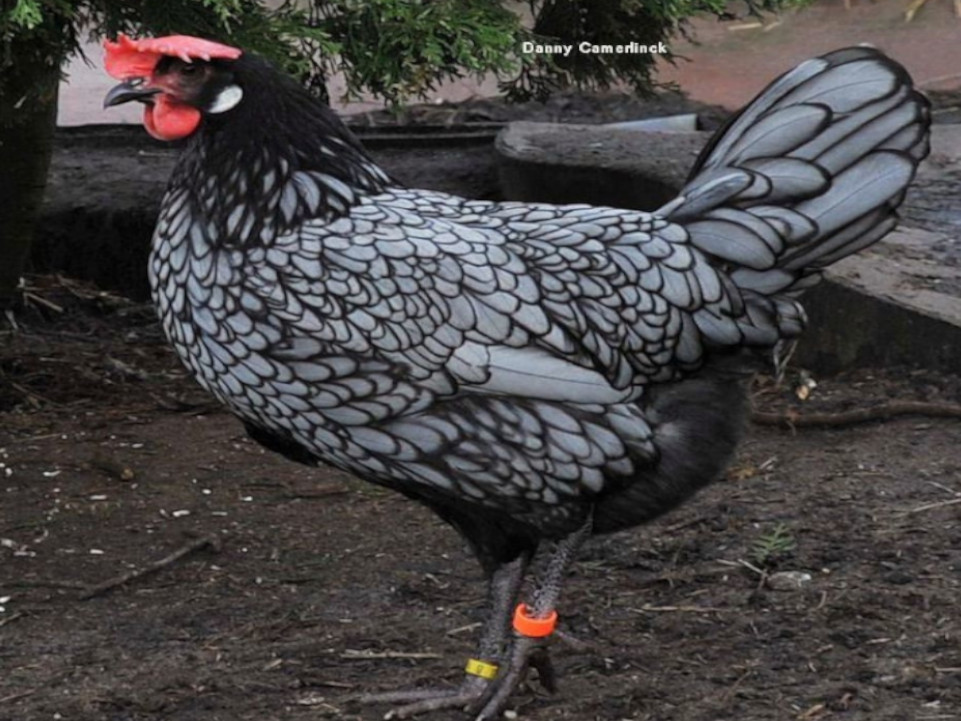
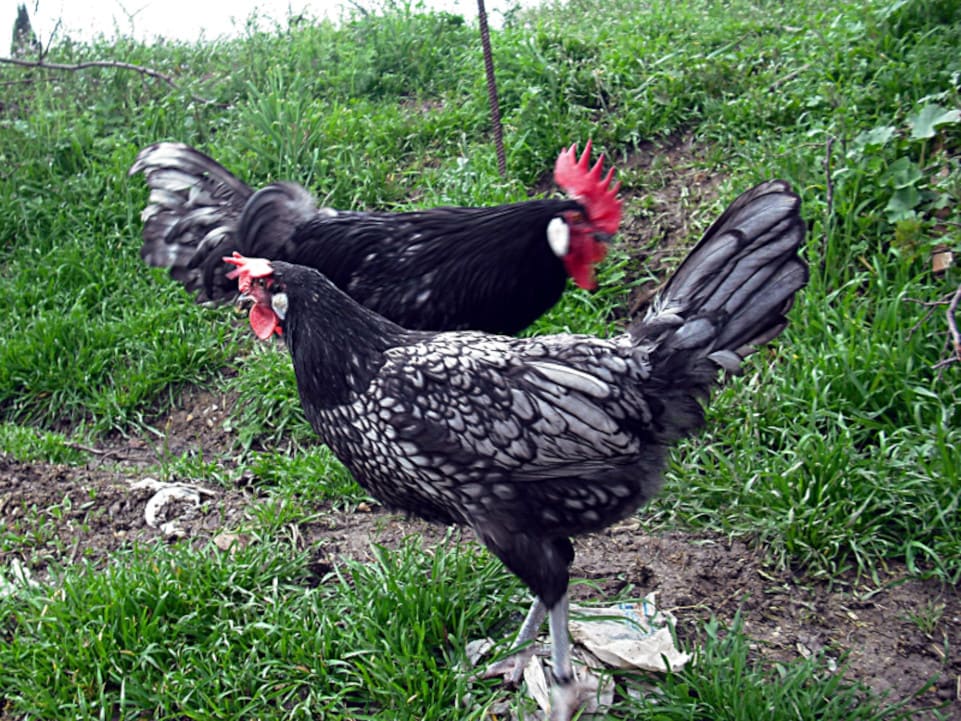
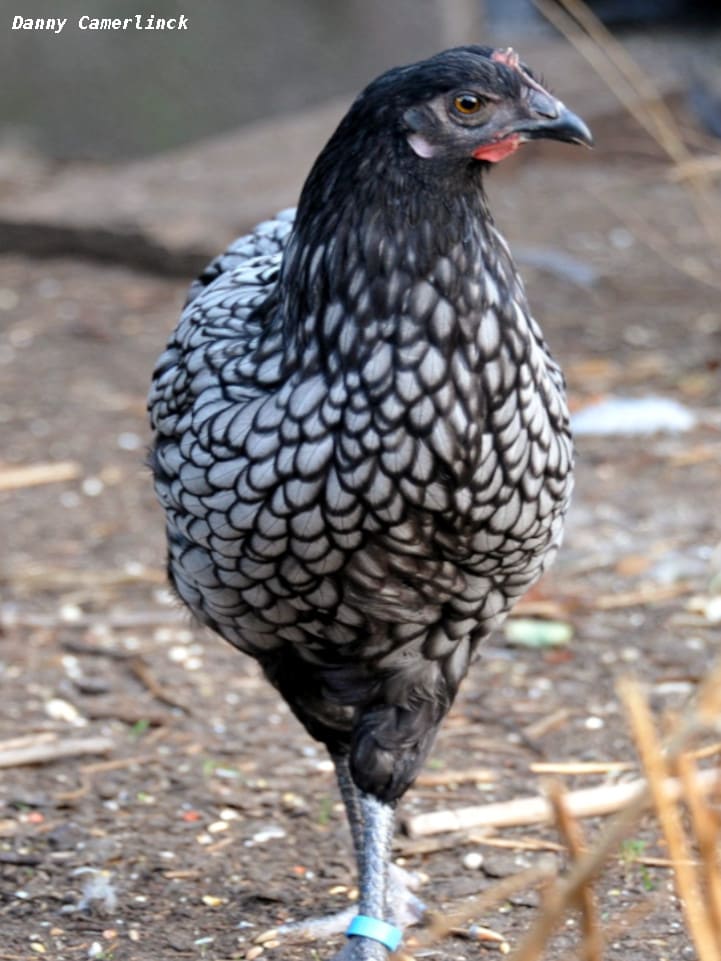
Feather with a slate-blue base and a narrow, darker blue stripe. Black feather edges (Lg gene), photo by Danny Camerlinck.
Valued as prolific layers of large eggs with white shells, under favorable conditions, they lay an average of 165 eggs per year, each weighing 70–80 grams; the chicks feather out quickly and are known for their early maturity; females typically begin laying at 5 or 6 months of age.
Although they are primarily raised as ornamental birds, given the particular challenges involved in preserving their beautiful plumage, their egg-laying is an added attraction for this breed.
It is an ancient and very hardy breed; they are magnificent for to gaze at them and be captivated by their elegance, their majestic yet delicate form, their deep blue plumage, their large white eggs, and they are a collector's item field very active.
Like the other breeds of Mediterranean origin, the prevailing Orejillas white, and it is a great egg layer, with egg whites, but little prone to broodiness. The ideal color of the pen is a beautiful blue slate with a drawstring closure of a darker blue steel gray (not black) on its edge.
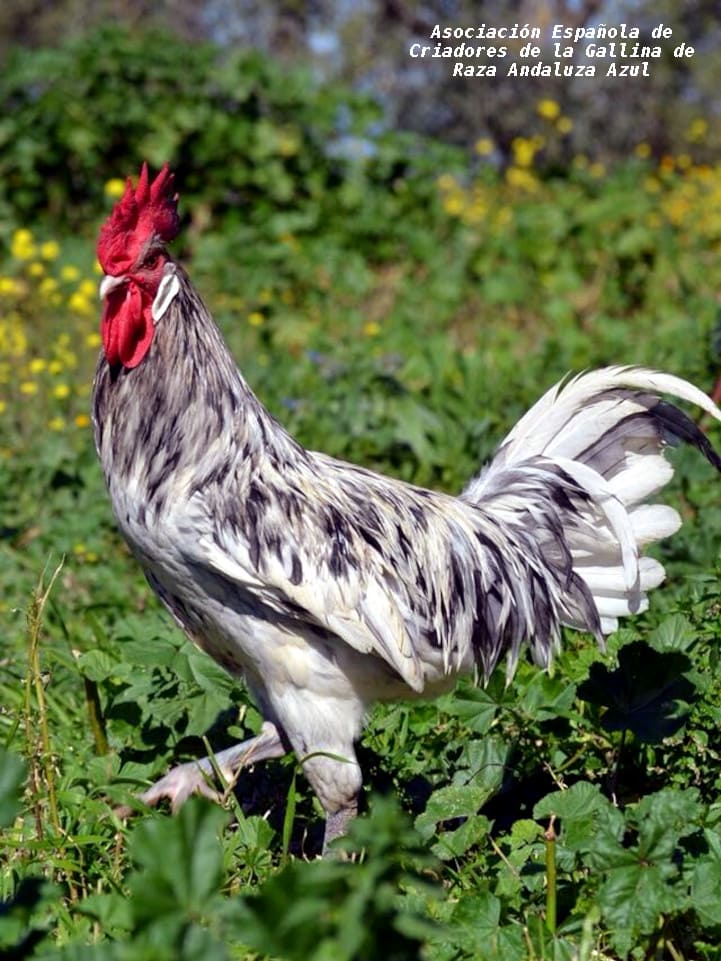
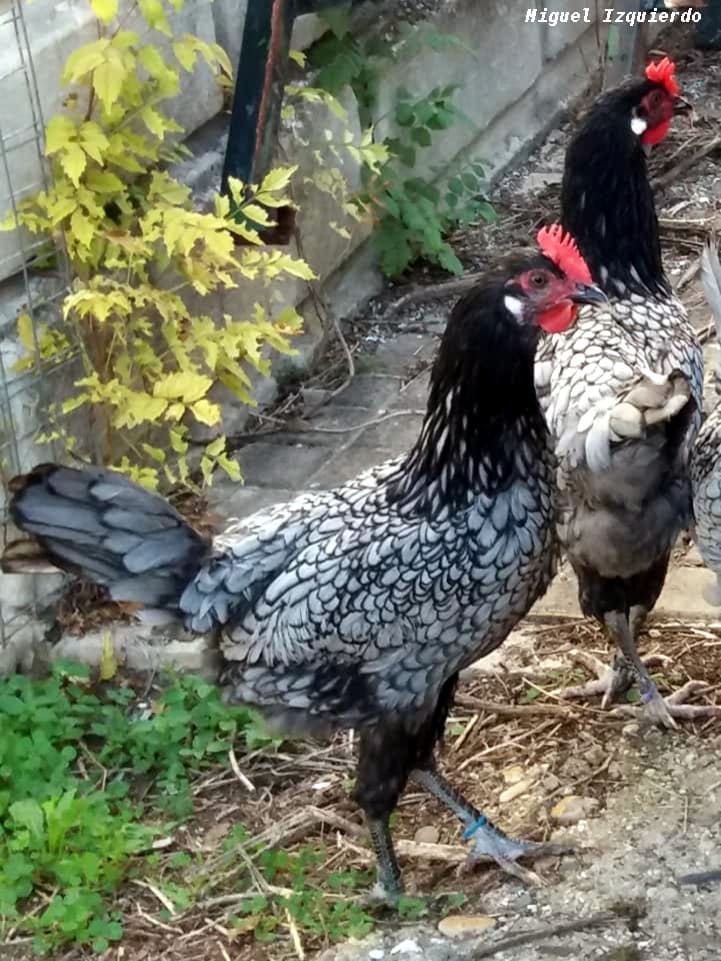
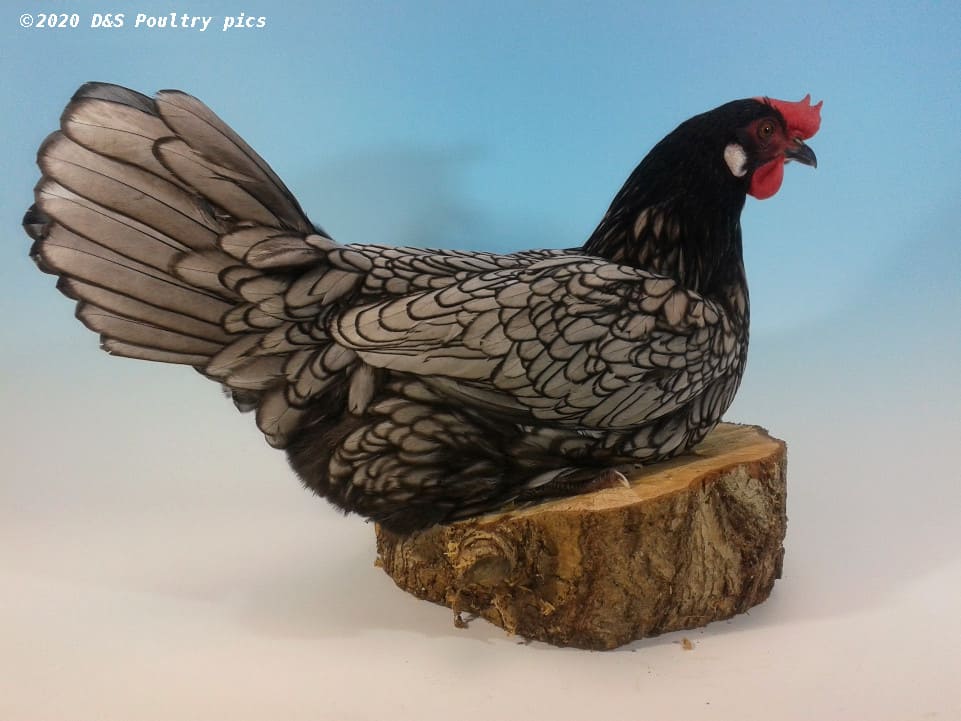
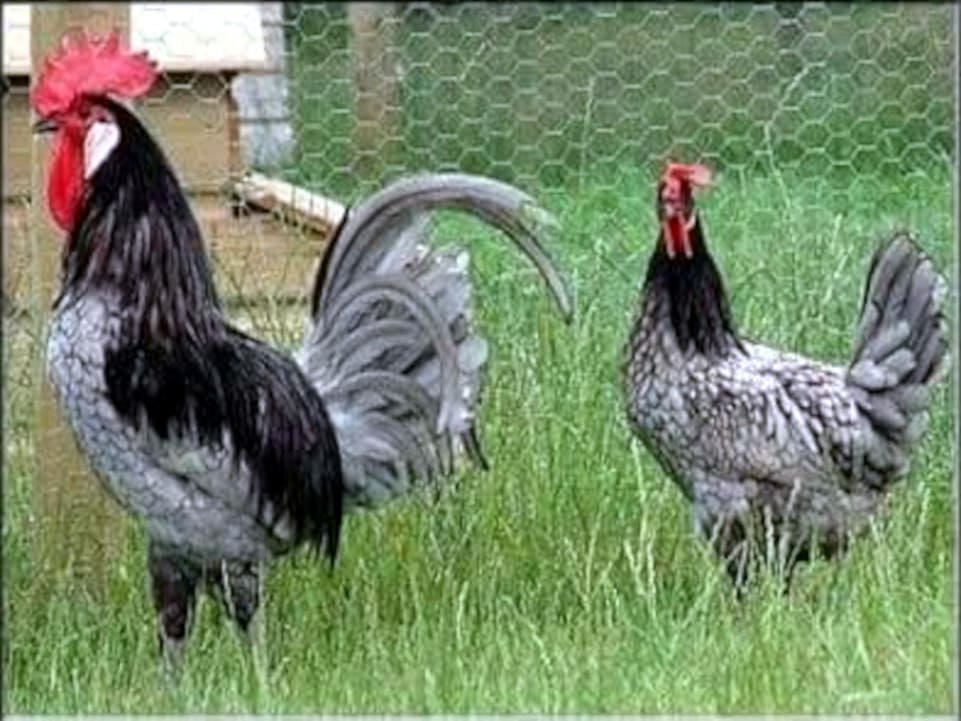
Perfectly marked tail feathers, blue Andalusian cockerel.
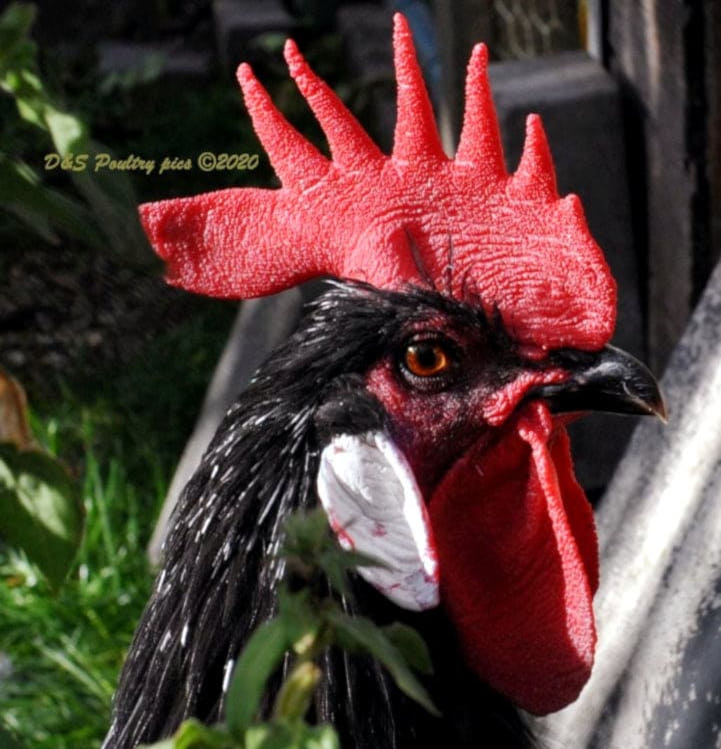
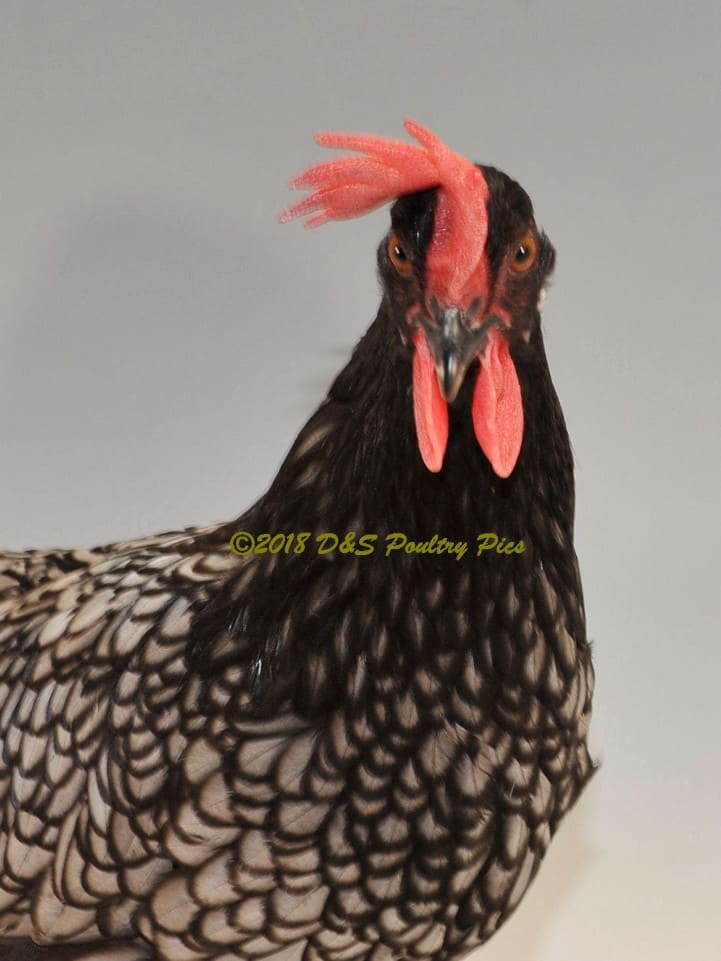
The male must have the head moderately long and broad, quite tall, with a medium-sized beak, strong and dark horn-colored; furthermore, the crest, of the simple type, is smaller and more attractive than the Menorcan variety; the tissue is fine (not coarse and dense), with narrower teeth, a broad base, and an upright (erect) shape, extending quite far beyond the lobe area but not too close to the neck; from above, it forms a beautiful arch with teeth of medium depth.
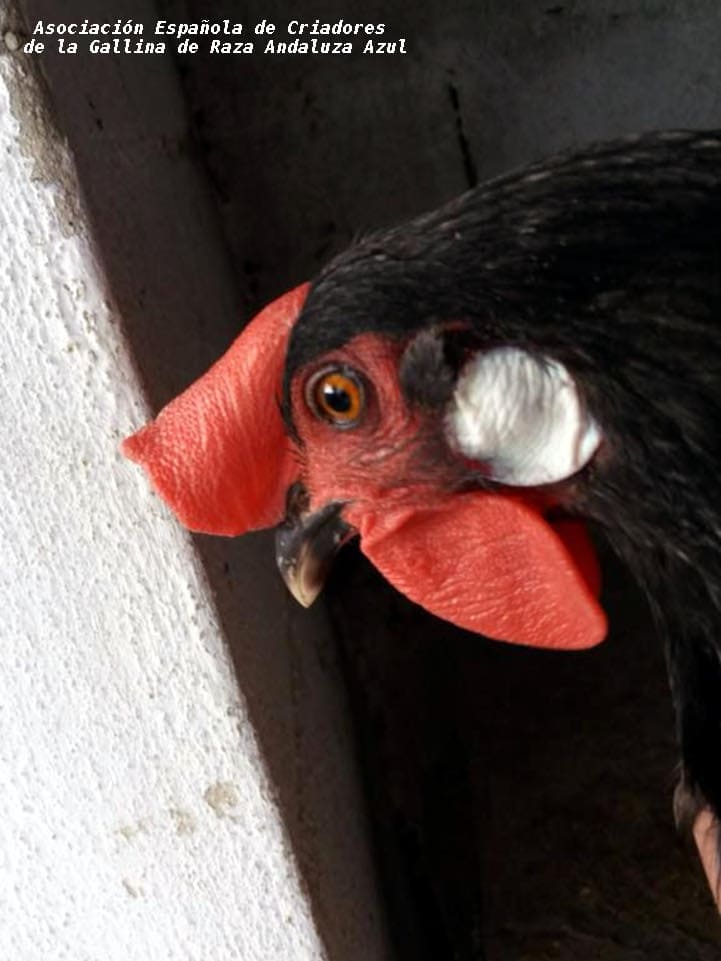
The face has thin skin, a bright red color, and small blackish feathers (whiskers or fringes), with no pallor, mold, or white spots. Large, lively eyes, dark red in color, tending toward brown; medium-sized ears, oval and almond-shaped, set close together, clean, and not translucent as if made of porcelain; long, slender beaks, well-rounded at the bottom.
Neck longer than average, slender, tall, and slightly arched backward, with a dewlap reaching to the shoulders; body elongated, cylindrical, yet sturdy; chest full, high, and well-arched; back long, of medium width, flat, well-rounded at the sides, slightly sloping at the withers, and with a pronounced withers.
Long, close-fitting wings; a broad, large, and fairly high tail, though not upright, adorned with long, broad, and well-curved tail feathers (longer and more curved than in other Spanish breeds); long, slender legs with muscular thighs and close-fitting plumage; bare tarsi, slate-colored (blackish in young birds and lighter gray in adults), with four slender, elongated toes.
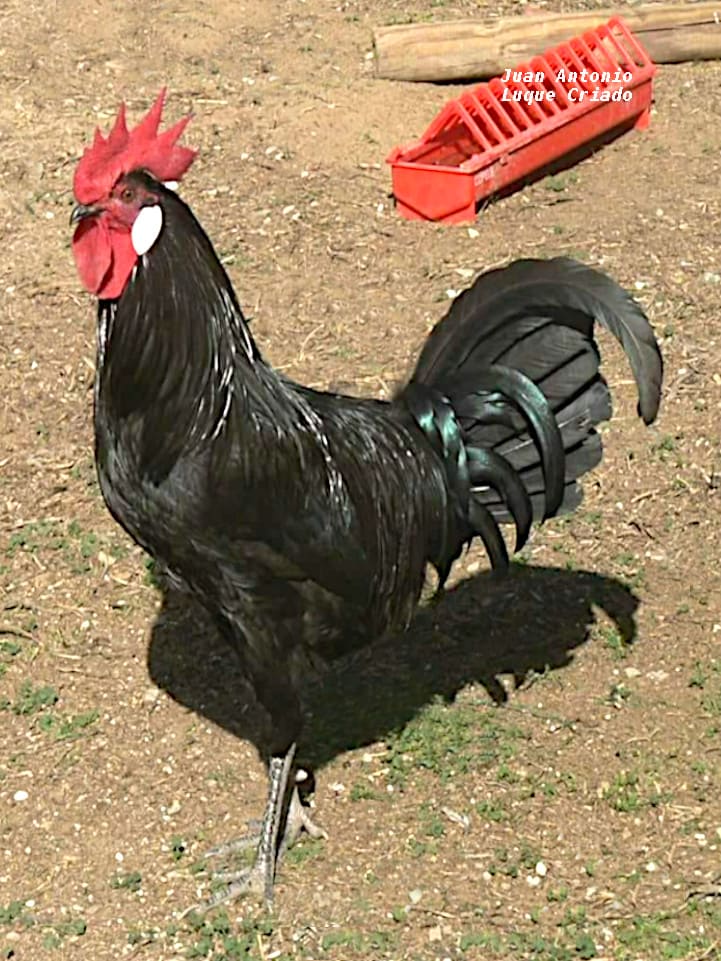
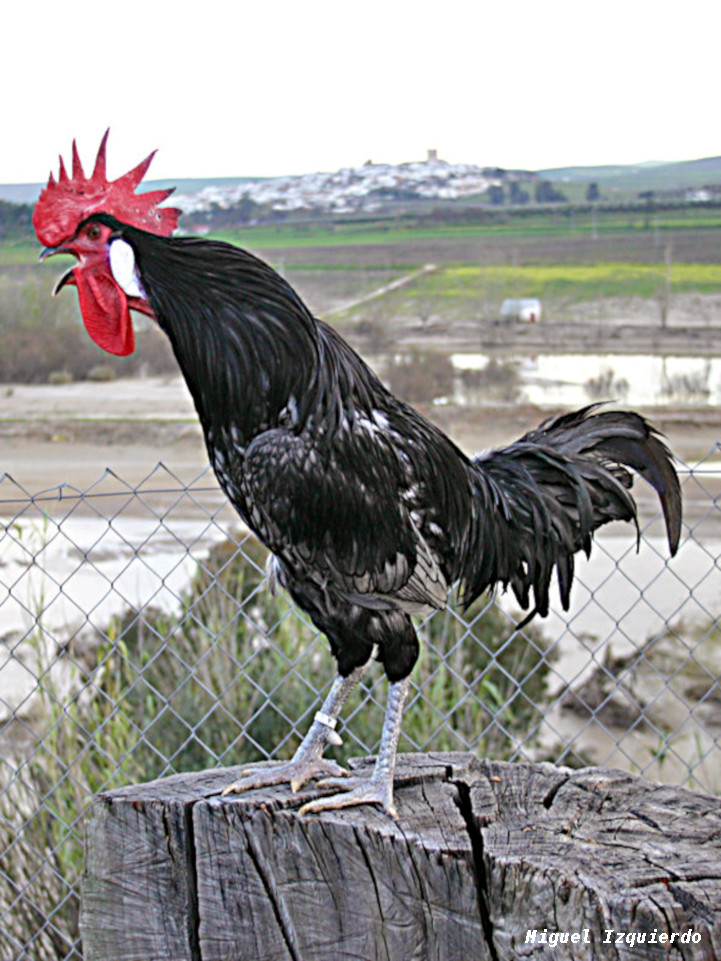
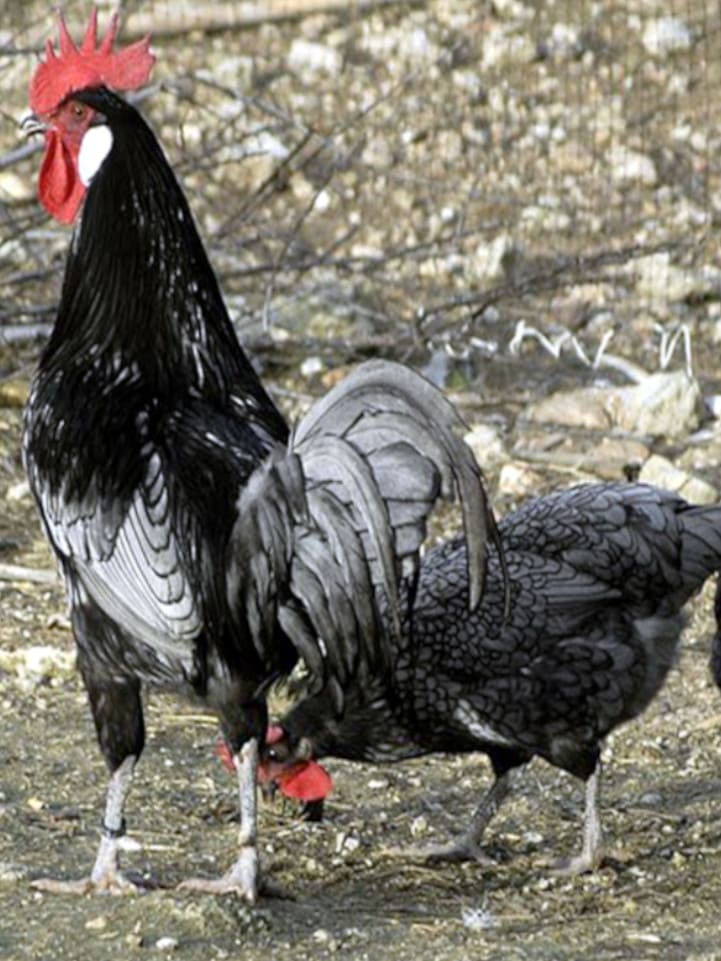
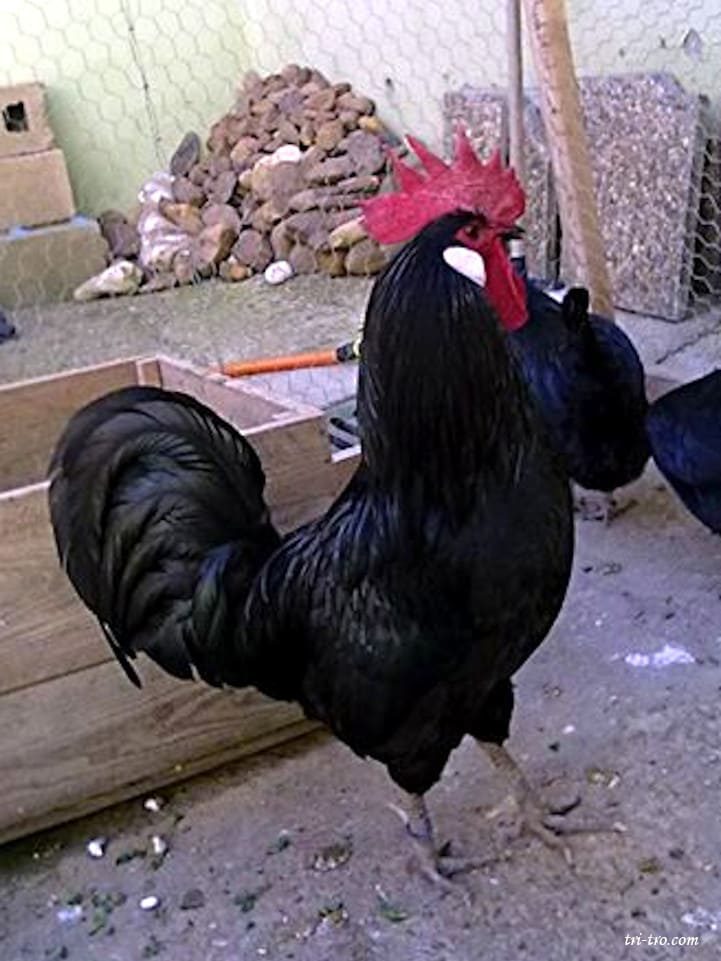
The male has a bright blue-black coat, sometimes shaded with a gray hue.
La raza pura tipo, que es bastante diferente de la menorquina, que tiene un arco menos convexo en la parte delantera, alcanzando más por detrás de la cabeza, y con más picos o puntas en la cresta.
Pattern of the race:
Head: Moderately long and deep.
Face: Full and smooth, with a fine texture.
Peak: Long, moderate length, delicately curved, grayish horny to black.
Eyes: Large and full. Dark brown irises.
Crest: A simple, medium-sized, smooth, right, well-established, firm, and partner on the head, evenly and deeply serrated, having five teeth well-defined. The one in the middle, slightly longer and proportionately more width than the other four; the crest spur is large and follows the curve of the neck slightly.
Chins: Long, thin, straight, and red.
Earlobes: In the form of almond oval, smooth, of moderate size, white.
Neck: Rather long, well-arched, with a full mane that flows down the back.
Wings: Large, well-folded, primary and secondary, wide and overlapping in natural order when the wing is closed.
Back: More width and long along its entire length, standing up along the back and sloping slightly toward the tail; a long, abundant mane.
Chest: Broad, deep, well-rounded, worn, upright, and forward.
Tippet: Abundant.
Queue: Large, full, and wide open, with broad, overlapping lobes set at a 45° angle to the horizontal. The lobes are long, uniform, well-curved, and abundantly covered.
Caireles: Abundant and long.
Thighs: Of moderate size, rather long, showing the knee well below the line of the body.
Feet: Long, placed well apart, color blue dark slate (allele "id" along with the "W").
Fingers: Rights, in the number of four.
Port: Airy and elegant.
Color of the rooster:
Head: Very dark blue, shiny.
Gola: A uniform, medium shade of slate blue, each feather defined, laceada of very dark blue, shiny.
Front of the neck: Azul pizarra lacada.
Wings: Azul pizarra, con cada pluma rebordeada de azul más oscuro y lustroso.
Back and seat: Azul pizarra lacada.
Queue: Slate blue, each feather edging of dark blue is lustrous.
Chest: Azul pizarra lacada.
Body: Azul pizarra lacada.
Thighs: Slate blue.
Subcolor: Slate blue.
Down: Slate blue.

The same characteristics as the rooster, taking into account sex differences.
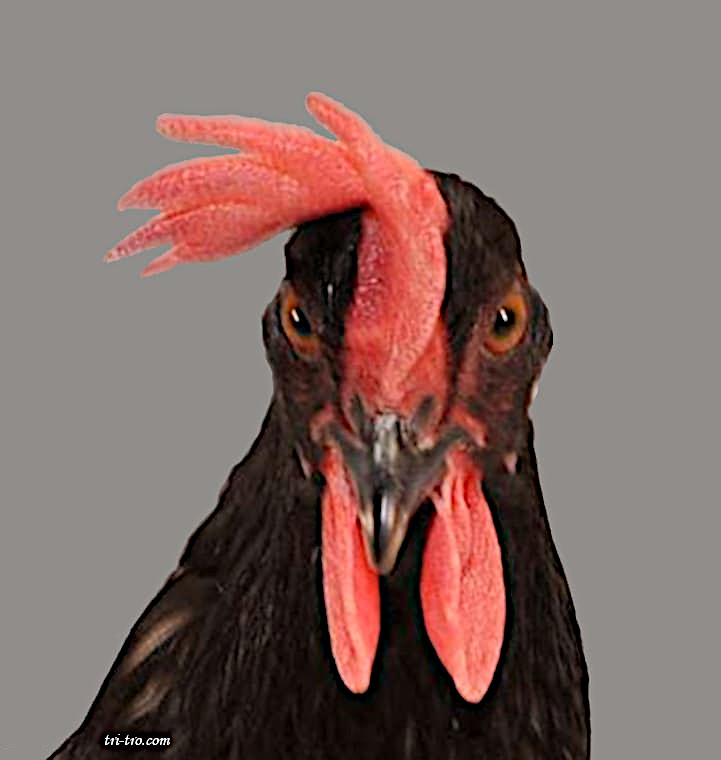
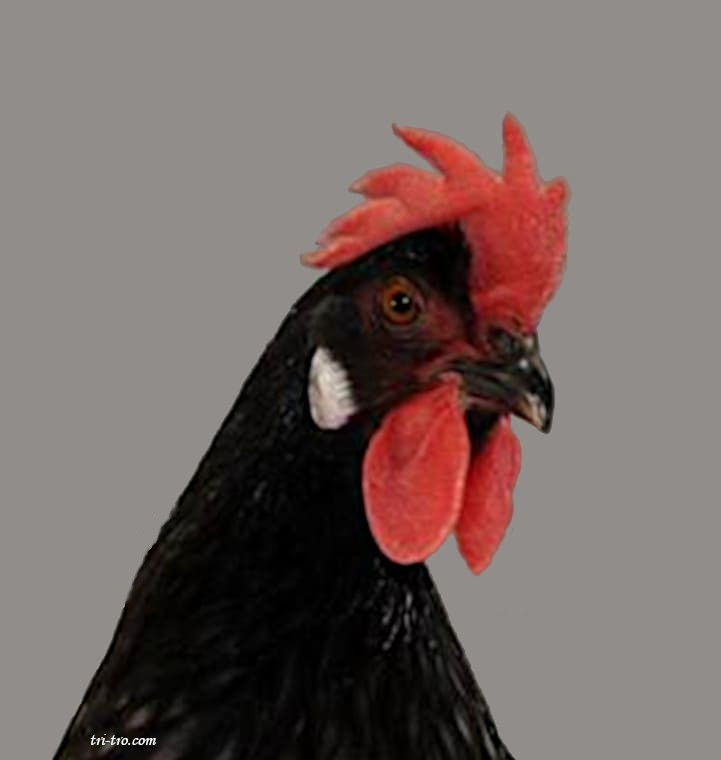
Compared to the male, the female has a slightly wider chest, a fuller and lower abdomen, a tail that is tightly curled and tilted slightly backward, smaller ears, shorter and even more rounded chins, and a crest that falls to one side of the face without covering the eye.
El color de la piel es blanco (gen “W”), las patas y los dedos son de un azul plomizo; las gallinas no son propensas a the broodiness.
Head, face, beak, and eyes: As in the cock.
Crest: Simple or plain alleles “p” and “r”, medium-sized, deeply serrated, with five distinct teeth; the front part of the crest and the first tooth are upright, and the remaining teeth slope gradually to one side; fine-textured, free of folds and wrinkles.
Chin and orejillas: As in the cock.
Neck: Rather long, gracefully arched.
Wings and back: As in the cock.
Chest: As in the cock.
Queue: Long, closed, carried at an angle of 35° above the horizontal, rectrices wide and overlapping.
Muslos, tarsos y dedos: como en el gallo.
Port: As in the cock.
Diameter of rings (mm): Rooster 18 – Hen 16
Comb, face, and wattles: Red hot.
Earlobes: Color white.
Ojos: castaño rojizo.
Peak: Corneum.
Legs and toes: Slate blue.
Eggs: Shell white. Weight: 60 g en pollitas. 70-80 g en adultas.
Plumage of the hen:
As with the rooster in all its parts, except for the wattle and earlobes, which are absent.
Rooster: 2,700 a 3,175 kg.
Chicken: 2,200 a 2,495 kg
Chicken: 2.720 kg
Polla 2.040 kg
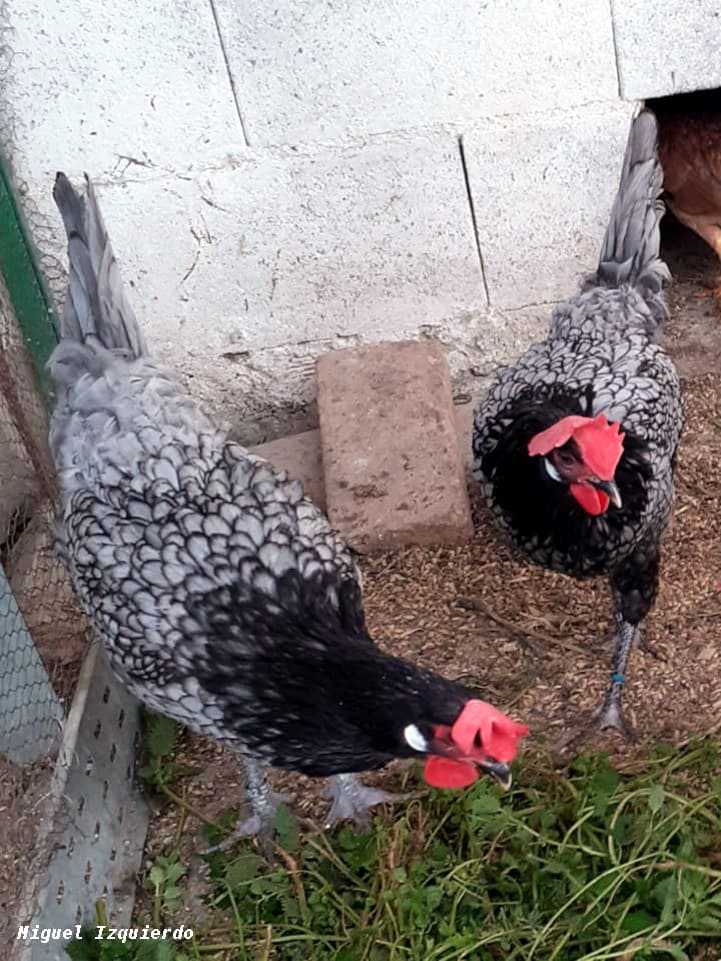
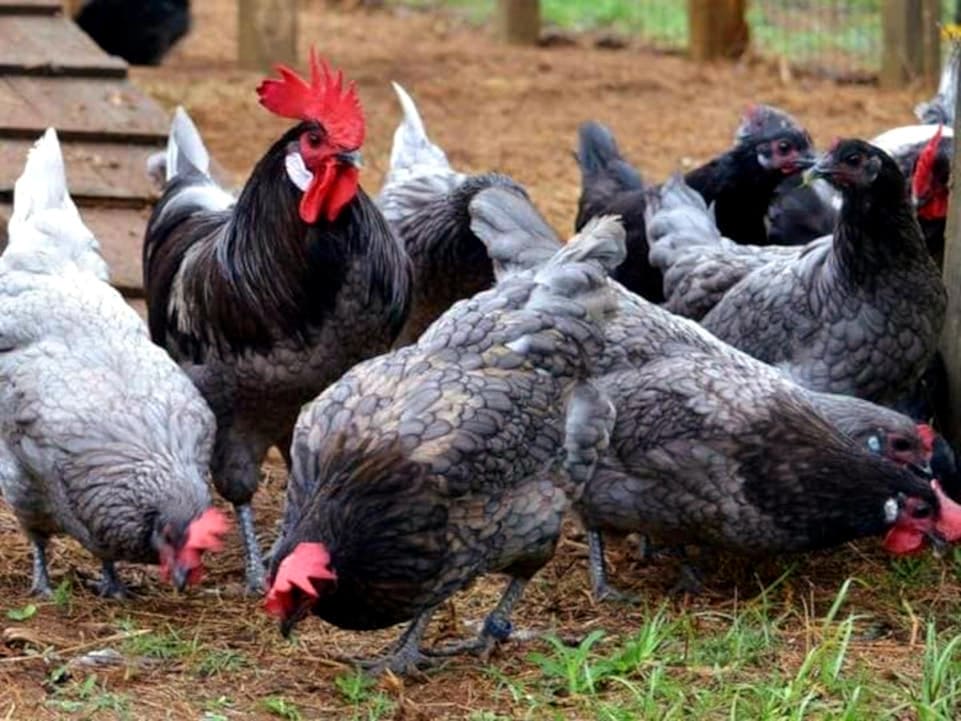
Group Hens Andalusian blue young.
Be made according to the visual appreciation by the method of points, which will serve to judge the value of a given volume. The maximum score will be 100 points. The aspects of the object of the qualification will be listed below:
Animals with a weight off intervals, which gives you the pattern, will be disqualified.
The final score of each specimen shall be the sum of the partial results.
In accordance with this final grade, the animals shall be classified morphologically as follows:
Más información en apartado.
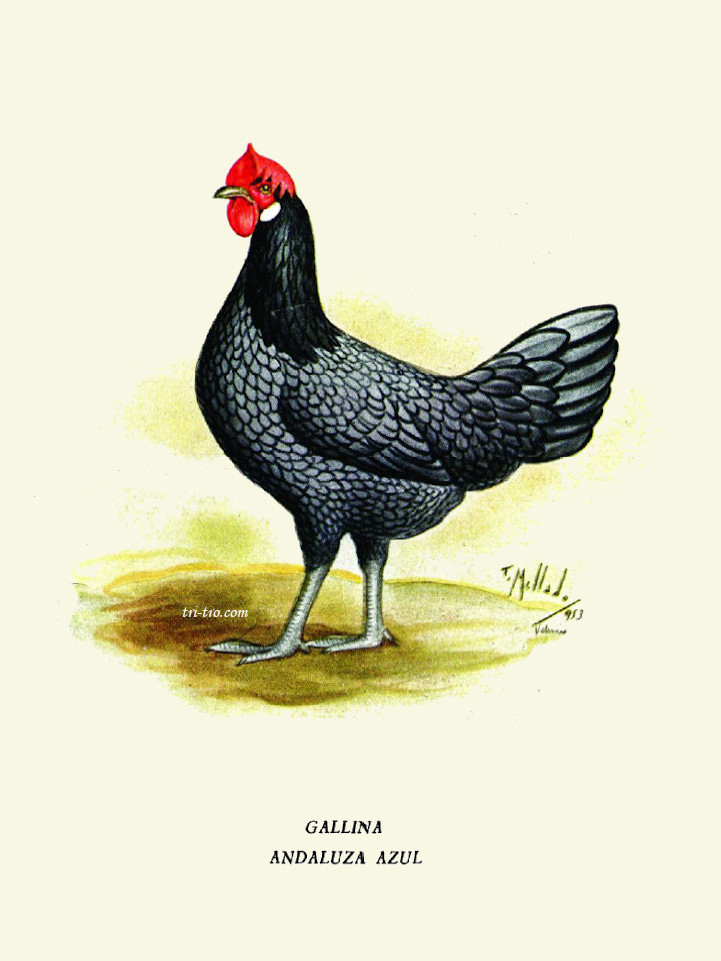
Blue Andalusian Hen Print 1952
(a) Red in the orejillas that occupies one-third or more of its surface.
b) White in the face.
c) Red or white positive on the color of the plumage.
d) Legs of another color that is not blue slate.
(e) Spots of any color in the plumage, tolerating the yellowish tone produced by the sun in the ruff and caireles of the adult roosters.
f) Any color on the beak, other than white or pinkish-white, tending toward grayish-black.
g) The absence of a border.
h) Back leaning too much.
(i) Tail very high.
Crossbreeding to produce Andalusian Blue.
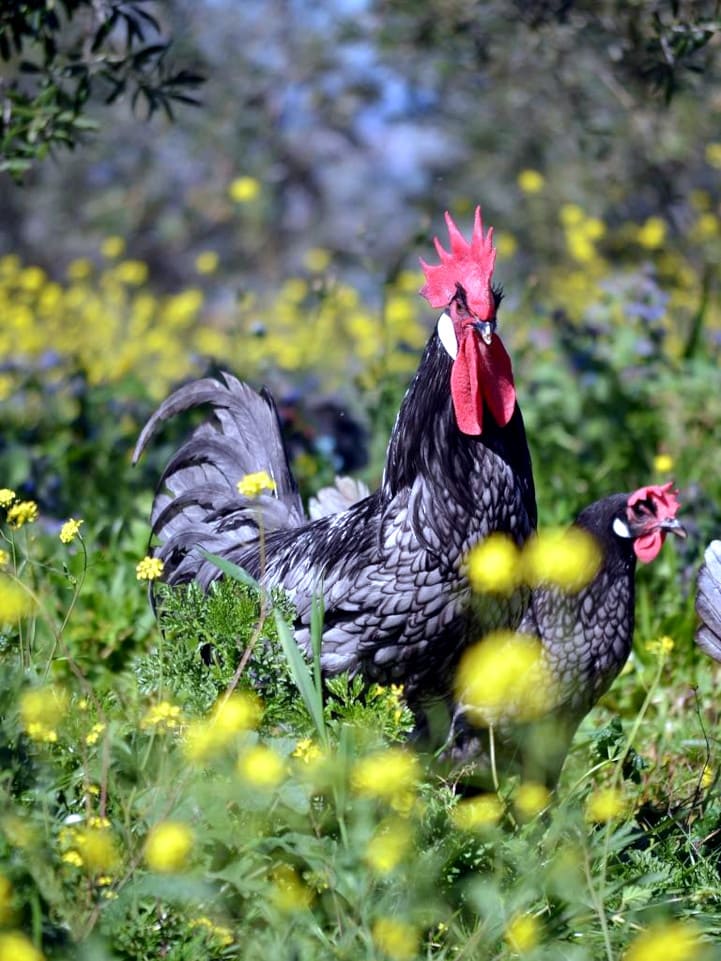
The plumage is rich, but smooth and snug. Ideal for all bird keepers is a pure blue dove, as the background of all the feathers, and in each feather, an edge very narrow and defined steel blue. But this perfection is not easy to achieve.
Thus, the background ranges from silver-gray to a dark slate blue; however, the proper and desirable shade is a light blue (bluish gray) without any mixture, or a pure dove blue, which is the middle ground between these two shades and is essentially a gray with a bluish tint.
Each feather, with the exception of the tail feathers, must have a very narrow border around its entire length (not just at the tips)—a border that is uniform in width, clearly defined, and a dark, glossy steel gray (not black)—and even the wing coverts and the undertail coverts must not be entirely black but rather have a blue undertone.
El fondo azul claro (paloma) del plumaje es el más difícil de obtener, por lo cual no se suele ser muy severo cuando es algo más claro u oscuro (azul pizarra); pero no debe tirar ni azul de pizarra oscuro o negruzco ni a la ceniza y blanco de plata, e igualmente debe estar libre.
First: For all yellow and brown rust-colored patches on the chest and underbelly, as well as on the shoulders and back—which frequently appear on pale-colored males—see "disqualifications" to distinguish those caused by the sun.
Second: Splash black and dark specks, producing the dissolution of the drawing of the edge, as well as feathers and whitish marks.
The feather pattern (see photo above) is even more important to many poultry breeders, who, at this stage and for birds that must be slender, allow for no compromise (strict selection); this does not mean, however, that one should focus solely on a well-defined edge while neglecting the true background color, which is light gray.
The weeping and the mozzetta, which are the most difficult to obtain in pure color, should not in any case be truly black and lustrous, but always appear in a shade of blue, if this is very dark as if it is a steel gray, very different from the feathers of the back.
The rectrices and gorges of the male should be blue, slate, uniform and more pure as possible.
In the female, in consequence of the same formation of pens, the drawing of the edge is more uniform, without the head, tail and rectrices; the tail is blue only.
A unique genetic trait of this breed, the Andalusian Blue hen, is the consistent production of offspring that includes not only blue chicks but also black ones.
Con el cruce, blanco sucio o splash y el negro, que se han utilizado en los cruzamientos originales hace ya muchas generaciones, sirve para realizar estas gallinas azules.
By way of explanation. The bluish-gray color of this breed is due to the presence of a single dose of the “Bl” allele when combined with the “E” allele (of the e gene, or of the e allelic series) which produces totally black birds.
Its effect consists of a partial dilution of melanin, which is responsible for the black color. Therefore, when it acts in a double dose, it suppresses it almost entirely, resulting in birds that are white with black and blue markings. Consequently, in “EE” birds, the following three cases occur:
In this race is not present in the allele “Co” (columbian), at least in the Spanish variety; and that has hidden, as all of our breeds blackthe allele “s” (gold).
All females carry the blue genes, and when bred with black-and-white or other blue individuals, the resulting offspring, in turn, produce many blue offspring.
When it comes to breeding stock, the ideal approach is to use both the best roosters and those with the deepest blue color, paired with well-built hens, and this will yield good results.
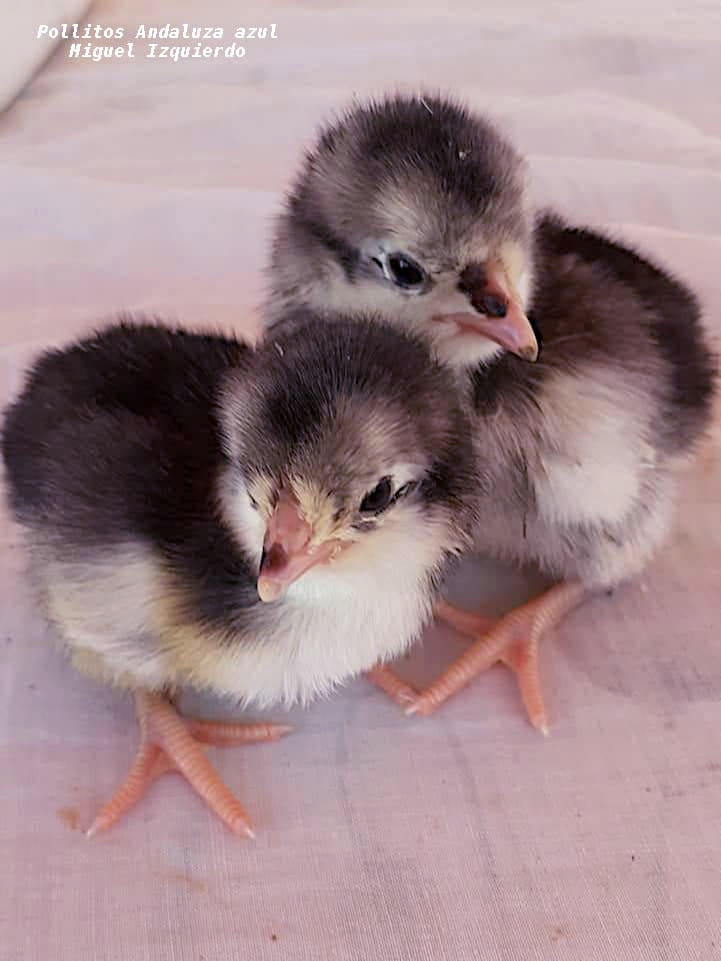
About 50 % All the chicks will be blue.
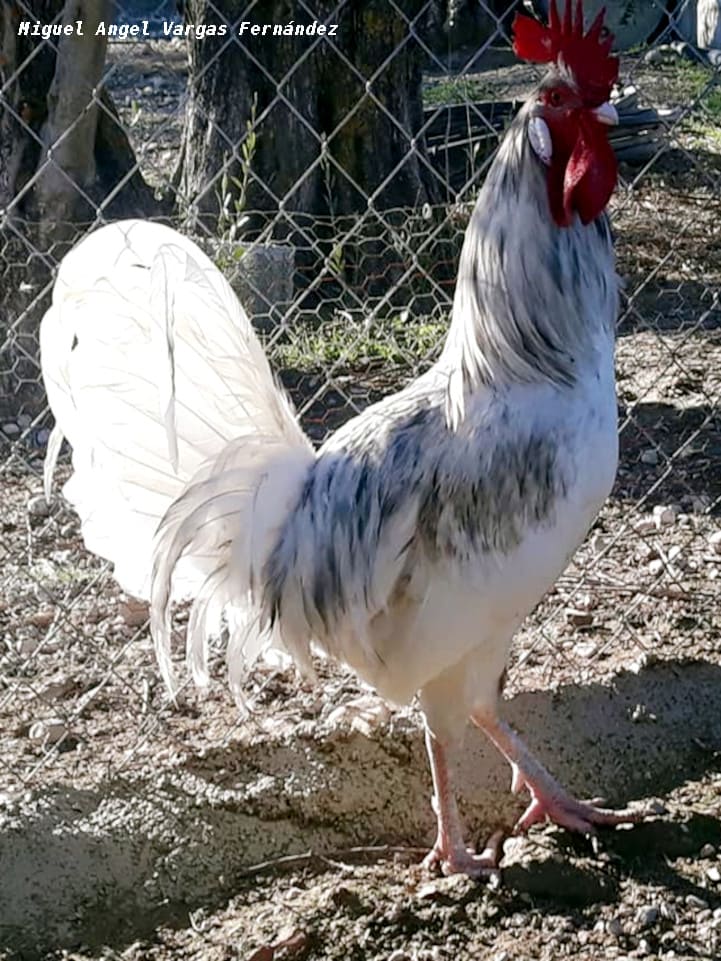
The other 50 % It will be available in black, white, and combinations of black and off-white.
Spanish breeds related to the Andalusian Blue include the Black Castilian, the Catalan del Prat, and other Mediterranean laying hens.
Resolution breeding program race avian
Andalusian blue:
Breeding program race avian
Andalusian blue:
You may be interested in these other sections