Parasitic diseases:
Malaria is a parasitic disease that affects only and exclusively to the digestive system. The disease is produced by various species of protozoan parasites, belonging to the genus Eimeria.
The coccidiosis is diseases whose spread is related to the density of population in the chicken coop and the humidity and temperature of the substrate, indispensable conditions for the start of the evolutionary cycle.
The system of multiplication of the coccidios, with alternation between phases sexuadas and sexless, allows a single ooquiste, which is the unit infecting mature, producing tens of thousands of intermediate forms with remarkable activity enteropathica.
The pathology of coccidiosis must be understood from two ways:
Sudden and progressive onset of the disease, leading to mortality and highly characteristic symptoms in each species of coccidia and type of bird.
When the infection does not get to have entity as to cause symptoms, either because the number of coccidios is low, or because there are factors that are immune to interfere with the progress of the infestation.
The pathogenicity of the different Eimeria species varies according to the strain and the number of oocysts sporulated ingested in a given time, their capacity for multiplication, the genetic susceptibility of the birds receiving, of the possible existence of immunity, density and general conditions of hygiene of the exploitation.
The impact of coccidiosis is primarily focused on contributing to worse feed conversion, slow growth, increase mortality and decrease significantly the normal performance of the farms.
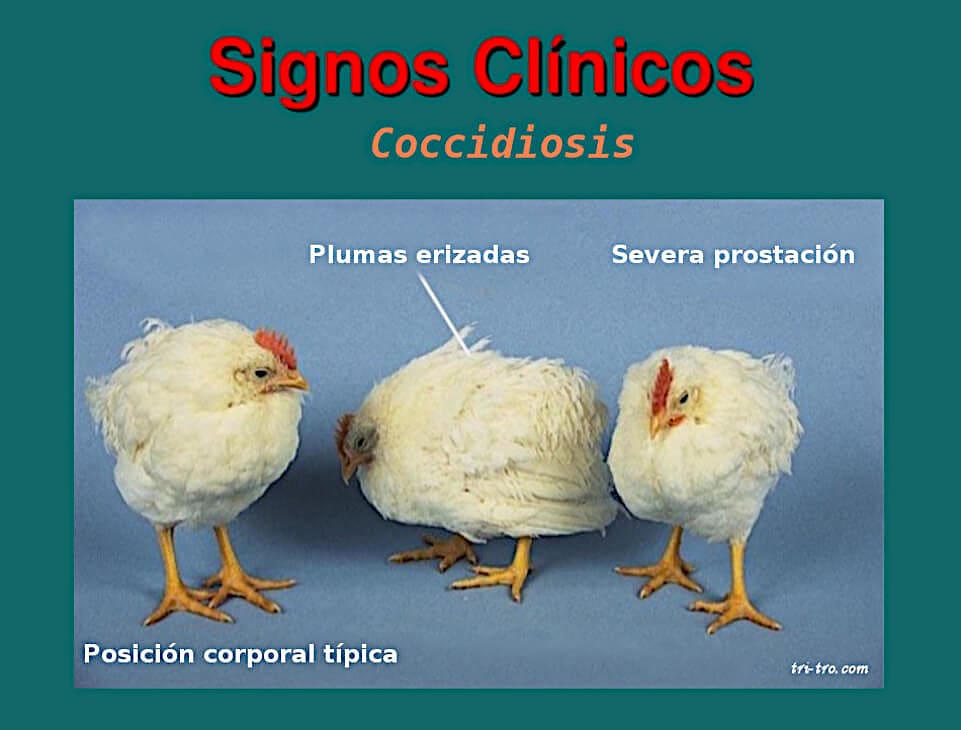
When the infection is severe, the birds appear lethargic, their plumage is dull and lackluster, and they may experience excessive drooling, low appetite, and—in the case of certain coccidial infections—diarrhea, depigmentation, etc.
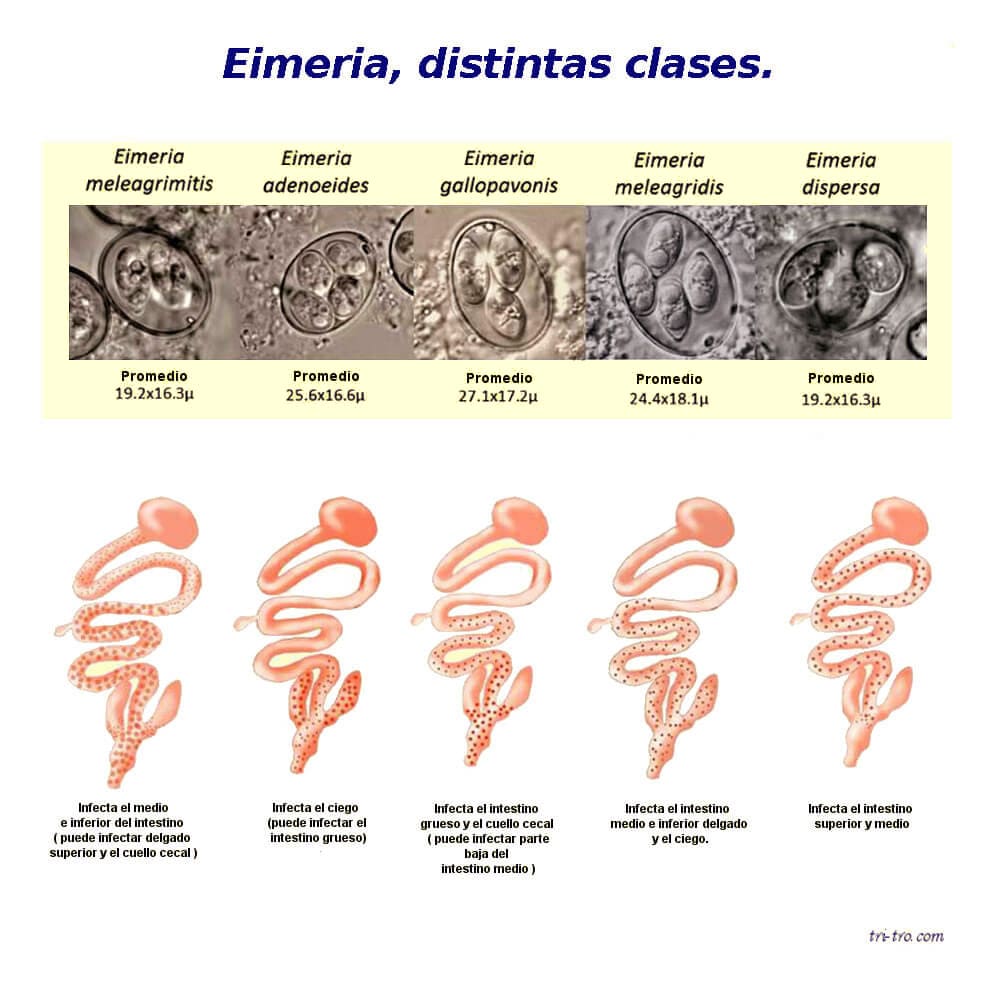
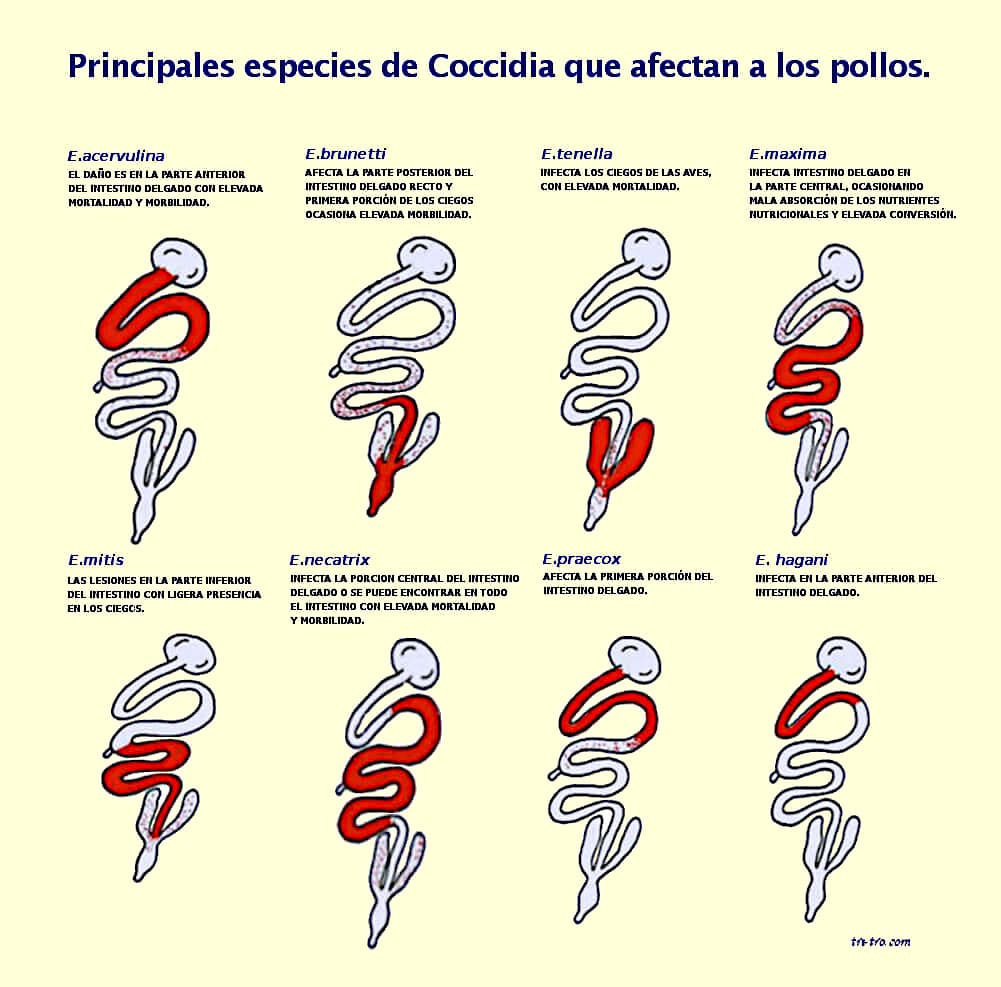
The eimeria or coccidia that can affect animals are:
Causing serious problems:
E. acervulina. E. Mivati E. máxima. E. necatrix. E. Brunetti, E. Tenella.
Of little significance:
E. praecox. E. mitix. E. hagani.
Each species presents as a feature that has a specific demarcation of settlement in the digestive tract.
If the bird is responsive, you can delete it after a few days hundreds of thousands of oocysts, destroying many other cells of the organism.
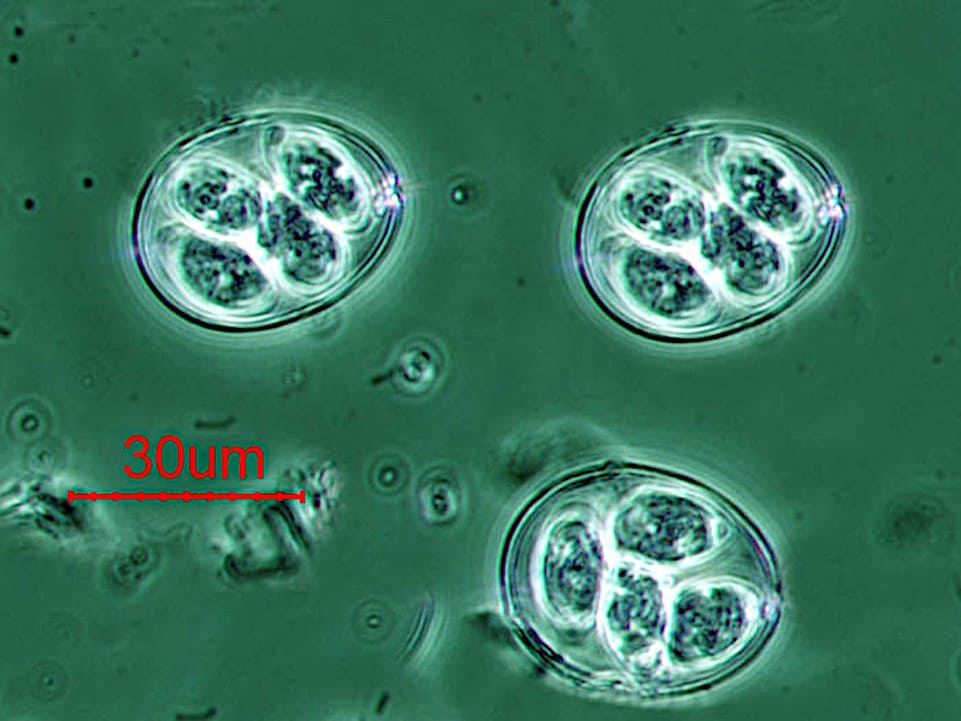
The period of sporulation is the time that elapses between a ooquiste is expelled through the feces until it becomes infective.
In terms of illness, it would not be proper to single out the coccidiosis, as there are several ways quite different, depending on the species affecting the birds.
The coccidios have a similar development, but pathogenically are very different.
Coccidia always enter birds through the oral route, when one or more infectious sporulated oocysts are ingested.
The oocysts are the primary forms excreted by the feces of the animals parasitized. As in latent form, can live for many months, because:
The coccidios are protozoa microscopic present a system of development and reproduction in the breast of other living cells, acting as an intracellular parasite.
It has two phases:
The one from propagation or stage of schizogony.
The one from reproduction or phase of gametogonia, which determines its great development and dissemination.
When oocysts are expelled in the feces, they have a large, central nucleus; this form is not infectious, as the oocyst must first sporulate in the external environment (exogenous phase).
In this stage, the nucleus divides twice, forming four sporocytes, each of which contains two sporocytes; in other words, a single oocyst produces eight infective sporocytes, which remain active within the coccidian membrane.
This sporulation process takes between 12 and 30 hours, depending on the species, and requires suitable environmental conditions—including temperature, oxygen, and humidity—otherwise the oocyst will not develop.
The infection of birds occurs in the moment that the oocysts sporulated are ingested.
Then begins the phase of endogenous, which takes place in the digestive tract, where they are released esporócitos and the sporozoites by the action of the digestive juices.
Although the released sporozoites primarily affect digestive cells (enterocytes), they also enter the bloodstream.
The sporozoites penetrate the enterocytes, where they develop, increase in size, and transform into merozoites I. Within these merozoites, the so-called first-generation schizonts I form—falciform, highly abundant, and motile structures—which then go on to infect other cells.
The schizonts passed on to other cells (enterocytes) develop a globose form called merozoite II, which in turn form another generation of schizonts II, which are released to the lumen of the gut after the corresponding cytopathic effect.
The cycle can be repeated once more, but in the end it exhausts the capacity of multiplying asexually, called esquizogónica, in which case the schizonts evolve with sexual dimorphism, forming macrogametocitos or microgametocitos, and this new phase is called gametogonia.
The release of motile microgametocytes is the step preceding the fertilization of macrogametocytes. Once fertilization has occurred, a zygote forms and the macrogametocyte’s membrane thickens; once released into the intestinal lumen, it will develop into an oocyst, which will be expelled in the feces, thus completing the coccidian life cycle.
The course of the disease and its severity depend largely on the age of the animals when they contract it.
In order to make the study of coccidiosis, there's that cater to the diverse parasitic forms, since each species of Eimeria presents some distinct features:

Coccidiosis duodenal: This coccidiosis is due to E. acervulina; it does not usually cause any noticeable symptoms. In cases of very severe infestations, weight loss, cachexia, and skin depigmentation may occur due to poor absorption of xanthophylls.
Coccidiosis of large intestine and rectum: The cause is often the E. brunetti and its gravity is lower than the varieties pathogenic traditional, although cases have been described of emission of stools mucilage with slight bleeding. The cases of mortality due to this variety of Eimeria are rare and generally do not exceed ten percent.
Coccidiosis cecal: The presence of this form of coccidiosis is spectacular for their symptoms and severity. In general, the chickens appear with an attitude of a certain dullness, manifesting an intense abdominal pain.
The chickens issued from time to time diarrhea clearly bleeding with clots of blood, and very high mortality.
Chronic forms cause weakness, progressive cachexia, poor feathering, and sometimes paralysis. This form is typical in chicks aged three to six weeks, as adults are more resistant to this parasite.
Coccidiosis intestinal: The most severe forms correspond to E. necatrix.
Presents with decay, aspect alicaído, arched back, an appetite spot, and the occurrence of diarrhoea alternating with constipation. In acute cases, there may be high mortality.
The main lesions caused by coccidiosis occur, as one might expect, in the digestive system, and more specifically in the intestines.
In acute cases, the prognosis is always poor due to the high mortality rate and the slow recovery of those affected. Subacute and chronic cases are of concern because of the production losses they cause.
The coccidiosis is fighting with a number of drugs that have shown marked activity.
Anticoccidial drugs are classified as follows:
The former interfere with the biological cycle, preventing them from multiplying (sulfonamides, clopidol, quinolones).
The latter have a clearly lethal effect (nicarbazin, monensin, robenidine, halofuginone).
The anticoccidiósico should ideally have the following advantages:
Possibly, there will not be any substance that covers efficiently these extremes.
For a treatment to be effective, it is first necessary to identify the specific species of Eimeria, and then selectively administer the most appropriate drug and use the highest possible dose of the most selective product.
In acute cases, it is preferable to treatment in the water, I think, be to highlight the need for programming of the dose, with a few days of treatment, alternating with days of rest, or detox, to embrace the full potential of inhibition of the evolutionary forms, and not to interfere with the development of immunity.
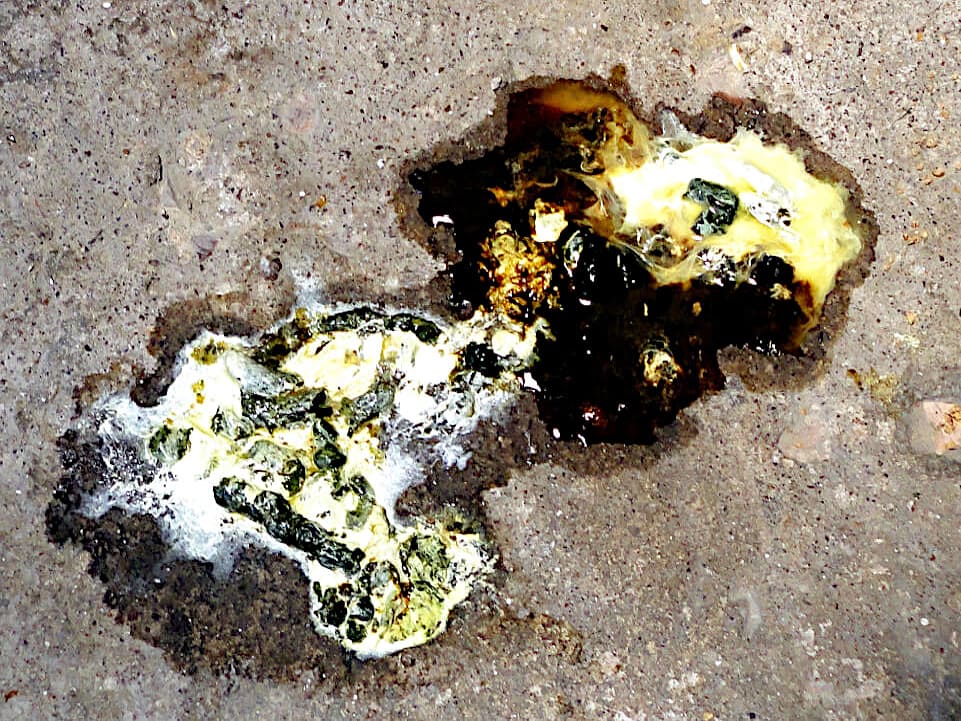
The prevention of coccidiosis passes through to prevent the chickens to eat oocysts (es un estado de reposo en el cual el cigoto, rodeado de una pared gruesa, madura. Cuando esto sucede, el ooquiste se abre y libera los esporozoítos infecciosos), impidiendo además que estos esporulen (ver foto).
All the systems that are efficient for removing moisture from the local or prevent this form are interesting to delay and minimize the coccidiosis.
Farm sanitation can be carried out by thoroughly washing both the premises and the surrounding or auxiliary areas (storage areas, access points, ramps, etc.) with plenty of water; this cleaning should be done using a pressure washer whenever possible.
Chemical disinfectants conventional are not active against the coccidios, hence the removal is somewhat problematic.
The only compound that has a certain activity is the ammonia, but for this it is necessary that is present in high concentrations, with enough moisture and temperature not lower than 15 °C, to be precise in addition to acting for at least twenty minutes.
To implement this system, sprinkle the barn or chicken coop with powdered gypsum, then spread agricultural-grade ammonium sulfate over it, and finally spray water over both.
This mixture produces enough ammonia to neutralize the oocysts in the soil.
Another method of preventing coccidiosis is chemoprophylaxis through feed, which involves the use of anticoccidial agents mixed into compound feed.
These substances act endogenously, preventing the development of coccidia during their schizogony or gametogony stages. Some products are administered in their pure form, while others are administered in combination.
There are also products available on the market for drinking water, such as Coccivex, which is the only treatment for coccidiosis that does not require a withdrawal period for eggs or meat.
The repeated use of these substances leads to the formation of resistances and hence promotes its use on rotating basis.
How coccidiosis works.
Where are the injuries located on the bird?!!, y qué clase de Eimeria la produce.
Life cycle of coccidiosis.
This video, produced by Hipra Laboratories, Inc., is very intuitive.
Literature review:
MERCK & CO. (1995). Manual Merck de Veterinaria. Rahway, N. J., EE. UU.
BUXADÉ, P. (1987). The laying hen. Ed. Mundiprensa. Madrid.
DORN, P. (1987). Manual of avian pathology. Ed. Acribia. Zaragoza.
HOFSTAD, M. S. (1984). Diseases of Poultry. Iowa State University Press, Ames, Iowa.
ZARZUELO, E. (1982). Vade mecum of the pathology, infectious poultry. Ed. Aedos, Barcelona.
CASTELLÓ, F. and CASTELLÓ, J. A. (1960). The New Art of Raising Chickens. Aedos, Barcelona.
OROZCO, F. (1989). Breeds of chickens Spanish. Ed. Mundiprensa. Madrid.
LACADENA, J. R. (1998). Genetics. Ed. AGESA
PUERTAS, M.J. (1992). Genetics: Fundamentals and Perspectives. McGraw-Hill Interamericana.
SANCHEZ-MONGE, E. (1969), Genetics. Espasa-Calpe S.A.
OROZCO, F. and ROBLA, F. (1986). Genetic aspects of the León rooster. 24th Symposium of the WPSA (Spanish Section): 199–212.
HILL, J. L. (1973). Genetics, general and applied. Ed. UTEHA.
CASTELLÓ, J. A., LLEONART, R., FIELD, J. L., OROZCO, F. (1989). Biology of the chicken. Real Escuela de Avicultura.
LLEONART, F., ROCA, E., CALLÍS, M., GURRI, A., PONTES, M. (1991). Poultry Hygiene and Pathology. Royal School of Poultry Science.
STURKIE, P.D. (1968). Fisiología aviar, Ed. Acribia. Zaragoza.
LOHMANN ANIMAL HEALTH (2012)
You may be interested in these other sections