Sexing of chicks 1

Methods of sexing chicks:

This is a topic very important in egg-laying poultry production. Chick sexing: It has always been understandable to want to raise as many female chicks (for eggs) as possible and as few male chicks as possible; for this reason, numerous efforts and techniques have been developed to determine the sex of chicks at hatching.

Since it is now possible (in 2024) to determine the sex of a chick inside the egg during incubation—we’ll discuss this in more detail later with some data—this is great news.

The sexing of day-old chicks was unknown prior to 1925. Since then, great strides have been made towards its progress. Currently, there are four general methods of sexing for day-old chicks:
  • Biochemical / histological,
  • Instrumental.
  • Orifice (cloaca), Japanese method.
  • Self-sexing.

In addition to egg production, raising chickens for meat has become increasingly important. It is well known that in modern poultry farming, in order to produce eggs and meat with the greatest savings in feed and labor, it is necessary to separate newborn chicks from the egg by sex, and this requires the ability to recognize the sex of day-old chicks, a task performed by specialized personnel called sexers.

Well, but as for our chicken coops or barns, we’re not going to call in a sexer and pay their fees—which are high because of their specialization—when we have so few chicks hatching.

To that end, I’ll share some other simple, easy-to-follow methods with you; of course, many of them are alternative approaches, and I’m sure you’ve heard of some methods from older people about how they used to do things.

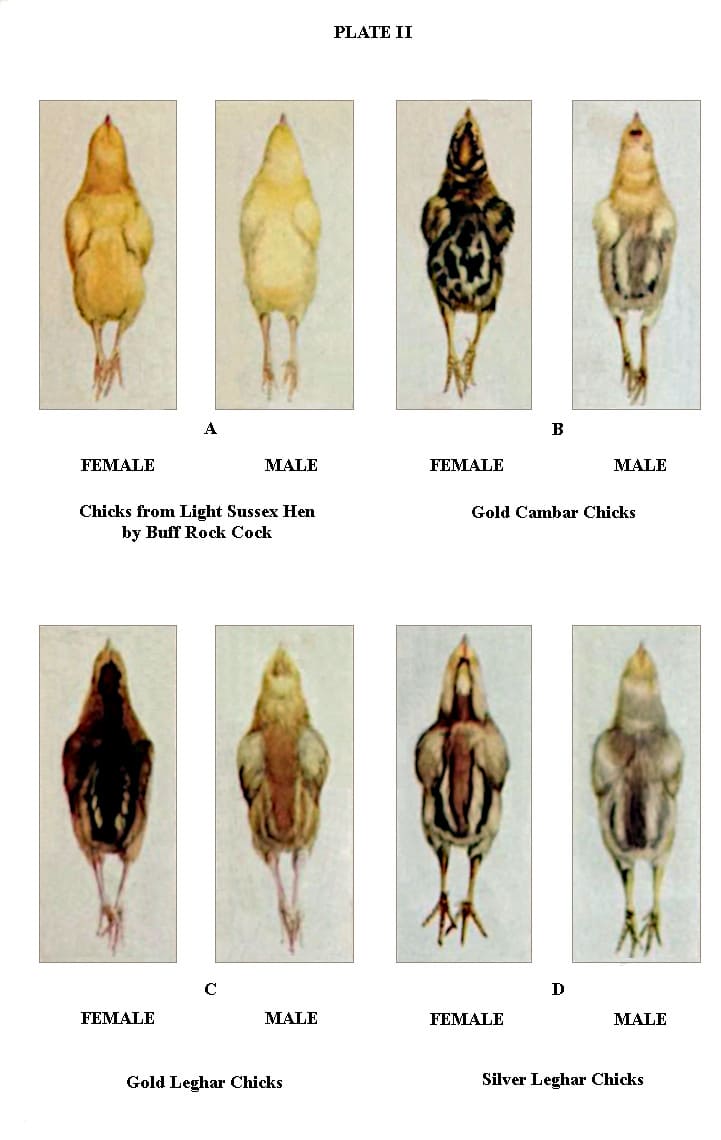
There are four methods that offer a solution to the problem of sexual selection, full or nearly full. In these procedures are used to determine the sex of the chick for a day, a side secondary sexual characteristics such as the color of the feathers of the chicks and pullets.

On the other hand, the sex characteristics of the primary, external or internal, such as the formation of the penis or (copulatory papilla) inside the chick's cloaca, and in both cases the formation of the gonads—that is, the sex glands—in the abdominal cavity of female and male chicks.

The first method for producing so-called “standard chickens” involves either crossbreeding or raising purebred lines. Based on numerous experiments involving the mating of different breeds, the English researcher Punnet was able to demonstrate that there are several ways to produce chicks with differences in plumage color and pattern, which allow for 100% accurate sex determination.

He bred his “Cambar” (Gold Campine × Barred Rock); it was the first breed of its kind, and he presented it for the first time at the World Poultry Congress in Rome in 1933.

This was Punnet’s fundamental discovery, and this principle was used to develop different breeds in which it is possible to distinguish the sexes of day-old chicks based on their coloration.

To understand what we have discussed, “sex-linked breeds” (or “self-sexing breeds”) are those in which each chick can be easily identified as male or female due to the influence of sex-linked hereditary traits, and in which the hereditary trait that determines this characteristic is passed on to all offspring in subsequent generations.

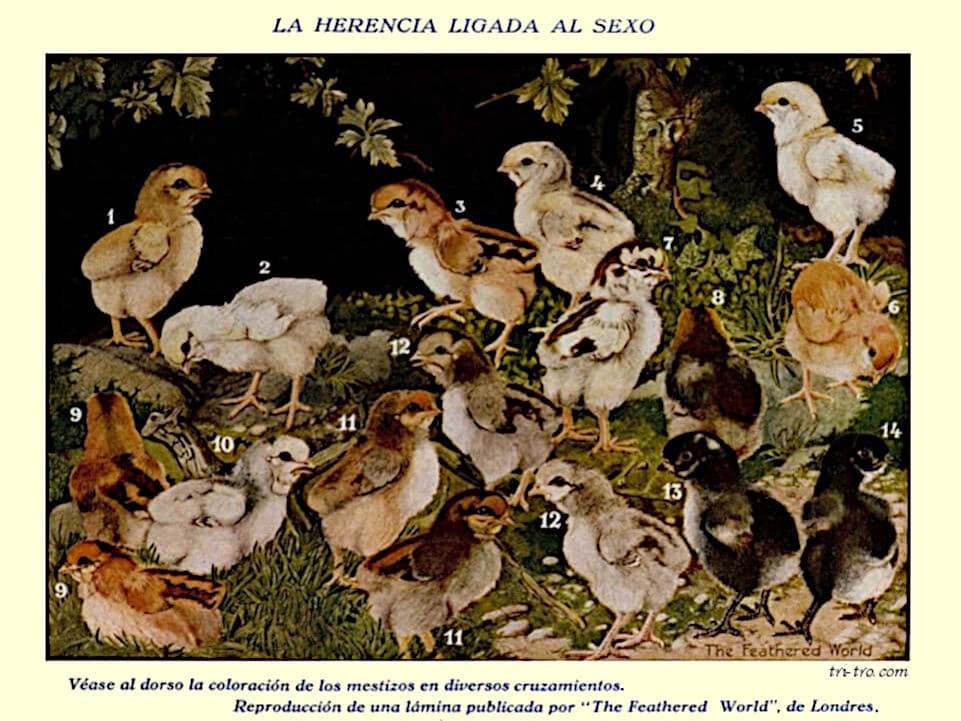
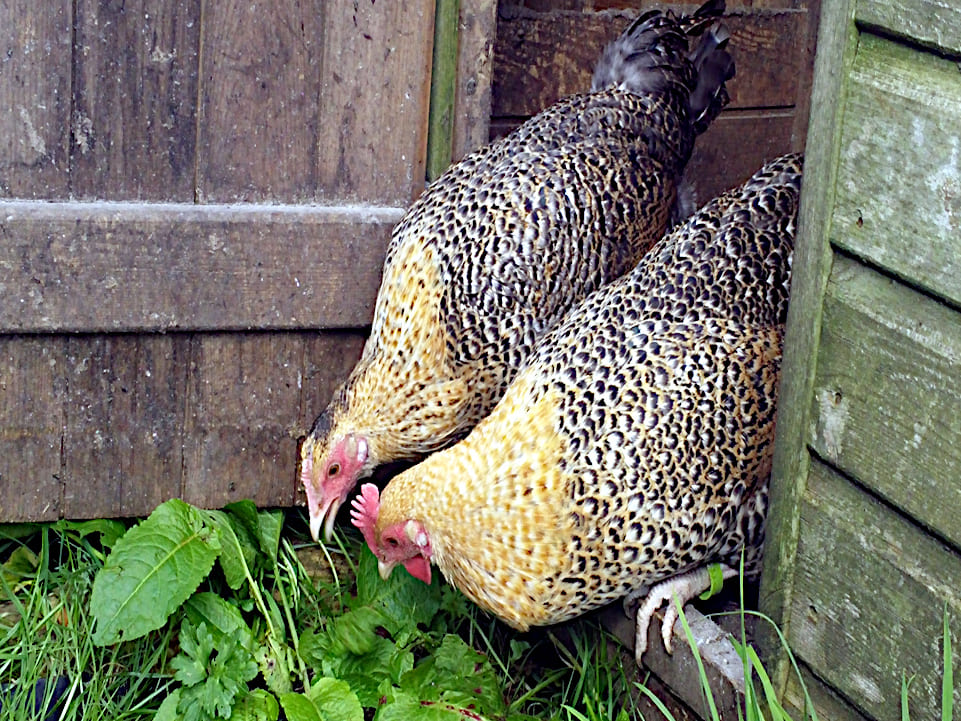
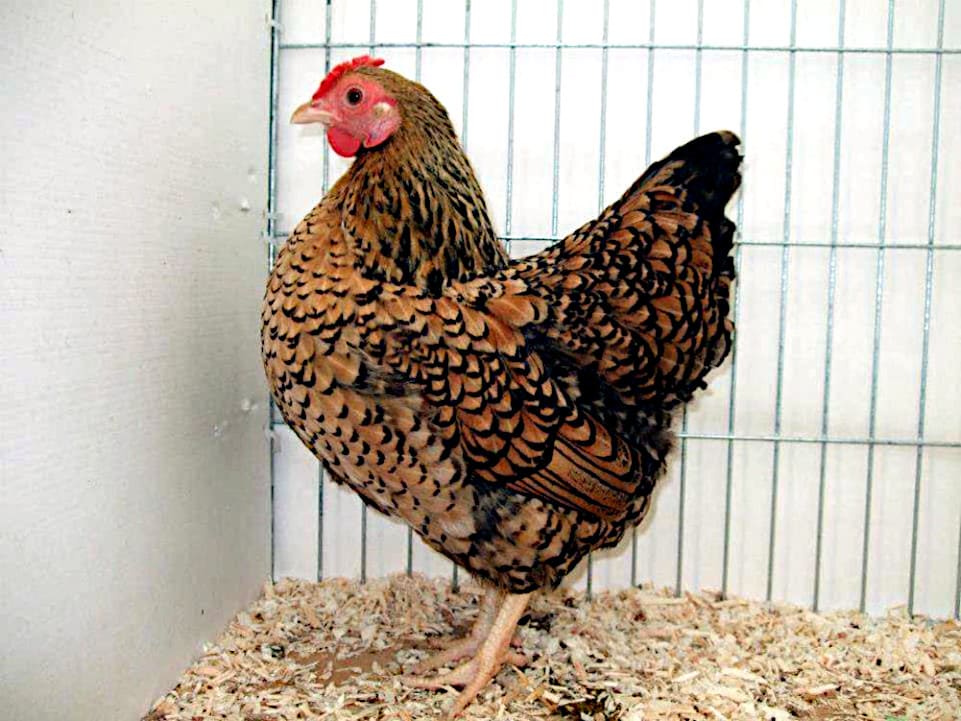
Some illustrative photos will help us understand and recognize them better.

The sex-linked Inheritance in chicks

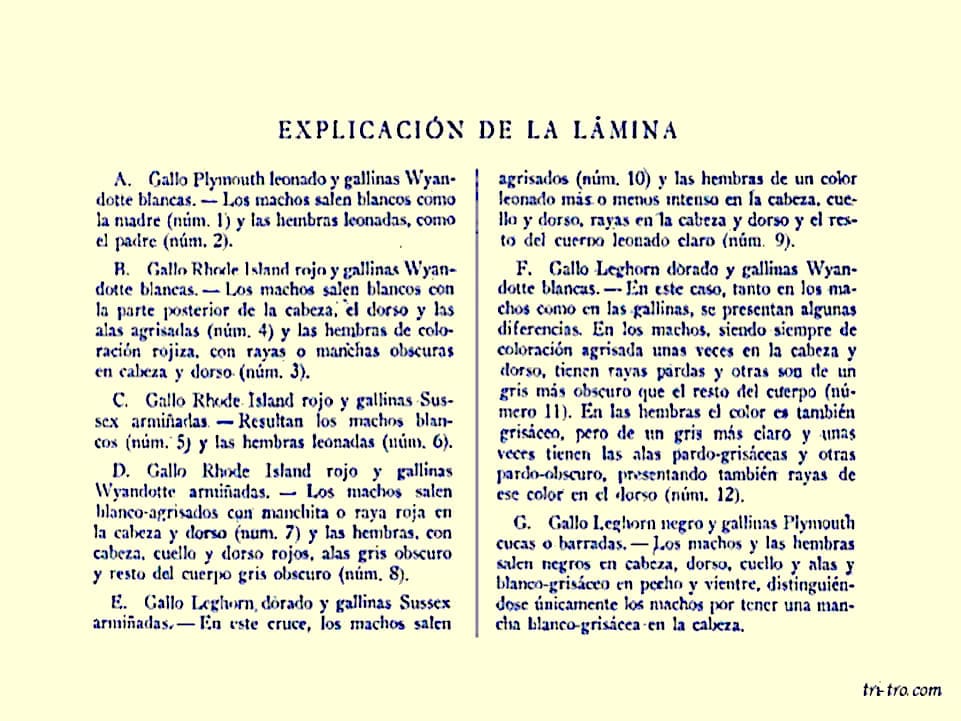
Explanation of the plate

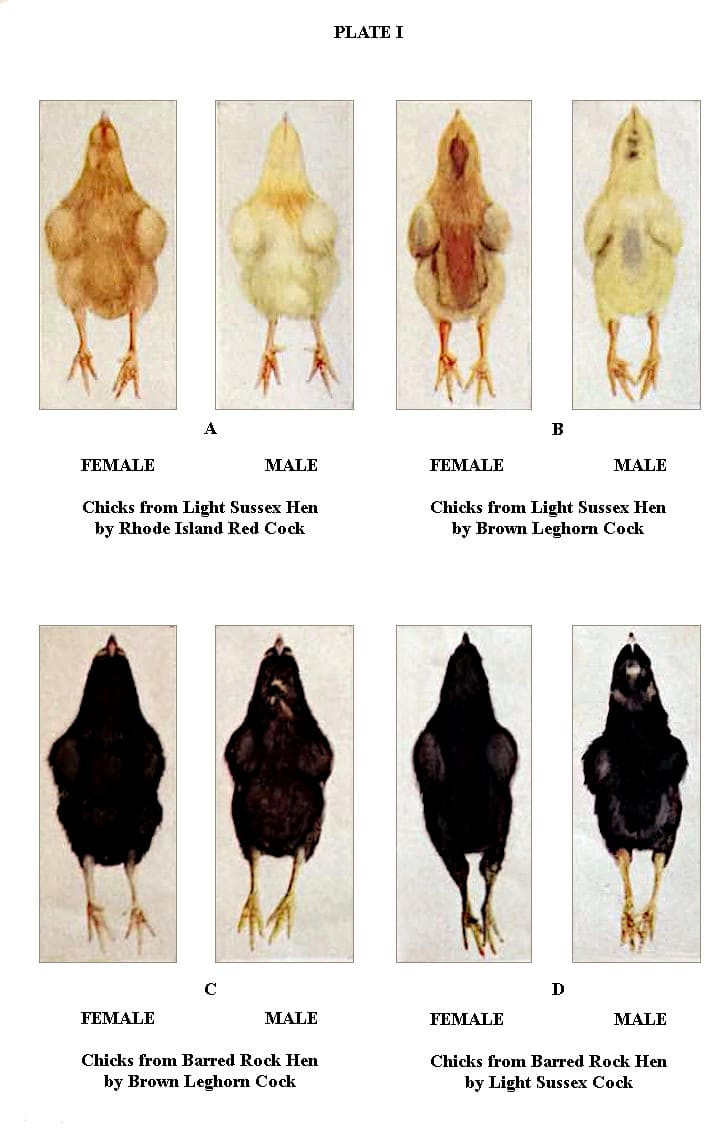
Self-hatching chicks Table I

Self-hatching chicks Table II

A brief history of Autoxeding breeding:

The first race of The first self-fertilized hen was Cambar (Gold Campine by Barred Rock) in 1929.

It was the experimental work of Professor R. C. Punnet and Mr. M. S. Pease at Cambridge that led to this discovery. Barred Rock need not be the only breed used; in fact, the breed will produce the crucial exclusion factor.

More importantly, each breed derives its character from the primary purebred used in its lineage; the colors of adult roosters are striking, as they carry a double dose of the gene, but those of the hens are often faded, because they carry only a single dose, which causes the markings to appear blurred.

Some of the first self-pollinating breeds, created by Punnet, some now extinct.

  • Brussbar – gold and silver.
  • Brock-bar Legbar: oro, plata y crema.
  • Change – gold and silver.
  • Dorbar – gold and silver.
  • Rhodebar-Welbar: oro y plata.
  • Wynar – gold and silver.
  • Bielefelder – gold and silver.

The Cream Legbar is a crested breed (which lays blue, green, or olive-colored eggs) that has been crossed with Araucana to give it its crest and egg color; some have a more complex genetic makeup.

The Wynar was first introduced at the Cambridge School of Agriculture around 1941, and the breeds used to create it were the Light Sussex, Brussbar (brown Sussex with bars), Canadian Barred Rocks, and, later, Rhode Island Reds.

The main Wyandotte variety used was the silver laced. The result was a large, well-proportioned dual-purpose bird (eggs and meat).

Once you are part of the Rare Poultry Society, Founded in 1969, these breeds are cared for by the Autosensing Breeding Association, many of which are extremely rare, if not extinct, so many of the association's members are working hard to recover them. 

Some autosomal crosses in chicks;

  • Chicken Cream Legbar; created from the Leghorn, brown, Barred Plymouth Rock, and Araucana.
  • Bielefelder Kennhun; created from the Welt Summers and Couco Malines.
  • Wybar: generated from Wyandotte, Barred Plymouth Rock and Brussbar.
  • Dorbar: generated from Dorking and Barred Plymouth Rock.
  • Rhodeba: large and Bantam, created from Rhode Island Red and Barred Plymouth Rock.
  • Brussbar: generada a partir de Brown/Light Sussex y barred de Plymouth Rock.
  • Brockbar: generated from Buff Plymouth Rock Barred Plymouth Rock.

Breeds of light, feather soft

  • Change
  • Legbar
  • Welbar

Races heavy feather soft

  • Brockbar
  • Brussbar
  • Dorbar
  • Rhodebar
  • Wybar

Hens Change gold

Chicken Wynar gold

Method Japanese sexing:

John Nitta brochure American Chick Sexing School, Lansdale, Pennsylvania. 1946

It is the method that is used for the detection, diagnosis, or treatment of penile atresia within the cloaca of day-old chicks, both female and male.

The art of the determination of the sex of chicken was developed in Japan in the University of Tokyo in 1924 and was practiced exclusively in that country.

The most popular method is the sexed by cloacal (Masui et al., 1924; Masui and Ito, 1931), which is done by simply looking for the presence or absence of a male sexual organ rudimentary noting each time the area of the cloaca of the chicks. Although this method is fast and accurate, it requires that the observer is well-trained and have a lot of practice. 

S. John Nitta was one of the pioneers in the technique of determining the sex of a chick in a day, immediately take birth in the incubator. In 1936, he returned to the United States to continue his studies in Santa Cruz, California, and after a few weeks, he secured employment with a small company of sexed in Ohio.

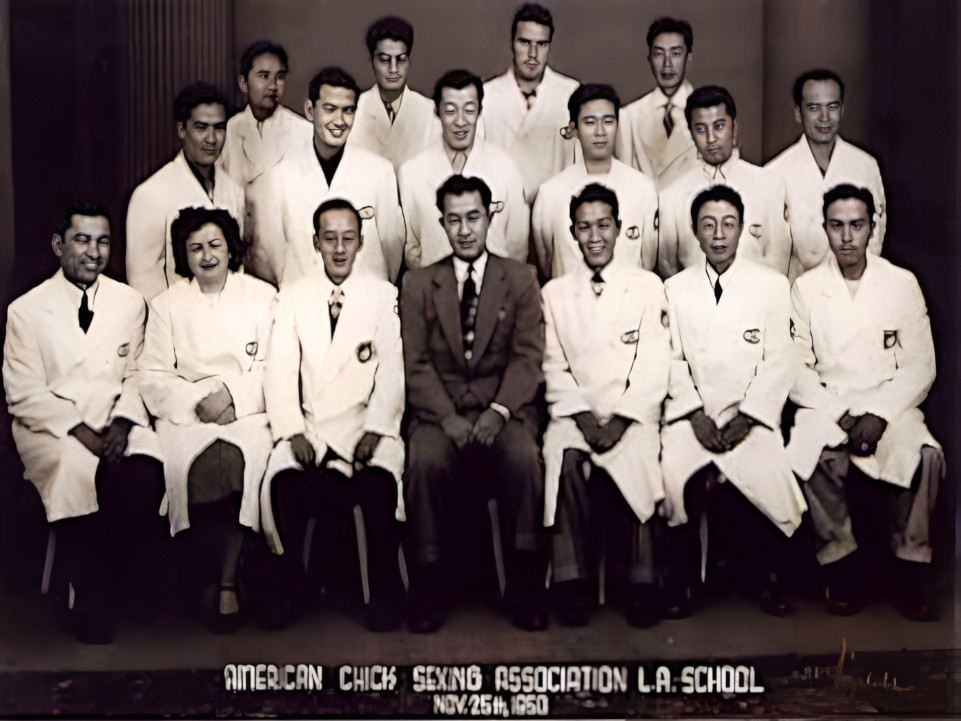
In 1937, Shigeru John Nitta founded the first commercial chicken sexing school, the American Chicken Sexing School, in the United States; it was a remarkable contribution to Japanese-American history. It was the only school to operate successfully every year from 1937 to 1974.

The goal of sex with chickens is able to determine the sex of a chicken newborn. Females would continue to produce eggs, while the males would be discarded. Ultimately, this would prevent the breeding of chickens to wait over a month for increased sexual characteristics are easily identifiable.

For 1940, it had also established schools in Boyle Heights and Terminal Island. However, shortly after the bombing of Pearl Harbor on December 7, 1941, and the subsequent crash on the Island Terminal, Nitta decided to keep your school on the West Coast.

Perhaps surprisingly, the new permanent location he chose for his school was Lansdale, Pennsylvania.

Over the next two decades, Nitta's American Chick Sexing Association (“Amchick”) was highly successful and highlighted how Japanese Americans contributed as productive workers in American society, especially after World War II.

Amchick was the leading contractor specializing in chick sexing, serving as the largest company providing sexing services to poultry farms across the United States from coast to coast.

Association of sexing chickens American school, 1950 directed by John Nitta

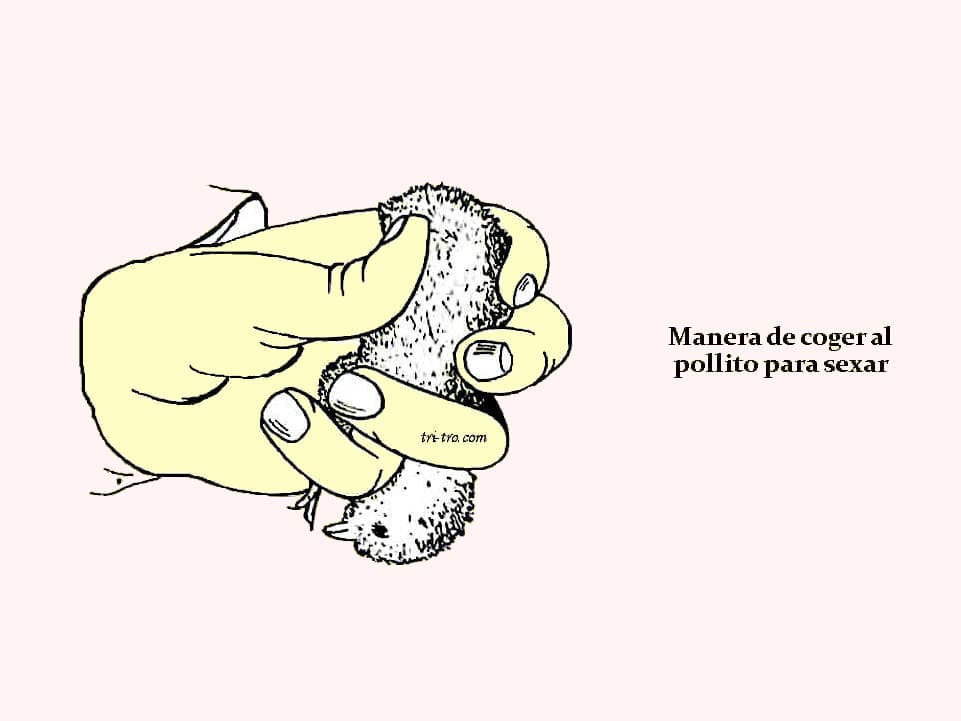
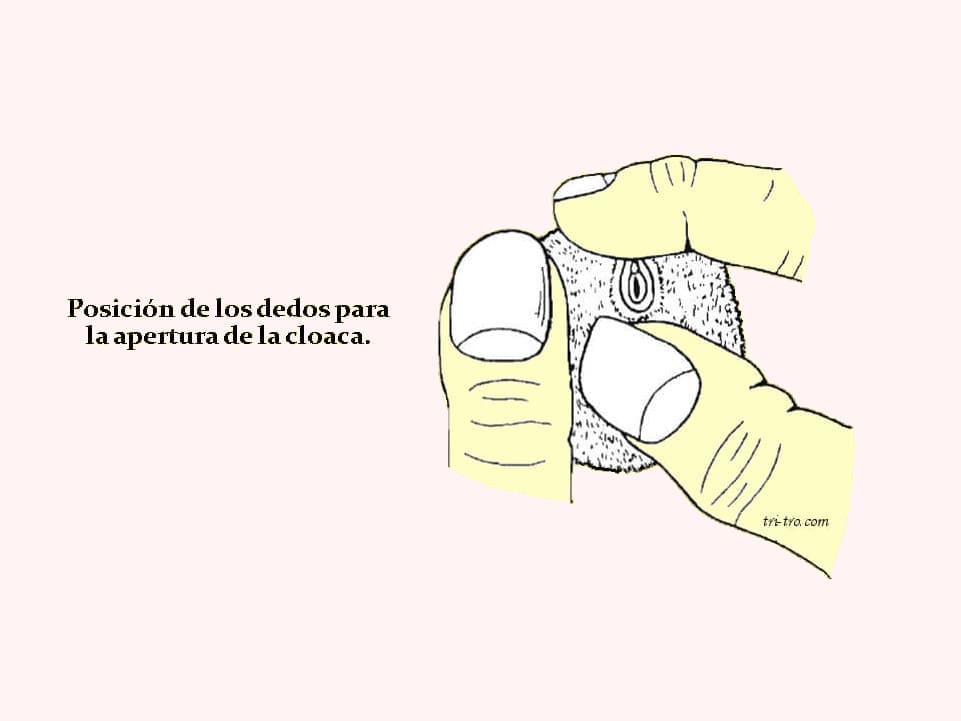
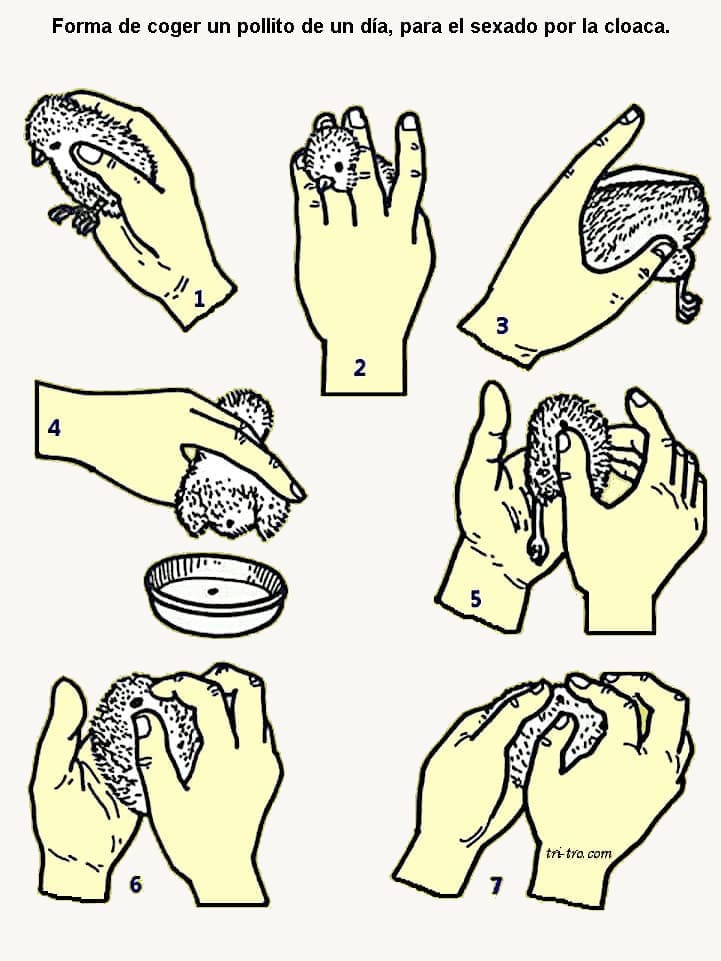
These diagrams will show you how to hold a chick for vent sexing; this technique is best suited for specialists and those with a keen eye; it takes practice to master. You’ll also notice variations in the vent, in both male and female chicks.

How to hold the chick for sexing.

The chick's head and neck rest between the ring finger and little finger of the left hand, while the chick's back fits perfectly into the palm of the hand.

Position of the fingers to the opening of the cloaca

Sexed by cloacal, variations.

Types, Males, variations (explanation photo):

In the practice of sexing are all of the sizes. It is of interest to note that as the process or eminence decreases in size, the bodies round increase, and the eminence smaller since they are not located directly between the folds cross.

to and b are characterized by the prominent male protrusion, which is easily noticeable.

How often do they appear? 64.32% of the time in males. Well-defined lines and a rounded base are important.

to larger chicken size, and b size medium.

b It is the average chicken. As the elevation decreases, the rounded bodies grow larger and are no longer found among the transverse folds, rising until they reach a dorsal position above them.

c. It shows us the slightest protrusion on this rooster, which might go unnoticed at a quick glance; if it is not accompanied by the everted vent and the absence of other typical folds, it could be mistaken for a hen. The central position of the protrusion, being the only rounded part of the body, provides the most important distinguishing features.

The prevalence among male chickens is 7.85%.

d we show the same type of elevation, with the various pressures of the fingers.

dwith a pressure somewhat greater, let us see well, to distinguish between the bodies round and elevation, although they visible to loosen the fingers.

The frequency among male chickens is 0.58%.

e This other type of male is harder to identify because the ventral and dorsal surfaces of the hump tend to flatten (these are female characteristics, which are more pronounced in females); to distinguish it, we must focus on the overall roundness of the lines.

Frequency of “e” and “f”: 20.53%

f type intermediate between e. Its generally rounded and smooth contours classify it as male; this feature serves to classify it as male, since the protrusion is rounded at its base. Frequency: 3.28%

Summary in males:

  • Illustrations to and predominant. 
  • Illustrations d and e quite common. 
  • Illustrations c. and f rare.

Types Females, variations (explanation photo):

g A typical example of an ideal female, making it easy to identify since there is nothing that could be mistaken for the male's protrusion.

h It indicates the presence of a V-shaped fold, the sides of which continue into the surrounding mucous membrane. Frequency among females: 57.22%.

Dies weist auf das Vorhandensein einer V-förmigen Falte hin, deren Seiten in die umgebende Schleimhaut übergehen. Häufigkeit bei Frauen: 57,22 %. c. with little pressure, while that arises as a i indem man die Schamlippe mit dem linken Daumen und dem rechten Zeigefinger zusammendrückt und dann mit dem Daumennagel des rechten Daumens nach oben drückt. Die Form der etwas herabhängenden Schamlippe unterscheidet sie von der männlichen Vorhaut.

j it is very similar to c. in males, except that, it is the most crushed. Frequency 16.98 %, within the type females.

k With an elevation of feminine crushed, in the form of horizontal trim, with the faces ventral and dorsal well-defined. The variation is considerable within this type, and in some cases it is not easy to classification.

Shows a small eminence female rounded look slightly to the left of the middle line, too small and delicate to be classified as a type male. Generally, stands out enough to hang down. 

Summary in females:

  • Illustrations g and h predominant.
  • Illustrations ij and quite common.
  • An illustration of the unusual.

Sexing chicks

At the point 3, gently tap it with your index finger to encourage it to defecate. Step 4: This will clean out the cloaca in preparation for sexing.

Method Endoscopy sexing:

The sexación chick a day is very important for poultry production.

The females are used exclusively for commercial layers, while the males are preferred in the commercial broiler because of its fast growth. Until now, several methods have been developed sexing of chicks (Kaleta and Redmann, 2008). 

In addition, it has developed a technique of molecular sexing (Clinton, 1994). Given that the chickens males are ZZ and females have the sex chromosomes ZW, the sex can be identified by analyzing the presence or absence of the chromosome W. 

Although this molecular sexing method is accurate, it is impossible to apply it to large numbers of chicks in practice due to the time and cost involved.

There is also a method of sex using the Keeler Optical (English) or "Chick Tester (Thozai Sangyo Boeki, Tokyo, Japan). The method japanese was presented for the first time in the ninth Congress Poultry World, which was held in Paris in 1951, featuring an apparatus coach built by Kizawa.

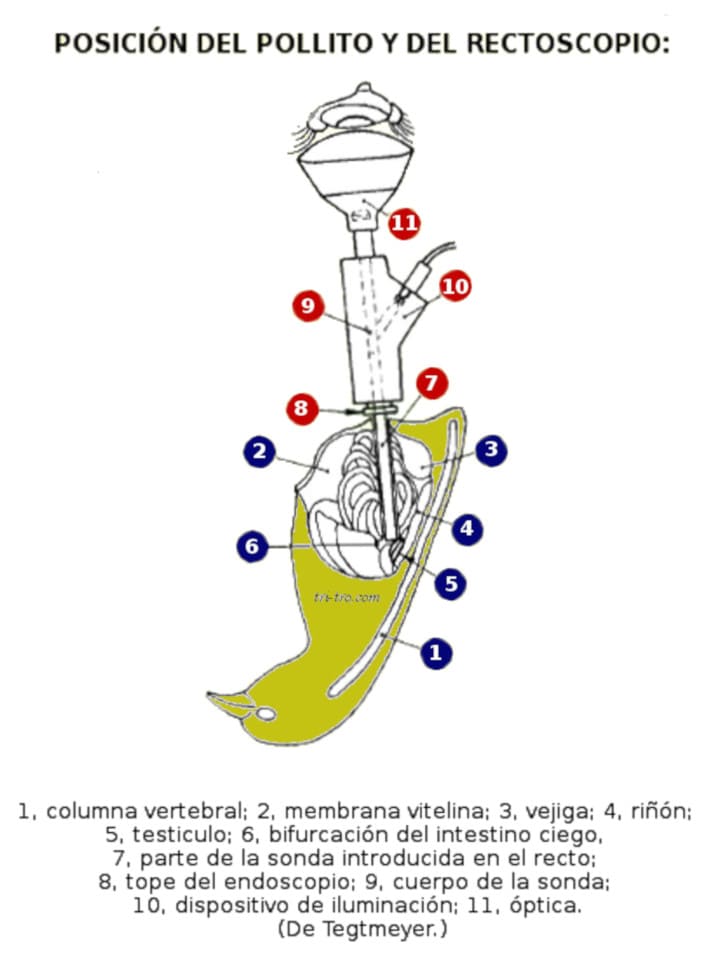
With this method, a probe is inserted monitoring in the gut of a chicken and observe the testicles or ovaries directly through the wall of the intestine. Although this method does not require specific skills, it is difficult to use due to the blurring of the images and low-resolution that occurs. The production of the “Chick Tester” has ceased since the 70s.

In the study conducted by Makoto Otsuka, Osamu Miyashita, and others, an endoscope system was modified.

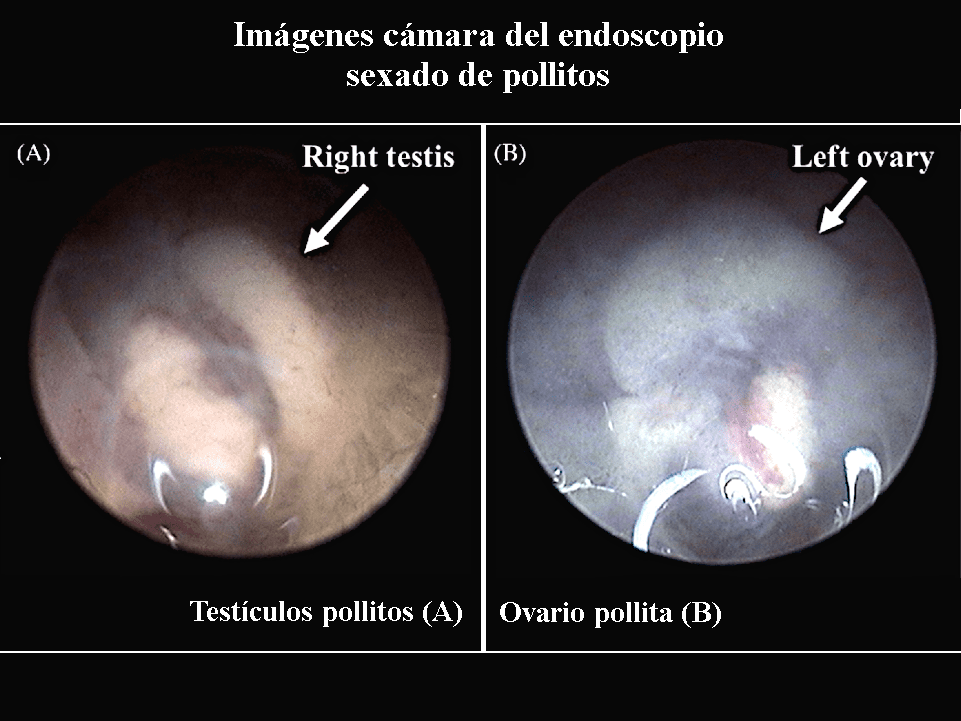
The sexing of day-old chicks is important for the production of layers and broilers. The endoscope probe was inserted from the cloaca in the intestine of a chick and noted the presence of testes or ovaries through the wall of the intestine. 

The image was displayed on the monitor. Sexing was performed on White Leghorn (WL) and Rhode Island Red (RIR) chickens using this new system. The accuracy of sexed males (95.0%) was higher than that of females (86.0%). The overall accuracy of sexing was 90.2% in this study, and accuracy would be improved with continued training in endoscope handling.

Currently, about 90% of commercial chickens—including layers and broilers—are sexed based on feather characteristics, but vent sexing is still necessary for most purebred lines. 

However, the number of people who acquire the skills to do so is rapidly declining and, in addition, very few schools teach this method.

Apparatus coach built by Kizawa 1951

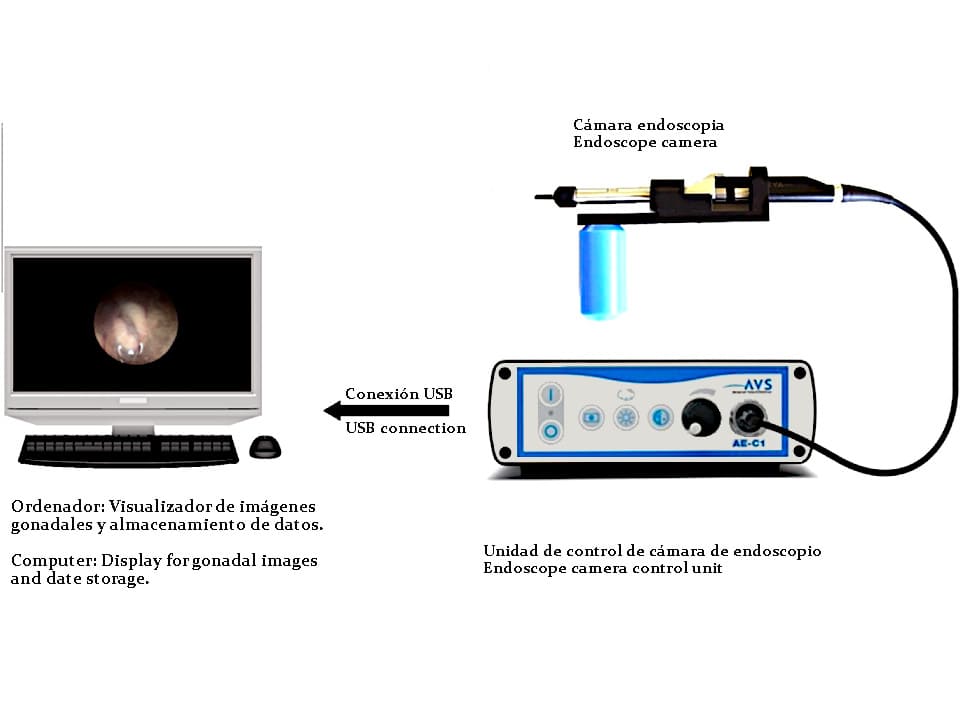
This is the modern and novel endoscope created for small animals which can determine the sex of day-old chicks quickly and accurately. Its components are:

Endoscopic camera probe, glass lens, USB connection, viewing of gonadal images, and data storage on a computer.

System endoscope new design

Technician performing the sexed with the endoscope

Images endoscope's camera sexed chicks


Bibliography:

Kaleta EF, Redmann T. 2008. Enfoques para determinar el sexo antes y después de la incubación de huevos de gallina y de pollitos de un día Poult del mundo. Sci. J. 64 391399

Masui K., Hashimoto, J., Ono, Y. 1924: El órgano copulador rudimental de las aves domésticas masculinas con referencia a la diferenciación sexual de los pollos. Jpn. J. Zootech. Sci 1 153164

Masui K., Ito S. 1931. Estudios morfológicos y estadísticos sobre el proceso genital de los pollitos del día (White Leghorn) con especial referencia a la discriminación sexual en los pollitos del día. Jpn. J. Zootec. Sci 5 139162

Clinton METRO. 1994: Un protocolo rápido para sexar embriones de pollos (Gallus g. domesticus). Anim. Gineta. 25 361362

Grabados RJ 1996: Crecimiento y maduración sexual. 74105 Reproducción en aves de corral, CAB International, Wallingford, Reino Unido

System of endoscopes for the sexing of chickens TESALA (photos) to small animals, and laboratory animals, AE-C1, AVS, Tokyo, Japan

Makoto Otsuka, Osamu Miyashita, Mitsuru Shibata, Fujiyuki Sato, Mitsuru Naito, un método novedoso para sexar pollitos de un día utilizando el sistema de endoscopios, Poultry Science, Volumen 95, Número 11, noviembre de 2016, páginas 2685-2689, https://doi.org/10.3382/ps/pew211

Sex Determination of Day-old Chicks T.H. Canfield. University of Minnesota, St. Paul, Minnesota, 1939

Dyce K.M., Sack W.O., and Wensing C.J.G., 1991. Veterinary Anatomy. Panamericana Publishing

Ede, D. A., 1965. Anatomy of birds. Ed. Acribia.

Grasse, P. P., 1980. Zoology. Vol. 4: Vertebrates. Reproduction, biology, evolution, and systematics. Ed. Toray-Masson.

Grifols, J. and Molina, R. 1994. Manual of clinical exotic birds. Ed. Grass-Iatros.

Natural History, 1984. Vol. 1. Ed. Ocean-Institute Gallach.

King G.M. y D. Custance. Colour atlas of vertebrate anatomy: The Pigeon. Pp.: 5.1— 5.17. Ed. Blackwell Scientific Publications.

Krahmer, R., and Schröeder, L. 1979. Anatomy of the domestic animals. Ed. Acribia.

McClelland, J., 1992. Atlas in color of the anatomy of birds. Ed. inter-American.

Nickel, R., 1977: The Anatomy of the Domestic Birds. Ed. Paul Parey.

Sandoval, J., 1976. Veterinary Anatomy. Published by Imprenta Moderna (Córdoba).

Schwarze E. 1980. Compendium of Veterinary Anatomy. Volume V: Anatomy of birds. Ed. Acribia.

Shively M.J., 1993. Anatomía veterinaria, básica, comparativa y clínica. Ed. Manual Moderno.

Sturkie P.D., 1967. Avian Physiology. Acribia Publishing.

Dr. Francisco Gil Cano.

Professor H. Aguinaga.

 

You may be interested in these other sections


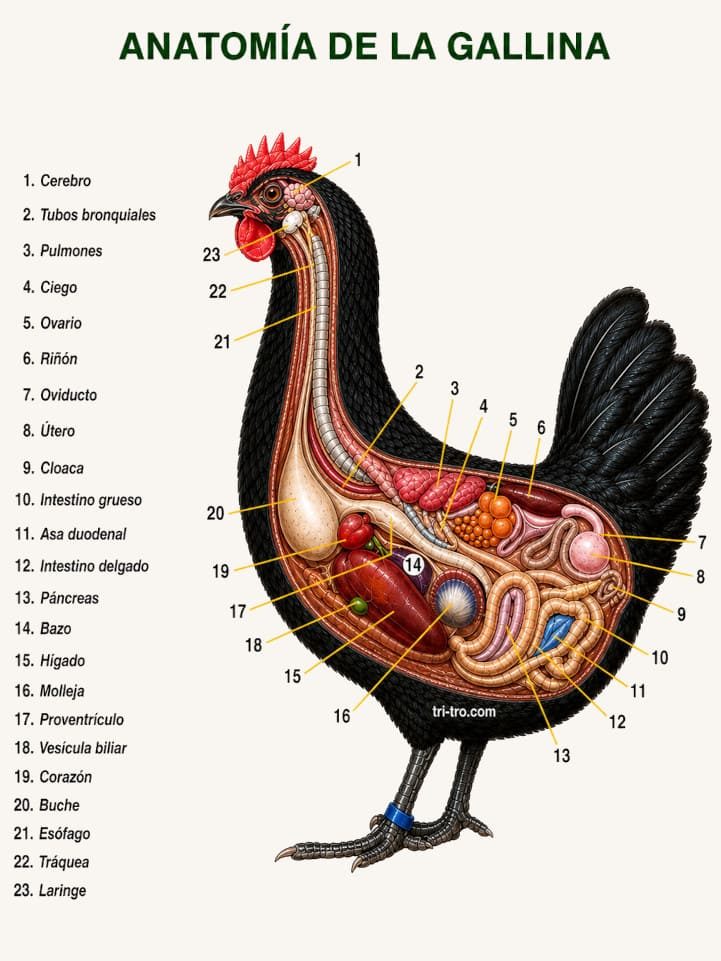
Anatomy of the chicken: parts, organs, and functions

Poultry Slaughter Form: What It Is and How to Use It

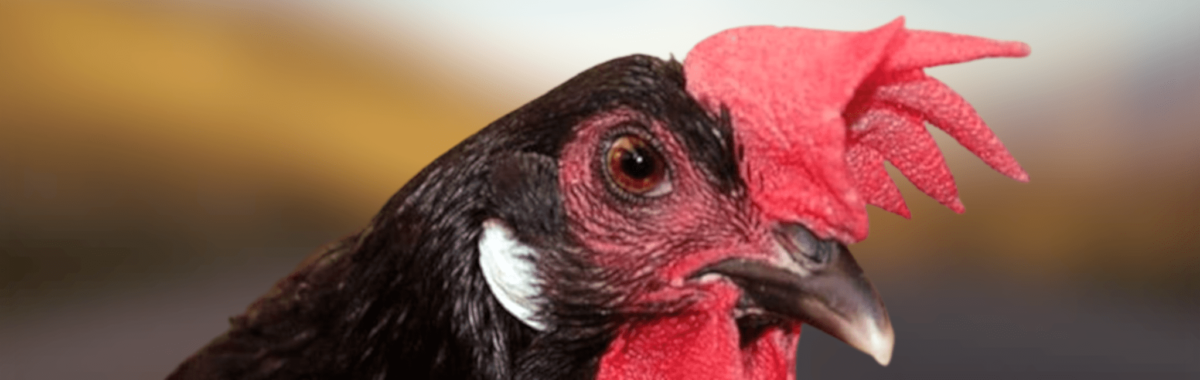
Castilian Black Hen: an elegant, egg-laying Spanish breed


Do you want to share or comment on your social networks

Scan to visit TRI-TRO
Escanea para visitar. TRI-TRO