Clinical manifestations:
The outbreak in turkeys usually begins abruptly, with losses of one or several turkeys, what makes you think that these are due to fights. Some birds, especially males, have manifest weakness, especially in the moments prior to death.
Some turkeys have skin lesions.
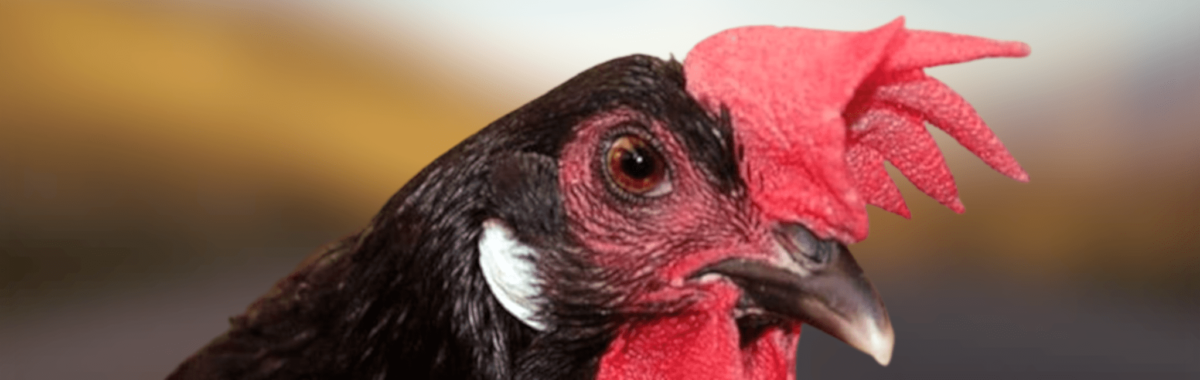
Males exhibit a swollen and turgid nasal appendage; for many, this is a pathognomonic sign of the disease, although it can also occur in cholera.
An accelerated and progressive weakness and signs of anemia occur in some cases where the endocarditis is the cause of death.
Other turkeys with growths (especially those that have been vaccinated) may die suddenly without showing any symptoms, likely as a result of an embolism. Deaths have been reported in female turkeys 4–5 days after artificial insemination, with signs of peritonitis and skin discoloration.
In chickens, the main symptoms are general weakness, lethargy, diarrhea, and sudden death.
In carrier hens, egg production may be reduced.
In ducks, pheasants, what is most significant is the depression, and diarrhea.
The mortality rate in turkeys can range from 1% to 25–50% for a flock, although it is worth noting that the disease may not occur in nearby flocks. The mortality rate in other birds is difficult to determine given the reported variation.
Pathologic lesions:
The lesions are septicemic with generalized congestion. Specifically, there is degeneration of the fat in the anterior thigh, degeneration and hemorrhage in the pericardial fat, and hemorrhage in the heart muscle; the liver and spleen are usually friable and enlarged.
Other injuries can be exuded, fibrinopurulenta in the joints and pericardial sac, plates of fibrin in the heart muscle, thickening of the wall of the proventriculus and the gizzard with ulcerations. We appreciate nodules of yellow on the blind, endocarditis and vegetative injuries pustulosas in the skin.
At times, they appear in blepharitis and conjunctivitis.
In ducks, lesions are similar to those seen in other species, although congestive and necrotic lesions in the interdigital membranes should be added. Microscopically, the changes are determined by vascular alterations. Interstitial hemorrhages and edema separating the myocardial fibers can be seen.
Fibrin clots containing bacterial aggregates are visible in the central portion of the blood vessels in the liver. Severe vacuolar degeneration is observed in the surrounding hepatocytes, as well as a marked increase in basophils within the sinusoidal reticuloendothelial cells (Kupffer cells).
In the spleen, early changes reflect necrosis and lysis of lymphoid cells.
This progresses to a total loss of lymphocytes with hyalinization in the sheaths of the arteries of the white pulp and the elements reticular surrounding.
The epithelium of the proximal tubules is altered early on in affected turkeys. Inflammation, dissociation, and detachment from the basement membrane are common in epithelial cells.
It is not unusual to find degenerative changes and necrosis in other organs such as the lung, heart, pancreas, gastrointestinal tract, skeletal muscles, and skin.
However, these changes are often asked in parenchymatous organs such as the liver, spleen, and kidneys.
Diagnosis:
The preliminary diagnosis will be based on the patient's medical history, clinical examination, and microscopic findings.
It is useful for the presence of lesions sep, although it cannot be said to be typical, as there are other diseases, such as cholera, as in these.
Clinically, inflammation and swelling of the nasal appendix in males are significant.
The diagnosis of certainty is based on the isolation and identification of the germ. The best sources for the isolation are the liver, spleen, and bone marrow of birds dying. Are used dishes or tubes of solid media and tubes with liquid media without inhibitors.
The most common culture media are brain, heart, or meat broth, enriched with 5% serum. Samples taken aseptically from organs and tissues—which should normally be free of secondary microbial contamination—are inoculated into these media.
If intestinal contents or organs from birds that died some time ago are used, a solid selective medium and an enriched culture should be employed. This organism grows well in the yolk sac of chicken embryos. The embryos should die 22 to 44 hours after inoculation.
The yolk sac harvested can be frozen to maintain the organism. After incubated for 24–28 hours in the culture medium, were inoculated in the skin escarificada of the ear of mice with a cotton swab dampened with the environment. If the body is present, kill the mouse in 96 hours. The organism can be recovered from the heart, blood, and liver.
Erysipelothrix rhusiopathiae It can be identified based on the colonies and individual morphology of the microorganisms, Gram staining, type of hemolysis, CO₂ requirements, oxygen reduction for optimal growth on solid media, and the characteristic reaction in the Kliger test.
The mouse and the dove can be used to test protective confirmatory using serum hi. A group of animals is inoculated parenteral using as inoculum a crop of 24 hours; the other group of animals is inoculated with an antiserum to erysipelas and this is immediately inoculated with the culture of erisipelas.
The unprotected group will die within four days; however, the animals that received the antiserum will survive. Erysipelothrix rhusiopathiae can be also detected by the technique of fluorescent antibody.
Measures against epizootic:
It has been suggested, although this has not been conclusively proven, that environmental (stress-related) factors contribute to the development of the disease.
In general, we can propose a zoohigiene correct, which includes rotation of the cuartones of child-rearing and the use of disinfectants such as sodium hydroxide to 1-2 % in the disinfection of equipment and utensils.
It has been used in the immunoprophylaxis with the application of a bacterin, inactivated with formalin, and adsorbed with aluminum hydroxide, in nursery areas of turkey, where the disease is enzootic.
Once the outbreak has been established, losses are greatly reduced with the use of antibiotics, specifically penicillin. Combining penicillin with bacterin at the onset of the outbreak is useful for controlling it.
Treatment with a hyperimmune serum derived from horses is effective if administered early in the course of the disease, although in practice it is rarely used due to its high cost.