Parasitic diseases:

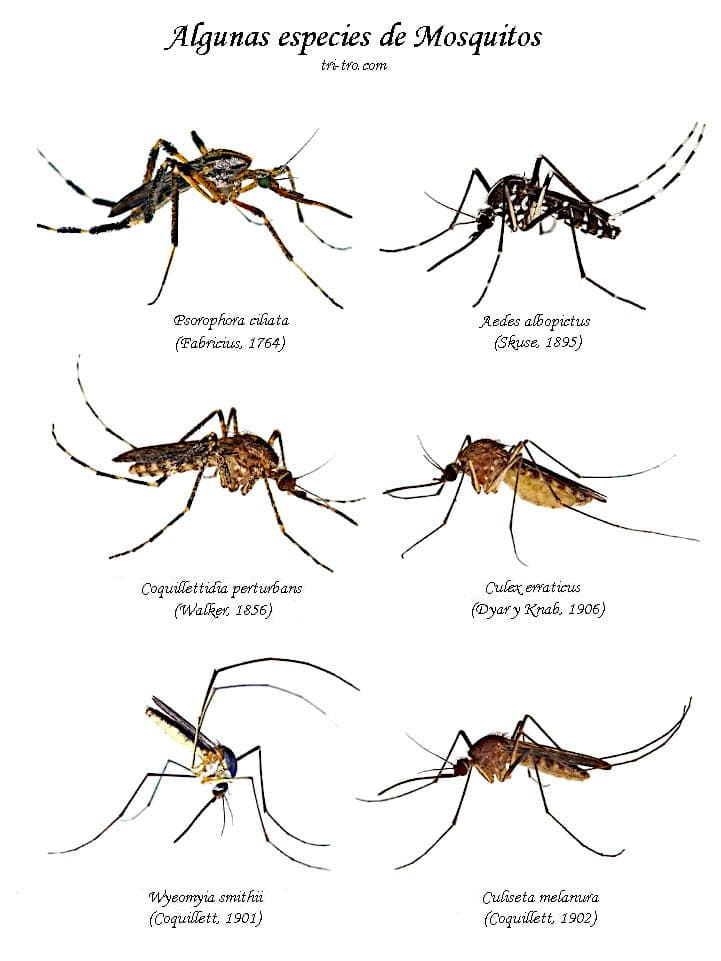
Some species of mosquitoes.

Left: Psorophora ciliata (Fabricius, 1764), Coquillettidia perturbans (Walker, 1856), Wyeomyia smithii (Coquillett, 1901). Right: Aedes albopictus (Skuse, 1895), Culex erraticus (Dyar and Knab, 1906), Culiseta melanura (Coquillett, 1902). Gainesville.

Mosquitoes aren't just a nuisance in the summer. They can also spread disease and cause stress in chickens. Controlling their presence in the chicken coop helps protect the birds' health.

Diseases transmitted by the Mosquitoes:

It is well proven, until today, mosquitoes play a major role in the spread of many infectious and parasitic diseases. Have been described massive invasions with problems lethal in some areas.

The importance of this insect deserves special mention as a proven reservoir and vector for diseases such as avian pox, given its biting and sucking behavior; for this reason, smallpox vaccination programs are often timed to coincide with the season when mosquitoes are most abundant. Other examples of diseases transmitted by mosquitoes include:

Malaria: Female Anopheles mosquitoes (which transmit the parasite): A. bifurcatus, A. super pictus, etc. Yellow fever: Stegomyia fasciata (Aedes) and Haemagogus. They transmit the virus.

Filariasis: Female Culicoides, Aedes, and Anopheles mosquitoes. (They spread the parasite.)

Dengue fever: Female mosquitoes of the genus Aedes (which transmit the virus): Aedes aegypti or Aedes albopictus.

Leprosy: infected females of the sandfly.

Chikunguña: Females of Aedes albopictus and Aedes aegypti. Transmiten el virus.

Encephalitis: Females of Culex tritaeniorhynchus and Culex vishnui (transmit the virus).

Zika: Aedes. aegypti (transmit the virus)

This alone shows just how deadly these tiny insects are, and we are amazed by their ability to infect and the number of diseases they transmit to humans and animals; we must not underestimate them.

There are numerous species; the most common belong to the following genera:

  • Aedes.

  • Culex.

  • Psorophora.

Culex malariager.

This mosquito, Culex malariager, Dating back 15 to 20 million years, it was discovered in the Dominican Republic, preserved in amber, and is infected with the malaria parasite Plasmodium dominicana. It is the oldest known fossil showing Plasmodium malaria, which is related to the type that infects humans today. (Photo by George Poinar, Jr., courtesy of Oregon State University)

Biology of mosquitoes:

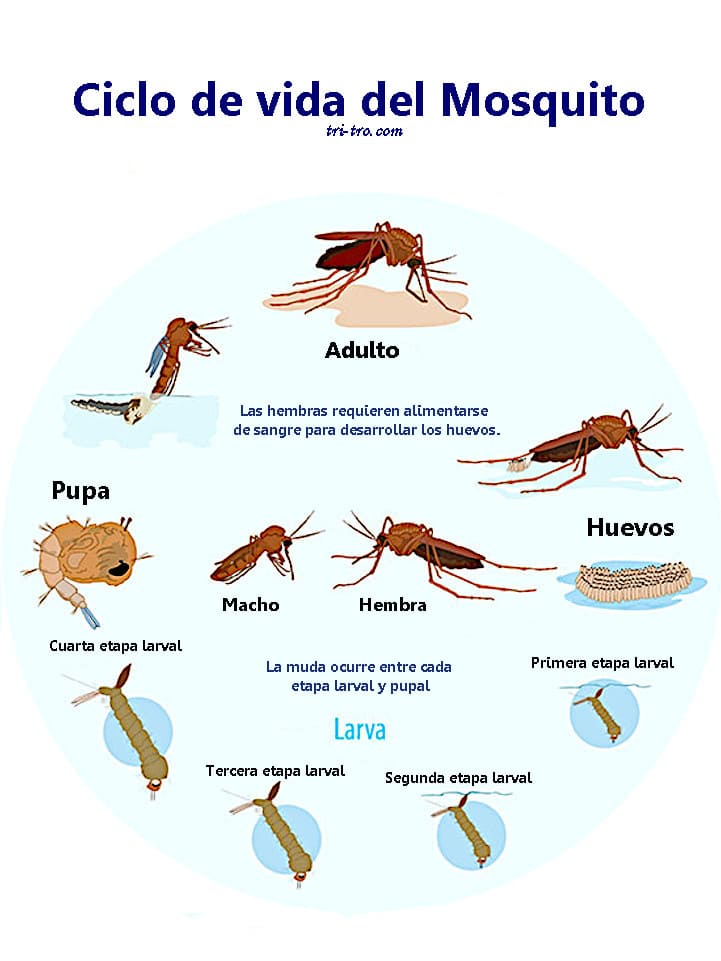
Mosquito life cycle

To be able to fight mosquitoes, it is important to understand their biology and behavior. During its life cycle, the mosquito goes through four stages (egg, larva, pupa, and adult).

The eggs are usually laid at night on the surface of the water and hatch in two or three days if the temperature is favorable; if the temperature is low, hatching may take longer.

Larvae hatch from these eggs and, after undergoing multiple transformations, reach full development, giving rise to nymphs. The larval stage lasts seven days for Culex mosquitoes and twenty-five days for Anopheles mosquitoes. After a certain number of days—which varies with temperature—the nymphs take flight, transforming into adult insects.

Mosquitoes mate easily, and after feeding on blood many times (on average, twenty days after the anopheles' last molting), the females begin to lay eggs.

The total number of eggs laid by a female Anopheles ranges from 150 to 300, and that of a female Stegomyia from 70 to 150. The complete life cycle of a Culex generation is thirty to thirty-two days; that of an Anopheles generation, fifty to fifty-two; note the difference.

From April through September, and sometimes even into October, there are generally four to six generations of mosquitoes, and sometimes more.

Males and females feed on the nectar of flowers and fruits; however, females require a blood meal for egg development. They feed on the blood of mammals, birds, and, according to Manson, fish and amphibians as well. It should be noted that Aedes males are sometimes hematophagous (a term describing the feeding habit of those that feed on blood).

A certain number of fertilized females overwinter in places wet and gloomy (stables, barns, coops, sheds, etc.) and when the good weather arrives back to the activity, making the start in the raft next.

The larvae can also spend the winter in life attenuated in water or covered in ice, and wait for its normal functioning when the temperature is more conducive.

Anopheles larvae live in clean, stagnant or slow-moving water containing filamentous vegetation, where they can hide from predators (fish, newt larvae, Daphnia pulex—the water flea—and so on). These are known as rural insects.

Culís and their nests can thrive in the dirtiest waters; even tiny spaces—such as a small crevice in a rock, a car tire, or a plastic container—are enough for them.

The greater part of the mosquitoes have a habit at night or at dusk, that is to say, that fly and bite at night.

The anatomy of Mosquitoes:

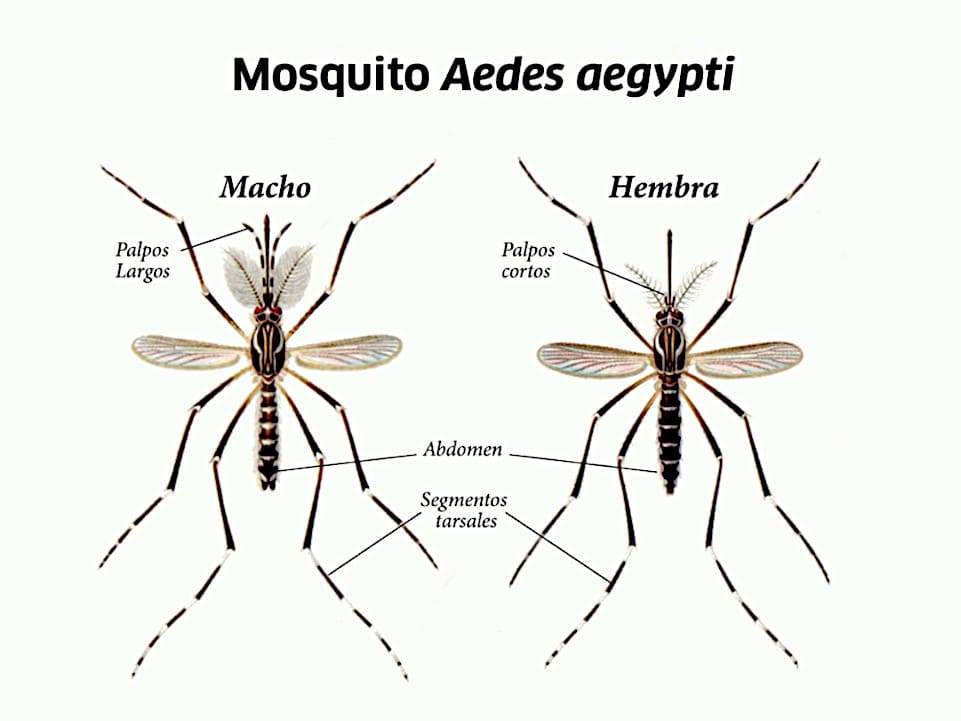
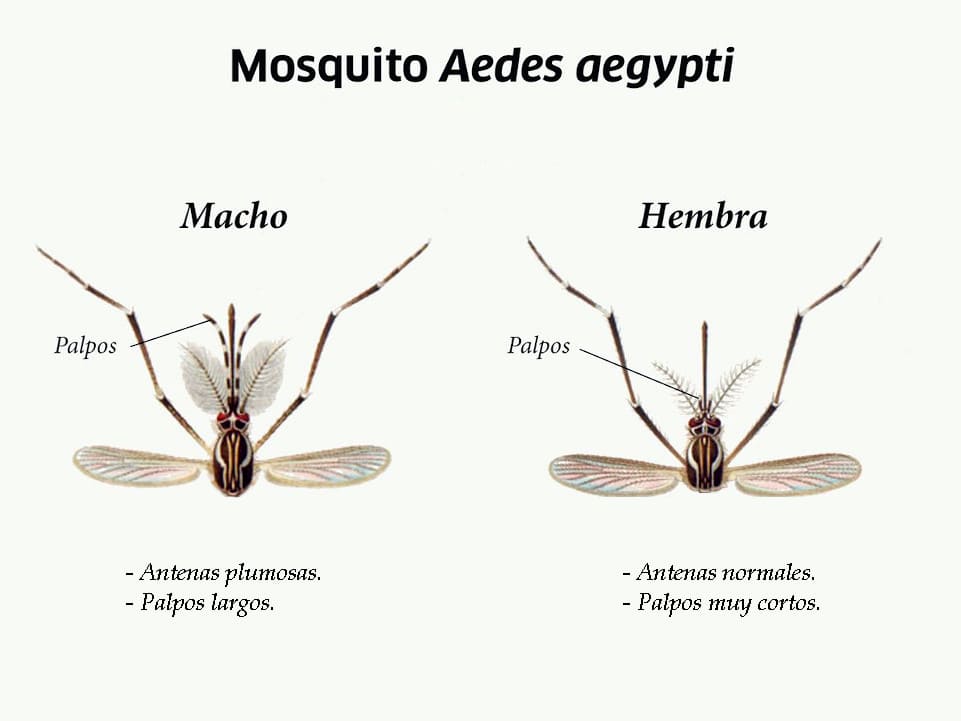
Mosquitoes, Aedes, male and female

Differences in male and female Mosquitoes

We're going to see the morphological structures of the mosquito, in its larval, pupal, and adult stages. This will help us identify them. The larvae and pupae develop in water, while the adults do so on land or in the air. This adaptation to two completely different ways of life results in very distinct anatomical structures.

Adults are small (between 3 and 6 mm) and very slender. The adult mosquito’s head is equipped with a piercing-sucking mouthpart; the mandibles and maxillae are modified into two long stylet-like structures, with the maxillae responsible for piercing the host’s skin.

In males and females that are not hematologic, stilettos mandibular and maxillary are absent or very reduced, so that they can only feed on vegetable juices.

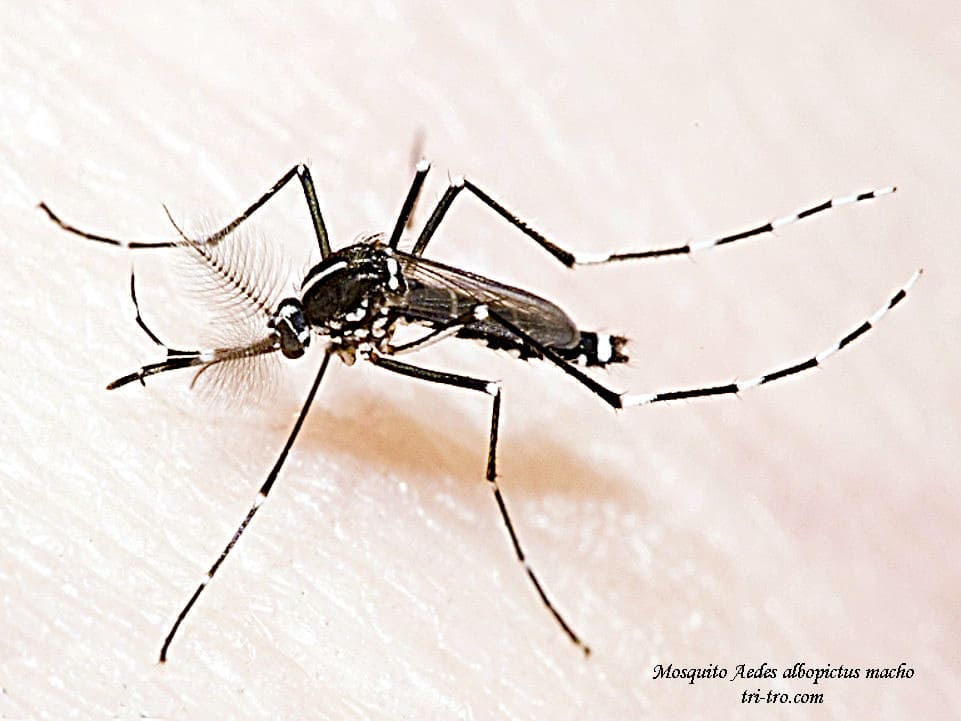
Males can be easily distinguished from females by the appearance of their antennae (which are very feathery in males and sparse in females).

Eggs of mosquitoes:

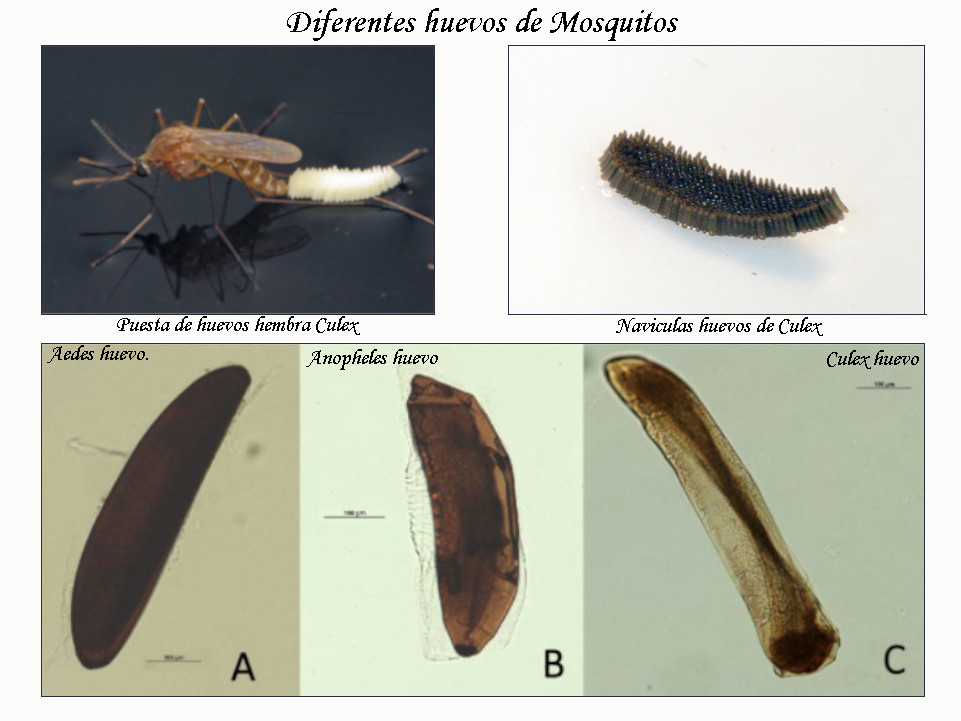
Different eggs of the Mosquitoes

The egg is deposited individually or in clusters called nymphs, either directly on the water or on dry ground that is likely to flood. In general, egg-laying occurs two to four days after feeding on blood (Becker et al., 2010).

Depending on whether eggs are laid on water or on land. This choice or laying strategy is related to the eggs’ ability to withstand dry conditions. The difference is that only eggs laid on the ground can survive long periods without moisture (Schaffner et al., 2001). Generally speaking, mosquito species that lay their eggs on water tend to overwinter as adults or larvae, while those that lay on the ground overwinter in the egg stage.

Egg clusters (groups of eggs): these eggs have two sides—one that repels water (the side furthest from the water) and another that is hydrophilic (the part in contact with the water)—which breaks the surface tension and provides buoyancy. The boat-like shape of the egg clusters in some species of the genus Culex gives them stability. In the genus Culiseta, the large size and irregular shape of the navicles increase the surface area in contact with the water, enhancing their buoyancy.

The Anophelinae species lay their eggs individually on the water's surface, with the exception that these eggs are equipped with two lateral floats and a viscous sheath that breaks the water's surface tension, providing them with stability and buoyancy.

Genres Ochlerotatus and Aedes and subgenus Culicella (genus Culiseta) perform placed individually on the soil or plant debris, never on the water.

Once embryonic development is complete, hatching occurs. In eggs laid on the ground, hatching does not coincide with the onset of flooding, as they require external stimuli to break their dormant state (López Sánchez, 1989), such as constant vibrations on the water’s surface, sudden changes in salinity, etc.

In contrast, eggs laid on the water’s surface have an easier time hatching because they do not need to break out of their dormant state; environmental stimuli are all that is needed for hatching to occur. Under optimal conditions, the eggs hatch two to four days after being laid, usually in a synchronized manner.

Mosquitoes larvae:

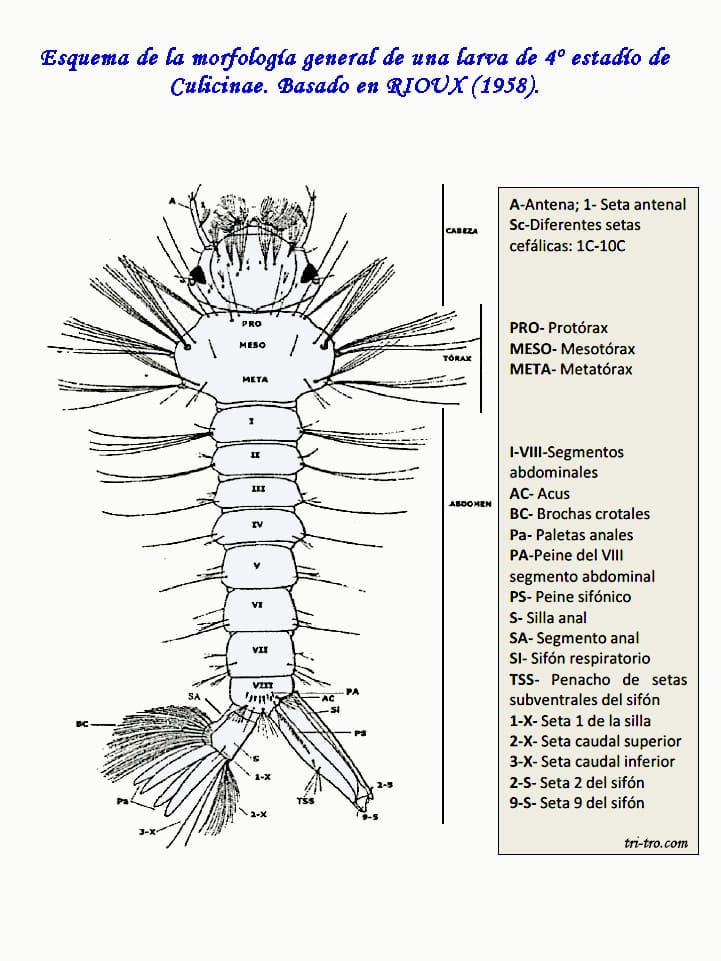
Fourth-instar larva of the Culicinae. Based on Rioux (1958).

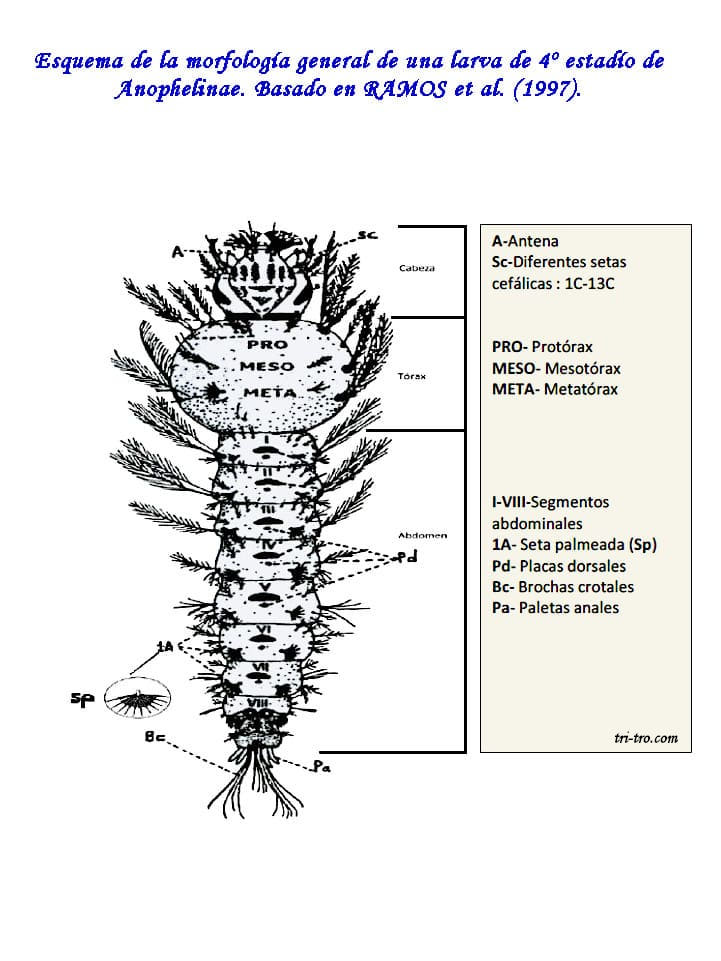
Anophelinae larva in the 4th instar, based on Ramos (1997).

The larva is the only one that goes through various developmental stages; the larvae must store enough energy to withstand the energy expenditure associated with metamorphosis and adult emergence.

The larvae's body is clearly divided into a head, thorax, and abdomen. The thoracic segments are fused and are wider than the abdominal segments. The abdomen consists of ten segments, the eighth of which is formed by the fusion of the eighth and ninth segments. The tenth abdominal segment is the anal segment.

The larval stage, along with the pupal stage, is the critical phase of the life cycle. After hatching, the young larvae are already fully adapted to life in water, but two characteristics indicate their mode of life: the use of oxygen for respiration and the consumption of suspended or dissolved particles for food (Clements, 1992).

Their voracious appetite and indiscriminate feeding are interrupted only in the moments immediately before and after molting (shedding their exoskeleton to allow for growth) (Christophers, 1960).

In addition to food, the larvae use the water they ingest—which always contains microorganisms and organic matter of high nutritional value in solution—as a food source (Wotton, 1990). This ability to filter, enrich, and utilize the scarce nutrients available in their environment is vital to their survival.

The growth of the larva is continuous during the four phases or stages of development, but not all regions are growing the same. The growth of hard parts (siphon and skull) takes place immediately after each molt. The soft tissue may not be the same, as occurs in some species where the chest grows before in length than in width.

Larvae in their fourth stage of development require a greater supply of nutrients, as this is when they build up most of the energy reserves that will be used during metamorphosis and the emergence of the adult.

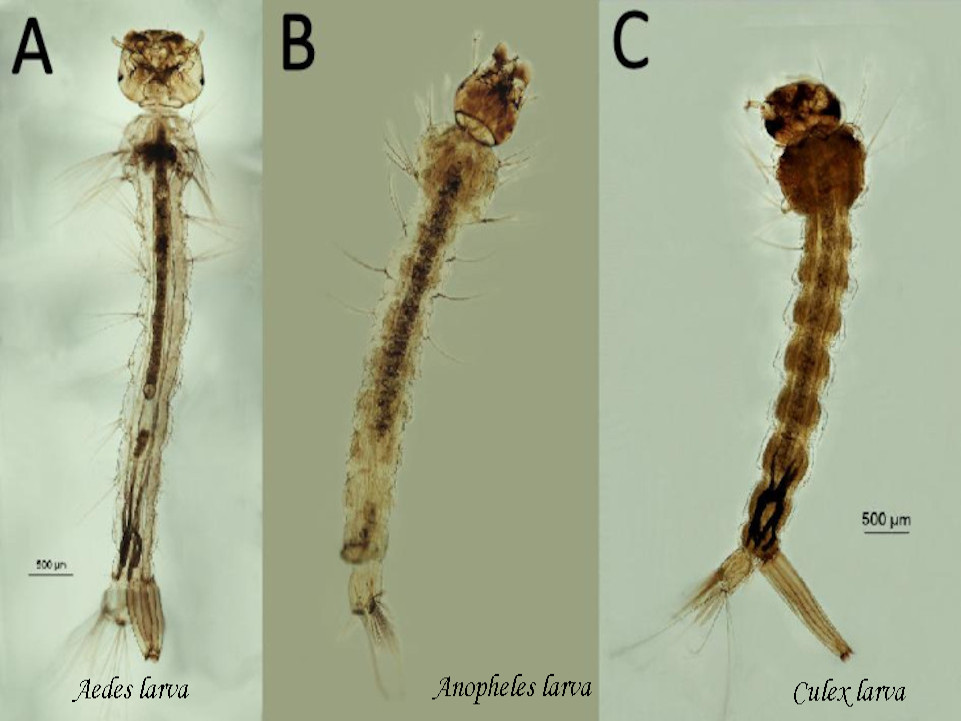
Larvae of mosquitoes. A. Aedes. B. Anopheles. C. Culex.

Pupae of mosquitoes:

The pupa is the third phase of development and the last one, which takes place in the aquatic environment. Generally, it is understood this phase as a period of change between the larva and the adult, devoid of power. It is a stage without states or intermediate stages of development, where it helps to save energy, because it is going to produce physiological changes and structural high cost of energy, aimed at the formation and the emergence of the adult.

After metamorphosis, only the nervous system, Malpighian tubules, and fat body remain from the larva. All other organs and systems are destroyed. The new generation of organs develops from undifferentiated embryonic cells (Clements, 1992).

The pupa spends most of its time on the water's surface, breathing air through its respiratory trumpets. Each trumpet contains a spiracle, and these, along with the swimming paddles, are the structures that most characterize it and by which we identify it.

The pupa is considered a transitional stage between the larval and adult stages, during which the mosquito does not feed.

The head and thorax are fused forming a single region called the cephalothorax, and the abdomen are the two anatomical regions of the pupa. To navigate, use the abdomen, since that is the unique part articulated, which acts organ propellant.

To determine the sex of pupae and distinguish between females and males, look at the genital lobe (which is long, conical, and completely divided by a deep fissure in males), unlike the small, partially divided lobe in females, which is separated by a shallow fissure. We can also tell by body shape and size (females are more elongated and their abdomen is as wide as the cephalothorax); in males, the cephalothorax is much wider than the abdomen.

In the evolution of each species, we find both specialists (limited to specific environments) and generalists, which are capable of inhabiting a wide variety of different environments. This is the case with mosquitoes of the genera Anopheles, Culex, Orthopodomyia, Uranotaenia, Coquillettidia, and Culiseta, which exhibit more uniform behavior.

Among them, Anopheles may be the genus with the most specific aquatic habitat. Although Anopheles larvae can coexist with various Culicidae species and colonize temporary water bodies with variable surface areas and vegetation—such as swamps, mangroves, rice paddies, rivers, streams, or tree hollows— However, they prefer fresh, clean, oxygenated, and cool water with abundant vertical vegetation, which serves to protect them from potential predators and sudden river currents.

The moment of emergence is the most critical stage for the adult; during this process, the pupa remains motionless on the surface and defenseless against potential predators or the effects of wind and waves.

To avoid this, it moves in advance to find quiet, safe areas, so that nighttime is when atmospheric conditions offer the greatest guarantee of stability (Brump, 1941).

It produces the emergence of the mosquito. At that time, the pupa begins to absorb air, and it accumulates in its interior, until the pressure causes the breakage of the cuticle along and the adult is free to the outside air.


Mosquito larvae. A. Aedes. B. Anopheles. C. Culex. Let's take a closer look to identify them.

Adult Mosquitoes:

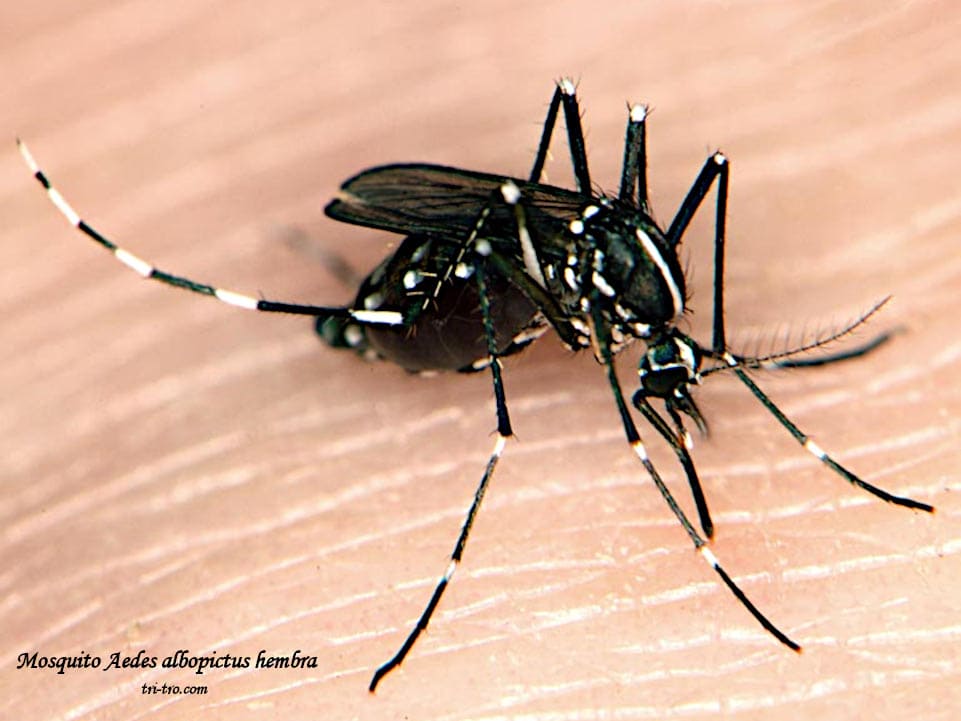
Asian tiger Mosquitoes, Aedes albopictus, female.

Asian tiger Mosquitoes, Aedes albopictus, male.

After emergence, the adult poses on the surface of the water until the wings are dried completely, harden and prepare to start the flight. The time you need to fly is a few minutes.

Instead, to synchronize your metabolism by air need a day (males) and two-day (females) (Gillett, 1983).

When males emerge, they need a little extra time (less than 24 hours) to reach sexual maturity. By the time the female emerges, the male is already ready to mate. A single male can inseminate several females; in contrast, females mate only once—they are monogamous—storing sperm in the spermatheca and using it for the continuous fertilization of eggs.

There are species in which, to attract females, males typically gather in swarms during the early morning and late afternoon, when light levels are relatively low. This oscillating movement of the swarm—in all directions and at various heights—serves as a signal to females, who are drawn to them (Clements, 1992).

After courtship, mating begins; copulation is brief (lasting no more than a minute), occurs face-to-face, and takes place in an area away from the swarm. After insemination, the male secretes an inhibitory substance that renders the female unreceptive for the rest of her life (Becker et al., 2010). The male dies a few days after insemination.

The female, on the other hand, must find a host to feed on in order to obtain enough protein to complete egg-laying. To do so, they have a complex sensory system that detects the presence of potential hosts in the vicinity. The dispersal process can be summarized in three phases (Sutcliffe, 1987):

  • Dispersion is not targeted or random: The female moves randomly in search of stimuli in the presence of a potential host. The first capture is olfactory. Detect odors and substances secreted by the body as the CO₂ or lactic acid to distances greater than 20 meters.

  • Dispersion-oriented or directed: When the female detects a stimulus, she directs her flight toward its location. As she approaches, she begins to fly in a zigzag pattern, and when she is close enough, she is able to distinguish the components of the perceived stimulus, which are secreted by each host.

  • Attraction: This is when the female has come close enough to identify the type of host and determine whether it is suitable for feeding. In this phase, identification is based on visual cues. Diurnal species are able to recognize the host’s color and shape and are attracted to blue, black, and red (Lehane, 1991). Nocturnal species rely on changes in intensity. Once perched on the host, the female can detect the heartbeat and body temperature, allowing her to select the most well-supplied areas to begin feeding (Davis & Sokolova, 1975).

Regarding host selection, it has been established that mosquitoes can feed on three types of hosts: mammals, birds, and amphibians (Schäefer, 2004). Those that prefer birds are called ornithophilic; those that feed on humans are called anthropophilic; and those that feed on other mammals and amphibians are called batrophilic.

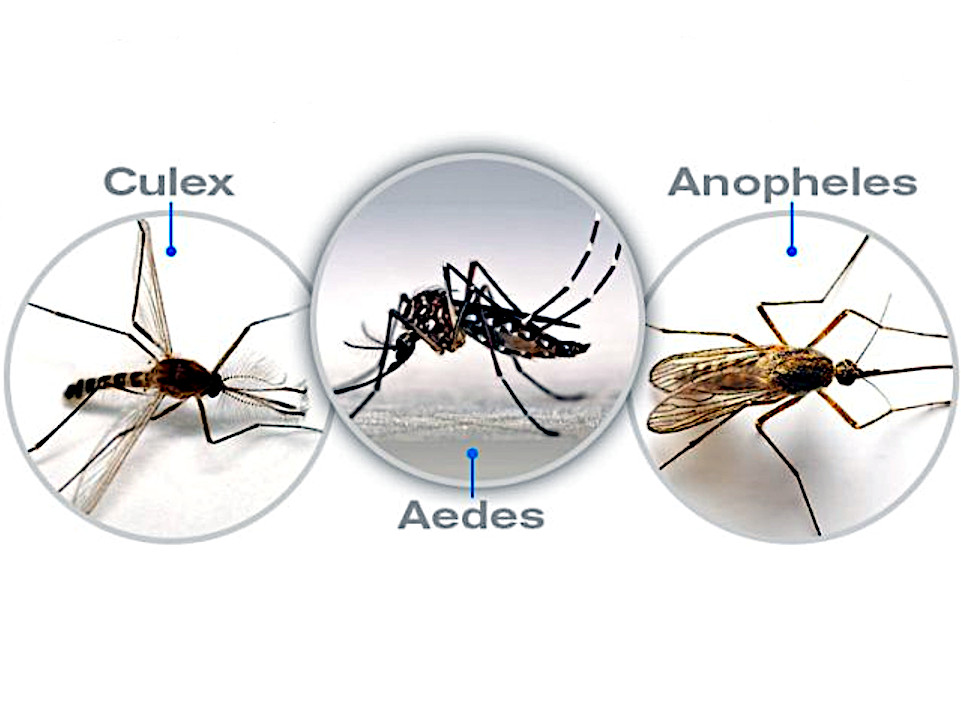
Types or varieties of mosquitoes. Culex. Aedes. Anopheles. Look closely to identify them.

Literature review:

MERCK & CO. (1995). Manual Merck de Veterinaria. Rahway, N. J., EE. UU.

Biología de mosquitos (Diptera: Culicidae) Francisco Alberto Chordá Olmos. Universidad de Valencia (2014)

DORN, P. (1987). Manual of avian pathology. Ed. Acribia. Zaragoza.

HOFSTAD, M. S. (1984). Diseases of Poultry. Iowa State University Press, Ames, Iowa.

ZARZUELO, E. (1982). Vade mecum of the pathology, infectious poultry. Ed. Aedos, Barcelona.

CASTELLÓ, F. and CASTELLÓ, J. A. (1960). The New Art of Raising Chickens. Aedos, Barcelona.

OLIVEIRA, R. L. DE, R. HIEDEN & T. F. SILVA. 1986. ALGUNOS ASPECTOS DE LA ECOLOGÍA DE LOS MOSQUITOS (DIPTERA: CULICIDAE).

OROZCO, F. (1989). Breeds of chickens Spanish. Ed. Mundiprensa. Madrid.

LACADENA, J. R. (1998). Genetics. Ed. AGESA.

PETERSEN, L. R. & J. T. ROEHRIG. 2001. WEST NILE VIRUS: A REMERGING GLOBAL PATHOGEN. EMERGING INFECTIOUS DISEASES.

PUERTAS, M.J. (1992). Genetics: Fundamentals and Perspectives. McGraw-Hill Interamericana.

MITCHELL, C. J., T. P. MONATH, M. S. SABATTINI, J. F. DAFFNER, C. B. CROPP, C. H. CALISHER, R. F. DARSIE, JR. W. L. JACOB. 1987 A. ARBOVIRUS ISOLATIONS FROM MOSQUITOES COLLECTED DURING AND AFTER THE 1982-1983 SANCHEZ-MONGE, E. (1969),

Genética. Ed. Espasa-Calpe S.A.

OROZCO, F. and ROBLA, F. (1986). Genetic aspects of the León rooster. 24th Symposium of the WPSA (Spanish Section): 199–212.

BUENO, MARÍ R., A BERNUÉS BAÑERES, FA CHORDÁ OLMOS & R. JIMÉNEZ PEYDRÓ. 2011. Aportes al conocimiento de la distribución y biología de Anopheles algeriensis Theobald, 1903 en España.

HILL, J. L. (1973). Genetics, general and applied. Ed. UTEHA.

CASTELLÓ, J. A., LLEONART, R., FIELD, J. L., OROZCO, F. (1989). Biology of the chicken. Real Escuela de Avicultura.

BERNUÉS BAÑERES, A. R.; BUENO MARÍ, F. A.; CHORDÁ OLMOS, R.; & JIMÉNEZ PEYDRÓ, R. 2012. Contribución al conocimiento de los mosquitos (Diptera, Culicidae) del Parque Natural del Carrascal de la Font Roja (Alicante, España).

LLEONART, F., ROCA, E., CALLÍS, M., GURRI, A., PONTES, M. (1991). Poultry Hygiene and Pathology. Royal School of Poultry Science.

STURKIE, P.D. (1968). Avian Physiology. Acribia Publishers. Zaragoza.

LOHMANN ANIMAL HEALTH (2012)


You may be interested in these other sections


Profitable Chicken Farming: Nicolás Casas of Mendoza

Gallus lafayettii: Origin and Characteristics of the Ceylon Fowl

The life and work of Fray Miguel Agustín


Do you want to share or comment on your social networks

Scan to visit TRI-TRO
Escanea para visitar. TRI-TRO