Parasitic diseases:

Red mite. Dermanyssus gallinae

Dermanyssus gallinae. Red mite:

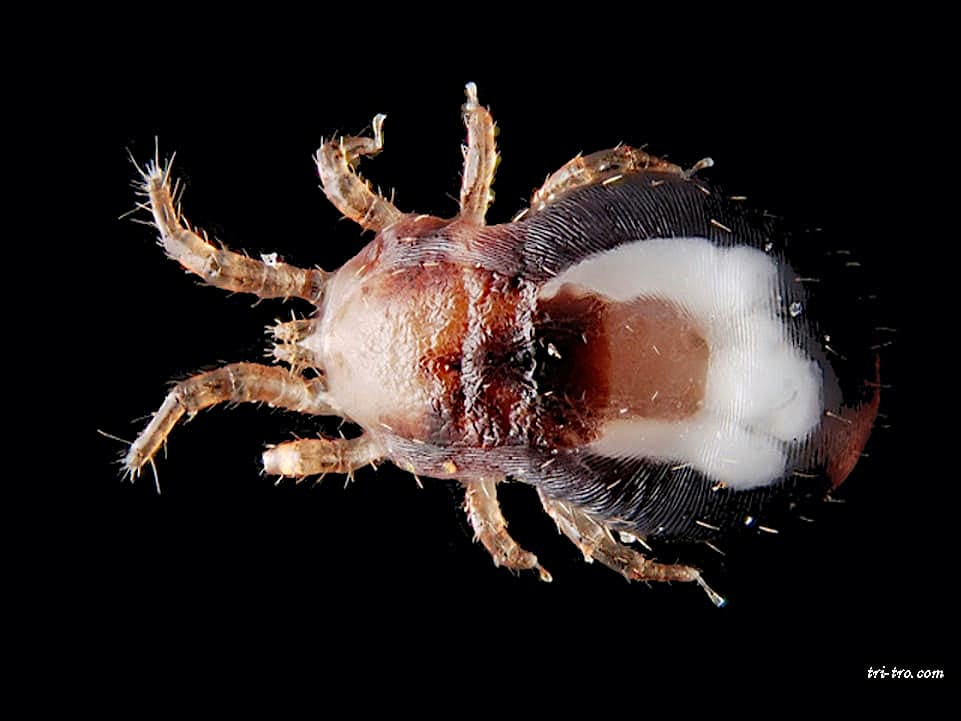
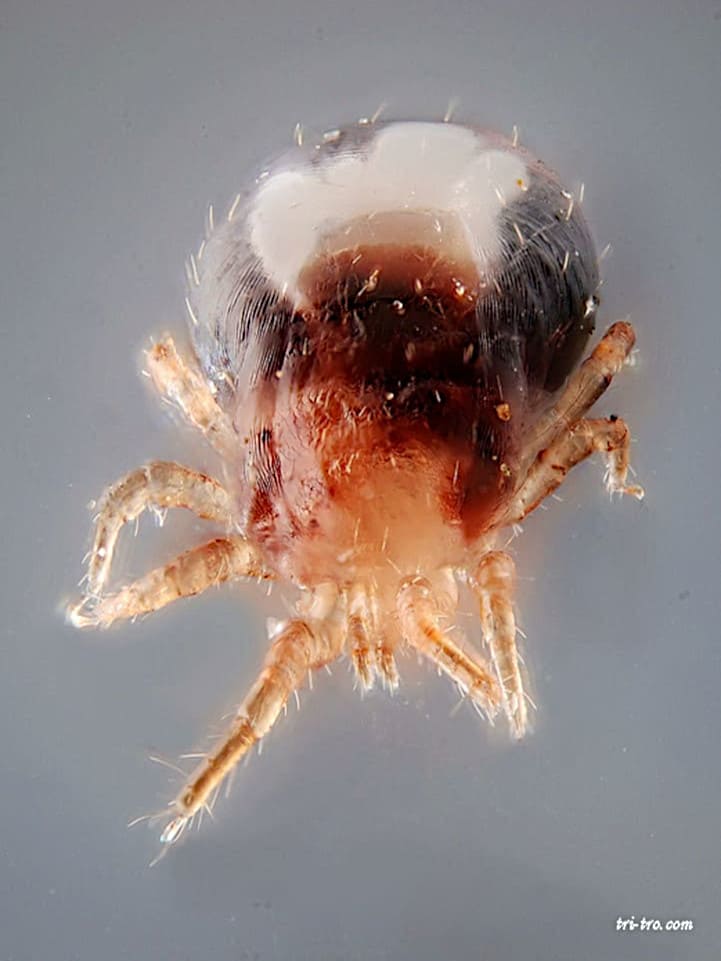
The citrus red mite is a parasitic disease temporaryof great importance in poultry, affecting even the birds were bred in the more modern housing systems. The causative agent is a mite is a tiny so-called Dermanyssus gallinae, very aggressive; it preys solely on birds for food. A stunning image of Gilles San Martin; this tends to be a native of Europe and Asia.

In contrast, the Ornithonyssus sylviarum The black species, which is a constant parasite on the bird, is less aggressive and is typically found in North and South America; both feed on their hosts’ blood, but in different ways, as we will see in the life cycle or reproduction.

All animals—including us—carry parasites that have evolved to live on or within certain species; each species has its own type of parasite, which may or may not survive for long. Some parasites are harmless, while others cause disease; that is why we must keep parasite levels low—this should be the goal of poultry farmers.

With warmer temperatures is the ideal climate for the proliferation of mites and lice.

We simply think of them—lice and mites—as things that bite; it feels like they’re biting us.

So you can imagine how much these pests torment the chickens—some of them can even be fatal.

Many of the most effective treatments can be obtained, either through agricultural traders or through a veterinarian.

The Dermanyssus gallinae (red mite or clothes mite) is a blood-sucking insect; this is why it has a reddish color; when in a dormant stage, it is brown.

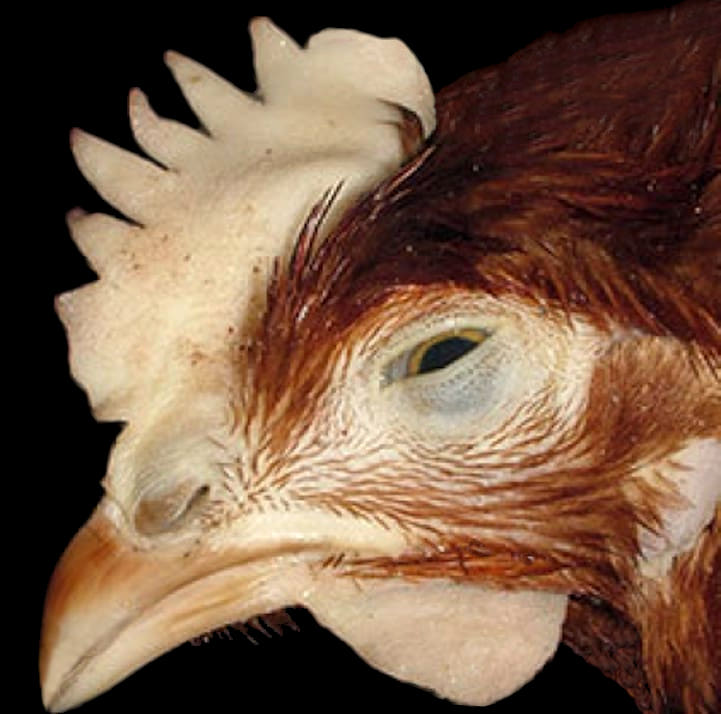
It is found in temperate regions. Because of its feeding habits, it causes anemia in the bird, a decrease in egg production, and increased feed consumption; it can even lead to the death of the hen.

On family farms may refuse to lie down in the nest infested.

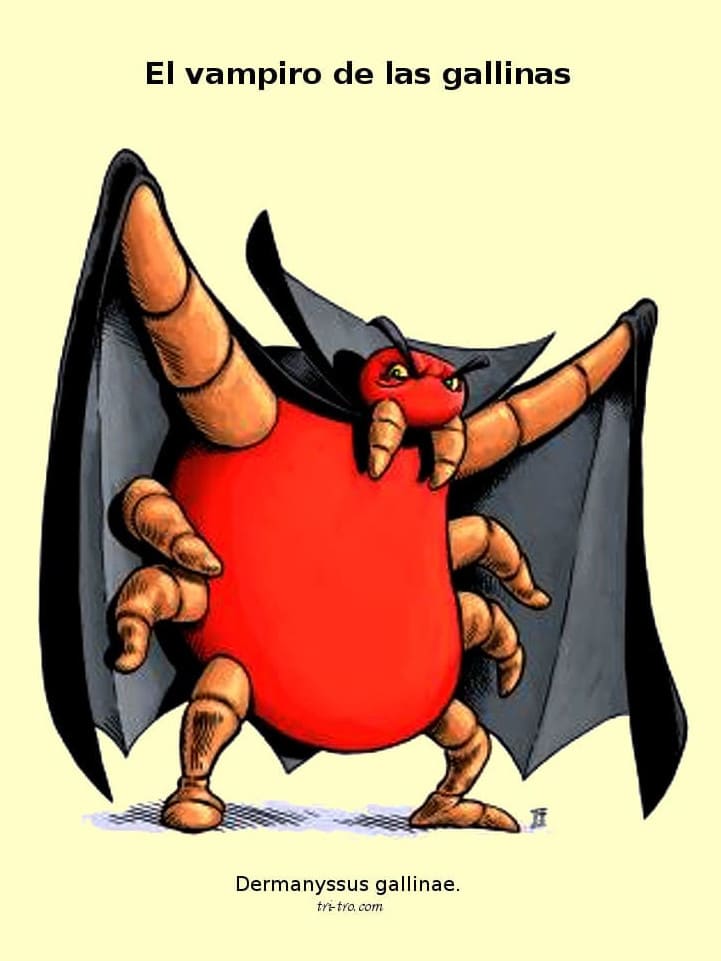
This tiny vampire or leech causes anemia in chickens and can spread the disease from one chicken to another.

It is night and sucks the blood of the hens at night, so it is relatively easy to control.

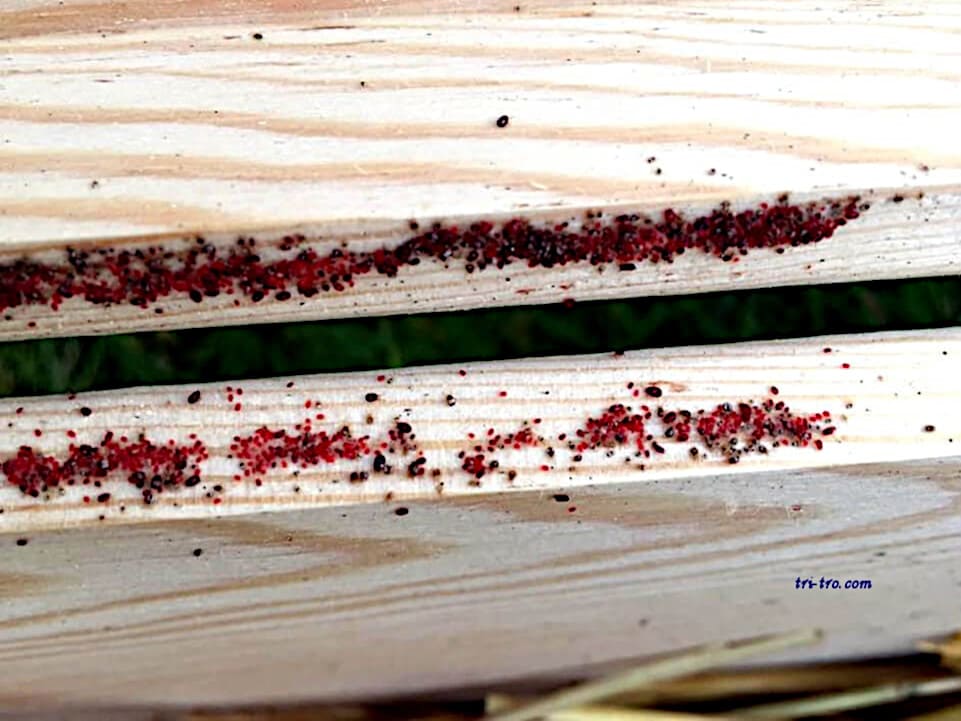
A whitish powder is sometimes the only telltale sign we have to know if they’re in our chicken coop, around the roosting perches, in the cracks, or on unpainted wood or structural elements. They can also be identified by eggs that may have small blood spots on the shell.

Red mites live in these hiding places during the day and come out at night to suck the birds' blood, causing anemia, weakness, and sometimes death. The mite rojo puede vivir durante 6 meses sin alimentarse, y su color es gris y muy hambriento.

Felt, fabric, sack, on the roof of the chicken coop, creates a sanctuary for the citrus red mite, as they can go under and be in a habitat out of five stars.

They hate the light of day, and we should not put it easy, so you have to delete the ceilings all the materials like felt, fabric, sack, and change them.

They will be replaced with Onduline, which is a sheet of bitumen corrugated and non-condensate, as it is hot, or plexiglass clear corrugated, instead, at the top of the chicken coop. Then, the light prevents any citrus red mite to breed there.

You can never be sure of being free of them, since the starlings, sparrows, and other wild birds can bring any time. Surveillance is the only answer.

The red mite's life cycle is extremely short—just ten days from the time the young are born, especially in warm climates—so it's easy to see how even a small infestation can quickly get out of hand.

They can also survive without food for months, and if you step into a chicken coop that has been empty for a while, you’ll be covered from head to toe in tiny gray specks—these are the very hungry red mites. They’ll feed on you, for lack of any other source, and then turn back to their characteristic red color.

Red mite. Dermanyssus gallinae

The Chicken Vampire

Life cycle, reproduction, Dermanyssus gallinae:

European red mite: life cycle.

Under favorable conditions of At temperatures between 10 °C and 35 °C and high relative humidity, the Dermanyssus gallinae mite reproduces rapidly, leading to a massive infestation within a few days. Its eggs hatch in seven to ten days, and by the fifth day, they will have completed their life cycle.

Infected birds suffer from severe anemia; they refuse to incubate eggs in infected nests or abandon them.

Breaking in this way any attempt of reproduction and the loss of exemplary valuable.

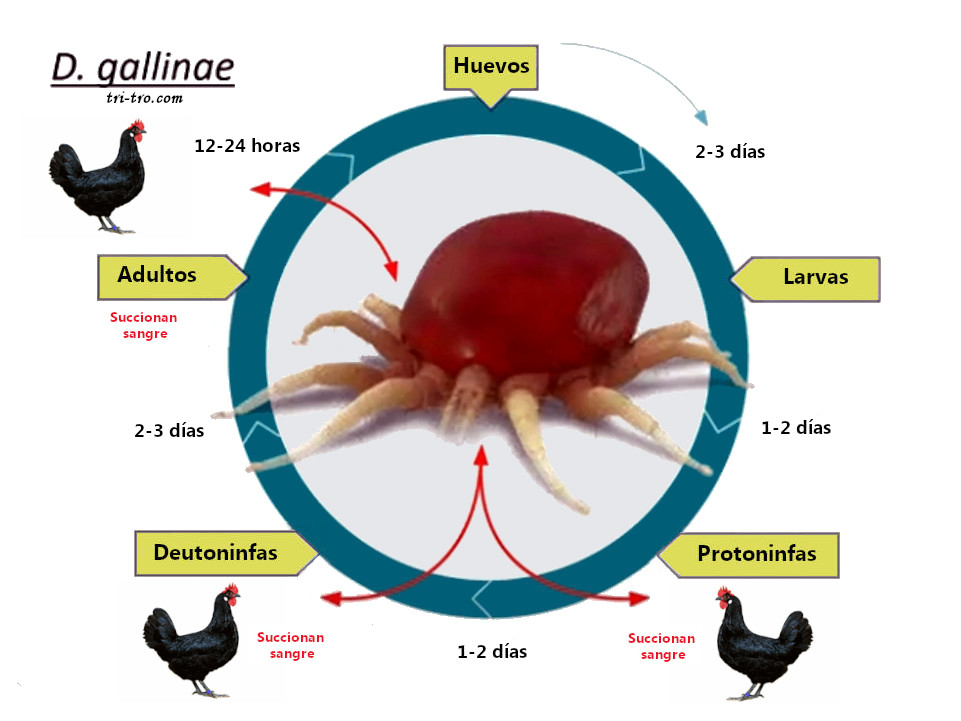
Red spider mite Dermanyssus gallinae They have four life stages during their growth, in addition to the egg (one larval stage and two nymphal stages); at hatching, the larva has six legs, and as it molts through subsequent stages until it becomes an adult, it develops eight legs. As you can see below or in the image, by the third stage (protonymph, deutonymph, adult), it is already feeding on the bird’s blood.

  • Eggs: Hatching: 2–3 days.
  • Larvae: 1–2 days (they don't eat).
  • Protoninfa: 1-2 days (as blood-feeding).
  • Deutoninfa: 1-2 days (as blood-feeding).
  • Adult: 2-3 days (as blood-feeding).

Life cycle, reproduction Ornithonyssus sylviarum:

South American black mite: life cycle.

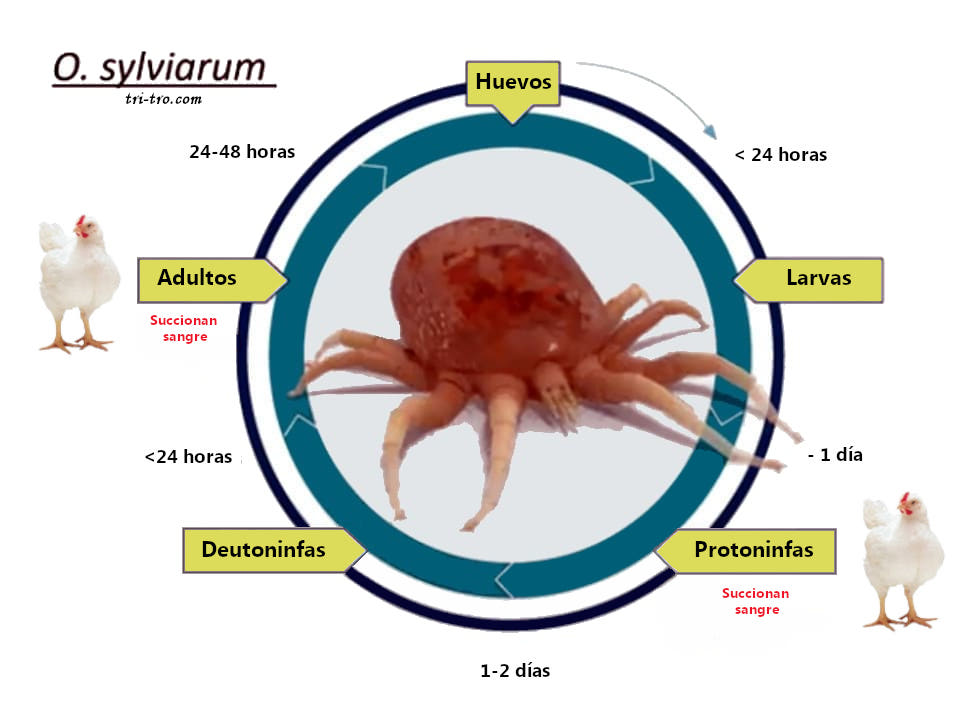
In contrast, the Ornithonyssus sylviarum, color black, has four identical life stages, apart from the egg (one larval stage and two nymphal stages); however, the duration of its life cycle varies. At hatching, the larva has six legs, and as it molts through subsequent stages until reaching adulthood, it develops eight legs. As you can see below or in the image, it feeds on the blood of chickens or hens during only two of these stages (protonymph, adult).

  • Eggs: Hatching 24 hours.
  • Larvae: 1 day (do not feed).
  • Protoninfa: 1 day (since they feed on blood).
  • Deutoninfa: 1-2 days (do not feed).
  • Adult: 24 hours (because they feed on blood).
Anemia por ácaro rojo en gallina
Red mite anemia in chickens

Treatment:

To combat spider mites, feather mites, air sac and tracheal mites, scabies mites, and lice; it is recommended to use ivermectin, a drug marketed by various pharmaceutical companies and sold under different brand names:

Merck (Ivomec and Equalan), Cyanamid (Cydectin), and (Duotin). There is a new product designed to be added to drinking water; EXZOLT acts directly on the mite life cycle; you can read the study.

Despite the fact that all these marks indicate the same concentration, we must be very careful, because in practice it is not so.

The procedure involves applying a drop to the back of the hen's neck and to the underside of its wings, in the featherless area, and rubbing it in with a cotton-tipped swab (like the kind used for ears) so that it spreads evenly and is absorbed into the bird's skin.

This is done every two months, if they do not appear before.

In addition, you can sprinkle flea and tick powder on the litter trays or the area under the perches.

Treatment of the chicken coop:

The torch can be used around the cracks and crevices, but be careful not to set fire to his chicken coop.

Steam or hot water used to clean walls and penetrate cracks.

Pressure washers can be used to spray into cracks to remove dust mites.

Apply a mixture of paraffin and petroleum jelly to the cracks and crevices.

Double-sided tape on the bottom of the hangers or hooks and around their ends. 

—If you have or find flypaper on the hangers as well.

—Treating birds with Frontline or ivermectin. Carbolic or potassium soap can be applied to cracks and crevices to kill mites.

An ash dust bath can really help birds get rid of mites and lice, and it’s their natural way of ridding themselves of external parasites.

Fine powders can be added to dust baths (such as diatomaceous earth); diatoms are a type of algae found in water, and their microscopic fossilized skeletons are known as diatomaceous earth.

They are like tiny, very sharp silica spears that pierce the parasite’s skin; they work by dehydrating the parasite, drawing out fluids with great efficiency and ultimately killing it. Since the parasite’s immune system does not react—as it does not recognize the spears as a chemical threat but rather as a natural cause of death.

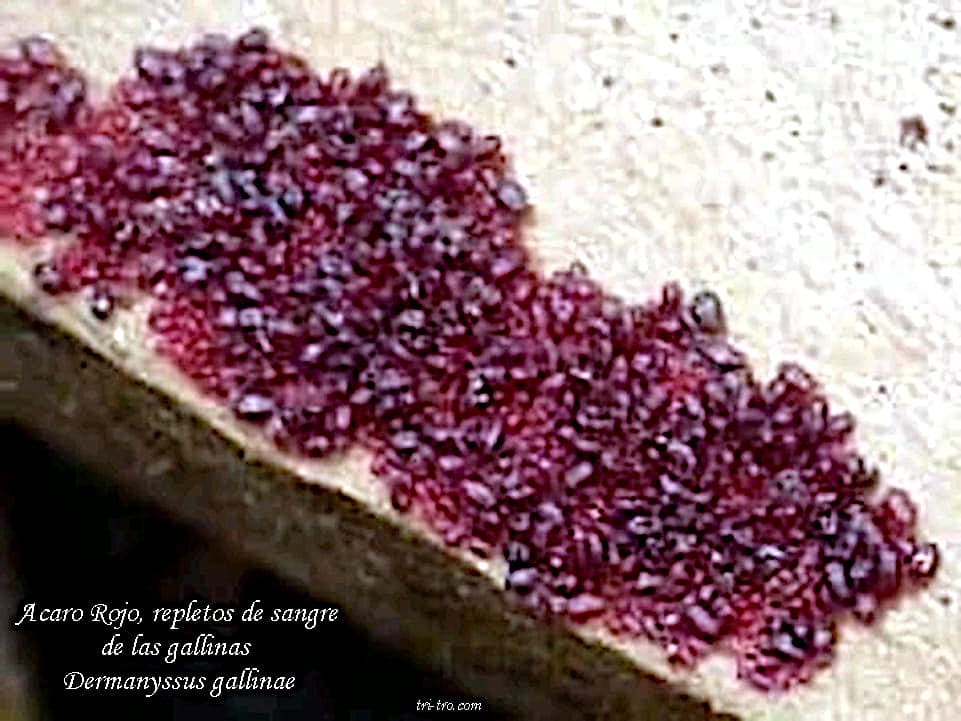
Dermanyssus gallinae full of blood

Red mite in the chicken coop. Dermanyssus gallinae

New system in aseladero modern with electricity

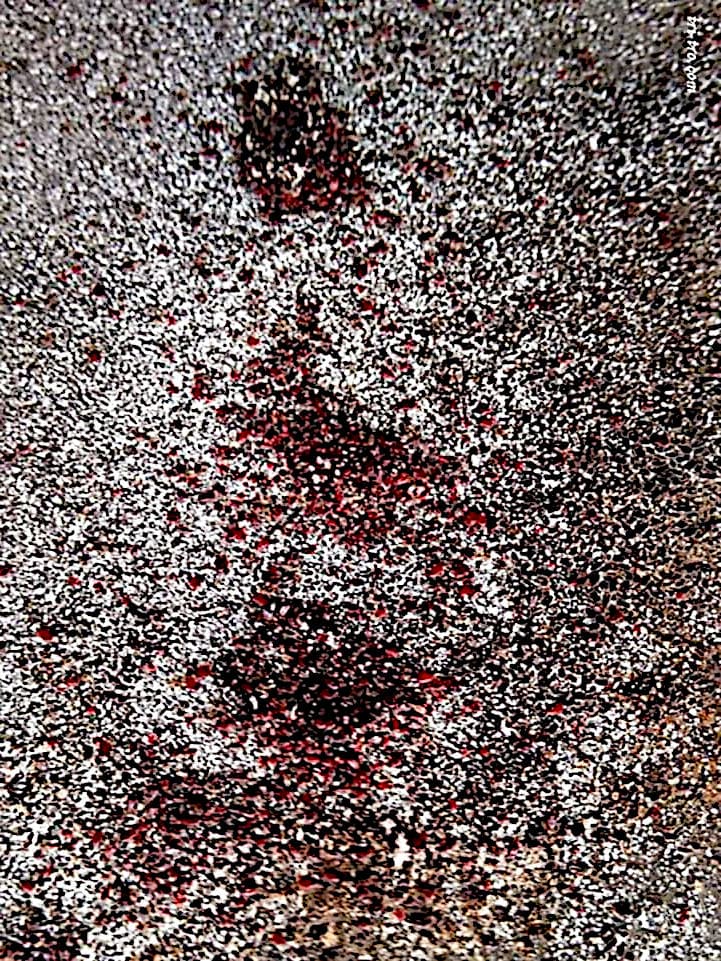
Dermanyssus gallinae. Red mite on the floor of the chicken coop.

Causes and solution to eradicate it from my chicken coops:

Now, regardless of all I will explain this information in an entertaining way so that everyone can understand it, and so that I enjoy writing it too.

This friend, the Dermanyssus gallinae (red mite)—it doesn't fly, but there are flights available all year round, if you know what I mean.

The famous wild sparrows, turtledoves, pigeons, thrushes, and so on serve as their airplanes or taxis, carrying them from one chicken coop to another; they alight and seek out their new hosts—our beloved chickens.

That’s why you need to enclose the entire perimeter of the chicken coop with mesh—either metal or plastic—with small openings that a sparrow can’t squeeze through; it’s like setting up a checkpoint so they can’t all get through; that already works in our favor.

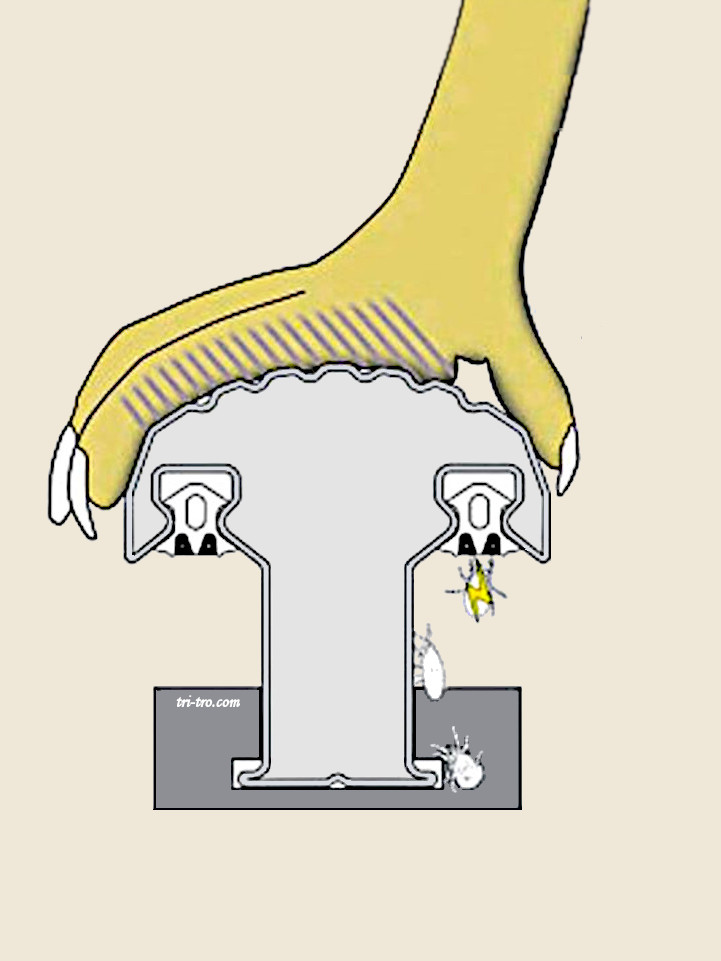
How the creature operates: always at night, when the birds are sleeping, it emerges from its hiding places, makes its way to the roosts, climbs up by the legs, and feeds on blood; this explains its characteristic color when it is sated. And since vampires dislike light, at dawn it retreats to its lair until the following night.

In other words, it doesn't constantly parasitize the bird; it reproduces at an incredible rate and, as you can see in the diagram, quickly becomes a pest, leaving us feeling helpless and anxious because we can't eradicate it.

I’ve had a massive infestation myself, and you learn from your mistakes; I tried all kinds of (chemical) products on the market, but I couldn’t get rid of them completely.

I changed my approach and, while researching natural products, I found exactly what I was looking for: diatomaceous earth.

It is composed of algae fossilized microscopic and the dust is his skeleton, with the form of needles are very sharp, and they have a power of absorption of fluids (liquids) of 65 %.

How the red mite works: These silica spears attach themselves to the mite's cuticle (its skin) and absorb its fluids, eventually drying it out and causing it to die of dehydration.

But you might ask: Why doesn’t the immune system work? (Definition: The immune system is the body’s natural defense against infections.) But of course, it doesn’t recognize any infection, so it doesn’t respond, treating it as a natural death. It’s a different story if chemicals are used; then it will respond.

How can we use diatomaceous earth? There are two ways: one is to spray it using a sprayer on all the walls, ceilings, etc. (it works just as well on flies, ants, etc.), and the other—which is the method I use—is to use it as a natural powder.

After thoroughly cleaning every part of the chicken coop (slats, perches, nesting boxes, ceilings, etc.) with a pressure washer (Kärcher), and once everything is completely dry, I dust the entire area with a fine-mesh steel strainer.

This product is harmless to birds and mammals, including humans (note: wear a mask to avoid inhaling it, just to be safe); it doesn’t irritate the skin, and it also has another use when mixed with chicken manure (droppings).

We’ll use it to make compost; once it’s fully matured, it will be great for our vegetable garden, trees, and lawn, and the plants will thank you for it. This way, in the long run, you’ll keep your chicken coop free of this terrible red mite and other parasites.

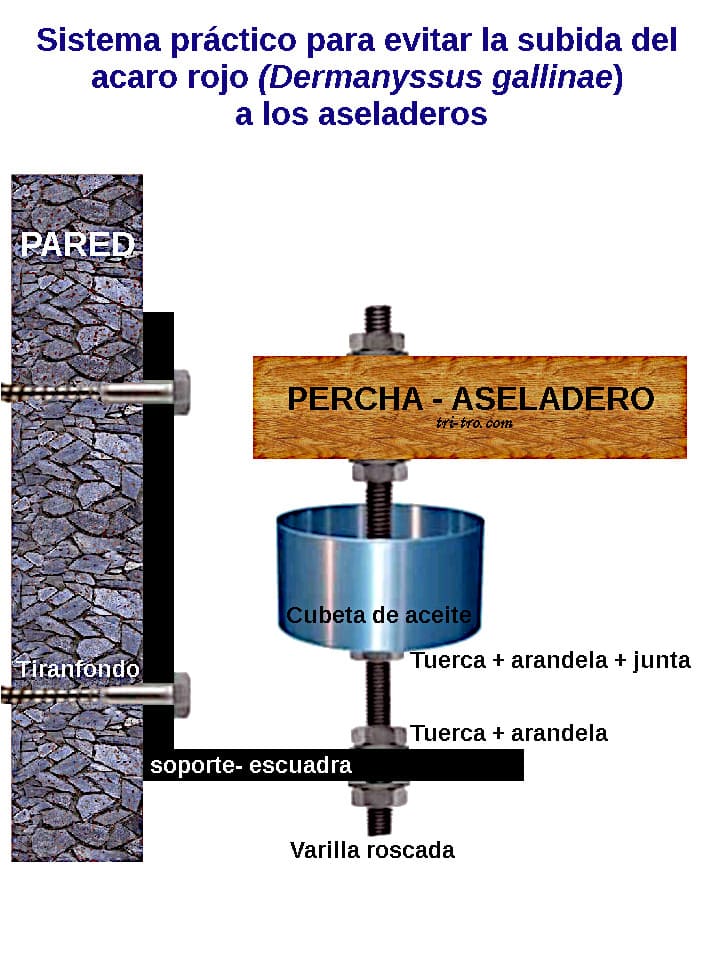
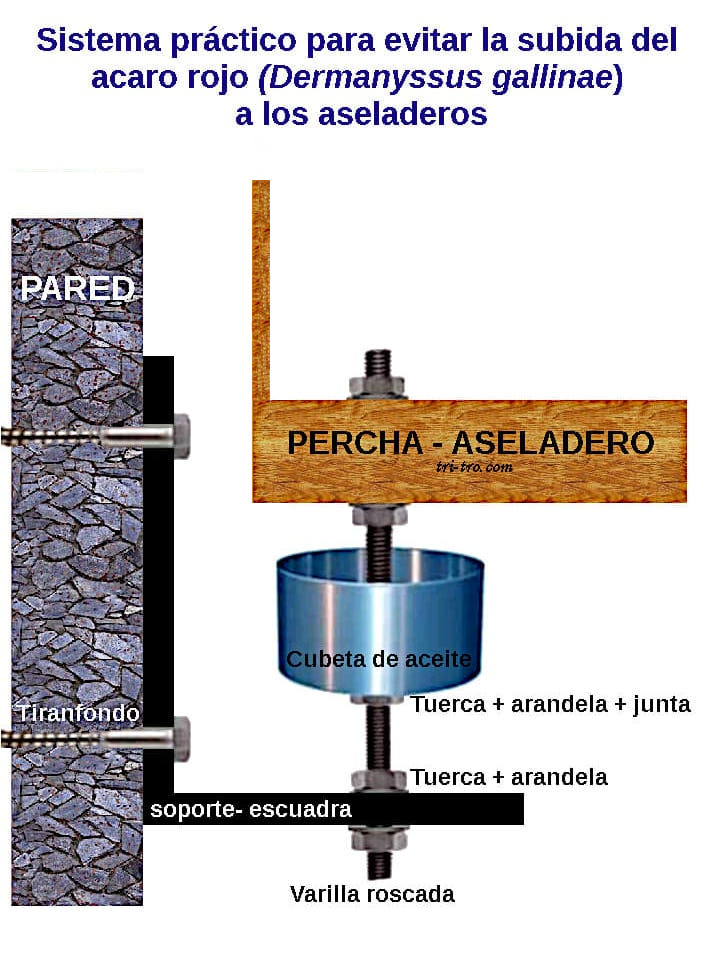
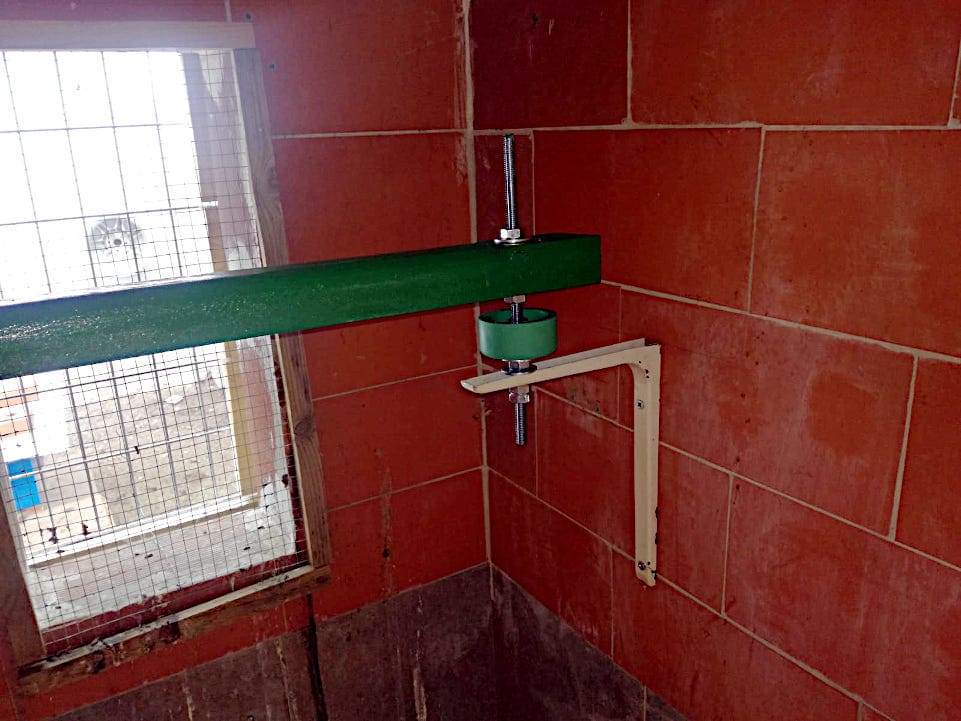
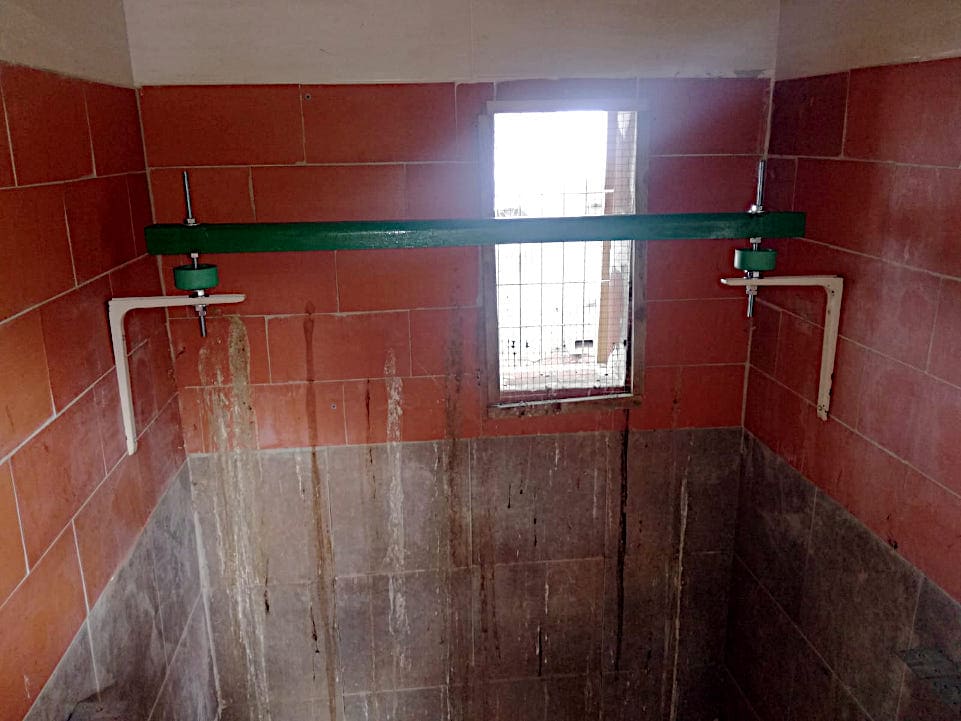
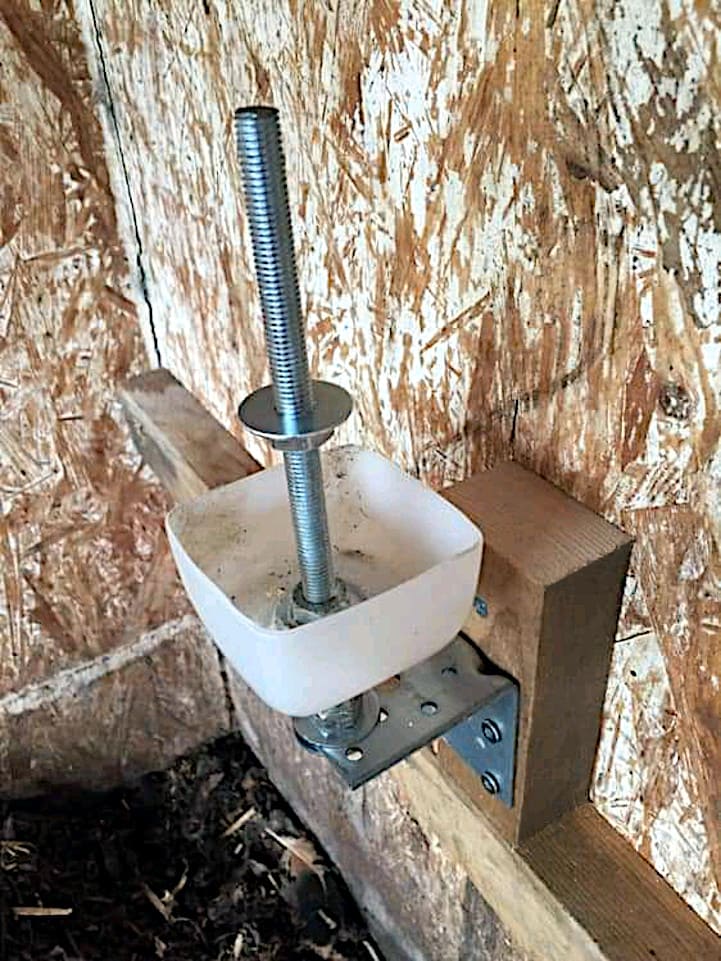
If you're handy, you can build the system shown in the photos; it's very simple, inexpensive, and practical for your hangers or coat hooks. Just remember to leave some space between the hanger and the wall; you can even add a wooden side panel (see design).

This ensures that the chicken and the wood do not come into contact with the wall, so that the mite cannot climb up it and get onto the bird, but instead makes its way and falls into the oil we have prepared.


Outline of the subject

Outline of the clamping table

Left-handed paddle made by Aurelio.

Right-handed paddle made by Aurelio.

A complete set of tools made by Aurelio.

Another format for the aseladero 

A video illustration of the citrus red mite:

Citrus red mite and dust mite black hungry.

Literature review:

MERCK & CO. (1995). Manual Merck de Veterinaria. Rahway, N. J., EE. UU.

BUXADÉ, P. (1987). The laying hen. Ed. Mundiprensa. Madrid.

DORN, P. (1987). Manual of avian pathology. Ed. Acribia. Zaragoza.

HOFSTAD, M. S. (1984). Diseases of Poultry. Iowa State University Press, Ames, Iowa.

ZARZUELO, E. (1982). Vade mecum of the pathology, infectious poultry. Ed. Aedos, Barcelona.

CASTELLÓ, F. and CASTELLÓ, J. A. (1960). The New Art of Raising Chickens. Aedos, Barcelona.

OROZCO, F. (1989). Breeds of chickens Spanish. Ed. Mundiprensa. Madrid.

LACADENA, J. R. (1998). Genetics. Ed. AGESA

PUERTAS, M.J. (1992). Genetics: Fundamentals and Perspectives. McGraw-Hill Interamericana.

SANCHEZ-MONGE, E. (1969), Genetics. Espasa-Calpe S.A.

OROZCO, F. and ROBLA, F. (1986). Genetic aspects of the León rooster. 24th Symposium of the WPSA (Spanish Section): 199–212.

HILL, J. L. (1973). Genetics, general and applied. Ed. UTEHA.

CASTELLÓ, J. A., LLEONART, R., FIELD, J. L., OROZCO, F. (1989). Biology of the chicken. Real Escuela de Avicultura.

LLEONART, F., ROCA, E., CALLÍS, M., GURRI, A., PONTES, M. (1991). Poultry Hygiene and Pathology. Royal School of Poultry Science.

STURKIE, P.D. (1968). Fisiología aviar, ed. Acribia. Zaragoza.

LOHMANN ANIMAL HEALTH (2012)

MSD ANIMAL HEALTH.


You may be interested in these other sections


Broody hens: a step-by-step guide to natural incubation

Gallus varius: Origin and Characteristics of the Green Rooster

The Rooster's Reproductive System: Parts and Function


Do you want to share or comment on your social networks

Scan to visit TRI-TRO
Escanea para visitar. TRI-TRO