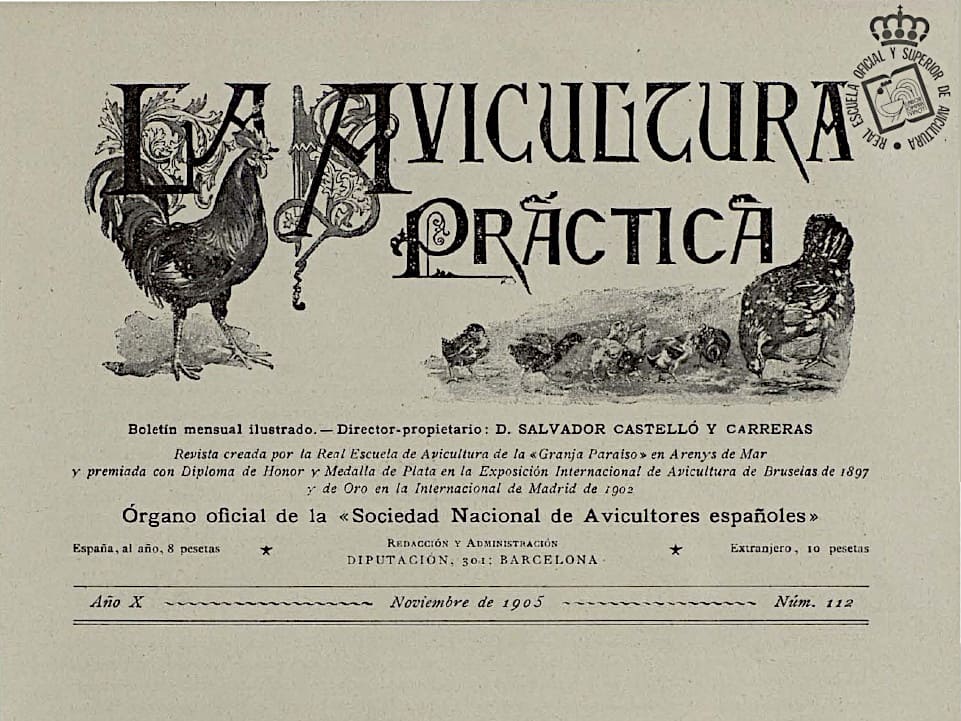
The earliest records or references to the Alicante hen appear in the Castelló magazine Practical Poultry Farming, in issue 112 of November 1905, discussing a topic of farm's selection of birds by the contributor Mario Zamora; he mentions that breed in the following text.
Spain, by lending its territory, has greatly contributed to the spread of this type of bird, which lives and survives thanks to the care provided by rural people, whose only experience is their unchanging daily routine. Throughout the peninsula, there are as many varieties as there are provinces, but they are all intermingled and scattered, so that no single, authentic specimen from that country can be identified.
As well as the Castilian hen and la Catalan del Prat, which are selected in Spain, are giving to both play and are known as the most egg-laying, what would not happen with the Valencia, Alicante, Murcia, Aragon, etc?
I don’t mean to suggest that they surpass such well-known breeds as the Black Castilian and the Catalan del Prat, but at the very least they should also be recognized as highly productive layers; after all, who knows if, over time, through selective breeding, we might succeed in producing purebred strains of these breeds, whose descendants could then compete with the other existing breeds.
Mario Zamora, An expert and pioneer of his time had already predicted the recognition of the Alicante hen; on December 18, 2020, Fesacocur officially certified it.
Practical Poultry Farming nº 112 of November 1905.
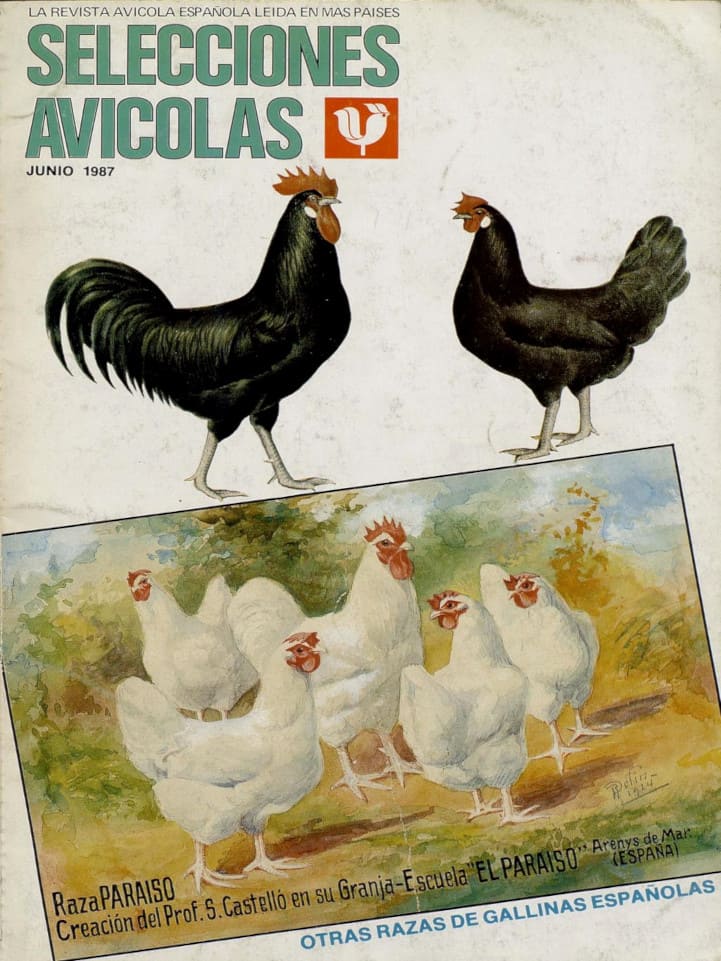
It also says Fernando Orozco, in the journal Selections Poultry June 1987, in the section on “other Spanish breeds of hens”.
“Within these hens, which had an aviculturist who was taking care of them and make some kind of selection, it is also worth mentioning the Alicante whitethat , according to Castelló were admitted in exhibitions and competitions. The aviculturist that you selected was Joaquin Ferranfrom Valencia. These birds were also called “Blanqueñas”.
Selections Poultry, June 1987
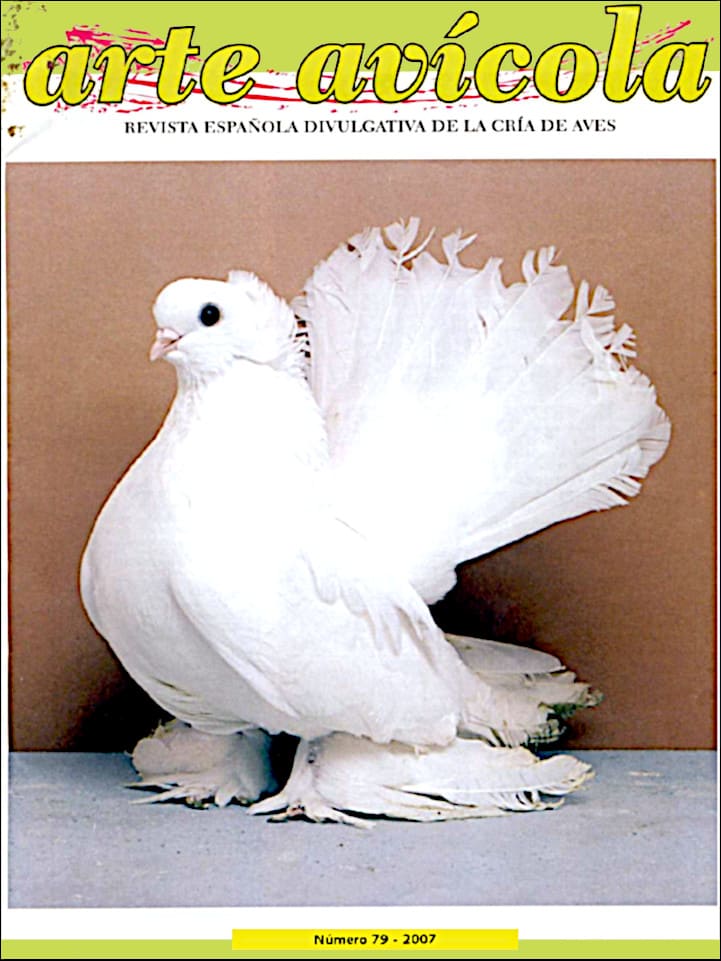
In 1999, two members of the Group Naturalist Heliaca Monóvar (Alicante) in the magazine Art Poultry (Nº. 79 – 2007) which, Interested in raising native chickens from the area, they began searching the rural areas of the region. They found a few chickens with very uniform coloring, large in size, and with combs that drooped to one side.
According to the information provided by the owner, these were very old chickens, as he had been raising them for over 50 years.
Asking people related to the field and the amateur to the breeding of domestic animals, several people knew of this type of chicken, and even had possessed copies.
As has been the case with many Spanish poultry breeds, the shift from traditional poultry farming to a more productive system—and the switch to foreign hybrids—led to the unintentional phasing out of native breeds.
These two members of Heliaca continued their research and were advised to speak with Julio Diez, a highly experienced individual with over 50 years of experience in breeding and preserving native chicken breeds in the province of Alicante.
They contacted him and asked him to come to the town of Monóvar, where the birds had been found; when he saw them, he was very surprised, as he couldn’t believe his eyes. He told them they were authentic Alicante chickens, identical to the twenty he had been raising for over 40 years.
Cover of *Arte Avícola* Nº. 79 – 2007
In July I said that I thought there were no more hens like him, because he had more than 30 years by looking them up in all corners of the province without finding anything appealing.
According to Julio Diez, this breed of Alicante chicken was once common in the chicken coops of rural farmhouses throughout the province of Alicante. He recalls that as a teenager, this Alicante chicken was found in most chicken coops, where spectacular roosters and hens that looked like turkeys were raised alongside other varieties of native chickens, and that Julio kept a few at his home.
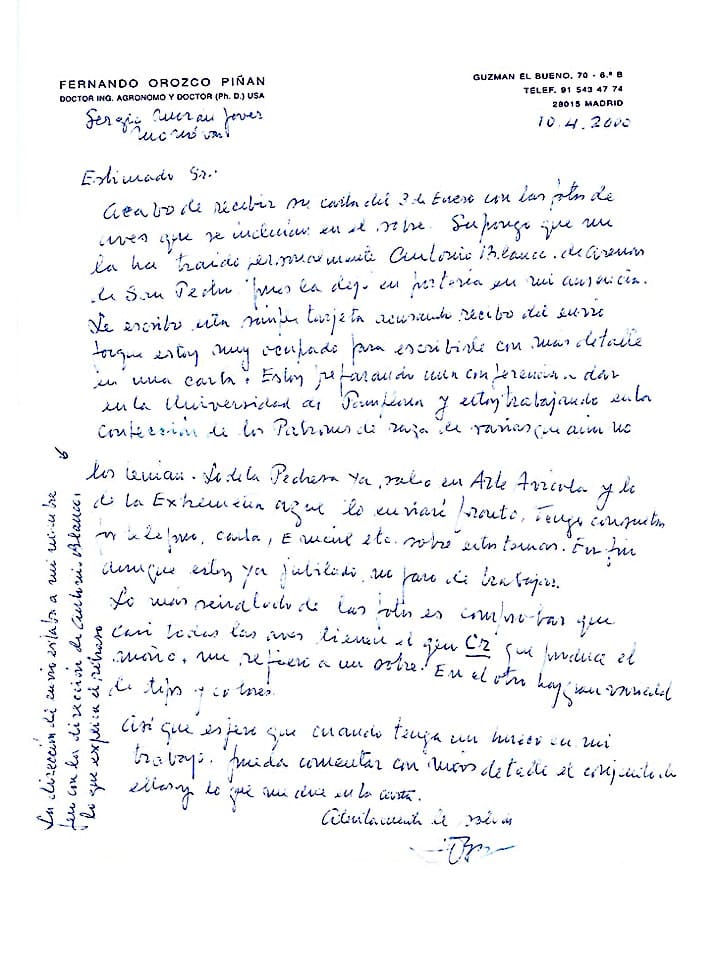
They sent Dr. Fernando Orozco several photographs of the roosters and hens. Months later, they received a phone call from Mr. Orozco, confirming that these were chickens with Mediterranean characteristics and that they were most certainly the so-called Alicantinas or Blanqueñas, a breed occasionally mentioned by Professor Salvador Castelló. He also told them that his father was familiar with this breed and had even raised a few of them.
Orozco encouraged them to launch a project to restore and characterize the Alicante chicken; however, due to health issues and his advanced age, he told them he could not assist them with technical advice. He suggested they speak with Dr. Amadeu Francesch from IRTA’s poultry genetics unit, a close friend of his who is much younger and well-versed in the subject (those were his exact words).
After contacting Amadeu Francesch, they sent him several photographs of the Alicante chickens and other native breeds from the area. Amadeu took a keen interest in the subject, and in April 2004 they visited the IRTA, where Amadeu worked, with the intention of speaking with him in person and learning firsthand what the future held for their chickens.
They initially had 3 cores of hens in different regions of the province, l’Alcoià, Vinalopó Mitjà y Baix Vinalopó, where the birds were found. These flocks, consisting of about 15 roosters and 50 hens, are of the Alicante silver hen breed, known locally as “afabades,” a Valencian term used to describe hens that are the color of the flower of the broad bean plant.
This is a story told to them by Pepe, an elderly shepherd (85 years old) whom they met, who kept a flock of twelve Alicante chickens—both males and females—inherited from his mother, who had raised them all her life; we can imagine just how old they must be. According to Pepe, this flock has never come into contact with other breeds; he has always raised this breed because it has always been highly prized for the quality of its meat and the size of its eggs.
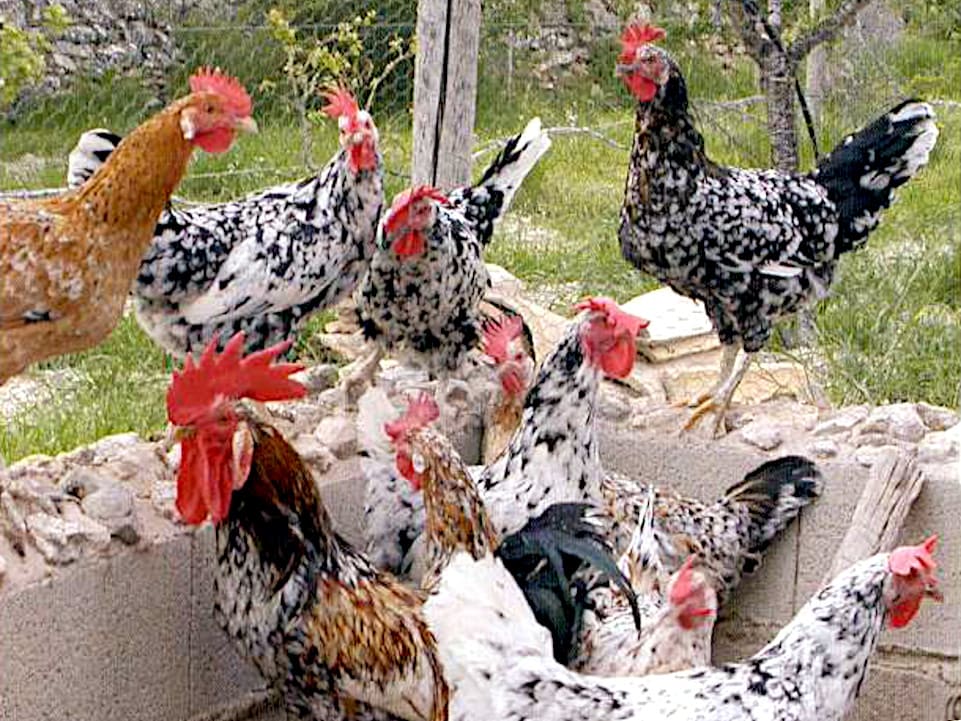
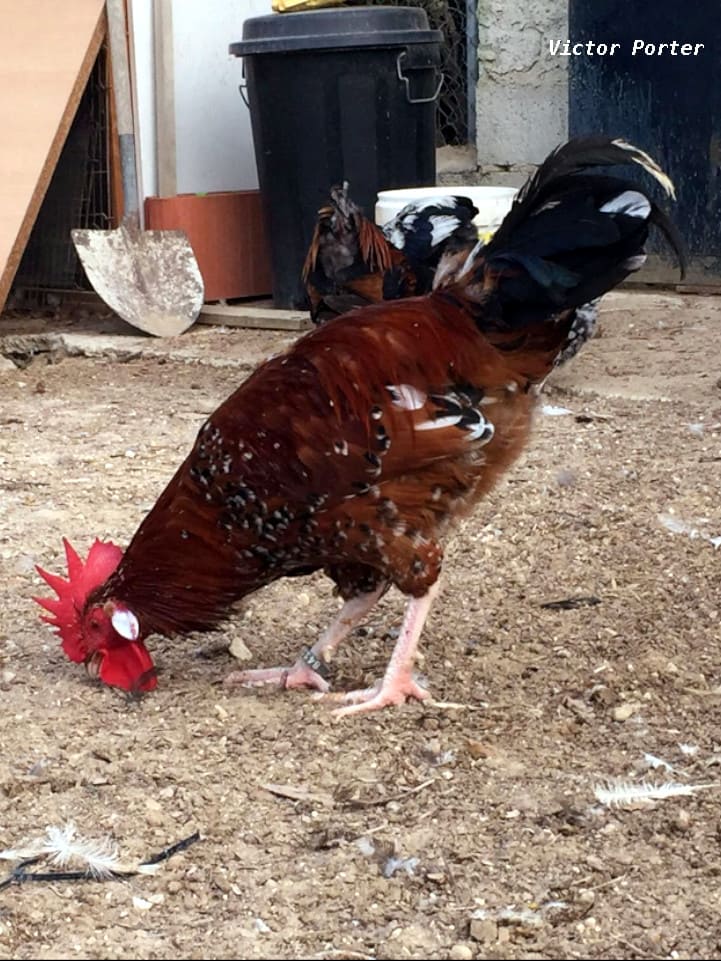
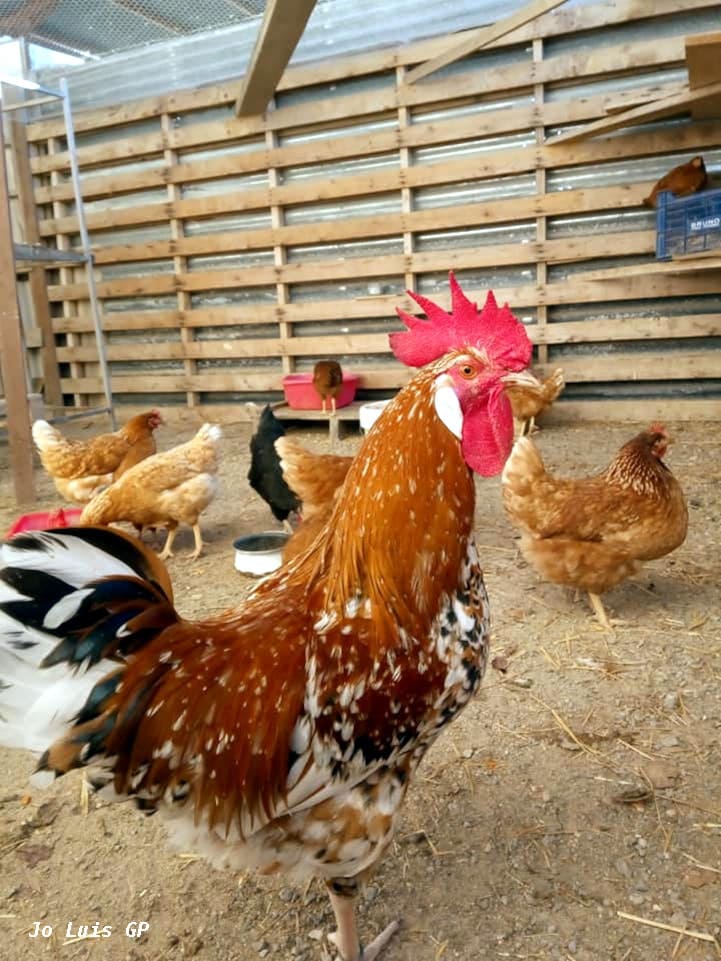
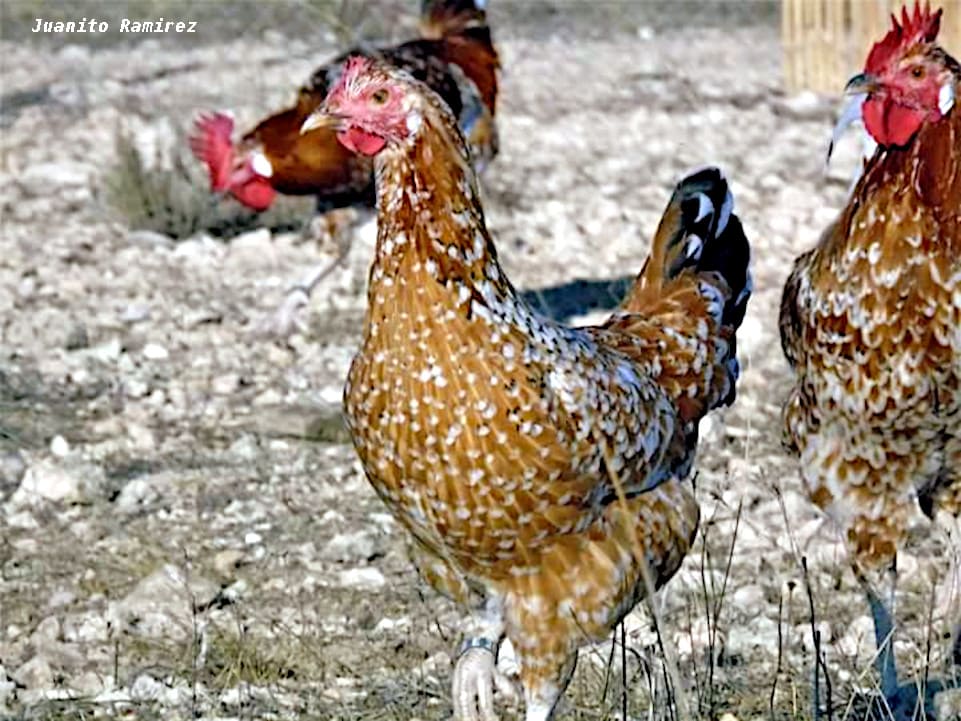
In addition to the silver Alicante hen, there is a breed preserved by Julio, mentioned earlier, consisting of about 25 birds that he calls “speckled Alicante hens or free-range hens,” which he has been raising for over 35 years, as he puts it, “like gold dust.”
These chickens were given to him by a close friend of his, a passionate breeder of native chicken breeds, who could no longer care for them due to his advanced age. With these words, he said to him: “Julio, take care of these because they’re all that’s left of the breed.” These speckled hens lived alongside other native breeds, including the Alicante silver hens, in an area known as the Elche countryside—according to accounts, a region rich in chicken diversity within the province of Alicante.
Handwritten letter from Dr. Orozco answering Sergio Morán Jover. Source: Association of Breeders of Alicante-Breed Chickens.
Areas of broadcast:
Due to these circumstances, the Alicante chickens are currently in a recovery phase; the province of Alicante and its surrounding areas are home to the largest number of breeders. You can find more information through the associations listed below.
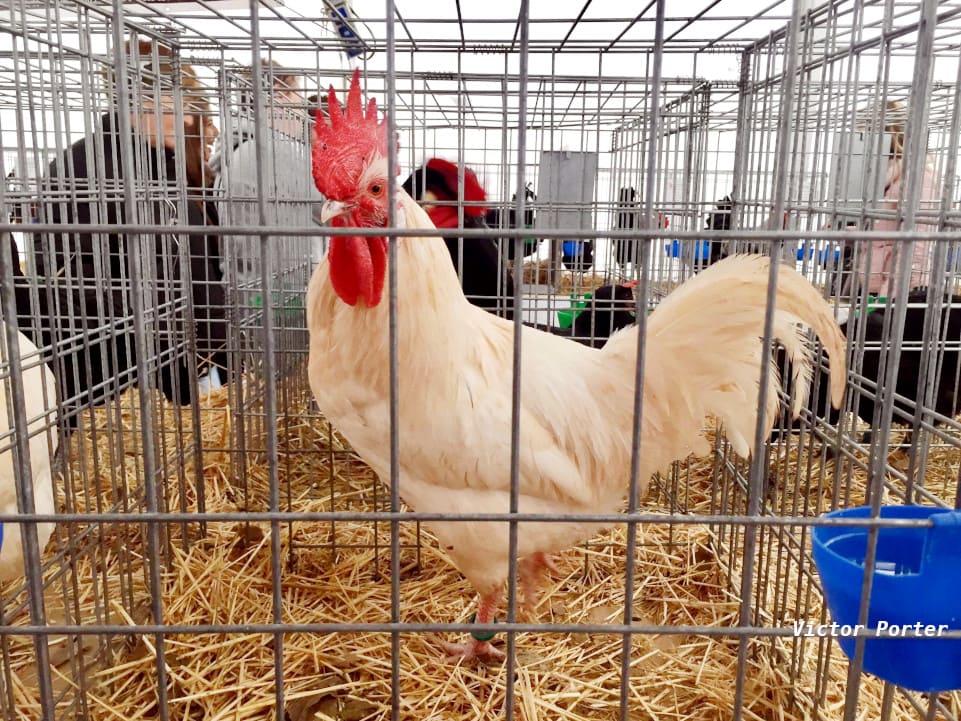
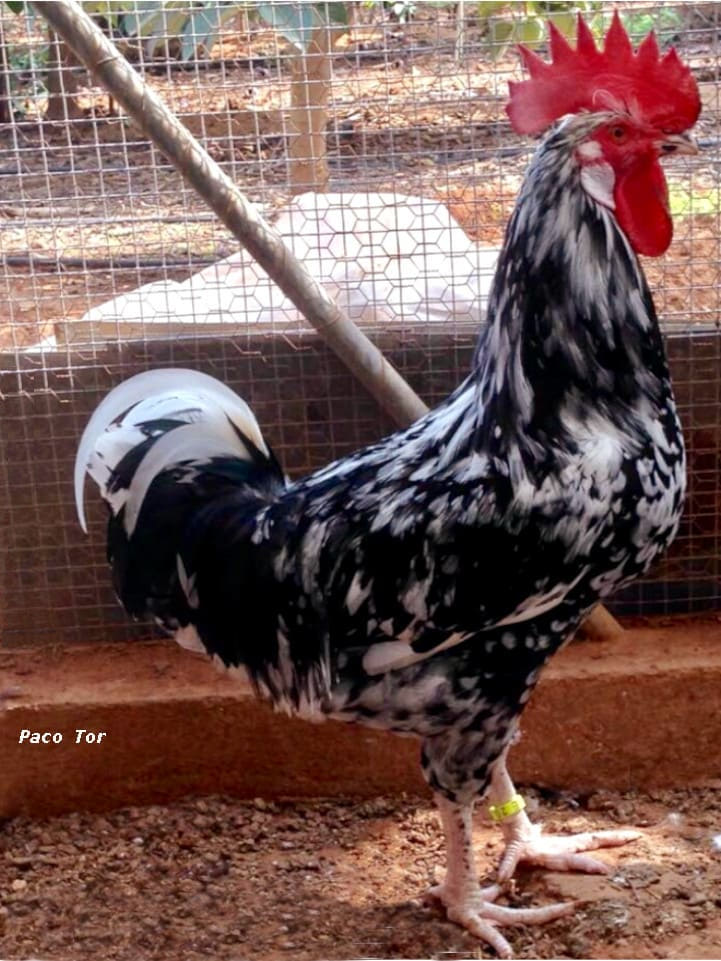
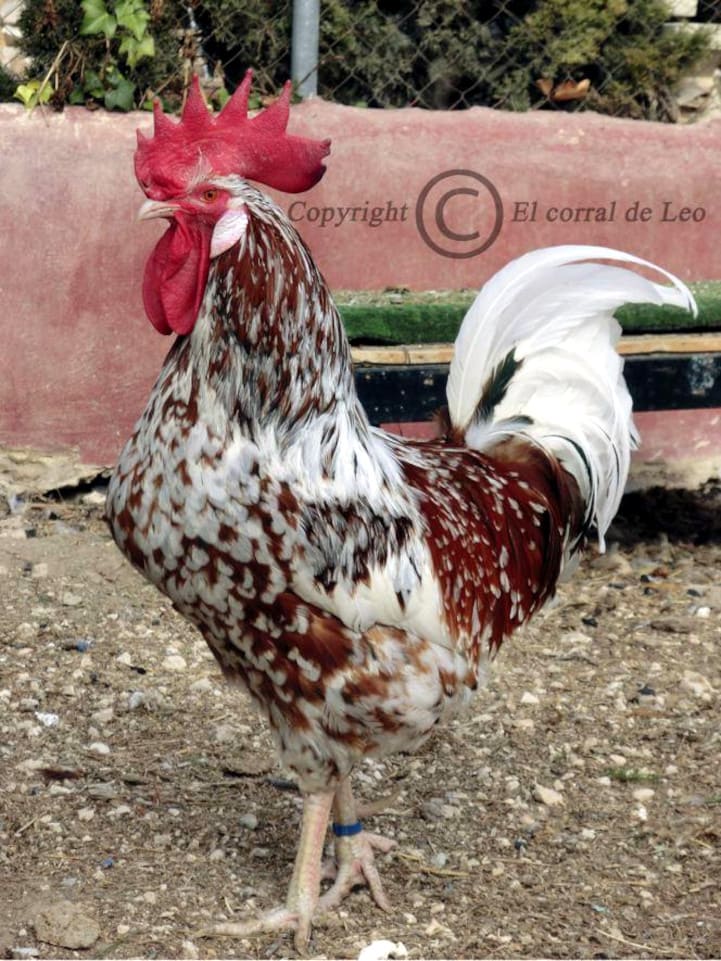
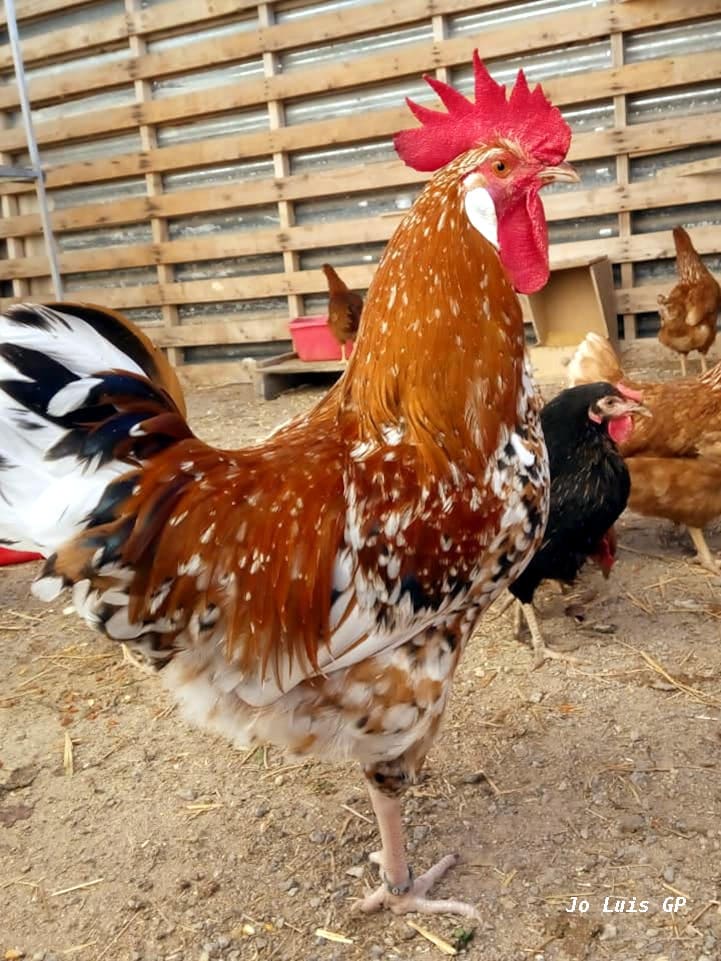
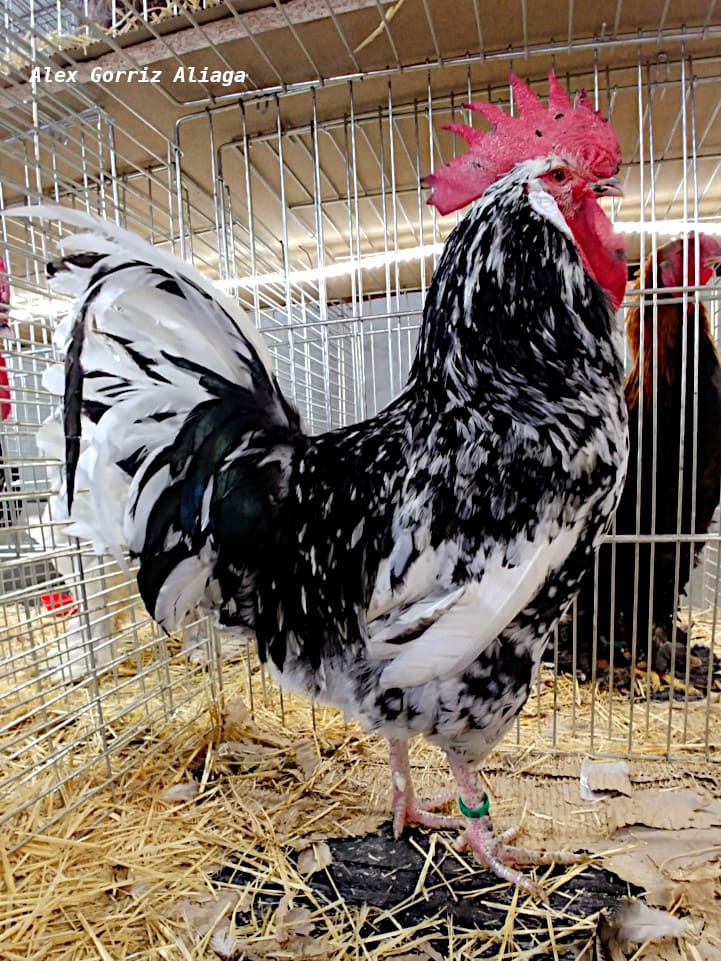
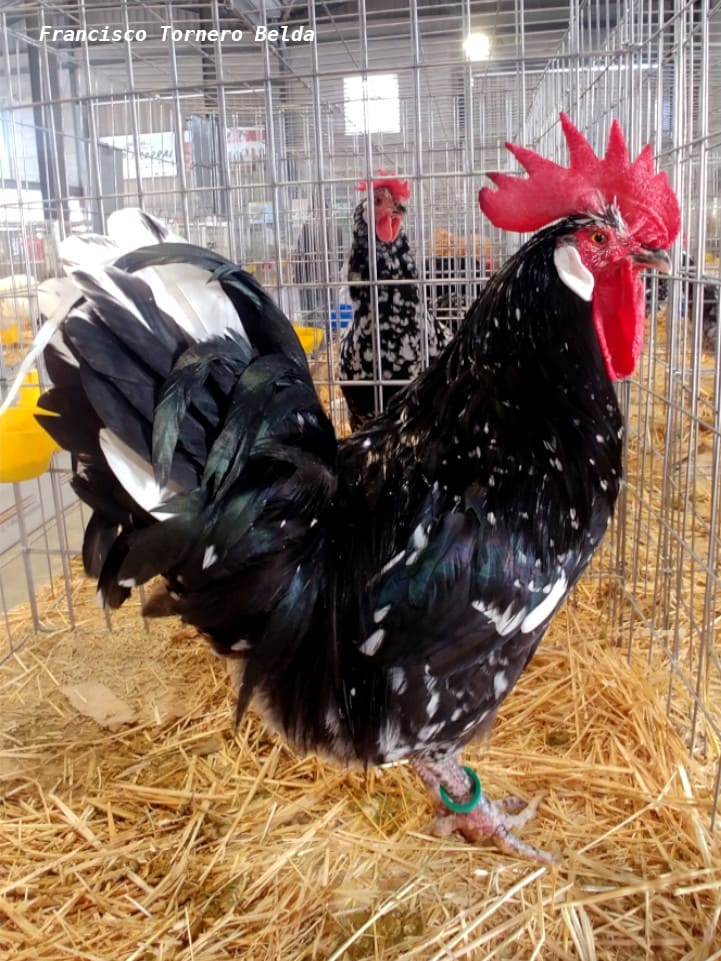
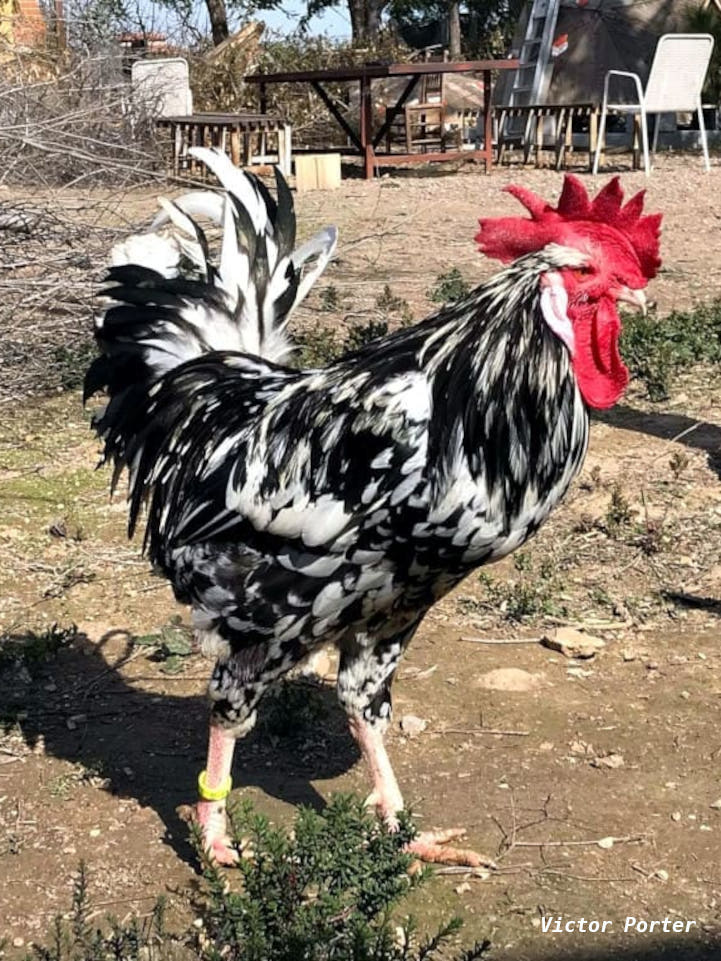
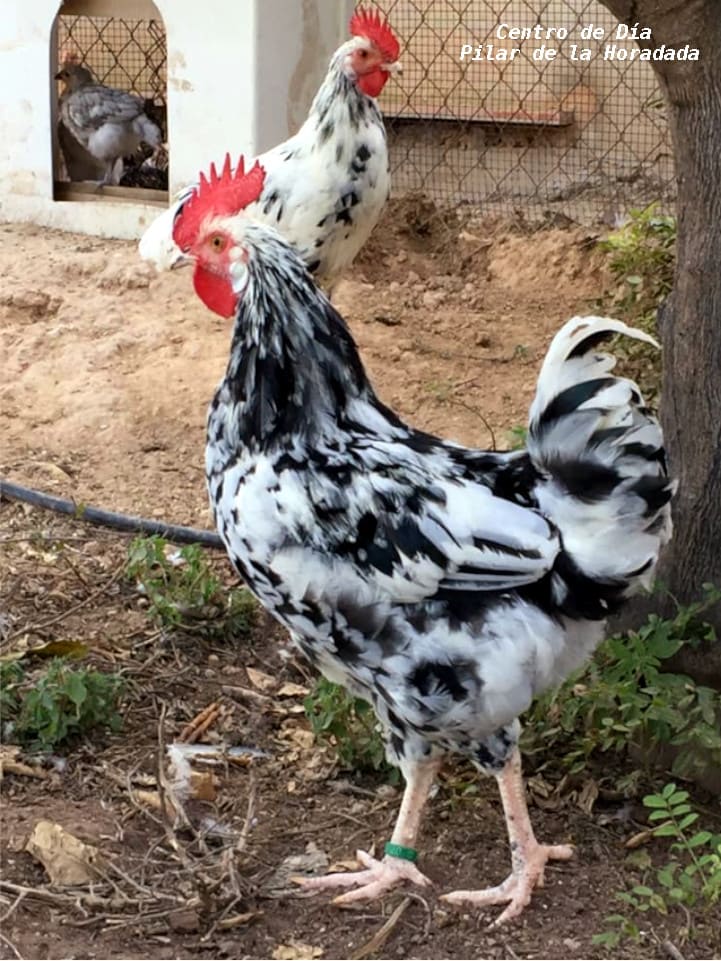
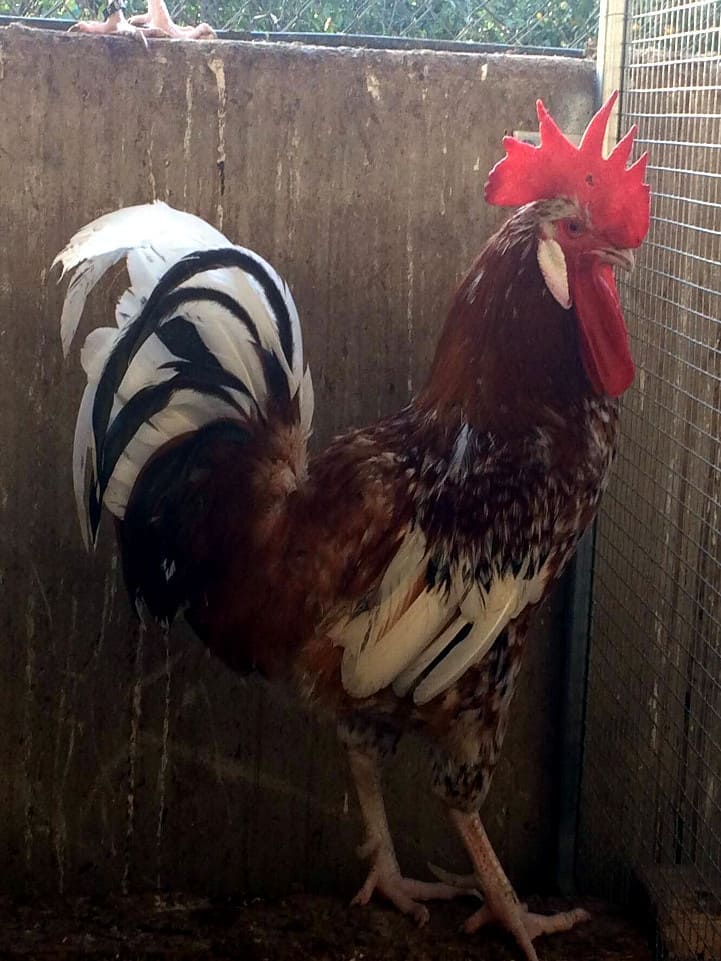
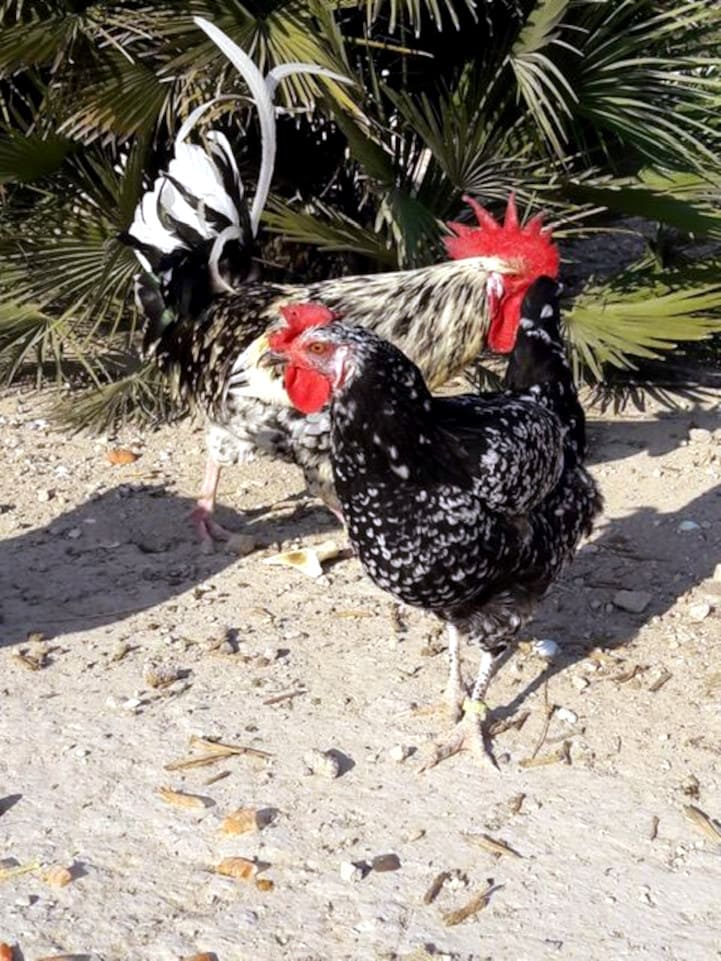
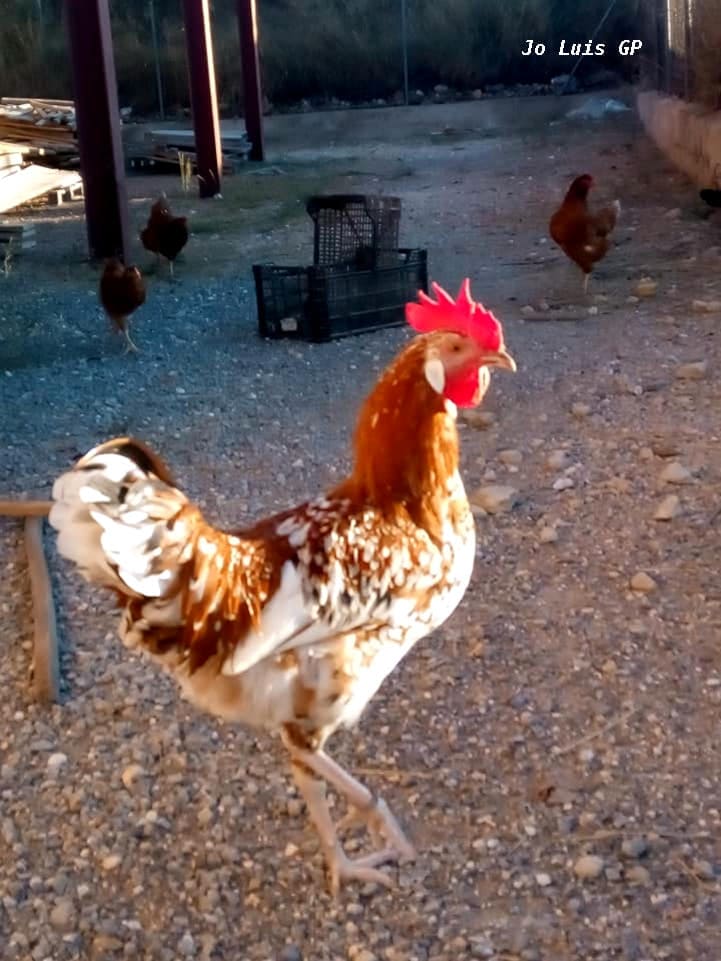
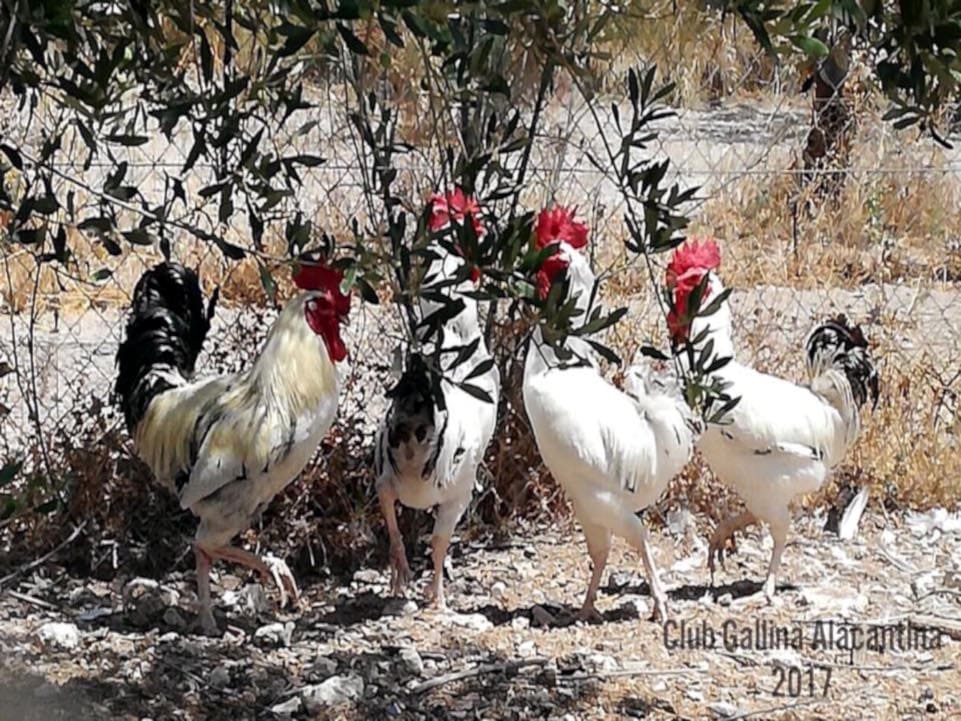
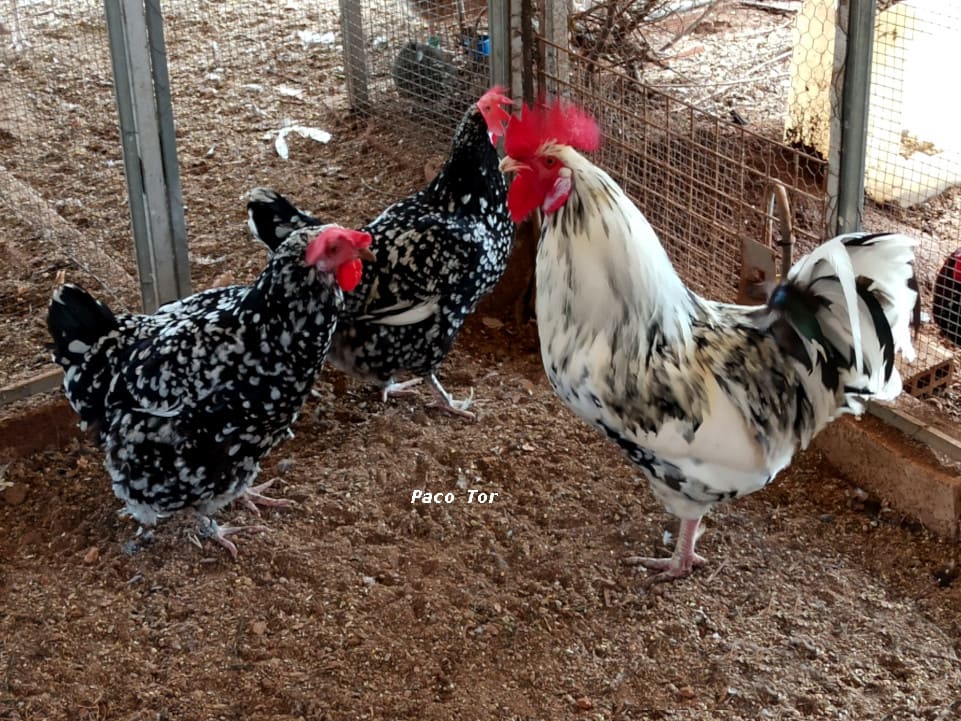
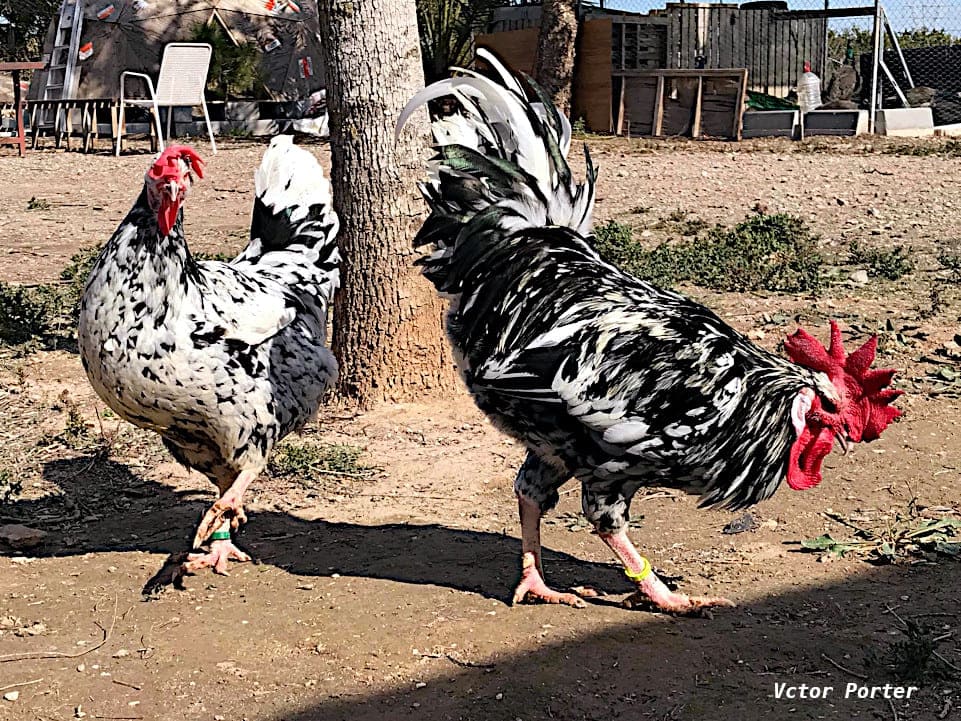
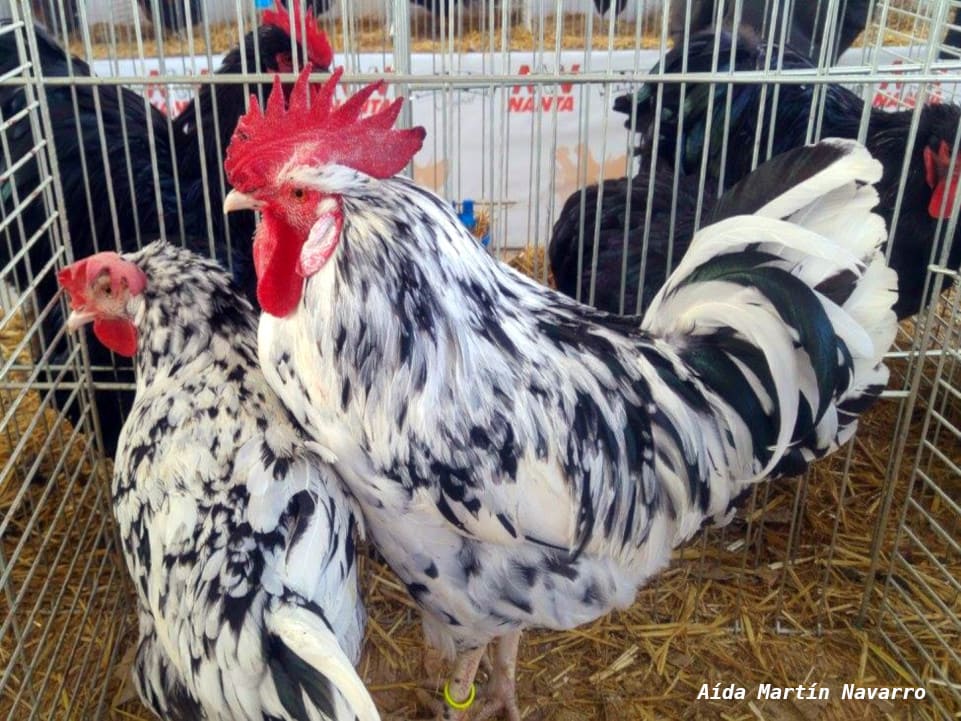
The male, trunk triangular, must It has a moderately large, long, and broad head, which is considerably longer than its tail; a long, strongly curved, strong, horn-colored beak; and an upper mandible that is darker than the lower one; in other varieties, they may have black spots (scaly skin).
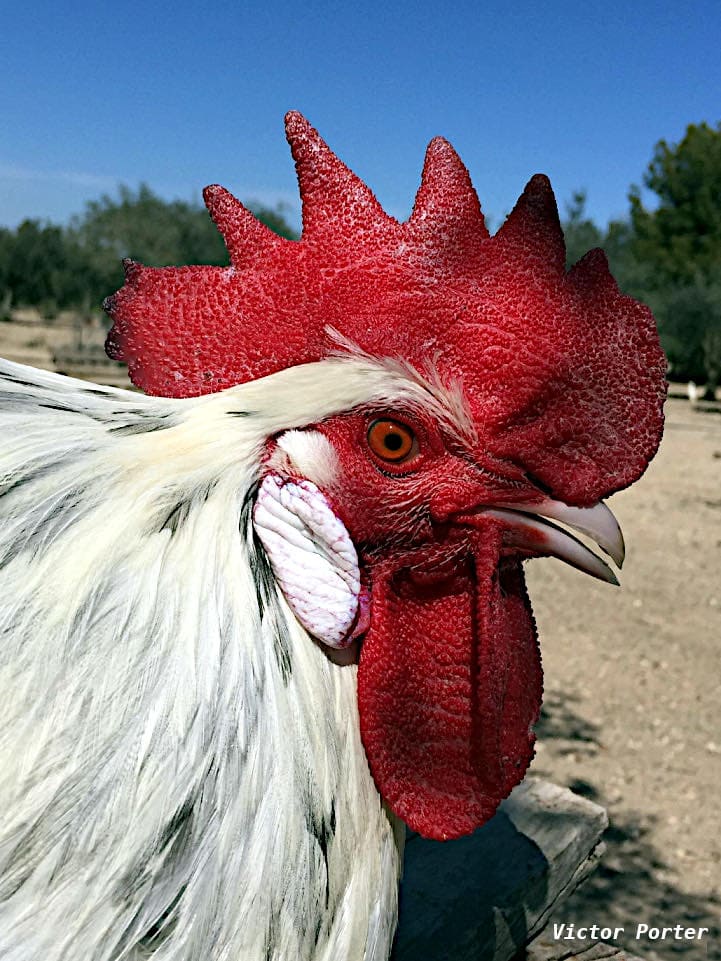
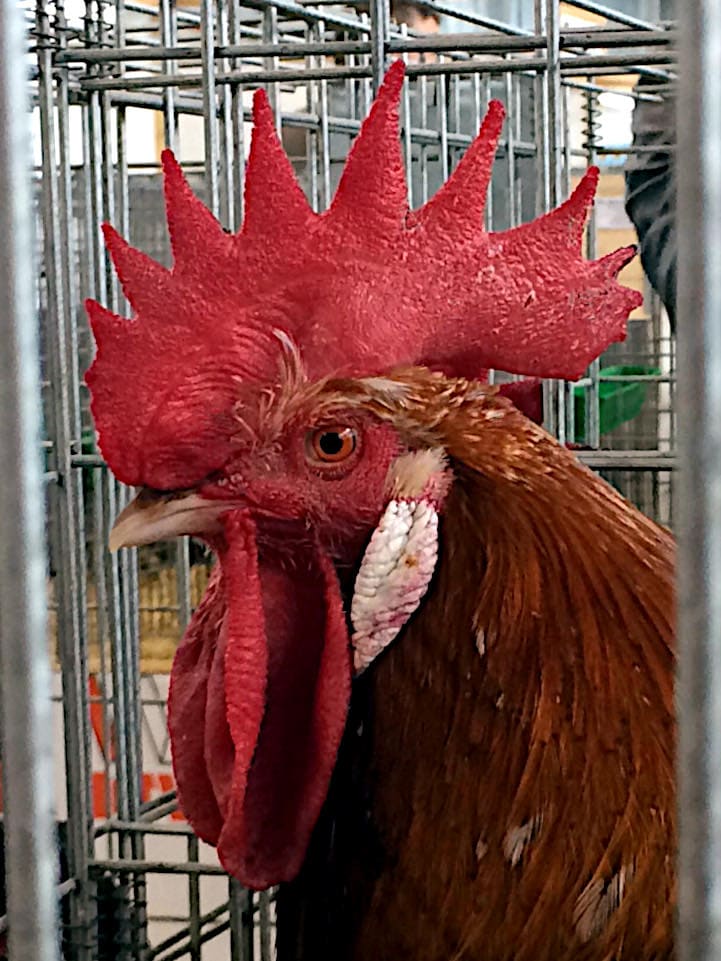
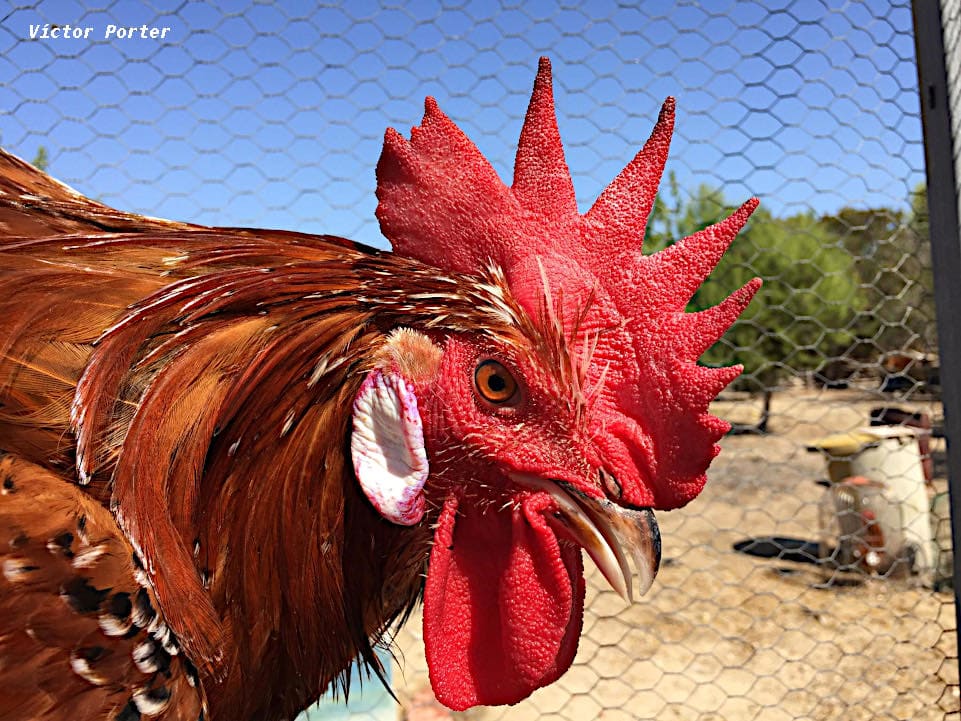
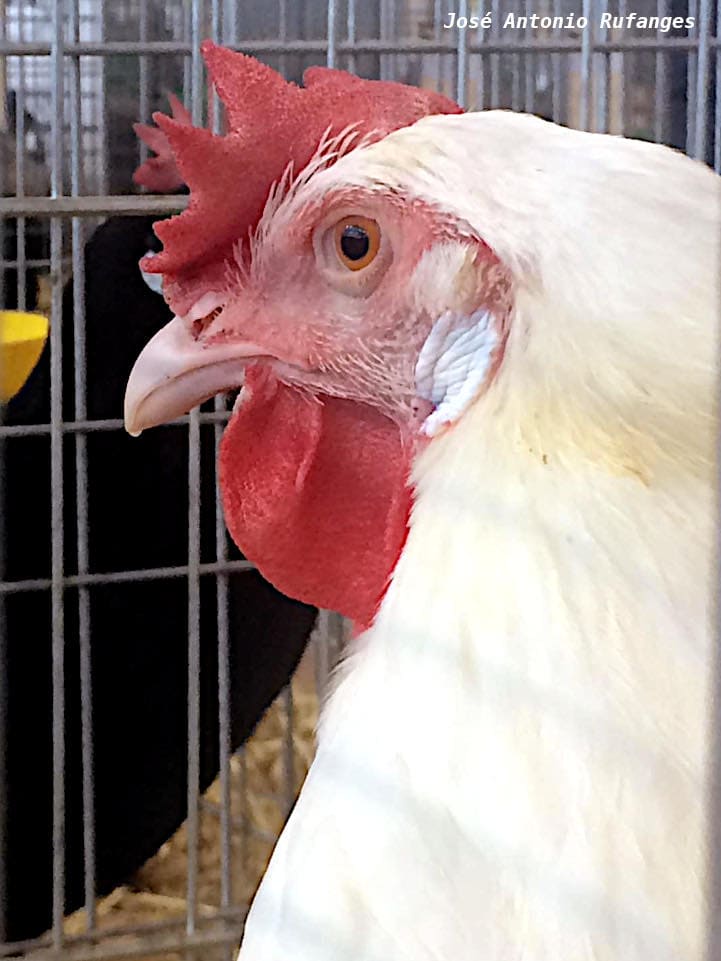
In addition, the crest is of type single large, being the tissue (not enough, and solid), with teeth that are well-defined and long, wide base and high (upright), the posterior lobe following the line of the nape of the neck, of a lively red color.
The face of fine skin, bright red, with small golden-white feathers (vibrissae or bridles) without pallor or mold or white spots. Large, lively, honey-colored eyes; medium-sized, oval, almond-shaped ears, closely set, clean and not transparent, but like white porcelain.
Large or very large, pendulous jowls, thin and well-rounded at the bottom; long, slender, upright neck, with abundant dewlap extending to the back; elongated, cylindrical, yet powerful body; slender, straight, and elongated chest; long back, of medium width, sloping from the shoulders to the tail in a straight line at a 40° angle to the horizontal.
Long, well-proportioned wings lying close to the body in a line parallel to the back; a medium-sized tail, though not upturned, adorned with long, broad, and well-curved tail feathers forming a 70-degree angle, and densely feathered; long, slender legs with muscular thighs and close-fitting plumage; bare tarsi, pinkish-white in color; depending on the variety, they may have pigmented areas (scaly skin), with four slender, strong toes.
Head: Overall, it is large, given the size of the crest and frill, although the skull itself is moderately large, wide, and long.
Face: Lisa and red.
Peak: Medium and slightly curved, color horn, with the upper jaw darker than the bottom.
Eyes: Large and full, with the iris, orange color.
Crest: Simple, large, smooth, straight, and well-set; firm and even across the head; uniform and serrated, with five to six well-defined teeth; the crest spur or lobe follows the line of the nape without touching it.
Chins: Large or very large, long, and red.
Earlobes: In the form oval, smooth, of moderate size, white.
Neck: Long, slightly arched and the head above the tail.
Wings: Large, neatly folded, and positioned parallel to the spine.
Back: Long, straight, half-width and very steep.
Chest: Not prominent, and rectum.
Tippet: Reaching up to the back, uncovered shoulders.
Queue: Medium size and very high position: 70°. Long, uniform, well-curved sickles with abundant husks.
Caireles: Abundant.
Thighs: Of moderate size, rather long, showing the knee-well below the line of the body.
Feet: Long, semi-bent, set wide apart, smooth, and free of feathers. White or pinkish in color, with small spots (mottling) depending on the variety.
Fingers: Rights, in the number of four.
Port: Type slim, one-size, high and erect.

Black speckled: Feet pink white with scab, peak of color corneum with black spots and the upper jaw darker than the bottom.
Pinto or Exchequer: Feet pink white with scab, peak of color corneum with black spots and the upper jaw darker than the bottom.
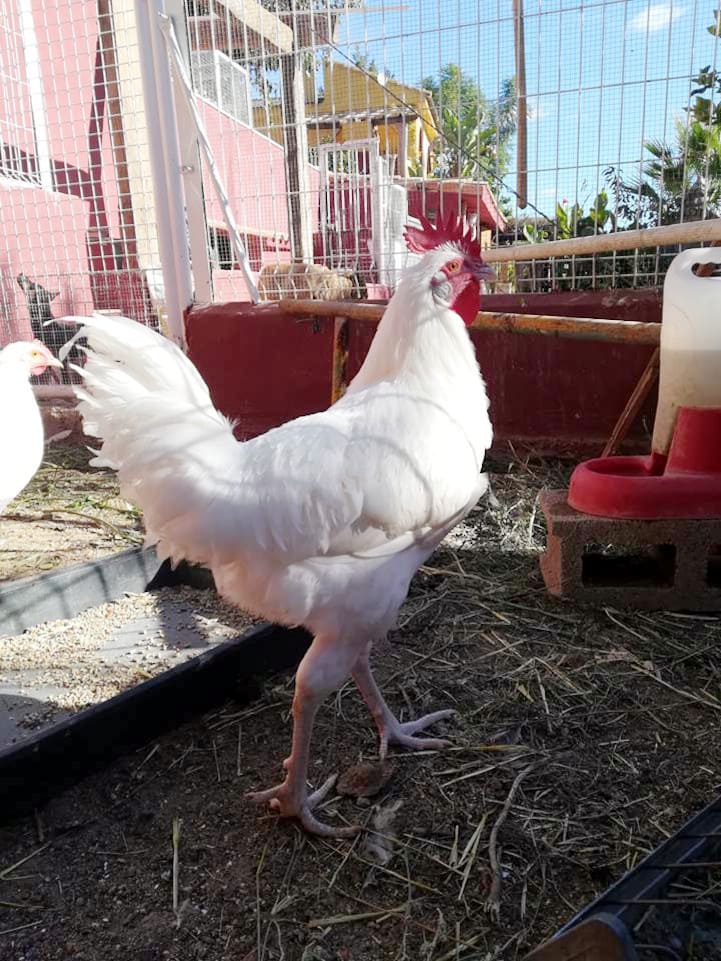
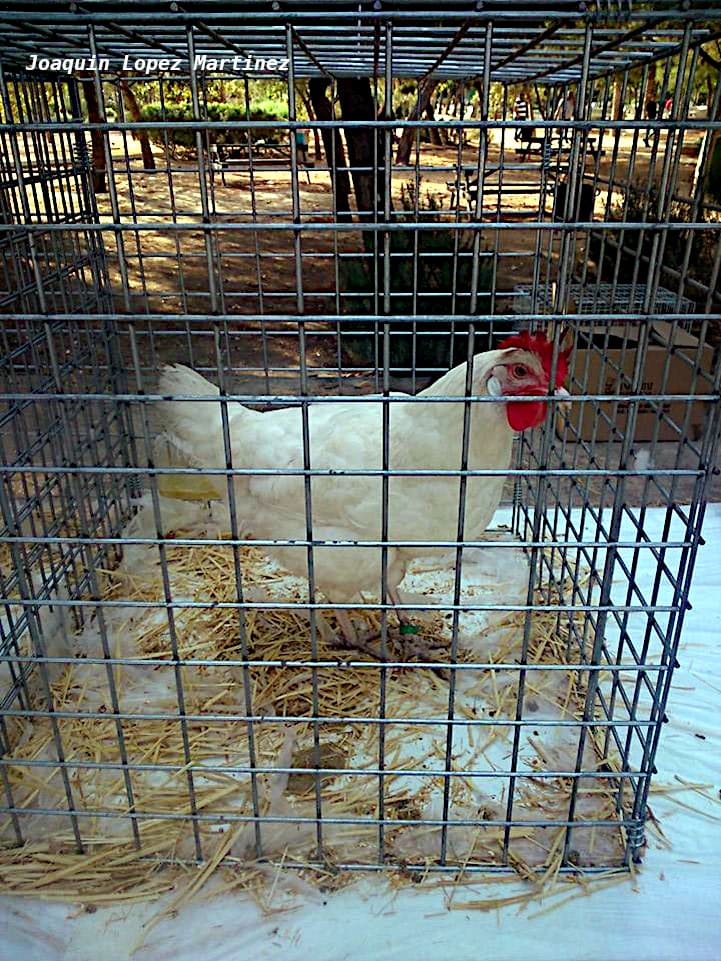
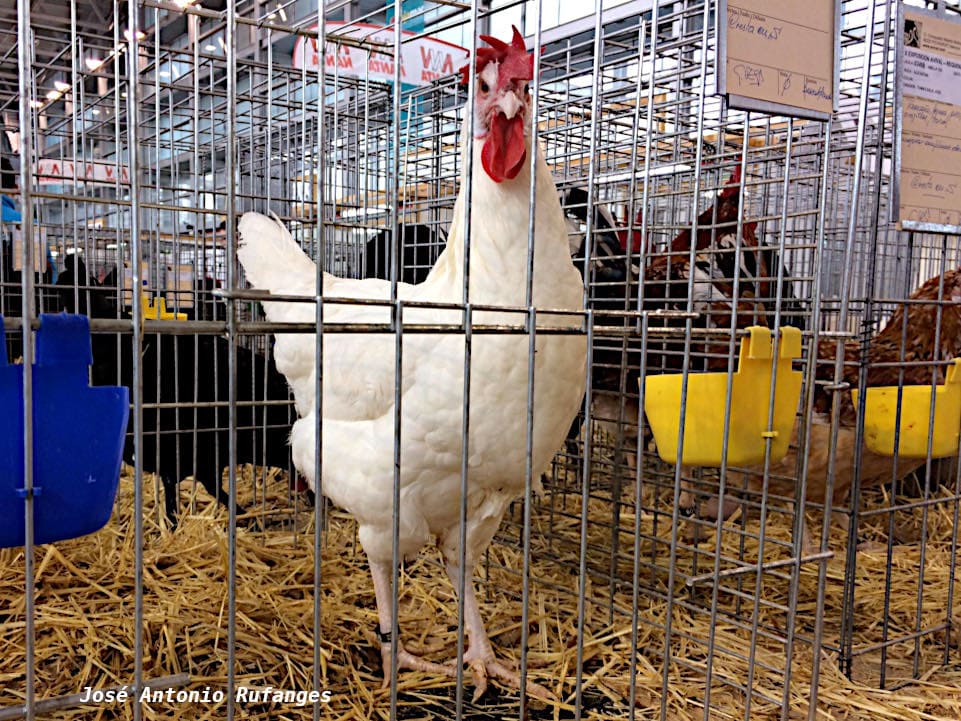
White: Feet pink, white and peak color bone.
The same characteristics as the rooster, taking into account sex differences.
Compared to the male, the female has a slightly broader, slender, and more prominent breast than the rooster’s, and it is elongated. The tail is tightly curled at a 45-degree angle, slightly lower than the rooster’s and more open; the earlobes are smaller, the wattles are shorter and even more rounded, and the comb hangs down on one side of the face without covering the eye.
The skin color is white (the “W” gene); the legs and toes are white or pinkish, with variations depending on the breed; hens are not very prone to the broodiness.
Head, face, beak, and eyes: As in the cock.
Crest: Simple or simple, allele “p” and “r”, of medium size, sawn, having five teeth defined; the front part of the ridge and the first tooth in an upright position, and the remaining of it to fall gradually on a side without getting to cover the eye; fine texture, free from creases and wrinkles.
Chin and orejillas: As in the cock, the more small.
Neck: long and erect, with plenty of tippet to the back.
Wings and back: As in the cock.
Chest: Like on a rooster, but more prominent.
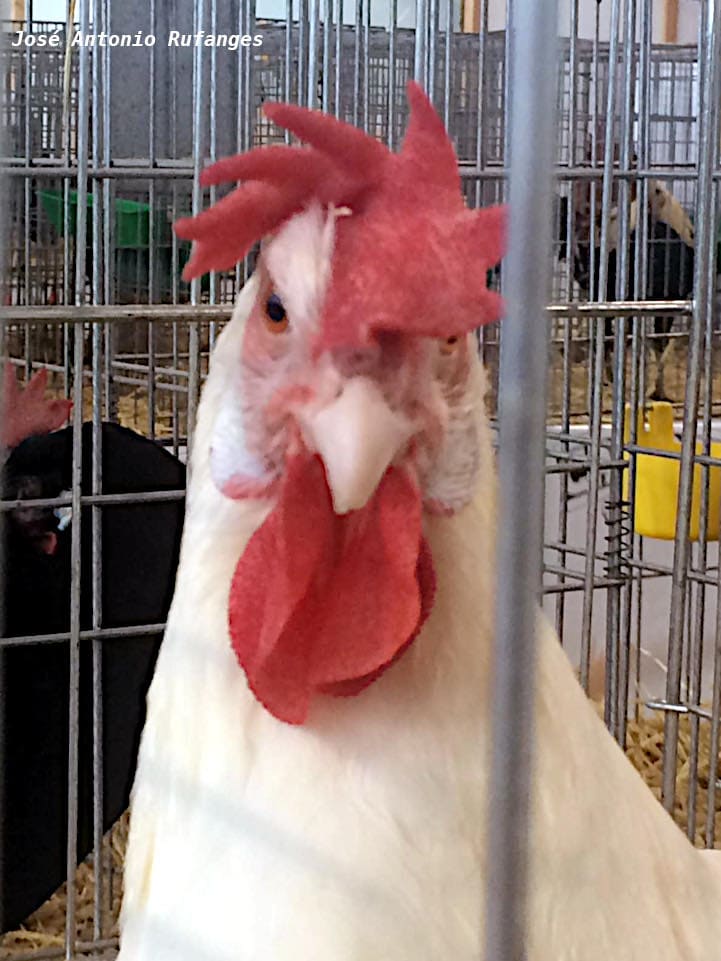
Queue: Long, closed, carried at an angle of 45° above the horizontal, rectrices wide and overlapping.
Thighs, tarsi, and toes: As in the cock.
Port: As in the cock.
Diameter of rings (mm): Cock-22 – Hen 20
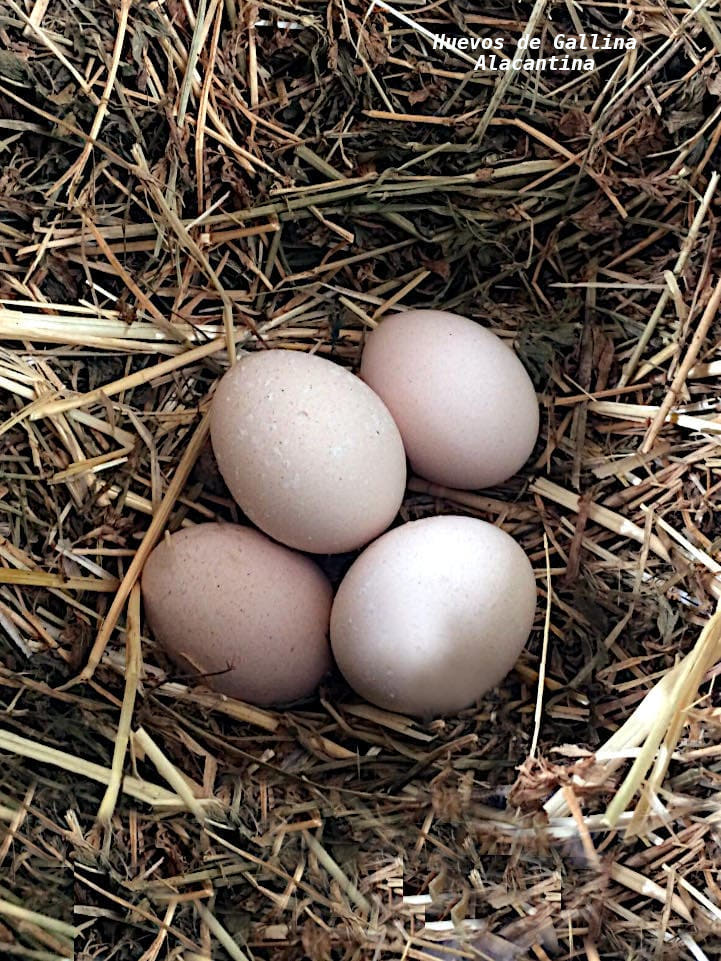
Eggs:
White shell, 55 to 70 g.
Plumage of the hen:
As with the rooster in all its parts, except for the wattle and earlobes, which are absent.
Weight:
Rooster: 3 a 3,5 kg. Chicken: 2,2 a 2,6 kg
Chicken: 2.720 kg Polla 2.040 kg
(a) Ears: yellow, red, or with too much red.
(b) Crest with carnation.
c) Chest prominent in males.
d) Feet of another color that is not white/pink, excluding stains (scab) in varieties.
(e) Tails sparsely populated, low-or long
f) Eye-covering crests on hens.
g) Flame of tippet in varieties speckled and exchequer.
Association information:
Certificate recognition race Alacantina.
Association information:
Group Facebook:
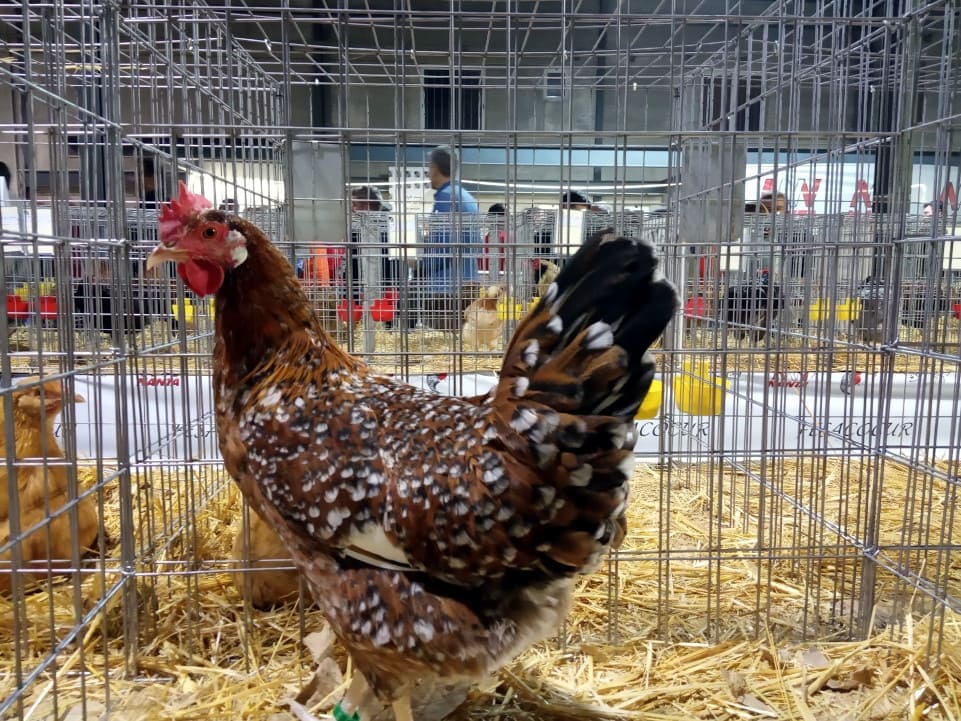
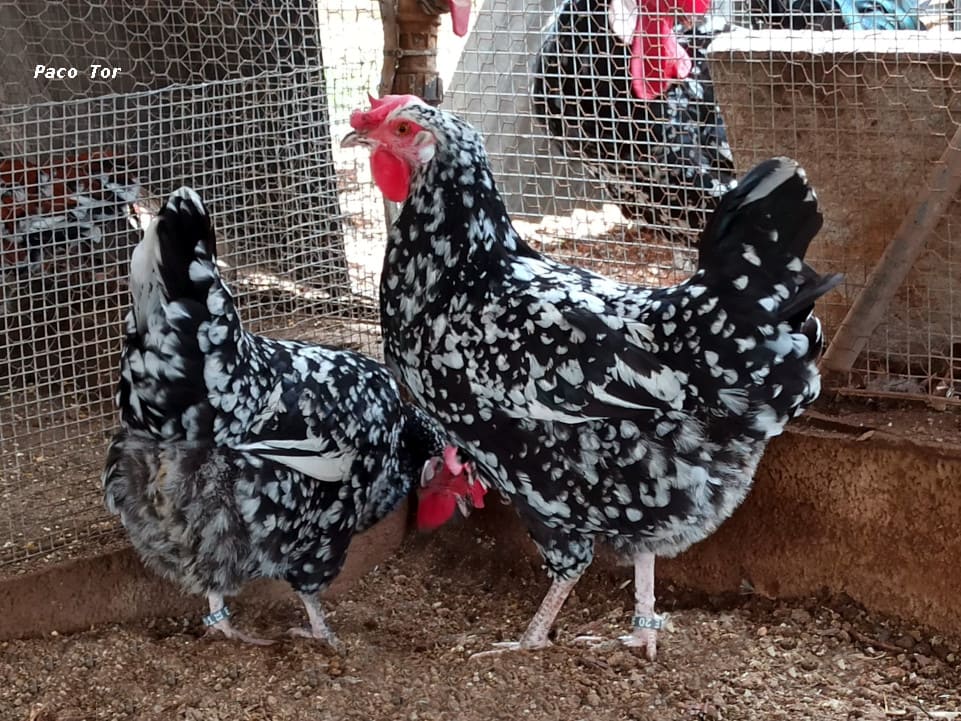
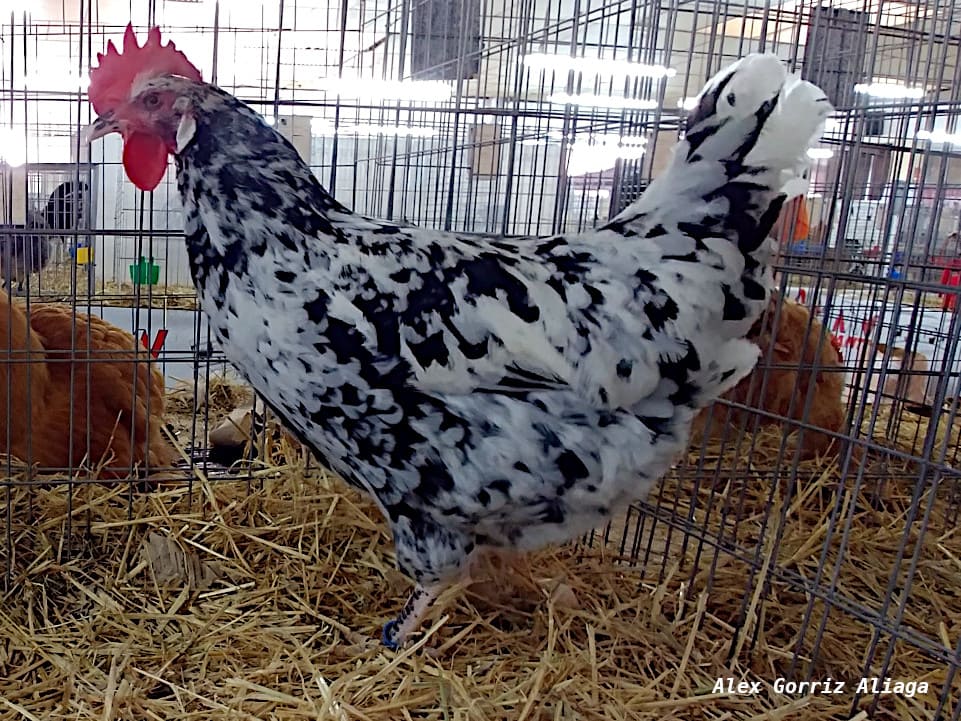
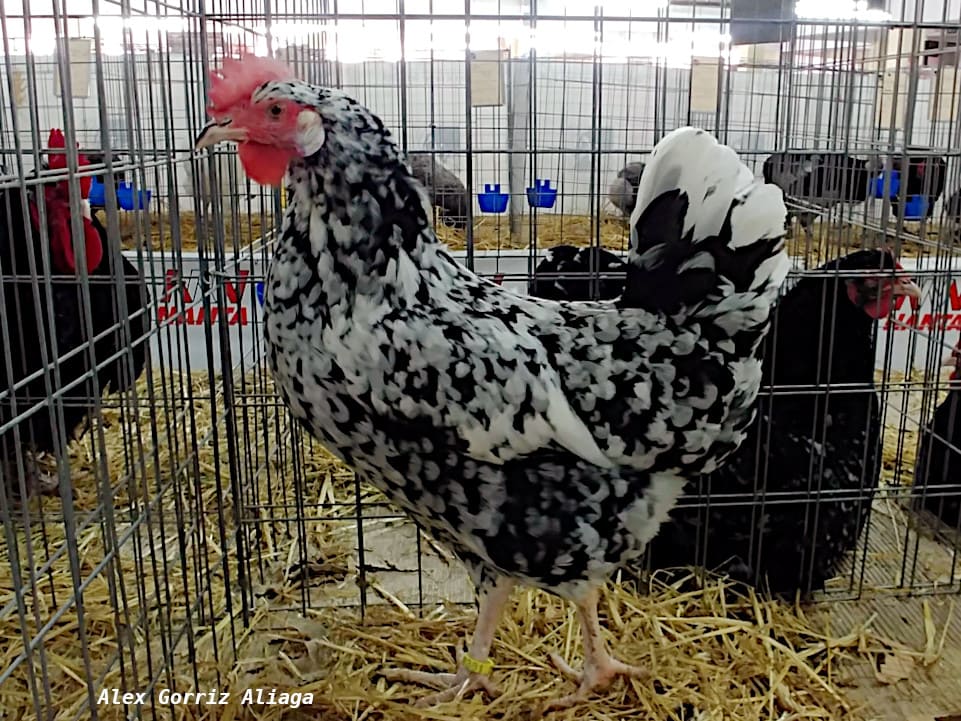
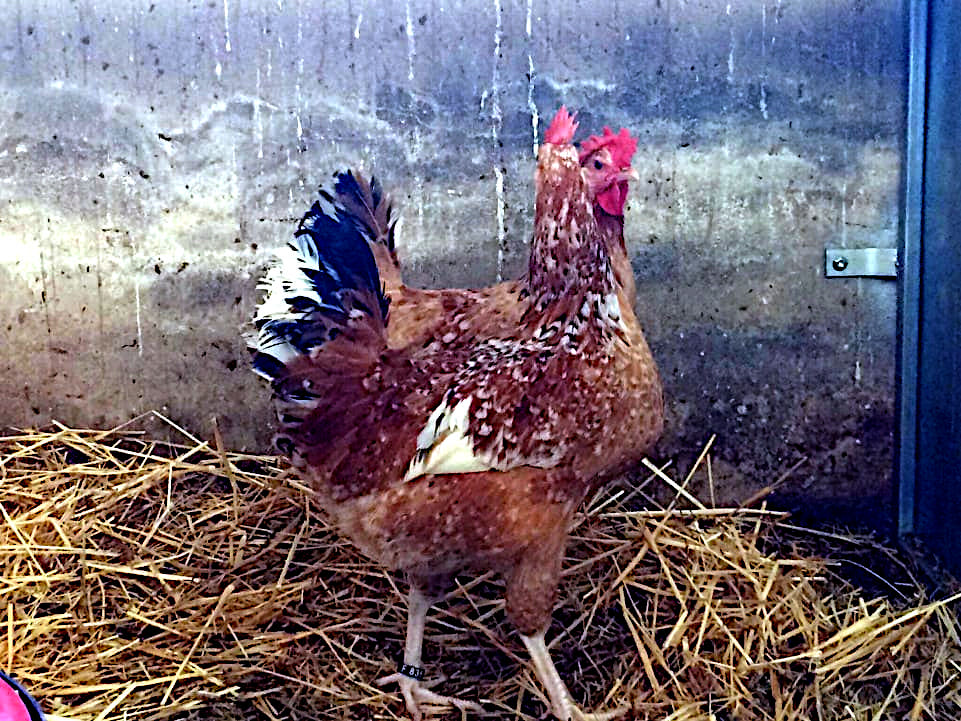
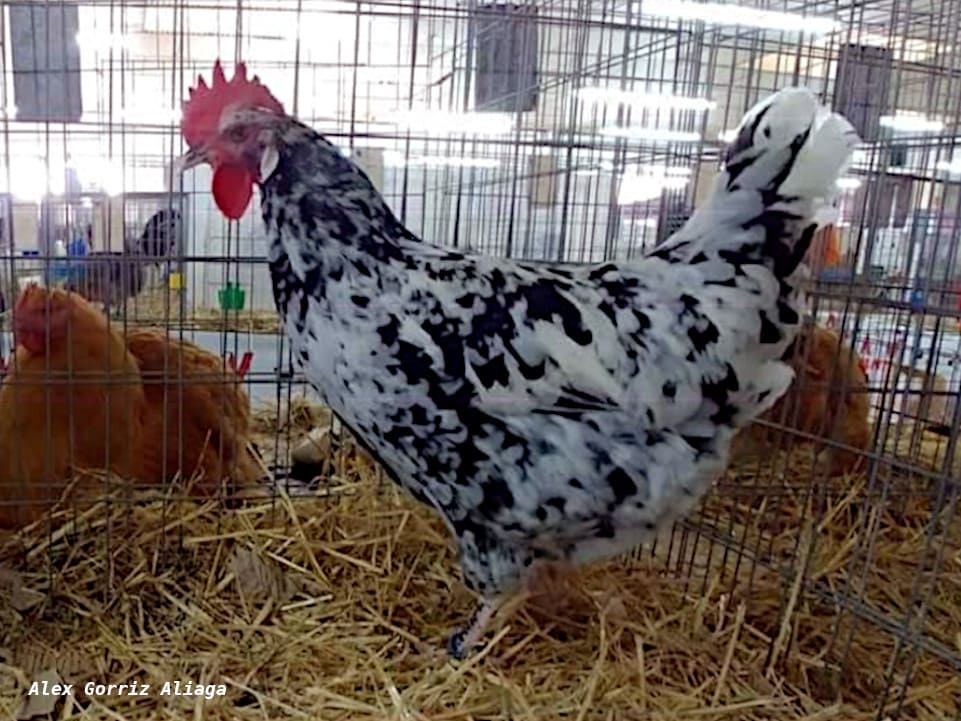
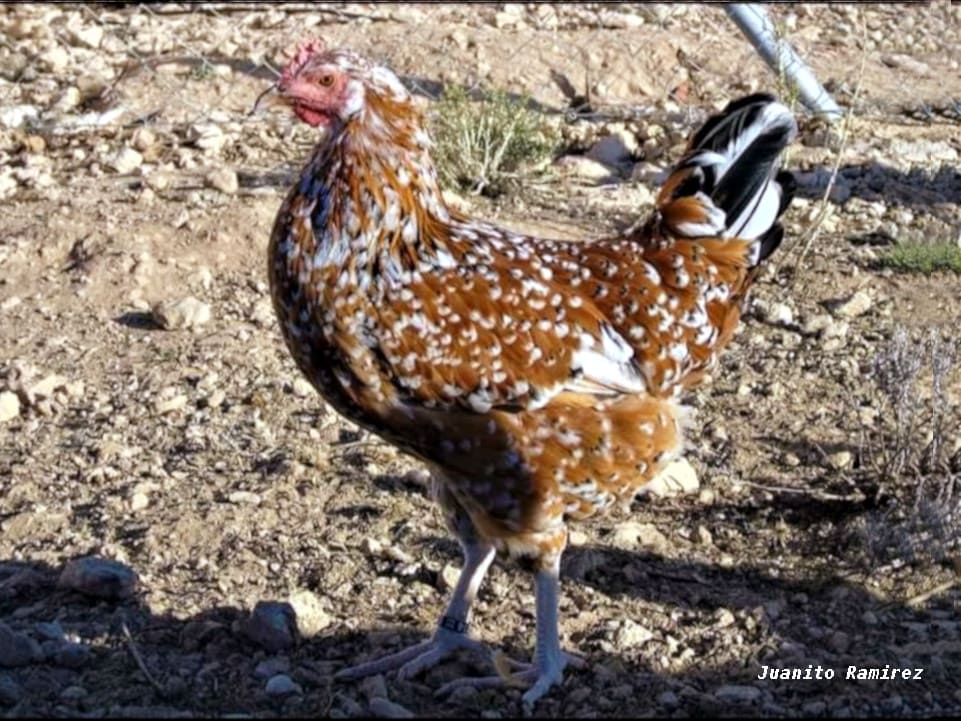
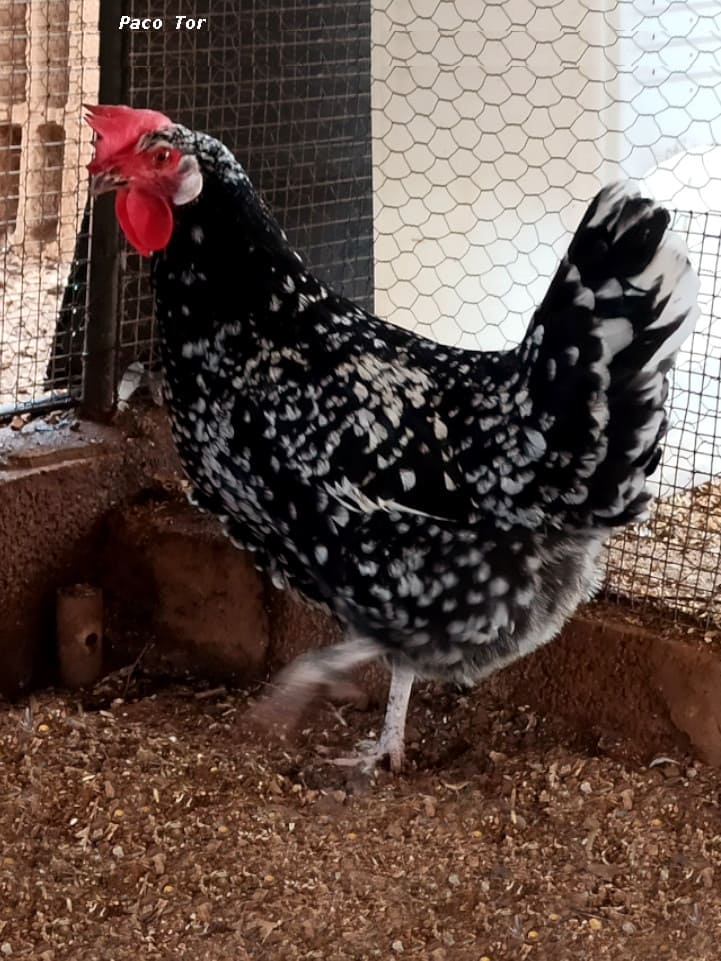
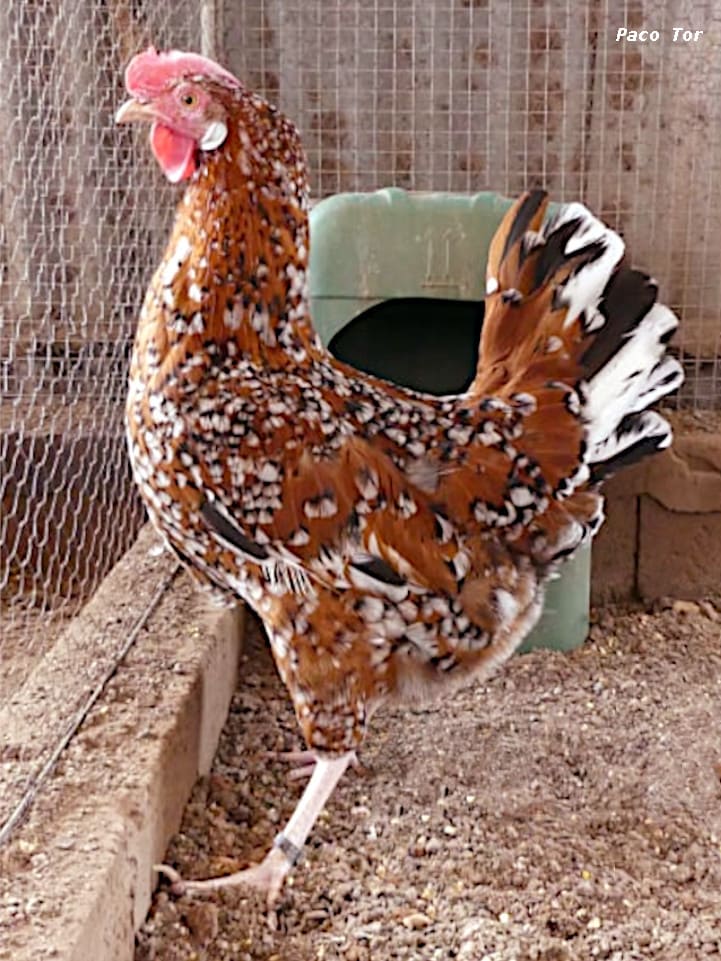
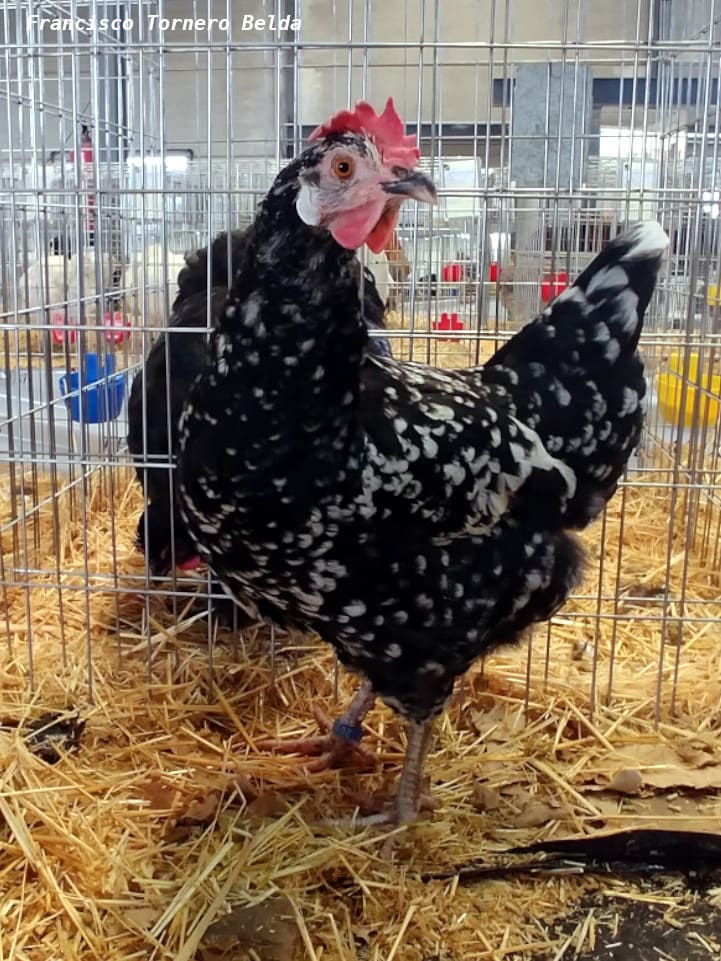
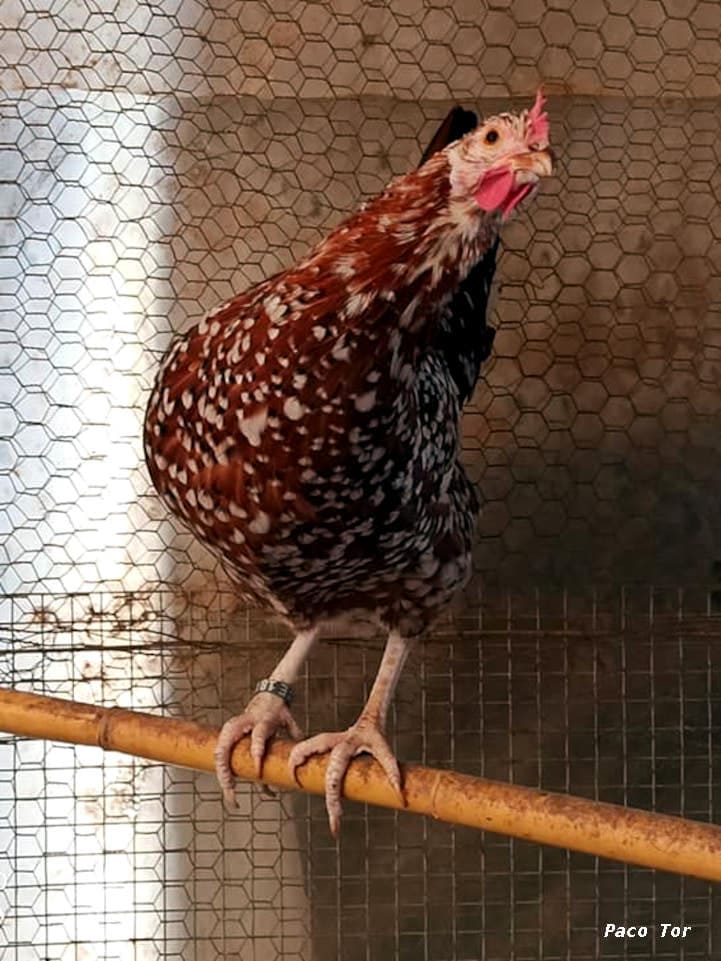
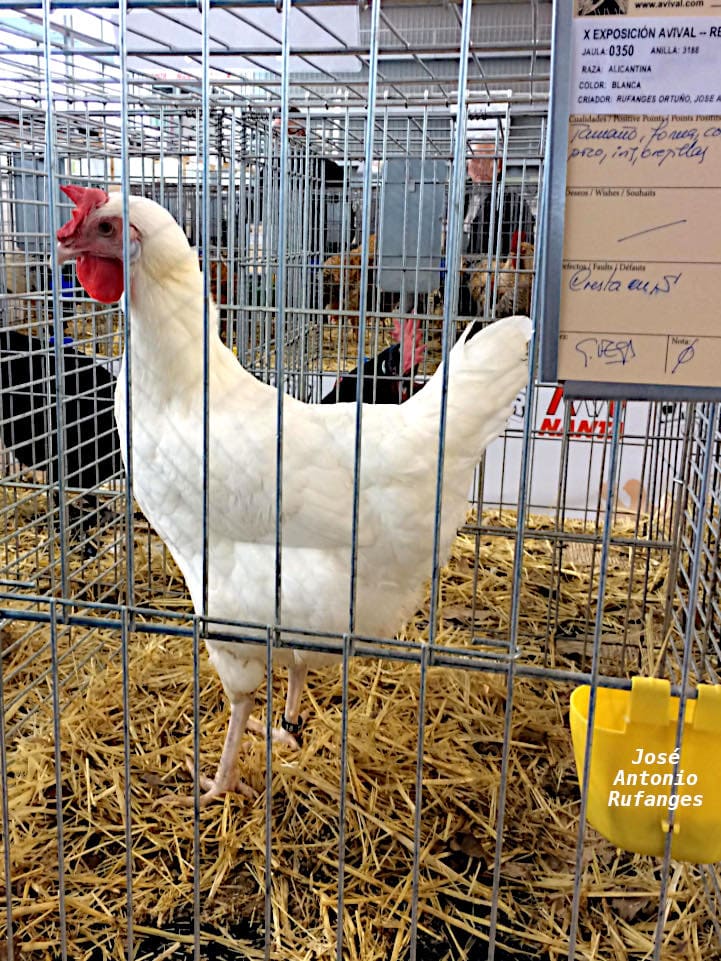
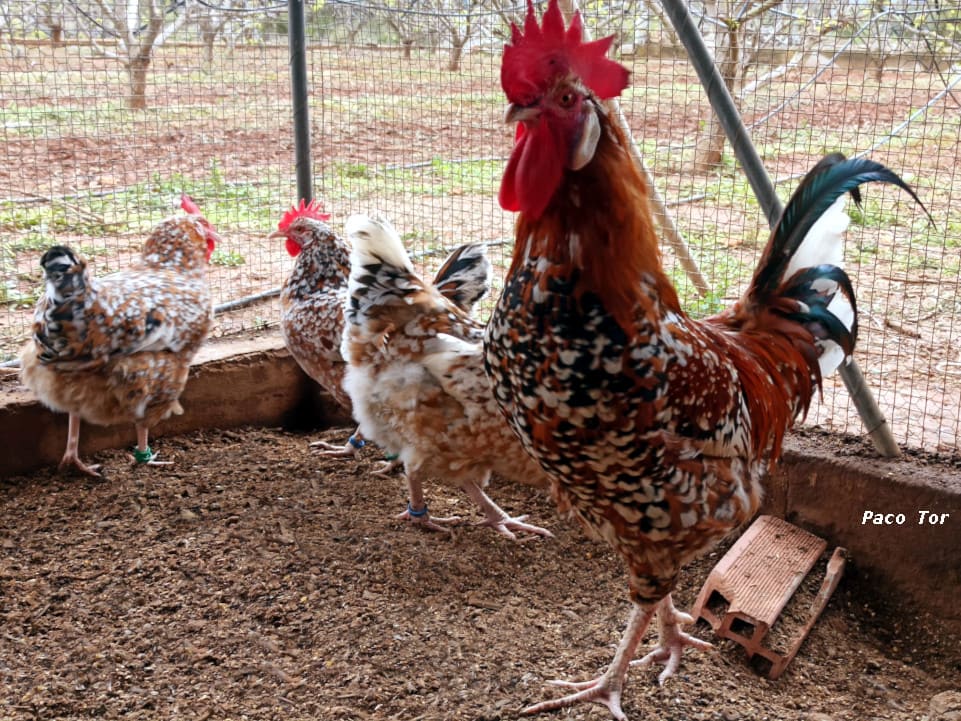
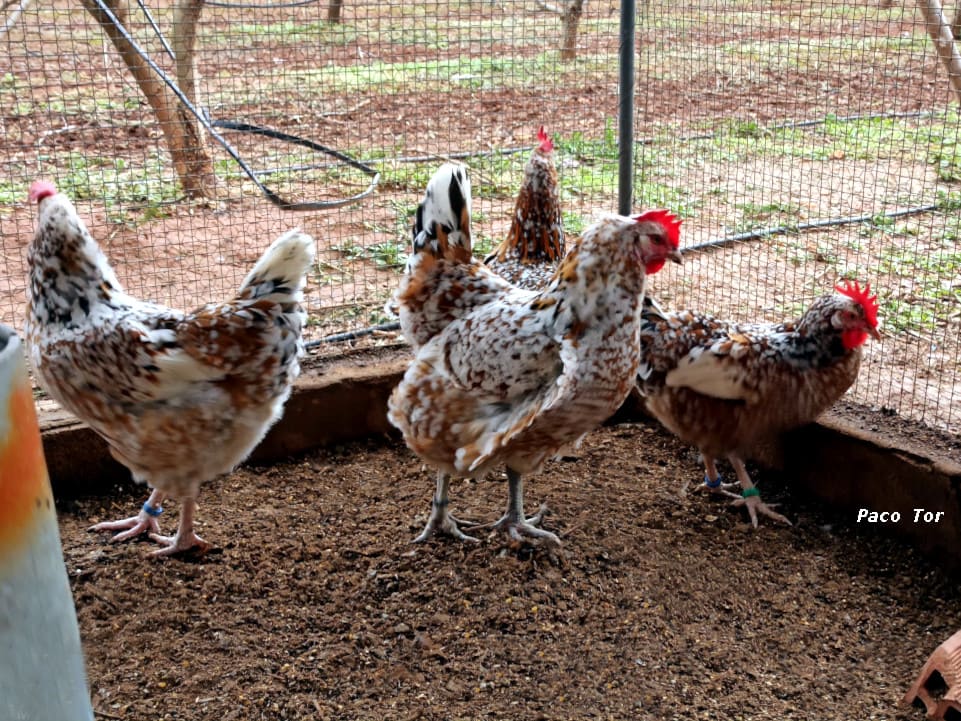
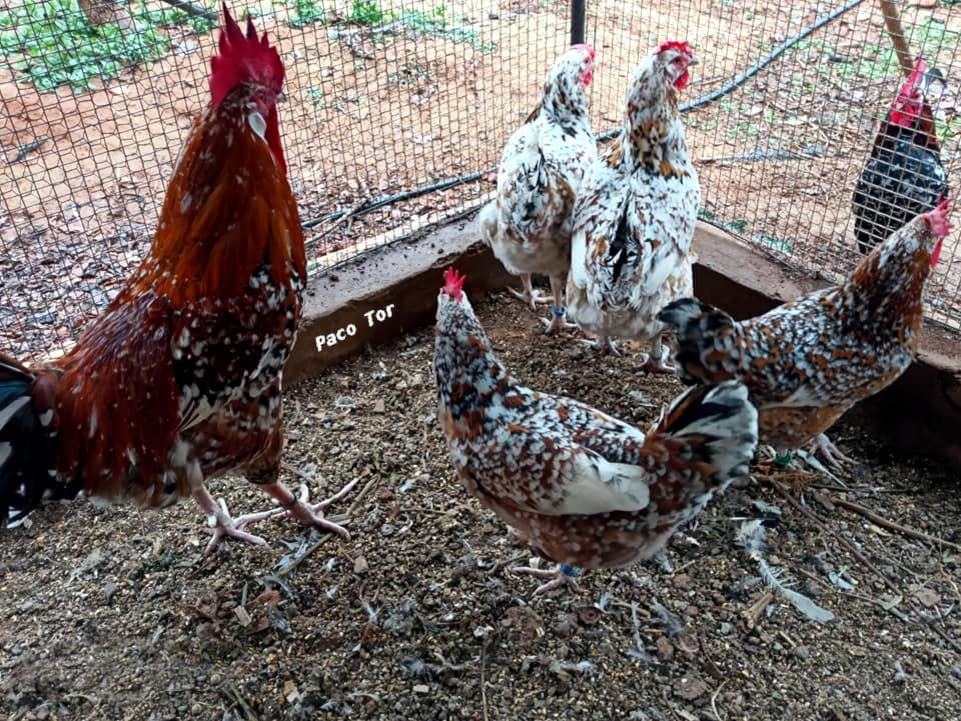
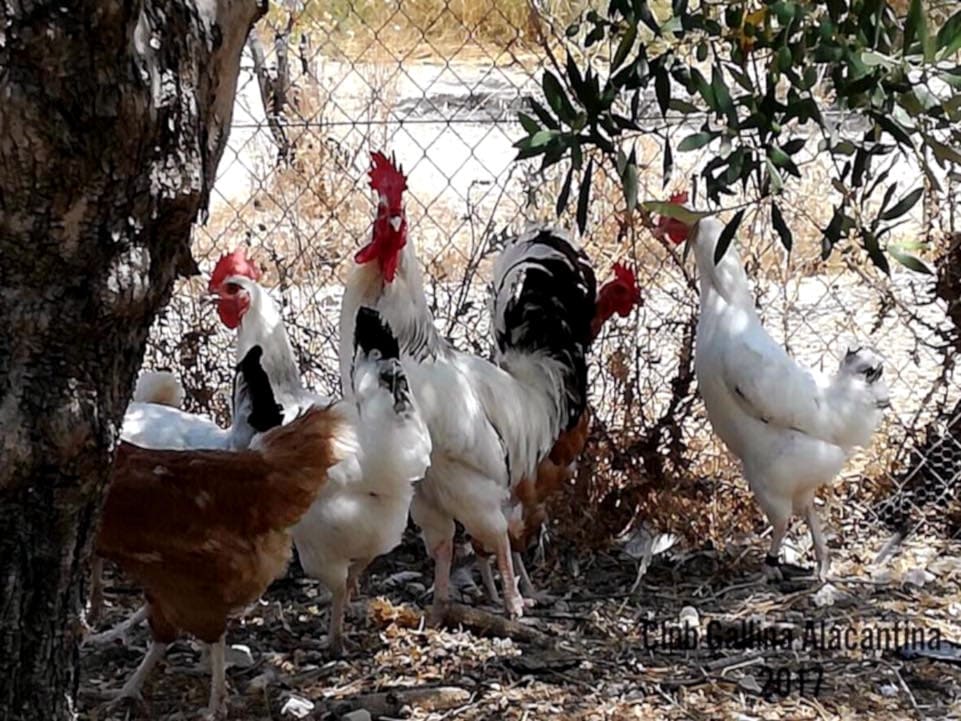
Women from Alicante at the 11th Avival Expo in Requena, Valencia (Spain).
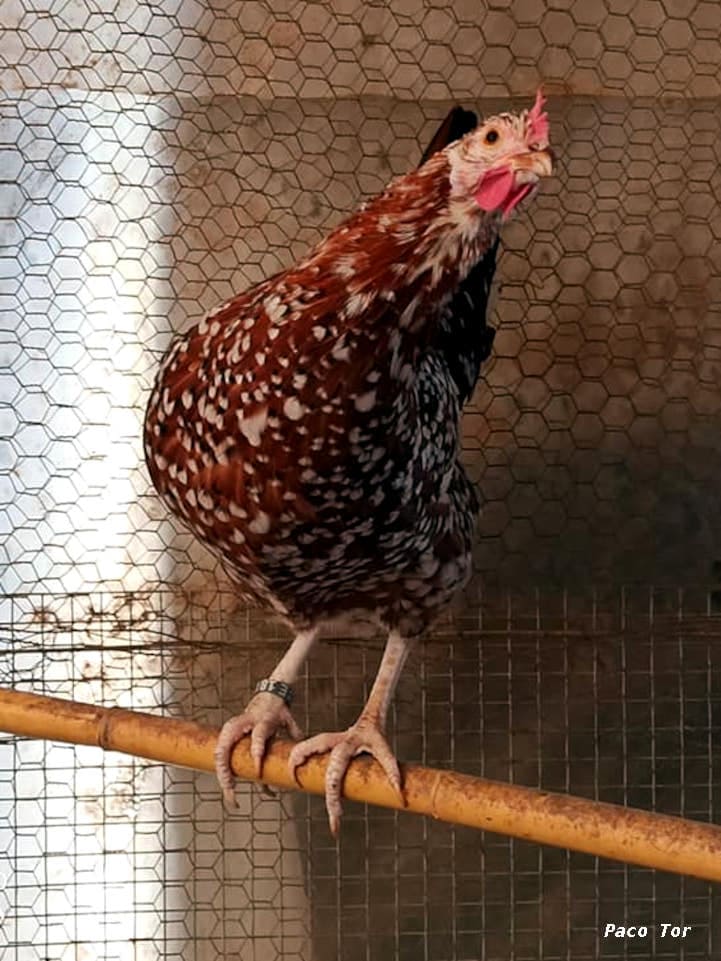
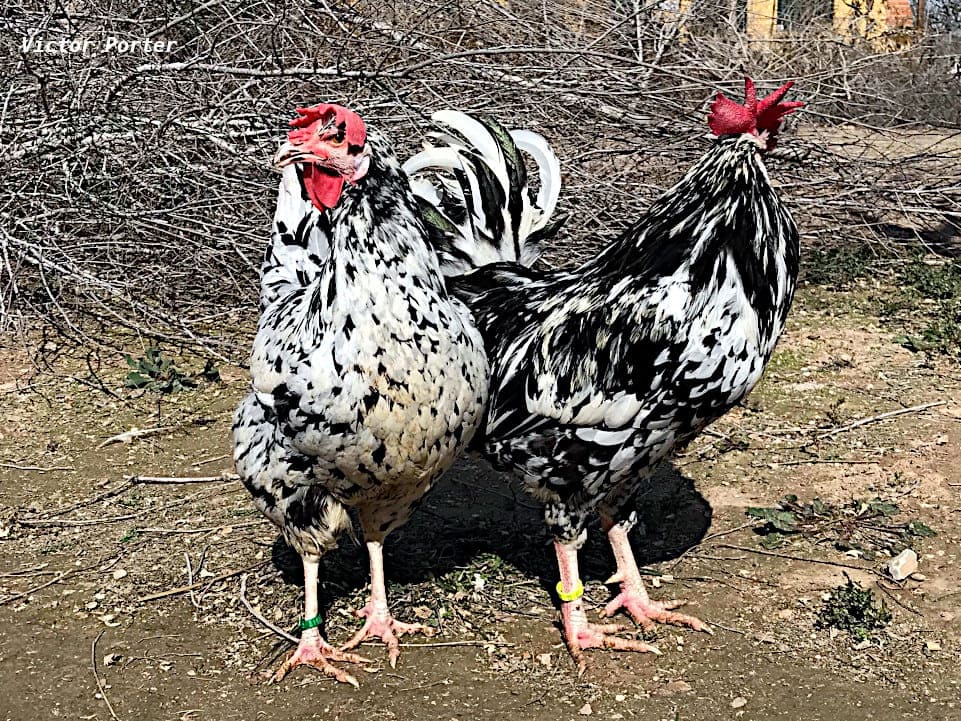
Alacantine breed, Pinta variety.
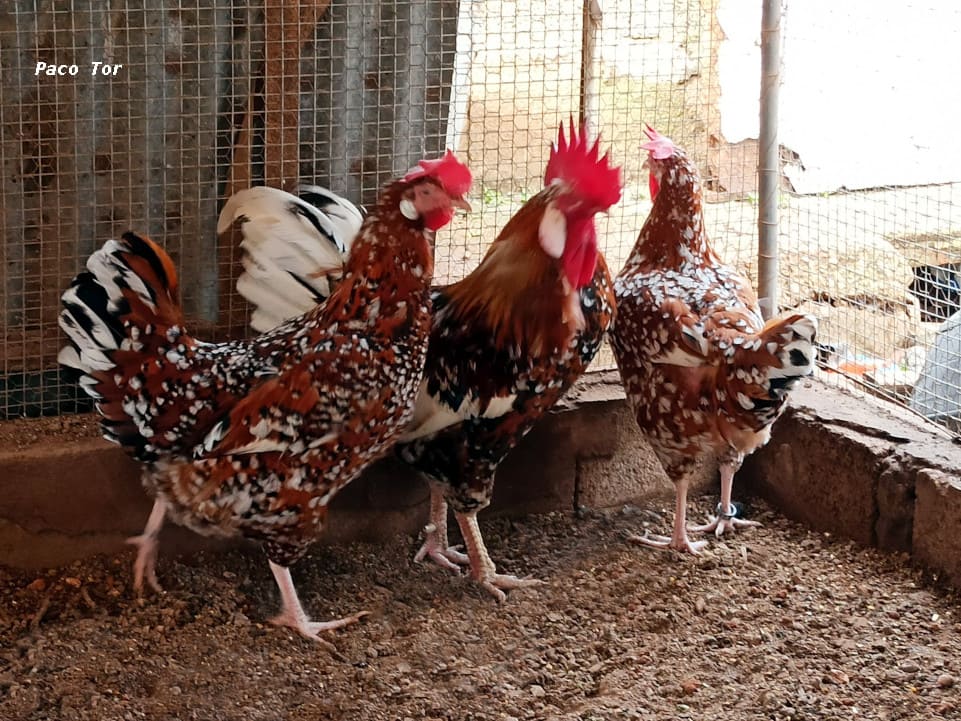
Alacantina Trio variety, Milflores type.
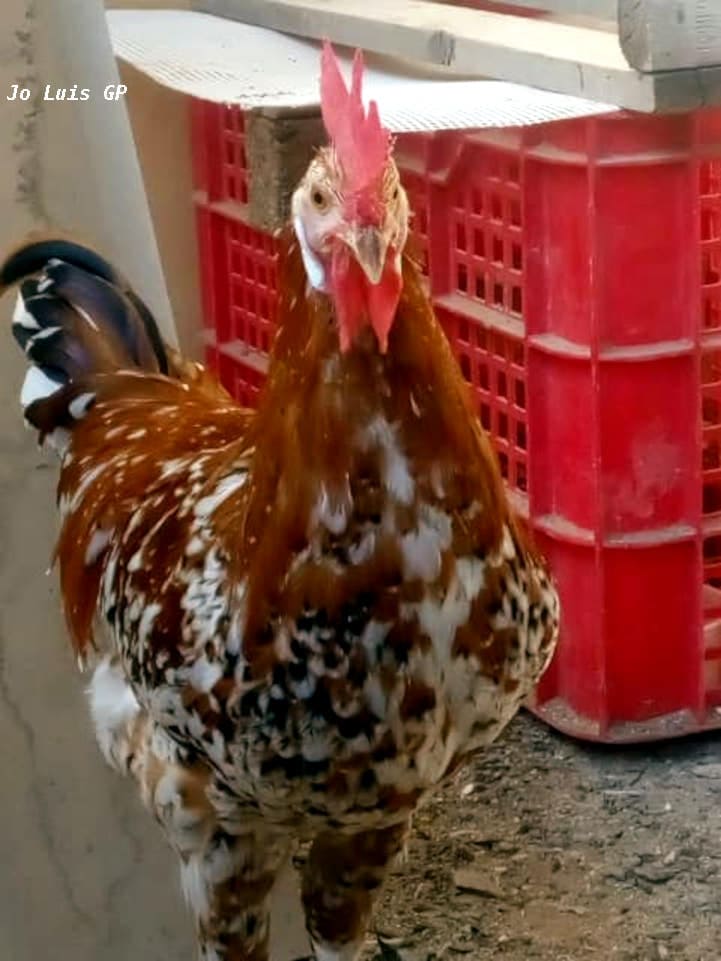
Young roosters from Alicante
You may be interested in these other sections