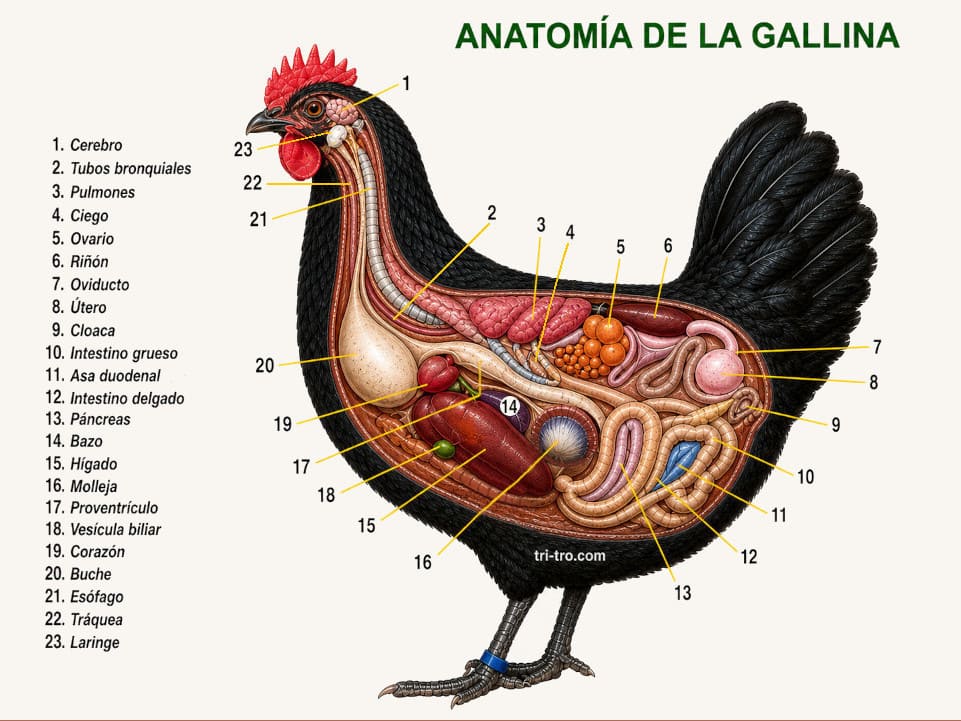
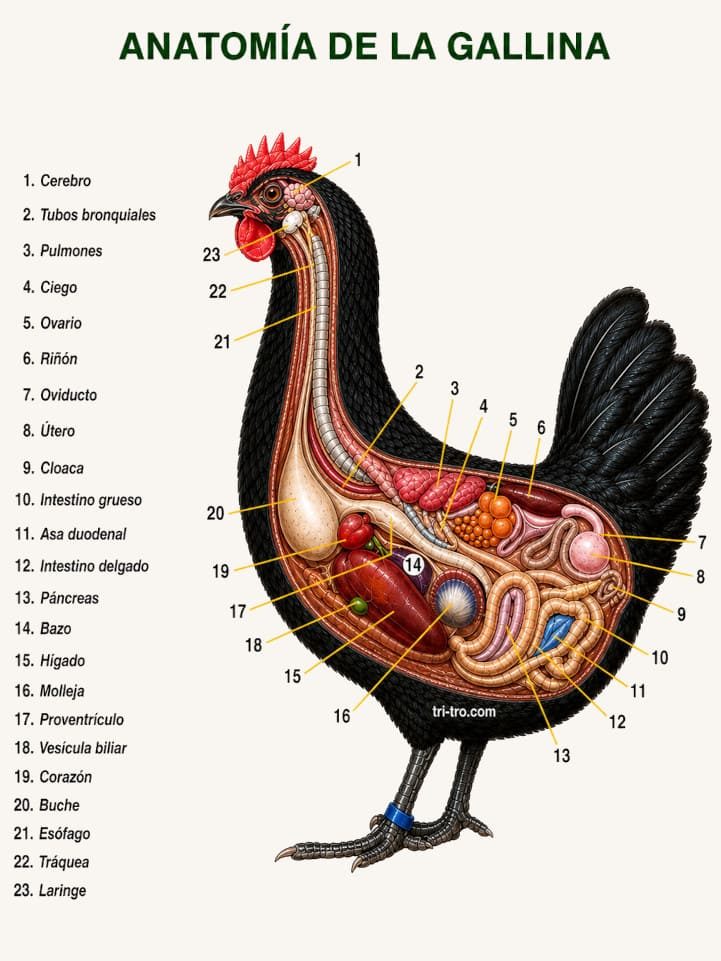
Understanding the anatomy of a hen is essential to understanding its health, behavior, and the diseases that can affect it.
In this guide, you'll find clear and practical explanations of all the parts of the body and organs.

🔎 Quick summary
  • 🧬 Type: Body structure of the chicken
  • ⚙️ Function: Understanding Organs and Systems
  • 🩺 Key: A basis for detecting diseases
  • 🔗 Practical use: Match symptoms to organs

Anatomy of the chicken: internal organs

Parts of a chicken (complete explanation)

A hen has different body parts, each with a specific function. It is essential to know them in order to understand her anatomy, health, and behavior.

The main parts of a chicken are:

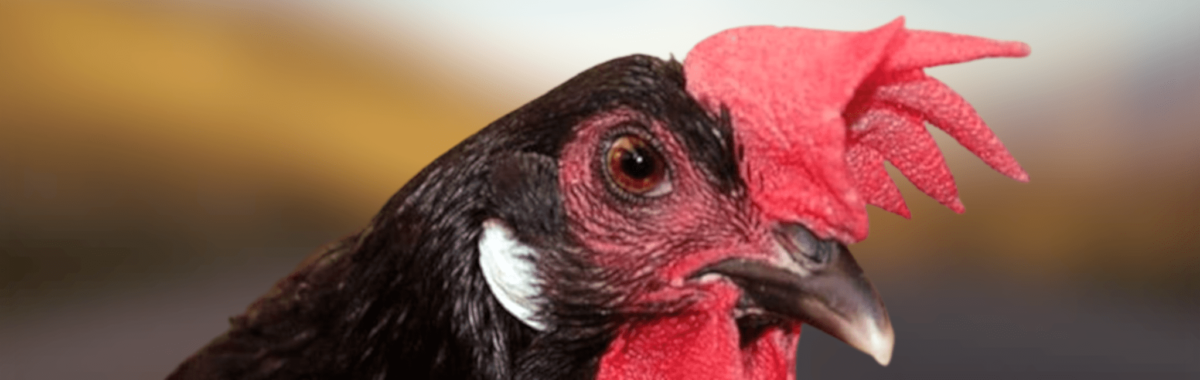
  • Head: Includes the chin, the beak, the eyes and the crest.
  • Neck: movable and flexible
  • Trunk: the part of the body that contains the vital organs, such as the digestive system, the circulatory system and the respiratory system.
  • Wings: They are essential for balance, even though they don't fly long distances.
  • Legs: essential for scratching and movement.
  • Tail: Helps with communication and balance.

Each of these components is related to the body’s various systems, which we will examine below in the different sistemas de la gallina.

Common characteristics and the integument in chickens:

There are two main branches of avian veterinary medicine.

One focuses on disease control in commercial poultry production. The other focuses on the individual treatment of caged, exotic, or free-range birds.

Veterinarians working in poultry production need a basic understanding of chicken anatomy, which enables them to understand their physiology, diseases, clinical examination, and production-related aspects.

The following is a description of the main parts of a hen’s body. Understanding these structures provides insight into how her body functions and how she has adapted to her environment.

In addition, there are specific characteristics that distinguish birds from other animals, such as the presence of feathers or the transformation of their limbs into wings.

🔹 Skin

Chicken skin is thin, loose, and easily torn. It contains few blood vessels and nerves, so it bleeds less than that of mammals.

This makes the birds seem less sensitive to skin manipulation.

The color is usually yellow or white, although it may vary in areas without feathers.

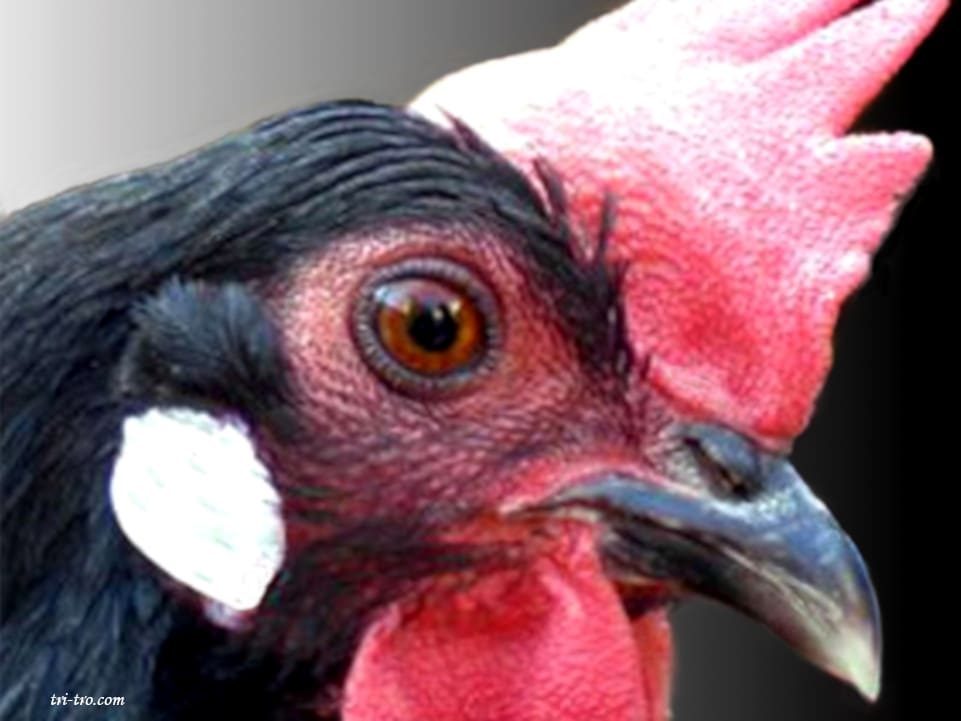
  • Crest
  • Chin
  • Earlobes

These structures are soft, ornamental extensions of the skin.

🔹 Brain

The brain mass of birds is less developed than that of mammals.

The hemispheres lack convolutions and are not connected by the corpus callosum.

Of particular note are the optic tubercles, which are more prominent due to the great importance of vision in birds.

🔹 Peak

It is equivalent to the lips of mammals and consists of a horny layer of keratin.

It grows continuously to compensate for wear and tear.

In gallinaceous birds, it is strong and curved, allowing:

  • Tearing food apart
  • Eating seeds
  • Catching insects

🔹 Legs

The lower limbs are well-developed.

  • Thigh
  • Knee
  • Leg
  • Metatarsus (scaly)
  • Toes with claws
  • Spur

Scales are epidermal structures similar to those found on reptiles.

Leg color

  • W–Id → white or pink
  • W–idid → black or bluish
  • wwId → yellow
  • wwidid → greenish

Number of fingers

  • Po → five fingers
  • poop → four fingers (normal)

🔹 Glands

  • Meibomian gland
  • Holocrine glands
  • Uropygial gland
  • Cloacal gland

The uropygial gland is the most important one. It produces a secretion used to clean and waterproof the feathers.

🔹 Muscles

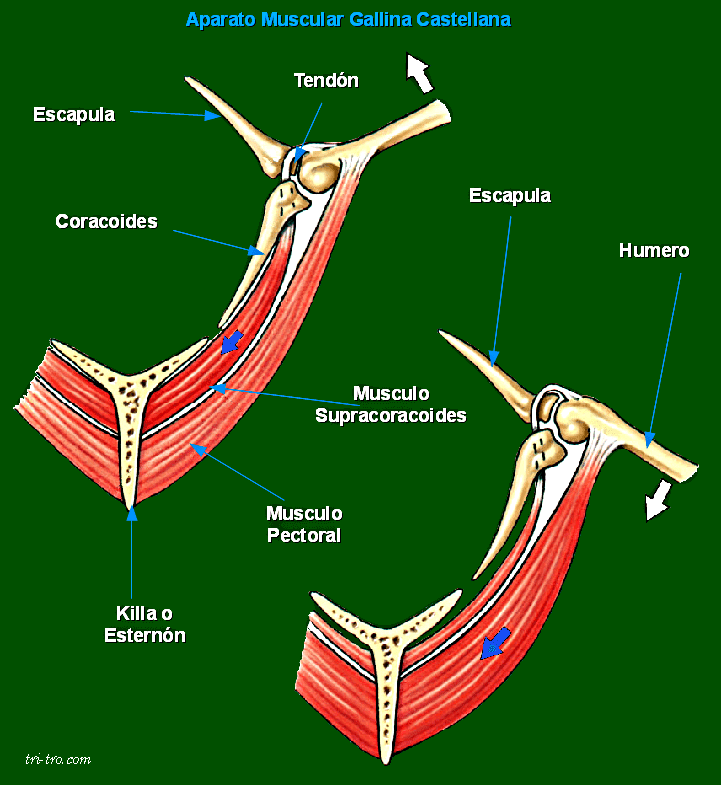
The pectoral muscles are primarily responsible for wing movement.

The pectoral muscle causes the wing to lower.

The supracoracoid muscle allows it to lift.

Anatomy of the chicken: internal organs

Digestive system of a chicken:

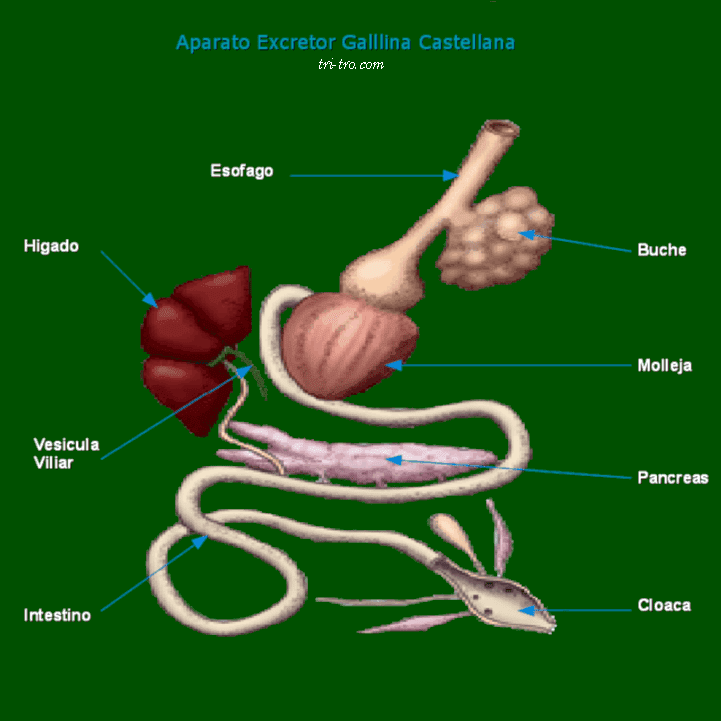
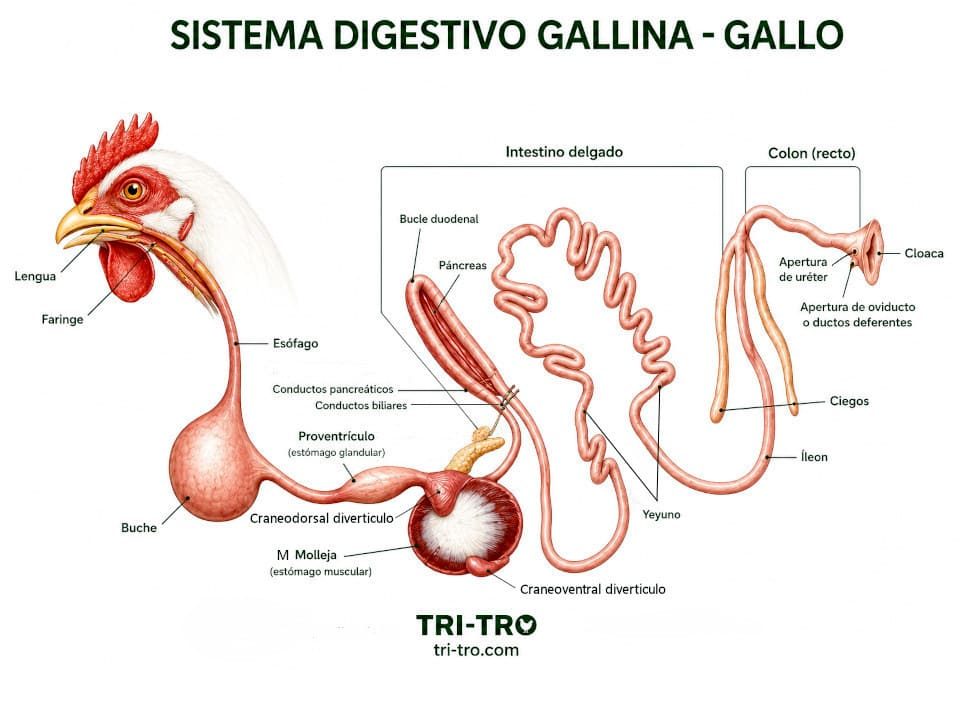
The digestive system of a chicken consists of the oropharynx, esophagus, stomach, small intestine (duodenum, jejunum, and ileum), a pair of caeca, and the colon.

The colon empties into the cloaca, which also serves as the terminal opening of the urinary and reproductive systems.

The liver and pancreas release their secretions into the small intestine, aiding digestion.

More information: the hen's digestive system.

🔹 Oropharynx

The oropharynx is the cavity that extends from the beak to the esophagus. In birds, there is no separation between the oral cavity and the pharynx, as they lack a soft palate.

The roof is formed by the soft palate, and the floor by the jaw, the tongue, and the laryngeal prominence.

Birds do not have lips or teeth; these functions are performed by the beak and the gizzard.

🔹 Palate

It features a central opening called the choana, which communicates with the nasal cavity.

Below this is an infundibular opening, into which the Eustachian tubes open.

There are mechanical papillae that facilitate the passage of food into the esophagus.

The openings of the salivary glands are also found in this area.

🔹 Tongue

The tongue is triangular in shape and is held in place by the hyoid apparatus, so it cannot protrude outward.

Its function is to propel food and close the coanal cleft.

The laryngeal prominence is located behind the tongue and contains the glottis.

🔹 Esophagus

The esophagus initially runs between the trachea and the cervical muscles, then curves to the right.

At the entrance to the thorax, it forms the crop, a dilation where food is temporarily stored.

In some birds, such as pigeons, the crop produces crop milk to feed the chicks.

Subsequently, the esophagus passes near the heart and lungs, continuing toward the proventriculus.

The presence of the crop divides the esophagus into anterior and posterior sections.

🔹 Stomach

The stomach is divided into two parts:

  • Proventriculus (glandular stomach)
  • Gizzard (muscular stomach)

Both parts work together in the digestive process.

🔹 Proventriculus

It has a spindle-shaped structure, and its mucosa secretes substances such as hydrochloric acid and pepsin.

It is located near the liver and in contact with the gizzard.

Its interior contains papillae through which digestive secretions are released.

🔹 Gizzard

The gizzard is a lenticular-shaped muscular organ responsible for grinding food.

It is made up of powerful muscles that allow it to crush food.

In seed-eating birds, it works together with small stones that are swallowed, performing a function similar to that of teeth.

It connects to the proventriculus and leads to the duodenum.

More information: cómo funciona el sistema digestivo paso a paso.

Chicken intestine:

The intestine is made up of the duodenum, jejunum, ileum, and a very short colon that empties into the cloaca.

At the ileocolic junction, there are two cecal branches that run retrograde alongside the ileum.

🔹 Duodenum

The duodenum forms a loop, inside which lies the pancreas.

It has two or three ducts that open into its distal end.

Two ducts originate in the liver:

  • Hepatoenteric
  • Hepatocystic

Both open near the pancreatic ducts.

🔹 Jejunum

It consists of mobile loops supported by the mesentery.

It has a small appendix called the vitelline diverticulum, a remnant of the embryonic connection to the yolk sac.

In newborn chicks, the yolk sac provides nutrients during the first few days.

Lymphatic nodules form plaques on the jejunal mucosa.

🔹 Ileum

The ileum continues into the jejunum without a clear demarcation.

Its origin is considered to begin at the point where the cecum inserts.

🔹 Large intestine

It consists of the ceca and the colon.

The ceca are long and originate at the ileocolic junction, extending along the length of the ileum.

The proximal segment contains a cecal sphincter with abundant lymphoid tissue (cecal tonsil).

Bacterial fermentation of cellulose occurs in the ceca.

Some birds, such as psittacines, lack ceca.

🔹 The colon

It is approximately 10 cm long and ends at the cloaca.

🔹 Cloaca

The cloaca is an organ common to the digestive, urinary, and reproductive systems.

The following structures open into it:

  • The colon
  • Ureters
  • Reproductive ducts

It is divided into three parts:

  • Coprodeum
  • Urodeum
  • Proctodeum

The coprodeum is the area where feces accumulate.

🔹 Liver and Pancreas

The liver consists of two lobes: the right and the left.

The right lobe is larger and contains the gallbladder (which is absent in some species).

The pancreas is located in the duodenal loop and consists of two lobes:

  • Dorsal
  • Ventral

It produces pancreatic juice that is released into the duodenum through several ducts.

🔹 Spleen

The spleen is a small, reddish-brown organ, approximately 2 cm in size.

Its shape varies by species:

  • It is triangular in ducks
  • It is elongated in parakeets
  • It is oval in pigeons

More information

Respiratory system of a chicken:

The respiratory system of a chicken differs significantly from that of mammals.

It lacks a diaphragm, and breathing is active, which requires energy expenditure.

The environment inside the chicken coop directly affects its functioning, particularly factors such as humidity or the presence of mold.

🔹 Nasal cavity

The nostrils are located at the base of the beak and are covered by a structure called the operculum.

There is a nasal septum and a connection to the oropharynx via the choana.

It has three nasal turbinates:

  • Rostral
  • Medial
  • Caudal

The nasolacrimal duct opens into the nasal cavity, below the medial turbinate.

🔹 Larynx, Trachea, and Syrinx

Larynx

It is located in the oropharynx, forming the laryngeal prominence.

It consists of the cricoid cartilage and two arytenoid cartilages that delimit the glottis.

During swallowing, the arytenoid cartilages close to prevent food from entering.

Birds do not have an epiglottis or vocal cords; sound is produced in the syrinx.

Trachea

It is composed of complete cartilaginous rings and can be felt on the right side of the neck.

It branches into two main bronchi, which are located behind the heart and enter the lungs.

Syrinx

It is located at the junction of the trachea and the main bronchi.

It is the organ responsible for sound production in birds.

In some species, such as ducks and swans, it contains resonant structures.

🔹 Lungs

They are small, lack lobes, and are bright red in color.

They are located beneath the thoracic vertebrae and ribs, which leave impressions on their surface.

They lack a pleural cavity and do not have the same capacity for expansion as in mammals.

🔹 Bronchi

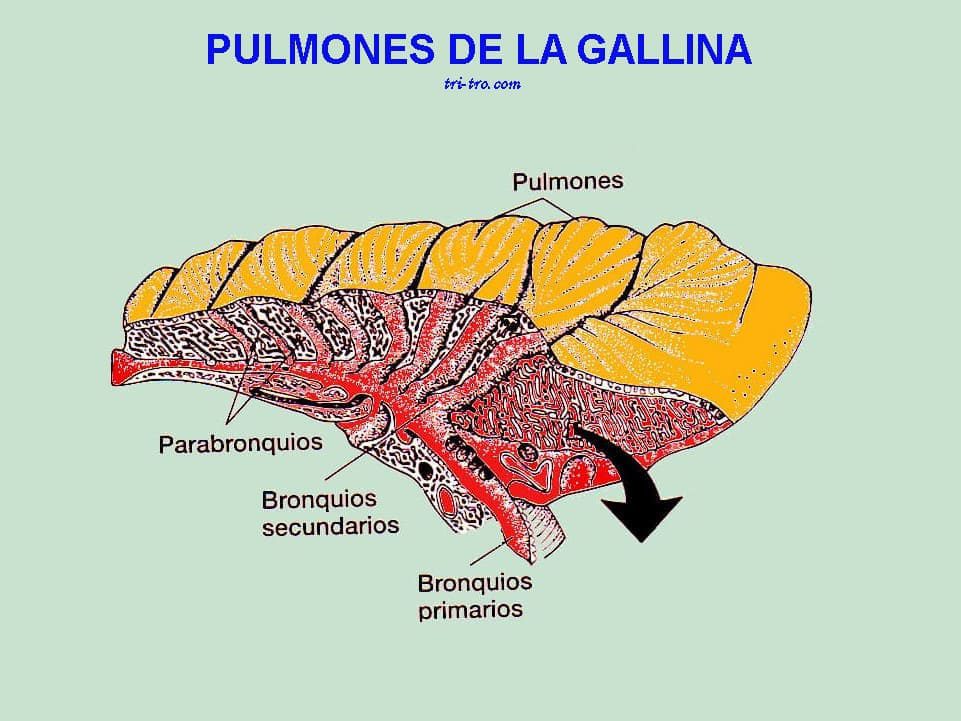
The main bronchi pass through the lungs and continue into the abdominal air sacs.

Each bronchus branches into 40 to 50 secondary bronchi.

These are classified as:

  • Medial ventral
  • Medial dorsal
  • Lateral ventral
  • Lateral dorsal

The secondary bronchi give rise to numerous parabronchi, where gas exchange occurs.

🔹 Gas Exchange

The parabronchi constitute the functional part of the lung.

Air capillaries branch off from them and intertwine with blood capillaries.

Gas exchange takes place within this network.

These capillaries are equivalent to the alveoli in mammals.

🔹 Air sacs

These are thin structures connected to the respiratory system that extend throughout the body.

Some extend into the bones, forming pneumatic bones.

The chicken has eight air sacs:

  • Cervical (single)
  • Clavicular (single)
  • Cranial thoracic (paired)
  • Caudal thoracic (paired)
  • Abdominal (paired)

🔹 Respiratory Cycle

Inhalation

The intercostal muscles contract and the sternum moves downward.

Air enters through the trachea and flows toward the caudal air sacs.

At the same time, air from the anterior region enters the lungs.

Exhalation

The abdominal muscles contract, and the air sacs are compressed.

Air enters the lungs for gas exchange and is subsequently expelled.

More information

 As part of Poultry Hub Australia's training initiative, they have developed a virtual chicken with the help of Tafe Digital in Armidale.Vickythe virtual chicken allows users to experience all parts of the chicken from the inside out.

The urogenital system of the chicken:

Chicken excretory system

The urogenital system the chicken's urinary system includes the kidneys and the ureters.

🔹 Kidneys

The kidneys are elongated, brown in color, and located on the ventral surfaces of the iliac bones and the sacrum.

At their cranial ends, they come into contact with the lungs.

Each kidney is divided into three sections:

  • Cranial
  • Medial
  • Caudal

These divisions are marked by the external iliac and ischiatic arteries.

The kidney is composed of renal lobules made up of nephrons and vascular networks where urine is produced.

🔹 Ureters

The ureter originates in the cranial portion of the kidney and extends toward the ureter.

In birds, there is no renal pelvis, nor is there a clear distinction between the cortex and the medulla.

The ureter has a whitish color due to the concentration of urates in the urine.

Chickens do not have a bladder or a urethra.

🔹 Blood Vessels of the Kidneys

The kidney receives blood through three renal arteries:

  • Superficial (originating from the aorta)
  • Medial
  • Caudal (originating from the ischiatic artery)

The veins drain into the common iliac vein, which empties into the inferior vena cava.

🔹 Renal Portal System

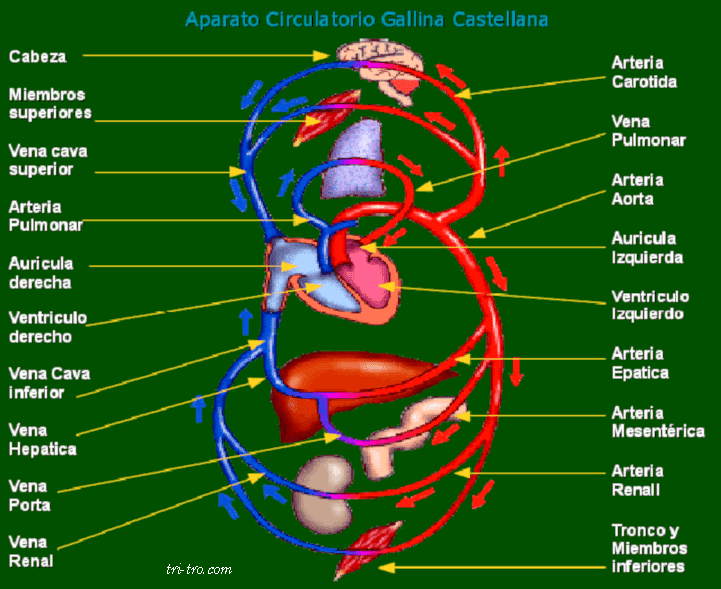
The renal portal system consists of the cranial and caudal renal portal veins.

These veins carry blood from the caudal parts of the body to the renal capillaries.

This system connects to the caudal mesenteric vein and the hepatic portal system.

Most of the blood passes through the liver first before reaching the heart.

🔹 Clinical significance

Due to the renal portal system, injections into the muscles of the pelvic region are not recommended.

Some of the medication may be eliminated by the kidneys before it is distributed throughout the body.

Therefore, the most appropriate site for intramuscular administration is the pectoral muscle.

Chicken cloaca:

Compartments of the cloaca of the hen

The cloaca is a common cavity where the digestive, urinary, and reproductive systems meet.

🔹 Coprodeum

It is the most cranial portion of the kloaca.

It receives the contents from the large intestine and serves as a storage area for feces.

🔹 Urodeum

It is located between the coprodeum and the proctodeum.

It is bounded by the coprourodeal fold and the uroproctodeal fold, the latter of which is barely noticeable.

The following structures open into this region:

  • The ureters (urine)
  • The vas deferens in males
  • The oviduct in females (left side)

🔹 Proctodeum

It is the most caudal portion of the cloaca and ends at the cloacal opening.

On its dorsal side is the opening to the bursa of Fabricius.

The bursa of Fabricius is an important lymphoid organ in the avian immune system.

🔹 Cloacal opening (anus)

This is the external opening of the cloaca.

During copulation, the so-called “cloacal kiss” occurs, in which the two cloacas come into contact to facilitate the transfer of sperm.

🔹 Characteristics of Other Birds

The rooster has a poorly developed copulatory organ.

However, species such as ducks, geese, and turkeys have a more developed phallus that can protrude during copulation.

🔹 Sexing Chicks

In day-old chicks, both sexes have a small genital protrusion.

This structure is:

  • Rounded in males
  • Conical in females

This difference allows for Sexing by experienced personnel.

Reproductive organs of the chicken:

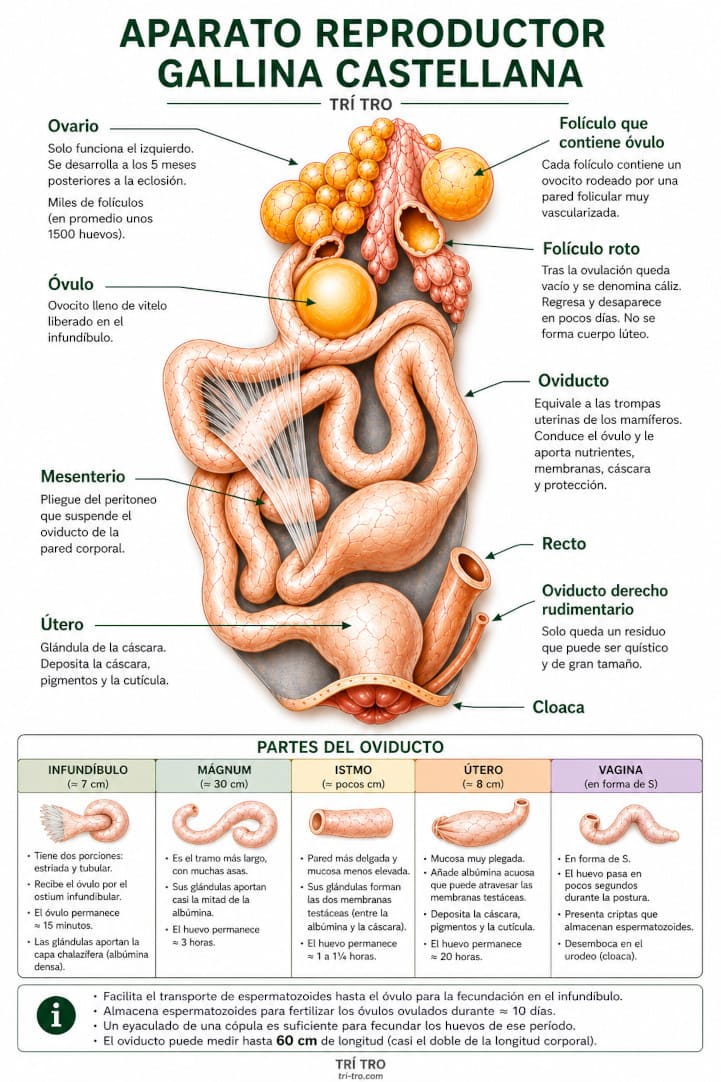
The female chicken's reproductive system

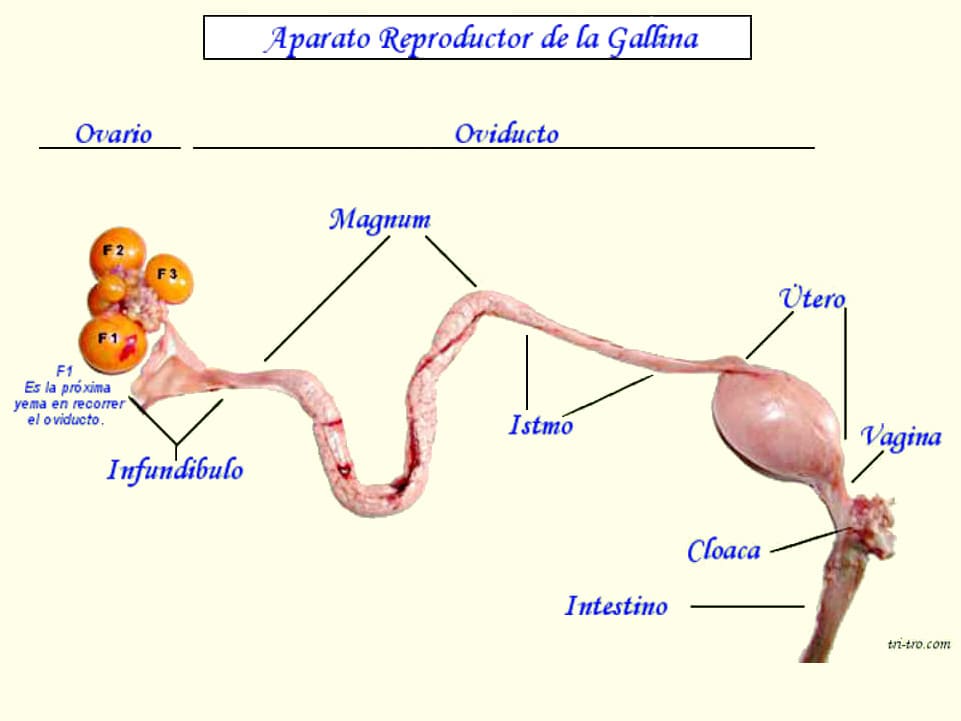
The reproductive system the hen's reproductive system consists of the ovary and the oviduct.

In domestic birds, only the left side is functional; the right side develops during the embryonic stage but subsequently atrophies.

The oviduct constitutes the entire female reproductive tract, from the ovary to the cloaca.

🔹 Ovary

The ovary develops approximately five months after hatching.

It consists of numerous follicles visible to the naked eye, giving it an appearance similar to a bunch of grapes.

It is located on the dorsal wall of the abdomen, cranial to the left kidney.

It contains thousands of follicles, far more than the total number of eggs a hen can lay (around 1,500 over her lifetime).

🔹 Follicles

Each follicle contains an oocyte filled with vitellus, surrounded by a highly vascularized wall.

Before ovulation, a whitish area called the stigma appears; this is the point where the follicle ruptures.

After the oocyte is released, the empty follicle is called a calyx and disappears within a few days.

Unlike in mammals, a corpus luteum does not form.

🔹 Egg (oocyte)

The oocyte is released during ovulation and contains the yolk sac, which will develop into the egg yolk.

🔹 Oviduct

The oviduct not only transports the oocyte to the cloaca, but also adds proteins, membranes, and the shell.

In addition, it allows fertilization to occur in its first section and can store sperm for several days.

A single mating can fertilize the eggs that are formed over the course of about 10 days.

The oviduct can reach up to 60 cm in length, nearly twice the hen’s body size.

🔹 Parts of the oviduct

  • Infundibulum
  • Mágnum
  • Isthmus
  • Uterus
  • Vagina

🔹 Differences from Mammals

Although some names are the same, the uterus and vagina in birds are not equivalent to those in mammals.

In birds, the entire female reproductive tract functionally corresponds to a single structure: the oviduct.

Reproductive tract of the Hen

Body cavity:

In birds, there is no diaphragm separating the thoracic cavity from the abdominal cavity, as is the case in mammals.

However, the body cavity does have an internal division in its cranial portion formed by two thin, translucent septa:

  • Horizontal septum
  • Oblique septum

🔹 Horizontal septum

It attaches laterally to the ribs and medially to the thoracic vertebral bodies.

Its caudal portion comes into contact with the oblique septum.

This septum delimits the paraventral cavity, which houses the lungs.

🔹 Oblique septum

It is larger than the horizontal septum.

It is attached ventrally to the sternum, laterally to the sixth and seventh ribs, and dorsally to the thoracic vertebrae and the horizontal septum.

This septum delimits the paradoral cavity, where the thoracic, cervical, and clavicular air sacs are located.

This internal organization is key to understanding the functioning of the respiratory system in birds.

More information

Endocrine glands:

The endocrine system regulates essential functions such as growth, metabolism, and reproduction through the secretion of hormones.

🔹 Pituitary gland

It is attached to the diencephalon and located in the sella turcica.

It consists of two distinct parts, as in mammals:

  • Anterior pituitary
  • Posterior pituitary

🔹 Thyroid Gland

It is a pair of reddish-brown, oval-shaped glands, each approximately 10 mm in size.

It is located at the entrance to the thorax, caudal to the crop.

🔹 Parathyroid glands

There are two to three on each side.

They are small, measuring between 1 and 3 mm, and are located posterior to the thyroid gland.

🔹 Last branchial gland

It is a small gland located next to the parathyroid glands.

🔹 Adrenal glands

They are oval or triangular in shape and measure approximately 13 mm.

They are located at the cranial pole of the kidneys.

These glands play a key role in the hormonal regulation of the hen’s body.

Circulatory system of a chicken

Circulatory system of a chicken:

The circulatory system of a chicken is similar to that of mammals, with a four-chambered heart and a complete circulatory system.

🔹 Heart

The heart is cone-shaped and is located in the thorax, cranial to the liver and between its lobes.

It is attached to the sternum by the fibrous pericardium.

  • It has four chambers: two atria and two ventricles.
  • The right atrium receives the superior vena cavae and the inferior vena cava.
  • The pulmonary veins join before reaching the heart.

🔹 Specific characteristics

  • The right atrioventricular valve has a single muscular leaflet and lacks tendinous cords
  • The left valve has three leaflets with tendinous cords
  • The right ventricle partially surrounds the left ventricle, taking on a crescent shape in cross-section

🔹 Major Arteries

The brachiocephalic trunk divides into the right and left branches, which give rise to:

  • Carotid arteries (neck)
  • Subclavian arteries (shoulders)

The aorta gives rise to the following main branches:

  • Celiac → stomach, liver, spleen, and intestine
  • Cranial mesenteric → intestine
  • Cranial renal → kidney and gonads
  • External iliac → thigh
  • Ischiadic → kidney, oviduct, and hind limbs
  • Caudal mesenteric → intestine and cloaca

🔹 Venous System

There are two cranial venae cavae that collect blood from the head, neck, and arms.

The right jugular vein is larger and more visible, while the left one may be smaller or even absent.

The arm vein (cutaneous ulnar vein) is frequently used for blood draws.

🔹 Lymphatic System

Birds have a less developed lymphatic system than mammals.

Only a few species, such as ducks, geese, and swans, have distinct lymph nodes.

  • One pair in the cervicothoracic region
  • One pair in the lumbar region

The lymphatic vessels drain into the cranial vena cavae.

There are important lymphoid structures such as:

  • Thymus
  • Spleen
  • Fabricius's sac
  • Cecal tonsils

These structures play a role in the immune response, particularly in the maturation of B lymphocytes.

More information

The nervous system and sensory organs of the chicken:

The nervous system of a chicken consists of the brain, the spinal cord, and the peripheral nerves.

🔹 Brain

The brain is small relative to body size, although somewhat larger than the eyes.

The cerebral hemispheres are pear-shaped and contain olfactory bulbs.

Both hemispheres are separated by a median fissure and from the cerebellum by a transverse fissure.

The optic lobes are highly developed, reflecting the great importance of vision in birds.

The optic chiasm is also well developed.

🔹 Spinal Cord

The spinal cord is approximately 3 to 5 mm in diameter and up to 35 cm in length.

It extends all the way to the pigostyle, unlike in mammals, where it does not reach that far distally.

Its interior consists of a gelatinous substance rich in glycogen and glial cells.

🔹 Peripheral nerves

Cervical nerves

  • The vagus nerve accompanies the jugular vein.
  • It lies dorsal to the proventriculus.
  • It forms part of the brachial plexus, which innervates the wing.

Intercostal nerves

Intestinal nerve

Runs alongside the cranial mesenteric artery.

Lumbosacral plexus

Includes the sciatic nerve, which can be palpated on the medial aspect of the thigh.

The chicken's view

Birds have much more complex and highly developed vision than mammals.

Their eyeballs are proportionally larger, and their retinas are highly sensitive to light.

In addition, birds possess unique structures that greatly enhance their ability to focus and perceive their surroundings.

🔹 Characteristics of the avian eye

  • A large eyeball relative to the head
  • A highly developed retina
  • A circular, highly mobile pupil
  • A highly convex cornea
  • A flexible and powerful lens

Birds can quickly adjust their focus to see both near and distant objects with great precision.

🔹 Ocular pecten

At the back of the eye lies a structure called the pecten, a dark, folded membrane that projects into the vitreous body.

It is believed to play a role in nourishing the retina and enhancing visual acuity.

🔹 Focusing Ability

Birds possess an extraordinary ability to change the curvature of their cornea and lens.

This allows them to:

  • Detect small objects at great distances
  • Focus quickly while in flight
  • Adapt to different light intensities

Birds of prey have a particularly well-developed ability to do this.

🔹 Third eyelid

In addition to the upper and lower eyelids, birds have a third eyelid, or nictitating membrane.

This structure protects the eye and helps reduce excessive light without completely blocking vision.

The lower eyelid is the most mobile.

🔹 Cornea and sclera

The cornea is thin and highly curved.

The sclera is reinforced by a ring of ossicles that provide rigidity to the eye.

Birds lack a tapetum lucidum.

🔹 Iris and Pupil

The iris contains striated muscle, allowing for voluntary control of the pupil's diameter.

The iris is typically yellowish-brown in color.

🔹 Retina

The retina lacks blood vessels and contains a raised structure called the pecten.

This structure is rich in blood vessels and is believed to be responsible for supplying nutrients to the retina.

In birds, 100% of the optic fibers cross at the optic chiasm.

For this reason, there is no indirect pupillary reflex in healthy animals.

More information

Chicken ear:

The ear structure in birds is simpler than in mammals.

Galliformes lack an external ear canal, and the ear opening remains covered by special feathers.

Chickens lack an external ear canal, and the ear opening remains covered by special feathers.

🔹 Outer Ear

The outer ear consists of a short, straight ear canal.

The ear canal is a membranous tube that ends in a large eardrum.

🔹 Middle Ear

The ossicular chain consists of a single bone.

This bone connects the eardrum to the oval window of the inner ear.

🔹 Inner Ear

The inner ear is similar to that of mammals, although its cochlea is less developed and lacks a spiral shape.

.

Chicken Muscles

Joints and muscles of the chicken:

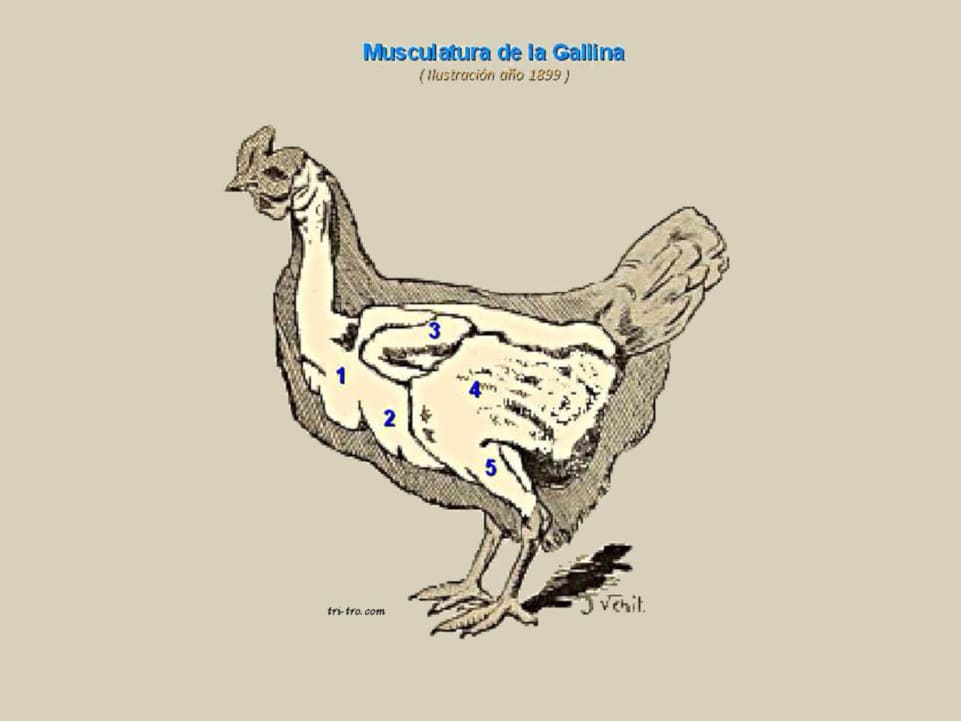
Bird muscles have a higher density of muscle fibers and less connective tissue than those of mammals.

The amount of intramuscular fat is lower, and muscle color depends on the body region and the bird’s flying ability.

In flying birds, the pectoral muscles are typically redder due to the abundance of myoglobin-rich muscle fibers.

In birds with limited flying ability, white muscle fibers with an anaerobic metabolism predominate.

🔹 Support Structures

Bones are covered by a fibrous membrane called the periosteum.

Muscles attach to bones via:

  • Aponeurosis
  • Tendons

Muscles are contractile organs responsible for body movement.

🔹 Major muscle groups

  • Shoulder muscles
  • Chest muscles
  • Thigh and leg muscles

The muscles are covered by the skin and a thin layer of fat called the dermis.

🔹 Pectoral Muscless

The pectoral muscles form the breast and are essential for flight.

Two main muscles are described:

  • Superficial pectoral muscle
  • Supracoracoid (deep pectoral)

Superficial pectoral muscle

It originates from the sternal body, clavicle, and associated membranes.

It inserts into the humerus and acts as a wing depressor during flight.

Supracoracoid muscle

It is located beneath the superficial pectoral muscle and acts as a wing elevator.

Its tendon passes through the triosal canal and inserts into the humerus.

A rupture of this tendon can prevent the bird from lifting its wing properly.

🔹 Clinical significance

The pectoral muscles allow for an assessment of the bird’s nutritional status.

This is also the recommended site for administering intramuscular injections.

The needle should be inserted into the caudal portion of the superficial pectoral muscle to reduce the risk of intravascular injection.

🔹 Wing Muscles and Structures

Among the wing muscles, the extensor muscle stands out; it is involved in carpal extension and flight.

The extensor tendon can be severed to limit the bird’s ability to fly.

🔹 Propatagium

The propatagium is a triangular fold of skin located on the cranial part of the wing.

It contributes to wing stability and extension during flight.

It can also be used for the placement of identification rings.

The cubital cutaneous vein, used for venipuncture, is located on its ventral surface.

🔹 Muscles of the Limbs

The muscles of the legs help maintain balance and are involved in locomotion.

They are highly developed due to their role in supporting the body.

Although they can be used for intramuscular injections, the renal portal system in birds must be taken into account.

🔹 Reciprocal apparatus

Many birds have a mechanism known as the reciprocal apparatus.

This system causes the toes to bend automatically when the bird flexes its tarsus.

It allows birds to perch securely.

🔹 Major veins and nerves

  • Caudal tibial vein → useful for venipuncture
  • Sciatic nerve → important in the diagnosis of Marek's disease

🔹 Tendons

Mineralization of the flexor tendons of the toes and wings is common.

Radiographically, this finding is often considered normal in many birds.

More information

The muscles of the trunk have a minor importance and the neck are very developed due to the mobility of this region of the rachis. The abdominal muscles and intercostal are reduced to thin films. 

Other sections of your interest.

For more information, please refer to the previous sections for a detailed overview of each system.

Apparatus muscle hen

Understanding the anatomy of a hen will allow you to identify any health issues earlier and improve your daily care of them.

From here on, we will explore each of the hen’s systems and organs on separate pages, explaining their functions, characteristics, and the most common diseases that can affect them.

Frequently Asked Questions About Chicken Anatomy


What are the parts of a chicken?

The main parts of a chicken are the head, neck, body, wings, legs, and tail. Each part serves a specific function in its anatomy.

What's in a chicken's head?

A chicken's head includes its eyes, beak, comb, and wattles, which are essential for feeding, vision, and temperature regulation.

What are a chicken's wings for?

Wings help with balance, enable short flights, and are important for communication and protection.

Why is it important to understand the anatomy of a chicken?

Understanding a hen's anatomy helps us better understand its behavior and health and detect potential problems early on.

Bibliography:

Information compiled from poultry veterinary manuals, scientific literature, and specialized publications on the anatomy, health, and diseases of poultry.


You may be interested in these other sections


The chicken's digestive system: how it works, step by step

The chicken's respiratory system: parts and function

Chicken Pox: Symptoms, Anatomy, and Interesting Facts


Do you want to share or comment on your social networks

Scan to visit TRI-TRO
Escanea para visitar. TRI-TRO