Water for our chickens

Water, essential for the hen:

Being essential in the poultry drinking water, es un elemento al que no se le da la importancia que merece en la cría de las aves. Como es lógico en cualquier explotación, los objetivos de rentabilidad centran la atención del avicultor en el alimento. Las grandes subidas del precio del alimento son un hecho, mientras que la calidad del agua, tanto de las instalaciones hidráulicas, control, técnicas de administración y tratamiento del agua de bebida, queda relegada a un segundo plano.

No hay vida sin agua. Este principio, conocido ya desde muy antiguo, se explica fácilmente si pensamos que, de todas las sustancias que forman parte de cualquier organismo viviente y, entre ellas, nuestras gallinas, el agua es el componente principal, que interviene en todos los procesos físicos y químicos necesarios para la continuidad de la vida.

The proportion of water in the body of the hens is variable, decreasing with increasing age and also changing in the case of animals subjected to a diet rich in hydrocarbon (compound of carbon and water, such as cereals, derivatives, tubers, and legumes). 

So, a chick newborn has almost 85 % of the water in your body, a young chick around 71 %, an adult hen 56 % and a capon priming only 42 %.

Según Leeson, del total de agua de un ave, el 70 % se halla en forma de líquido intracelular y el 30 % en forma extracelular. De esta última, unas tres cuartas partes se hallan en los espacios intersticiales y el resto en el plasma sanguíneo, radicando perfectamente el balance hídrico en mantener un equilibrio dinámico entre estas dos partes.

Biological role of water:

In summary, the role or function that performs the water in the body of the hen son los siguientes:
 
  1. Form a party for about 75% of the composition of the blood.
  2. It is the basic substance of all fluids intercellular, involved in the transport of the nutritious principles.
  3. It forms a part, although in varying amounts, of all cells of the body in which the chemical reactions of the body.
  4. Due to its high specific heat, it is the most important regulator of body temperature.
  5. Participates in all the reactions and physiological changes that control the osmotic pressure, pH, and oncotic pressure (osmotic pressure exerted by proteins in serum and, in particular, by the albumin is called oncotic pressure) in the body.
  6. Involved in the processes of digestion as a carrier of the particles in food through the gastrointestinal tract.
  7. It is essential in the process of eliminating the waste products from the body via the kidney.

Remember that the animals drink 2 to 3 times more than what you eat, and if you lack the water contribution, or is administered in a bad condition, has a negative impact on animal production. If we tried to go in depth on the metabolism of water, we should be thinking if your intake comes from:

  • The water of drink, without doubt, the main source of supply is 75% to 80% of the total.
  • La contenida en los alimentos, aun los actuales piensos compuestos, suministrados en forma de harina, suele llevar alrededor del 10 % de humedad. Del 5 al 10 % del agua necesaria para el ave tiene este origen.
  • El agua metabólica, originada en el organismo como subproducto de los catabolismos (parte del proceso metabólico que consiste en la degradación de nutrientes orgánicos, digestión u otros procesos químicos corporales). Cerca del 15 % necesaria para el ave proviene de ahí.

The excreted water is done through:

  • Las excreciones sólidas y líquidas -heces y orina-. Sin embargo, solo el 16 % de toda el agua excretada o poco más en pollitos pequeños tiene esta vía. 
  • Evaporation losses, very small in the birds through the skin, does not have sweat glands, but elevated through breathing, especially the higher the ambient temperature. 75% to 80 % of the water is eliminated by this pathway.
  • Los huevos, en el caso de las ponedoras, la pérdida, no obstante, es pequeña, pues solo puede elevarse a un 5 % del total.

El agua, para beber como para la limpieza, es una de las principales materias primas utilizadas en la industria avícola y, pese a su importancia, es muy poco lo que se ha estudiado respecto al papel que desempeña en la avicultura. 

The water quality, and its use, is manifested in the health and performance of our hens.

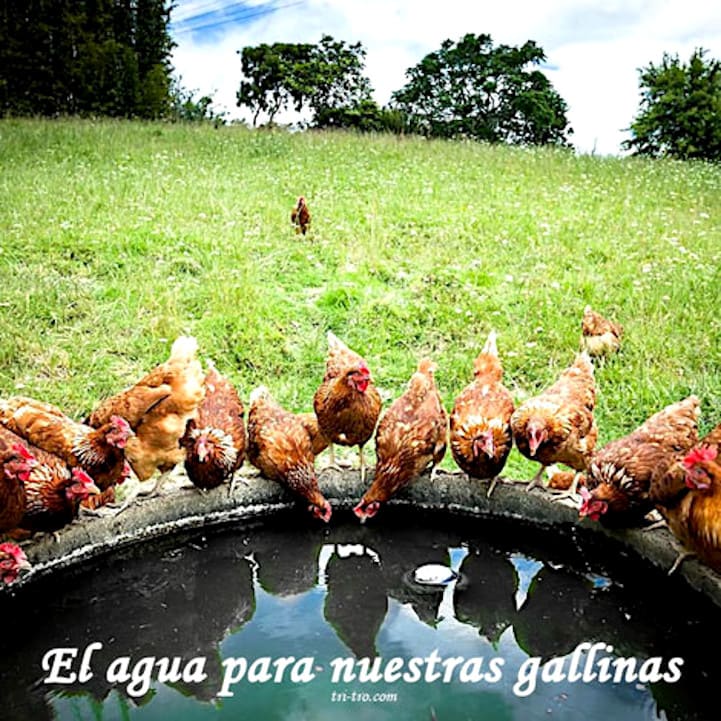
Hen drinking natural water 

Por aludir a algunos ejemplos prácticos, resumiendo:

  • The water serves as a means of driving nutrients and waste products in the body.
  • Is the transport of hormones and chemical messengers, transporting them from their places of production to the necessary sites, required for the ave.
  • Actúa como lubricante en las articulaciones.
  • It is an essential component of the acid-base balance (a chemical reaction that occurs between an acid and a base, producing a salt and water).
  • In the osmotic balance (that is, the pressure that is exerted by the movement of the water molecules).
  • It works as an emulsifier in the body, being few substances that are not soluble in it.
  • Acts in chemical reactions, forming, within the resulting products, a molecule of water.
  • The water has a high specific heat and required to raise its temperature more energy in comparison with other liquids, eliminating a lot of energy when it cools down.
  • These properties play an essential role in the thermal control of the hens.
  • También, el aumento de la temperatura del agua disminuye su viscosidad y tensión superficial, facilitando una serie de reacciones que permiten el funcionamiento óptimo del sistema inmunológico.

En los diversos recorridos del agua natural, es modificada su composición al incorporarse elementos orgánicos e inorgánicos tanto de la superficie como del subsuelo. Muchos de ellos son dañinos para la salud humana y, en ocasiones, para algunos animales domésticos.

Las condiciones climáticas, geográficas, geológicas, estacionales y las prácticas de manejo de la misma pueden afectar a la calidad del agua que abastece a nuestros gallineros o granjas.

Importance of water for the hen:

For chicks recién nacidos, el agua representa entre el 75 y el 85 % de su peso corporal. Durante el proceso de crecimiento, en machos 61 % y disminuye al 55 % en hembras, mientras que en el huevo el 65 % constituye su peso en agua. El agua del cuerpo está sujeta a un balance metabólico como cualquier otro nutriente, con ingresos y pérdidas, alcanzando un equilibrio que, al romperse, provoca un cuadro patológico.
 
En el ave joven, este balance es positivo, dado que se requiere agua para la formación de tejidos y reacciones metabólicas durante su crecimiento. Por ello, los pollos deben tener una fuente constante de agua limpia y fresca que garantice su óptimo crecimiento y máxima eficiencia para la transformación alimenticia de la dieta. 
 
Un ejemplo de la importancia del agua: una gallina sobrevive incluso si pierde el 98 % de su grasa o el 50 % de la proteína corporal, pero muere si pierde el 20 % de su agua corporal.
 
La pérdida de agua en la gallina se da a través de las heces, orina, por las secreciones nasales y la respiración, siendo esta última de gran importancia, ya que de ella depende el control de la temperatura corporal.
 
La eliminación del agua difiere en función del líquido ingerido, edad y hasta con fines comerciales; por ejemplo, en los pollos de engorde producen heces con 60 y 70 % de agua, mientras que las gallinas de postura alcanzan 75 %.
 
Es conocido que entre las causas más comunes de pérdida excesiva de agua están las enfermedades de las aves, como son las enteritis, diarrhea, coccidiosis, etc., especially in birds in growth and heat stress.
 
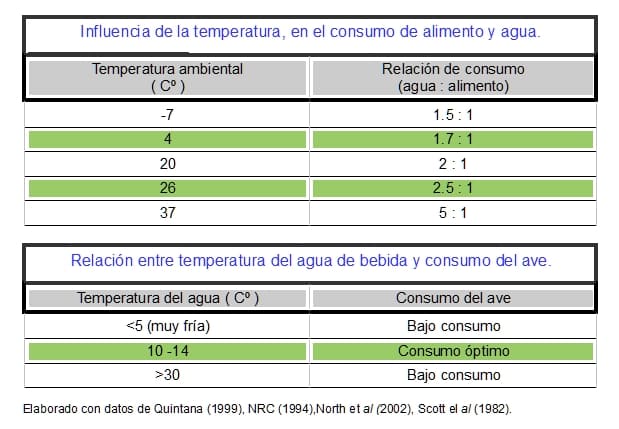
Temperature: You can increase or camouflage flavors and odors. There is a relationship between the temperature of the water and the consumption of the same for our birds, see photo.
 
Taste and smell: Aún no se conoce lo que sabe bien o mal de nuestras gallinas o aves comerciales y el olor cae dentro del mismo contexto, ya que tienen poco desarrollado el olfato y el gusto. Por lógica, debemos administrar sin sabor u olor, hasta no determinar lo contrario, por el bien de nuestras gallinas.
 
Color: It has little to do with the acceptance on the part of the chicken, but it can be indicative to us of pollution.
 
Turbidity: Refers to the presence of solids in suspension as the tiny particles in the water. The cause of the turbidity is important, because if you are the waste materials of human, animal or industrial, the water is not safe to drink and can transmit diseases or generate toxicities, acute or chronic, and even with impact for the human being.

En las siguientes fotos se resumen:

  • La influencia de la temperatura en el consumo de alimento y agua.
  • Relationship between temperature of drinking water and consumption of the bird. 
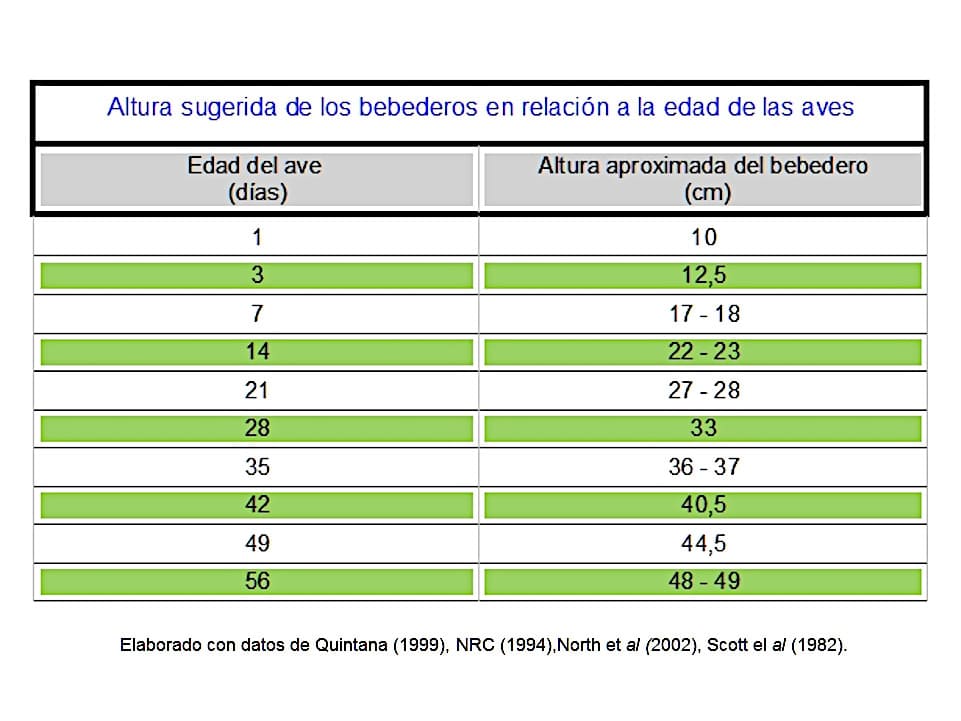
  • The height suggested for the water fountains in relation to the age of the birds.

Influence of temperature on the consumption, food and water

Height suggested drinkers in relation to the age of the bird

Water consumption in birds:

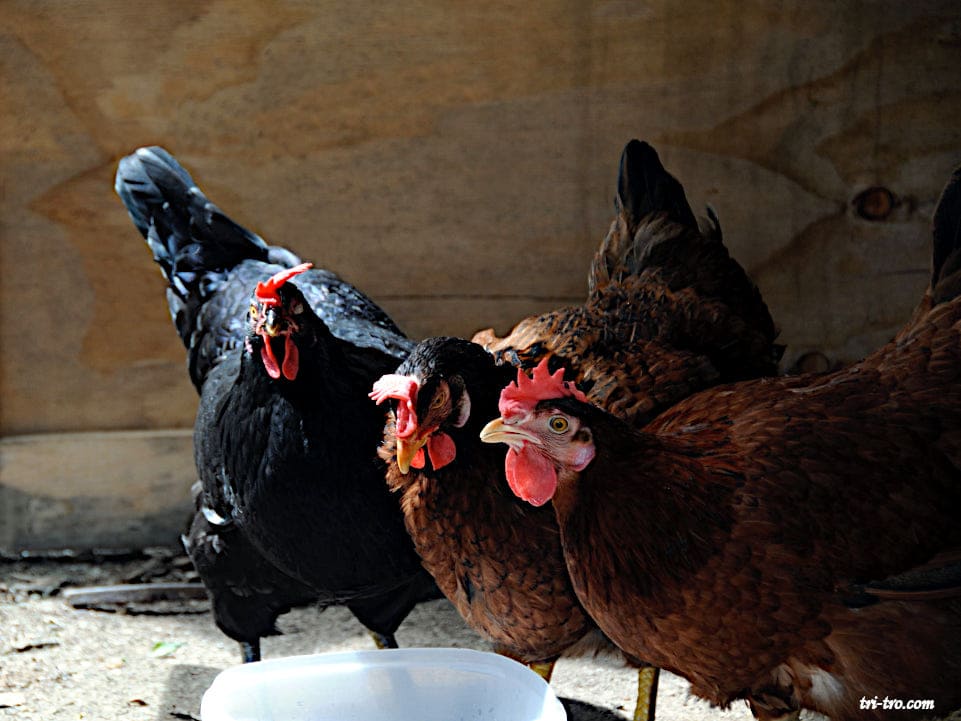
Hens drinking

El agua no cabe duda de que es un componente esencialalthough not usually included in the nutritional requirements, but it is subject to the establishment of minimum levels of consumption in our hens. The demand for water, in primary form, it is by voluntary consumption of the bird. The amount of water ingested is always greater than any other nutrient, and differs from its intake by various factors, among which are:

Temperatura ambiental: Se ha estimado un incremento en el consumo de agua, en promedio, de 7 y 9 % por cada grado Celsius, en aumento de la temperatura ambiental a partir de los 21 °C. Las gallinas ponedoras pueden aumentar el consumo de agua de 150 a 300 ml cuando se incrementa la temperatura de 21 a 32 °C.

En condiciones normales, la gallina tiene un consumo aproximado de agua, dos veces la cantidad de la dieta alimentaria ingerida, pero en ambientes cálidos la proporción puede aumentar a ocho veces o más. En cambio, el frío reduce el consumo de agua, aunque no se ha definido en qué proporción.

Con climas templados, las necesidades de agua en las aves se atienden a las siguientes proporciones:

  • 76% is covered with the water to drink.
  • From 6 to 10 % of the water consumed with the food.
  • The 14 to 18 % is water metabolic product of oxidative metabolism of nutrients such as proteins, fats, and carbohydrates.

Para la edad del ave se han desarrollado diferentes fórmulas para calcular el consumo de agua. A continuación, un ejemplo:

Amount of water per hen per day = age in days x 5.28 ml.

In this formula, it sets this value in the colder months, with the coefficient of 5.1 ml/day and 5.7 ml/day in the warm months.

Diversos autores han intentado establecer un consumo de media en milímetros; en las siguientes fotos se resumen:

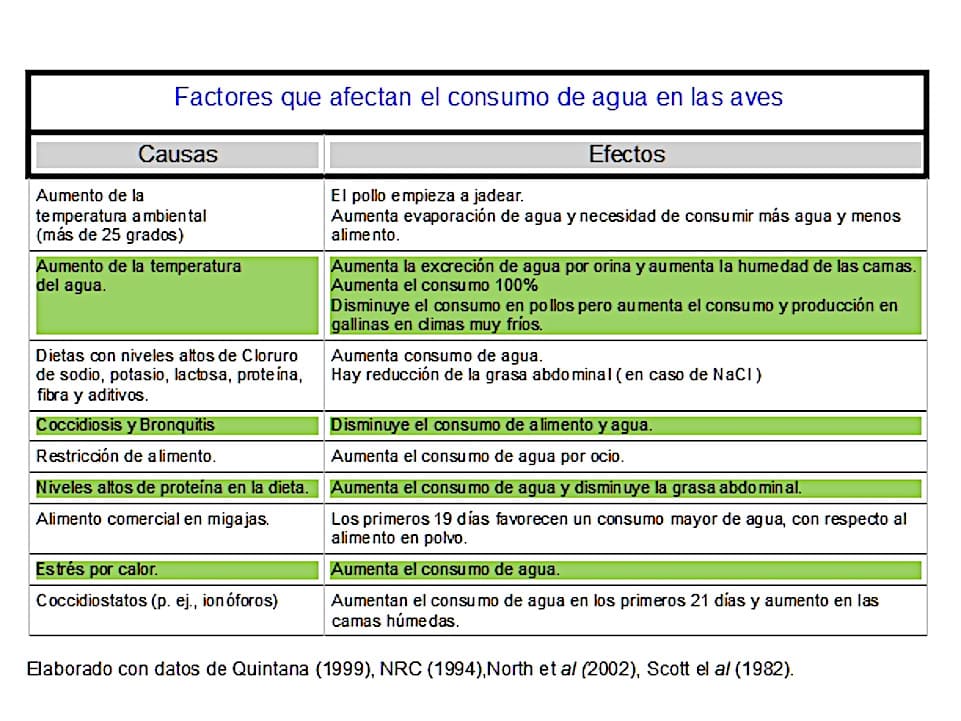
  • Factors that affect the consumption of water birds. 
  • Consumo de agua en aves de diferentes edades y en ambientes con distintas temperaturas. 

Lo mejor es, sin duda, calcular el consumo de nuestras aves, bajo las condiciones de manejo de cada gallinero o granja. Esto podrá ser una alternativa de gran utilidad para observar la salud de nuestras gallinas y el éxito de diversos tratamientos si son necesarios.

Factors that affect the consumption of water

Water consumption in birds of different ages

State of health of the water:

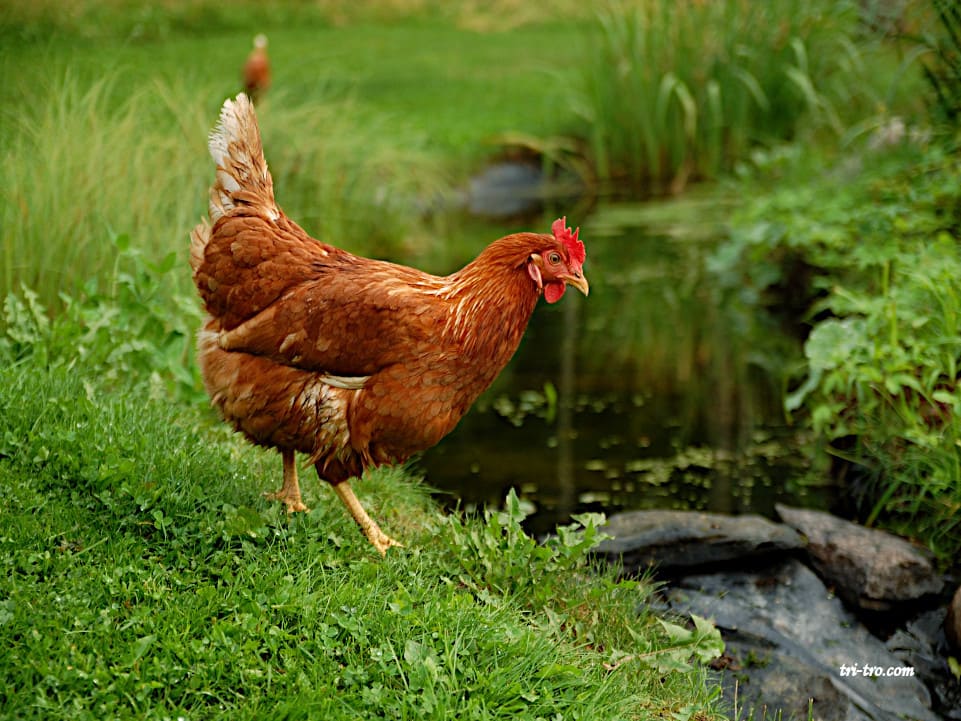
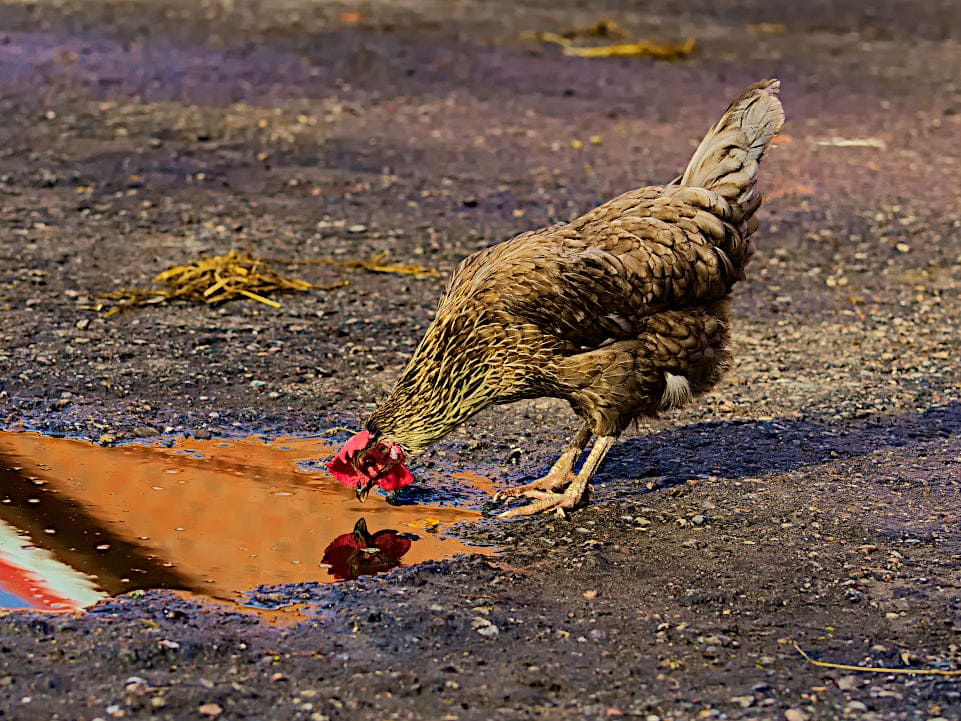
Hen drinking from a puddle

Para aprovechar al máximo el agua, es necesario tomar en cuenta algunos aspectos sobre el compartimento de la gallina respecto al consumo del agua. A diferencia de otras especies, las aves no succionan; obtienen el agua picoteando y, al echar la cabeza hacia atrás, dejan escurrir su agua por el esófago, siendo la cantidad que obtienen relativamente poca.

She stays at the drinker for about two minutes and returns to it for several times a day. Hens prefer to eat and drink when other birds are at the feeders or drinkers (social interaction), and it is rare for a solitary hen to approach the drinker.

Even without knowing exactly why, it has been found that hens sisters, fed and housed alike and identical set, can consume different amounts of water. According to Sutherland and Deacon 1972, who measured individually, the daily consumption of water in a herd, at the same time associated with the start of each hen, the differences between the two birds by putting the same amount of eggs can be present in up to a 70 % increase.

However, comparing to other two birds with the same level of implementation to each other, the difference in consumption between them was only 7 %. On the other part, the curious thing is that from one day to another the same hen will vary from 20% to 30 % of its consumption, for no apparent reason that would justify.

Sometimes, a consumption of water is excessively high or low on a given day was offset by the opposite the next day, but in other cases the bird is not caught this compensation until after several days. You don't know the reasons for these individual differences, but the fact is that there are, and that can't be forgotten.

The feverish and the various pathologies of clinical and subclinical, that might appear in our hens, affect the consumption of water. It has been shown that the chickens subjected to heat stress resist him better, when they increase their consumption of water; on the contrary, decrease it by 20 %, reduces feed efficiency, and there is a delay in the growth.

The deprivation prolonged water in chicks causes nephritis, nephrosis, (caused by various disorders that damage the kidneys) polycythemia (a blood disorder in which the bone marrow produces too many red blood cells), and dryness in the skin of the legs.

In chickens, the same situation leads to necrosis of the ovaries (Death of cells and tissue), Pro ventriculitis (inflammation of the pro ventricle or glandular stomach of birds), decrease in the size of the eggs, as well as the thickness and density of the shell.

Consumption and type of feed: it is very common and convenient to calculate water consumption based on the water-feed ratio and it has been observed that birds ingest twice as much water as feed. 

Under optimal conditions, the chickens in initiation, consume 2 to 2.5 milliliters of water per gram of food, and in birds of posture in growth of 1.5 to 2.9 milliliters of water per gram of food. 

However, this fact must be adjusted when there are changes in the temperature or in accordance with the age of the bird.

The medication of the birds with water, we must take into account the aspects of behavioral (behavior of animals in their natural environments), whereas water consumption in an average maximum of two minutes and then there will be a rest period (several minutes and even hours) to re-approach the drinker.

Water quality:

We have already commented that the water is a resource relativamente disponible en todo momento, a un precio económico, y que el factor para nuestro gallinero o explotación es su calidad y no su disponibilidad.

Once we have invested in birds of race or genetics valuable, we need to take care to provide them with a suitable environment, with a balanced diet and water quality for optimum development.

Se ha calculado que el agua de mala calidad conlleva unas pérdidas del 30 al 100 % en los costos de medicación, por la reducción de la disponibilidad del principio activo del medicamento; aparte, a mayores, los costos por problemas de salud y mortalidad.

Para evaluar la calidad del agua, se toman en cuenta sus características físicas, químicas y microbicidas; no existe un nivel de calidad del agua admitido a escala mundial para la avicultura.

Es de suponer que difiere de la asignada al consumo humano e incluso de la utilizada para riego. Está claro que la salud de las aves puede verse afectada por ingerir agua de mala calidad, ya que está ligada a su origen (río, pantano, manantial, artesiano, etc.) y determinada por el tipo de suelo, precipitación pluvial, escurrimientos de las áreas adyacentes y las actividades humanas de la zona donde tengamos nuestros gallineros o explotaciones.

No hay en la naturaleza agua absolutamente pura y, en lo negativo, puede contener hasta 90 posibles contaminantes no aceptables.

The main groups of pollutants are:

  1. Inorganic compounds (calcium, magnesium, iron, manganese, silicate, carbon dioxide, hydrogen sulfide, phosphates, copper, aluminum, arsenic, lead, cadmium, nitrates).
  2. Organic compounds.
  3. Solid.
  4. Gases.
  5. Microorganismos (algas, protozoarios (Cryptosporidium sp., Giardia sp.), bacterias, por ej., Escherichia coli y otras coliformes).

In the photos that you will find below is a collection of data obtained by different authors that describe some physical and chemical characteristics of the water, as well as their possible impact on the health of the bird.

Esto nos puede servir para comprender, en su caso, un análisis del agua de nuestras instalaciones o zona y saber en qué proporciones los componentes del agua son aceptables o no para la salud de nuestras gallinas.

Effects of the chemical elements present in the water, on the health of the birds

Effects of the chemical elements present in the water below

Literature review:

MERCK & CO. (1995). Manual Merck de Veterinaria. Rahway, N. J., EE. UU.

BUXADÉ, P. (1987). The laying hen. Ed. Mundiprensa. Madrid.

DORN, P. (1987). Manual of avian pathology. Ed. Acribia. Zaragoza.

HOFSTAD, M. S. (1984). Diseases of Poultry. Iowa State University Press, Ames, Iowa.

ZARZUELO, E. (1982). Vade mecum of the pathology, infectious poultry. Ed. Aedos, Barcelona.

CASTELLÓ, F. and CASTELLÓ, J. A. (1960). The New Art of Raising Chickens. Aedos, Barcelona.

OROZCO, F. (1989). Breeds of chickens Spanish. Ed. Mundiprensa. Madrid.

LACADENA, J. R. (1998). Genetics. Ed. AGESA

PUERTAS, M.J. (1992). Genetics: Fundamentals and Perspectives. McGraw-Hill Interamericana.

SANCHEZ-MONGE, E. (1969), Genetics. Espasa-Calpe S.A.

OROZCO, F. and ROBLA, F. (1986). Genetic aspects of the León rooster. 24th Symposium of the WPSA (Spanish Section): 199–212.

HILL, J. L. (1973). Genetics, general and applied. Ed. UTEHA.

CASTELLÓ, J. A., LLEONART, R., FIELD, J. L., OROZCO, F. (1989). Biology of the chicken. Real Escuela de Avicultura.

LLEONART, F., ROCA, E., CALLÍS, M., GURRI, A., PONTES, M. (1991). Poultry Hygiene and Pathology. Royal School of Poultry Science.

STURKIE, P.D. (1968). Fisiología aviar, ed. Acribia. Zaragoza.

LOHMANN ANIMAL HEALTH (2012)


You may be interested in these other sections


Discover the history of the Castilian Black Hen

Everything You Need to Know About Banding Hens and Roosters

Glossary. Essential terminology related to chickens and roosters


Do you want to share or comment on your social networks

Scan to visit TRI-TRO
Escanea para visitar. TRI-TRO